Kyle Bellucci Johanson serves as a Visiting Critic in Cornell University's College of Architecture, Art, and Planning, Department of Art. Holding an MFA from California Institute of the Arts and a BA in Art and Reconciliation Studies from Bethel University, he merges artistic practice with critical theory through performance architecture and collaborative media. Whitney Independent Study Program (2022–23) Founding fellow at land's edge free school (Los Angeles) Teaching experience at SAIC, UIC, CUNY, and Cooper Union His research investigates: Power structures through spatial interventions Critical theory applications in art practice Post-capitalist imaginaries Hauntology and historical materialism Transdisciplinary approaches to social critique Project trends reveal: Reinterpretation of Soviet design principles Investigation of worker identity in post-industrial contexts Temporal and spatial dislocation in artistic practice Monument critique through performative methods Quantum theory-inspired architectural concepts Reimagining of common spaces as political sites Scientific awards include: Creative Research Grant (2025) Whitney ISP participation (2022–23) Automata Studio Residency (2022) Artists Run Chicago Grant (2021) BOLT Residency (2020–21) Through projects like KLUB WRKR —a nomadic workers' club reimagined for the gig economy—and table (2018–2022), a Chicago-based experimental space for artistic practice, he interrogates institutional frameworks while fostering community through discursive meals and collaborative exhibitions.
The Courtauld Institute of Art, University of LondonUnited Kingdom
Sarah Wilson is Professor of Modern and Contemporary Art at The Courtauld Institute of Art, University of London. She has been a faculty member since 1982 and has held leadership roles including Head of the Modern and Contemporary Section (2005-2008) and Head of Diploma programmes (2014-2015). She is internationally recognized as the English-language expert on Post-War European art and has held visiting positions at Paris-IV Sorbonne and the University of Versailles-Saint Quentin. Wilson was educated at the University of Oxford (BA English Literature) and at the Courtauld Institute of Art (MA and PhD). She was awarded the title Chevalier des Arts et des Lettres in 1997 for services to French art and culture, and received the International Association of Art Critics' Award for Distinguished Contribution to Art Criticism in 2015. She has held visiting professorships at Paris-IV Sorbonne (2002-2004), École Nationale Supérieure des Beaux-Arts (2006-2007), and University of Versailles-Saint Quentin (2012-2013). Sarah Wilson's research spans post-war and Cold War European art, contemporary global art practices, and the intersections between conceptual art, political theory, and visual culture. Her work extends from European avant-gardes to contemporary art across the former Soviet Union and Asia. She is particularly known for her expertise in French Stalinism, neo-Marxism and the arts, and conceptual art practices beyond the 'first world.' Wilson has initiated important academic programs such as the 'Global Conceptualism' MA course with Boris Groys, which connects Anglo-American conceptual art with practices from Moscow and beyond. She has also expanded her research to include modern and contemporary Asian art since 2013. Her extensive publication record shows a consistent focus on European art history with increasing engagement with global perspectives, particularly Asian contemporary art since 2013. Wilson's scholarship bridges art historical analysis with philosophical inquiry, especially regarding French theory and its visual manifestations. Her major publications include 'Paris, Capital of the Arts, 1900-1968' (2002) and 'The Visual World of French Theory: Figurations' (2010), with a second volume 'The Visual World of French Theory II: Interventions' in preparation. Chevalier des Arts et des Lettres (1997) International Association of Art Critics' Award for Distinguished Contribution to Art Criticism (2015) Marie Curie Actions – RBUCE-UP, Chaire d'excellence, Université de Versailles-Saint Quentin (2012-2013) Professor Wilson has supervised 36 PhD students to completion and over 230 MA dissertations, creating what she describes as 'a unique English-language archive in the field of post-1945 European and global art history.' Her former students now hold prominent positions in major institutions worldwide including Tate, the British Museum, Design Museum, Scottish National Gallery of Modern Art, British Council, Centre Georges Pompidou, Kunsthalle Bremen, and universities across Europe and North America. She has received significant research funding including a Marie Curie Actions grant for her project 'Globalisation before globalisation: avant-gardes, academies, revolutions.' Wilson is actively involved with the Courtauld alumni's former East Wing Collection (now VS1, Vernon Square) and has contributed to the Research Forum's programmes. She has curated numerous exhibitions including the 'Global Conceptualism'-related projects and served on the curatorial team of the 1st Asian Biennale (China-Guangzhou) in 2014. Her commitment to women artists has led to early exhibitions of artists like Zofia Kulik and Alina Szapocznikow before their international prominence. She is involved with CCRAC (Cambridge-Courtauld Russian Art Centre), Calvert 22, and Pushkin House in London, reaching out to Russia and Eastern Europe.
Marie Kondrat is an Assistant Professor in the French Department at the University of Lausanne (UNIL), Faculty of Arts, appointed with conditional pre-tenure status beginning August 1, 2023. Her appointment reflects her international academic profile developed through teaching and research in the United States, France, and Switzerland. Her research focuses on theories of the image , the dynamic relationship between literary theory and cinema , and conceptual transfers between literary studies and other disciplines, particularly through translation. Her work spans 20th and 21st century literature across French, English, Italian, and Soviet linguistic traditions. At UNIL, she leads the “History and Current Events of Criticism” module and is responsible for theoretical instruction in the new MA specialization program in Comparative Literature (CIEL—Interdisciplinary Center for the Study of Literature). Her current research project, INVUES: image, literature, theory (2024–2027) , has been awarded funding under the FPFS Monique de Meuron Program for young academics, underscoring her emerging leadership in interdisciplinary literary studies. Her doctoral thesis, "Le Hors-champ: extensions de lieu," was recognized with two major awards: Latsis Prize (2022) Barbour Prize for Literary and Aesthetic Criticism Marie Kondrat has no listed advisees at this time. She does not appear to be involved in part-time teaching, nor is there any indication of retirement or prior staff status. No publications or email contact details are currently available in the provided text.
Rachel Price is an Associate Professor of Spanish and Portuguese at Princeton University, affiliated with the Program in Media and Modernity, the Princeton Environmental Institute, and the Program in Latin American Studies. She holds a Ph.D. from Duke University and a B.A. from Yale University. Her research focuses on Latin American and circum-Atlantic literature and culture, with a particular emphasis on Cuba. Key areas include environmental humanities, media studies, slavery’s legacies, and visual art. She is the author of The Object of the Atlantic (2014) and Planet/Cuba (2015), exploring material aesthetics and planetary crises in Cuban art and literature. Price co-edited El populismo por venir? (2018) and has published widely on topics such as concrete poetry, neoconcrete art, and media during slavery’s height in Cuba. She is a 2024–2025 Harvard Radcliffe Institute Fellow and has held roles in Princeton’s Interdisciplinary Doctoral Program in the Humanities. Her work bridges environmental policy, postcolonial theory, and media history, analyzing how material objects and artistic practices reflect broader socio-political transformations. Recent projects examine climate change in contemporary Cuban art and the interplay between digital culture and postcolonial identities. Price previously taught at Brown and Stony Brook Universities and has engaged in research with Colombia’s Consejo Regional Indígena del Cauca.
Alexei Yurchak is a Professor in the Department of Anthropology at the University of California, Berkeley. His research focuses on Soviet and post-Soviet societies, with particular attention to cultural practices, political transformations, and the intersection of history and anthropology. He is renowned for his work on late socialism, the collapse of the USSR, and the cultural legacies of Soviet ideology. Yurchak’s scholarship bridges anthropology, history, and political theory, exploring themes such as parody, memory, and the paradoxes of power in authoritarian systems. Key contributions include his book Everything Was Forever, Until It Was No More: The Last Soviet Generation , which examines the cultural identity of the final generation raised under Soviet rule. His research also delves into post-Soviet Russia’s political dynamics, ethnographic analyses of systemic change, and the role of cultural forms like music, art, and media in shaping societal narratives. His articles span topics from Soviet music culture and the aesthetics of parody to contemporary Russian politics. He critiques the interplay between ideology and everyday life, emphasizing how cultural practices reveal deeper political and social structures. Yurchak’s interdisciplinary approach has positioned him as a leading scholar in postsocialist studies and critical anthropology.
Diana Kudaibergenova is a Lecturer in Central Asian Politics and Society at the School of Slavonic and East European Studies (SSEES), University College London. She is a cultural and political sociologist specializing in power relations within authoritarian contexts, with particular expertise in Central Asian political systems and societies. Her academic profile reflects deep engagement with the complexities of post-Soviet political transformations across the region. Dr. Kudaibergenova earned her MPhil and PhD in Sociology from the University of Cambridge, where she previously served as an Assistant Professor in Political Sociology before joining UCL. Her educational background and early academic career at Cambridge provided the foundation for her extensive research on nationalism, authoritarianism, and political sociology in Central Asia. Her research program spans multiple interconnected domains including authoritarianism, political sociology, nationalism, and decolonial praxis. Kudaibergenova examines how power operates through state institutions, cultural production, and everyday practices in non-democratic contexts. She has developed innovative conceptual frameworks for analyzing 'everyday authoritarianism' and the resilience of dictatorial systems. Her work particularly focuses on Central Asia, where she has conducted extensive fieldwork across multiple countries, examining how citizens navigate and resist authoritarian rule through cultural expression, social movements, and digital activism. Her publications reveal consistent patterns of exploring how authoritarian regimes maintain control while citizens develop strategies of resistance and alternative meaning-making. Dr. Kudaibergenova has secured significant research funding including the Forces of Art joint grant by Hivos Foundation, Prince Claus Fund for Culture and Development, and European Cultural Foundation in 2018 for her work on protest art in Central Asia. She actively supervises graduate students and welcomes research projects that push disciplinary boundaries, employ innovative methodologies, and explore new conceptual ground in Central Asian studies. Her advisory work emphasizes decolonial approaches and creative methodologies for understanding complex political phenomena in the region. Her teaching portfolio at UCL includes modules on Central Asian Politics and Society, Post-Soviet Politics and Society, Political Sociology, and Political Art and Protest in Eurasia, reflecting the breadth and depth of her scholarly expertise and commitment to training the next generation of Central Asian specialists.
Jonathon Turnbull is a cultural and environmental geographer affiliated with the Department of Geography at the University of Cambridge, where he is a PhD candidate. His research focuses on radioactive resurgence in the Chornobyl Exclusion Zone, exploring narratives of nature’s recovery and the ethical implications of nuclear ecologies. He is a member of the Vital Geographies research group and has held academic roles including Dissertation Supervisor (BA Geography, University of Oxford) and editorial roles with Routes: The Journal for Student Geographers . His work bridges environmental humanities, digital geographies, and post-humanist theory, with a focus on dogs, wolves, and human-nature relations in contested landscapes. Education: PhD in Geography (ESRC funded), University of Cambridge (2018–present); MSc (Distinction) in Nature, Society and Environmental Governance, University of Oxford (2017); BA (First Class) in Geography, University of Oxford (2015). Research Interests: More-than-human geographies, nuclear ecologies, digital ecologies, post-humanism, animal studies (dogs/wolves in Chernobyl), and the Ukrainian Environmental Humanities. He collaborates with filmmakers, artists, and international researchers to explore topics like contaminated care, weird ecologies, and pandemic-era human-animal relations. Awards: Over 15 grants and honors, including Cambridge Festival production grants, ESRC funding, and the AJ Pressland Prize for Ukrainian language excellence. His work has been featured in outlets like The Ecologist , BBC, and cultural festivals. Grants & Projects: Digital Ecologies (international research group), Ukrainian Environmental Humanities Network, Terraforming Terra (Norway), and The Dogs That Survived documentary. He has organized conferences on topics like digital animal encounters and serves on editorial boards for journals and magazines. Labs/Teams: Co-founder of Digital Ecologies research group; collaborator with the Clean Futures Fund’s Chernobyl dog project; affiliated with the National University of Kyiv-Mohyla Academy and Wageningen University.
Dr. Lena Dallywater is a Researcher at the Leibniz Institute for Regional Geography in Leipzig since 2016. She coordinates the Leibniz ScienceCampus Eastern Europe – Global Area and holds a PhD from Leipzig University (2024) on 'Intellectual Conceptualizations of Black and African Aesthetics since 1956'. Her academic background includes an M.A. in Communication and Cultural Studies (2011), and extensive professional experience in research coordination, including roles in the DFG-funded program 'Adaptation and Creativity in Africa' (2011–2016) and at the Global and European Studies Institute (GESI). Her research focuses on intellectual history, philosophy, and African aesthetics, with a regional emphasis on Southern and West Africa and the African diaspora in France and the USA. Key themes include the Black Arts Movement, Black Consciousness Movement, and transnational cultural transfers. She has coordinated interdisciplinary projects linking Eastern Europe, the Soviet Union, and Africa during decolonization eras. Publications highlight her expertise in decolonization studies, transnational activism, and postcolonial theory. These include co-editing volumes like *Eastern Europe, the Soviet Union, and Africa* (2023) and *Southern African Liberation Movements* (2019). Her work bridges historical analysis with contemporary debates on cultural identity and global networks. Leibniz ScienceCampus Coordinator: Eastern Europe – Global Area PhD Topic: Black and African Aesthetics (2024) Past Roles: DFG Program Coordinator (2011–2016), GESI Research Administrator Her research infrastructure contributions include archival work and geovisualization projects at the IfL, emphasizing spatialization of cultural and historical processes.
Robyn Jensen serves as an Assistant Teaching Professor at the University of California, Berkeley, specializing in 19th and 20th-century Russian literature, Nabokov, Chekhov, the short story, prison literature in Russia and America, and women in Soviet cinema. Her academic credentials include: Ph.D. in Slavic Languages and Literatures from Columbia University M.Phil in Slavic Languages and Literatures (with minor in Film Studies) from Columbia University M.A. in Slavic Languages and Literatures from Columbia University B.A. in Slavic Languages and Literatures from Barnard College Dr. Jensen's research centers on Russian literary and cultural studies with deep expertise in Vladimir Nabokov and Anton Chekhov . Her work critically examines Moscow Conceptualism , self-narratives , photography theory , interart aesthetics , theatrical performance , and carceral systems . Her current book project Nabokov’s Camera Eye investigates visual media's role in literary construction. Her recent publications reveal a consistent scholarly trajectory exploring intersections between Russian literature and visual culture, particularly through Nabokov's works. She analyzes photographic representation in autobiography, pedagogical approaches to complex texts, and intermedial relationships between painting and narrative, demonstrating how visual frameworks shape literary meaning. Scientific Awards: No awards documented in available sources. Advising and Grants: Public records indicate no formal PhD/Master's advisees or grant funding disclosures. Her public writing in Los Angeles Review of Books suggests engagement with broader academic discourse beyond traditional advising structures.
Aria Fani serves as Assistant Professor and Elahé Omidyar Mir-Djalali Professor in Persian and Iranian Studies at the University of Washington, where he also directs the Persian and Iranian Studies Program. His academic journey includes a Ph.D. from University of California, Berkeley (2019), B.A. from San Diego State University (2009), and A.A. from San Diego Miramar College (2007). Specializes in modern Persian literature and translation studies Focuses on Persianate cultural connections across Afghanistan, Iran, and Tajikistan Winner of ACLA’s 2025 René Wellek Prize His research explores Persianate transregionalism’s persistence through colonialism, nationalism, and modernization processes. Recent publications analyze poetic competitions (iqtirāḥ) in 20th-century Persian periodicals and translation’s role in asylum seeker advocacy. Fani is establishing a Translation Studies Hub at UW to create a minor and advanced certificate program in translation studies. Teaching courses on Muslim Pilgrimage Writings, Persian Media, Orientalism, and Epic Traditions Active social advocate for non-citizen Americans since 2017 Co-translated Bijan Jalali’s Shape of Extinction (2025)
Jaak Tomberg is an Associate Professor of Contemporary Literature at the University of Tartu, specializing in philosophy of literature, poetics, science fiction, and literary utopias. He holds a PhD in Comparative Literature (2009) alongside earlier degrees in Estonian and Comparative Literature. His research explores intersections between literary forms and socio-technological contexts, with key works analyzing cyberpunk poetics, dystopian narratives, and the evolution of realism in a globalized digital age. Tomberg has published three monographs, including the 2023 work How to Fulfil a Wish , which examines the status of science fiction in contemporary culture. He co-edited avant-garde journal VIHIK and contributed to experimental literary criticism. His 2014 Science Fiction Research Association Pioneer Award recognized groundbreaking essayistic scholarship. Beyond academia, Tomberg has written plays, translated fiction, and engaged in cultural theory through edited volumes on place/location semiotics. His work bridges academic rigor with creative practice, maintaining a focus on speculative fiction’s role in mediating technological and cultural realities.
Kristian Petrov is a Senior Lecturer in Cultural Studies Research and Reader in History of Ideas at Karlstad University, serving as Head of Subject. He is affiliated with KuFo (Culture Studies Research Group), one of the university's prioritized research groups. His research focuses on three core areas: modernity and globalization, medical humanities (psychiatry/suicide prevention), and cultural-aesthetic ideas analyzed through interdisciplinary methodologies. He employs conceptual history, hermeneutics, and material cultural studies in his work. Key roles include ethics advisor for the Faculty of Arts and Social Sciences (2021–2023), co-coordinator of Karlstad University's collaboration with Västanå Theater (2015–2020), and deputy supervisor of doctoral students in History and English. He has organized major conferences like Selma Lagerlöf 2018 and Cosmopolitanism in a Wider Context. Professional memberships include Humtank, GEXcel Network, and the History of Political and Social Concepts Group. His publications bridge theoretical and applied research, addressing topics like Russian nihilism, post-communist transitology, and the cultural history of sugar. Recent works emphasize humanities' role in addressing societal challenges such as suicide prevention and science communication. His interdisciplinary approach integrates philosophy, political science, and public health.
Dr. Maria Chehonadskih is an academic affiliated with Queen Mary University of London's Department of Modern Languages and Cultures within the School of Languages, Linguistics and Film. She holds a PhD in Philosophy from Kingston University (2017) and prior degrees from Voronezh State University and the Russian State University for the Humanities. Before joining Queen Mary, she served as a Max Hayward Visiting Fellow at St Antony’s College, Oxford (2019–2021) and an Associate Lecturer at Central Saint Martins, University of the Arts London (2018–2022). Her current roles include teaching modules such as 'Culture and Language' and 'Russian Novel: Self and Society.' Education: PhD in Philosophy, Kingston University (2017) Master’s and Bachelor’s degrees, Voronezh State University and Russian State University for the Humanities (Russia) Her research focuses on Russian and Soviet cultural, political, and intellectual history, including avant-garde movements, Marxist philosophy, and post-Soviet discourses. Key interests include Alexander Bogdanov’s empiriomonism, Andrei Platonov’s literary contributions, Lev Vygotsky’s pedagogy, and the intersection of art, politics, and epistemology in Cold War contexts. She critically engages with postcolonial theory and the post-communist condition, exploring geopolitical knowledge frameworks. Her publications span literary analysis, philosophy, and art criticism, with recent works addressing Soviet Marxism’s epistemological legacy and the cultural politics of Pussy Riot. She also contributes to interdisciplinary dialogues on global ethics and contemporary art practices. Dr. Chehonadskih’s advising and grants focus on post-Soviet studies, though specific grant details are not listed. Her work is associated with Queen Mary’s research initiatives in modern languages, cultural studies, and critical theory.
Jinyi Chu serves as Assistant Professor of Slavic Languages and Literatures at Yale University, specializing in transnational cultural exchanges between Russia and China during the 19th-20th centuries. His scholarly work bridges literary studies, geopolitics, and translation theory within global modernist frameworks. Education: Ph.D. Slavic Languages and Literatures, Stanford University (2019) M.A. Russian Literature, Shanghai International Studies University (2012) B.A. Russian and English, Shanghai International Studies University (2010) Visiting Researcher, Institute of Russian Literature (Pushkinskii Dom), Russian Academy of Sciences (2015-2016) Chu's research centers on two interconnected axes: Russian modernism of the fin-de-siècle period and Russo-Chinese cultural relations. He investigates how Russian writers engaged with China to reimagine universalism, and how 'reform' was aestheticized in Soviet and Chinese cultural productions of the 1980s. His work spans socialist cultures, memory studies, science fiction, and the history of science, emphasizing translation as a catalyst for global consciousness. His publication portfolio reveals consistent transnational methodology, analyzing cultural circulation across borders through studies of Chinese science fiction in Russia, Daoist philosophy in Tolstoy's work, and avant-garde movements. Recent articles demonstrate growing emphasis on geopolitical dimensions of literature, particularly regarding socialist-era cultural networks and post-apocalyptic narratives in contemporary reception.
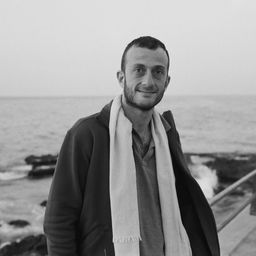
Gregory Buchakjian is a Lebanese art historian, visual artist, and academic based in Beirut. He is a faculty member and Director of the School of Visual Arts at the Académie Libanaise des Beaux-Arts (ALBA), and completed his PhD at Université Paris IV Sorbonne. His work bridges scholarly research and artistic practice, focusing on urban memory, architectural decay, and contemporary Arab art. Académie Libanaise des Beaux-Arts (ALBA) – Faculty, Director of School of Visual Arts Université Paris IV Sorbonne – PhD in Art History His research centers on the transformations of urban space in Beirut, particularly through abandoned dwellings as sites of memory, conflict, and cultural identity. He explores how war, political instability, and social change reshape the city’s architectural and social fabric. His interdisciplinary approach integrates photography, installation, archival research, and writing. Buchakjian’s artistic and scholarly output reveals a consistent focus on postwar urbanism, memory, and visual documentation. His publications and exhibitions analyze the material and symbolic lives of derelict buildings, using them as lenses to understand broader historical and cultural narratives in Lebanon and the Arab world. Selected Scientific and Artistic Contributions: Author of War and Other (Impossible) Possibilities (2012) Co-editor of Abandoned Dwellings: A History of Beirut (2018) Exhibitions at Sursock Museum (Beirut), Villa Empain (Brussels), and Venice Biennale of Architecture (2018) Participant in the Atelier de Recherche ALBA (1997–2004) Member of the advisory committee of the Saradar Collection Buchakjian has advised on academic and artistic juries, including the Boghossian Prize and Beirut Art Center’s Exposure. His work has been featured in international media and academic platforms. He leads long-term research projects involving mapping, architectural exploration, and narrative reconstruction of Beirut’s urban landscape. He has been involved in curatorial and research teams such as the Atelier de Recherche ALBA and has contributed to major exhibitions and publications on Lebanese visual culture and urban heritage.