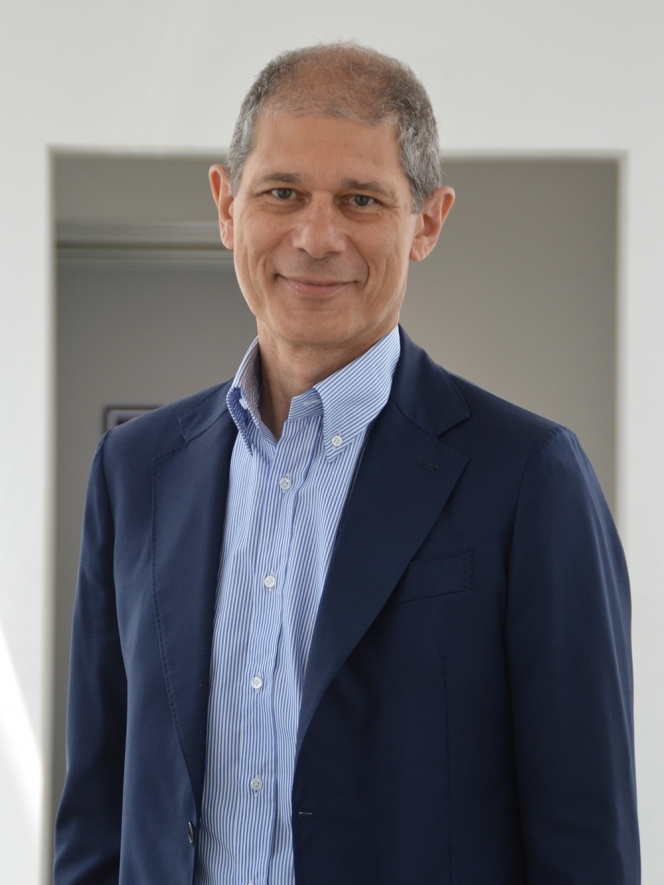
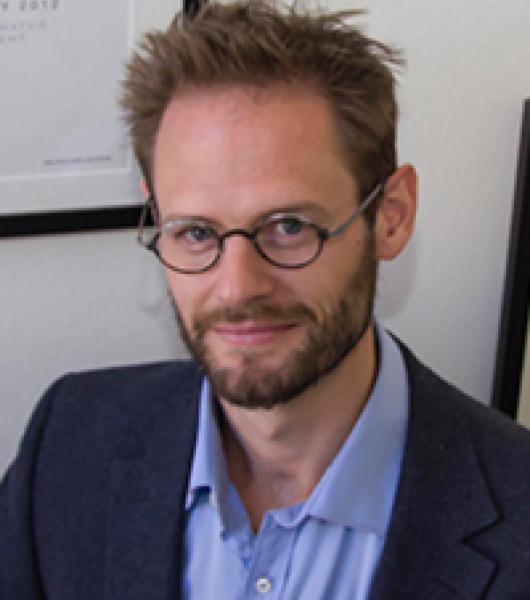
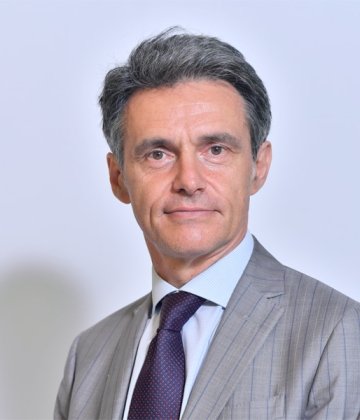
Prof. Sergio Ginebri is an Associate Professor at the Department of Jurisprudence, University of Rome Tre. He holds a PhD in Economics from Sapienza University of Rome and has extensive experience in fiscal policy, pension systems, and public finance research. His work focuses on topics like pension sustainability, social inequality, and the political economy of public debt. Education: PhD in Economics, Sapienza University of Rome (1988–1992) MA in Economics, University of Warwick (1987–1988) Laurea in Statistics and Demography, Sapienza University of Rome (1977–1984) Research Interests: Prof. Ginebri specializes in public policy, fiscal sustainability, and the social impacts of pension reforms. His research explores how demographic trends, wealth distribution, and political dynamics shape economic policies. Recent work includes analyses of longevity risks, pension equity, and fiscal policy integration in the EU. Key Projects: Coordinated studies on pension system sustainability (2002–2018) Developed models for forecasting public pension expenditure Contributed to EU tax policy observatories Awards: Recipient of the national PhD award (1994) and recognition for academic excellence in tax policy research (2001). Teaching: Teaches courses in political economy, public finance, and macroeconomics at undergraduate and graduate levels.
Robert JOLIET is an Associate Professor of Finance at IÉSEG School of Management in France. He holds a Ph.D. in Economics and Management from HEC-ULg Management School (Belgium) and has held various academic leadership roles, including Director of Academic Development and Academic Director of the PGE (MSc in Management). His research focuses on finance, portfolio management, SRI (Socially Responsible Investing), and corporate finance, with a particular emphasis on international expansion, capital structure, and sustainable investment strategies. Education: 2008: Ph.D. in Economics and Management, HEC-ULg Management School, Belgium 2004: Master of Advanced Studies (DEA), Management Sciences (Finance), University of Liège, Belgium 2002: Master of Science in Business Engineering (Finance), University of Liège, Belgium Research interests span SRI fund dynamics, corporate social responsibility valuation, international debt policies, and market liquidity. Notable contributions include analyzing the impact of SRI mutual funds on corporate governance and environmental practices, and exploring the stability of sovereign debt structures in the Eurozone. Awards include the 2005 FORTIS Award (Third Prize) and the 2003 E.G. de Barsy Doctoral Fellowship. He has published extensively in journals like Economics Letters and Journal of Banking & Finance . Academic leadership roles include directing programs and departments at IÉSEG, alongside coordinating the Finance Track and managing academic development initiatives. His teaching focuses on financial data analysis, active portfolio management, and investment strategies in capital markets. He is a member of the LEM (Laboratoire d'Économie Moderne) research group and contributes to interdisciplinary research in finance and economics.
Azizjon ALIMOV is a Full Professor at IÉSEG School of Management (University of Lille, France), specializing in Corporate Finance, Mergers and Acquisitions, and Law and Finance. He holds a Ph.D. in Finance from the University of Oregon (2007) and an MBA from Central Michigan University (2001). His HDR (Habilitation) in Management Sciences was awarded by the University of Lille in 2023. His research focuses on corporate governance, cross-border M&A dynamics, and the interplay between legal frameworks and financial decision-making. Key themes include intellectual property rights' impact on corporate debt costs, product market competition effects on corporate cash holdings, and government borrowing influences on acquisition strategies. His work frequently examines global contexts, with studies spanning North America, Asia, and Europe. Notable publications include analyses of IPO staging mechanisms (2024), managerial discipline through trade liberalization (2023), and the role of labor protection laws in loan contracting (2015). His recent work emphasizes reproducibility in management science methodology (2023) and cross-border regulatory challenges in M&A. No scientific awards are explicitly listed; however, his extensive publication record reflects sustained academic contributions. He has advised students across institutions including City University of Hong Kong and the Sauder School of Business, though specific advisee names are not documented here. His professional experience includes roles at the University of Arizona (2008–2010), California State University (2007–2008), and as an HSBC Visiting Assistant Professor at the University of British Columbia (2016–2018). He currently leads the Finance Track at IÉSEG, contributing to programs like the Grande École Master’s in Finance and MSc Corporate Finance courses.
Mungo Wilson is a Professor of Finance at the Saïd Business School , University of Oxford, and an associate member of the Oxford-Man Institute of Quantitative Finance. He holds a PPE degree from Oxford, an MSc in Economics from LSE, and a PhD in Economics from Harvard. His research focuses on asset pricing, credit risk, mutual funds, and macroeconomic influences on financial markets. He has published extensively in top journals and engages actively with industry through board roles and advisory work. Education : Bachelor's in Philosophy, Politics & Economics (PPE), University of Oxford MSc Economics, London School of Economics PhD in Economics, Harvard University Research Interests : Assesses how macroeconomic conditions and credit risk shape asset prices Analyzes mutual fund behavior and market information transmission mechanisms Explores political dynamics' impact on financial markets His professional engagements include board memberships with funds like EA Asia Absolute Return Master Fund and advisory roles at Broadwell Capital. Teaching focuses on microeconomics for MBA programs, covering game theory, market structures, and price discrimination. Advisory & Grants : Supervises doctoral students at Saïd Business School and serves on programme committees for major finance conferences (e.g., European Finance Association, CEPR Annual Spring Symposium). Awards : While no specific prizes are listed, his impactful research has been widely cited and presented globally.
Dr Daniel Franchini is a Lecturer in International Law at the School of Law , University of Sheffield. He is also Deputy Director of the Sheffield Centre for International and European Law Research Cluster and Editor in Chief of its Working Papers Series. DPhil and MJur, University of Oxford MA Law, University of Trento (Italy) His research focuses on Public International Law , with specialization in international dispute settlement, state responsibility, jurisdiction and immunities of states, sanctions, and international investment law . His work explores intersections between domestic and international legal frameworks, particularly in cyber conflicts and financial diplomacy. Recent publications highlight his expertise in cyber dispute resolution , state immunity, and sanctions as tools for international conflict management. He has contributed to edited volumes and journals, emphasizing judicial roles in cyber conflicts and the legal implications of economic measures. Dr Franchini has received grants from the Society of Legal Scholars for collaborative research on international dispute settlement. He previously clerked at the Special Tribunal for Lebanon and the International Criminal Tribunal for the former Yugoslavia, and coached Oxford's Jessup International Law Moot Court team.
Witold J. Henisz serves as Vice Dean and Faculty Director of the Impact, Value, and Sustainable Business Initiative at The Wharton School, University of Pennsylvania, holding the Deloitte & Touche Professorship in Management. His research centers on political and social risk identification, ESG impact materiality, and corporate diplomacy frameworks that transform stakeholder relationships into strategic assets. His educational background includes a Ph.D. in Business and Public Policy from UC Berkeley's Haas School and an M.A. in International Relations from Johns Hopkins SAIS. Henisz has served as Departmental Editor at Journal of International Business Studies and Associate Editor at Strategic Management Journal , reflecting his scholarly influence. Research interests converge on geopolitical risk quantification, stakeholder engagement optimization, and sustainable business model innovation. His work demonstrates how political hazards materially impact firm valuation and how corporate diplomacy can mitigate conflict through strategic stakeholder alignment. Recent publications leverage massive media datasets (4+ billion articles) to model populism dynamics, indigenous land conflicts, and ESG-credit risk linkages. Award highlights include the Aspen Institute Ideas Worth Teaching Award (2020), Iron Prof recognition (2019), and Academy of International Business Fellowship. His geostrategy framework Geostrategy by Design (2024) provides executives with actionable methods for navigating geopolitical volatility. Aspen Institute Ideas Worth Teaching Award (2020) Iron Prof recognition (2019) Academy of International Business Fellow (2014-present) Multiple Wharton Excellence in Teaching Awards (2006-2021) Industry Studies Association Best Paper Award (2019) Henisz consults through PRIMA LLC for multinational firms (Rio Tinto, Shell), financial institutions (Eaton Vance, World Bank), and NGOs. His executive education programs train leaders in ESG integration and geopolitical risk management, while his KEROVKA crisis simulation develops real-time strategic response capabilities. Media frequently cites his expertise on ESG controversies, with 50+ major publications featuring his analysis since 2022 including Financial Times , Bloomberg , and Wall Street Journal .
Carolin Pflueger is an Associate Professor at the Harris School of Public Policy , University of Chicago, and holds affiliations as a NBER Faculty Research Fellow and CEPR Research Affiliate . Her work bridges macroeconomics and finance, focusing on inflation dynamics, monetary policy impacts, and financial market risk perception. University: University of Chicago School: Harris School of Public Policy Affiliations: NBER, CEPR Role: Associate Professor Her research explores how inflation and monetary policy influence financial markets, including models connecting Treasury bond risk to stagflation drivers and analyzing economic agents' perceptions of policy uncertainty. Recent work leverages cross-sectional data of stock prices and economic forecasts to quantify macrofinancial linkages. Notable scientific recognitions include the Fama DFA Prize (2023), AQR Insight Award Finalist (2018), and the Arthur Warga Award (2014). She has received NSF Grant 2149193 for macrofinance research. Contact: cpflueger@uchicago.edu | GitHub Code Repositories
Stefano Rossi is a Full Professor of Finance at Bocconi University's Department of Finance, serving as Chair of the Department. He holds affiliations with the Centre for Economic Policy Research (CEPR) and the European Corporate Governance Institute (ECGI), and serves on editorial boards for journals including Journal of Law, Finance, and Accounting and European Financial Management . His research focuses on corporate governance, bankruptcy, debt financing, sovereign borrowing, and quantitative trading, with publications in top journals such as The Journal of Finance and Journal of Monetary Economics . He has received international recognition, including awards for his work on ownership evolution. Prior to Bocconi, he taught at institutions including the Stockholm School of Economics and Cornell University. He earned his BA/MSc from Bocconi and a PhD in Finance from London Business School. Prof. Rossi's research explores intersections between corporate finance and public policy, with recent work analyzing credit cycles, municipal bankruptcy law, and liquidity shocks in insurance markets. His articles frequently address systemic financial risks and institutional frameworks governing corporate and sovereign debt. Awards include the ECGI Best Paper Prize for his collaborative research on ownership dynamics. Teaching spans corporate finance, valuation, and financial markets at undergraduate, graduate, and executive levels. He has developed courses at Bocconi's undergraduate, MBA, and PhD programs, emphasizing practical applications of theoretical finance models. His comprehensive curriculum includes mergers & acquisitions and private equity strategies. Key contributions include studies on shareholder voting mechanisms, sovereign default dynamics, and the impact of tax policies on corporate behavior. His work often bridges academic rigor with real-world policy implications, influencing both academic discourse and regulatory practices.
Olivier David Zerbib is an Assistant Professor of Sustainable Finance at CREST, ENSAE, Institut Polytechnique de Paris, and serves as an Associate Editor for the Review of Finance. His research bridges financial theory with environmental sustainability, focusing on market mechanisms for ecological challenges. His primary research areas include sustainable finance, environmental finance, and asset pricing, with specific expertise in green bonds, biodiversity valuation, and climate impact investing. He investigates how pro-environmental preferences influence pricing mechanisms, develops sustainable asset pricing models, and examines shareholder engagement strategies to curb greenwashing through quantitative methodologies. Analysis of his publications reveals a cohesive trajectory toward integrating environmental metrics into core financial frameworks, with significant contributions spanning green bond markets, sustainable CAPM development, and biodiversity economics. His work demonstrates methodological rigor through score-driven conditional betas and empirical validation across global markets. Dr. Zerbib's scientific recognition includes: #1 most cited article in the Journal of Banking and Finance over 3 and 5 years (2019) SUERF/UniCredit Research Prize (2018) Multiple Best Paper Awards at international finance conferences (2017-2020) European Investment Forum Research Prize Finalist (2021) He co-organizes the CMAP-CREST Quantitative Sustainable Economics and Finance seminar series with Patricia Crifo, Emmanuel Gobet, Peter Tankov, and Gauthier Vermandel, fostering collaboration between Ecole Polytechnique and ENSAE on quantitative approaches to sustainability challenges. His presentation record spans elite institutions including LSE, Yale, and the European Commission Joint Research Center.
Dimitrios P. Tsomocos is a Professor of Financial Economics at Saïd Business School and a Fellow in Management at St Edmund Hall, University of Oxford. He holds a BA, MA, MPhil, and PhD from Yale University and previously worked at the Bank of England. He serves on editorial boards including Annals of Finance and Economic Theory, and is a Senior Research Associate at the Financial Markets Group at the London School of Economics. His educational background includes: University of Oxford: M.A. by resolution, 2002 Yale University: Ph.D. in economics, 1996 Yale University: M.Phil. in economics, 1992 Yale University: M.A. in economics, 1990 Yale University: B.A. in economics, 1989 Professor Tsomocos is a mathematical economist specializing in Central Banking, Banking and regulation, Incomplete asset markets, Systemic risk, Financial instability, and Issues of new financial architecture. His research focuses on contagion, financial fragility, interbank linkages, and the impact of the Basel Accord using General Equilibrium models with incomplete asset markets, money, and endogenous default. He is working toward designing a new paradigm of monetary policy, financial stability analysis, and macroprudential regulation. His recent publications show a consistent focus on financial stability, banking regulation, and the interaction between monetary policy and financial stability. The research spans theoretical modeling of bankruptcy and default in general equilibrium frameworks, practical applications to bank regulation, analysis of commodity cycles in emerging economies, and policy responses to crises like the COVID-19 pandemic. His work frequently employs quantitative methods and general equilibrium modeling to address pressing issues in financial economics. His scientific achievements include: 2004 Bank Sabatell prize for the best work on the economics of banking (for "Book vs. Fair Value Accounting in Banking and Intertemporal Smoothing") Co-development of the Goodhart-Tsomocos model of financial fragility (2003) Testimony to House of Lords for the Economic and Financial Affairs and International Trade Sub Committee's report (2011) Appointment to Research Advisory Board, Central Bank of Russian Federation (2018) Professor Tsomocos has advised numerous PhD students and collaborated extensively with central banks worldwide. He has served as an economic advisor to a major political party in Greece and regularly provides commentary on the Greek economy. His research has had substantial policy impact, with the Goodhart-Tsomocos model implemented by more than ten central banks including the Bank of Bulgaria, Bank of Colombia, Bank of England, and Bank of Korea. He continues to collaborate with researchers from the ECB, Central Bank of the Russian Federation, and Bank of Chile on updated versions of his financial fragility model. He co-developed the Goodhart-Tsomocos model of financial fragility while working at the Bank of England, which has been implemented at various central banks globally. His research group at Oxford continues to refine this model and apply it to contemporary financial stability challenges.
Roi Livne is an Associate Professor and Department Associate Chair in the Department of Sociology at the University of Michigan, within the College of Literature, Science, and the Arts. He holds a Ph.D. from the University of California-Berkeley (2016). His research focuses on the intersections of morality, culture, and economics within healthcare systems, particularly addressing end-of-life care, healthcare economics, and the sociological implications of modern medicine. Education: Ph.D. in Sociology from UC Berkeley (2016). Current courses include SOC 305-001: Introduction to Sociological Theory. Research interests include the sociology of morality, medical sociology, qualitative approaches, and the sociological analysis of science and technology. His seminal work, Values at the End of Life: The Logic of Palliative Care , examines the moral and economic tensions in end-of-life decision-making. Livne's recent projects explore the moral economy of healthcare pricing, sociological dimensions of the COVID-19 pandemic, and the concept of limits in modernity. His publications address topics such as the cultural and economic frameworks shaping healthcare decisions, the ethics of resource allocation, and the societal impact of pandemics. While no specific awards are listed, his work has contributed significantly to debates in medical sociology and economic theory. Advising and grants are not explicitly detailed here, though his roles suggest active mentorship and research leadership. His work is affiliated with the University of Michigan's Sociology Department, with office hours booked via https://www.wejoinin.com/livne.
Professor Will Bateman is a distinguished academic at the Australian National University (ANU) College of Law, where he serves as a Professor and recently completed his term as Associate Dean (Research) from 2021 to 2024. He is also a Chief Investigator for the ANU Grand Challenge project "Humanising Machine Intelligence" and a Fellow at the Gradient Institute, a leading ethical AI research organization based in Sydney. Professor Bateman's educational background is impressive, having earned a PhD and LLM (Hons) from the University of Cambridge and a BA/LLB (Hons) from the Australian National University. Prior to his academic career, he worked in appellate litigation, commercial disputes, and banking as a solicitor at Herbert Smith Freehills, and served as an associate to Justice Stephen Gageler AC of the High Court of Australia and Justice Steven Rares of the Federal Court of Australia. Professor Bateman's research spans two major interdisciplinary domains that sit at the intersection of law with finance and technology. His work on financial regulation focuses on the legal aspects of central banking, sovereign debt markets, digital currencies, and sustainable investing. He has provided expert evidence to the UK Parliament's House of Lords Inquiry into Quantitative Easing, and has collaborated with major financial institutions including the Federal Reserve Bank of New York and the Bank of England. His research on artificial intelligence examines regulatory frameworks for AI in the public sector, with collaborations including the Minderoo Foundation and the Gradient Institute. His recent publications demonstrate a remarkable breadth across legal theory, financial regulation, and AI governance. The articles reveal a consistent theme of examining how traditional legal frameworks adapt to new financial technologies and monetary policy challenges. His work bridges theoretical legal scholarship with practical policy implications, as evidenced by his numerous government consultations and collaborations with central banks worldwide. 2020 Yorke Prize by the University of Cambridge for his work on public finance and constitutionalism Top 10 all-time most downloaded SSRN paper on central banking ("Central Bank Money: Liability, Asset, or Equity of the Nation?") Professor Bateman actively supervises research students, currently mentoring Benjamin Ettinger who is pursuing a PhD on "Legal Method, Cartels and Public Monopolies: A View From the High Court 1908 - 1948." He has secured significant research funding, including projects funded by the Economic and Social Research Council (UK), the German Research Foundation (Deutsche Forschungsgemeinschaft), and The Minderoo Foundation. His "Rebuilding Macroeconomics Initiative: Legal and Economic Conceptions of Money" received £245,000, while the "FA Mann" project was funded with €620,000 (approximately A$1,012,500). He leads the "Humanising Machine Intelligence" project, an ambitious interdisciplinary initiative involving computer scientists, mathematicians, philosophers, sociologists, psychologists, and lawyers aimed at developing democratically legitimate machine intelligence. He also co-led a major project with the University of Western Australia to formulate model legal frameworks for AI regulation in the public sector, funded by The Minderoo Foundation.
Professor Begona Dominguez is a faculty member in the School of Economics at The University of Queensland (UQ), within the Faculty of Business, Economics and Law. She holds a Doctor of Philosophy in Economics from Universitat Autònoma de Barcelona. Her research focuses on Macroeconomics, Public Finance, and Monetary Economics, with emphasis on fiscal policy design, central bank balance sheets, and optimal taxation frameworks. Her key projects include Supporting Entry and Growth of Australian Businesses via Tax and Transfers (2022–2024) and The role of a central bank's balance sheet in shaping the economy (2021–2024) . She is available for PhD supervision and actively contributes to applied macroeconomic analysis, particularly in urban economic advantages and policy evaluation. Publications span topics like fiscal sustainability, inflation dynamics under central bank policies, and the implications of constitutional constraints on taxation. Her work bridges theoretical models (e.g., Ramsey frameworks) with empirical applications in tax policy and public debt management. Professor Dominguez maintains affiliations with the Centre for Applied Macroeconomic Analysis (ANU) and has reviewed prominent texts such as John Taylor's Reform of the International Monetary System . She is based in Room 507, Colin Clark Building at UQ.
Andrea Beltratti is a Full Professor at Bocconi University, specializing in financial economics and asset pricing. He holds a Ph.D. in Economics from Yale University (1989) and a B.A. in Economics from the University of Turin (1982). His research focuses on stock and bond volatility, mortgage markets, environmental economics, and financial crises. Notably, his work on asset price dynamics was mentioned during the 2013 Nobel Prize Ceremony. He teaches courses on equity portfolio management, financial investments, and real estate valuation. Education: Ph.D., Yale University; B.A., University of Turin Key Research Areas: Financial markets, banking systems, sustainable development, and macroeconomic policy Beltratti’s publications span journals like the Journal of Banking and Finance, Journal of Financial Economics, and Oxford Economic Papers. His award-winning contributions include analyses of global credit crises and asymmetric contagion effects in European sovereign debt markets. He actively contributes to academic discussions through teaching and research on fintech, infrastructure finance, and alternative investments.
Axel Dreher is Professor of International and Development Politics at Heidelberg University’s Alfred-Weber-Institute for Economics. He is a leading scholar in political economy and development economics, with extensive affiliations including the German National Academy of Sciences Leopoldina, CEPR, CESifo, KOF, AidData, and EUDN. He serves as Editor of the Review of International Organizations and Co-Director of the Center for European Studies (CefES) at the University of Milan-Bicocca. Ruprecht-Karls-University Heidelberg (2011–Present) Georg-August University Göttingen (2008–2011) ETH Zurich (2005–2008) University of Konstanz (2004–2005) University of Exeter (2003–2004) University of Mannheim (2000–2003) His research centers on political economy , economic development , foreign aid , and globalization . He investigates how political institutions, leadership incentives, and geopolitical interests shape development outcomes and international financial flows. His work often employs empirical and geospatial methods to analyze aid allocation, corruption, migration, and the rise of emerging donors like China. The 15 most recent publications reflect a strong focus on China’s overseas development finance , regional favoritism , and the political determinants of aid . Keywords span political economy, development economics, and international relations, with subfields including Chinese foreign aid, geospatial analysis, governance, institutional quality, and South-South cooperation. His recent book Banking on Beijing and award-winning paper Wedded to Prosperity exemplify his cutting-edge contributions to understanding the political economy of development. Scientific awards include: 2023 Best Paper Award, Political Economy of Aid Society (PEAS) 2023 Best New Dataset Award, International Political Economy Society International Geneva (IG) Award 2020 Excellence in Refereeing Award, World Bank Economic Review (2019) 2010 KfW Excellence Award for policy-relevant research Multiple DFG and Swiss research grants Dreher has advised over 30 PhD students on topics ranging from aid effectiveness to political violence and migration. He has received major research grants from the German Research Foundation (DFG), Swiss Network for International Studies (SNIS), European Commission, and VolkswagenStiftung. His leadership roles include organizing the annual Political Economy of International Organizations conference series and serving on editorial boards of top journals such as World Development and Defence and Peace Economics . He is actively involved in academic labs and research networks including the Courant Research Center on Poverty and Equity at Göttingen, AidData at William & Mary, and the Center for European Studies (CefES). His current work continues to explore the intersection of politics, development, and globalization, particularly through georeferenced data and natural experiments.