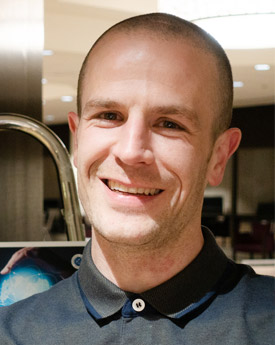
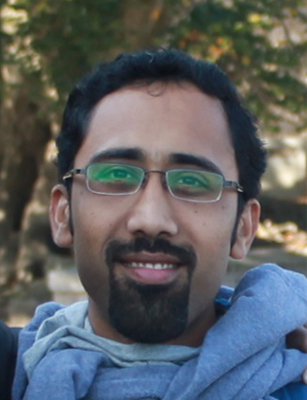
Juan Jose Marin Hernandez is a Researcher at the University of Murcia affiliated with the research group "Instrumental Methods Applied". He earned his Doctorate from the University of Murcia in 2019 under the supervision of Dr. Manuel Hernández Córdoba and Dr. Ignacio Francisco López García. His doctoral thesis focused on microextraction techniques with nanomaterials for inorganic species determination using atomic absorption spectrometry. His research spans: Analytical Chemistry methodology development Nanomaterial applications in separation science Atomic absorption spectrometry optimization Inorganic speciation analysis No scientific awards or student advisement details are documented in available sources. Contact: juanjo281201@hotmail.com
Sébastien Leclaire is an Associate Professor in the Department of Mechanical Engineering at Polytechnique Montréal, a leading engineering institution in Canada. With over a decade of experience in numerical fluid dynamics, he specializes in multiphase flow modeling using Lattice Boltzmann Methods (LBM), an emerging research niche. His work spans computational fluid dynamics, rarefied gas flows, porous media applications, and multiphase flow simulations. His educational background includes a B.Sc. in Pure and Applied Mathematics from the University of Montreal, an M.Sc. in Applied Mathematics from the University of Montreal, an M.Eng. in Mechanical Engineering from Polytechnique Montréal, and a Ph.D. in Mechanical Engineering from Polytechnique Montréal. Leclaire has built a multidisciplinary research profile through collaborations at institutions worldwide, including applied mathematics at the University of Montreal, mechanical engineering at Polytechnique Montréal, civil engineering at ENS Cachan in France, computer science at the University of Geneva in Switzerland, and chemical engineering at Polytechnique Montréal. Leclaire's research focuses on improving LBM modeling, extending its application to practical cases, and optimizing simulation codes for high-performance computing. His work addresses engineering challenges in fluid mechanics, particularly in multiphase flows, computational fluid dynamics, Lattice Boltzmann Method, and verification and validation. He has published over 65 papers, with recent work (2021-2025) demonstrating continued innovation in rarefied gas flows, porous media applications, and computational efficiency improvements. His publications show a consistent trajectory toward increasingly complex flow scenarios and computational optimizations. As a dedicated educator and researcher, Leclaire actively supervises graduate students and is recruiting for new research projects. He is affiliated with the Industrial Flow Processes Research Unit (URPEI) and teaches courses including MEC8270 (Finite Elements in Thermofluids), MEC6215 (Numerical Methods in Engineering), and MEC2200 (Fluid Dynamics).
Orlando Acevedo is a Professor and Director of Graduate Studies in the Chemistry Department within the College of Arts and Sciences at the University of Miami. His research focuses on computational organic and biological chemistry, with particular emphasis on solvent effects, ionic liquids, drug discovery, and machine learning applications in chemistry. Dr. Acevedo's research program develops and applies computational tools targeting organic and enzymatic catalyst design, environmentally friendly solvent design, and drug discovery. His work addresses fundamental problems in organic and medicinal chemistry, including elucidation of enzymatic reactions, controlling enantioselectivity for chiral compounds, transition structure prediction, de novo design of high-affinity inhibitors, and origins of drug resistance. His group develops improved force fields, machine learning software, and methodology to achieve quantitative success with large-scale quantum and molecular mechanical calculations. His recent publications demonstrate expertise in computational chemistry applied to diverse areas including biofuel processing, antimicrobial drug development, materials science, and viral therapeutics. His work shows a consistent pattern of using advanced computational methods to understand molecular interactions in complex systems, particularly focusing on ionic liquids and their applications in various chemical processes. Honorable Mention Award from the South Florida ACS Section Dr. Acevedo has received significant funding from the National Science Foundation for projects related to machine learning, desulfurization of fuels, protein arginine methyltransferase research, and monooxygenase mechanisms. He also collaborates with researchers at institutions including the Birla Institute of Technology (India), Houston Methodist, East Carolina University, and Utah State University on projects spanning drug discovery and enzyme mechanism elucidation. His laboratory develops open-source software tools, including Genetic Algorithm Machine Learning (GAML) for automated force field parameterization and machine learning potentials that compute energies with quantum mechanical accuracy at high speed. These tools enable his group to study unique solvent environments like ionic liquids and deep eutectic solvents, as well as apply machine learning to biological systems for drug discovery and catalysis.
Russell Impagliazzo is a Professor in the Department of Computer Science and Engineering at the University of California, San Diego (UCSD). He has held positions as Assistant Professor, Associate Professor, and Professor at UCSD since 1991 and was a Visiting Professor at the Institute for Advanced Study (Princeton) from 2007 to 2012. His academic journey includes a BA in Mathematics from Wesleyan University and a PhD in Mathematics from UC Berkeley. His research focuses on computational complexity theory , with key contributions to: Randomness in computation Cryptography (e.g., pseudorandom generators) Circuit lower bounds Proof complexity (e.g., polynomial calculus, resolution) Structural complexity (e.g., average-case hardness) Optimization heuristics (e.g., local search) The trends in his publications include foundational work on derandomization, hardness amplification, and algebraic proof systems. His papers often bridge theoretical computer science with mathematics, particularly in analyzing the limits of computational models. Scientific awards and honors include: NSF Young Investigator Sloan Fellow Fulbright Scholar Guggenheim Fellow Simons Investigator Best Paper Award (Computational Complexity Conference) Best Paper Award (STOC) Outstanding Paper Award (SIAM) He actively advises students and has contributed to grants and programs such as the Simons Institute’s Fine-Grained Complexity and Algorithms and the Meta-Complexity program at the Simons Lab in Spring 2023.
Dr. Cheng-Zhi Anna Huang is currently a faculty member at the Massachusetts Institute of Technology (MIT) with a joint appointment between the Department of Electrical Engineering and Computer Science (EECS) and the Department of Music and Theater Arts (MTA), spanning both the College of Computing and School of Humanities, Arts, and Social Sciences. She simultaneously holds an adjunct associate professor position at the Université de Montréal's Department of Computer Science and Operations Research. Her academic background includes a PhD from Harvard University, a master's from the MIT Media Lab, and dual bachelor's degrees in music composition and computer science from the University of Southern California. Dr. Huang's research focuses on human-AI co-creation in music, with particular emphasis on: Generative AI models for music composition and performance Neural network interpretability for musical applications Interactive systems for real-time human-AI collaboration Reinforcement learning frameworks for creative expression Cross-cultural music modeling and computational musicology She pioneers novel approaches to musical interaction through machine learning, aiming to develop systems that extend how humans understand, learn, and create music. Her publication portfolio shows strong emphasis on generative models for music, particularly transformer architectures, with consistent output in top AI/ML venues since 2014. Recent work focuses on controllable music synthesis, human-AI co-creation frameworks, and performance modeling. The 14 most recent publications demonstrate progression from fundamental music representation research toward sophisticated interactive systems and evaluation frameworks. Awards and Honors: Canada CIFAR AI Chair (Mila) Outstanding Paper Award at NeurIPS Workshop CtrlGen (2021) First Prize in San Francisco Choral Artists New Voices Project (composition) Dr. Huang actively supervises graduate students, with recent master's advisees including Nithya Shikarpur (2024) working on human-AI co-creation for Hindustani music, and Yusong Wu (2023) researching controllable performance synthesis. She is currently recruiting postdoctoral researchers and PhD students for her MIT Music Technology laboratory, focusing on multi-agent reinforcement learning and human-AI interaction in musical contexts.
Dr. Joanna Kulpińska is an Assistant Professor at Jagiellonian University's Faculty of International and Political Studies, specializing in the Institute of American Studies and Polish Diaspora. Her research focuses on transatlantic migration patterns, migration sociology, and Polish diaspora dynamics. She has been recognized with the Copernicus Society of America Scholarship (2013) and leads projects examining immigrant adaptation during crises. Specializes in Balkan studies and ethnic relations Recipient of Copernicus Society of America Scholarship (2013) Conducts research on migration policy and historical trends Research Focus: Kulpińska's work examines migration chains, undocumented immigrant strategies, and multigenerational diaspora networks through case studies of Polish rural communities like Strzyżów and Babica. Scientific Recognition: She has received academic awards including the Copernicus Society of America Scholarship, and participates in international conferences like the Polish American Historical Association's Annual Meeting.
Kathryn J. Perkins serves as Chair and Associate Professor in the Department of Political Science at California State University, Long Beach, where her work bridges legal studies, political science, and gender theory through critical examinations of law-society intersections. Her scholarly focus centers on: Queer and trans jurisprudence in state legislation and judicial systems Gender identity construction within legal frameworks LGBTQ advocacy organization strategies and agenda-setting Interest group influence in state court litigation Analysis of her 2015-2024 publications reveals evolving scholarship from foundational studies of amicus briefs in state courts to contemporary investigations of transgender rights in sports and gender-segregated spaces, consistently highlighting systemic discrimination against gender-minority communities while advancing theoretical frameworks in feminist and queer legal theory. No scientific awards were documented in available sources. Information regarding student mentorship, research funding, laboratory infrastructure, or collaborative research teams was not disclosed in the provided materials.
Raed Al Kontar serves as an Associate Professor with tenure in the Industrial & Operations Engineering (IOE) department at the University of Michigan's College of Engineering. He leads the Data Science Lab and holds affiliate appointments with the Michigan Institute for Data Science and Computational Discovery and Engineering. His research bridges probabilistic modeling with engineering applications, focusing on personalized, collaborative, and distributed data analytics where knowledge from diverse sources is integrated while preserving privacy. His research program addresses three core questions across descriptive, predictive, and prescriptive analytics: extracting shared/unique patterns across datasets, enabling collaborative model improvement while maintaining data privacy, and optimizing distributed trial-and-error processes. Key research areas include Federated Learning, Uncertainty Quantification, Bayesian Optimization, and Digital Twins, with applications spanning healthcare, manufacturing, and materials science. Current funding includes NSF (including a 2022 CAREER award), NIH, NLM, and industry partnerships. Research Trends: His recent publications demonstrate a strong focus on heterogeneous data integration through novel matrix/tensor factorization techniques, personalized PCA frameworks, and consensus-based distributed optimization. The work consistently bridges theoretical guarantees (e.g., identifiability conditions) with practical applications in hydrogel development, 3D printing, and pharmaceutical safety. Award Highlights: His group has won 12 best paper awards since 2022 across INFORMS, ASA, and IISE, including the 2024 Wilson Prize and INFORMS Data Mining Section's Best General Track Paper. Dr. Al Kontar has successfully placed multiple PhD students in tenure-track positions including Naichen Shi (Northwestern), Xubo Yue (Northeastern), and Seokhyun Chung (University of Virginia). His lab maintains active collaborations with medical researchers (NIH/NLM projects), materials scientists (autonomous experimentation), and pharmaceutical safety experts. The lab combines theoretical innovation with real-world impact, exemplified by their NSF CAREER-funded work on the Internet of Federated Things.
Dr Michael Bromley serves as a Senior Research Associate within the Nuclear Innovation Programme at Lancaster University's School of Engineering. His research focuses on advancing nuclear fuel recycling technologies and separation science for radioactive waste management, with expertise spanning radiochemistry, photochemistry, and materials engineering. His primary research interests include: Nuclear Engineering: Specializing in spent nuclear fuel recycle processes and fission product management for next-generation nuclear systems. Radiochemistry: Investigating uranium and cerium behavior in high-concentration systems relevant to fuel reprocessing. Photochemistry: Developing rapid photochemical reduction techniques and photocatalytic initiation methods for nuclear applications. Separation Science: Optimizing solvent extraction using ligands like TODGA/TBP and creating nanoporous membrane technologies. Materials Science: Engineering nanostructured metal films and electrodes for analytical separations and sensor applications. Analysis of his 14 publications (2010-2023) reveals three interconnected research trajectories: (1) photochemical uranium reduction for fuel recycling (peaking in 2023), (2) solvent extraction kinetics for fission management (2015-2018), and (3) nanoporous metallization via photocatalytically initiated electroless deposition (2010-2013). These efforts consistently address challenges in nuclear waste processing through innovative chemical engineering approaches. No scientific awards were documented in the source materials. Information regarding student advising, grant funding, or educational background was not provided in the available texts. Dr Bromley operates within Lancaster University's Nuclear Innovation Programme, collaborating on advanced separation technologies and fuel cycle chemistry projects targeting sustainable nuclear energy solutions.
Full Professor of Constitutional Law at Sapienza University of Rome's Faculty of Law, where he teaches Constitutional Law and Institutions of Public Law. Currently serves as Prorector for Institutional Affairs and Relations. Active in multiple academic leadership roles including Director of "Politica del Diritto" and "Costituzionalismo.it" journals, and President of the "Salviamo la Costituzione" association. Research focuses on constitutional theory, democratic governance, and fundamental rights. Key interests include constitutional crisis management, differentiated regional autonomy, judicial impartiality, and the relationship between law and economics. His work critically examines constitutional revisionism and advocates for constitutional resilience in contemporary political challenges. Recent publications (2023-2025) demonstrate consistent output in constitutional theory, with recurring themes of democratic backsliding, leadership models, and constitutional adaptation to social change. His scholarship bridges theoretical analysis with practical constitutional challenges facing European democracies. Recipient of significant academic recognition through editorial leadership and association presidencies, though specific awards aren't documented in source materials. Founded the Rivista dell'Associazione Italiana dei Costituzionalisti and led the Gruppo di Pisa constitutional studies association. Maintains active engagement with public discourse through editorial work for "il manifesto" and collaboration with major Italian newspapers. Coordinates research projects including "Constitutional Lexicon and Fundamental Rights".
Ramkrishna Sarkar serves as an Assistant Professor in the Department of Chemistry at the Indian Institute of Technology Kanpur. His research focuses on advanced polymer science with particular emphasis on sustainable materials development. His work bridges fundamental polymer chemistry with practical applications in reusable and recyclable polymeric materials. Education: Ph.D. (2019): Indian Institute of Science (IISc) Bangalore M.Sc. (2014): Indian Institute of Science (IISc) Bangalore Research Interests: Dr. Sarkar's research spans polymer synthesis, dynamic covalent polymeric networks, reusable polymeric materials, polymer recycling, and bio-sourced polymers. His work on sub-10 nm polymeric nanostructures represents cutting-edge research in precision polymer engineering. His recent focus on light-driven green catalysis in water demonstrates his commitment to environmentally sustainable chemical processes. Professional Experience: Following his M.Sc. and Ph.D. at IISc Bangalore, Dr. Sarkar served as a Research Associate at the same institution before completing a post-doctoral fellowship at Eindhoven University of Technology in the Netherlands. He currently leads research activities in the Department of Chemistry at IIT Kanpur. Teaching: Dr. Sarkar teaches courses in Basic Organic Chemistry and Spectroscopic Characterization of Organic Molecules, bringing his research expertise into the classroom to provide students with contemporary perspectives in polymer science. Contact: Faculty Building 435, Department of Chemistry, IIT Kanpur, Kanpur 208016, India | Phone: +91512-259-2304 | Email: ramkrishna@iitk.ac.in
Dr. Pranav Joshi is an Associate Professor in the Department of Mechanical Engineering at the Indian Institute of Technology Kanpur (IIT Kanpur), where he has been employed since April 2018. His research specializes in experimental fluid mechanics and heat transfer, with particular focus on turbulent boundary layers, rotating flows, and convective heat transfer systems. Prior to joining IIT Kanpur, he held research positions at the National Aerospace Laboratories (India), Eindhoven University of Technology (Netherlands), and Johns Hopkins University (USA). Education: Ph.D. Mechanical Engineering, Johns Hopkins University (2013) M.S. Mechanical Engineering, Johns Hopkins University (2009) M.Sc. (Engg.) Mechanical Engineering, Indian Institute of Science (2006) B.E. Mechanical Engineering, Shivaji University (2003) Research Focus: Dr. Joshi's work bridges fundamental fluid dynamics and thermal sciences, examining complex phenomena in rotating turbulent convection, boundary layer modifications under pressure gradients, and particle-laden flows. His experimental investigations employ advanced measurement techniques to characterize flow structures and heat transfer mechanisms in both natural and forced convection systems. Publication Trends: His 15 most recent publications (2010-2017) demonstrate consistent focus on turbulence characterization, with experimental studies on rotating Rayleigh-Bénard convection systems dominating recent outputs. Earlier works established foundations in boundary layer turbulence modulation. Journals include Journal of Fluid Mechanics and Physical Review Fluids . Awards & Honors: AIAA Graduate Student Presentation Award (2012) Johns Hopkins ME Fellowship (2006-2007) IISc ME Department Alumni Medal (2006) Shivaji University Merit Scholarship (2003) Laboratory affiliations and student advising information are not detailed in available sources.
Cüneyt Arslan is a Professor in the Department of Metallurgical and Materials Engineering at Istanbul Technical University (ITU) in Istanbul, Turkey. With a distinguished academic career spanning several decades, Professor Arslan has established himself as a leading researcher in materials science and metallurgical engineering, particularly in the areas of strontium chemistry, nanomaterials, and hydrometallurgical processes for resource recovery. Research Focus Professor Arslan's research spans multiple specialized domains within materials science: Strontium chemistry and celestite processing for strontium carbonate production Nanocrystalline materials synthesis through ultrasonic spray pyrolysis Hydrometallurgical processes for metal recovery from various sources Waste treatment and recycling technologies, particularly for electronic waste Development of advanced ceramic materials and composites Electrochemical processes for metal recovery and purification His work demonstrates a strong emphasis on practical applications of materials science to solve industrial and environmental challenges, with particular expertise in strontium chemistry (81% fingerprint), X-Ray Diffraction (71%), Strontium Carbonate (65%), Copper Refining (59%), Nanocrystalline materials (59%), and Leaching processes (59%). Scientific Recognition William Campbell Fellowship Yurtdışı master doktora bursu (International master's doctoral scholarship) Research Leadership Professor Arslan has successfully led numerous research projects, including recent work on anatase powder synthesis, strontium carbonate production from celestite, and electronic waste recycling. His research output shows consistent productivity with 45 documented publications spanning from 1994 through 2025, reflecting sustained scholarly contributions to his field.
Sufyan Ali Memon serves as a Professor in the Department of Defense Systems Engineering at Sejong University, Republic of Korea. His academic journey includes Assistant Professor positions at Isra University (2016-2017), UNIST as Postdoc Research Associate (2017-2018), Indus University (2018-2019), and Mehran University of Engineering & Technology (2019-2021) before joining Sejong University in 2021. His research focuses on Tracking, Estimation, Guidance, Navigation, and Control systems, with particular expertise in multi-target tracking in cluttered environments, UAV trajectory estimation, and smoothing algorithms. His fingerprint analysis reveals strong activity in Target Tracking (97%) , Multi-Target Tracking (83%) , Unmanned Aerial Vehicles (37%) , and State Estimation (27%) . Analysis of his 42 research outputs (2015-2025) shows consistent growth in publication output, with 8 papers in 2025 alone. His work spans journals like Expert Systems with Applications , IEEE Access , and Sensors , demonstrating interdisciplinary applications from defense systems to social media analysis and pipeline inspection robotics. The publications reveal a clear evolution from fundamental tracking algorithms toward practical implementations in UAVs, industrial systems, and security applications. h-index 12 330 Citations Web of Science ResearcherID: AAD-9239-2019 His professional background includes significant contributions to smoothing algorithms for target tracking in cluttered environments, with major achievements including dynamic trajectory estimation for UAVs and multi-UAV tracking systems. Current research appears focused on integrating machine learning with traditional tracking systems and expanding applications to industrial inspection and security domains.
Antonio Chica is an Associate Professor at the Department of Computer Science, Universitat Politècnica de Catalunya (UPC), specializing in geometry processing, real-time rendering, and virtual reality applications. His research focuses on 3D reconstruction, procedural landscape generation, and LiDAR data optimization. Teaching at Terrassa School of Engineering and Barcelona School of Informatics Member of the Modeling, Visualization, Interaction and Virtual Reality Group Key research areas include: Geometry processing techniques for signed distance fields Procedural generation of 3D landscapes and vegetation Game development frameworks and VR training systems Efficient algorithms for massive point cloud rendering His recent publications emphasize Bayesian reconstruction methods, adaptive SDF approximations, and optimized VR training tools. He actively collaborates on LiDAR data calibration, terrain modeling, and cultural heritage visualization projects. Antonio Chica's work integrates advanced graphics algorithms with practical applications in urban modeling, medical training, and historical preservation. He develops open-source tools like MeshPipe to simplify geometry processing workflows.