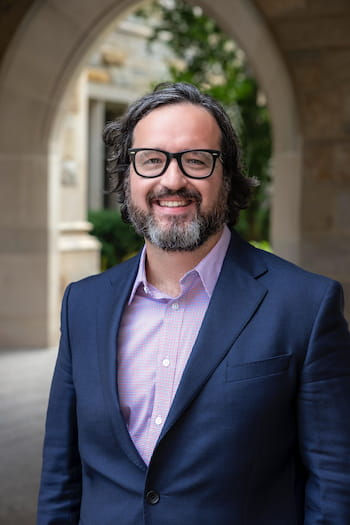
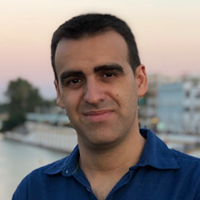
Brydon Wang is a Lecturer in Design (Built Environment) at the University of Queensland's School of Architecture, Design and Planning. A lawyer and interdisciplinary scholar, he researches flood-resilient smart cities, trustworthy AI, and automated construction with 19 years of industry experience. Research explores marine urbanism, amphibious architecture, and regulatory frameworks for automated systems. His recent publications (2018-2024) examine floating city technologies, AI ethics in construction, and 3D-printed marine infrastructure. Teaching includes Contract Law and Responsible Data Science courses. He co-edited Automating Cities (Springer, 2021) and has been featured on ABC Radio National and in The Conversation discussing ocean colonization and climate adaptation.
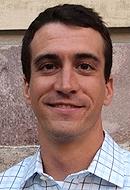
Dr. Justin Henriques is an Associate Professor in the Department of Human-Centered Engineering at Boston College, part of the College of Engineering. He holds a Ph.D. and M.S. in Systems Engineering from the University of Virginia's School of Engineering and Applied Science, an M.U.E.P. in Urban & Environmental Planning from the University of Virginia’s School of Architecture, and undergraduate degrees in Integrated Science and Technology (applied science) and Philosophy. Prior to Boston College, he taught at James Madison University and conducted postdoctoral research at the University of Oxford’s Environmental Change Institute. His research focuses on climate adaptation, humanitarian technology for underserved communities, and sustainable infrastructure systems. He leads projects in Northern Kenya focused on resilience through climate adaptation. Research interests include: Climate Change Adaptation: Developing models to assess vulnerability and resilience in infrastructure systems. Humanitarian Technology: Innovating low-cost solutions for environmental monitoring and public health in developing regions. Environmental Sensing: Leveraging drone technology and multispectral imaging for ecosystem analysis and agricultural monitoring. Recent publications emphasize interdisciplinary approaches to education innovation, environmental monitoring, and infrastructure resilience. His work bridges engineering systems with social and environmental challenges in the Global South. Dr. Henriques has no listed advisees but has contributed to curriculum development at both Boston College and James Madison University, including first-year engineering programs and leadership initiatives. His research partnerships include federal facilities in the U.S. and international collaborations in Kenya, Indonesia, and Haiti.
Prof. Katia Parodi is a Professor at the Chair of Medical Physics within the Faculty of Physics at Ludwig Maximilian University of Munich. Her research focuses on advanced imaging techniques for particle therapy, including proton and ion beam applications. She leads studies in proton computed tomography (CT), ionoacoustic monitoring, and radiobiological assessments of high-dose-rate therapies like FLASH radiotherapy. Her work integrates cutting-edge technologies such as photon-counting CT, machine learning for dosimetry prediction, and novel contrast agents for multimodal imaging. She also explores applications of radioactive ion beams for precision oncology and has pioneered the SIRMIO small-animal irradiation platform for pre-clinical research. Key research interests include improving proton beam range verification through bremsstrahlung imaging, optimizing particle therapy with AI-driven algorithms, and understanding biological effects of ultra-high dose-rate irradiation. She collaborates on international projects, including FLUKA code development for radiation simulations and European initiatives on privacy-protected patient data analysis. Her publications highlight advancements in in-beam PET systems, molecular dynamics simulations of radiation effects, and the development of 3D-printed phantoms for proton CT. Current efforts emphasize translating AI innovations into clinical practice for personalized radiotherapy.
Qin Qian is a Professor in the Department of Civil & Environmental Engineering at Lamar University, College of Engineering. She holds academic leadership roles and teaches courses in fluid mechanics, hydraulics, and water quality modeling. Her research focuses on environmental hydrodynamics, water quality modeling, sediment transport, and urban stormwater management. Dr. Qian has secured over $8 million in research funding from agencies like NSF, NOAA, and the Texas Department of Transportation, leading projects on flood mitigation, sensor networks, and coastal resilience. She has advised numerous students and published over 50 peer-reviewed articles. Awards include the Anita Riddle Fellow (2017–2020) and Outstanding Service Award from OCEESA (2019). Education: Ph.D. Civil Engineering, University of Minnesota, 2008 M.S. Civil Engineering, University of Minnesota, 2004 M.S.S. Software Engineering, University of St. Thomas, 2003 B.S. Hydrogeology & Engineering Geology, Nanjing University, 1994 Research Interests: Environmental Hydrodynamics, Water Quality Monitoring with IoT Sensors, Stream Restoration, Coastal Flooding, Urban Drainage Systems. Articles Trends: Recent work emphasizes AI-driven water quality modeling, hurricane impact analysis, and sustainable reuse of dredged materials. Projects integrate sensor networks and hydraulic modeling for real-time environmental monitoring. Awards: Recipient of 14+ honors including national and international recognition in teaching, research excellence, and service to environmental engineering communities. Grants/Advising: PI/co-PI on 29 funded projects. Advised 15+ graduate students and led undergraduate research teams in flood modeling, sediment studies, and environmental sensor deployment. Labs/Teams: Active in the Research Group on Water Resources and Resilience, collaborating with NOAA, Texas General Land Office, and the Center for Resiliency on coastal infrastructure projects.
Matthieu Vignal is a Lecturer in Geography at Avignon Université, affiliated with the ESPACE laboratory (UMR7300). His research focuses on the interactions between societies and their environment, particularly the impact of global change on vegetation dynamics. He employs spatial analysis, statistical modeling, and field data to produce actionable knowledge for territorial stakeholders, such as conservation strategy development. Recent projects include studying citizen science data’s role in biodiversity monitoring and the effects of climatic events like droughts on vegetation resilience. His work emphasizes methodological innovations, such as developing spatial models to quantify ecological boundaries and integrating multi-source meteorological data. He actively participates in interdisciplinary collaborations, including co-organizing conferences on climate change impacts. Vignal advocates for applied research that bridges scientific expertise with policy-making, emphasizing the importance of science mediation in institutional warning systems. Key research areas include climate change adaptation, spatial data modeling, and socio-ecological systems analysis. His publications span topics like catchment dynamics, species distribution modeling, and transboundary environmental governance. While no specific awards are noted, his contributions reflect a commitment to both academic rigor and practical societal relevance.
Leonard Ortolano is the UPS Foundation Professor of Water Resources and Environmental Planning at Stanford University's Department of Civil and Environmental Engineering, part of the School of Engineering. He has held this position since 1970, progressing from Assistant Professor (1970-1973) to Associate Professor (1974-1979) before attaining full Professor status. His research focuses on environmental policy design, water resources management, and sustainable urban development, with emphasis on China, South Asia, and developing nations. Education includes a B.S. in Civil Engineering (1963, Polytechnic Institute of Brooklyn), and M.S./Ph.D. in Engineering from Harvard University (1966/1969), specializing in Water Resources Planning with minors in Economics and Operations Research. Research interests span environmental governance, corporate environmental management, and community-based solutions to resource challenges. Notable projects include studies on China’s environmental policy implementation, Mozambique’s water resale systems, and cleaner production in Pakistan’s industries. His work bridges academia and practice, with consulting roles for agencies like the World Bank and the U.S. Environmental Protection Agency. Recent publications highlight themes such as carbon offset quantification challenges, regulatory enforcement negotiation simulations, and slum dweller mobilization in Tanzania. Awards include the Rhodes Prize (1996), Grant Award (2005), and multiple Fulbright-Hays grants. Leadership roles include Director of Stanford’s Haas Center for Public Service (2003-2006) and Urban Studies Program (1980-2003). Current advising focuses on interdisciplinary PhD research addressing hydropower licensing, chemical policy, and renewable energy integration. His lab collaborations explore topics like acid mine drainage treatment in Appalachia and alternative development scenarios for India’s Sundarbans region.
Lahcen ZOUHRI is an Associate Professor in Hydrogeology specializing in the modeling of physico-chemical processes and exploration of hydrogeological reservoirs. His affiliations include the AGHYLE team (AGroecology, HYdrogeochemistry, miLieu and rEssources) and international collaborations with institutions like Cadi Ayyad University (Morocco), Tunisian universities, and Veolia Water. He holds a Doctorate in Hydrogeology (Dr-HDR) and is an editorial board member of GEOLOGUE and associate editor of Arabian Journal of Geosciences . His research focuses on hydrogeology, environmental geochemistry, and geophysical techniques applied to groundwater systems. Key topics include aquifer vulnerability, seawater intrusion, mine site remediation, and climate change impacts on water resources. He actively participates in doctoral thesis juries, chairs conference sessions, and leads fieldwork at the Beauvais experimental site in France. Major contributions include geophysical imaging of chalk aquifers, GIS-based water resource management frameworks, and interdisciplinary approaches to contaminated site characterization. His work spans multiple regions including Morocco, Tunisia, and France, emphasizing sustainability and policy-relevant solutions.
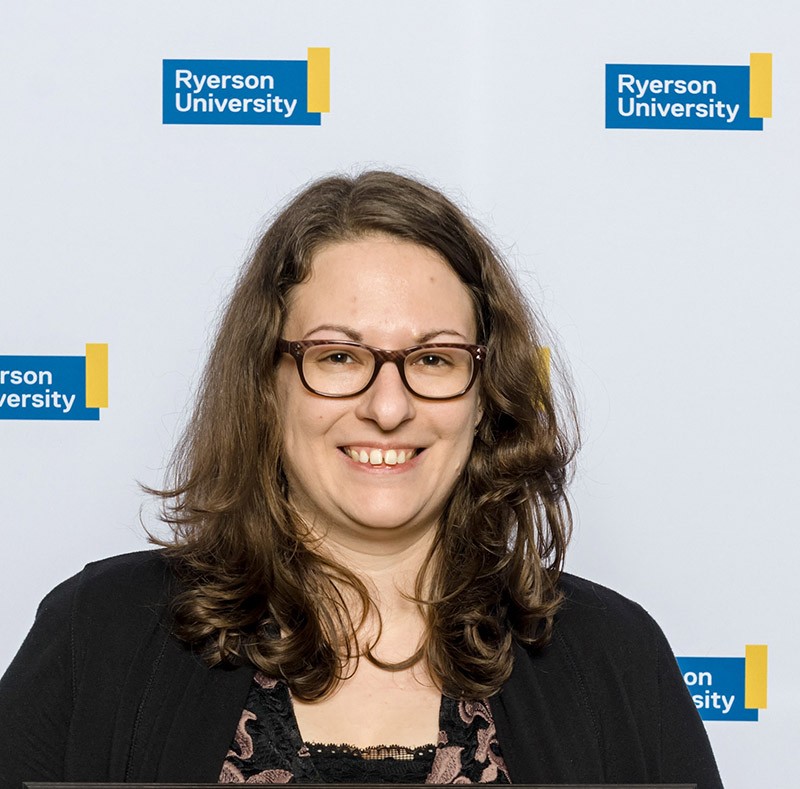
Melissa T. Moos is an Assistant Professor and Limited Term Faculty at the School of Occupational and Public Health, Toronto Metropolitan University. Her expertise spans water quality, climate change, and environmental remediation. She holds a BScH (2004) and PhD in Biology (2010) from Queen’s University, and an MPH (2018) from Brock University. Her research focuses on microbiological threats, source water protection, and harmful algal blooms, with projects in urban water management and climate resilience. She has received notable awards, including the Dean’s Teaching Award (2021) and Queen Elizabeth II Diamond Jubilee Scholarships (2016–2017). Teaching includes courses like Applied Ecology, Biostatistics, and Public Health Agents of Communicable Disease. Her research projects address topics such as beach closures due to invasive mussels, urban planning for water quality, and phosphorus remediation in stormwater systems. She has also studied oil sands contamination and water quality for hydro power generation. Labs/Teams: Engaged in interdisciplinary environmental and public health initiatives, collaborating with institutions like the Lake Simcoe Region Conservation Authority. Her work integrates watershed management and innovative remediation strategies.
Ryan Plummer is the Director of the Environmental Sustainability Research Centre (ESRC) at Brock University, currently on leave. He holds adjunct appointments at the University of the Sunshine Coast (Sustainability Research Centre) and the University of Waterloo (Department of Environment and Resource Studies). His interdisciplinary research program centers on the governance of social-ecological systems, with emphasis on adaptive co-management, resilience theory, water resources, and environmental stewardship. Dr. Plummer holds a PhD in Rural Studies from the University of Guelph and has received multiple awards for research and teaching excellence. His core research explores: Novel governance strategies for complex socio-ecological challenges Mechanisms of collaboration and social learning in resource management Climate adaptation frameworks, particularly in water governance and flood planning Resilience-building in communities and organizations Human-nature relationships through outdoor education and stewardship Recent publications (2023-2025) demonstrate strong thematic coherence around disaster resilience, collaborative governance, and pandemic-era environmental behavior. Over 80% of articles focus on climate adaptation, social-ecological systems modeling, or stakeholder engagement methodologies, reflecting sustained emphasis on actionable sustainability science. Notable scientific recognition includes: Chancellor’s Chair for Research Excellence (2008) CMHC Excellence in Education Award (2008) Faculty Teaching Excellence Award (2004) As ESRC Director, he leads transdisciplinary initiatives and partnerships focused on sustainability solutions. No specific grants, labs, or student advisees are detailed in source materials.
Gualberto Asencio Cortés is Associate Professor in Computer Science at Universidad Pablo de Olavide. He holds Ph.D. in Computer Science from UPO (2013) and Executive Master in Innovation from EOI (2016). Research focuses on developing advanced algorithms for: Time series forecasting in energy, agriculture, and environmental domains Feature selection methods for deep learning Explainable AI for predictive modeling Big data stream processing Developed innovative tools like FS-Studio for feature selection experimentation. Recent publications demonstrate strong focus on agricultural applications (pest forecasting, phenology prediction) and energy consumption modeling using hybrid deep learning approaches.
Hans Bihs is a Professor at the Institute for Building and Environmental Technology within NTNU's Faculty of Engineering. His work focuses on computational fluid dynamics (CFD), wave hydrodynamics, and offshore renewable energy systems. He leads the development of the open-source hydrodynamic framework REEF3D , emphasizing applications in coastal engineering, floating offshore wind turbines, and aquaculture structures. Current research projects include the ERC Consolidator Grant-funded PARTRES (2023–2028), the SurfWave project analyzing Portugal's Ericeira World Surfing Reserve, and the MAPLE initiative studying marine plastic pollution. He has held grants from EEA Grants, NFR KPN, and the Baltic Project SolidShore. Research interests span fluid-structure interaction, sediment transport modeling, and high-performance computing. His team develops numerical methods for complex coastal and oceanic systems, with applications in wave energy, ship-induced wave dynamics, and climate-resilient coastal infrastructure. Notable collaborations include the IBM/NTNU Centre for Green Shift and the DigiCoast PhD program. His lab focuses on advancing multi-fidelity CFD solvers and integrating machine learning for predictive coastal modeling.
Elizabeth Wentz is Vice Provost and Dean of the Graduate College at Arizona State University (ASU), holding dual appointments in the School of Geographical Sciences and Urban Planning. She leads the Knowledge Exchange for Resilience initiative, supporting Maricopa County’s community resilience through knowledge sharing, and formerly directed ASU ADVANCE promoting institutional diversity. Her research focuses on geographic technologies (GIS, remote sensing, spatial analysis) applied to urban environments, water resource management, and urban climate resilience. Education: Ph.D. Geography, Pennsylvania State University (1997) M.A. Geography, The Ohio State University (1989) B.S. Mathematics, The Ohio State University (1987) Research Interests: Urban climate dynamics, geospatial technology integration, water conservation strategies, spatial pattern analysis, and community resilience frameworks. Her work bridges theoretical GIScience with applied urban sustainability challenges, emphasizing data-driven solutions for heat mitigation, resource management, and disaster preparedness. Recent Research Focus: Publications highlight urban heat island mitigation via tree shade optimization, geodesign for Indigenous flood resilience, and spatial modeling of energy consumption patterns. Her studies often combine multi-source geospatial data with interdisciplinary collaborations. Grants & Projects: NSF-funded Decision Center for a Desert City (DCDC) addressing climate uncertainty Urban Environmental Modeling (UEM) Project analyzing 100 global cities WaterSim model development for Phoenix water planning Labs/Teams: Director of the Urban Climate Research Center and Senior Global Futures Scientist, collaborating with interdisciplinary teams on sustainability challenges. Teaches courses on geospatial technologies and graduate research design.
Mark Buntaine is a Professor at the Bren School of Environmental Science & Management, University of California, Santa Barbara. His research focuses on improving governance for effective environmental policy implementation in low- and middle-income countries. He leads experimental projects testing citizen participation in environmental governance, such as solid waste management, pollution reduction, and forest conservation. Education: PhD in Environmental Politics & Policy/Research Methods, Duke University MS in Sustainable Development and Conservation Biology, University of Maryland BA in Political Science and Chinese, Wake Forest University Research Interests: Buntaine explores how institutional design can enhance government accountability to citizens. His work emphasizes participatory governance models, anti-corruption measures, and the role of transparency in environmental decision-making. He collaborates with NGOs and governments to design scalable solutions for environmental challenges in developing regions. Articles Overview: Recent work includes studies on citizen monitoring reducing pollution in China, social competition driving waste management in Uganda, and transparency reforms in Ugandan public procurement. His research spans environmental policy, governance innovation, and development economics. Scientific Awards: None explicitly listed in provided materials. Advising & Grants: Supervises three PhD students researching corruption in environmental management, Latin American watershed policy, and citizen participation in emerging democracies. His grants likely support field experiments in Uganda, China, and Indonesia, though specific funding sources are not detailed here. Labs/Teams: Leads the Bren School's environmental governance research group, focusing on experimental approaches to policy implementation challenges in global South contexts.
Dr. Jason Everett is a Visiting Fellow at the School of Biological, Earth & Environmental Sciences, University of New South Wales, with joint affiliation at the Sydney Institute of Marine Science. He completed his PhD in 2008 and previously worked at the NSW Office of Environment and Heritage. His research examines oceanographic drivers of pelagic ecosystems, focusing on zooplankton regulation of fisheries production, carbon export, and marine ecosystem modeling. Research Focus: Investigates how currents, eddies, and upwelling structure plankton/fish distributions Quantifies size-based trophic dynamics in marine communities Develops global size-structured ecosystem models for fisheries and carbon projections Recent publications (2019-2025) demonstrate strong emphasis on climate change impacts, marine conservation planning, and plankton ecology. Article analyses reveal dominant themes in climate-smart protected areas (38%), ecosystem modeling (31%), fisheries sustainability (15%), and zooplankton dynamics (16%). Leadership & Collaboration: Convenor of IMOS Zooplankton Task Team; Technical Advisor for Australian Ocean Data Network; collaborates with CSIRO, University of Tasmania, University of British Columbia, and international networks. Conducts fieldwork aboard RV Investigator and develops analytical tools for multi-source marine datasets.
Professor Mark Hamann is a faculty member at James Cook University, where he leads research on marine biology and conservation with a primary focus on threatened marine and coastal species, particularly marine turtles. His work integrates animal tracking methodologies, human dimensions analysis, and assessment of anthropogenic threats to marine ecosystems, positioning him at the forefront of marine conservation science in the Australian context. His research program centers on marine turtle ecology, conservation biology, and microplastic pollution impacts, with specific expertise in foraging and nesting habitat dynamics, migration patterns, and human-wildlife conflict resolution. He investigates critical issues including plastic ingestion effects, artificial light disruption at nesting sites, and socio-ecological dimensions of conservation policy, often employing field studies across the Great Barrier Reef and northern Australian waters. Analysis of his 15 most recent publications (2023-2025) reveals a dominant research trajectory focused on marine turtle conservation, with recurring themes in microplastic impacts across trophic levels, habitat connectivity, and global conservation status assessments. His work consistently combines empirical field data with conservation policy applications, demonstrating strong emphasis on Australian marine systems while maintaining international relevance through frameworks applicable to global turtle populations. Scientific awards are not mentioned in the available documentation. Information regarding student advising or specific research grants is not provided in the source materials, though his extensive publication record suggests active mentorship and externally funded research programs. Professor Hamann directs a specialized research group conducting fieldwork on marine turtle biology and conservation, utilizing animal tracking technologies, environmental DNA analysis, and habitat assessment methodologies to address urgent conservation challenges for threatened coastal species in industrialized marine environments.