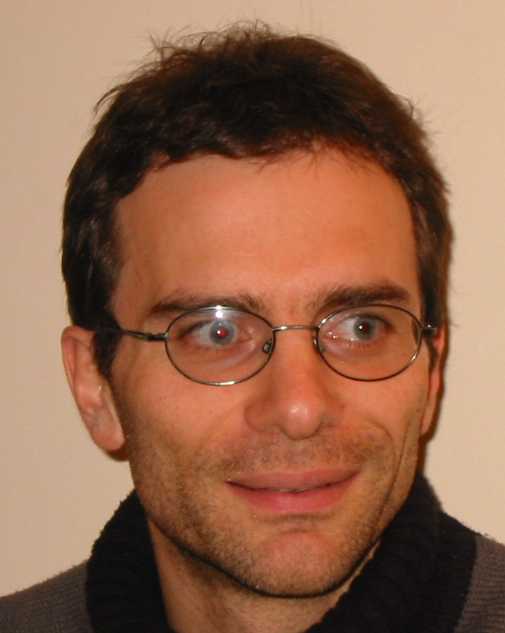
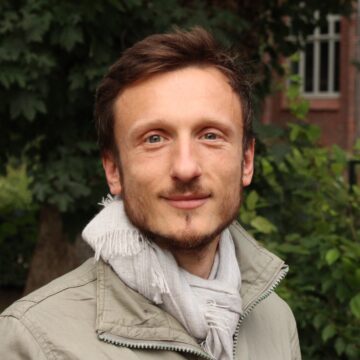
Sébastien Tordeux is an Associate Professor at the University of Pau, affiliated with the Magique 3D research team in the Faculty of Sciences. His research focuses on numerical methods for wave propagation, particularly Trefftz methods, asymptotic expansions, and electromagnetic/acoustic scattering. He holds a PhD in Applied Mathematics from the University of Versailles Saint-Quentin and has held positions at INSA-Toulouse and ETH Zurich. He has advised multiple PhD students and organized conferences such as the 2017 conference in honor of Abderrahmane Bendali. His work emphasizes high-order numerical modeling and efficient solvers for wave equations in complex media. Education: PhD in Applied Mathematics (2004, Université de Versailles), DEA M2SAP (2001), ENSTA Engineer (1998-2001). Professional roles include Chair of Excellence in Numerical Analysis (INRIA-UPPA 2010-2015), and leadership in Master’s program administration and national academic committees (CNU 26). Research interests span Trefftz methods for time-harmonic models, numerical solvers reducing pollution effects, and asymptotic modeling for small obstacle scattering. Recent contributions include quasi-Trefftz methods for electromagnetic systems and iterative approaches for 3D wave simulations. He has supervised PhD students working on topics like antenna patch models, perforated plate acoustics, and multiscale electromagnetic diffraction. His collaborative projects involve institutions like ONERA and TU Berlin, focusing on high-accuracy wave modeling and computational methods.
Florian Kaltenberger is a Professor in the Communication Systems department at EURECOM, a leading research institute in digital technology based in France. He actively contributes to research and teaching in wireless communications, with a focus on 5G/6G technologies, massive MIMO, and OpenAirInterface-based prototyping. Research Affiliation: EURECOM - Communication Systems Key Projects: SOLDER FP7, Newcom++, COST 2100 Professional Memberships: IEEE, reviewer for major journals and conferences His research centers on signal processing for wireless communications, MIMO systems, channel modeling, and hardware implementation. He specializes in exploiting channel reciprocity in TDD systems and developing practical testbeds for next-generation networks. Recent publications highlight a strong trend toward AI-integrated RAN, open-source 5G/6G testbeds (e.g., OpenAirInterface, X5G), UAV-aided localization, and real-time control using decentralized applications. His work bridges theoretical innovation with field deployment in programmable living labs. Award Highlights: Neal Shepherd Best Propagation Award (2013) He leads research grants under EU frameworks like FP7 and collaborates internationally on open RAN and 6G innovation. Though no formal student list is provided, his role as project lead and frequent co-authorship suggests active mentorship. He also manages EURECOM’s contributions to large-scale collaborative projects. Kaltenberger is deeply involved in lab development, particularly around OpenAirInterface, where he leads efforts in creating end-to-end, multi-vendor, private 5G O-RAN testbeds with real-time AI control and green networking capabilities.
Pierrick Lotton serves as a CNRS Research Director at Le Mans University's Institute of Acoustics (LAUM), a joint research unit between CNRS and the university. He leads critical work within LAUM's Transducers team, focusing on fundamental and applied research in electroacoustics and thermoacoustics. His institutional affiliation places him at France's premier acoustics research laboratory, which maintains extensive facilities for acoustic measurements, ultrasonic experimentation, and transducer development across multiple specialized domains including materials science, opto-acoustics, and bioacoustics. Lotton's research program centers on two interconnected pillars: electroacoustics and thermoacoustics. His electroacoustic investigations pioneer advanced modeling, development, and characterization of audio transducers with particular emphasis on nonlinear behaviors in loudspeakers and electric guitar pickups. Simultaneously, his thermoacoustic research explores acoustic refrigeration systems, complex couplings between acoustic and thermal energy fields, and transient nonlinear phenomena. This dual focus enables innovative cross-pollination between audio engineering and thermal physics, driving advancements in both fundamental understanding and practical applications of acoustic energy conversion. Analysis of his 2019-2024 publications reveals a consistent trajectory in transducer physics, particularly MEMS-based piezoelectric speakers, voice coil dynamics in magnetic environments, and digital acoustic projection systems. His work demonstrates exceptional methodological diversity spanning analytical modeling, experimental validation, and educational innovation. Notable contributions include the ASKNOWN project's open-access acoustics courseware and breakthroughs in understanding transducer nonlinearities for both consumer audio and specialized applications like fish sound localization. No major scientific awards were documented in the available institutional materials, though his sustained publication record in high-impact journals and presentations at European Acoustics Association forums indicate significant peer recognition. His collaborative research network spans France, Germany, Italy, and the Czech Republic, reflecting strong international engagement. Lotton's academic supervision activities aren't explicitly detailed, but his educational initiatives like the ASKNOWN project demonstrate commitment to pedagogy. His research is supported through LAUM's institutional framework and collaborative projects including European initiatives and ANR-funded programs. Current work appears concentrated on advancing MEMS transducer technology, refining thermoacoustic cooling systems, and developing next-generation educational resources for acoustics. As a core contributor to LAUM's Transducers team, Lotton operates within one of Europe's leading acoustics laboratories. His current projects align with LAUM's strategic focus on transducer innovation and thermoacoustic applications, positioning him at the forefront of both theoretical acoustics research and practical engineering solutions. The laboratory's comprehensive infrastructure supports his work from fundamental wave propagation studies to applied device development.
Naveen Kanalu Ramamurthy serves as an Associate Professor at the School for Advanced Studies in the Social Sciences (EHESS) in Paris, where he is affiliated with the Center for Historical Research (CRH). His scholarly work centers on the institutional history of the Mughal Empire (1526-1857) in South Asia, with particular emphasis on the relationship between Hanafi Islamic law and imperial governance structures. Dr. Ramamurthy completed his Doctorate in History at the University of California, Los Angeles (2015-2021), preceded by multiple Master's degrees from prestigious Parisian institutions: Iranian Studies from Sorbonne Nouvelle University Paris 3, History of Economic Thought from Panthéon-Sorbonne University Paris 1, and History and Philosophy from Paris Ouest Nanterre. His academic foundation includes studies at the École Normale Supérieure – Ulm and undergraduate work in Economics at the University of Delhi. His research program examines three interconnected dimensions of Mughal governance: (1) the administrative organization of imperial space, (2) the intersection of legal normativity and historical anthropology, and (3) the regulation of political economy. Drawing on Arabic legal manuscripts, Persian administrative documents, and vernacular language sources, Ramamurthy reveals how Islamic legal institutions adapted to local contexts across precolonial South Asia, challenging simplistic narratives of imperial uniformity. Dr. Ramamurthy's publications demonstrate consistent scholarly engagement with Mughal legal frameworks within trans-imperial networks connecting South Asia with the Middle East and Central Asia. His work bridges historical methodology with theoretical innovation, particularly in analyzing how bureaucratic practices shaped imperial urbanity and legal consciousness during the 17th-18th centuries. Among his significant recognitions, Dr. Ramamurthy received the Collège de France Prize for Young Researchers in 2023. He currently leads the ANR-funded MugUrba project (2024-2027) examining bureaucratic rhythms of imperial urbanity in Mughal South Asia and co-directs the interdisciplinary "Empire" research program at EHESS. As an educator, Ramamurthy teaches courses on "The State in Islam: Authority, Law and Institutions in the Mughal Empire in India," theoretical approaches to historical practice, and contributes to the PRI Empires program. He serves on editorial boards including Annales. Histoire, sciences sociales and participates in the pedagogical council for the History Master's program at EHESS. Dr. Ramamurthy also contributes to the "Research Sources and Data" Collective at CRH, supporting digital initiatives that enhance historical research methodologies while maintaining his primary focus on Mughal institutional history through traditional archival scholarship.
Mathieu Fontaine is an Associate Professor in Machine Listening at Télécom Paris , affiliated with the LTCI Lab within the IDS Department (Information, Data, Signal). His research focuses on machine listening for speech and audio signal processing. PhD in Informatics (2019), Lorraine University Master in Applied and Fundamental Mathematics (2015), Poitiers University BSc in Fundamental Mathematics (2013), Rennes University Fontaine's research spans speech enhancement , speaker separation , source localization , and music source separation using heavy-tailed probabilistic models and deep Bayesian networks , with applications in augmented reality . He has expertise in Python , signal processing , and machine learning (80% proficiency). His recent publications (2024) include work on diffusion models for speech synthesis , room acoustics estimation from 3D meshes , robust audio scene analysis , and direction-aware speech processing . Earlier publications (2022-2023) explore flow-based NMF , alpha-stable representations , and adaptive beamforming in multiparty environments. Fontaine collaborates with the S2A team and ADASP group at LTCI Lab. His work integrates probabilistic modeling with deep learning to address challenges in real-world audio processing, including reverberation, noise, and complex acoustic environments.
José Picheral is a Professor at CentraleSupélec, affiliated with the Laboratory of Signals and Systems (L2S). He holds a PhD (2003) and HDR (2017) in high-resolution signal processing methods and inverse problems. His research focuses on array processing, source localization, acoustic imaging, and vibration analysis, with applications in aeroacoustics, automotive systems, and industrial monitoring. He has supervised multiple PhD students and contributed to projects like Valeo’s smartphone-based car key replacement system. Education: Engineering Degree: Supélec (1999) and Politecnico di Milano (1999, Erasmus-TIME) PhD: Paris Sud University (2003) Habilitation (HDR): Université Paris Sud (2017) Research Interests: High-resolution methods for distributed sources, sparse signal processing, acoustic imaging, asynchronous measurements, and sensor array design. Current projects include spatial source covariance estimation, EEG spectrum analysis, and automotive applications using smartphone localization. Key Contributions: Over 50 publications in top journals/conferences (e.g., IEEE Transactions, ICASSP). Notable work on MUSIC algorithm robustness, DAMAS optimization, and sparse approaches for tip-timing signals. Advising & Collaboration: Supervised 7 PhD students. Collaborations with SAFRAN, Valeo, and academic teams in Bayesian inference and inverse problems. Active in L2S’s Inverse Problems Group and SYCOMORE team. Labs/Teams: Member of L2S’s Signal Processing and Statistics group, leading research in systems and control, telecommunications, and energy systems.
Christophe Bailly is the Director of the Laboratory of Fluid Mechanics and Acoustics (LMFA UMR5509) and a Professor at École Centrale de Lyon, France. His career spans academic roles at École Centrale Paris (1995-2006) and École Nationale Supérieure des Techniques Avancées (2001-2020), alongside membership in the Institut Universitaire de France since 2007. He specializes in turbulence, aeroacoustics, sound propagation, and high-resolution numerical methods. His research focuses on jet noise , ducted flow acoustics , and advanced diagnostic techniques like Interferometric Rayleigh Scattering. He has co-authored over 120 peer-reviewed articles and a textbook on turbulence with Geneviève Comte-Bellot. Notable scientific awards include the Yves Rocard Prize (1996), Alexandre Joannidès Prize (2001), Air & Space Academy Medal (2016), CEAS Aeroacoustics Award (2020), and the French Medal (2023). He serves as Associate Editor for the AIAA Journal and Advisory Editor for Flow, Turbulence and Combustion .
Denis ALLAND is a Professor of Public Law at Paris-Panthéon-Assas University, specializing in public international law. He serves as co-director of the DOGMA Institute (Institute for the Study of Dogmatic Disciplines and the General History of Forms). Research Focus: History of public international law, legal immunities, and the interplay between international and domestic legal systems. Key Contributions: Extensive publications on asylum law, treaty interpretation, and European Union constitutional frameworks. Education: DEA in International Law, DEA in Public Law, State Doctorate in Law. Academic Roles: Associate Professor of Law, teaching public international law, and editor of legal compendiums like the Collection of Courses of the Hague Academy of International Law (vol. 362, 2014).
Mathias FINK is a Professor at ESPCI Paris on the Georges Charpak chair. His research focuses on fundamental wave physics in complex media with major applications in medical imaging, telecommunications, and geophysics. He pioneered time-reversal mirrors for wave focusing and co-founded 6 technology companies. Key Institutions: ESPCI Paris, Collège de France Research Themes: Wave physics, time-reversal techniques, matrix imaging, metasurface design His work spans multi-echo wave systems , ultrasonic therapeutic devices , and adaptive electromagnetic communication systems . Recent publications emphasize 3D matrix imaging in biological tissues and space-time interface dynamics . Scientific recognition includes: First academic elected at Collège de France (2008) Over 400 peer-reviewed publications 70+ patents and 6 start-ups Collaborations extend to Institut des Hautes Études Scientifiques , Langevin Institute , and Hong Kong University of Science and Technology . His team's volcanic imaging work with seismic noise has revolutionized subterranean mapping.
Luc Segoufin is a Research Professor at INRIA (French National Institute for Research in Computer Science and Automation), affiliated with the Department of Computer Science at École Normale Supérieure (ENS) in Paris. He leads the VALDA research team, focusing on theoretical computer science foundations. His research spans: Database theory: Query answering, consistency, and enumeration complexity Logic and automata: Finite model theory, automata over data structures Computational complexity: Fine-grained analysis and lower bounds Formal methods: Verification and logic-based modeling His recent publications (2022–2024) concentrate on: Dichotomy theorems for query answering under constraints Constant-delay enumeration algorithms for structured data Decidability in logic fragments over trees and graphs Connections between automata, algebra, and complexity No scientific awards are mentioned in available sources. He collaborates extensively within the VALDA team and international researchers on projects involving database theory, logic, and automata. No student advising details are provided.
Mohammed Nabil EL KORSO is a Professor at CentraleSupélec, part of the University of Paris-Saclay. He is affiliated with the Laboratoire des Signaux et Systèmes (L2S). His research focuses on statistical signal processing, machine learning, detection/estimation theory, and robust signal processing, with applications in radioastronomy, radar systems, and source localization. He has contributed extensively to methodologies like Kalman filtering, covariance estimation, and array processing. His work emphasizes robust techniques for handling non-Gaussian noise and interference, particularly in radio interferometry and SAR imaging. Key contributions include algorithms for array calibration, RFI mitigation, and subspace estimation. His research also addresses challenges in distributed and adaptive signal processing, with applications to vital signs monitoring and robotic systems. He has published over 50 journal articles and conference papers, focusing on performance bounds (Cramér-Rao, Weiss-Weinstein), Bayesian methods, and practical implementations for large-scale systems. His recent work includes advancements in low-cost interferometric imaging and phase estimation for SAR time series. EL KORSO collaborates with international projects like the Square Kilometre Array (SKA), contributing to technological developments in radio astronomy. He supervises research in signal processing labs and actively participates in academic conferences such as EUSIPCO and ICASSP.
Tania Landes is a Professor at the University of Strasbourg (Unistra) affiliated with the ICube Laboratory UMR 7357 CNRS/Unistra and the PAGE Group (Architectural Photogrammetry and Geomatics). Her work focuses on integrating advanced 3D modeling and geomatics techniques for urban applications. Academic Rank: Professor Institution: University of Strasbourg Research Affiliation: ICube Laboratory UMR 7357 CNRS/Unistra Research Interests : Indoor and outdoor 3D modeling with RGB-D sensors and LiDAR Semantic segmentation of point clouds for BIM (Building Information Modeling) Thermal imaging integration for urban microclimate studies Historical and cultural heritage documentation via photogrammetry Urban tree modeling and vegetation impact on thermal comfort Scan-to-BIM workflows and automation Key Projects include the TIR4sTREEt thermal infrared studies of street trees in Strasbourg and COOLTREES for quantifying urban cooling benefits from vegetation. Her publications emphasize improving 3D reconstruction workflows and modeling accuracy across domains. Scientific Contributions span 15+ years with over 50 publications, covering: Urban heat island mapping (2022 onwards) Historical building modeling (2014-2017) Mobile laser scanning applications (2020 onwards) Kinect sensor calibration for 3D modeling (2015) Microclimate simulation via LASER/F (2016) Archaeological documentation (2011)
Daud Ali is an Associate Professor and Chair of the South Asian Studies Department at the University of Pennsylvania. His research focuses on the cultural, social, and political history of South Asia, with a particular emphasis on medieval court society, political practices, conceptions of landscapes and gardens, sexuality, pedagogy in colonial India, and the usage of history. He employs epigraphical and literary sources alongside innovative theoretical approaches to analyze these themes. Ali has authored two groundbreaking books: Querying the Medieval: The History of Practice in South Asia (co-edited with Ronald Inden and Jonathan Walters, 2000) and Courtly Culture and Political Life in Early Medieval India (2004). His scholarly contributions include exploring how royal and courtly technologies were appropriated by local actors during political recessions in medieval India, and he has presented lectures on figures like Bhoja Paramāra and their transformation into legendary roles.
François Briatte is an Assistant Professor in Political Science at the Catholic University of Lille , affiliated with the European School of Political and Social Sciences (ESPOL). He serves as Co-Director of International Mobility and has previously taught at Sciences Po Paris, Grenoble, Reims, the University of Lille 2, and the University of Edinburgh. His research focuses on legislative networks in European parliaments and comparative health policies . He combines methodologies from network analysis, political sociology, and digital politics to study legislative collaboration patterns, electoral behavior, and healthcare system reforms. His work often addresses Political polarization Electoral turnout dynamics Open data governance Health policy analysis Recent publications include empirical studies on Voting indecision in the 2022 French presidential election Covid-19’s impact on 2020 French local elections Network visualization tools for political science Comparative analysis of legislative cosponsorship He has developed open-source software packages like GGally and ggnetwork for network analysis in R, and actively participates in academic conferences across Europe and North America.
Simon Laurent is a Lecturer at Le Mans University and a researcher at the Laboratory of Acoustics (LAUM) since 1994. His work bridges signal processing with acoustics and mechanical applications, focusing on innovative solutions for audio systems, biomedical diagnostics, and environmental monitoring. Research Focus: Non-linear systems (electrodynamic loudspeakers), biomedical signals (snoring), sensor arrays (fractional sphere antennae), and impact signal analysis (water droplets on complex liquids) Recent Publications highlight applications in precision livestock farming, adaptive audio systems, and acoustic diagnostics. Key trends span multichannel signal processing , bioacoustic monitoring , and non-linear acoustic modeling . Patents include improved microphone array designs for spatial sound capture. Collaborative work on droplet impact acoustics and mobile sound zones demonstrates interdisciplinary applications.