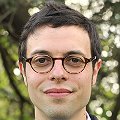
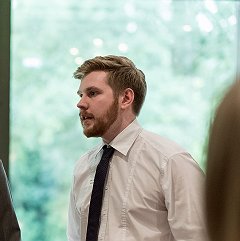
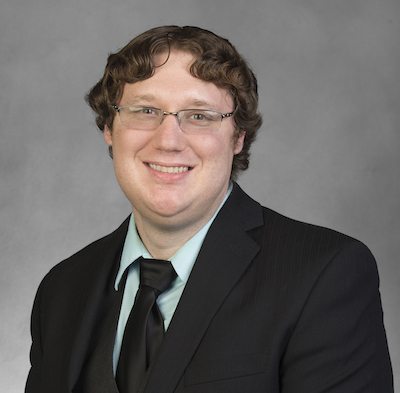
Univ.-Prof. Martin Pinzger is a Professor at the Department of Informatics Systems, Alpen-Adria-Universität Klagenfurt. He serves as Head of Department and Member of the Senate, actively contributing to academic governance. Research Focus: Automating Software Engineering Tasks, Mining Software Repositories, Program Analysis, Software Evolution and Visualization Recent Work: Developing tools for API evolution analysis, cybersecurity AI (CAI), robotics benchmarking (RobotPerf), and dependency validation His research combines empirical studies with tool development for software maintenance and security. Current projects address challenges in REST API breaking changes, cloud security certifications, and robotic system performance evaluation. Publications since 2023 demonstrate continued engagement with topics spanning AI-driven code segmentation, microservice API evolution, and cybersecurity tool development. Key trends include cross-disciplinary applications of NLP to software engineering and security-focused tool creation. Contact: martin.pinzger@aau.at
Dr. Pengyu Nie is an Assistant Professor at the University of Waterloo's Cheriton School of Computer Science. His research enhances developer productivity through machine learning techniques for software testing, code maintenance, and program analysis. Specific interests include execution-guided test completion, code-comment co-evolution, and multilingual programming systems. Current projects investigate LLM-based code editing in computational notebooks, multilingual code co-evolution, and test generation for exceptional behaviors. Research outputs include tools like pytest-inline for Python testing and Roosterize for Coq lemma suggestions. Awards include the Margarida Jacome Dissertation Award (2023) and ACM SIGSOFT Distinguished Paper Awards (2023, 2019). He leads the UW-SWaG research group and advises PhD/master's students on software engineering and ML projects.
Jean-Rémy Falleri is a Full Professor of Computer Science at Enseirb-Matmeca (Bordeaux INP) and a researcher at LaBRI laboratory in Bordeaux, France. He serves as head of the Computer Science department at Enseirb-Matmeca and co-head of the Systems and Data department at LaBRI. From 2020 to 2025, he was appointed as a junior member (later honorary member) of the prestigious Institut Universitaire de France. His educational background includes a habilitation from Université de Bordeaux (2015), a PhD from Université Montpellier 2, and a Master's degree from IMT Mines Alès (formerly École des Mines d'Alès). He also completed post-doctoral research at INRIA Lille in the RMoD group. Falleri's research focuses on software engineering, particularly software evolution and the development of practical tools to analyze and understand code changes. His work bridges theoretical research with practical applications, resulting in tools like GumTree for visualizing code differences and Roseau for detecting breaking changes in libraries. His research interests span source code differencing, API analysis, breaking change detection, and software maintenance techniques. His publication record shows consistent contributions to top software engineering conferences including ICSE, ASE, ICSME, and FSE, with research themes evolving from code clone detection and developer expertise extraction to modern challenges in API evolution and Docker configuration analysis. Junior Member of Institut Universitaire de France (2020-2025) Honorary Member of Institut Universitaire de France (2020-2025) Falleri has supervised numerous Master's students, PhD candidates, and post-doctoral researchers throughout his career. He has held significant service roles including Head of LaBRI's Systems and Data department (since 2021), Head of LaBRI's Software Engineering group (2015-2021), and member of various conference program committees. His work has practical impact through actively maintained tools that address real challenges in software development and evolution.
Nikolaos Tsantalis is a Professor in the Department of Computer Science and Software Engineering. He serves as Associate Chair for Software Engineering and focuses on advancing software engineering practices through automated refactoring tools, empirical studies, and code quality analysis. His work emphasizes improving software maintainability, design quality, and developer productivity. Research Interests: Automated Refactoring (e.g., RefactoringMiner, JDeodorant) Code Smells and Design Patterns Empirical Studies on Refactoring Tool Support for Software Evolution Code Diffing and Tracking IDE Integration for Refactoring Key Contributions: Developed RefactoringMiner (2020), a tool for detecting refactoring operations in commit histories, and JDeodorant, a static analysis tool for identifying and resolving class-level design smells. His recent work explores leveraging LLMs and semantic embeddings for automated refactoring. Advising/Grants: No students are explicitly listed, but Tsantalis has contributed to numerous tool-based projects funded through academic collaborations. His research spans industry-academia partnerships to improve software development workflows. Labs/Teams: Leads research on automated refactoring and software maintenance through collaborations with IDE vendors and open-source communities.
Cedric Richter is a Research Scientist at University of Oldenburg specializing in the intersection of Machine Learning and Software Verification. He actively contributes to major software engineering conferences including ASE, ICST, and ISSTA as both author and program committee member. His research focuses on applying machine learning techniques to software verification and bug detection problems. Key areas include neural bug detectors, program analysis, abstract syntax tree processing, and code differencing. Richter has developed several open-source tools including code_tokenize, code_ast, code_diff, and code_graph that facilitate AST-based code analysis and program graph generation. His work on TSSB-3M has contributed large-scale datasets of single statement bug fixes in Python. His publications demonstrate a consistent research trajectory exploring how machine learning can enhance traditional software verification techniques, with recent work examining the application of large language models like ChatGPT to support verification tools. Richter serves on program committees for major software engineering conferences including ASE (2023, 2025), ICSE (2022-2025), and ESEC/FSE, demonstrating his standing in the software engineering research community.
Josef Pichler serves as a Professor at the Research Center Hagenberg within the University of Applied Sciences Hagenberg, specializing in the Information & Communications Technology focal area. His academic profile demonstrates continuous research activity with publications spanning from 1998 through 2024, showing particularly productive periods in 2008-2010, 2013-2014, and consistently from 2017 onward. Dr. Pichler's research focuses on practical software engineering solutions with strong industrial applications. His primary interests include software systems , reverse engineering , documentation generation , and domain-specific languages . His work bridges theoretical computer science with practical industry needs, developing tools that address real-world software maintenance and comprehension challenges. Analysis of his recent publications reveals a clear research trajectory toward integrating artificial intelligence with traditional software engineering practices. His 2023-2024 work particularly emphasizes AI-assisted programming, semantic differencing techniques, and low-code development platforms for industrial applications like welding robot control. This demonstrates his ability to adapt to emerging technologies while maintaining focus on practical software engineering problems. Dr. Pichler has delivered numerous presentations on topics ranging from ChatGPT applications in computer science education to advanced semantic differencing approaches. His activities indicate active engagement with both academic and industry communities, particularly in the German-speaking region. While specific grant information isn't detailed in the provided text, his research output suggests involvement in projects related to software documentation, reverse engineering tools, and AI-assisted development environments. His supervision of student work (indicated by 'Supervised Work (3)') demonstrates his commitment to academic mentorship alongside his research activities. The Research Center Hagenberg, where Dr. Pichler is based, appears to be a significant hub for ICT research with strong industry connections, as evidenced by his publications on industry collaboration and practical software solutions.
Michael John Decker is an Assistant Professor at Bowling Green State University specializing in software engineering research and education. He teaches courses including Software Architecture & Design, CS Capstone, and Advanced Software Engineering from his office in Hayes 242, with research deeply integrated into source code analysis and software evolution infrastructure development. His educational background includes a Ph.D. from Kent State University (2017) and a Master's degree from The University of Akron (2012), both in Computer Science. Decker's research centers on software engineering with emphasis on source code analysis, program comprehension, and software maintenance/evolution. He actively develops the srcML infrastructure for syntactic representation of source code and explores natural language processing applications for identifier analysis and documentation generation. His work bridges empirical studies of developer practices with tool development to enhance code understandability and maintenance efficiency. Analysis of his recent publications reveals consistent focus on syntactic differencing techniques, identifier semantics, and automated documentation systems. The research combines empirical validation with practical tooling, demonstrating strong trends in leveraging domain knowledge for code change comprehension and natural language integration in software artifacts. His scientific recognition includes: Most Influential Paper Award at SCAM'21 (2021) for 'Lightweight Transformation and Fact Extraction with the srcML Toolkit' Best Challenge Entry Award at DysDoc3 for 'Automatically Redocumenting Source Code' $750K NSF Grant for Syntactic Differencing Infrastructure development Decker actively secures research funding including the significant NSF grant and serves in leadership roles at major conferences (ICPC'23 Tool Track Co-Chair, ICPC'23 Session Chair). While specific student advisees aren't listed, his research involves extensive collaboration through labs and conference committees. He is a core researcher in the Software DeveloMent Laboratory (SDML) advancing srcML infrastructure and the Source Code Analysis and Natural Language Lab (SCANL) focusing on NLP applications for source code. Current projects include syntactic differencing enhancements and identifier analysis systems for improved software evolution support.