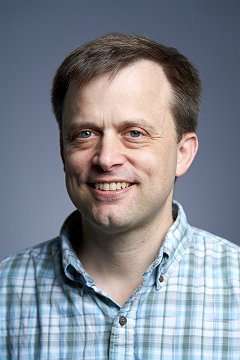
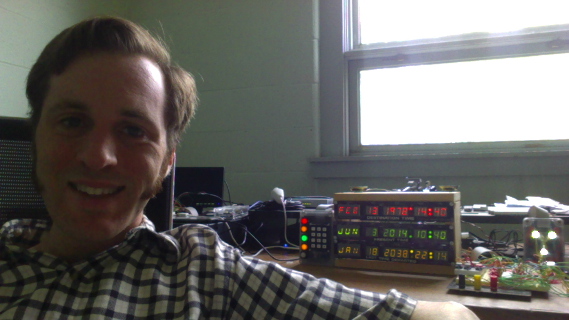
Dustin Richmond is an Assistant Professor in the Department of Computer Science and Engineering at the Baskin School of Engineering, University of California, Santa Cruz. His work focuses on secure, usable hardware systems with applications in FPGA acceleration, RISC-V architectures, and side-channel analysis. Email: drichmond@ucsc Office: Engineering 2, Room 221 Research Interests: Secure hardware systems FPGA-based computing Manycore processors High-level synthesis Side-channel vulnerabilities Notable Article Trends: Recent publications emphasize cloud FPGA security, manycore design optimization, and hardware security. Earlier works focus on RISC-V acceleration, OpenCL compiler enhancements, and heterogeneous computing systems. GitHub Contributions: Maintains open-source projects like RISC-V-On-PYNQ and PYNQ-HLS, addressing FPGA programming challenges and RISC-V integration. Active in resolving community issues related to toolchain compatibility and hardware-software interfaces.
Julien Arino is a Professor in the Department of Mathematics at the University of Manitoba , specializing in Mathematical Epidemiology and Mathematical Population Dynamics . He is an active member of the Mathematical Biology group and focuses on the role of movement in disease transmission, with applications to both human and animal health. Department of Mathematics Faculty of Science University of Manitoba His research spans: Metapopulation dynamics with explicit movement Multi-pathogen and multi-species transmission modeling Computational epidemiology with data science integration Evaluation of travel control measures for disease variants Recent work includes publications on: Cholera transmission in Chad Multi-species bovine tuberculosis dynamics Measles resurgence patterns Software tools for R compilation and data visualization He maintains a public YouTube channel with lecture videos on Mathematical Epidemiology and contributes open-source code for scientific computing in R and Python. His methodological contributions include novel approaches to plot formatting and computational efficiency in epidemic modeling.
Anita Disney is an Assistant Professor of Neurobiology at Duke University and a Faculty Network Member of the Duke Institute for Brain Sciences and Center for Cognitive Neuroscience. Her research investigates neuromodulatory mechanisms in brain circuitry and pre-clinical Alzheimer's Disease neurochemistry using non-human primate models. Her educational background includes: Ph.D. from New York University (2005) Dr. Disney's research spans two integrated domains: Basic Research: Examining how acetylcholine, noradrenaline, serotonin, and oxytocin dynamically specify functional connectivity to enable flexible behavior Disease-Focused Research: Characterizing neurochemical alterations in the 20-30 year pre-symptomatic phase of late-onset Alzheimer's Disease (accounting for >95% of cases) Her lab pioneers question-driven methodology including novel biosensors combining electrophysiology with real-time neurochemical monitoring, proteomics, metabolomics, and comparative cortical anatomy. Analysis of her 15 most recent publications reveals persistent focus on cholinergic modulation in visual processing (60% of works), with increasing translational emphasis on Alzheimer's mechanisms since 2018. Her work consistently employs cross-species comparisons (macaque, marmoset, rodent) and integrates molecular, cellular, and systems-level approaches. No scientific prizes, fellowships, or medals were documented in the source material. However, her research program recently secured substantial funding through Duke's Research & Innovation Seed Grant program (December 2024; $2 million total). Dr. Disney leads an active research laboratory developing next-generation neurochemical monitoring tools. While specific advisees aren't listed, her lab trains researchers in electrophysiology, neuroanatomy, and proteomic techniques. Current funding supports her investigation of pre-clinical Alzheimer's biomarkers and neuromodulatory circuit dynamics. The Disney lab operates within Duke's neuroscience ecosystem as a core component of the Duke Institute for Brain Sciences, specializing in in vivo neurochemical-electrophysiological integration and comparative cortical architecture studies.
Gregory Wornell serves as the Sumitomo Electric Industries Professor in Engineering within MIT's Department of Electrical Engineering and Computer Science (EECS), part of the School of Engineering. He maintains key affiliations with the Computer Science and Artificial Intelligence Laboratory (CSAIL) and the Institute for Data, Systems, and Society (IDSS), while leading the Signals, Information, and Algorithms Laboratory in the Research Laboratory of Electronics (RLE). Education: BASc from the University of British Columbia SM and PhD from MIT His research program integrates theoretical foundations with practical systems across signal processing, information theory, and statistical inference. Current work explores architectures for sensing, learning, and communication systems alongside computational imaging, vision, and perception frameworks. Neuroscience applications form an emerging thread in his interdisciplinary approach, particularly regarding information processing in biological systems. Analysis of recent publications (2021-2025) reveals three dominant trends: 1) Uncertainty quantification and calibration methods for machine learning systems, 2) Fairness frameworks for AI with uncertain sensitive attributes, and 3) Novel signal processing techniques for RF communications and acoustic imaging. His work consistently bridges information-theoretic principles with deep learning implementations. Scientific awards: None specified in source materials. Advising and grants: Source materials indicate active PhD supervision through publications with students like Shah, Shen, and Sattigeri, though formal advisee lists aren't provided. Research appears supported by MIT-IBM Watson AI Lab collaborations and institutional resources from RLE/CSAIL. He directs the Signals, Information, and Algorithms Laboratory (SIAL), which focuses on developing mathematical frameworks for information extraction from complex systems. The lab maintains strong connections with MIT's wireless communications and computational imaging communities through RLE and CSAIL collaborations.
Robert Swinney serves as Professor of Operations Management and Senior Associate Dean for Programs at Duke University's Fuqua School of Business, where he leads academic initiatives while maintaining an active research profile in operations strategy and supply chain management. His research spans critical operations domains with particular emphasis on: Supply chain resilience against disruptions and shortages Strategic consumer behavior in pricing and platform markets Sustainability integration in global supply networks Operational dynamics of digital platforms and crowdfunding Healthcare operations and pharmaceutical supply chains Analysis of his 2016-2024 publications reveals evolving focus from foundational work on strategic consumers and inventory management toward contemporary challenges like platform economics, sustainable operations, and healthcare supply chains. His methodology consistently integrates game theory and operations research to model complex business scenarios, with increasing attention to social responsibility and systemic risk mitigation in multi-tier networks. No scientific awards are documented in the provided information. Administrative leadership as Senior Associate Dean for Programs constitutes his primary service role, though specific grant funding or student advising details remain unreported in the source material.
Fereydoun Daneshgaran is a Professor and Chairman of the Electrical & Computer Engineering Department at California State University, Los Angeles, where he has served since 2006. He also directs the fiber and nonlinear optics research laboratory and has held various academic leadership positions including chairman of the Communications group and acting chairman of the ECE Department. Dr. Daneshgaran's educational background includes: Ph.D. in Communications, VLSI, and Optimization from UCLA (1992) M.S. (Magna Cum Laude) in Communications, Solid State Electronics, and Control Systems from Cal State LA (1985) B.S. (Magna Cum Laude) in Electrical and Mechanical Engineering from Cal State LA (1983) Dr. Daneshgaran's primary research interests focus on wireless communications, digital communications, and information theory. His work spans multiple specialized areas including coding theory (particularly Turbo Codes and LDPC codes), quantum key distribution, cognitive radio, and network localization. His research has significant applications in wireless networking protocols, particularly IEEE 802.11 standards, with numerous publications analyzing throughput performance under various network conditions. He has also made substantial contributions to optical communications and signal processing techniques. Dr. Daneshgaran's publication record shows a progression from foundational work in Viterbi decoding and turbo codes to more recent applications in quantum communications and advanced wireless network protocols. His research consistently bridges theoretical communications theory with practical implementations, as evidenced by both his extensive journal publications and industry experience. His scientific achievements include: Best Paper Award at First International Conference on Advances in Satellite and Space Communications (SPACOMM 2009) U.S. Patent No. US 2007/0079223 A1 for "A method and system for Information processing" Dr. Daneshgaran has supervised numerous Ph.D. students and visiting scholars, primarily from Politecnico University of Turin (POLITO), Italy, fostering international research collaborations. His academic leadership extends to developing and teaching the entire graduate sequence in digital communications at Cal State LA, along with specialized courses in wireless communications, cognitive radio, and optical communication systems. He has also maintained industry connections through various consulting roles and entrepreneurial ventures in communications technology. As director of the fiber and nonlinear optics research laboratory from 1994 to 2015, Dr. Daneshgaran led research in optical communications and related technologies. His work has bridged theoretical communications research with practical implementations, as evidenced by both his academic publications and industry experience founding companies like EuroConcepts S.r.l. and Quantum Bit Communications, LLC.
Ayalvadi Ganesh is a Lecturer in the Department of Mathematics at the University of Bristol's School of Mathematics, where he teaches advanced courses including Complex Networks, Stochastic Optimisation, and Queueing Networks. His academic work bridges theoretical mathematics with practical network applications. His research spans communication networks , decentralized algorithms , and stochastic modeling , with core expertise in large deviations theory , random graphs , queueing systems , and information theory . Recent work demonstrates strong focus on multi-agent bandit problems, epidemic modeling on networks, and latency optimization in distributed systems, reflecting interdisciplinary applications from cybersecurity to biological networks. Analysis of his 15 most recent publications reveals dominant trends in decentralized decision-making (38% of works), network epidemics/rumor spreading (27%), and stochastic optimization (20%), with increasing crossover into machine learning and biological applications since 2020. Best Paper award at ACM SIGMETRICS 2010 for 'Load balancing via random local search in closed and open systems' His teaching portfolio includes graduate-level courses on Complex Networks, Stochastic Optimisation, and Queueing Theory, with documented emphasis on connecting theoretical foundations to real-world network challenges. While specific grant details aren't provided in source materials, his publication pattern suggests sustained research funding in network science and stochastic systems.
Joseph Cichon, MD, PhD, serves as Assistant Professor of Anesthesiology and Critical Care at the Perelman School of Medicine, University of Pennsylvania, where he directs the In Vivo Imaging Center for Anesthetics and Psychedelics. His dual clinical expertise in neuroanesthesia and research focuses on neural circuit mechanisms underlying rapid-acting antidepressants. His educational background includes: BS in Pennsylvania State University, 2008 MS in Pennsylvania State University, 2009 PhD in Neuroscience & Physiology, NYU School of Medicine, 2015 MD, NYU School of Medicine, 2017 Dr. Cichon investigates how anesthetics and psychedelics like ketamine and nitrous oxide produce rapid antidepressant effects through modulation of prefrontal cortical circuits. His work combines in vivo imaging , electrophysiology , and rodent behavioral models to decode cellular mechanisms of neural plasticity, with emphasis on SK2 channel function, somatostatin interneuron activity, and dendritic calcium dynamics. This research bridges anesthesiology, psychiatry, and neuroscience to develop novel therapeutics for depression and neuropathic pain. His publication record demonstrates consistent contributions to high-impact journals including Nature Neuroscience and Nature Communications , with recent work revealing nitrous oxide's antidepressant mechanism via prefrontal SK2 channel inhibition (2025) and ketamine's disruption of cortical calcium spikes (2020). Key research themes include neural circuit modulation by rapid-acting agents, sleep-dependent synaptic plasticity, and neuropathic pain mechanisms. No scientific awards are documented in available sources. Dr. Cichon directs the In Vivo Imaging Center for Anesthetics and Psychedelics at Penn, where his team employs advanced GCaMP-based imaging and transgenic models to visualize real-time neural activity during anesthetic and psychedelic interventions. His laboratory focuses on translating circuit-level discoveries into clinical applications for mood disorders.
Diego Feldman serves as an Associate Professor in the Marketing Department at the Faculty of Business, Austral University, based at the Rosario Headquarters in Argentina. His academic role positions him within the university's core teaching and research structure for business disciplines. Research interests are explicitly inferred from departmental affiliation as Marketing and broader Business studies, though no specific methodologies or theoretical frameworks are documented in available sources. The absence of publication records suggests primary emphasis on instructional duties within undergraduate and graduate business programs. No scientific awards, student mentorship activities, research grants, or laboratory affiliations are referenced in institutional materials. University-wide contact channels like admisiones.rosario@austral.edu.ar handle general inquiries but provide no personal academic outreach pathways.
Professor Snjezana Gligorevic is a faculty member in the Department of Electrical Engineering and Information Technology at Aachen University of Applied Sciences. She serves as a Professor specializing in Information Processing Systems and is also a member of the University Senate. Her research and teaching interests focus on: Information Theory and source coding Error correction and channel coding Digital Signal Processing techniques Communication systems and signal transmission Radar signal processing applications Professor Gligorevic teaches multiple courses across bachelor and master programs including Information Theory, Coding for Error Correction, Digital Signal Processing, and Applied Transmission Line and Signal Theory. Her practical courses emphasize hands-on experience with signal processing algorithms, circuit simulation using LTspice IV, and implementation of communication systems. Contact information: Email: gligorevic@fh-aachen.de Phone: +49 241 6009-52134 Office: Building E, Room E 334 Address: Eupener Str. 70, 52066 Aachen
Andrew Myers is a Professor in the Department of Computer Science at Cornell University , focusing on Programming Languages , Computer Security , and Distributed Systems . He is an ACM Fellow and currently serves as Editor-in-Chief for ACM Transactions on Programming Languages and Systems (TOPLAS). His professional roles include program chair or co-chair for conferences such as ACM POPL 2018 , ACM CCS 2016 , and POST 2014 . His research bridges formal methods with practical language design , as evidenced by projects like the Condorcet Internet Voting System and the Viaduct compiler . Contributions span security protocols , concurrent programming , and hardware design languages . 2023 : Universally Composable Security for Program Partitioning 2022 : A Flexible Type System for Fearless Concurrency, PDL: A High-Level Hardware Design Language 2021 : Viaduct compiler for secure distributed programs 2020 : Handling Bidirectional Control Flow 2018 : MixT consistency language, Covert Channel-Free Hardware Scientific recognition includes Best Paper Awards at POPL 1999 , SOSP 2001 , SOSP 2007 , CIDR 2013 , PLDI 2013 , and PLDI 2015 . Professional service includes conference organization (e.g., ACM POPL 2018 Program Chair , Steering Committee roles in PriSC and PLDI). Myers maintains active open-source projects like civs (Condorcet Internet Voting System) and Viaduct , reflecting his commitment to secure, verifiable systems and language-driven solutions .
Vincent Weaver is an Associate Professor in the Electrical and Computer Engineering Department at the University of Maine's College of Engineering. He leads the VMW Research Group, focusing on low-level systems research including hardware performance counters, computer architecture, and operating systems. Weaver received his BS in Electrical Engineering from the University of Maryland College Park in December 2000, followed by MS (January 2009) and PhD (May 2010) degrees in Electrical and Computer Engineering from Cornell University. He joined the University of Maine faculty in July 2012 as an Assistant Professor and earned tenure and promotion to Associate Professor in September 2018. His research centers on hardware performance analysis, architectural simulation, and systems programming with emphasis on Linux kernel development and embedded systems. Weaver's work bridges theoretical computer architecture with practical systems implementation, often resulting in open-source tools that advance the field. His publications reveal a consistent focus on performance analysis techniques, code optimization, and security through low-level system understanding. Weaver maintains an active teaching schedule including courses in embedded systems, operating systems, and network engineering. He values students with strong programming skills and encourages open source contributions as part of the learning process. His research group provides hands-on experience with cutting-edge processor architectures and performance analysis tools.
Michael Lindner serves as a Senior scientist at the Monumenta Germaniae Historica (MGH), an integral research institute within the Berlin-Brandenburg Academy of Sciences and Humanities in Berlin, Germany. His position places him at the forefront of critical scholarly work on medieval European historical sources. Dr. Lindner's research specializes in Medieval History with concentrated expertise in German History , Philology , and Historical Documents . His scholarly activities encompass Textual Criticism and the preparation of authoritative Source Editions , contributing significantly to the understanding of medieval political, religious, and cultural frameworks through primary source analysis. Contact details are maintained through the MGH office at Jägerstrasse 22/23, 10117 Berlin (Space 453), with professional communication channels including email lindner@bbaw.de and telephone +49 (0)30 20370 239.