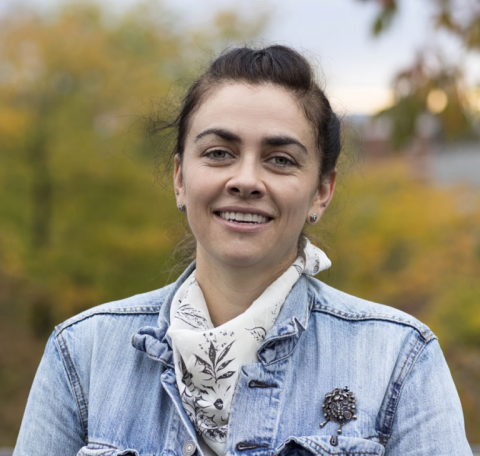
Yarrow Axford is a William Deering Professor in the Department of Earth, Environmental, and Planetary Sciences at Northwestern University. She holds a Ph.D. from the University of Colorado, an M.S. from Utah State University, and an A.B. from Mount Holyoke College. Her research focuses on climate and environmental change through paleolimnological analysis of lake sediments, particularly in Arctic regions and the U.S. Midwest. Key areas include Holocene climate dynamics, glacier fluctuations, and methane cycling. She teaches courses such as Arctic Environments and Paleoclimate Perspectives on Future Climate Change. Her lab, the Quaternary Sediment Lab, employs advanced equipment like scanning XRF core loggers and particle size analyzers. Current projects explore Greenland glacier retreat and Holocene climate reconstruction. Recent publications highlight Arctic glacier changes, Holocene thermal maxima, and methane dynamics in Arctic lakes. She collaborates internationally on lake-based reconstructions and methodological advancements in paleoclimatology.
Mostafijur Rahman is an Assistant Professor of Environmental Health Sciences at Tulane University's School of Public Health and Tropical Medicine. His research leverages large environmental health datasets to study climate impacts on neurodevelopment, mental health, and cardiopulmonary outcomes. Research focuses on: Air pollution impacts on autism spectrum disorders Health effects of extreme heat and air pollution co-exposures Environmental justice and health disparities Climate vulnerability in urban populations Recent publications analyze prenatal exposures to particulate matter, mortality risks from extreme temperatures, and adaptation strategies in vulnerable communities. Methodological strengths include advanced statistical modeling of chemical mixtures and mixed-methods approaches. Awards and honors: Emerging Investigator designation by AJRCCM (2022) Best Poster Award, NYC Epidemiology Forum (2019) Dr. Morton Lippmann Scholarship, AIHA (2018)
Ezra C. Wood is an Associate Professor in the Department of Chemistry at Drexel University, specializing in atmospheric chemistry research related to air pollution and climate change. His work focuses on quantifying primary pollutant emissions and elucidating secondary pollutant formation mechanisms, particularly ozone and secondary aerosol. Dr. Wood received his PhD from the University of California-Berkeley in 2004. His research employs optical and mass spectrometric techniques to measure trace atmospheric compounds at part-per-trillion levels. His work spans multiple research areas including: Atmospheric radical chemistry (HO x , RO 2 ) Urban air pollution dynamics Wildfire smoke chemistry Forest-atmosphere interactions Advanced atmospheric measurement techniques His research has been funded by the National Science Foundation, National Oceanic and Atmospheric Administration, and the Texas Air Quality Research Program. Dr. Wood has conducted extensive fieldwork in major urban areas (New York City, San Antonio, Philadelphia), forested regions (Indiana, Michigan), and wildfire-affected areas in rural Idaho. Dr. Wood teaches analytical, physical, and environmental chemistry courses at Drexel University, including Atmospheric Chemistry (Environmental Science 405/605), Analytical Spectroscopy (Chemistry 530), and Chemistry of the Environment (Environmental Science 401/501). His research group has developed specialized instrumentation including the Ethane CHemical AMPlifier (ECHAMP) for measuring peroxy radicals and operates a Chemical Ionization Mass Spectrometer (CIMS) for atmospheric analysis.
Dr. David Green is a Senior Research Fellow at the School of Public Health, Faculty of Medicine at Imperial College London, leading the Aerosol Science Team within the Environmental Research Group. His research focuses on aerosol and gas measurement, source apportionment, and health impact studies. Key leadership roles include directing the Centre for Low Emission Construction and contributing to diversity initiatives. His work integrates advanced analytical techniques, such as real-time supersite monitoring in London, to inform public health policies and environmental forecasting systems. Research interests emphasize aerosol composition measurement, development of new techniques, and quantifying emission sources in urban environments. Collaborative projects span agencies like the Environment Agency, EPSRC, and EU initiatives. He supervises PhD students exploring topics such as non-road mobile machinery emissions, satellite-based traffic analysis, and subway air quality. His team’s work bridges environmental science and public health, addressing issues like ultrafine particle exposure, particulate matter on public transport, and policy-driven emission reductions. Key Collaborations: Includes STFC Air Quality Network, High Speed 2, and EU Metrology for Nitrogen Dioxide projects. Advising: Oversees five PhD students and post-doctoral fellows, focusing on environmental engineering and public health applications. Labs/Teams: Leads the Aerosol Science Team and contributes to the MRC Centre for Environment and Health.
Professor Markku Kulmala (University of Helsinki) is a leading expert in atmospheric and environmental physics. As Academician of Finland and double ERC Advanced Grant holder, he leads the Institute for Atmospheric and Earth System Research (INAR) and ACCC Flagship. With ~1200 publications and a WoS H-index of 124, his work focuses on atmospheric aerosols, climate interactions, and air quality. Academy of Finland grants (2004-2009, 2011-2015) ERC Advanced Grant (2×) ISI Highly Cited Researcher His research team has published 4 groundbreaking studies in Nature and Science , including: Aerosol formation mechanisms Aerosol-cloud-climate interactions Atmosphere-land surface relationships Climate-air quality feedbacks With over 20 PhD/Master's students supervised, recent work includes Arctic aerosol studies ( Elementa 2025), Beijing air quality analysis ( Nature Communications 2025), and climate modeling applications. He has received multiple international awards including the Fuchs Memorial Award and honors from Stockholm and Tartu universities.
Sara Dubowsky Adar is a Professor of Epidemiology and Global Public Health at the University of Michigan School of Public Health. Her research integrates epidemiology, environmental health, exposure science, and biostatistics to investigate environmental hazards' impacts on human health, with primary focus on air pollution and noise effects on healthy aging. Her educational background includes: ScD in Environmental Epidemiology from Harvard T.H. Chan School of Public Health (2005) MHS in Environmental Health from Johns Hopkins School of Public Health (1998) BS in Environmental Engineering from Massachusetts Institute of Technology (1996) Dr. Adar's research centers on environmental risk factors for aging, particularly examining how living environments influence healthy aging trajectories through cross-disciplinary collaborations with environmental epidemiologists, climatologists, exposure scientists, economists, and demographers. Her work spans air pollution, noise exposure, cardiovascular disease, and intervention strategies to improve health outcomes. Her extensive publication record reveals strong thematic patterns across environmental exposures and neurological/cognitive outcomes, with increasing focus on source-specific particulate matter, dementia pathways, and intervention effectiveness in recent years. The research demonstrates methodological sophistication through large cohort studies, randomized trials, and harmonized international assessments. Professional recognition includes: Sandra A. Daugherty Award for Excellence in Cardiovascular Epidemiology (American Heart Association) Excellence in Teaching Award (University of Michigan School of Public Health) Dr. Adar serves as Associate Editor at Environmental Health Perspectives and previously held leadership roles including Secretary/Treasurer of the International Society for Environmental Epidemiology. Her research group actively develops evidence-based interventions to reduce environmental health hazards while maintaining strong educational commitments to trainees. The Adar Research Group operates within the Department of Epidemiology at Michigan Public Health, focusing on interdisciplinary environmental health research with particular emphasis on vulnerable populations including children, older adults, and communities in low-resource settings globally.
Nga Lee "Sally" Ng is a Professor at the Georgia Institute of Technology, holding appointments in the School of Chemical & Biomolecular Engineering (primary), School of Earth & Atmospheric Sciences (joint), and School of Civil & Environmental Engineering (courtesy). Her research focuses on aerosol chemistry, with expertise in atmospheric nanoparticle formation, aerosol health effects, and advanced instrumentation development. She leads the Ng Research Group, which uses laboratory chamber experiments and field measurements to study aerosol dynamics. Dr. Ng has pioneered initiatives like the $12M NSF-funded ASCENT network for nationwide atmospheric measurements and served in leadership roles including Chair of AIChE's Environmental Division (2020) and AAAR Conference Chair (2019). She has received prestigious awards such as the AGU Atmospheric Sciences Ascent Award (2023), Love Family Professorship, and EPA STAR Early Career Award. Research interests: Aerosol chemistry, health impacts, instrument development, and climate interactions. Key contributions: Pioneering work on secondary organic aerosol formation, wildfire smoke health risks, and urban air quality monitoring networks. Her work bridges fundamental science and public health, with recent focus on quantifying aerosol toxicity using high-throughput assays and advancing low-cost sensor technologies for real-time air quality assessment.
Dr. Wu Fengchang is a prominent environmental scientist and academic leader in China, currently serving as Director of the Academic Committee at the Chinese Research Academy of Environmental Sciences (CRAES) and Director of the National Ecological and Environmental Criteria Committee. He is an Academician of the Chinese Academy of Engineering (since 2017) and leads national initiatives in water pollution control, environmental criteria development, and ecological engineering. His work integrates science, technology, and policy to address water quality management and heavy metal pollution. Education: PhD in Environmental Geochemistry (1995, Institute of Geochemistry, Chinese Academy of Sciences) Research focuses on biogeochemical modeling, pollution control technologies, and interdisciplinary studies in environmental toxicology and risk assessment. He pioneered the State Key Laboratory of Environmental Criteria and Risk Assessment and developed innovative methods for water quality criteria derivation and sediment remediation. Awards include international recognition such as the Elsevier Most Cited Researcher (2019) and multiple national honors, including the National Science and Technology Progress Award (2017, 2013). During the COVID-19 pandemic, he served as Deputy Director of the State Council’s environmental risk prevention expert group. Key roles: Technology Chief Engineer for China’s National Water Pollution Control Program, Chief Scientist of a Key Innovation Team, and consultant to international organizations like the International Copper Association. His contributions span over 20 lake/reservoir systems and 10 key river basins, emphasizing ecological restoration and policy advocacy. He invented sampling equipment for in-situ sediment analysis and pioneered methods for pollution source apportionment and risk assessment.
Bernhard Rappenglueck is a Professor of Atmospheric Chemistry at the University of Houston within the Earth and Atmospheric Science Department, part of the College of Natural Sciences and Mathematics. He maintains an active research group with students from diverse international backgrounds originating from over 15 countries, with expertise spanning Chemistry, Environmental Sciences, Mathematics, Engineering disciplines, Meteorology, and Physics. His educational background includes a Habilitation in Bioclimatology & Atmospheric Environmental Chemistry from Munich University of Technology (TU Munich) in 2003, a PhD in Physics from University of Munich (LMU Munich) in 1996, an M.S. in Meteorology from University of Munich (LMU Munich) in 1991, and a B.S. in Technical Physics from Munich University of Technology (TU Munich) in 1985. Rappenglueck's research integrates meteorology and atmospheric chemistry through both experimental field work and numerical modeling. His primary research interests encompass meteorological processes and their impacts on atmospheric chemical composition across spatial and temporal scales, micrometeorological and boundary layer studies, regional and large-scale transport processes within the troposphere, air quality studies in polluted and unpolluted areas including photochemical processes, and the application and development of atmospheric modeling. His work spans from biosphere-atmosphere exchange processes to regional urban air quality studies and long-range transport studies, utilizing various meteorological measurement tools including micrometeorological towers, tethered sondes, SODAR, RASS, and radio- and ozonesondes. His publication record shows consistent research output focused on urban air quality assessment across multiple global megacities including Munich, Berlin, Athens, Santiago de Chile, Mexico City, Houston, Los Angeles, Dallas/Ft Worth, and Doha, Qatar. Recent work emphasizes machine learning applications for ozone forecasting, boundary layer height determination, VOC source apportionment, and the impacts of emission changes on atmospheric composition. His research demonstrates strong methodological diversity, combining field measurements with advanced modeling approaches to address complex air quality challenges. Rappenglueck actively mentors numerous graduate and undergraduate students, with a track record of successful student placements in academic, government, and industry positions. His group has participated in major field campaigns including TexAQS-II/TRAMP, SHARP, and TCEQ O3 formation campaigns in Houston. His teaching portfolio includes advanced courses in Atmospheric Chemistry, Boundary Layers and Turbulence, Remote Sensing for Atmospheric Science, Aerosols and Climate, and Air Pollution Meteorology, contributing to both undergraduate and graduate degree programs in Atmospheric Science at the University of Houston.
Dr. Christine Christ is a Researcher at the Faculty of Theology of the University of Basel. Her work spans theological disciplines with a focus on historical, ethical, and intercultural perspectives. Institution: University of Basel School: Faculty of Theology She contributes to research areas including theology, religious studies, ecumenism, and ethics, though specific projects are not detailed in the provided texts. Her role involves academic collaboration and guest research initiatives. Recent publications highlight trends in soil science, environmental monitoring, and climate-related research, suggesting potential interdisciplinary engagements or data inconsistencies. These works address multi-scale soil quality frameworks, sediment source apportionment, peatland carbon dynamics, and radionuclide tracing methodologies. Dr. Christ's contact details include the email christine.christ@unibas.ch . No scientific awards or student supervision details are mentioned in the provided data.
Fu Zongmei is a Professor at the School of Environmental Science and Engineering of Southern University of Science and Technology (SUSTech) since 2019. She previously held academic positions at Peking University (2010-2019) and Hong Kong Polytechnic University (2008). Her research focuses on atmospheric chemistry , air pollution , and chemistry-climate interactions , with expertise in inverse modeling of emissions, secondary organic aerosol formation, and air-sea exchange processes. Education: Ph.D. in Earth & Planetary Sciences (Harvard University, 2007), S.M. in Engineering & Applied Sciences (Harvard University, 2005), M.S. and B.S. in Atmospheric Sciences (National Taiwan University) Her research combines ground-based , aircraft , and satellite observations to study pollutant transport, cloud-aerosol interactions, and climate impacts on air quality. Recent work includes assessing haze mitigation strategies in Northern China and analyzing PM2.5 health risks through spatiotemporal modeling. Key honors include the National Natural Science Foundation of China Outstanding Young Scientist Fellowship (2012), the Tu Chang Wang Meteorological Science and Technology Award (2013), and the Ministry of Education Natural Science Award (Second Prize) (2019). She serves as an associate editor for Atmospheric Environment and contributes to major international conferences as session co-chair and organizer. Notable grants: NSFC General Project on Organic Nitrogen Aerosols (2020-2023, PI), National Key R&D Program on Air Quality Modeling (Co-I), and 973 Program on Chemistry-Climate Interactions (Co-PI)
Vishal Verma is an Associate Professor in the Department of Civil and Environmental Engineering at the University of Illinois. His research focuses on understanding the sources, chemical composition, and health impacts of atmospheric particulate matter (PM2.5), particularly its oxidative potential. He has contributed to studies on urban air pollution, combustion emissions, and indoor/outdoor environmental monitoring. Key research areas include: Quantifying oxidative potential of aerosols and its relationship with human health Investigating emission sources of PM2.5 in urban environments (e.g., Kuwait, Delhi) Developing novel measurement techniques for real-time aerosol analysis Exploring the impact of atmospheric aging on aerosol toxicity Notable achievements include the NSF CAREER Award (2019) for integrating education and research on particulate matter toxicity. His work has been featured in high-impact journals like Nature Communications and Environmental Science & Technology . Collaborations span global institutions, emphasizing international research networks. Verma’s contributions extend to public health applications, such as studies on N95 mask sanitization using electric cookers and microwave decontamination methods. His research bridges environmental engineering, toxicology, and policy, addressing critical global challenges like climate change and urban air quality.
Dr. Michael Vermeuel is an Assistant Professor in the Department of Earth, Atmospheric, and Planetary Sciences at Purdue University. He leads the AIR CheM (Atmospheric Interdisciplinary Research in Chemistry and Meteorology) group, focusing on reactive atmospheric gases impacting air quality, climate, and ecosystems. His work combines field observations, chemical transport modeling, and laboratory studies. Education: PhD in Chemistry (2021), University of Wisconsin – Madison MS in Chemistry (2017), University of Wisconsin – Madison BS in Chemistry (2015), The College of New Jersey Research Interests: Dr. Vermeuel’s group investigates the sources and fates of atmospheric chemicals using advanced techniques such as chemical ionization mass spectrometry and micrometeorological flux measurements. Key areas include ozone deposition dynamics, VOC cycling in forests, and marine-abiotic VOC sources. His work bridges laboratory experiments, field campaigns (e.g., FROG-NY, FluCS), and model development to address environmental challenges. Awards: AGU James R. Holton Award (2024) His lab emphasizes interdisciplinary collaboration, with projects addressing urban pollution, wildfire impacts, and climate feedbacks. Current research includes the Fluxes of Reactive Organic Gases in New York (FROG-NY) and the Flux Closure Study (FluCS) at Manitou Experimental Forest.
Philip K. Hopke, Ph.D., serves as an Adjunct Professor in both the Department of Public Health Sciences and Department of Environmental Medicine at the University of Rochester School of Medicine and Dentistry. With a distinguished career spanning over five decades since earning his Ph.D. from Princeton University in 1969, Dr. Hopke has established himself as a global leader in environmental chemistry and air pollution research. Ph.D. in Chemistry, Princeton University (1969) M.A. in Chemistry, Princeton University (1967) B.S. in Chemistry, Trinity College (1965) Dr. Hopke's pioneering work focuses on particulate matter source apportionment , where he developed innovative methodologies like dispersion-normalized positive matrix factorization (DN-PMF). His research integrates chemometrics , atmospheric chemistry , and environmental epidemiology to address critical air quality challenges worldwide. Recent projects span China's megacities, Iran's water crisis, and New York State's vehicle emission regulations, with particular emphasis on health impacts of source-specific pollutants. Analysis of his 15 most recent publications reveals consistent focus on advanced source apportionment techniques , health outcomes linked to air pollution , and policy evaluation using sophisticated statistical modeling. His work increasingly incorporates machine learning approaches while maintaining rigorous chemical characterization of environmental samples. Scientific Recognition Fellow of both the Air and Waste Management Association (2021) and American Association for Aerosol Research Recipient of the Lifetime Achievement Award in Chemometrics (2014) Albert Nelson Marquis Lifetime Achievement Inductee (2018) Multiple international awards including the Fissan-Pui TSI International Aerosol Research Award (2018) Dr. Hopke maintains an exceptionally active research program with collaborators across six continents, evidenced by his 2025 publications from China, Iran, Kazakhstan, and the United States. His work bridges fundamental atmospheric science with practical public health applications, particularly in evaluating regulatory impacts on air quality and health outcomes.
Sally Pusede is an Associate Professor in the Department of Environmental Sciences at the University of Virginia's College of Arts & Sciences, where she directs atmospheric chemistry research and co-leads the Repair Lab. Her work bridges atmospheric science and environmental justice through measurements from ground, aircraft, and satellite platforms in urban and agricultural environments. Dr. Pusede earned her Ph.D. from the University of California Berkeley in 2014. Her educational background established the foundation for her interdisciplinary approach combining chemical measurements with community engagement. As an atmospheric chemist, Pusede investigates reactive nitrogen cycles, greenhouse gas emissions (particularly nitrous oxide), and neighborhood-level air pollution disparities. Her research employs spatial and temporal variability analysis to derive mechanistic insights into urban atmospheric processes, with emphasis on how pollution adversely affects human health and ecosystems. She is co-director of UVA's Repair Lab, which develops community-based solutions to environmental justice issues like coal dust pollution in Hampton Roads and industrial swine facility impacts in North Carolina. Analysis of her 15 most recent publications (2022-2025) reveals three dominant research thrusts: 1) Quantifying air pollution inequality using satellite remote sensing (especially nitrogen dioxide and ammonia), 2) Investigating reactive nitrogen chemistry in urban-agricultural interfaces, and 3) Developing community-driven repair frameworks for environmental justice. Her work consistently demonstrates how neighborhood-level pollution disparities contribute to health outcomes and ozone formation, particularly in communities of color. Dr. Pusede's scientific contributions have been recognized with prestigious awards including: Presidential Early Career Award for Scientists and Engineers (PECASE), Biden Administration, 2024 Future Horizons in Climate Science Turco Lectureship, American Geophysical Union, 2022 National Science Foundation (NSF) CAREER Award, 2021 NASA New Investigator Program Award, 2021 Environmental Sciences Organization Faculty Teaching Award, University of Virginia, 2016 She mentors graduate students through the Pusede Lab while securing major grants from NSF, NASA, and the White House Office of Science and Technology Policy. Her teaching portfolio includes EVSC 4380 (Air Pollution and Environmental Justice), EVSC 4490/7490 (Air Pollution), EVSC 5350 (Atmospheric Chemistry), and EVSC 3300 (Atmosphere and Weather). The Repair Lab operates as an interdisciplinary environmental justice hub where Pusede collaborates with community practitioners, embedding researchers in Virginia communities through its practitioner-in-residence program. This lab focuses on coal dust pollution in Hampton Roads and industrial swine facility impacts in Eastern North Carolina, using satellite data to document environmental injustices while co-developing solutions with affected residents.