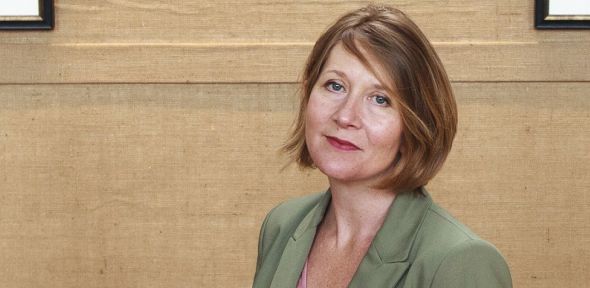
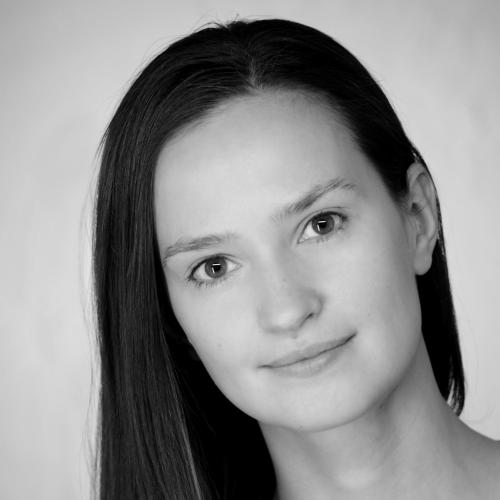
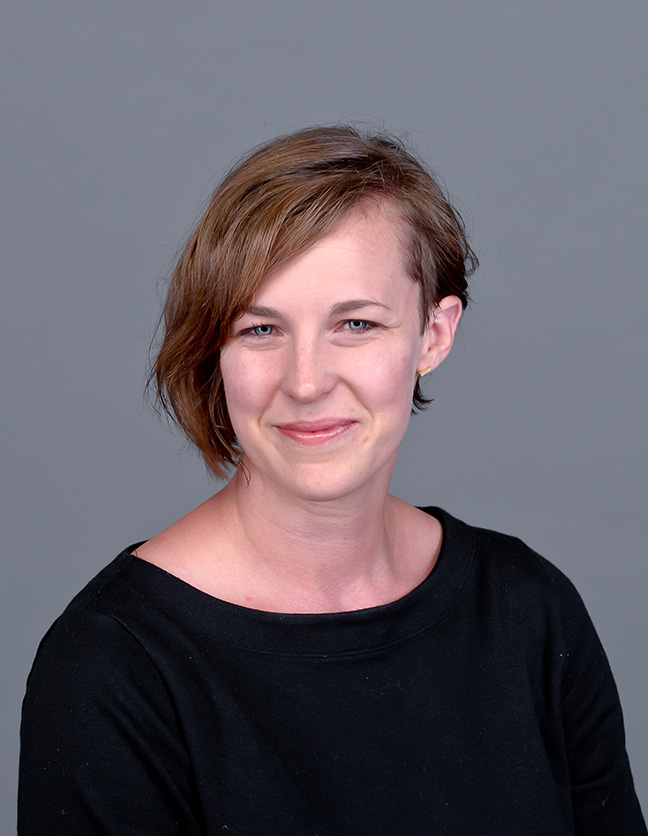
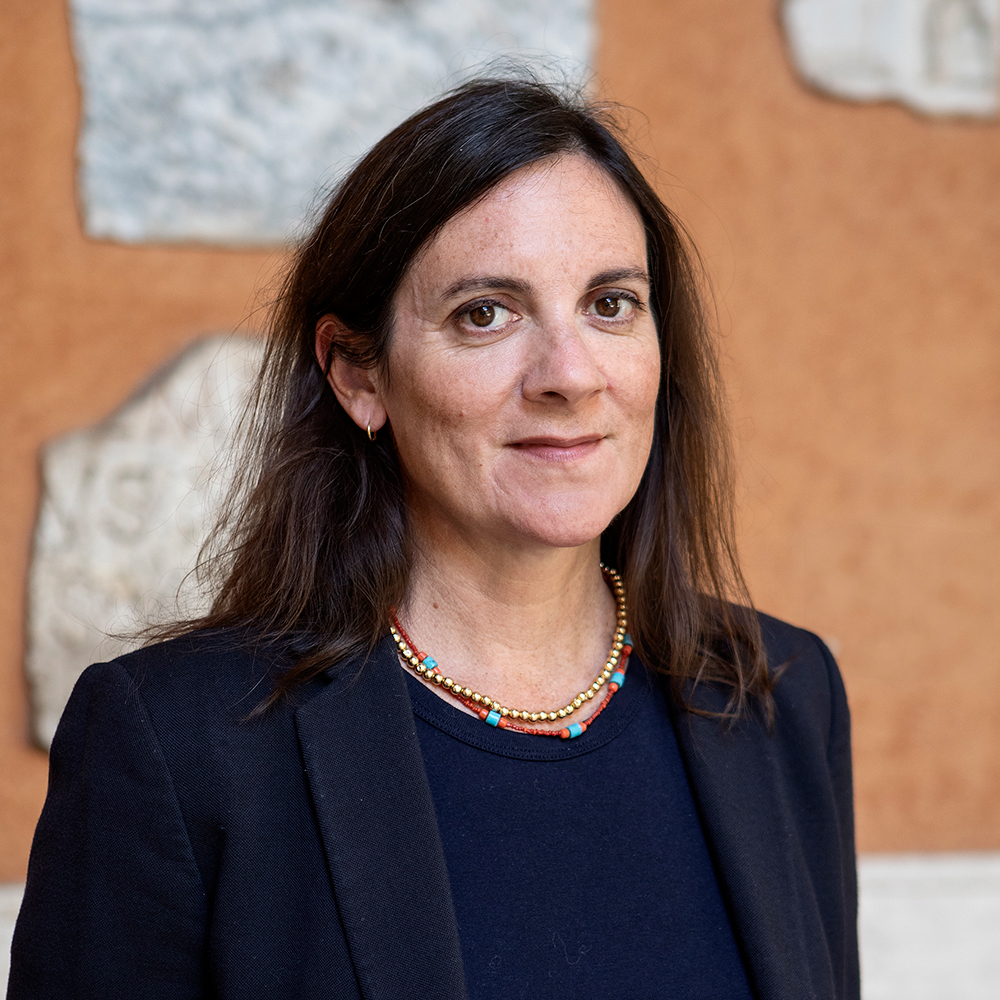
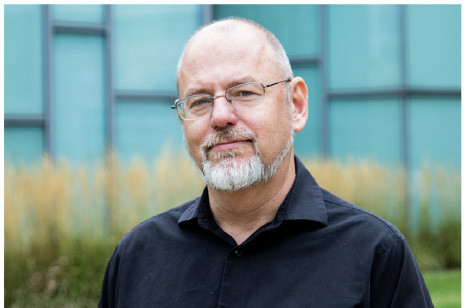
Professor Emma Widdis is a leading scholar at the Faculty of Modern and Medieval Languages and Linguistics at the University of Cambridge, specializing in the intersection of Soviet cinema, ideology, and cultural geography. Her work explores the reeducation of sensory perception through film, early Soviet urban spaces, and the construction of subjectivity via cinematic techniques. Teaches 20th-century Russian/Soviet literature, cinema, and film theory Focuses on sensory engagement, political avant-garde, and urban spatial representation Supervisor for MPhil and PhD students in Slavonic Studies Her recent book Socialist Senses (2017) examines how cinema shaped Soviet perceptions of reality. Her publications span topics like silence in sound film, set design materiality, and costume symbolism in early Soviet cinema. While no formal scientific awards are listed, her research has been supported through institutional grants and collaborations with centers like CRASSH and Cambridge Language Sciences.
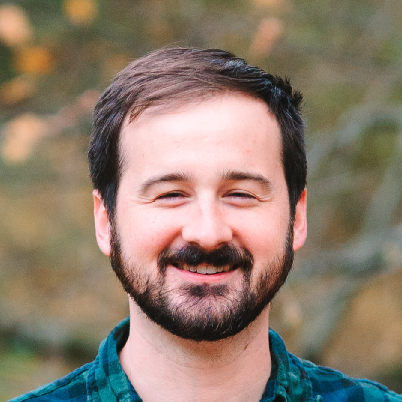
Chris Donahue is an Assistant Professor in the Computer Science Department at Carnegie Mellon University . He also serves as a part-time Research Scientist at Google DeepMind on the Magenta team. His work focuses on leveraging generative AI to enhance human creativity, particularly in music. Education: PhD in Computer Science (UC San Diego), Postdoctoral Scholar (Stanford University) His research spans controllable generative modeling of music and audio , with a focus on real-time interactive systems. Projects like Piano Genie , Beat Sage , and Copilot Arena demonstrate his commitment to real-world deployment. His Generative Creativity Lab (G-CLef) explores AI applications beyond music, including programming and natural language. Recent publications highlight advancements in multimodal music evaluation , real-time adaptation , and AI-driven sound morphing . He co-developed Magenta RealTime , an open-weight real-time music generation model, and MusicFX DJ Mode . Scientific Awards: Best Paper Award (top 1) at NAACL Student Research Workshop 2025 Best Paper Award (top 1% of submissions) at CHI 2025 Best Paper Runner-up at ISMIR 2021 He co-advises PhD students like Wayne Chi (NDSEG Fellow) and mentors Irmak Bukey . His lab receives support from the AIxArts incubator fund at CMU .
Jenna Wise DiVincenzo is an Assistant Professor at the Elmore Family School of Electrical and Computer Engineering at Purdue University. She specializes in research areas such as software verification, formal methods, and programming languages, with a focus on gradual verification techniques that combine static and dynamic analysis. Her work emphasizes usability and scalability in verification tools, and she has contributed to projects like Gradual C0 and gradual null-pointer analysis. Dr. DiVincenzo earned her PhD in Software Engineering from Carnegie Mellon University (2023) and a BS in Mathematics and Computer Science from Youngstown State University (2017). She has interned at IBM Research, MIT Lincoln Laboratory, and the Software Engineering Research and Empirical Studies Lab at YSU. Her awards include the Google PhD Fellowship, NSF GRFP Fellowship, and 2022 Rising Star in EECS. Her research projects span theoretical advancements in gradual verification, empirical studies on usability, and practical tool development. She advises PhD students (e.g., Craig Liu, Conrad Zimmerman) and collaborates on initiatives like gradual verification for Rust and educational tools to teach verification concepts. Her work also explores leveraging large language models for specification generation and enhancing verification tool soundness through formal proofs.
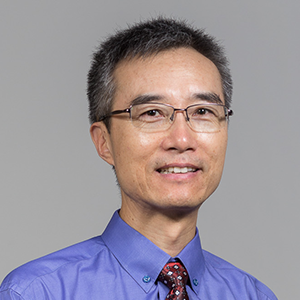
WANG Ye is an Associate Professor in the Department of Computer Science at the School of Computing, National University of Singapore (NUS). He holds a PhD in Information Technology from Tampere University of Technology, Finland, and has been a tenured faculty member at NUS since 2002, following his industry research role at Nokia Research Center. He is the director of the Sound and Music Computing Lab at NUS, leading cutting-edge research in AI-driven music and health technologies. PhD, Information Technology, Tampere University of Technology, Finland (2002) MSc, Telecommunications, Braunschweig University of Technology, Germany (1993) BSc, Telecommunications, South China University of Technology, China (1983) His research is centered on Sound and Music Computing for Human Health and Potential (SMC4HHP) , with a focus on eHealth, eLearning, mobile/wearable computing, and music information retrieval. His work spans AI for stroke rehabilitation, language learning through singing, singing voice synthesis, and automatic music transcription. He has pioneered systems like SLIONS (language learning via karaoke), CocoLyricist (AI co-creation for stroke recovery), and SinTechSVS (expressive singing voice synthesis). The latest articles highlight a strong trend in AI-driven music and health technologies , particularly in controllable lyric generation, singing voice synthesis, automatic pronunciation assessment, and multimodal music transcription. The research increasingly integrates large language models, explainable AI, fairness, and real-world deployment, reflecting a shift from theoretical exploration to practical, human-centered applications in healthcare and education. Dr. Wang has received numerous scientific honors, including: Best Paper Awards at ACM MM, ISMIR, IEEE ISM, and CHI First Prize, Asia Pacific Assistive, Rehabilitative, and Therapeutic Technologies Challenge (2015) Faculty Teaching Excellence Award, NUS School of Computing (2024) Top Paper Award, ACM Multimedia 2022 AI in Medicine Collaborative Grant for CocoLyricist project He has supervised over 11 PhD and 20 MComp students and is currently guiding six PhD candidates. His grants come from MOE, NRF, A*STAR, Nokia, and Smule. He has served as General Chair of ISMIR2017 and TPC Co-Chair of ICOT2017, and is on the editorial boards of IEEE Transactions on Multimedia and Journal of New Music Research. He has also developed and taught the first course on Sound and Music Computing in Singapore. Dr. Wang leads the Sound and Music Computing Lab (SMC Lab) , a multidisciplinary team exploring the synergy of music computing, AI, mobile technology, and cloud systems for health and education. The lab actively collaborates with medical institutions such as NUS Yong Loo Lin School of Medicine, Singapore General Hospital, and Harvard Medical School, and is currently working on projects in AI-supported language learning, stroke rehabilitation, and intelligent music interfaces.
Swiss Federal Institute of Technology in LausanneSwitzerland
Pierre Vandergheynst is a Full Professor at the Swiss Federal Institute of Technology Lausanne (EPFL) in the Department of Electrical Engineering, with a courtesy appointment in Computer and Communication Sciences. He serves as EPFL’s Vice-Provost for Education since 2015 and leads the Signal Processing Laboratory 2 (LTS2). His research spans harmonic analysis, sparse approximations, mathematical data processing, and applications in signal/image processing, computer vision, machine learning, and graph-based data analysis. PhD in Mathematical Physics (1998), Université catholique de Louvain Postdoctoral Researcher at EPFL (1998-2001) Assistant Professor at EPFL (2002-2007) His research explores geometry/symmetry in high-dimensional data, redundant dictionaries for dimensionality reduction, and computational harmonic analysis on manifolds. Recent work focuses on protein structure modeling, geometric deep learning, and graph-based signal processing. Key article trends include graph neural networks for protein analysis, geometric deep learning in neuroscience, and structured knowledge priors in neural models. His 2023-2025 publications emphasize interpretable AI, long-range dependencies in graphs, and molecular representation learning. Scientific Awards: IEEE Signal Processing Magazine Best Paper Award (2023) Signal Processing Society Best Paper Award (2022) Apple ARTS Award (2007) De Boelpaepe Prize, Royal Academy of Sciences of Belgium (2009-2010) He has supervised over 30 PhD theses and contributed to foundational work in graph signal processing, compressive sensing, and geometric deep learning. His lab develops tools for data science on non-Euclidean structures, with applications in medicine, astronomy, and wireless systems.
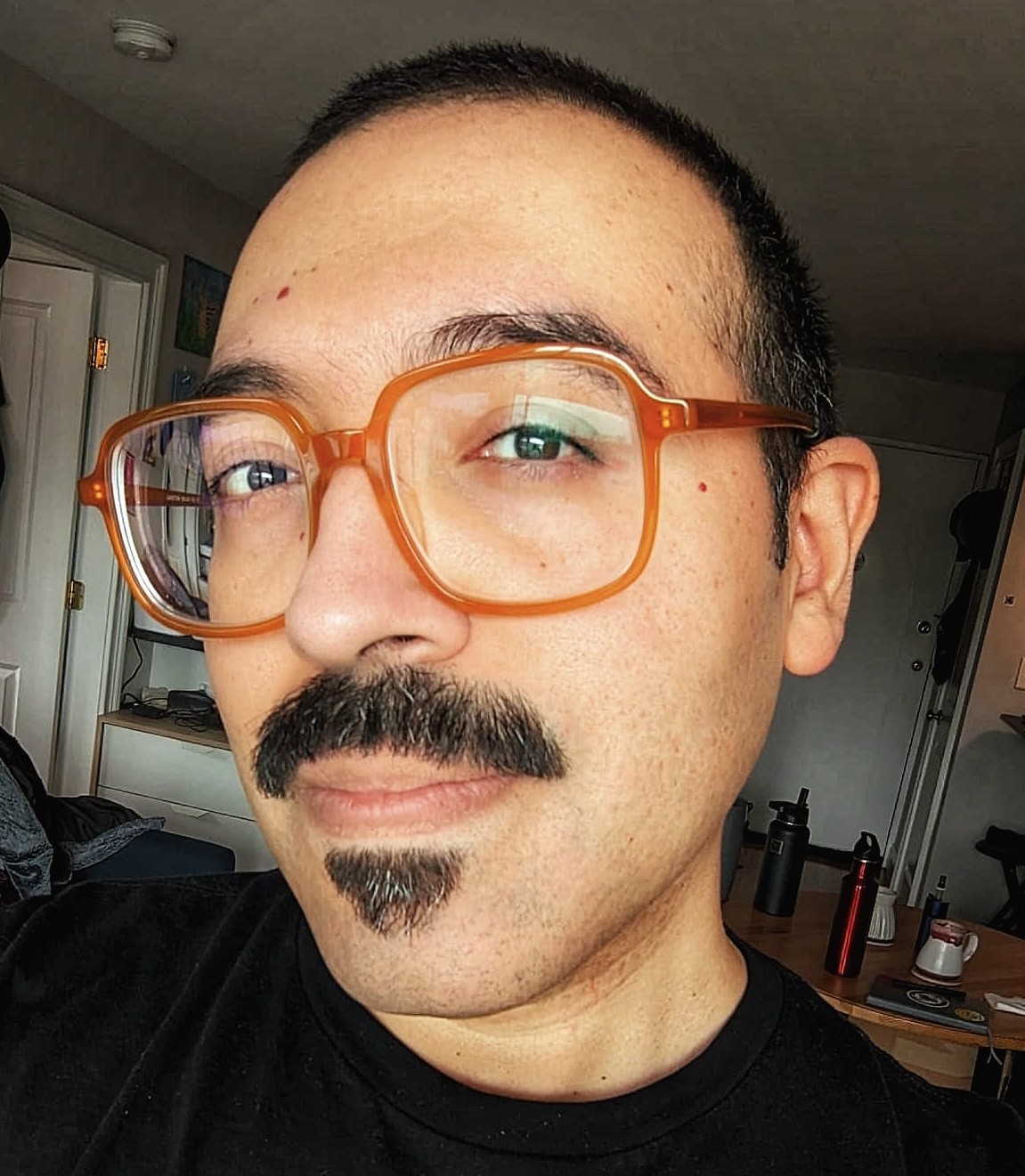
José Angel Araguz is an Assistant Professor of English at Suffolk University, specializing in creative writing and literary studies. His research focuses on Latinx poetics, poetic forms, and experimental literary genres. He holds a PhD from the University of Cincinnati, an MFA from New York University, and a BA from the College of Santa Fe. Dr. Araguz is deeply involved in literary publishing, serving as Editor-in-Chief of Salamander , a member of The Cincinnati Review’s Strategic Board, and an advisory board member for SWING literary journal. He also leads editorial roles at Airlie Press and Right Hand Pointing. His creative work spans poetry, nonfiction, and hybrid genres, with a focus on Latino/a identity, speculative elements, and formal innovation. Major publications include Ruin and Want (2023), La esperanza espera (2023), and Rotura (2022). His research explores blackout poetry, microcuentos, and the intersection of creative writing with cultural critique. He teaches courses like Latinx Literature, Creative Writing, and Poetry Workshops. Office hours are Fridays 10:30 a.m.–1:30 p.m. or by Zoom appointment.
Dr Olga Petri is an Assistant Professor in Human Geography at the Department of Geography, University of Cambridge. She is a Bye-Fellow and Director of Studies in Geography (Part II) at Jesus College, and a Leverhulme/Newton Trust Early Career Research Fellow. Her research bridges cultural and historical geography, queer studies, and more-than-human geographies, with a focus on urban modernity in non-Western contexts. Born in St Petersburg, Olga holds a BA and MA in Geography from Saint-Petersburg State University, an MSc in Urban Studies from University College London (merit), and a PhD in Geography from the University of Cambridge. Olga's research explores four key areas: Queer Geographies in authoritarian urban spaces, More-than-Human Geographies analyzing human-animal relationships, Russian Arctic Studies examining environmental and geopolitical transformations, and Migration Urbanism studying cities as hubs for political refugees. Her work on Beastly St Petersburg and Winged Worlds reconfigures urban history through animal and queer lenses. Scientific awards include the Leverhulme/Newton Trust Early Career Research Fellowship and a 2020 shortlisting for Student-Led Teaching Award . She is a Junior Research Fellow at Wolfson College since 2018. Olga leads postdoctoral research on human-animal dynamics in imperial Russia. She supervises graduate students in cultural/historical geography and urban studies. Her work features in Vital Geographies research group at Cambridge.
Lisa Walcott is an Associate Professor of Art at Hope College, where she has been a faculty member since 2018. She teaches sculpture courses, the capstone course for art majors, and a First-Year Seminar on artistic processes. Her studio practice focuses on kinetic sculptures and installations that explore themes of home, the everyday, and the feminine experience. MFA in Sculpture from Cranbrook Academy of Art (2010) B.A. from Trinity Christian College (2005) Walcott’s research intersects sculpture, installation art, and kinetic design, often recontextualizing domestic objects to investigate themes of interdependence, repair, and the unseen forces in everyday life. Her work frequently involves mechanical components and materials like wax, motors, and household items to create immersive, motion-driven installations. Her recent artworks, such as Making a Mountain (2024) and A Soft Punch to the Gut (2024), exemplify her focus on transforming utilitarian structures into emotive, kinetic pieces. These works, alongside digital collages like The Way I Figure It (2023), reveal a trajectory toward blending physical materials with conceptual frameworks to explore domestic ingenuity and tension. Walcott actively mentors students through faculty research collaborations and founded the Hope College Art Club. She exhibits nationally at institutions like the Eli and Edythe Broad Art Museum and The Sculpture Center, with solo exhibitions at venues including Manifest Gallery (Cincinnati) and the Urban Institute for Contemporary Art. Her studio practice integrates material investigations and workshops to refine techniques, which she translates into both pedagogy and art. Notable solo exhibitions include Swarm (2013) at the Broad Art Museum and Tight Spots (2021) at Saugatuck Center for the Arts.
Professor Beth Williamson is a leading scholar of medieval culture, holding dual roles as Professor of Medieval Culture and Chair in the History of Art at the University of Bristol's Department of History of Art (Historical Studies), and as Academic Director (Research Impact & Translation Partnerships) within the Faculty of Social Sciences and Law. She earned her B.A. from Oxford University (Oxon), an M.A., and a Ph.D. from the University of London (Lond.). Her research focuses on visual, material, and aural dimensions of medieval religious practice, exploring how sensory experiences shaped devotional life. Key themes include sacred imagery (e.g., the Virgin Lactans and Madonna of Humility), liturgical spaces, and the intersection of art with music, time, and political power. Recent projects include studies of Westminster Abbey’s royal patronage and collaborations in interdisciplinary historical research. Her publications span over three decades, addressing topics from Italian Renaissance altarpieces to Irish medieval sculpture, with a strong emphasis on material culture and devotional practices. Despite her prolific output, no formal awards are listed, though her academic leadership roles reflect her scholarly impact. As a mentor, her supervisory activities are noted in her profile but lack specific student names. Her work bridges academic and public spheres, particularly through her role in translating research into societal impact initiatives. She is affiliated with the University of Bristol’s Senate House and contributes to institutional leadership.
Kyle Bellucci Johanson serves as a Visiting Critic in Cornell University's College of Architecture, Art, and Planning, Department of Art. Holding an MFA from California Institute of the Arts and a BA in Art and Reconciliation Studies from Bethel University, he merges artistic practice with critical theory through performance architecture and collaborative media. Whitney Independent Study Program (2022–23) Founding fellow at land's edge free school (Los Angeles) Teaching experience at SAIC, UIC, CUNY, and Cooper Union His research investigates: Power structures through spatial interventions Critical theory applications in art practice Post-capitalist imaginaries Hauntology and historical materialism Transdisciplinary approaches to social critique Project trends reveal: Reinterpretation of Soviet design principles Investigation of worker identity in post-industrial contexts Temporal and spatial dislocation in artistic practice Monument critique through performative methods Quantum theory-inspired architectural concepts Reimagining of common spaces as political sites Scientific awards include: Creative Research Grant (2025) Whitney ISP participation (2022–23) Automata Studio Residency (2022) Artists Run Chicago Grant (2021) BOLT Residency (2020–21) Through projects like KLUB WRKR —a nomadic workers' club reimagined for the gig economy—and table (2018–2022), a Chicago-based experimental space for artistic practice, he interrogates institutional frameworks while fostering community through discursive meals and collaborative exhibitions.
Caroline Goodson is a Professor of Early Medieval History at the University of Cambridge and a Fellow of King’s College. She holds a dual affiliation with the American Academy in Rome as the Andrew H. Mellon Humanities Professor (2024-2026). Her work bridges history, archaeology, and material culture studies, focusing on early medieval Mediterranean polities and urban dynamics. Education: BFA from Rhode Island School of Design (1997), PhD in Art History and Archaeology from Columbia University (2004). Prior to Cambridge, she taught at Birkbeck College, University of London (2005–2017). Research interests include urban archaeology, medieval power structures, and the interplay between material culture and political authority. She has led excavations at sites like Villa Magna in Italy and authored influential works on papal urbanism and medieval garden spaces. Recent publications include Cultivating the City in Early Medieval Italy (2021) and edited volumes such as Graphic Signs of Identity, Faith, and Power (2017). Her current work explores environmental impacts on medieval urban life. Awardee of the Rome Prize (2003) and a Fellow of the Royal Historical Society (2010), she serves on editorial boards for Speculum and Oxford Studies in Medieval European History .
Ian Horrocks is a Professor of Computer Science at the University of Oxford and a Fellow of Oriel College. His research focuses on knowledge representation, description logics, automated reasoning, and semantic web technologies. He has held academic positions at the University of Manchester (2003–2007) and served as Chief Scientist at Cerebra Inc. (2001–2006). Horrocks earned his BSc (1st class), MSc, and PhD in Computer Science from the University of Manchester (1981–1997). His work includes foundational contributions to ontology languages (e.g., OWL) and reasoning systems such as HermiT and ELK. He has supervised over twenty doctoral students and postdoctoral researchers. His honors include Fellowships from the Royal Society (2011), ECCAI (2009), and the British Computer Society (2005). He serves as Editor-in-Chief of the Transactions on Graph Data and Knowledge and leads initiatives in semantic web standards and knowledge graph applications. Key Roles: Editor-in-Chief (Journal of Web Semantics), Co-Chair (W3C OWL Working Group) Grants: EPSRC Senior Research Fellowship (2005), numerous international collaborations Labs: Oxford Semantic Technologies, involvement in projects like RDFox and PAGOdA
Massachusetts Institute of TechnologyUnited States
Stefan Helmreich is the Elting E. Morison Professor of Anthropology at MIT, where his research examines how scientists conceptualize fundamental phenomena—especially waves—across oceanography, biology, acoustics, and computing. His interdisciplinary work bridges anthropology, science studies, and media theory. Core research themes include: Cultural and scientific constructions of ocean waves Marine microbial ecologies and alien oceans Sound studies and transduction theories Multispecies ethnography Scientific visualization practices Helmreich's publications demonstrate consistent engagement with wave phenomena as both physical forces and cultural symbols, exploring how scientific representations of waves shape environmental understanding. His award-winning books trace connections between marine science, cosmology, and media technologies. He has received numerous prestigious awards including a Guggenheim Fellowship and multiple book prizes from anthropological associations. Helmreich maintains creative collaborations through projects like 'Wave Count'—a musical exploration of wave representations across genres.
Habib Ullah is an Associate Professor in Data Science at the Norwegian University of Life Sciences (NMBU), Norway, where he conducts research at the intersection of computer vision and machine learning. He is affiliated with the Institute of Data Science under the Faculty of Science and Technology. He has previously held academic positions at COMSATS University Islamabad, Pakistan, and the University of Ha'il, Saudi Arabia, and served as a postdoctoral researcher at The Arctic University of Norway. Educational Background: PhD in Information and Communication Technology (Computer Vision), University of Trento, Italy (2011–2015) MSc in Electronics and Computer Engineering, Hanyang University, South Korea (2007–2009) BSc in Computer Systems Engineering, NWFP University of Engineering and Technology, Pakistan (2002–2006) Habib Ullah's research is primarily focused on computer vision and machine learning, with applications in aquaculture, agriculture, and human behavior analysis. He investigates underwater fish feeding sounds using audio classification, develops zero-shot learning models for recognizing unseen classes, and applies deep learning to detect stress in salmon via skin dot patterns. He also explores AI-driven controlled environment agriculture, leveraging sensors and automation for optimal crop growth. His work emphasizes practical AI solutions for real-world challenges in environmental and biological domains. The recent publications highlight a strong trend in leveraging deep learning for zero-shot and semi-supervised learning, particularly in computer vision tasks such as sea ice classification, crowd anomaly detection, and agricultural monitoring. His research spans remote sensing, biomedical signal processing, and human activity recognition, demonstrating interdisciplinary versatility. The keywords reflect a focus on robust feature representation, knowledge transfer, and model generalization. Scientific Awards and Funding: Industrial PhD grant 'Advancing Controlled Environment Agriculture AI' from The Research Council of Norway (Project number 354125, 2 million NOK, 2024) Team member (Coordinator-Participant) in the Battery Cell Assembly Twin (BatCAT) project funded by Horizon Europe (7 mEuro, 2023–2027) Development of an AI-Based Image Analysis System for Monitoring Plant Status (Funding: 1.8 mNOK, starting 2025) Habib Ullah actively supervises PhD projects and contributes to academic service through editorial and organizational roles. He has served as an Associate Editor for IEEE Access, Guest Editor for MDPI Remote Sensing, and Editor of the Springer book Machine Learning Techniques and Sensor Applications for Human Emotion, Activity Recognition, and Support (ML-SHEARS) . He has also been a Track Chair and Program Committee Member for several international conferences, reflecting his leadership in the academic community. His research is supported by significant grants and collaborative projects, indicating strong institutional and international engagement. He is involved in multiple research teams and projects, including the BatCAT project on battery manufacturing and AI applications in controlled environment agriculture with RIFT LABS AS. His lab work integrates deep learning, sensor fusion, and data analytics for environmental and biological monitoring systems.
Jiajun Wu is an Assistant Professor of Computer Science and, by courtesy, of Psychology at Stanford University. He holds multiple affiliations including membership in Bio-X, Faculty Affiliate status at the Institute for Human-Centered Artificial Intelligence (HAI), and membership in both the Wu Tsai Human Performance Alliance and Wu Tsai Neurosciences Institute. Dr. Wu earned his Ph.D. and S.M. in Electrical Engineering and Computer Science from the Massachusetts Institute of Technology before joining Stanford. Dr. Wu's research program focuses on creating AI systems that understand and interact with the physical world through the integration of computer vision, machine learning, robotics, and cognitive science. His work emphasizes physics-based modeling combined with deep learning to develop systems capable of perceiving, reasoning about, and predicting physical interactions. Key research areas include 3D scene understanding, neurosymbolic AI approaches, multimodal perception (combining vision, sound, and language), and embodied intelligence for robotics applications. His lab develops novel frameworks that bridge the gap between neural networks and symbolic reasoning to create more interpretable and robust AI systems. Analysis of Dr. Wu's recent publications reveals a strong trajectory toward integrated multimodal understanding for embodied AI. His work increasingly combines vision, sound, and language processing with physical reasoning to create systems that can interact meaningfully with the physical world. There's a clear progression from foundational computer vision research toward practical robotics applications, with significant emphasis on foundation models for robotics, sim2real transfer techniques, and creating comprehensive datasets for embodied AI research. Dr. Wu's exceptional contributions have been recognized with numerous prestigious awards including the NSF CAREER award (2024), Young Investigator Programs from ONR (2024) and AFOSR (2023), the Okawa research grant (2024), and being named to IEEE Intelligent Systems' 'AI's 10 to Watch' (2024). He has received multiple best paper awards at leading conferences including ICRA (2024), SIGGRAPH Asia (2023), and CoRL (2023). Dr. Wu actively mentors a large cohort of students across multiple levels, serving as primary advisor for doctoral candidates, master's students, and numerous independent researchers. His research is supported by substantial funding from major technology companies including Google, Meta, Amazon, Samsung, and J.P. Morgan, as well as government agencies like NSF, ONR, and AFOSR, reflecting the significance and impact of his work in physical AI and multimodal perception systems. Dr. Wu leads a dynamic research group at Stanford that collaborates extensively with the Wu Tsai Neurosciences Institute and Institute for Human-Centered AI. Current projects include developing neurosymbolic models for computer graphics, creating multisensory datasets like OBJECTFOLDER 2.0 for sim2real transfer in robotics, and building foundation models for embodied intelligence that can understand and manipulate objects with human-like physical intuition.