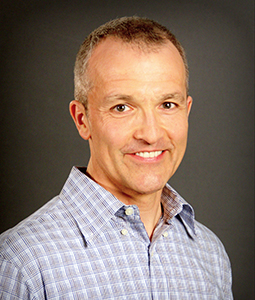
Justin Romberg is the Schlumberger Professor and Associate Chair for Research in the School of Electrical and Computer Engineering at Georgia Tech, and serves as Associate Director for the Center for Machine Learning. He holds a B.S.E.E., M.S., and Ph.D. from Rice University, followed by postdoctoral work at Caltech and visiting roles at UCLA and the Laboratoire Jacques-Louis Lions. His research bridges signal processing, machine learning, optimization, and applied probability, with notable contributions to imaging inverse problems, data compression, and broadband beamforming. Dr. Romberg has received prestigious awards including the ONR Young Investigator Award (2008), PECASE (2009), Packard Fellowship (2009), and IEEE Fellowship. His recent work emphasizes real-time RF emulation, neural adjoint methods for sound speed learning, and decentralized optimization frameworks. Current projects include radar signal processing, multi-agent reinforcement learning, and hardware-friendly sparse neural networks. His lab focuses on translating theoretical insights into practical systems, such as low-bit beamforming accelerators and medical monitoring devices using MEMS sensors.
Di Xiao is a Sessional Lecturer at the University of Waterloo. Their work focuses on advancing medical imaging technologies, particularly in ultrasound and MRI, with an emphasis on real-time processing, deep learning integration, and algorithm optimization. They are affiliated with the Sessional lecturers group. Research interests include ultrasound imaging innovations such as speed-of-sound estimation, beamforming techniques, and sparse-array optimizations. Their work also spans MRI reconstruction, signal processing, and applications of machine learning in medical diagnostics. Notable contributions include developing frameworks for live tissue assessment and minimizing image quality loss in sparse data scenarios. Publications highlight trends in real-time ultrasound systems, neural network-driven imaging enhancements, and sparsification strategies for MRI. The articles collectively emphasize interdisciplinary approaches merging AI with traditional medical imaging challenges. No scientific awards or grants are explicitly mentioned. No lab affiliations or student advising records are provided.
Svein-Erik Måsøy is a Professor in the Department of Circulation and Medical Imaging at Norwegian University of Science and Technology (NTNU), affiliated with the Faculty of Medicine and Health Sciences. His research focuses on improving medical ultrasound imaging quality through advanced beamforming techniques, aberration correction, and sound velocity estimation. From 2022-2024, he served as the Center Director of the Center for Innovative Ultrasound Solutions (CIUS). Research Interests: Måsøy’s work emphasizes enhancing image clarity in medical ultrasound to aid early disease detection and robust diagnostics. He specializes in beamforming optimization, adaptive image quality enhancements, and clinical validation of these techniques in echocardiography and fetal ultrasound. His recent projects include applying deep learning for automated measurements in salmon farming and improving 3D echocardiography imaging. Publications Trends: His recent publications span 2022-2025, addressing topics like deep learning-based image quality scoring, coherence-based aberration correction in fetal ultrasound, and Doppler ultrasound applications in borehole fracture analysis. These reflect a blend of clinical and geophysical ultrasound innovations. Lab/Teams: As former CIUS Director, he contributed to interdisciplinary ultrasound research collaborations. His work integrates medical imaging with machine learning and geophysical applications, fostering advancements in both clinical and industrial ultrasound technologies.
Alicja Wieczorkowska is a Professor affiliated with the University of Gdańsk, specializing in Music Information Retrieval, Machine Learning, and Audio Signal Processing. She has edited multiple books and special issues in journals like Sensors and Springer's Studies in Computational Intelligence series. Her research focuses on audio processing applications in healthcare, music recommendation systems, and environmental monitoring. Education Background: Not explicitly stated in text. Research Interests: Development of audio and image sensing techniques for healthcare and environmental applications Machine learning models for music and speech analysis Data mining and pattern recognition in polyphonic audio Interpretable models for medical survival analysis Recent Research Trends: Her recent work emphasizes practical applications of machine learning in music recommendation systems, medical diagnostics (e.g., liver transplantation prognosis), and environmental pollen monitoring through image processing. She has pioneered methods for audio-based vehicle speed detection and pipe organ acoustics modeling. Labs/Teams: Actively collaborates with interdisciplinary teams including computer scientists, medical researchers, and acoustic engineers. Key collaborators include Z.W. Ras, E. Kubera, and M. Klec.
Douglas Christensen is a Professor in both the Department of Electrical and Computer Engineering and the Department of Biomedical Engineering at the University of Utah. His academic career spans over five decades, beginning with a Ph.D. in Electrical Engineering from the University of Utah in 1967. He has authored or co-authored multiple books, including Ultrasonic Bioinstrumentation and Basic Introduction to Bioelectromagnetics . Education: BS, Electrical Engineering, Brigham Young University (1962) MS, Electrical Engineering, Stanford University (1963) PhD, Electrical Engineering, University of Utah (1967) Postdoctoral Fellowship, University of Washington (1972-1974) Research Interests: Therapeutic ultrasound Optical biosensors Acoustic radiation force Phase aberration correction 3D MR thermometry Medical imaging systems Ultrasound wave propagation Scientific Awards: Fellow, American Institute for Medical and Biological Engineering (2001) Distinguished Teaching Award, University of Utah (2004) Lifetime Achievement Award, ECE Department (2020) ECE Chair's Award (2022) His recent publications focus on improving transcranial ultrasound simulations through skull geometry modeling, optimizing phase aberration correction for breast MRgFUS, and enhancing MR thermometry accuracy via model predictive filtering. He has secured significant NIH grants for HIFU bioengineering and transcranial MRgFUS innovations. Christensen teaches foundational courses in biomedical engineering and electrical circuits, with active roles in 2023-2024 academic terms.
Jinglu Tan is a Professor in the Department of Chemical and Biomedical Engineering under the College of Engineering at the University of Missouri. He also serves as Director for the Division of Food, Nutrition & Exercise Sciences, a joint division between the College of Agriculture, Food & Natural Resources and the School of Medicine. His research spans biomedical and agricultural engineering, focusing on plant stress modeling, energy metabolism in muscles, and ultrasound sensing technologies. Ph.D. in University of Minnesota His research interests include: Modeling and sensing of photoelectron transduction in plants Kinetic analysis of energy metabolism in muscles Ultrasound measurement of rheological properties Chlorophyll fluorescence for stress detection Deep learning in multispectral image fusion Machine learning for climate and crop yield prediction Recent publications highlight: 2025 studies on ultrasound viscosity measurement and photosynthesis modeling 2024 work on microplastic-drought interactions in rice, frost forecasting, and crop recognition via satellite imagery Long-term contributions to chlorophyll fluorescence analysis and metabolic pathway simulations
David Shattuck is an Associate Professor at the University of Houston's Cullen College of Engineering and serves as Director of Evaluation, Planning, and Assessment for the Honors College. He holds a bachelor's in Engineering Science from SUNY Buffalo and a Ph.D. in Biomedical Engineering from Duke University. Education: BS Engineering Science, State University of New York, Buffalo PhD Biomedical Engineering, Duke University His research focuses on Electronics Education , with emphasis on collaborative learning tools, circuit analysis, and online textbook development. Earlier work spans Geophysics and Ultrasound Imaging , including contributions to ground-penetrating radar and speed-of-sound estimation algorithms. Recent publications highlight his educational initiatives (2005, 2003), earlier work in geophysical modeling (1995-1998), and foundational research in ultrasonic signal processing (1982-1989). Scientific Awards W.T. Kittinger Outstanding Teacher Award, Cullen College of Engineering (2006) Distinguished Service Award, Honors College Student Governing Board (2013) Career Teaching Award, University of Houston (2013) Career Teaching Award, College of Engineering (2017) Distinguished Leadership in Teaching Excellence Award (2020) William A. Brookshire Teaching Excellence Award (2020) Dr. Shattuck also contributed to the 4th Edition of James Nilsson's Electric Circuits and served as a reviewer for journals and textbook publishers.
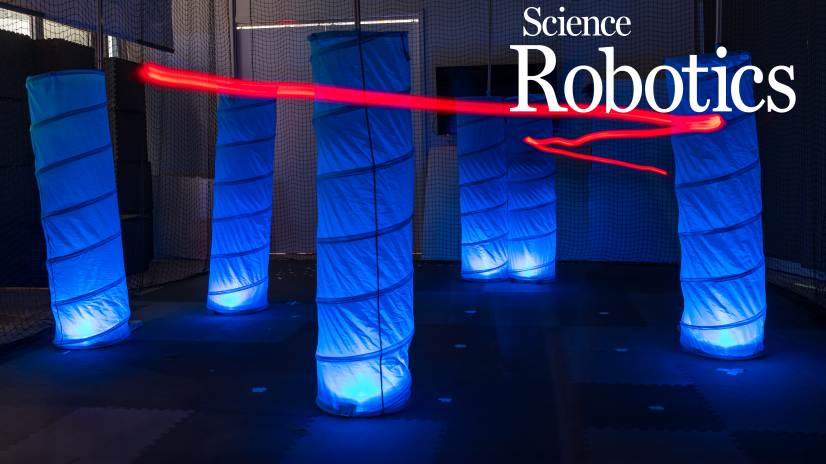
Nitin J Sanket is an Assistant Professor in the Robotics Engineering Department at Worcester Polytechnic Institute, where he leads the Perception and Autonomous Robotics Group (PeAR) founded in 2022. His research focuses on advancing autonomy for tiny mobile robots through bio-inspired approaches that enable on-board sensing and computation without external infrastructure. Ph.D. in Computer Science from University of Maryland, College Park (2021) M.S. in Robotics from University of Pennsylvania (2016) B.E. in Electronics and Communication from M. S. Ramaiah Institute of Technology, Bangalore, India (2013) Professor Sanket's research centers on four interconnected thrusts: Active perception (using movement to simplify perception problems), Interactive perception (selectively interacting with the environment), Novel perception (using data statistics like neural network uncertainty), and Novel sensing (employing sensors like event cameras). His work targets extreme resource-constrained robots, exemplified by the world's first RoboBeeHive prototype – hummingbird-sized nano-quadrotors capable of pollination with all sensing and computation performed on-board. His lab's 'Minimal-AI' philosophy emphasizes efficiency, using perception-action synergy to solve complex problems with minimal computational resources. His recent publications reveal a strong focus on efficient vision algorithms for tiny robots, with papers in Science Robotics (featured on the cover), IEEE ICRA, IROS, and CVPR. Key themes include uncertainty modeling for resource-constrained systems, event-based vision, and bio-inspired navigation. His work frequently bridges theoretical innovation with practical implementation on real hardware. Larry S. Davis Award for Best Computer Science PhD Thesis at University of Maryland (2021) MDPI Drones 2021 PhD Thesis Award Brin Family Prize (2018) Science Robotics cover feature (2023) Professor Sanket actively mentors 19 students (3 PhD, 6 Masters, 10 undergraduates) and recently secured a $705K NSF grant (September 2025) for bio-inspired sound navigation in tiny robots. His lab emphasizes hands-on experience with real hardware systems rather than pure simulation. His research on bat-inspired drones for search and rescue operations has received extensive media coverage from Associated Press, Washington Post, NPR, and other major outlets, demonstrating the real-world relevance of his work. The Perception and Autonomous Robotics Group (PeAR) provides students with opportunities to work on cutting-edge problems in nano-drone development, bio-inspired navigation, and minimal-AI approaches, preparing them for careers at the forefront of robotics innovation.
Bernhard Beck-Winchatz is a Professor of Physics & Astrophysics at DePaul University's College of Science and Health. He holds several leadership positions including Interim Director of the STEM Center, Graduate Program Director for Physics & Astrophysics, and Campus Director of the Illinois Space Grant Consortium. His academic responsibilities span teaching and program development across multiple levels of science education. His research focuses on innovative STEM education methodologies, particularly in astronomy and physics pedagogy. Key interests include: Developing practical classroom applications for astronomy concepts Designing high-altitude balloon experiments for educational settings Creating assessment tools for science literacy Implementing technology-enhanced learning in earth/space science Teacher training programs for urban and K-12 environments Beck-Winchatz's publications consistently explore science education techniques, with strong emphasis on: Hands-on experimental learning (particularly balloon-based projects) Integration of digital tools like Google Sky and GPS in curriculum Assessment of non-science majors' understanding Development of accessible urban astronomy programs His work frequently appears in education-focused journals like The Classroom Astronomer and conference proceedings.
Professor Maciej Michałek is a distinguished academic at Poznań University of Technology, where he serves in the Faculty of Automatic Control, Robotics and Electrical Engineering within the Institute of Automation and Robotics. His research spans robotics, control systems, and automation with particular focus on nonholonomic mobile robots and advanced control methodologies. Professor Michałek's research interests center on Vector Field Orientation (VFO) control methodology, mobile robot motion planning, and Active Disturbance Rejection Control (ADRC). He has made significant contributions to fixed-time and predefined-time control systems, kinematic modeling of multi-trailer vehicles, and precision docking systems for electric buses. His work bridges theoretical control concepts with practical applications in automotive, aerospace, and robotics domains. His recent publications demonstrate a clear trajectory toward time-constrained control systems with guaranteed convergence properties, multi-agent coordination, and practical implementations in electric vehicle infrastructure. Professor Michałek has published extensively in top-tier journals including IEEE Transactions on Cybernetics, Nonlinear Dynamics, and IEEE Transactions on Vehicular Technology. As a supervisor, Professor Michałek has guided doctoral students through research on cascaded control systems for mobile robots and motion algorithmization within the VFO framework. His mentorship focuses on rigorous theoretical development combined with practical implementation of advanced control systems. Professor Michałek maintains active research in both theoretical control methodologies and their practical applications, particularly in electric vehicle charging systems, automotive control mechanisms, and aerospace stabilization. His laboratory work focuses on experimental validation of control algorithms using robotic platforms and vehicle simulation systems.