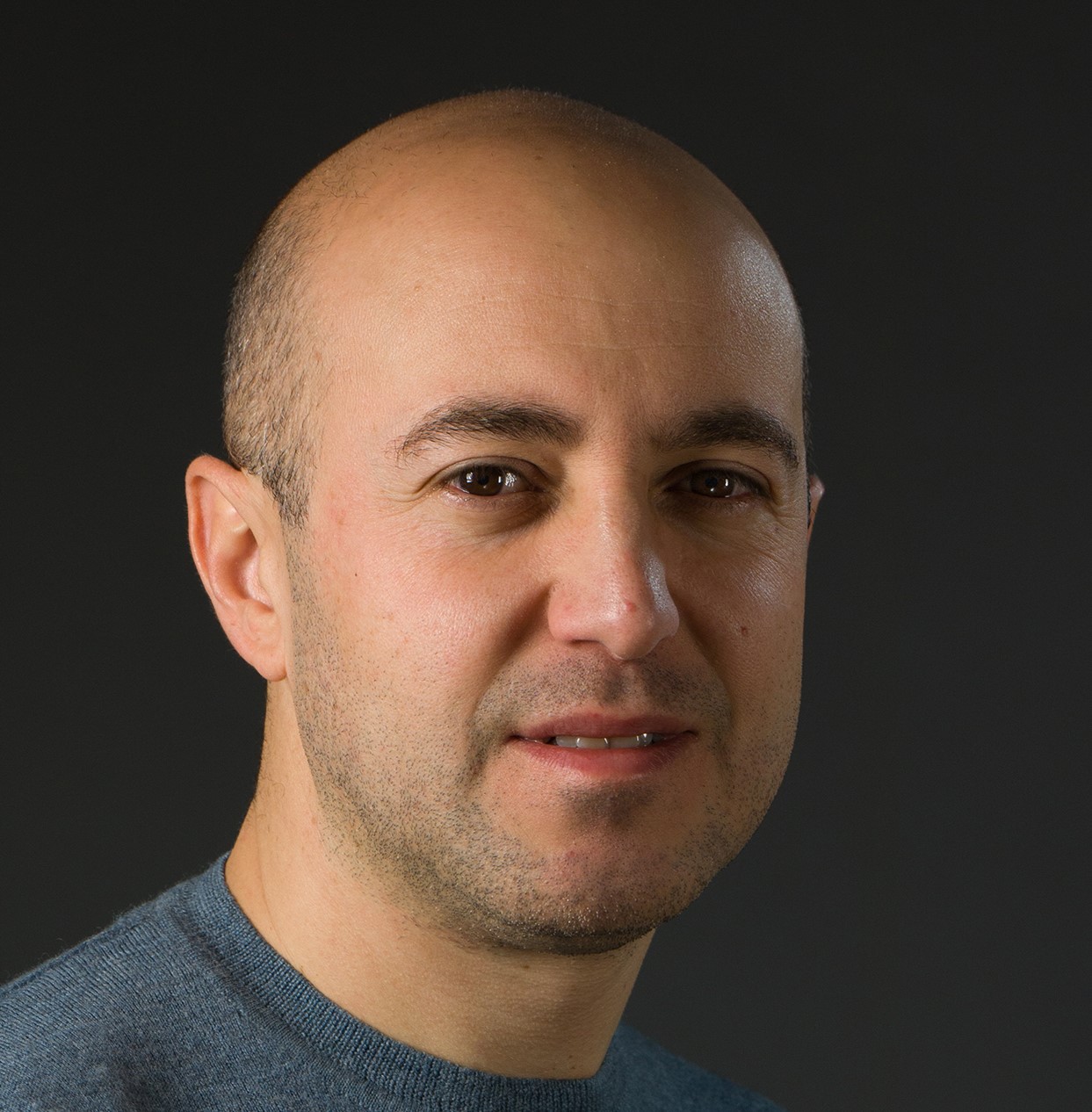
Slim Essid is a Full Professor at Télécom Paris, leading the Audio Data Analysis and Signal Processing (ADASP) group. He holds a Doctorat (Ph.D.) and Habilitation from Université Pierre et Marie Curie (UPMC). With 15+ years of research experience, he has advised 15 PhD graduates and currently co-advises 10 others. His work focuses on machine learning, signal processing, and multimodal systems, publishing over 150 peer-reviewed papers. He serves as a reviewer for top journals/conferences (e.g., IEEE Transactions) and research funding agencies. Education: State Engineering Degree, École Nationale d’Ingénieurs de Tunis (2001) M.Sc. (D.E.A.) in Digital Communication Systems, École Nationale Supérieure des Télécommunications, Paris (2002) Ph.D., Université Pierre et Marie Curie (2005) Habilitation (HDR), UPMC (2015) Research Interests: Multimodal learning, self-supervised representations, audio-visual segmentation, music structure analysis, domain generalization, and speech enhancement. Recent publications highlight innovations like TACO (training-free sound-prompted segmentation) and CLOUDS (domain-generalized semantic segmentation framework using foundation models). His work bridges audio processing with vision and language models, emphasizing unsupervised/zero-shot approaches. Key achievements include state-of-the-art methods in sound event detection, speaker diarization, and music segmentation. He collaborates with 14 post-docs and leads projects funded by French/EU agencies.
Pierrick Lotton serves as a CNRS Research Director at Le Mans University's Institute of Acoustics (LAUM), a joint research unit between CNRS and the university. He leads critical work within LAUM's Transducers team, focusing on fundamental and applied research in electroacoustics and thermoacoustics. His institutional affiliation places him at France's premier acoustics research laboratory, which maintains extensive facilities for acoustic measurements, ultrasonic experimentation, and transducer development across multiple specialized domains including materials science, opto-acoustics, and bioacoustics. Lotton's research program centers on two interconnected pillars: electroacoustics and thermoacoustics. His electroacoustic investigations pioneer advanced modeling, development, and characterization of audio transducers with particular emphasis on nonlinear behaviors in loudspeakers and electric guitar pickups. Simultaneously, his thermoacoustic research explores acoustic refrigeration systems, complex couplings between acoustic and thermal energy fields, and transient nonlinear phenomena. This dual focus enables innovative cross-pollination between audio engineering and thermal physics, driving advancements in both fundamental understanding and practical applications of acoustic energy conversion. Analysis of his 2019-2024 publications reveals a consistent trajectory in transducer physics, particularly MEMS-based piezoelectric speakers, voice coil dynamics in magnetic environments, and digital acoustic projection systems. His work demonstrates exceptional methodological diversity spanning analytical modeling, experimental validation, and educational innovation. Notable contributions include the ASKNOWN project's open-access acoustics courseware and breakthroughs in understanding transducer nonlinearities for both consumer audio and specialized applications like fish sound localization. No major scientific awards were documented in the available institutional materials, though his sustained publication record in high-impact journals and presentations at European Acoustics Association forums indicate significant peer recognition. His collaborative research network spans France, Germany, Italy, and the Czech Republic, reflecting strong international engagement. Lotton's academic supervision activities aren't explicitly detailed, but his educational initiatives like the ASKNOWN project demonstrate commitment to pedagogy. His research is supported through LAUM's institutional framework and collaborative projects including European initiatives and ANR-funded programs. Current work appears concentrated on advancing MEMS transducer technology, refining thermoacoustic cooling systems, and developing next-generation educational resources for acoustics. As a core contributor to LAUM's Transducers team, Lotton operates within one of Europe's leading acoustics laboratories. His current projects align with LAUM's strategic focus on transducer innovation and thermoacoustic applications, positioning him at the forefront of both theoretical acoustics research and practical engineering solutions. The laboratory's comprehensive infrastructure supports his work from fundamental wave propagation studies to applied device development.
Mathieu Fontaine is an Associate Professor in Machine Listening at Télécom Paris , affiliated with the LTCI Lab within the IDS Department (Information, Data, Signal). His research focuses on machine listening for speech and audio signal processing. PhD in Informatics (2019), Lorraine University Master in Applied and Fundamental Mathematics (2015), Poitiers University BSc in Fundamental Mathematics (2013), Rennes University Fontaine's research spans speech enhancement , speaker separation , source localization , and music source separation using heavy-tailed probabilistic models and deep Bayesian networks , with applications in augmented reality . He has expertise in Python , signal processing , and machine learning (80% proficiency). His recent publications (2024) include work on diffusion models for speech synthesis , room acoustics estimation from 3D meshes , robust audio scene analysis , and direction-aware speech processing . Earlier publications (2022-2023) explore flow-based NMF , alpha-stable representations , and adaptive beamforming in multiparty environments. Fontaine collaborates with the S2A team and ADASP group at LTCI Lab. His work integrates probabilistic modeling with deep learning to address challenges in real-world audio processing, including reverberation, noise, and complex acoustic environments.
Christophe Bailly is the Director of the Laboratory of Fluid Mechanics and Acoustics (LMFA UMR5509) and a Professor at École Centrale de Lyon, France. His career spans academic roles at École Centrale Paris (1995-2006) and École Nationale Supérieure des Techniques Avancées (2001-2020), alongside membership in the Institut Universitaire de France since 2007. He specializes in turbulence, aeroacoustics, sound propagation, and high-resolution numerical methods. His research focuses on jet noise , ducted flow acoustics , and advanced diagnostic techniques like Interferometric Rayleigh Scattering. He has co-authored over 120 peer-reviewed articles and a textbook on turbulence with Geneviève Comte-Bellot. Notable scientific awards include the Yves Rocard Prize (1996), Alexandre Joannidès Prize (2001), Air & Space Academy Medal (2016), CEAS Aeroacoustics Award (2020), and the French Medal (2023). He serves as Associate Editor for the AIAA Journal and Advisory Editor for Flow, Turbulence and Combustion .
Mathias FINK is a Professor at ESPCI Paris on the Georges Charpak chair. His research focuses on fundamental wave physics in complex media with major applications in medical imaging, telecommunications, and geophysics. He pioneered time-reversal mirrors for wave focusing and co-founded 6 technology companies. Key Institutions: ESPCI Paris, Collège de France Research Themes: Wave physics, time-reversal techniques, matrix imaging, metasurface design His work spans multi-echo wave systems , ultrasonic therapeutic devices , and adaptive electromagnetic communication systems . Recent publications emphasize 3D matrix imaging in biological tissues and space-time interface dynamics . Scientific recognition includes: First academic elected at Collège de France (2008) Over 400 peer-reviewed publications 70+ patents and 6 start-ups Collaborations extend to Institut des Hautes Études Scientifiques , Langevin Institute , and Hong Kong University of Science and Technology . His team's volcanic imaging work with seismic noise has revolutionized subterranean mapping.
Slim Essid is a Full Professor at Télécom Paris and coordinator of the Audio Data Analysis and Signal Processing (ADASP) group. He holds a PhD and HDR from Université Pierre et Marie Curie (UPMC). His research focuses on machine learning, artificial intelligence, and signal processing applied to temporal data analysis, including multiview learning, representation learning, and structured prediction. Applications span music content analysis (MIR), multimodal perception (e.g., EEG data analysis), and human behavior analysis. He has advised 15 PhD students and collaborated on over 14 post-doctoral projects. Education: PhD in Signal Processing, Université Pierre et Marie Curie (2005) Habilitation (HDR), Université Pierre et Marie Curie (2015) M.Sc. in Digital Communication Systems, Télécom ParisTech (2002) Engineer Degree, École Nationale d’Ingénieurs de Tunis (2001) Research interests emphasize multimodal learning, self-supervised representation learning, and audio-visual fusion. Key projects include sound-prompted segmentation, zero-shot audio captioning, and EEG-based auditory attention decoding. Over 150 peer-reviewed publications exist across conferences like NeurIPS, ICML, and journals like IEEE Transactions. Active in reviewing for top-tier venues and advising French/EU research projects. Labs/Teams: Member of the Signal, Statistics and Learning (S2A) research team and the Information Processing and Communication Laboratory (LTCI).
Simon Laurent is a Lecturer at Le Mans University and a researcher at the Laboratory of Acoustics (LAUM) since 1994. His work bridges signal processing with acoustics and mechanical applications, focusing on innovative solutions for audio systems, biomedical diagnostics, and environmental monitoring. Research Focus: Non-linear systems (electrodynamic loudspeakers), biomedical signals (snoring), sensor arrays (fractional sphere antennae), and impact signal analysis (water droplets on complex liquids) Recent Publications highlight applications in precision livestock farming, adaptive audio systems, and acoustic diagnostics. Key trends span multichannel signal processing , bioacoustic monitoring , and non-linear acoustic modeling . Patents include improved microphone array designs for spatial sound capture. Collaborative work on droplet impact acoustics and mobile sound zones demonstrates interdisciplinary applications.
Bruno Gas serves as a Professor at Sorbonne University, affiliated with the ASIMOV research team within the Intelligent Systems and Robotics Institute (ISIR). His academic work bridges robotics, artificial intelligence, and cognitive science through innovative investigations into sensorimotor learning frameworks for embodied agents. Gas's research centers on how naive robotic agents develop spatial and bodily representations through sensorimotor interactions, with particular emphasis on multimodal sensory integration (audition, vision, and touch). His work demonstrates how robots can autonomously construct internal models of their environment through active exploration, utilizing principles from developmental psychology and neuroscience. Key methodologies include neural network modeling, predictive processing architectures, and bio-inspired sensorimotor contingency frameworks that enable agents to learn without pre-programmed spatial knowledge. Analysis of Gas's recent publications (2013-2020) reveals consistent thematic progression in developmental robotics, focusing on the emergence of topological spatial representations, active exploration strategies, and multimodal sensor fusion. His research demonstrates how sensorimotor flow generates internal spatial models, with notable contributions including the Head Turning Modulation System for environment exploration and tactile space representation models. This work establishes critical links between robotics, cognitive science, and neuroscience through experimentally validated frameworks for embodied learning. No explicit information regarding student supervision or research grants appears in the source material, though extensive collaborative publications with researchers like Sylvain Argentieri and J. Kevin O'Regan suggest active mentorship and project leadership within the ISIR ecosystem. His publication record shows sustained interdisciplinary collaboration across European robotics institutions. Gas operates within the ASIMOV team at ISIR (Institut des Systèmes Intelligents et de Robotique), a premier robotics research unit jointly operated by Sorbonne University and CNRS. The team specializes in adaptive systems and intelligent machines, with research spanning embodied cognition, developmental robotics, and human-robot interaction. ASIMOV's experimental platforms focus on sensorimotor learning paradigms for autonomous exploration, positioning Gas at the forefront of bio-inspired robotics research in France.
Stephane Dorin serves as Associate Professor at Université Paris 8, France, specializing in cultural sociology with emphasis on music consumption patterns. His academic work bridges European and South Asian cultural contexts through rigorous ethnographic analysis of musical globalization processes. His educational background includes a PhD dissertation from EHESS: Paris (2005) examining Western popular music acculturation in Calcutta. Dorin's research interests focus on transformations of musical taste in digital environments , audience reception of classical and contemporary music , and postcolonial cultural dynamics in South Asian music scenes . His fieldwork particularly explores how jazz, rock, and pop music become vehicles for local identity construction amid globalization forces. Dorin's publication record reveals consistent thematic development across two decades, with increasing sophistication in analyzing the intersection of political movements (particularly the Naxalite insurgency), folk traditions (jibanmukhi songs), and Western musical forms. His work demonstrates methodological rigor through ethnographic approaches that document both amateur and professional music production in urban India. The 2012 Jazz Research Journal article represents his mature scholarship examining racial dimensions of musical diffusion during colonial periods. As editor of Sound Factory. Musique et logiques de l'industrialisation (2012), Dorin contributes to theoretical frameworks analyzing industrialization's impact on musical production. His correspondence email Stephane.dorin@gmail.com indicates active professional engagement despite limited institutional contact details in the source material.
Houssem Haddar is a Research Director at the Applied Mathematics Unit (UMA) of ENSTA Paris , a leading institution in applied mathematics and inverse problems. He is a key figure in the development of theoretical and computational methods for wave scattering and inverse problems, with applications spanning medical imaging, non-destructive testing, and industrial engineering. Research Focus: Inverse scattering theory, transmission eigenvalues, eddy current tomography, diffusion MRI models, and numerical methods for wave propagation. Collaborations: Works extensively with institutions like LOA, U2IS, and external researchers across France and internationally. Publications highlight his expertise in solving complex inverse problems using innovative mathematical frameworks, including duality principles, level-set methods, and asymptotic models. His work bridges theoretical advancements with practical applications in seismic imaging, material characterization, and electromagnetic scattering.
Roland Badeau is a Full Professor in the Signal, Statistics and Learning (S2A) team within the Image, Data, Signal (IDS) Department at Télécom Paris, Institut Polytechnique de Paris. His primary affiliation is with the Information Processing and Communication Laboratory (LTCI). Research Interests: Badeau specializes in statistical modeling of non-stationary signals, with core expertise in adaptive high-resolution spectral analysis and Bayesian extensions to Non-negative Matrix Factorization (NMF). His work spans room acoustics (stochastic reverberation models), data representation (dimensionality reduction, time-frequency analysis), probabilistic latent variable modeling, and algorithm development (Bayesian estimation, optimization methods, fast adaptive algorithms). Applications focus on audio/music processing including source separation, denoising, dereverberation, multipitch estimation, and automatic music transcription, with extensions to biomedical data analysis and digital communications. Key Trends in Publications: Recent work centers on Statistical Wave Field Theory, establishing mathematical frameworks for reverberation modeling using energy-stress tensor formalism and Riemannian geometry. His publications demonstrate a progression from foundational signal processing algorithms (e.g., YAST, ESPRIT) to physics-informed approaches for polyhedral rooms and frequency-dependent attenuation, with strong emphasis on Bayesian and alpha-stable distribution methods for robust audio separation. Academic Leadership: Badeau supervises doctoral and master’s theses while leading teaching units at Télécom Paris. He serves as the TSIA study track supervisor (Signal Processing for Artificial Intelligence) and Master ATIAM correspondent. His team (S2A) develops tools like DESAM for joint source separation and multi-track coding.
Sylvain Argentieri serves as an Associate Professor at the Institute for Intelligent Systems and Robotics (ISIR) within Sorbonne University, where he has been a member of the ASIMOV research group ("Architectures and Models for Adaptation and Cognition") since 2008. His office is located at ISIR, Campus Pierre et Marie Curie, 4 place Jussieu, BC173, 75005 Paris. He maintains an active research presence with publications spanning from 2006 to 2024. His educational background includes obtaining the highest teaching diploma in France (Agrégation externe) in Electrical Engineering from the École Normale Supérieure in 2002, followed by a Ph.D. in Computer Science from Paul Sabatier University (Toulouse) in 2006, and his Habilitation à Diriger des Recherches (HDR) in 2018. Argentieri's research focuses on artificial perception in robotics with special emphasis on auditory perception, active multimodal perception approaches, and sensorimotor integration. His work demonstrates a consistent trajectory exploring how robots can develop perceptual capabilities through sensorimotor experiences, with particular attention to binaural sound localization, head movement control, and the emergence of spatial representations from uninterpreted sensory signals. His publications reveal a strong interest in how naive agents can structure their understanding of the world through active exploration and sensory prediction. His publication record shows a clear progression from foundational work on sound source localization to more complex investigations of sensorimotor contingencies and embodied cognition. The research spans multiple venues including IEEE conferences, Robotics and Autonomous Systems, and Frontiers journals, with recent work incorporating transformer architectures and neural network approaches to auditory processing. Argentieri maintains active collaborations with researchers including Nicolas Obin, Bruno Gas, and Valentin Marcel, as evidenced by his co-authored publications. His laboratory work takes place within the ASIMOV team at ISIR, which focuses on architectures and models for adaptation and cognition in robotic systems.
Clair Vincent is a Lecturer at Centrale Lyon, affiliated with the Department of Fluid Mechanics, Acoustics and Energetics (MFAE) and the Laboratory of Fluid Mechanics and Acoustics (LMFA - UMR CNRS 5509). His research focuses on aeroacoustics, numerical simulation of turbomachinery noise, and acoustic wave scattering by turbulence. Master's degree in numerical modeling in mechanics from the University of La Rochelle PhD in acoustics from Université Claude-Bernard-Lyon-1 (2013) Postdoctoral fellowship at the Institute of Sound and Vibration Research (University of Southampton) His research explores acoustic wave scattering , turbomachinery noise , and high-fidelity numerical simulations for aeronautical applications. Recent work includes experimental and computational studies in jet noise reduction and sound propagation correction methods. His publications span topics like Large-Eddy Simulations for turbofans, leading edge serrations for noise mitigation, and acoustic measurement techniques in wind tunnels, reflecting collaborations with Rolls-Royce, Safran, and the European Commission's Horizon 2020 program. Clair Vincent supervises theses on aeroacoustic simulations and teaches courses in acoustics , fluid mechanics , and numerical methods for MSc Acoustics and general engineering programs. He coordinates in-company training for the ECI sandwich course. He works within the LMFA laboratory, contributing to projects funded by DGAC, ANR, and Safran Aircraft Engines, including the ARENA industrial chair.
Alexandre Aubry is a Research Director at CNRS affiliated with the Institut Langevin in Paris. His work focuses on imaging through complex media using wave physics principles, with applications in ultrasonic imaging, optical microscopy, seismic imaging, and radar technology . He leads projects supported by the ERC Consolidator Grant REMINISCENCE and ANR COPPOLA , and has co-founded the biomedical imaging company OWLO . Education: Habilitation à Diriger des Recherches, Université Paris Sciences & Lettres (2022) Post-Doc under John Pendry, Imperial College London (2008-2010) PhD under Arnaud Derode, Université Pierre et Marie Curie (2008) Engineer's Degree, ESPCI ParisTech (2005) Research Highlights: He developed 3D ultrasound matrix imaging to overcome wavefront distortions in biomedical applications, and pioneered passive seismic matrix imaging for volcanic structure mapping. His theoretical contributions include distortion matrix formalism for aberration correction and multiple scattering analysis in heterogeneous media. Scientific Awards: ERC Consolidator Grant REMINISCENCE ANR COPPOLA grant Research Team: Currently supervising 9 active PhD students and 5 postdoctoral researchers , with a track record of mentoring 12 former team members including prominent researchers like François Legrand and Laura Cobus.
Charles Pézerat is a Researcher at the Institute of Acoustics at Le Mans University. His work focuses on advanced acoustic and vibration analysis techniques for automotive, structural, and material applications. Acoustic source identification Vibration damping mechanisms Laser ultrasonics and optical measurement Elastic wave propagation in complex media His recent publications demonstrate expertise in force analysis adaptation to polar coordinates, Bayesian source localization, and full-field vibration measurement validation. Collaborations span multiple laboratories including the Laboratory of Mechanics and Acoustics. Research trends show emphasis on: Automotive NVH (Noise, Vibration, and Harshness) Micro-perforated material damping Non-invasive measurement techniques Computational inversion methods for acoustics Structural interaction with turbulent flows Acoustic metamaterials development He has actively participated in international conferences like Eurodyn and French Congress of Acoustics since 2014.