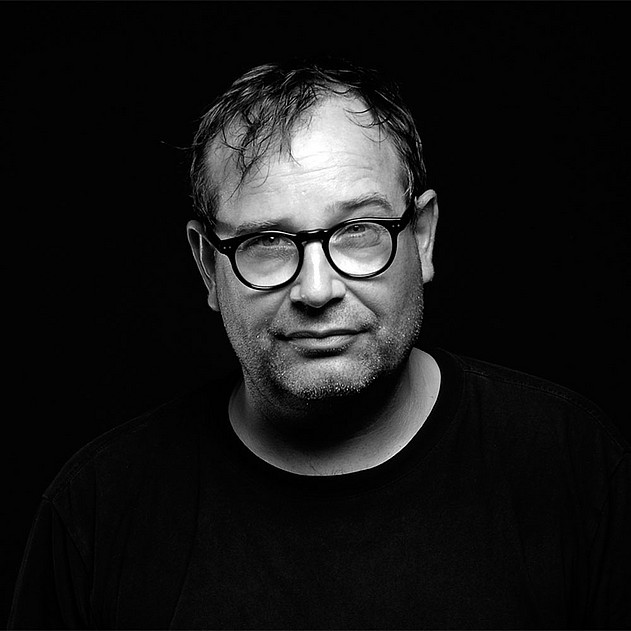
Jacob Eriksen serves as a Lecturer in the Sound Studies and Sonic Arts Master of Arts program at the University of the Arts Berlin, where he teaches within the Guest Faculty framework for 2025. His academic background spans Musicology, Philosophy, and Sound Studies, cultivated through studies in Copenhagen, Toronto, and Berlin. His research integrates artistic experimentation with theoretical conceptualization, focusing on intersections between order and chaos, synthesis and organism, repetition and difference, and human/non-human dynamics. Eriksen's creative practice manifests through sound art, conceptual art, and musical experiments that challenge conventional boundaries. His work positions artistic exploration as a generative space for knowledge production, emphasizing emergent properties from structured systems colliding with organic processes. He actively participates in Berlin's academic ecosystem as a member of the KlangDenken/Sonic Thinking research colloquium, contributing to interdisciplinary discourse on auditory phenomena and creative methodologies.
Dr. Huaming Chen is a Senior Lecturer in the School of Electrical and Computer Engineering at The University of Sydney, Australia. His work focuses on trustworthy machine learning systems, software engineering, and software security. With numerous publications in top-tier conferences and journals, Dr. Chen has established himself as a significant contributor to the fields of AI security and software engineering. Dr. Chen's primary research interests lie at the intersection of software engineering and artificial intelligence, with a strong emphasis on trustworthy AI systems. His work spans several key areas including: Software Security for AI-enabled systems Trustworthy and Responsible AI development Computational biology applications Industrial 4.0 implementations Federated learning and privacy-preserving techniques Large language model verification and uncertainty analysis His research addresses critical challenges in ensuring AI systems are secure, reliable, and ethically sound. Dr. Chen's recent publications demonstrate a strong trend toward addressing security and trustworthiness challenges in AI systems. His work spans multiple domains including software security (particularly for AI systems), trustworthy AI development, and applications in computational biology. A significant portion of his recent work focuses on large language models, examining their vulnerabilities, verification methods, and uncertainty analysis. He also maintains active research in federated learning, adversarial machine learning, and software security techniques. Dr. Chen has received several notable awards and recognitions: 2020 IEEE CIS Student Grant for IEEE WORLD CONGRESS ON COMPUTATIONAL INTELLIGENCE (WCCI) 2017 Student and Early Career Travel Fellowship for The 16th International Conference on Bioinformatics (InCoB 2017) 2017 Student Travel Award for 2017 IEEE World Congress on Services Dr. Chen actively supervises multiple research students working on cutting-edge projects related to trustworthy AI and software security. His current students are exploring topics ranging from blockchain-based governance frameworks to open-source AI security and digital twin platforms. He also serves in numerous committee roles at top conferences including area chair for ACM MM, and PC member for ACM CCS, IJCAI, KDD, and many others. His service as a Guest Editor for journals like Computers & Security and as a Grant Reviewer for UKRI demonstrates his standing in the research community. Dr. Chen organizes workshops focused on Trustworthy and Responsible AI, reflecting his commitment to advancing the field. His research group appears to focus on practical applications of AI security techniques, with projects spanning multiple domains including healthcare, finance, and industrial systems. He maintains active collaborations with researchers across multiple institutions, as evidenced by his co-authorship on diverse publications.
Đorđe Žikelić is an Assistant Professor of Computer Science at the School of Computing and Information Systems at Singapore Management University (SMU) in Singapore. He completed his PhD in 2023 at the Institute of Science and Technology Austria (ISTA) under Krishnendu Chatterjee and Petr Novotný, receiving both Outstanding PhD Thesis and Outstanding Scientific Achievement awards. Prior to his doctorate, he earned bachelor's and master's degrees in mathematics from the University of Cambridge. His educational background includes: PhD in Computer Science, Institute of Science and Technology Austria (ISTA), 2023 Bachelor's and Master's in Mathematics, University of Cambridge Dr. Žikelić's research focuses on advancing formal methods to ensure software and AI systems are correct, safe, and trustworthy. His work bridges theoretical aspects of formal reasoning about probabilistic systems with practical automated verification methods. His primary research interests span three interconnected areas: Program Analysis and Verification: He develops techniques for analyzing probabilistic programs, numerical programs, and efficient quantifier elimination methods, addressing fundamental challenges in verifying complex software systems. Trustworthy AI and Safe Autonomy: He creates formal verification frameworks for learning-enabled control systems and neural networks, ensuring AI operates safely in uncertain environments through methods like runtime monitoring and certificate repair. Probabilistic System Verification: He explores broader applications including bidding games on graphs and blockchain protocol analysis, extending formal methods to novel domains beyond traditional finite-state verification. His publication trajectory shows a consistent progression from theoretical foundations to practical applications, with recent work increasingly focused on integrating formal verification with machine learning. His 2024-2025 publications demonstrate growing expertise in verifying learning-based systems and developing practical tools like PolyQEnt for quantified entailment solving. His scientific achievements have been recognized with: Outstanding PhD Thesis Award at ISTA Outstanding Scientific Achievement Award at ISTA Distinguished Paper Award at FM 2024 Dr. Žikelić serves on program committees for major conferences including TACAS, PLDI, AAAI, and CAV. He actively mentors through the Programming Languages Mentoring Workshop (PLMW) at PLDI 2025. His research group at SMU focuses on developing novel algorithms for verifying correctness of programs and AI systems, with current projects spanning formal methods, artificial intelligence, and programming languages.
Prof. Dr.-Ing. Matthias Blau is a Professor at Jade University of Applied Sciences in Oldenburg, Germany, working within the Department of Civil Engineering Geoinformation Health Technology under the School of Technology and Health for People. He leads the Institute for Hearing Technology and Audiology and conducts research on sound transmission to and perception by the human auditory system, and the design of technical systems that interact with this system. His research interests focus on understanding how sound is transmitted to and perceived by the individual human auditory system, and how technical systems (including hearing systems, medical implants, or concert halls) can be designed to interact with this system. His work spans ear canal modeling, hearing aid technology, head-related transfer functions, and individualized audio systems. He has developed methods for predicting sound pressure at the eardrum, modeling infant ears, and improving binaural audio rendering. Analysis of his publication record reveals a consistent research trajectory focused on individualized approaches to hearing technology. His work has evolved from basic ear canal modeling to sophisticated applications in hearing aids, virtual environments, and infant hearing assessment. Key themes include the development of models that account for individual anatomical differences, the creation of databases for acoustic research, and the improvement of spatial audio rendering techniques. Prof. Blau has supervised multiple PhD students whose work has contributed significantly to the field. His former students include Tobias Sankowsky-Rothe (2023), Mina Fallahi (2021), Eugen Razumow (2015), and current students Felix Stärz and Reinhild Roden. His research has practical applications in hearing aid design, hearing assessment for infants, and virtual reality audio systems. He leads the Institute for Hearing Technology and Audiology at Jade University, which maintains the IHA database of human geometries including torso, head and complete outer ears for acoustic research. This database, available on Zenodo, contains complete ear canals up to the eardrums, making it an ideal tool for studying interactions with in-ear hearing systems.
Patrick Lehmeier serves as a Part-Time Lecturer at Amberg-Weiden University of Applied Sciences within the Faculty of Electrical Engineering, Media and Computer Science, specializing in event audio production systems and technologies. His academic focus centers on practical audio engineering applications for live events, with core competencies in: Real-time sound reinforcement systems Event-specific media signal processing Integrated audio-visual production environments Contact is available through his institutional email: p.lehmeier@oth-aw.de .
Prof. Dr. Stefan Neuner is a Professor of Art History, Art Science, and Art Theory at the Berlin University of the Arts since October 2017. He has held various academic positions across Europe, including as a Scientific Assistant at the University of Vienna (1999-2005), the University of Zurich (2005-2010), and as a Postdoc Fellow at eikones - NFS Bildkritik at the University of Basel (2011-2017). Neuner earned his PhD in 2006 from the University of Vienna with a dissertation titled "Maskierung der Malerei. Jasper Johns nach Willem de Kooning." His academic journey includes postdoctoral research at the Kunsthistorisches Institut in Florence/Max-Planck-Institut and fellowships at prestigious institutions including the German Study Center in Venice and the International College for Cultural Techniques Research and Media Philosophy at Bauhaus-University Weimar. Prof. Neuner's research focuses on the painting of the Venetian Renaissance, the relationship between art, science and technology in the early modern period, art of the 20th and 21st centuries, and the intersection of visual arts and new music. His work demonstrates a particular interest in visual perception, artistic techniques, and the theoretical frameworks that shape our understanding of art across historical periods. He has made significant contributions to the study of artists such as Jasper Johns, Bruce Nauman, Jackson Pollock, and Venetian Renaissance masters like Vittore Carpaccio. Analysis of Neuner's recent publications reveals a consistent engagement with questions of visual perception, spatial experience, and the materiality of art. His work spans from Renaissance painting to contemporary art practices, with particular attention to how viewers interact with artworks. Key themes include the relationship between image and text, the role of material supports in artistic creation, and the philosophical underpinnings of visual experience. His scholarship demonstrates interdisciplinary connections between art history, philosophy, and cultural studies. Among his notable contributions are his editorial work for the online journal terpentin.org and his publications on topics ranging from textile studies to the theoretical frameworks of contemporary art. His book "Mobile Eyes. Peripatetisches Sehen in den Bildkulturen der Vormoderne" (2013) exemplifies his interest in the relationship between movement and visual perception in pre-modern image cultures. Scientific Assistant at the University of Vienna (1999-2005) PhD from the University of Vienna (2006) Scientific Assistant at the University of Zurich (2005-2010) Postdoc Fellow at the Kunsthistorisches Institut in Florence (2009-2010) Associated Scholar of the German Study Center in Venice (since 2010) Short Term Fellowship at Bauhaus-University Weimar (2014) Postdoc Fellow at University of Basel (2011-2017) Professor at Berlin University of the Arts (since 2017) Prof. Neuner has supervised student researchers including Sophia Wilm and Maria Knoll. His academic leadership extends to editorial roles, including co-founding the German-English online journal for art criticism terpentin.org. While specific grant information is not detailed in the available materials, his research has been supported through prestigious fellowships including those from the Max Planck Society and the Swiss National Science Foundation (through eikones). Neuner is actively engaged in the academic community through his participation in research networks and his contributions to major art historical publications. His work bridges historical scholarship with contemporary theoretical approaches, making significant contributions to the field of art history.
Mark Lammert is a Professor of Painting and Drawing at the Berlin University of the Arts (UdK Berlin) since 2011. Born in Berlin in 1960, he studied painting at the Berlin Art Academy and was a master student at the Academy of Arts in 1989 and 1996. He has been a member of the Berlin Academy of Arts since 2015. Lammert's artistic practice spans painting, drawing, graphic arts, and stage design. His work incorporates diverse philosophical, political, and historical references, which he combines through reduction, fragmentation, and collage to create images with high aesthetic impact. He has designed stage sets for notable productions including works by Heiner Müller and Dimiter Gotscheff. Lammert's recent exhibition activities demonstrate his continued prominence in contemporary art. His upcoming exhibition 'REVOLUTIONARY SPLITTERS' (November 2024-January 2025) at Galerie Pankow explores French Revolution-era drawings alongside his own work. Previous significant exhibitions include 'Balance' at Hamburger Bahnhof (2022), 'NOTHINGTOSEENESS' at the Academy of Arts (2021), and 'Rot Gelb Blau' at the Leonhardi-Museum in Dresden (2020-2021). His notable awards include the Käthe Kollwitz Prize from the Berlin Academy of Arts (1999), the Eberhard Roters Scholarship from the Prussian Seehandlung Berlin (2002), and a Scholarship from the Bonn Art Fund (1999). Lammert's publications include 'Bühnen Räume Spaces' (2014), a documentation of his theater work, and several exhibition catalogs. His artistic commentary extends to social issues, as evidenced by his statement 'Der Krieg der Viren' addressing the Corona crisis.