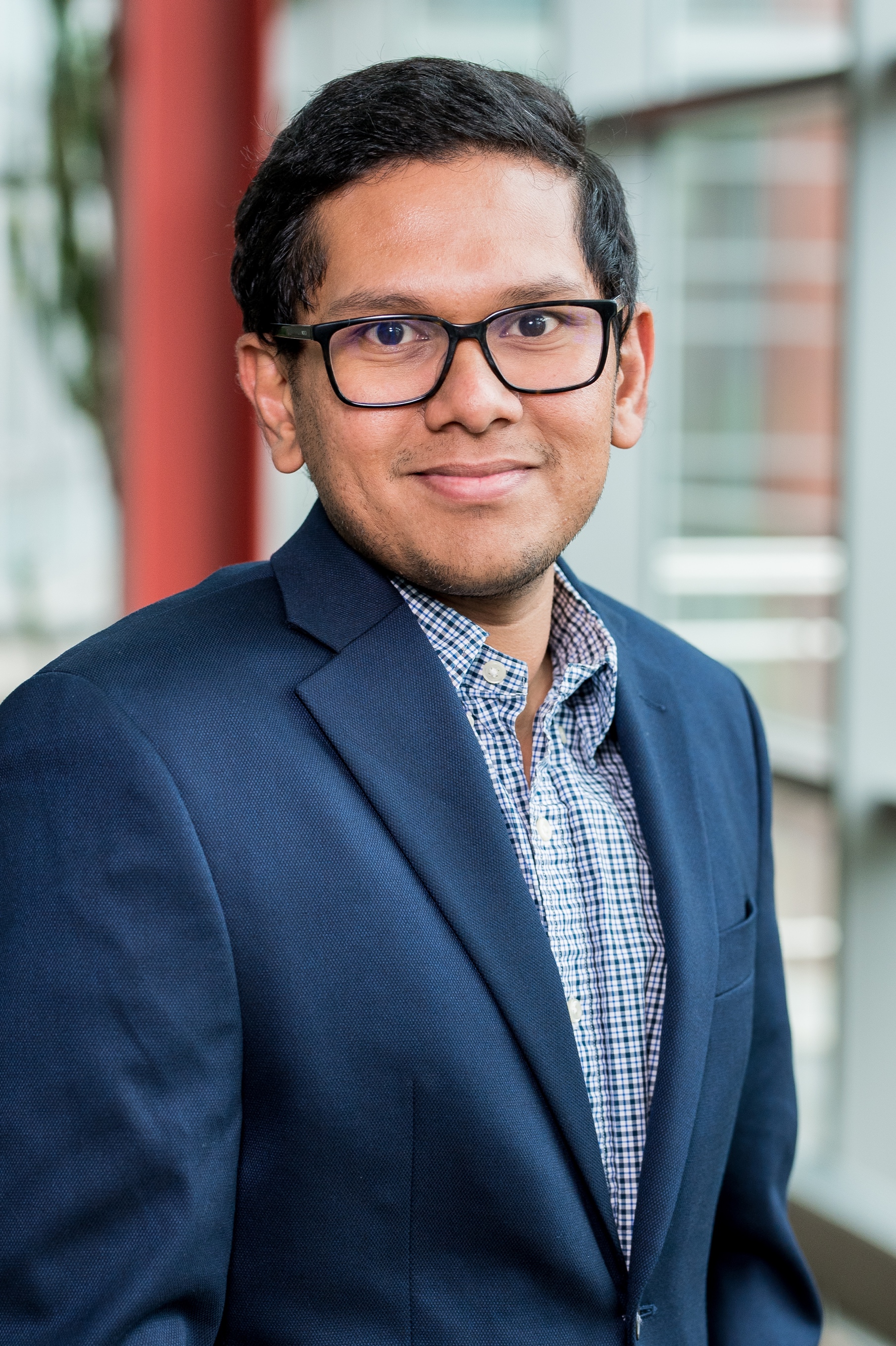
Piers Gelly is an Assistant Professor in the Department of English at the University of Virginia, where he teaches Writing and Rhetoric courses. His work bridges creative writing, pedagogy, and social justice, with a focus on labor organizing and digital technologies. MFA in Fiction, University of Virginia (2019) BA in College of Letters, Wesleyan University (2013) His research explores intersections of generative AI in education, podcast production, labor studies, and collaborative authorship. He co-organizes the Writing With Sound speaker series, collaborating with experts like Avery Trufelman and Sarah Larson. Recent projects include curating a student-union collaboration exhibition at UVA’s Small Special Collections Library (2024) and investigating AI ethics in pedagogy. His publications span Literary Hub , The Point , and The Stinging Fly . Key grants include the Thrive Grant (2025), Learning Technology Incubator Grant (2024), and Active Archive Fellowship (2021). Thrive Grant (2025) Learning Technology Incubator Grant (2024) Active Archive Fellowship (2021) Henfield Prize for Fiction (2019) He collaborates extensively with labor unions in Charlottesville and mentors students through podcast projects and collective curatorial efforts.
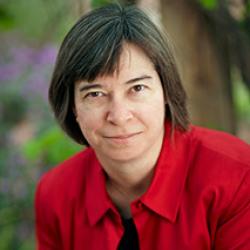
Leila De Floriani is a Professor at the University of Maryland, with appointments in the Department of Geographical Sciences and the University of Maryland Institute for Advanced Computer Studies (UMIACS). She previously served as a professor at the University of Genova (Italy) since 1990, where she developed Italy's first undergraduate and graduate curricula in computer graphics and directed the Ph.D. program in Computer Science for eight years. Her professional activities include serving as the 2020 President of the IEEE Computer Society and currently as IEEE Division VIII Director for 2023-24. Professor De Floriani's research spans geometric modeling, data visualization, spatial data representation and processing, computer graphics, shape analysis, and topological data analysis. Her work focuses on developing mathematical models and algorithms for representing, analyzing, and visualizing complex spatial data, particularly through hierarchical models, mesh-based representations, and topology-based approaches. Her research group, the GeoVis group, investigates applications in terrain modeling, environmental data analysis, and forest structure mapping using LiDAR technology. Analysis of her recent publications reveals a strong focus on terrain representation and processing, with increasing emphasis on topological data analysis, machine learning integration, and efficient algorithms for large-scale spatial data. Her work bridges theoretical foundations in computational topology with practical applications in geospatial sciences, demonstrating consistent innovation in data structures and visualization techniques. Scientific Awards & Recognitions Fellow of IEEE (2016) for contributions to geometric modeling and scientific visualization Fellow of International Association for Pattern Recognition (IAPR) (1998) for contributions to geometric modeling and image analysis Fellow of Eurographics Association (2020) for outstanding contributions to computer graphics and visualization Pioneer of Solid Modeling Association (2017) for seminal work in solid and feature-based modeling Inducted Member of IEEE Visualization Academy (2020) IEEE Computer Society Golden Medal Award (2018) Inducted Member of IEEE Honor Society Eta Kappa Nu (2019) Multiple best paper awards at major conferences including Shape Modeling International (2015), IEEE/EG Symposium on Volume and Point-Based Graphics (2008), and ACM SIGSPATIAL (2008) Professor De Floriani has successfully advised numerous PhD students including Xin Xu, Yunting Song, and Noel Dyer, whose recent dissertations focused on topology-based individual tree mapping, efficient terrain analysis, and bathymetric data visualization respectively. Her research has been funded by prestigious agencies including the National Science Foundation, NASA, and the European Commission. As the leader of the UMD GeoVis group, she oversees a research program that develops open-source tools for spatial data analysis available on GitHub, with current projects focusing on forest point cloud processing and topology-based geospatial data visualization. The GeoVis group, affiliated with the Department of Geographical Sciences, UMIACS, and the Center for Geospatial Information Sciences, maintains a strong collaborative environment with ongoing projects in geometric modeling, spatial data structures, topology-based machine learning, and mesh-based terrain modeling. The group has received recent funding from NASA's HPOSS program for developing an open-source library for forest point cloud processing based on topological data analysis.
Charith Mendis is an Assistant Professor in the Siebel School of Computing and Data Science at the University of Illinois at Urbana-Champaign, with joint appointments in the Department of Computer Science, Electrical and Computer Engineering, and the Coordinated Science Lab. His research focuses on the intersection of compilers, program optimization, and machine learning systems. Dr. Mendis received his educational background from prestigious institutions: Ph.D. in Computer Science from Massachusetts Institute of Technology (2020) S.M. in Computer Science from Massachusetts Institute of Technology (2015) B.Sc. in Electronics and Telecommunication Engineering from University of Moratuwa (2013) His primary research interests center around compiler technology and machine learning systems. Mendis leads the ADAPT lab at UIUC, where his team works on creating high-performance ML optimization techniques and automated compiler construction using machine learning and formal methods. His work bridges the gap between traditional compiler design and modern machine learning approaches, with applications in tensor compilers, graph neural networks, and sparse computation. He has developed novel frameworks for optimizing deep learning workloads, verification of compiler transformations, and performance modeling for emerging hardware architectures. Mendis has established himself as a leading researcher in compiler optimization for machine learning systems, with a particular focus on tensor compilers, graph neural networks, and performance modeling. His recent publications demonstrate increasing sophistication in combining formal methods with machine learning techniques to solve challenging problems in compiler optimization and verification, with multiple papers accepted at top-tier conferences including OOPSLA, PLDI, POPL, and SIGMOD. His notable scientific achievements include: Google ML and Systems Junior Faculty Award (2025) DARPA Young Faculty Award (2024) NSF CAREER Award (2024) Distinguished Paper Award at POPL (2025) William A. Martin Thesis Award for Outstanding SM thesis, MIT (2015) Multiple teaching excellence awards at UIUC (2021-2023) Dr. Mendis actively mentors students through the ADAPT lab, offering research opportunities for undergraduates, master's students, and PhD candidates interested in compiler technology and machine learning systems. His research is supported by significant funding from the ACE center (part of JUMP 2.0), National Science Foundation (NSF), DARPA, IIDAI, and industry partners including Google, Intel, Amazon, and Qualcomm. He teaches advanced courses in compiler construction and machine learning for compilers. He leads the ADAPT lab at UIUC, which focuses on developing advanced compiler technologies for modern machine learning workloads. The lab maintains active collaborations with industry partners and has established itself as a leading research group in compiler optimization for AI systems. Current projects include tensor compilers, graph neural network optimization, and automated verification of deep learning systems.
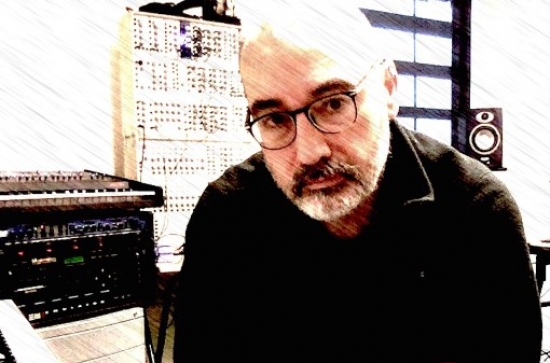
Sergiu Nisioi is an Associate Professor at the Faculty of Mathematics and Computer Science, University of Bucharest, with expertise in computational linguistics, machine translation, and text simplification. He bridges cognitive science with NLP through eye-tracking and EEG research, while also exploring sound art and digital autonomy via initiatives like HYPHA.ro. Current projects include PN-IV-P2-2.1-TE-2023-2007 (text complexity/readability), Legal Document Processing , and Europarl Dialectal Corpora Research spans computational psycholinguistics , LSTM-based translation models , and algorithmic composition for sound art His work integrates interdisciplinary methodologies, combining EEG signal processing for architecture data with the University of Architecture, and DSP for ecological projects at chlorophylla.live.
Tom Mitchell is a Professor of Audio and Music Interaction at the University of the West of England (UWE), Bristol . As leader of the Creative Technologies Laboratory , his research focuses on interactive technologies for creative expression, blending computer science, music, and artificial intelligence. He is the principal investigator for the UKRI Future Leaders Fellowship project "Sensing Music Interactions from the Outside-In" and co-investigator for the Bridge , a £3M creative technology facility. His research spans digital musical instrument design , GPU-accelerated audio processing , and sonification of scientific data . Recent work includes accessibility improvements in virtual environments, AI-driven DMI development, and interdisciplinary collaborations like the MiMU Gloves with Imogen Heap. He also contributes to robotics teleoperation through auditory feedback systems. Selected publications highlight trends in GPU acceleration for audio , generative AI in musical contexts , and human-robot collaboration via sonification. As a software developer , he specializes in C++ and the Juce library , with applications in live performance systems and scientific visualization projects like Soma and danceroom Spectroscopy . UKRI Future Leaders Fellow Active in AHRC and WECA-funded projects Best paper nominations at EvoMUSART and International Faust Conference Mitchell collaborates with institutions including the Bristol Robotics Laboratory , Computer Science Research Centre , and Pervasive Media Studio . His work bridges academic research with commercial applications through ventures like May Productions and x-io Technologies.
Mary LaFrance is the IGT Professor of Intellectual Property Law at the William S. Boyd School of Law, University of Nevada, Las Vegas (UNLV), where she has served as faculty since 1999. Previously, she taught at Florida State University College of Law (1990-1999) and served on the faculty of the Florida State University School of Motion Pictures, Television, and Recording Arts. At UNLV, she held the position of Associate Dean for Academic Affairs from 2001 to 2004. Her educational credentials include: A.B. summa cum laude from Bryn Mawr College M.A. in Philosophy from Duke University School of Graduate Studies (1986) J.D. with High Honors from Duke University School of Law (1986), where she was Executive Editor of the Duke Law Journal Professor LaFrance's research focuses on domestic and international intellectual property law across copyright, trademark, patent, and trade secrets domains, with specialized expertise in entertainment law applications and taxation of intellectual property assets. Her recent work examines digital-era challenges including eBook lending models, sound recording performance rights, and the intersection of copyright with library systems in bridging the digital divide. She has also analyzed territorial limitations of trademark law following Abitron litigation. Current publication trends (2023-2025) reveal concentrated scholarship on copyright's adaptation to digital technologies, particularly in library ecosystems and collective management systems, alongside ongoing contributions to trademark theory through international comparative studies. Her work demonstrates consistent engagement with evolving global IP frameworks and practical industry applications. No scientific awards or honors are referenced in the provided materials. While the text confirms her role as an active scholar and conference participant, no formal Ph.D. or Master's student advisees are documented. Her professional engagements include collaborative work with institutions like the World Intellectual Property Organization and participation in the Vanderbilt Music Law Summit, but specific grant funding details remain unmentioned. Professor LaFrance maintains significant involvement with international IP organizations including the Association for Teaching and Research in Intellectual Property (ATRIP), Intellectual Property Researchers of Europe (IPRE), and the Conference on Innovation and Communications Law (CICL). She regularly contributes to State Bar of Nevada Intellectual Property Law Section events and participated in UC Berkeley's Contractual Override Workshop examining licensing provisions that eliminate copyright exceptions.
Victor Lazzarini is a Professor of Music at Maynooth University, Ireland, specializing in computer music and audio signal processing. He holds a BMus from Universidade Estadual de Campinas (UNICAMP), Brazil, and an AMusD from the University of Nottingham, UK. His research spans electroacoustic music, digital signal processing, and music technology. He leads the Csound project, a widely used sound and music computing system, and authored libraries like Aulib and Aurora. Education: Bachelor of Music (BMus), UNICAMP, Brazil Advanced Music Degree (AMusD), University of Nottingham, UK His research interests include sound synthesis, computer music languages, and the intersection of music with technology. He has authored over 150 peer-reviewed publications and books such as Spectral Music Design: A Computational Approach (Oxford UP, 2021) and co-edited volumes like Ubiquitous Music Ecologies (Routledge, 2020). His work bridges academic and industrial sectors through projects like the Enterprise-Ireland-funded commercialization initiative. Prof. Lazzarini’s contributions to music technology include pioneering tools like Csound, which enable real-time audio synthesis and processing. His articles span topics from digital filter design to historical computer music archaeology, reflecting his expertise in both theoretical and applied domains. Awards: AIC/IMRO International Composition Prize (2006) He advises on interdisciplinary projects such as the BeatHealth initiative, integrating ubiquitous computing and music. His creative output includes electroacoustic compositions performed globally and released on labels like FarPoint Recordings. Lazzarini actively collaborates with international teams, contributing to conferences like DAFx and ICMC, and leads initiatives like the Ubimus (Ubiquitous Music) research network.
Venu Govindaraju is a SUNY Distinguished Professor of Computer Science and Engineering at the University at Buffalo, where he also serves as Vice President for Research and Economic Development. He founded the Center for Unified Biometrics and Sensors (CUBS) in 2003 and leads the National AI Institute for Exceptional Education, funded by a $20M NSF grant. His research focuses on artificial intelligence, pattern recognition, biometrics, and handwriting analysis, with notable contributions to postal automation, cybersecurity, and early screening for dyslexia/dysgraphia in children. Govindaraju holds IEEE and ACM Fellowships, and was named Person of the Year by the Council of Heritage and Arts of India in 2024. He has advised 47 doctoral students and pioneered foundational AI technologies impacting global industries. Research interests include: AI-driven education tools, handwriting recognition systems, document analysis, and cross-domain biometric technologies. His work bridges AI with humanities through projects like the Marianne Moore Digital Archive. Recent initiatives focus on leveraging AI to address speech-language pathologies and enhance K-12 education accessibility. Leadership roles include co-chair of SUNY’s AI Task Group and advisor to the SUNY-IBM AI Research Alliance. He is a vocal advocate for responsible AI policy, advising lawmakers at White House events and contributing to legislative briefings. His innovations are highlighted in Empire AI, New York’s $400M computing consortium.
Karthik Srinivasan is an Assistant Professor in the Analytics, Information, and Operations Academic Area at the University of Kansas School of Business. He holds a Ph.D. in Management Information Systems from the University of Arizona, an M.Mgt. in Business Analytics from the Indian Institute of Science, and a B.E. from Mumbai University. His research focuses on interpretable machine learning, explanatory modeling, text mining for business applications, and healthcare information systems. He develops methods to enhance transparency in AI systems and applies data science to healthcare, finance, and retail contexts. Recent work includes predictive modeling for incomplete data, graph-based retail analytics, and analyzing pandemic impacts on stock markets and public health. His publications span journals like MIS Quarterly, Decision Support Systems, and Nature Digital Medicine. He also contributes open-source tools like TextRegress and MoreThanSentiments for advanced text analysis. Teaching responsibilities include undergraduate and graduate-level data management courses. His research emphasizes practical applications in business and public health, leveraging interdisciplinary approaches to address real-world challenges.
Xiaoze Xie serves as the Paul L. & Phyllis Wattis Professor of Art at Stanford University within the Department of Art & Art History under the School of Humanities and Sciences. An internationally recognized artist, he maintains a studio practice deeply engaged with political and cultural memory. His academic journey includes a Master of Fine Arts from the Central Academy of Arts & Design in Beijing and the University of North Texas, complemented by a Bachelor of Engineering in Architecture from Tsinghua University. Research interests center on contemporary political art, particularly examining archival practices, library systems, and institutional memory through painting, drawing, and video installations. His notable series include Theater of Power analyzing political iconography, Library projects documenting knowledge institutions, and Tracing Banned Books in China confronting censorship. His work consistently explores the intersection of personal memory and collective history within Chinese cultural contexts. Critical reception highlights his contributions through reviews in The New York Times , Art in America , and ARTnews . His artistic output reveals persistent engagement with temporal fragmentation, archival materiality, and political documentation across media. Recent exhibitions at major biennales demonstrate evolving focus on urban transformation and post-pandemic cultural memory. Asia Game Changer West Award (2022) Academic Award in Painting, Nanjing International Art Festival (2016) Joan Mitchell Foundation Painters and Sculptors Grant (2013) Pollock-Krasner Foundation Grant (2003) Dallas Museum of Art Artist Award Phoenix Art Museum Artist Award Xie's artistic practice functions as scholarly research, generating significant discourse through permanent collections at major institutions including Baltimore Museum of Art, Denver Art Museum, and Museum of Fine Arts Houston. His GSA Art-in-Architecture Commission for the US Courthouse in Davenport, Iowa demonstrates public art engagement. Current projects continue his exploration of cultural memory through the Reinventing the Library Cave in Dunhuang initiative, connecting historical preservation with contemporary practice.
Dr. Michael L. Austin is a Senior Lecturer in Music and Sound at Edge Hill University, serving as Programme Leader in Music Production since January 2023. He previously held academic roles at Louisiana Tech University, Howard University, and others. His research focuses on sound and music in interactive media, including video games, social media, and smart devices. He is Executive Director of the Society for the Study of Sound and Music in Games and a Research Associate at the Library of Congress's Radio Preservation Task Force. Education: PhD in Humanities (Aesthetic Studies) from the University of Texas at Dallas (2011), MA in Music Theory from UT Austin (2007), and BA in Music Composition from UT San Antonio (2005). Research interests include ludomusicology, cultural representation in media, sound design for UX, and algorithmic bias in emerging technologies. His 2024 monograph Audiovisual Alterity explores identity representation in music videos, while earlier works like Music Video Games: Performance, Politics, and Play (2016) analyze music's role in digital games. Publications span video game music analysis, algorithmic bias, and sound art. His talks include topics like 'Sounding Drag Identities in Video Games' and 'Algorithmic Bias in Emerging Media.' As a sound artist, his work has been exhibited at the Smithsonian and Dallas Museum of Art.
Neil Bruce is a Lecturer in Sound Design at the School of Digital Arts, Manchester Metropolitan University. With a PhD in Soundscapes and an MSc in Signal Processing, he bridges practice-led research with academic inquiry. Education: PhD in Soundscapes, MSc in Signal Processing, Dip Mus (Open) His research focuses on soundscapes, perception, and immersive audio, particularly in urban decay and liminal spaces. He explores how emerging technologies like VR/AR can enhance sonic storytelling and inclusivity in soundscape research. Recent publications and presentations highlight trends in ethical field recording, soundscape commodification, and inclusive methodologies like soundsitting. Collaborations with institutions like the University of the Arts London and EPSRC-funded projects underscore his interdisciplinary approach. Beyond academia, Bruce works with UK artists, performs as a guitarist, and hosts the Creativity Kickstarter podcast, authoring a book on creativity as a skill.
Christine Erbe is a John Curtin Distinguished Professor at Curtin University's School of Earth and Planetary Sciences, within the Faculty of Science and Engineering. She holds a PhD in Geophysics and has extensive experience spanning academia, government, industry, and education. Her research focuses on underwater acoustics, marine mammal bioacoustics, and the impacts of anthropogenic noise on marine ecosystems. She is a Fellow of the Acoustical Society of America and former Chair of its Animal Bioacoustics committee. Education: PhD in Geophysics, University of British Columbia (1997) MSc in Physics, University of Dortmund (1993) BSc in Physics, University of Dortmund (1989) Grad. Dip. Ed. in Mathematics/Science Education, Queensland University of Technology (2007) Research Interests: Characterization of marine soundscapes Effects of noise on marine fauna behavior and physiology Sound propagation modeling in oceans Development of acoustic mitigation strategies Awards & Roles: Fellow, Acoustical Society of America Former ISO representative for underwater noise standards Her work includes pioneering studies on vessel noise impacts, passive acoustic monitoring, and the global library of underwater biological sounds (GLUBS). She leads the Centre for Marine Science & Technology and collaborates internationally on marine conservation and policy.
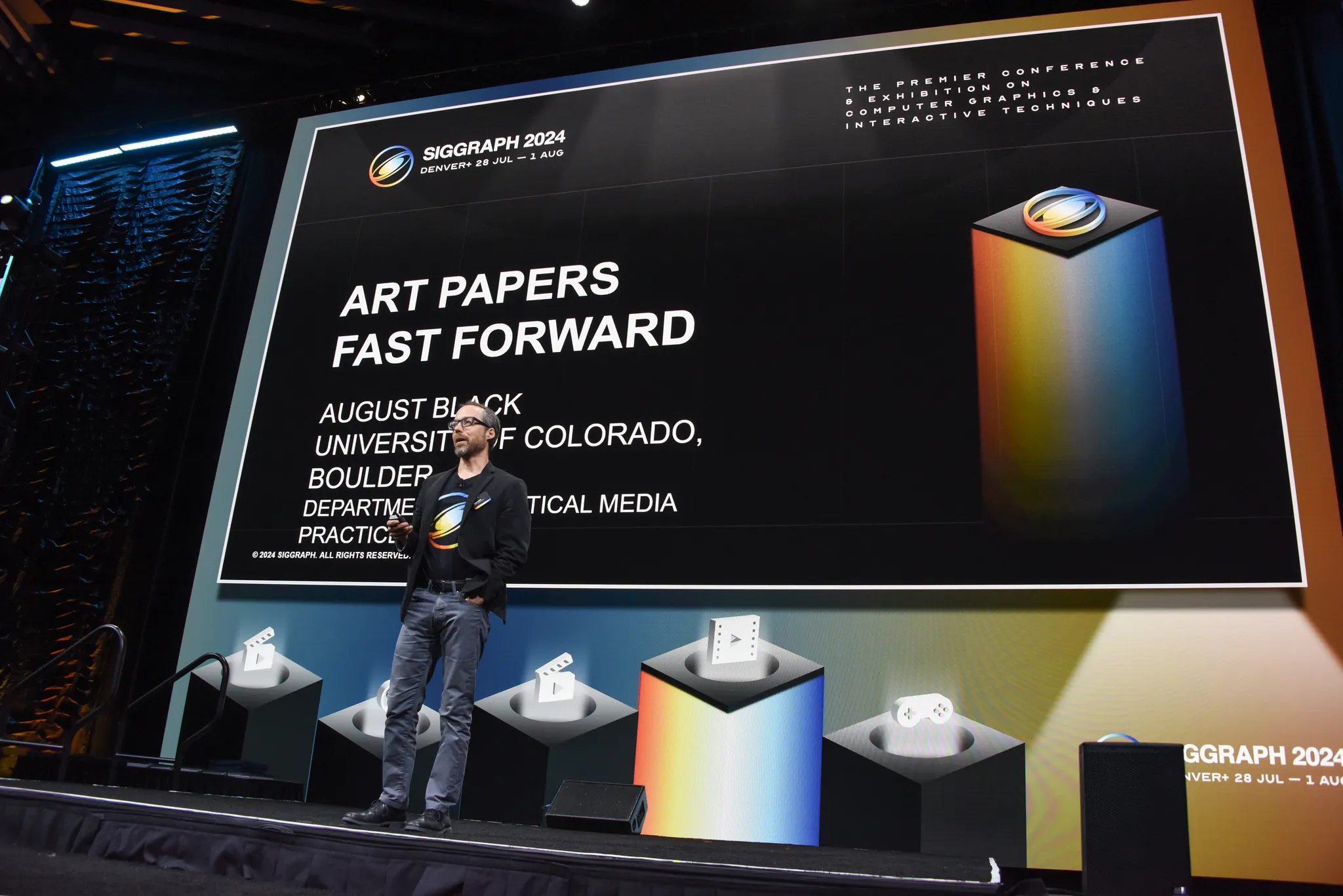
August Black is an Assistant Professor in the Department of Critical Media Practices at the University of Colorado Boulder. As a hybrid practitioner of art, design, and engineering, he creates experimental spatial and acoustic systems by building custom technological artifacts. His work critically engages techno-social systems through live networked audio, user-generated content, and immersive installations. BFA, Syracuse University MS & PhD, UC Santa Barbara (NSF IGERT Fellow) His research explores the intersection of philosophy of technology, software studies, and AI ethics. Current projects investigate global networking for hyper-local communication, while past work includes networked radio systems and generative audio-visual platforms. He has taught at UC Santa Barbara, University of San Francisco, and CU Boulder. Recent projects include Pulse Memorial (2024), a mobile multichannel memorial system, and Audio Compost (2022), a virtual frippertronic loop project. His work often incorporates WebRTC, FM radio integration, and participatory frameworks across digital and physical environments. NSF IGERT Fellow Black has advised PhD candidate Nima Bahrehmand and collaborated with institutions like ORF Kunstradio, Ars Electronica Futurelab, and Cycling '74. His practice includes software development (janode library for Janus WebRTC), hardware engineering, and exhibitions at festivals including Ars Electronica and SIGGRAPH.
Pedro Faria Lopes is an Associate Professor at the Department of Information Science and Technology (ISTA), School of Technologies and Architecture, ISCTE – Instituto Universitário de Lisboa. He is also an Associate Researcher at ISTAR-Iscte, contributing to the Digital Living Spaces research group. His academic roles involve teaching and supervising students in digital multimedia, human-computer interaction, and game design. His educational background includes: PhD in Electrical and Computer Engineering, Higher Technical Institute - UTL (1996) Master's degree in Electrical and Computer Engineering, Higher Technical Institute - UTL (1989) Bachelor's degree in Electrical Engineering, Higher Technical Institute - UTL (1985) Pedro Faria Lopes's research interests focus on digital multimedia, human-computer interaction, computer games, sound and video for multimedia, computer animation, and digital content creation for lifelong and e-learning contexts. His work bridges technology and education, emphasizing interactive and engaging digital experiences. He has contributed extensively to the development of serious games, multimedia applications, and educational technologies. His recent publications highlight trends in educational video games, procedural content generation, interactive storytelling, and digital inclusion through mobile applications. These works reflect a strong commitment to applying computing technologies in educational, social, and cultural domains, particularly through game-based learning and accessible design. He has supervised numerous graduate students, with 15 completed and 3 ongoing Master’s dissertations, as well as 1 completed and 1 ongoing doctoral theses, primarily at ISCTE. His teaching activities include courses such as: Human-Computer Interaction Digital Game Design and Production Sound, Video and Digital Content Authoring Visualization and Human-Computer Interaction Multimedia Management Although no specific scientific awards are listed in the provided text, his sustained research output and academic leadership suggest recognition within his fields. His work in digital living spaces and educational technologies indicates active engagement in interdisciplinary research projects.