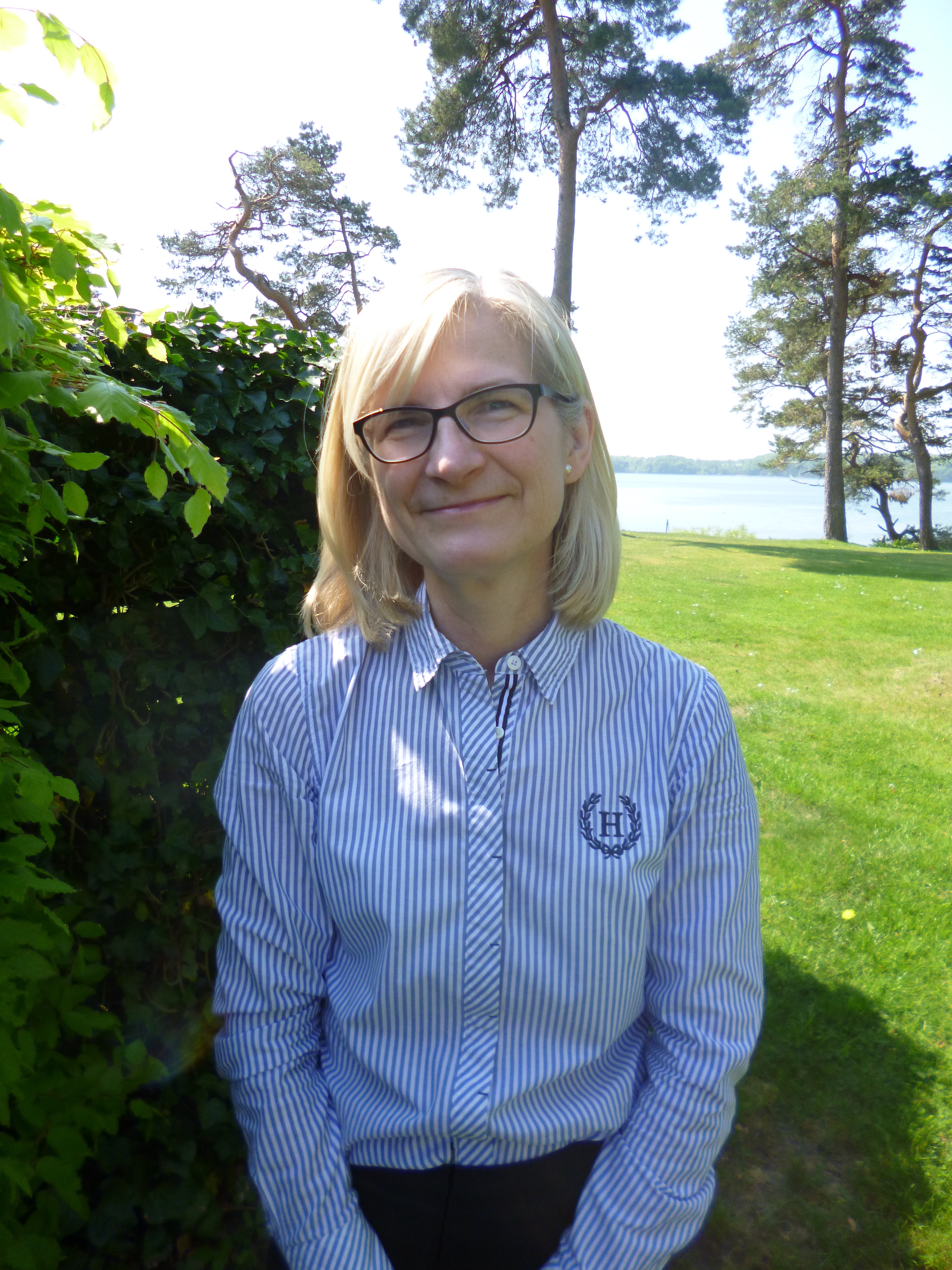
Jan Østergaard is a Full Professor in Information Theory and Signal Processing at Aalborg University's Department of Electronic Systems. He leads the AI and Sound research section and directs the CASPR center. His expertise spans AI-driven acoustic signal processing, information theory, and EEG signal analysis. Østergaard holds a M.Sc. from Aalborg University and a PhD (cum laude) from Delft University of Technology. Major awards include the Danish Young Researcher’s Award and a EURASIP Best Thesis honor. His work focuses on speech enhancement, sound zone technologies, and neural tracking of auditory attention. Recent research emphasizes low-latency speech transmission, deep learning for sound field control, and robust voice activity detection. He serves on editorial boards and national committees, advancing Denmark’s sound technology initiatives. Education: M.Sc. (Aalborg, 1999), PhD (Delft, 2007) Research interests emphasize practical AI applications in sound systems, including hearing aid improvements, data-efficient acoustic modeling, and feedback control in networked systems. Over 210 publications and 17 active projects reflect his interdisciplinary impact across academia and industry.
Mikael B. Skov is a Vice Dean and Professor at the Technical Faculty of IT and Design of Aalborg University , Denmark. His research spans human-AI interaction, robotics, and user experience, with a focus on trust signaling in clinical AI, swarm robotics, and sound zones for domestic environments. Role: Vice Dean for Research Department: Computer Science Research Interests: Skov investigates how humans interact with AI and robots in healthcare and domestic settings, emphasizing trust calibration, alert design, and acoustic comfort. His work includes developing frameworks for UX maturity in robotics organizations and studying long-term adoption of sound zone systems. Recent Projects: As principal/co-investigator, he leads the HERD project on human-AI collaboration in robot swarms (2021–2025) and supervises Data og Bæredygtig Mad (2020–2023), an HCI perspective on sustainable food systems. Publications: His 2024 work includes studies on AI explanations in clinical training, music applications with intermittent interactions, and multi-robot supervision. Earlier projects (2001–2020) focused on mobile device usability, UX practices, and context-aware computing.
Dorte Hammershøi is a Professor in the Department of Electronic Systems at The Technical Faculty of IT and Design, Aalborg University, Denmark. Her research focuses on acoustics, sound engineering, and hearing science with significant contributions to human hearing, ear canal acoustics, and audio technology applications. Her research interests include: Temporary Threshold Shift and frequency resolution in human hearing Ear canal acoustics and sound pressure level measurement Distortion Product Otoacoustic Emission (DPOAE) analysis Impulse response and acoustic impedance studies Hearing aid technology and rehabilitation methodologies Virtual reality audio interfaces and accessibility applications Professor Hammershøi's recent publications demonstrate a strong clinical-engineering interdisciplinary approach, bridging theoretical acoustics with practical hearing rehabilitation applications. Her work on hearing aid fitting methodologies, occupational noise exposure effects, and virtual reality audio interfaces shows consistent innovation in translating engineering principles to clinical practice. The research shows particular attention to individualized hearing solutions and accessibility technologies. Her scientific contributions have been recognized with: Dansk Lydpris 2020 (awarded November 17, 2021) Ambassadør for Aalborg (awarded September 15, 2004) Professor Hammershøi has supervised 5 PhD students and led numerous research projects including the ongoing "Audio Only VR for Blind Gamers" project (2024-2028) funded by the Independent Research Foundation of Denmark, and the completed "BEAR: Better Hearing Rehabilitation" project (2016-2022). Her research has attracted significant media attention with 110 press/media appearances discussing hearing damage prevention, tinnitus, and public health implications of noise exposure. She maintains active professional engagement through committee memberships (46 documented activities), international collaborations, and contributions to clinical practice guidelines. Her work continues to influence both academic research and practical applications in hearing science and audio engineering.
Prithvi Ravi Kantan is a full-time Researcher at Aalborg University's Department of Architecture, Design and Media Technology within The Technical Faculty of IT and Design. His work focuses on developing sound-based and multimodal feedback systems for motor rehabilitation, integrating principles from music technology and biomedical engineering. Education: PhD in Embodied Sonification Design (2021-2023) M.Sc. in Sound and Music Computing (2018-2020) B.E. in Electronics and Telecommunications (2009-2013) Research interests include real-time auditory feedback systems for neurological rehabilitation, user-centered design of clinical technologies, and the application of generative music in data sonification. He actively contributes to projects like HearWalk (2023-2027), exploring sound-facilitated motor learning in cerebral palsy patients. Notable achievements include winning the Danish Sound Day Research Pitch Battle (2023) and receiving the Best Student Paper Award at ICAD 2024. His work aligns with UN SDG 3 (Good Health) and SDG 4 (Quality Education). Teaching responsibilities include coordinating bachelor and master-level courses in PBL-based learning, emphasizing interdisciplinary approaches. He has supervised multiple student projects and contributed to over 39 publications since 2013.
Jesper Rindom Jensen is an Associate Professor in the Department of Electronic Systems at Aalborg University, Denmark, under the Technical Faculty of IT and Design. He is the Head of the Audio Analysis Lab, a leading research group in audio signal processing, since 2023. His work bridges theoretical signal processing and practical applications in artificial intelligence and audio systems. Full Name: Jesper Rindom Jensen Institution: Aalborg University School: The Technical Faculty of IT and Design Department: Department of Electronic Systems Research Lab: Audio Analysis Lab Email: jrj@es.aau.dk Office: Fredrik Bajers Vej 7B, B5-206, 9220 Aalborg Øst, Denmark Education: M.Sc. in Electronic Systems, Aalborg University (cum laude, 2009) Ph.D. in Signal Processing, Aalborg University (2012) Research Interests: Jesper Rindom Jensen's research centers on audio signal processing, with a strong emphasis on artificial intelligence, speech enhancement, noise reduction, beamforming, and multichannel systems. His work applies to diverse domains including robot and drone audition, spatial audio, and active noise control. He develops novel filtering techniques, including variable span linear filters and harmonic beamformers, to improve speech quality and intelligibility in noisy and reverberant environments. Publication Trends: His recent publications (2023–2025) show a strong trend toward integrating deep learning with classical signal processing, particularly in direction-of-arrival estimation, underwater acoustics, and robust multichannel systems. There is a clear focus on real-world applications, including sound zone control, active noise control, and limited-data scenarios using knowledge distillation. His work consistently emphasizes robustness, efficiency, and practical deployment. Scientific Awards and Recognition: AAU Talent for emerging research leaders Recipient of a competitive postdoc grant from the Danish Independent Research Council Advising and Grants: Jesper has supervised multiple PhD and master’s students, including Nørholm, Karimian-Azari, Zhang, and Wang. He has led significant research projects such as 'Sound Processing for Robots and Drones' (2018–2020) and participated in others related to joint audio-visual tracking and speech enhancement. His research has been supported by national funding bodies, reflecting its innovation and impact. Labs and Teams: He is a founding and core member of the Audio Analysis Lab at Aalborg University, which focuses on cutting-edge audio signal processing and AI-driven solutions. The lab fosters interdisciplinary collaboration and has produced numerous publications, datasets, and real-world applications. Jensen’s leadership since 2023 underscores his pivotal role in shaping the lab’s research direction.
Morten Søndergaard is an Associate Professor at Aalborg University’s Department of Communication and Psychology, affiliated with the Faculty of Social Sciences and Humanities. He is part of the Art, Aesthetics & Health Research Laboratory and the MASSHINE initiative. His research focuses on sound art, media art curation, and transdisciplinary practices, emphasizing the exclusion mechanisms in 20th-century art systems and unarchived avant-garde movements. Søndergaard has curated exhibitions globally, including at Kiasma and ZKM, and co-founded the POM conference series and ISACS symposia. He leads the Erasmus Master of Excellence in Media Arts Cultures, collaborating with institutions in Austria, Poland, and Hong Kong. His work bridges art, science, and technology, with recent projects exploring sonic archives and participatory curatorial frameworks. Key collaborations include roles with the European NeMe network, SUNY College New York, and the Momentum Biennial. He has organized over 20 projects since 2008, including the 2025 Momentum Biennial as head curator. His teaching spans media art theory, sound art practices, and curatorial methodologies at both bachelor and master levels. Søndergaard’s research outputs include over 145 publications, with a focus on sound art’s theoretical and practical dimensions. His current projects emphasize ‘uncurating’ methodologies and the reactivation of marginalized avant-garde practices. Notable activities include editorial roles, international conference organization, and advisory roles in art and science networks. His work has been featured in media outlets like Artdaily and the Biennial Foundation, highlighting his contributions to contemporary art discourse and curatorial innovation.
Anne Elisabeth Haxthausen is an Associate Professor at the Software Systems Engineering section within DTU Compute , Technical University of Denmark . Her work focuses on formal methods, railway control systems, and safety-critical software engineering. Founder and leader of the DTU Railway Verification Group Member of European Technical Working Group on Formal Methods in Railway Control Editorial board member for Springer Formal Aspects of Computing Journal Active in the Overture Language Board Her research emphasizes formal verification of railway interlocking systems, particularly through compositional approaches and automated tools. She has contributed to projects like RobustRailS, Overture, and RAISE, focusing on model-based development and verification. She serves as a tutor for bachelor students and contributes to the advisory committee for DTU's Computer Science and Engineering MSc program. Her recent publications explore challenges in verifying autonomous and AI-driven railway technologies.
Maja Fagerberg Ranten is an Assistant Professor at the Department of People and Technology, Roskilde University, specializing in Sustainable Digitalization. Her research bridges design, art, and technology to explore bodily experiences through technical and physical materials. Academic Qualification: PhD in Information Technology (2022), focusing on Designing Bodily Interactions from a phenomenological perspective. Her work employs research-through-design methodologies , drawing on speculative and critical design, phenomenology, and more-than-human perspectives. Key areas include bodily reflective interactions, digital material exploration, and the intersection of humans, materials, and technology. Research Trends across her publications highlight bodily interaction design, speculative practices, and eco-technogenesis. Collaborations span institutions like The Royal Danish Theatre and The School of Design, with activities in workshops and seminars up to 2024. Projects : Participated in MemoryMechanics (2020–2023), focusing on interactive artifacts for audience-stage dynamics. Also engaged in AI sustainability workshops and R&D on digitalization at Zealand Academy of Technologies and Business.
Jonas Fritsch is an Associate Professor at the IT University of Copenhagen, affiliated with the Media, Art & Design School and the Center for Climate IT. He leads the Affective Interaction & Relations (AIR) Lab and serves as Principal Investigator (PI) for major projects like the VELUX-funded TRACE initiative (2023-2027) and the DFF-funded VOCAL project (2022-2025). His research focuses on affective interaction design, particularly in healthcare, emotional design, and the integration of cultural theory into HCI. Research Interests: His work explores affective healthcare design, embodied interaction, and interdisciplinary design methodologies. Recent projects include developing tools for patient-centered care, synthetic voice design frameworks, and affective engagement in extended reality (XR). Notable collaborations span Denmark and international partners, emphasizing human-technology relationships in care practices. Key Projects: TRACE investigates emerging human-technology interactions in care practices, while VOCAL explores novel vocal imaginaries through voice design. He has secured grants totaling over 8.5 million DKK, demonstrating impact in both academic and applied domains. Labs & Teams: As head of the AIR Lab, he fosters collaborative research on affective technologies. Media contributions include public installations like UDREDNING, which engages audiences in diagnostic processes through XR. He actively participates in conferences and review committees, emphasizing interdisciplinary dialogue in design and technology.
Niels Aage is an Associate Professor in the Department of Civil and Mechanical Engineering at the Technical University of Denmark (DTU). His research focuses on topology optimization, biomechanics, and multiphysics modeling, with applications in acoustic devices, biomedical implants, and microelectromechanical systems (MEMS). He holds roles such as Vice President of the International Society for Structural and Multidisciplinary Optimization (2023–2027). Education and Professional Background: Conducted a 5-month research visit at the University of Colorado, Boulder (USA) in 2010. Specializes in giga-scale numerical modeling, finite element methods, and topology optimization algorithms. Research Interests: Develops novel methods for topology optimization of fluidic, thermal, and acoustic systems. Explores applications in patient-specific spinal implants, metamaterials with vibroacoustic bandgaps, and nonlinear dynamic substructuring. His work integrates machine learning and reduced-order modeling for efficient simulation. Publications: Over 100 peer-reviewed articles, including recent contributions on connectivity promotion in topology optimization (2025), vibroacoustic metamaterial design (2025), and anatomically conforming spinal fusion cages (2024). Research emphasizes high-resolution modeling and bridging computational design with additive manufacturing. Scientific Awards: ISSMO Haftka Young Investigator Award (2021), Equinor Prize 2020, and Hyperion Innovation Excellence Award (2017). Recognized for contributions to structural optimization and computational mechanics. Advising and Grants: Supervises multiple PhD projects, including work on vibroacoustic shape optimization, quantum-opto-mechanical systems, and smart hearing aid modeling. Engages in collaborative projects funded by industry and academia. Labs/Teams: Collaborates with DTU’s Solid Mechanics group and industry partners on projects involving topology optimization, multiphysics simulation, and biomedical engineering. Active in international conferences and serves on editorial boards.
Amalia de Götzen is an Associate Professor at Aalborg University's Department of Architecture, Design and Media Technology, part of The Technical Faculty of IT and Design. Her work focuses on Systemic Design, Service Design, and Open Data initiatives, with a particular emphasis on participatory approaches and sustainability. She leads projects like CREATIVE DRIVERS FOR SUSTAINABLE LIVING HERITAGE LANDSCAPES and BC4ECO (Blockchain for Environmental Education), exploring interdisciplinary solutions for societal challenges. Her research interests include systemic design principles, cross-cultural collaboration through digital platforms, and ethical frameworks for data-driven design. Notable contributions include the DiversityOne multi-country smartphone sensor dataset and work on Theory of Change methodologies in urban regeneration projects. She has been awarded for innovative contributions to mobile sensing and 3D user interface design. Prof. de Götzen actively engages in public sector design, developing tools like the Stakeholder Map to enhance citizen-centric service design. Her projects often bridge academia and industry through collaborative ecosystems, emphasizing open licensing and IP awareness (e.g., ZOOOM project). Key Projects: Co-Design 4 Transitions (CD4T) - Climate Transition Strategies (2024-2027) Blockchain for Environmental Education (BC4ECO) - Disruptive Technology Pedagogy (2022-2025) CREATIVE DRIVERS - Heritage Landscapes and Sustainable Living (2023-2026) Awards: 2023: Mood Inference Model Prize for cross-cultural data analysis 2015: 3D User Interface Design Excellence Award Her work frequently addresses global challenges through design thinking, such as circular economy practices and digital citizenship frameworks. Current research explores temporal dimensions in urban planning and ethical AI integration in diversity-aware platforms.
Ali Adjorlu is an Assistant Professor at Aalborg University's Department of Architecture, Design and Media Technology. His research focuses on innovative applications of Virtual Reality (VR) to support marginalized populations, particularly children with Autism Spectrum Disorder (ASD), hearing impairments, and social anxiety. He leads the Multisensory Experience Laboratory and collaborates on interdisciplinary projects such as the GAMESS initiative, which develops game-based learning tools for social skills training in ASD education. His work bridges technology, education, and healthcare, emphasizing accessibility and user-centric design. Key collaborations include: Co-supervision of the Haptic Feedback for Hearing Impaired PhD project (2022–2025) Leadership in the GAMESS project (2022–2024), addressing ASD social skills through gamified VR Partnerships with Cirkus Summarum and Danish National Children’s Choir for inclusive VR applications Research interests include: VR interventions for ASD life skill training (e.g., public transportation, communication) Music therapy in immersive environments Hearing conservation and auditory training for cochlear implant users Accessibility frameworks for neurodiverse and disabled populations His publications highlight VR's potential in education, healthcare, and social inclusion, with notable contributions to conferences like IEEE VR and SMC. He actively engages with public media to disseminate research outcomes, appearing in articles about VR therapy for autism and hearing impairment interventions. Adjorlu’s work also explores: VR-based empathy training for parents of hearing-impaired children Collaborative music interfaces for ALS patients Remote UX evaluation methodologies for assistive technologies His research has led to practical tools like Earnormous (a hearing health VR game) and DecibelDefender (concert safety training), demonstrating real-world impact. He emphasizes iterative design processes involving end-users to ensure interventions are both effective and accessible.
Nicolai Jørgensgaard Graakjær is a Professor in Music and Sound in Marketing Communication at the Department of Communication and Psychology, Faculty of Social Sciences and Humanities, Aalborg University, Denmark. He leads the Mediated Communication section and was previously head of the MÆRKK research group (2010–2022). His work spans musicology, sound studies, social psychology, and media/communication science, focusing on how sound shapes human thought, emotion, and behavior in commercial and social contexts. His research interests include: Music and sound in advertising and retail Sonic branding of products and services (e.g., cars, food) Sound in sports environments (football stadiums, athletic events) Multimodal emergence and audience perception Environmental sound design and sustainability perception Collective identity formation through sonic experiences The most recent publications (2023–2026) reflect a strong trend in the psychological and cultural impact of sound in marketing and media. Themes include electric vehicle sound design, sonic logos, urban soundmarking, and the role of music in televised sports. These works span disciplines such as environmental psychology, branding, media studies, and sociolinguistics, demonstrating a consistent interdisciplinary approach. The sub-fields emphasize sensory marketing, auditory perception, emotional resonance, and multimodal integration. Nicolai Graakjær has no listed scientific awards in the provided text. He has supervised at least one PhD student and is actively involved in research grants and projects, including: Sound Branding – A literature review (2012–2019) Lydbranding (2011–2019) Innovationsnetværket for Market, Communication and Consumption (2011–2013) Æstetik i markedskommunikation (2010–2019) Undersøgelse af multimodal emergens (2010–2019) These projects were supported by research councils and industry collaborations, focusing on aesthetic meaning-making, sensory branding, and audience experimentation. He is associated with the MÆRKK research group and the Mediated Communication section at Aalborg University, where he contributes to interdisciplinary research on sound, media, and human behavior. His activities include organizing and participating in conferences, peer reviewing manuscripts, serving on editorial boards, and engaging in public discourse through press and media appearances.
Hanna Mattila is an Associate Professor in the Department of Architecture, Design and Media Technology at Aalborg University, within the Technical Faculty of IT and Design. She specializes in urban design, with a focus on transformation and mobilities. Her academic affiliations include a visiting professorship at Aalto University and prior roles at the University of Minnesota Twin Cities. Associate Professor, Aalborg University (2021–Present) Visiting Professor, Aalto University (2022–Present) Visiting Professor/Associate Professor, University of Minnesota Twin Cities (2018–2020) Senior University Lecturer, Aalto University (Prior to 2021) Hanna Mattila's research centers on planning theory, design theory, and the ethical and aesthetic dimensions of urban planning and design. Her work explores democratic planning processes, land use law, mobility justice, and informal planning practices, particularly in contexts like Venezuela’s 'Caracas En Bici' project. She investigates how planning can be both inclusive and technically sound, balancing democratic ideals with practical governance. Her recent publications reflect a strong engagement with contemporary urban challenges, including populist rhetoric in planning, collective action, and material flows in urban construction. These works span journals such as International Journal of Urban and Regional Research and Planning Theory & Practice , demonstrating interdisciplinary reach across urban studies, political science, and environmental ethics. Hanna Mattila has received recognition for her scholarly contributions, including being awarded the title of Docent in Spatial Planning by the University of Helsinki in 2023. Docent in Spatial Planning, University of Helsinki (2023) She has advised and collaborated on multiple research projects, including the TRANAPLAN project on democratic planning in Finnish land use law, and actively participates in academic events such as Urban Design Day 2024 and PLANNORD 2024. Her work contributes to UN Sustainable Development Goals related to sustainable cities and communities. Hanna Mattila is involved in editorial and organizational roles, serving as a journal editor and organizing academic workshops and seminars. She collaborates with researchers across Scandinavia and internationally, particularly in areas of urban transformation, mobilities, and participatory planning.
Alan O'Leary is an Associate Professor in Media Studies at Aarhus University's School of Communication and Culture, where he specializes in videographic criticism and academic filmmaking. His work bridges traditional scholarship with innovative video essay formats, exploring anti-utilitarian practices of 'minor' and 'luxury' scholarship. Dr. O'Leary's research focuses on the methods and poetics of video essays, with particular interest in constraint-based creativity. His scholarly profile includes significant contributions to understanding how digital videos can serve as critical commentary on film and screen media. He has published extensively in leading journals including [in]Transition: Journal of Videographic Film & Moving Image Studies , where he serves as co-editor. His recent publications demonstrate a consistent trajectory exploring videographic criticism as scholarly practice, with increasing focus on creative constraints, epistolary formats, and collaborative approaches. O'Leary's work has gained international recognition, with video essays winning prestigious awards and being selected for major film festivals including Marienbad Film Festival 2025. Winner of the Videographic Criticism category of the British Association of Film, Television and Screen Studies (BAFTSS) Practice Research Awards 2024 Video essay CLASSIF. & ME (LAIRD'S CONSTRAINT) selected for Marienbad Film festival 2025 Multiple video essays named among the best in Sight and Sound annual polls (2022, 2023) O'Leary actively supervises MA theses and PhD students working on topics including film festivals, collaborative songwriting, and popular celebrity, with special interest in practice-based research. He leads several research projects including Cyborgs, Constraints and Critical Intimacies: The Poetics of Videographic Criticism and Epistolary video essay , while regularly organizing workshops and conferences on videographic methods.