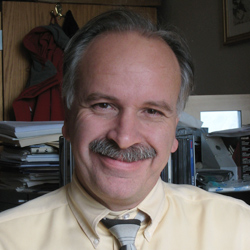
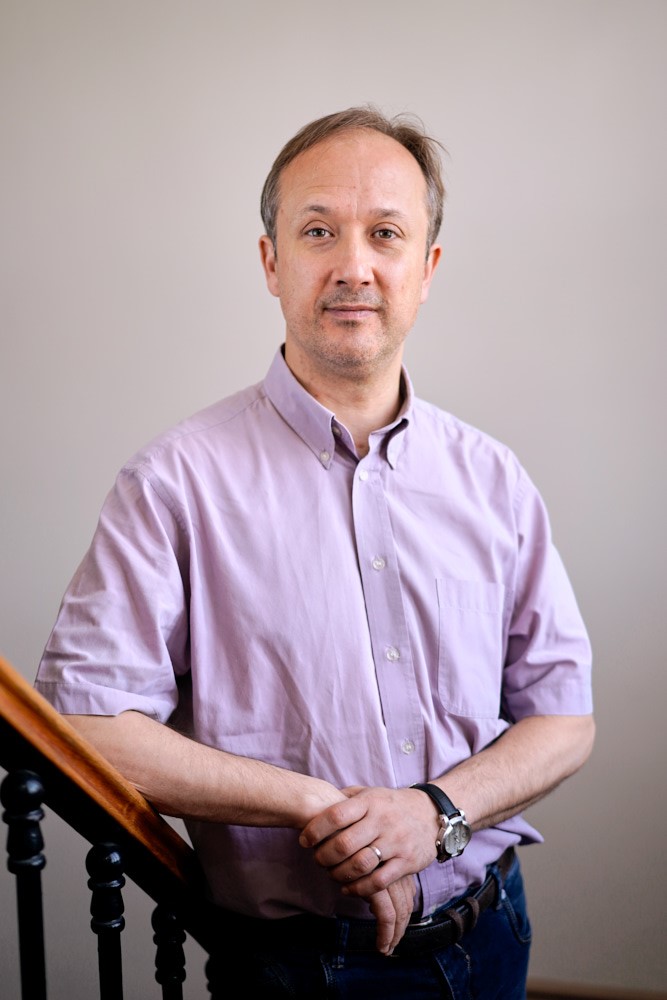
Haoyuan Chen is an Assistant Professor at Southern Methodist University (2024–present), previously serving as Assistant Professor at the University of Texas Rio Grande Valley (2021–2024) and a Postdoctoral Research Associate at Northwestern University (2017–2021). He holds a Ph.D. in Chemistry from Rutgers University (2011–2017) and a B.S. from the University of Science and Technology of China (2007–2011). His research focuses on Computational Chemistry , Materials Design , and Machine Learning , with an emphasis on metal-organic frameworks (MOFs) for applications in energy storage, environmental remediation, and catalysis. He leads the Chen Research Group , advancing interdisciplinary approaches to materials innovation. Key awards include the ACS Petroleum Research Fund (2022) and a DOE Basic Energy Sciences Grant (2022) , supporting his work on sustainable materials and computational design. His research bridges simulation and experimentation, exemplified by projects like the Research Experiences via Integrating Simulations and Experiments (REVISE) initiative for undergraduate students. He has contributed to databases like MOFX-DB and pioneered studies on MOF stability, adsorption mechanisms, and upcycling waste into carbon capture materials.
Jean-François Gaillard is a Professor of Civil and Environmental Engineering and (by courtesy) Earth and Planetary Sciences at Northwestern University's McCormick School of Engineering. His research group focuses on understanding the molecular and biogeochemical processes that affect the fate of metals in aquatic systems, with special emphasis on how chemical speciation controls metal biouptake and bioavailability. His educational background includes a D.Sc. in Physical Sciences - Geochemistry from University Denis Diderot (Paris 7) and Paris Institute of Earth Physics, a Dr. in Water Sciences from University Pierre et Marie Curie, an M.S. in Advanced Water Studies from the same institution, and a B.S. in Air and Water Science and Technology from the University of Savoie. Professor Gaillard's research employs field studies, laboratory experiments, and modeling approaches using advanced analytical, microscopic, and spectroscopic methods. His work particularly focuses on the chemical fate of arsenic, nickel, and mercury in aquatic environments as well as the environmental impacts of nano-structured materials. His group has developed various methods for spectral decomposition and reference spectrum selection for X-ray Absorption Spectroscopy (XAS) data analysis. His recent publications show a strong trend toward environmental applications of nanomaterials, metal speciation studies using advanced spectroscopic techniques, and the development of remediation strategies using drinking water treatment residuals. His work bridges fundamental environmental chemistry with practical engineering solutions for water quality challenges. Professor Gaillard currently advises multiple graduate students working on projects related to mercury biouptake, bacterial responses to nanomaterials, and metal mobility in sediments. His research has been supported by various grants focusing on environmental chemistry, nanomaterial impacts, and water treatment technologies. His laboratory utilizes advanced techniques including X-ray Absorption Spectroscopy, synchrotron X-ray microtomography, and various analytical electron microscopy methods. The research group collaborates with other Northwestern faculty, particularly in chemistry and earth sciences, to address complex environmental challenges through interdisciplinary approaches.
Christian Serre is a Research Director at the Centre National de la Recherche Scientifique (CNRS) and Director of UMR8004 – Institute of Porous Materials of Paris. He is affiliated with École Normale Supérieure (ENS) Department of Chemistry and ESPCI Paris, both part of PSL University. With over 450 publications, an h-factor of 139, and more than 90,000 citations, he is a leading figure in the field of porous materials and metal-organic frameworks (MOFs). Engineer from ESPCI Paris (1994), specialty: Soft Matter MSc in Physical Chemistry, University of Paris VI (1995), with honors PhD from University of Versailles St-Quentin-en-Yvelines (1999) Post-doctoral fellow at CNRS-Rhodia-Princeton university joint laboratory (2000) Dr. Serre's research focuses on metal-organic frameworks (MOFs) and porous materials, with applications spanning carbon capture, energy storage, environmental remediation, and biomedical applications. His work bridges fundamental chemistry with practical industrial applications, developing scalable synthesis methods for MOFs and exploring their use in gas separation, catalysis, and drug delivery systems. His research group investigates structure-property relationships in MOFs, defect engineering, and the development of composite materials for real-world applications. Analysis of Dr. Serre's recent publications reveals a strong focus on advancing MOF technology for practical applications. His work spans environmental applications like carbon capture and air purification, energy storage solutions for batteries, and biomedical applications including drug delivery and therapy. A significant portion of his recent work addresses scalability and industrial implementation of MOF technologies, reflecting a strategic shift toward translational research that bridges laboratory discoveries with commercial applications. CNRS Bronze medal (2006) FP7 ERC grant 'BioMOFs' (2008-2013) French Chemical Society Solid State Chemistry award (2011) Berthelot Medal/Prix Fondé de l'état from the French academy of Sciences (2016) Dr. Serre has secured extensive funding through numerous European projects (including multiple ERC grants), national grants, and industrial collaborations with major companies like Total Energies, EDF, L'Oréal, and St Gobain. He has served as Principal Investigator for projects such as DeSANNS, BioMOFs, Macademia, Sotherco, M4CO2, Gramofon, Nemosine, MOF4air, Methasol, and MOF2H2. He currently leads the Paris Region priority project MaTerRE (2022-2026) dedicated to sustainable materials for the energy transition (12 M€, >500 researchers) and previously led 'Respore' (2017-2021). As Director of UMR8004 – Institute of Porous Materials of Paris, Dr. Serre leads a multidisciplinary research team focused on the synthesis, characterization, and application of porous materials. His institute serves as a hub for MOF research in France, collaborating with academic and industrial partners worldwide. The institute has developed strong capabilities in MOF synthesis at scale, characterization techniques tailored to porous materials, and application testing in areas like gas separation and energy storage.
Agnieszka Marcewicz-Kuba is an Associate Professor at the Faculty of Chemistry , Maria Curie-Skłodowska University, Lublin, Poland. Her work focuses on catalytic methods for environmental protection, particularly in reducing sulfur dioxide and nitrogen oxide emissions from coal combustion. PhD in Chemical Sciences (2003) Master’s in Chemistry (1994) Postgraduate studies in scientific research management, PR, and entrepreneurship Research interests include catalyst development for simultaneous NOx/SO₂ removal, pollution control in coal-fired systems, and eco-materials like montmorillonite- and zeolite-based catalysts. Recent publications analyze the role of platinum/vanadium in catalytic activity, support material optimization, and practical implementations in industrial settings. Her 15 most recent articles (2006–2012) emphasize chemical engineering , environmental chemistry , and materials science , with subfields spanning desulfurization techniques, catalyst synthesis, adsorption dynamics, and emission reduction strategies. She has contributed to the DESONOX process and its application in coal combustion systems.
Krista Carlson serves as an Associate Professor at the University of Nevada, Reno, specializing in advanced materials development for nuclear and environmental applications. Her research bridges fundamental materials science with practical engineering solutions for radioactive waste management and water treatment systems. Education: Ph.D. in Glass Science, New York State College of Ceramics at Alfred University (2008) B.S. in Glass Engineering Science, New York State College of Ceramics at Alfred University (2004) Her research program focuses on sorbent synthesis for radionuclide capture , particularly for iodine and other hazardous species in complex gas streams. She develops high-temperature metallic glasses based on tungsten and tantalum for extreme environments, and designs electrochemical systems for water treatment using nanostructured electrodes. Her salt waste processing work addresses critical challenges in electrochemical reprocessing of used nuclear fuel, creating sustainable waste management solutions through phosphate-based dechlorination and zeolite occlusion techniques. These efforts combine sol-gel chemistry, nanomaterials engineering, and electrochemical analysis to tackle nuclear waste remediation. Analysis of her publication record reveals strong emphasis on nuclear materials (65% of recent work), electrocatalysis (20%), and biomedical materials (15%). Key technical threads include metallic glass corrosion resistance, iodine sorbent regeneration cycles, and titanium dioxide nanotube applications for water disinfection. Her methodology integrates computational modeling with experimental validation across multiple length scales. While no specific scientific awards are documented in the source material, her research demonstrates sustained funding through nuclear energy programs and materials science initiatives. Her advising activities focus on graduate students in materials engineering, with emphasis on experimental techniques for nuclear applications. Her laboratory operations center on materials synthesis facilities for sol-gel processing, metallic glass production via gas atomization, and electrochemical testing rigs for waste treatment validation. Current efforts target scalable sorbent production and integration of metallic glasses into nuclear facility waste processing systems.