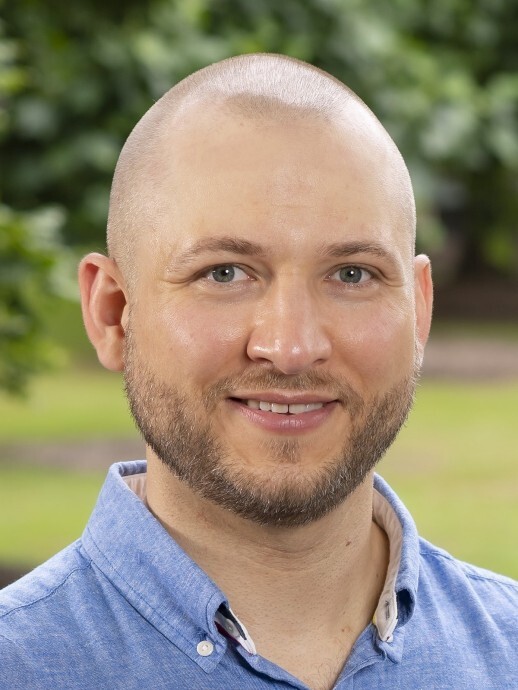
Elia Distaso is an Assistant Professor at the Department of Mechanics, Mathematics & Management, Politecnico di Bari, Italy. His research focuses on fluid dynamics, hydrogen combustion, and computational modeling. University: Politecnico di Bari Department: Mechanics, Mathematics & Management Academic Rank: Assistant Professor Email: elia.distaso@poliba.it His work spans hydrogen engines , CFD simulations , and hydraulic systems , with recent publications addressing auto-ignition mechanisms, cavitation phenomena, and sustainable aviation technologies. He specializes in leveraging numerical methods for combustion and fluid flow analysis. His 15 most recent publications highlight trends in computational fluid dynamics, including boundary condition modeling, pressure-velocity coupling, and OpenFOAM® applications. Key subfields include hydrogen combustion dynamics , lubricant oil reactivity , cryogenic heat exchanger design , and piezohydraulic pump analysis .
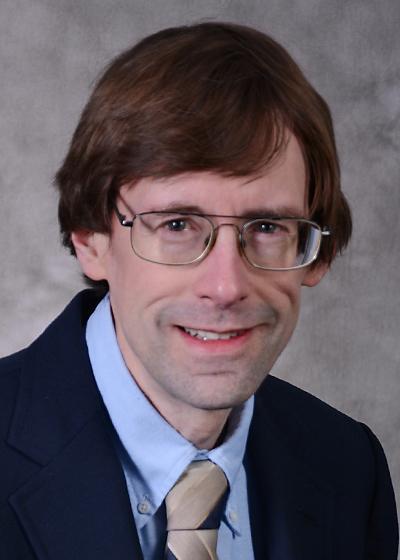
Dale R. Tree is a Professor in the Department of Mechanical Engineering at Brigham Young University (BYU), College of Engineering, where he has held academic appointments since 1994. He progressed from Assistant Professor (1994–2000) to Associate Professor (2000–2007) before attaining full professorship in 2007. His research focuses on experimental combustion diagnostics across diesel engines, coal, biomass, and black liquor systems, with emphasis on soot/NOx reduction and optical measurement techniques. Education: PhD, Mechanical Engineering (Minor: Chemical Engineering), University of Wisconsin-Madison, 1992 MSME, Mechanical Engineering, Purdue University, 1988 BS, Mechanical Engineering, Brigham Young University, 1986 Research Interests: Professor Tree investigates combustion dynamics using advanced diagnostics like Planar Laser-Induced Fluorescence (PLIF) and Laser-Induced Incandescence (LII). Key areas include: Soot/NOx formation mechanisms in diesel engines Black liquor droplet combustion for pulp industry applications Biomass/coal cofiring impacts on emissions Low-NOx burner design for sustainable fuels High-temperature fuel spray characterization Publication Trends: His recent articles (2004–2010) predominantly explore combustion optimization, emissions reduction, and diagnostic methods. Common themes include soot modeling in compression ignition engines, black liquor spray dynamics, biomass cofiring emissions, and innovative temperature/pollutant measurement techniques. Collaborative work with national labs (e.g., Sandia) and industry (Cummins) underscores applied research focus. Scientific Awards: No awards mentioned in the source material. Advising & Leadership: Has advised 15+ graduate students (MS/PhD) in combustion research. Additional roles: SAE Advisor & Mini-Baja/FSAE Coach Department Assessment and ABET Coordinator Sabbatical researcher at Sandia National Laboratories (1999–2000) Labs & Collaborations: Conducts experiments at BYU Combustion Laboratory. Key collaborations include Sandia National Laboratories (optical diagnostics), Cummins Engine Company (diesel emissions), and industry partnerships in biomass conversion. Leads student engineering teams for SAE competitions.
Armin Wehrfritz is an Assistant Professor in the Department of Mechanical Engineering at the University of Turku. His research focuses on high-fidelity numerical simulations of multiphase and chemically reacting flows, particularly involving low-carbon fuels like hydrogen. He holds a Master's degree from the University of Kaiserslautern and a Ph.D. from Aalto University. During his doctoral studies, he was a visiting researcher at Eindhoven University of Technology, and later worked as a Research Associate at the University of New South Wales in Sydney. His expertise spans computational fluid dynamics (CFD), turbulence modeling, combustion physics, and high-performance computing (HPC), with a growing interest in machine learning applications for numerical methods. Education: Doctoral Degree: Aalto University, Finland Master's Degree: University of Kaiserslautern, Germany Research interests include: Direct numerical simulation (DNS) and large-eddy simulation (LES) of combustion processes Hydrogen integration in compression-ignition engines Development of advanced micro-mixing models for transported PDF methods Data-driven approaches for optimizing combustion systems His recent work emphasizes reducing carbon emissions through hydrogen-diesel dual-fuel systems and improving simulation accuracy for engine-relevant conditions. Collaborations have involved institutions in the Netherlands, Australia, and the U.S., focusing on topics like plasma-ignited hydrogen jets and NOx reduction mechanisms.
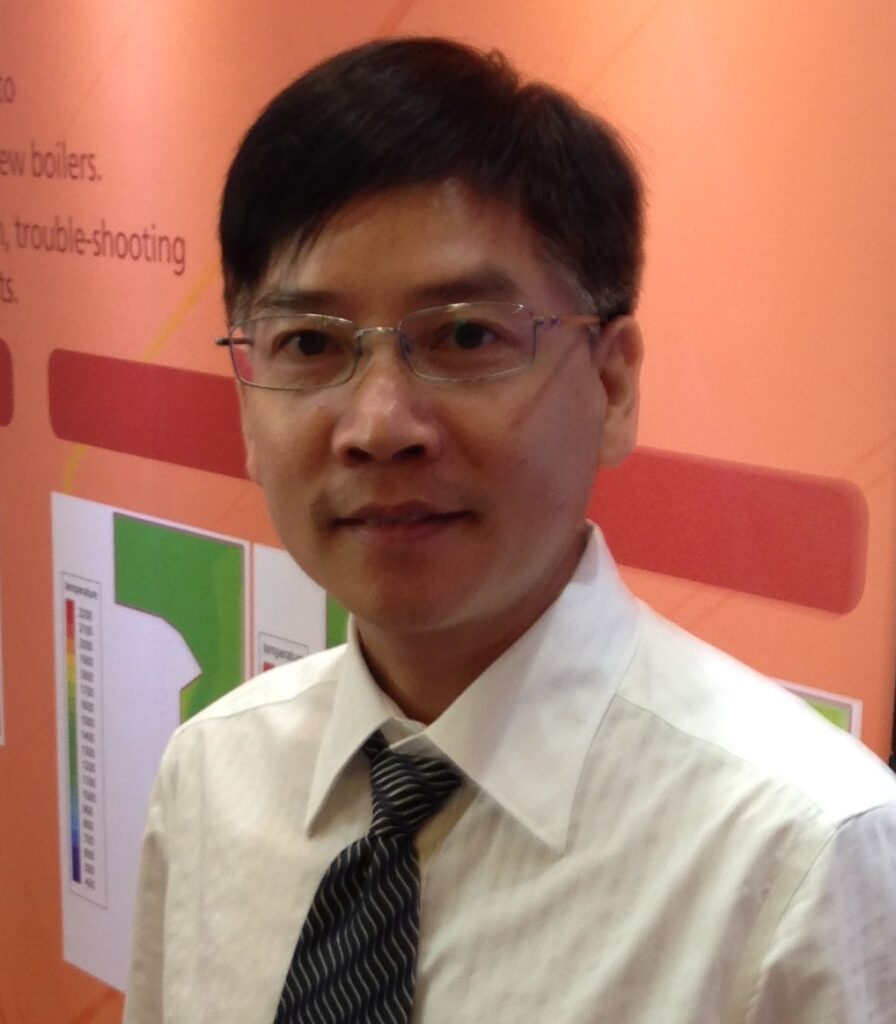
Dr. Wenming Yang is an Associate Professor at the Department of Mechanical Engineering, National University of Singapore (NUS). He has been with NUS since 2000, progressing from Research Fellow to Assistant Professor in 2011 and Associate Professor since 2017. His research focuses on combustion technologies across multiple scales and applications. Current research areas include internal combustion engines using biofuels, emulsion fuels, and natural gas Development of high-efficiency, low-emission boilers (grate biomass, pulverized coal, CFB, incinerators) Design of micro thermophotovoltaic power generators Active collaboration in computational modeling and experimental validation Dr. Yang's recent publications (2003-2015) primarily address combustion optimization, emissions control, and microscale energy systems. His work spans fundamental chemical kinetics to applied engine modeling, with a strong emphasis on sustainability and alternative fuels. Scientific Recognition Dean’s Chair Professor (2020) – NUS College of Engineering Academic Contributions Teaches Energy Conversion Process (ME3221), Internal Combustion Engine (ME4227), and Air-Conditioning and Building Automation (ME5204) Leads the GSTPG Lab, focusing on combustion innovation and energy systems Actively seeks Ph.D. candidates for research in IC engines, WTE plants, and biomass boiler technologies
Tian Li is an Adjunct Associate Professor at the Department of Energy and Process Engineering, Faculty of Engineering, Norwegian University of Science and Technology (NTNU). Based at the Varmeteknisk building on the Gløshaugen campus, Dr. Li is affiliated with the ComKin Group and has been actively involved in numerous research projects focused on biomass conversion and combustion technologies since 2011. Dr. Li's research primarily focuses on: Biomass gasification and combustion technologies Computational Fluid Dynamics (CFD) modeling of energy conversion processes Multiphase flow and reaction kinetics in thermochemical processes Turbulence modeling in combustion systems Development of simulation tools for bioenergy applications Over the past decade, Dr. Li has led or contributed to multiple significant research projects funded by the Norwegian Research Council and industrial partners, including BioCarbUp, GASPRO, GrateCFD, GAFT, BioCarb+, CenBio, and GasBio. These projects have focused on optimizing biomass conversion processes for sustainable energy production. Dr. Li's publication record shows consistent contributions to high-impact journals in the energy and combustion fields, with a strong emphasis on computational modeling approaches. The research demonstrates expertise in developing and validating models for biomass conversion processes, with applications ranging from industrial-scale biomass furnaces to fundamental particle-level phenomena. Dr. Li has developed significant expertise in various computational tools and programming languages: Software: OpenFOAM, ANSYS Fluent, ANSYS ICEM CFD, Star-CD, MFiX, CHEMKIN, LOGEsoft, LabVIEW Programming: C/C++, Python, Fortran, Matlab Through participation in major research centers like CenBio (Bioenergy Innovation Centre), Dr. Li has contributed to advancing Norway's bioenergy research capabilities and fostering collaboration between academia and industry in the sustainable energy sector.
Benoit Fiorina is a Professor at Paris-Saclay University, affiliated with the CNRS and CentraleSupélec at the EM2C Laboratory. He serves as Co-coordinator of the Combustion team and Deputy Director of the SMEMaG Doctoral School, overseeing the Fluid, Energetics, and Processes department. Previously, he held positions as Associate Professor at École Centrale Paris (2006-2014) and completed postdoctoral research at Stanford University. Education: Habilitation (2012) - Institut National Polytechnique de Toulouse PhD in Turbulent Combustion (2004) - École Centrale Paris Engineer Degree in Fluid Mechanics & Energy (2001) - ESSTIN Nancy Research Focus: Fiorina specializes in turbulent reactive flows with emphasis on pollutant formation mechanisms and plasma-assisted combustion. His work integrates high-performance computing with advanced numerical methods for applications in aerospace propulsion, industrial furnaces, and clean energy systems. Key methodologies include Large Eddy Simulation (LES), tabulated chemistry approaches, and multi-regime combustion modeling. Publications: Recent work (2021-2025) demonstrates strong focus on plasma-combustion interactions, hydrogen flame dynamics, and soot prediction using virtual chemistry techniques. Articles frequently combine experimental validation with high-fidelity simulations to address turbulent flame stabilization and ignition challenges. Awards & Recognition: Research Excellence Award - Combustion Institute Supervised doctoral students awarded the Paul Laffitte Prize and Gérard de Soete Prize Professional Activities: Former President of the French Combustion Institute (2015-2018), editorial board member for Flow Turbulence and Combustion and Fuels journals, and participant in ANR/EU research projects on plasma-assisted combustion and emission reduction.
Kevin Hughes is a Senior Lecturer in the Energy Engineering Group at the Department of Mechanical Engineering, School of Mechanical, Aerospace and Civil Engineering, University of Sheffield. He holds a PhD and first degree in Chemistry from the University of Leicester (1987) and focuses on fuel combustion, fuel cells, and process modelling in carbon capture and storage (CCS) systems. His research combines experimental and theoretical approaches, including planar laser diagnostics, quantum chemistry, and CFD simulations. Education: PhD and BSc in Chemistry from University of Leicester. Research Interests: Fuel combustion, pollutant chemistry, PEM fuel cells, CCS process modelling, catalyst development, and combustion in supercritical CO2. Grant Projects: FP7-ENERGY-2010-2 (RELCOM), Gas-FACTS (EPSRC), EP/J020788/1, EP/M001482/1 (Selective EGR), TEABPP (Energy Technology Institute). Scientific Contributions Publications: Over 50 papers on fuel combustion mechanisms, fuel cell optimization, CCS systems, and alternative fuels. Collaborations: Regular work with M. Pourkashanian, D.B. Ingham, S. Michailos, and M.S. Ismail. Technical Expertise Chemical Kinetics Validation Quantum Chemistry Applications Gas Diffusion Layer Analysis Surrogate Fuel Development Supercritical Combustion
Prof. Dr. Heinz Burtscher serves as Professor at the FHNW University of Applied Sciences Northwestern Switzerland since 1996, where he founded and led the Institute of Aerosol and Sensor Technology until 2018. Affiliated with the School of Engineering and Environment , he specializes in Aerosol Measurement Technology and Measurement and Sensor Technology with focus on combustion-generated nanoparticles, environmental aerosol monitoring, and sensor development for particulate matter analysis. PhD in Electrical Engineering (1980) from ETH Zurich Postdoctoral qualification in experimental physics (1991) on combustion aerosols His research interests span: Characterization of small particles from combustion processes (e.g., diesel soot, wood burning) Development of field measurement techniques for particle emissions Advancements in sensor technology for ambient air monitoring Toxicological evaluation of nanoaerosols Innovations in exhaust gas cleaning systems Recent publications address sub-23 nm particle measurement , e-cigarette vapor characterization , and real-time SOA formation potential in combustion emissions. He received the Smoluchowski award (1994) from the Gesellschaft für Aerosolforschung (GAeF) and maintains active membership in GAeF and the Swiss Aerosol Group. As both educator and researcher, Burtscher teaches Power electronics , Electrical drives , and Sensor systems while leading projects on: Volcanic ash detection systems Nanoparticle exposure assessment Vehicle cabin air filtration Periodic emission inspection protocols He works closely with the Institute for Sensors and Electronics at FHNW and collaborates with ETH Zurich's combustion research groups.
Cecile Devaud is a Professor in the Department of Mechanical and Mechatronics Engineering at the University of Waterloo's Faculty of Engineering. She leads the Turbulent Combustion Modeling Lab and is affiliated with Waterloo Engineering’s Fire Research Group and the Waterloo Institute for Sustainable Energy. Her research focuses on Computational Fluid Dynamics (CFD) for turbulent reacting flows, with applications in fire safety, automotive engineering, and sustainable energy systems. She holds a PhD in Turbulent Combustion from the University of Cambridge and has pioneered advancements in CFD modeling techniques like Conditional Source-term Estimation (CSE). Education: 1999: Doctorate in Turbulent Combustion, University of Cambridge, UK 1995: Bachelor's in Mechanical Engineering (Propulsion Systems), INSA Rouen, France 1995: Master's in Thermal Power-Gas Turbine Technology, University of Cranfield, UK Research Interests: Development of CFD models for turbulent combustion, fire safety engineering, soot formation, auto-ignition, and emissions reduction. Her work spans aerospace, automotive, and nuclear industries, with recent focus on two-phase flows and compartment fires. Lab & Partnerships: The Turbulent Combustion Modeling Lab collaborates with industry and global partners to advance combustion technologies. Current projects include oxyfuel combustion, MILD combustion, and fire risk analysis in residential and industrial settings. The lab actively seeks graduate students and sponsors. Recognition: Holds a US patent for 'Air hybrid engine with a plurality of air tanks' (with collaborators).
Robin Lewis Modini is a Tenured Staff Scientist at the Paul Scherrer Institute (PSI) in Switzerland, working within the Laboratory of Atmospheric Chemistry since 2012. He leads research on atmospheric aerosols with expertise in aerosol optics, health impact mechanisms, and climate interactions. His position evolved from Tenure-Track Scientist (2016-2020) to Tenured Staff Scientist (2020-present), following postdoctoral work at EPFL (2012-2016) under Prof. Satoshi Takahama and Scripps Institution of Oceanography (2010-2012) under Prof. Lynn Russell. Education includes: PhD in Physics from Queensland University of Technology, Australia (2007-2010) with thesis on marine aerosol water uptake under Prof. Zoran Ristovski Bachelor of Applied Science with Honours in Physics from Queensland University of Technology, Australia (2002-2005) His research centers on aerosol health effects through oxidative potential measurements (SNSF project), in situ characterization of black carbon optical properties (ACTRIS/EUROCHAMP), and bridging observational gaps between ground-based and remote sensing data (BISAR project). Key methodologies involve the Single Particle Soot Photometer (SP2), machine learning applications, and field campaigns at Jungfraujoch and Zeppelin Observatory. Current work emphasizes combustion aerosol toxicity and Arctic aerosol-cloud interactions. Recent publications (2022-2025) show consistent focus on instrument validation, oxidative potential quantification, and black carbon behavior across environments. Trends include advancing real-time health-relevant metrics (e.g., dithiothreitol assays), refining optical property measurements (CAPS monitors, polar nephelometers), and analyzing transcontinental pollution transport (Africa-Amazon, Bolivia-Andes). International collaborations through ACTRIS and EUROCHAMP underpin high-impact work in Aerosol Science and Technology, Atmospheric Chemistry and Physics, and Nature Communications. No scientific awards were mentioned in the provided text. Modini directs SNSF-funded health impact studies and participates in European projects (ACTRIS, EUROCHAMP, BISAR) examining aerosol optical properties and oxidation processes. His AC/BC project conducted black carbon measurements in Arctic clouds at Svalbard's Zeppelin Observatory. While he served as postdoc adviser at EPFL and Scripps, no current advisees are listed. Notable grants include Swiss National Science Foundation support for aerosol health research and European infrastructure funding for chamber studies. He operates within the Aerosol Physics Group at PSI's Laboratory of Atmospheric Chemistry, utilizing SP2 photometers and custom polarimetric instruments. The group conducts field campaigns across Switzerland (Jungfraujoch), Bolivia (La Paz), Southern Ocean (Antarctic Circumnavigation Expedition), and Arctic regions, with international teams including ETH Zurich and UC San Diego collaborators. Current efforts focus on machine learning integration for aerosol-cloud interaction modeling and health metric development.
Dr. Tan Boon Thong is an Associate Professor at the Malaysia School of Engineering, Monash University Malaysia. His research focuses on fluid structure interaction, aerodynamics, thermal energy storage, and sustainable engineering solutions. He is actively involved in industry collaborations, including projects on acoustic rainfall estimation, thermal storage systems, and nanostructure-based biomedical applications. His work aligns with UN Sustainable Development Goals related to affordable and clean energy, industry innovation, and climate action. Dr. Tan has led or participated in multiple research projects, including studies on galloping-induced energy harvesting, heat transfer enhancement, and biofuel combustion optimization. He has also contributed to improving water distribution infrastructure and reducing non-revenue water in Malaysia. His teaching commitment includes MEC2404 (Mechanics of Fluid) and mentoring student teams in competitions like Shell Eco Marathon and Formula SAE, fostering technical and soft skills. He has received the ITEX 2018 Silver Medal for his contributions. His research outputs span over 46 publications, with a focus on combustion science, fluid dynamics, and sustainable engineering. Collaborations include international partners in Thailand, China, and Malaysia. Dr. Tan’s labs and teams prioritize real-world applications, emphasizing interdisciplinary approaches to address global challenges. His current projects explore graphene-enhanced cooling systems and sustainable material composites, reflecting his dedication to advancing engineering solutions for societal benefit.
Nicole Riemer is a Professor at the University of Illinois Urbana-Champaign, affiliated with the Department of Climate, Meteorology and Atmospheric Sciences, Civil and Environmental Engineering, and the National Center for Supercomputing Applications (NCSA). Her research focuses on aerosol particles' creation, transport, and transformation, with applications to climate, health, and pollution mitigation. She develops advanced simulations to study aerosol impacts on weather patterns, climate change, and human health. Education : Not explicitly stated in the provided texts. Affiliations : Multiple roles across climate, engineering, and supercomputing departments. Her work integrates observational data, satellite information, and computational models to address global challenges like air pollution and climate feedback loops. Key areas include aerosol mixing state, black carbon dynamics, and aerosol-cloud interactions. Dr. Riemer has received prestigious awards, including the Atmospheric Sciences Ascent Award (2021) and the NSF CAREER Award (2013). Her research outputs span aerosol chemistry, climate modeling, and computational methods. Notable datasets include work on particle-resolved modeling and machine learning applications in environmental science. She actively mentors graduate students and collaborates internationally on climate and atmospheric science projects.
Randy L. Vander Wal is a Professor at The Pennsylvania State University, holding appointments in the John and Willie Leone Family Department of Energy and Mineral Engineering, Materials Science and Engineering, and Mechanical Engineering within the College of Earth and Mineral Sciences. His research spans multiple areas of energy and materials science with a strong focus on nanomaterials synthesis and characterization. Dr. Vander Wal's research interests include energy generation through nanostructured catalysts for hydrocarbon processing, energy utilization through metal oxide gas sensors, energy conversion through nanostructured lubricants, and energy storage through new battery materials. His expertise also covers laser diagnostics for measuring species, temperature, pressure and flow, as well as various analytical methods including microplasmas and laser-based techniques like LIBS, LIF, LII, CRD, and DFWM. His work in materials chemistry focuses on nanomaterial syntheses using methods such as CVD, plasma, electrospinning, combustion, aerosol, mechanical processes and ablation, followed by comprehensive characterization and application testing. A significant contribution to the field was coining the term 'nanostructure' to describe the atomic layer planes comprising soot, enabling statistical comparison through custom algorithms developed specifically for HRTEM image quantification. Dr. Vander Wal's research portfolio demonstrates strong trends in carbon nanomaterials, particularly graphene and other graphitic forms, with applications spanning energy conversion, environmental monitoring, and advanced composites. His recent publications show increasing focus on sustainability applications, decarbonization technologies, and environmental health impacts of combustion products. His academic contributions extend to teaching courses including EGEE 120: Oil: International Evolution, ENVSE 406: Sampling and Monitoring of the Geo-Environment, FSC 431: Chemistry of Fuels, and several advanced graduate courses in nanotechnology and catalytic materials. His educational background includes a Ph.D. in Chemical Physics from The University of Wisconsin with research on 'The Vibrationally Mediated Photodissociation of Water,' and undergraduate degrees in Physics, Chemistry, and Math from Calvin College.
Corinna Schulze-Netzer is an Associate Professor in the Department of Energy and Process Engineering at NTNU. Her research focuses on Computational Fluid Dynamics (CFD) applied to reacting multiphase flows, energy recovery from bio-originated and municipal wastes, and emission prediction in alternative fuel combustion. She leads the HighRec project (2024–2028), exploring high-temperature gasification for plastic waste recycling. Notable contributions include developing surrogate concepts for sewage sludge gasification and stochastic reactor networks for grate-fired plants. Her work spans projects like ACTIVATE (ammonia as carbon-free fuel) and GrateCFD (optimizing biomass/waste energy plants). She has published extensively on topics like ammonia/hydrogen combustion instabilities, MILD combustion emissions, and feedstock-flexible gasification. Corinna collaborates widely, with funding from the Research Council of Norway and international partners like CNRS and Scania. Education : Not explicitly stated in text. Teaching : Courses include Termo- og fluiddynamikk , Avfallsteknologi og ressursgjenvinning , and thermodynamics modules. Grants : FRIPRO Young Research Talents grant (2024–2028). Labs/Teams : Involved in NTNU’s combustion and energy systems research groups.
Étienne Robert is a Full Professor in the Department of Mechanical Engineering at Polytechnique Montréal. He holds a B.Eng from Polytechnique Montréal, an M.Sc., and a Ph.D. from École Polytechnique Fédérale de Lausanne (EPFL). His research primarily focuses on experimental approaches to fluid mechanics, with particular expertise in combustion, multiphase flows, and aerosol dynamics. His educational background includes: B.Eng (Polytechnique Montréal) M.Sc. (EPFL) Ph.D. (EPFL) Robert's primary research interests span several interconnected areas in fluid mechanics and combustion science. He is particularly known for his work on unstretched diffusion flames, thermal-diffusive instabilities, soot formation, carbon nanotube synthesis, and acoustic manipulation of particles. His research often combines fundamental experimental work with practical applications in energy systems, environmental protection, and aerospace engineering. Robert advocates for simple experimental setups that allow for fundamental understanding of underlying physics, with results well-suited for validating theoretical or numerical models. His recent publications demonstrate a strong focus on combustion science, fluid mechanics, and energy systems. Key trends include research on hypergolic rocket fuels, cooling tower optimization, aerosol dynamics, diffusive-thermal instabilities in alternative fuel combustion, and cavitation phenomena. His work bridges fundamental fluid mechanics with practical applications in energy, environmental engineering, and aerospace systems. Robert has supervised numerous graduate students, including doctoral candidates and master's students working on diverse projects related to combustion, fluid mechanics, and materials science. His research has been supported by various funding sources including NSERC (mentioned in a 2022 news item about receiving over $2 million in grants). His laboratory work appears to focus on experimental fluid mechanics, with specialized equipment for studying diffusion flames, acoustic particle manipulation, and aerosol dynamics. His research projects often involve interdisciplinary collaborations across mechanical engineering, aerospace engineering, and environmental science.