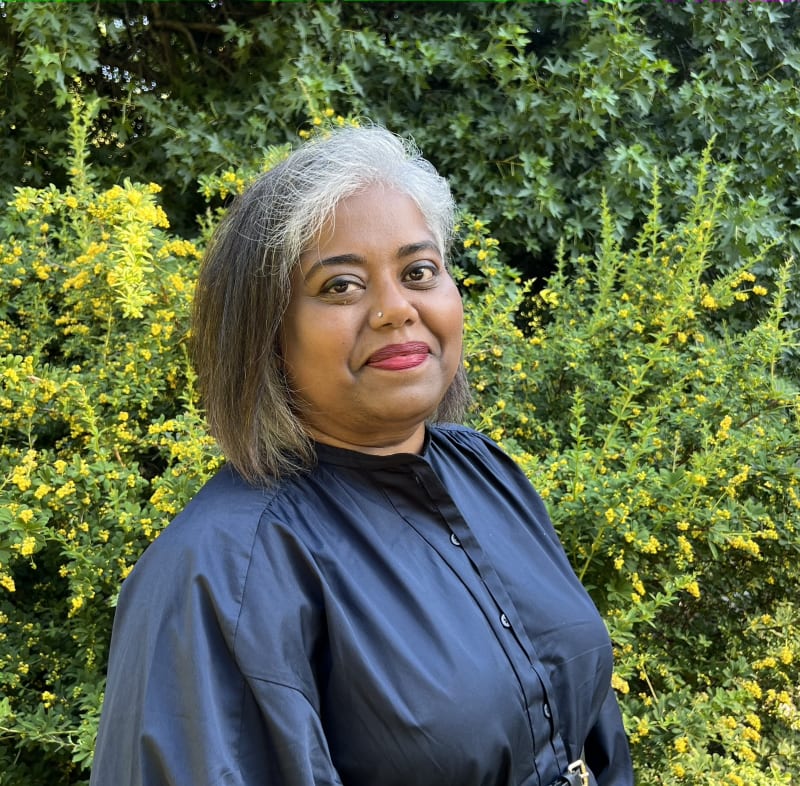
Dr. Carola Lorea is a Junior Professor at the Institute for Religious Studies, Faculty of Philosophy, University of Tübingen (since 2023) and former Senior Research Fellow at NUS's Asia Research Institute (2022-2023). Her work bridges religious studies, cultural anthropology, and digital humanities with a focus on South/Southeast Asian borderlands. PhD in South Asian Studies (2015, La Sapienza University of Rome) 2023 Habilitation Venia Legendi in religious studies and cultural anthropology Research centers on Matua traditions , Baul oral cultures , religion and pandemics , and sensory scholarship . She pioneered the CoronAsur research blog (2020) and leads the MANTRAMS project with ERC Synergy Grant (2023). Key contributions include: Digital Archive of Baul Songs (EAP1247 PI) Theoretical work on bricolage thinking in borderland communities Critical analysis of caste dynamics in post-Partition Andaman settlers Sonic approaches to religious studies Teaching includes courses on Religious Sounds (Tübingen 2024), Religion and South Asian Society , and Bengali language instruction. She founded the Digital Archive 'Songs of the Old Madmen' and co-edits volumes on global religious sound studies.
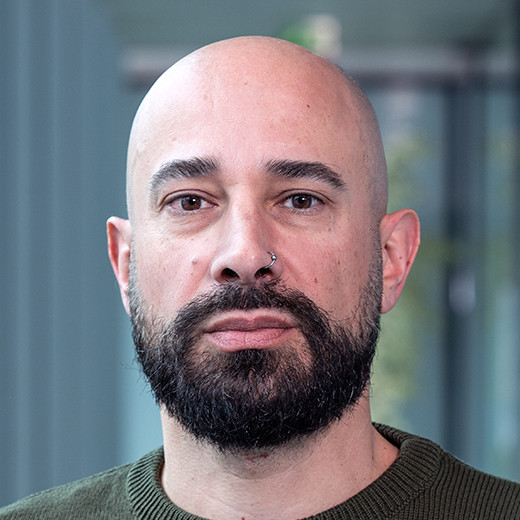
Prof. Dr. Andrea Sick is Professor of Cultural and Media History/Theory at the University of the Arts Bremen (HfK Bremen) where she leads the Digital Media study program. She founded the Binational Artistic PhD Program, collaborating with institutions including Leiden University, University of Groningen, and University of Gothenburg. Her research explores intersections between technology, art, and cultural production through both academic and curatorial work. Education includes studies in German Studies, Political Science, Cultural Studies, and Art History at Heidelberg, Bremen, and Hamburg universities, culminating in a 2001 PhD from Universität Hamburg on cartographic knowledge systems. She co-directs the art-science project thealit Frauen.Kultur.Labor , producing exhibitions, conferences, and publications. Research focuses span: Technological media's impact on artistic production Art-biology-information technology intersections Performance art history/theory Queer Studies frameworks Artistic research methodologies Generative AI in cultural analysis Her work critically examines how digital tools transform cultural documentation and archival practices. Recent projects include: Latent Museums (AI analysis of museum collections) The Dynamic Archive (ongoing digital archiving project) Re Capitulating.Queer (2024-2026 curatorial project) Administrative roles include: Dean of Art and Design (2012-2018) Co-Rector for Research & International Affairs (2018-2023) Lead of Binational Artistic PhD Program (since 2022) Awards include the Heinrich-Böll-Stiftung doctoral scholarship (1998-2001). She mentors 12+ PhD students in artistic research, including projects on sonic archaeology, queer archives, and decolonial practices.
Paul D. Miller, known professionally as DJ Spooky, That Subliminal Kid, is a Professor of Music and Mediated Art at The European Graduate School (EGS). Based in New York City, he is an experimental electronic and hip-hop musician, conceptual artist, and writer whose work spans music production, film, multimedia installations, and critical theory. He has released over a dozen albums pioneering 'illbient' and trip hop genres, authored influential books including Rhythm Science and Sound Unbound , and exhibited internationally at venues like the Venice Biennale and Andy Warhol Museum. Education: Bowdoin College: Studied philosophy and French literature; thesis on Richard Wagner's Gesamtkunstwerk as precursor to new media. Research Interests: Miller's work centers on remix culture as a postmodern methodology, exploring intersections of sound, image, and technology. His theoretical framework positions the DJ as a 'post-subjective auteur' who creates meaning through layered connections across time, culture, and media. Key projects include Rebirth of a Nation (reworking D.W. Griffith's film to address racial history) and Terra Nova (Antarctica sound recordings addressing climate change), demonstrating his focus on historical reinterpretation and environmental crisis through digital media. Publications: His 14 scholarly articles (2001-2009) analyze remix as cultural practice across domains from album art history ( The Inner Sleeve ) to Baudrillard's philosophy ( Baudrillard: A Remembrance ). The corpus reveals consistent investigation into how sampling, digital layering, and media archaeology reshape narrative, memory, and cultural identity in the information age. Awards: No scientific awards or fellowships were documented in the source text. Advising and Grants: The source text provides no information regarding students supervised, academic advising, or research grants administered by Miller. Labs and Teams: Miller operates through project-based collaborations rather than fixed labs, forming temporary collectives with institutions like the American Museum of Natural History (for Terra Nova ) and artists including Yoko Ono, Ryuichi Sakamoto, and choreographer Francesca Harper. His 'Unfinished Stories' project with Pulitzer-winning critic Margo Jefferson exemplifies his interdisciplinary approach bridging dance, music, and social commentary.
Dr. Jonathan Skinner is a Reader (equivalent to Associate Professor) in English and Comparative Literary Studies at the University of Warwick's Faculty of Arts, where he researches and teaches ecocriticism, contemporary poetry, and creative writing. He founded and edits the journal ecopoetics , exploring intersections between writing and ecology. His research examines: Ecopoetic theory and environmental literature Intersections of sound studies and ethnopoetics North American avant-garde poetry (Olson, Kyger, Eigner) Translation and transnational poetics Third Landscape theory and urban wildness He leads a research network facilitating cross-cultural poetry exchanges along avian migration routes. Skinner's publications predominantly explore ecocritical frameworks through poetry analysis, with recent work examining climate change poetics, multispecies communication, and Anthropocene aesthetics. His scholarship connects literary studies with environmental science, acoustics, and landscape theory. He currently supervises five PhD students researching multispecies poetics and environmental literature through AHRC-funded projects, and has successfully supervised two doctoral candidates studying deindustrialization and extractive urbanism. Previously supervised MA theses span modernist poetry, ecocriticism, and creative writing.
Jordi Claramonte Arrufat is a Spanish philosopher and university professor at the National University of Distance Education (UNED) in the Department of Philosophy and Moral and Political Philosophy. His work centers on Modal Aesthetics , a theoretical system analyzing the relationships between necessity, contingency, possibility, and impossibility in art and sensitivity. He has authored six major essay works, including the foundational Estética Modal: Libro Primero (2016) and Libro Segundo (2021). PhD in Philosophy from UNED (2006) Visiting professor at MIT, Yale University, and Chicago Arts Institute His research bridges aesthetics with political and social self-organization processes, focusing on contextual art practices and the breakdown of artistic representation in favor of direct action. Collaborations include groups like Fiambrera Obrera and Sabotaje Contra el Capital Pasándole Pipa (SCCPP). In 2022, he delivered the talk Art to the Limit at Valencia's 1st Biennial of Thought, addressing creativity in times of social crisis. Publications include analyses of censorship, relational aesthetics, and applications of modal theory to cinema, architecture, and sculpture. Claramonte's work has inspired academic research across disciplines, including studies on: Modal applications in audiovisual media and cinema Architectural modal analysis Scultptural modal strata Tradition in modern aesthetics He has supervised 17 doctoral theses and contributed to critical dialogues on autonomy, precariousness, and the political dimensions of sensitivity.
Edward Nesbit is Senior Lecturer in Composition at King's College London's Department of Music within the Faculty of Arts & Humanities. He studied at Cambridge University, Guildhall School of Music and Drama, and King's College London under Julian Anderson and George Benjamin. His compositions are regularly performed by major ensembles including the London Sinfonietta, BBC Symphony Orchestra, and Philharmonia Orchestra at venues like Wigmore Hall and Royal Festival Hall. Research interests focus on: Contemporary choral and vocal composition techniques Integration of literary and dramatic elements in musical works Collaborative performance practices Community music engagement methodologies Recent compositions demonstrate diverse approaches to narrative storytelling through music, with frequent exploration of biblical/historical themes and nature-inspired programmatic elements. His work includes collaborations with the Choir of King's College London, resulting in commercial recordings on the Delphian label. Nesbit has secured funding including an AHRC Impact Acceleration Award for community music projects. He leads the 'Singing for Wellbeing' initiative developing choral repertoire for community engagement and directs composition studies at undergraduate/postgraduate levels.
Brian Larkin is Professor of Anthropology at Barnard College, Columbia University, and Codirector of Columbia's Center for Comparative Media. He holds a PhD from NYU (1998) and studies media technologies through anthropological frameworks. Research examines media infrastructures in Nigeria: Religious media in Islamic and Christian contexts Nigerian film (Nollywood) circulation Urban soundscapes and loudspeaker culture Infrastructure politics and colonial legacies Authored Signal and Noise: Media, Infrastructure, and Urban Culture in Nigeria (Duke, 2008) and co-edited Media Worlds: Anthropology on New Terrain (California, 2002). Current work explores the relationship between media forms, religious transformations, and urban experience in postcolonial contexts.
Anthony Gritten is Head of Undergraduate Programmes at the Royal Academy of Music in London. A distinguished scholar-performer, he completed his doctorate at Cambridge University on Stravinsky's neoclassical music under Alexander Goehr. As a Fellow of the Royal College of Organists, Gritten has given over 400 recitals across the UK, France, and Canada, establishing himself as a leading interpreter of organ repertoire. His academic journey includes positions at the University of East Anglia, the Royal Northern College of Music, and Middlesex University before his current leadership role at the Royal Academy of Music. Gritten's scholarly profile is marked by an interdisciplinary approach that bridges performance practice with philosophical inquiry. Gritten's research interests focus on the intersection of music, philosophy, and performance studies. His work explores musical gesture, the phenomenology of performance, and the philosophical dimensions of musical practice. He has made significant contributions to understanding the works of John Cage, Charles Rosen, and Stravinsky through the lens of performance philosophy. His research reveals how embodied experience shapes musical interpretation and how philosophical concepts manifest in performance practice. His scholarly output demonstrates a sustained engagement with questions of indeterminacy, distraction, and ecological awareness in musical performance. Gritten's work has helped establish Performance Philosophy as a legitimate field of academic inquiry, connecting practical musical concerns with broader philosophical questions about meaning, interpretation, and embodiment. Fellow of the Royal College of Organists Gritten has supervised numerous doctoral students in the field of performance philosophy and artistic research. His administrative leadership as Head of Undergraduate Programmes has shaped curriculum development at the Royal Academy of Music, emphasizing the integration of practical performance with theoretical and philosophical inquiry. He has been instrumental in developing research frameworks that validate practice-based research in music, contributing to the institutional recognition of artistic research as a legitimate scholarly pursuit.
Dr. Rathna Ramanathan is a leading academic and practitioner in intercultural communication and alternative publishing. Currently serving as Provost of Central Saint Martins and UAL Executive Dean for Global Affairs , she has previously held deanships at Central Saint Martins and the Royal College of Art. Based in London but originally from Chennai, India, her work bridges South Asian and global design practices. University of Reading - PhD in Typography and Graphic Communication Central Saint Martins - MA in Communication Design University of Madras - BA Fine Art Her research focuses on intercultural communication and alternative publishing in the Global South, examining how marginalized voices can be amplified through design. She explores the tension between tangible/intangible heritages and contemporary design, and investigates how form, media, and content interact in addressing social/political issues. Recent publications highlight her design research trends in decolonial publishing, critical typography, and intercultural book design. As a design educator , she emphasizes listening, cross-cultural learning, and sustainable practices. Her supervision includes postgraduate research students working on topics like female printers in India, exhibition design, and architectural lettering. Key scientific collaborations include major projects with Tara Books (international design awards), British Council-funded initiatives (Crafting Futures, Going Global Partnership), and the Murty Classical Library of India (Harvard University Press partnership). She consults on Indic typeface design with Adobe and Monotype. Her design lab at Central Saint Martins (M9Design) works with international networks of editors, translators, and type designers. Current team projects focus on digital/print transitions, bilingual typography, and preserving endangered typographic practices through innovative publishing formats.
Courtney N. Reed is a Lecturer in Digital Technologies at Loughborough University London, where she joined in November 2023. She maintains a dual role as a visiting research fellow at the Max Planck Institute for Informatics. Her academic journey includes a BMus in Electronic Production and Design from Berklee College of Music (2016), followed by an MSc (2018) and PhD (2023) in Computer Science from Queen Mary University of London. Prior to her current position, she completed postdoctoral research at both the Max Planck Institute for Informatics and King's College London. Bachelor of Music: Electronic Production and Design, Berklee College of Music (2016) Master of Science: Computer Science, Queen Mary University of London (2018) Doctor of Philosophy: Computer Science, Queen Mary University of London (2023) Dr. Reed's research explores the entangled relationships between humans, bodies, instruments, and technology in music interaction, with particular focus on vocal electromyography (VoxEMG) and the vocalist-voice relationship. Her work incorporates feminist and post-human theories to examine sociopolitical contexts within arts technology, aiming to design for creativity while acknowledging individual, messy bodies in artistic practice. She has developed an open-source platform for vocal electromyography to investigate how biosignal feedback changes understanding and perception of the body in vocal performance. Her interdisciplinary approach bridges music technology, human-computer interaction, and embodied interaction studies. Analysis of Dr. Reed's recent publications (2023-2025) reveals a strong thematic focus on embodied interaction in music technology, with particular emphasis on vocal performance, biosignal feedback, and the philosophical underpinnings of digital instrument design. Her work consistently integrates theoretical frameworks like Karen Barad's agential realism with practical applications in digital musical instruments. Key trends include the exploration of ambiguity in data representation, the sociocultural dimensions of timbre in instrument design, and the development of novel methodologies for understanding embodied musical experiences through micro-phenomenology and ethnographic approaches. ACM SIGCHI Outstanding Dissertation Award (2024) for her thesis 'Imagining & Sensing: Understanding and Extending the Vocalist-Voice Relationship Through Biosignal Feedback' Best Newcomer Award at Loughborough University London's Community Awards Celebration (2024) Dr. Reed actively contributes to the academic community through conference organization and leadership roles. She serves as Member-at-Large on the NIME Board, previously chaired papers for NIME 2024, and co-organized the IBM SkillsBuild Sprint at Loughborough London. She has also chaired sessions at the ACM TEI Conference and co-chaired the Student Design Competition. Her collaborative work spans multiple institutions and includes significant contributions to interdisciplinary projects that bridge music, technology, and human experience. She has been instrumental in developing the senSInt research group and the RaveNET wearable network project. Dr. Reed leads the senSInt research group which focuses on sensorimotor interaction in music and performance contexts. The group develops innovative technologies including the VoxEMG platform for vocal electromyography, the Bones anti-corset for vocal performance, and the RaveNET network of wearable biosensing nodes. These projects explore the intersection of biosignals, embodied interaction, and musical expression, creating novel frameworks for understanding how technology mediates human creativity and performance. The group frequently collaborates with musicians, technologists, and theorists to develop and test these systems in real-world performance contexts.
Morten Søndergaard is an Associate Professor at Aalborg University’s Department of Communication and Psychology, affiliated with the Faculty of Social Sciences and Humanities. He is part of the Art, Aesthetics & Health Research Laboratory and the MASSHINE initiative. His research focuses on sound art, media art curation, and transdisciplinary practices, emphasizing the exclusion mechanisms in 20th-century art systems and unarchived avant-garde movements. Søndergaard has curated exhibitions globally, including at Kiasma and ZKM, and co-founded the POM conference series and ISACS symposia. He leads the Erasmus Master of Excellence in Media Arts Cultures, collaborating with institutions in Austria, Poland, and Hong Kong. His work bridges art, science, and technology, with recent projects exploring sonic archives and participatory curatorial frameworks. Key collaborations include roles with the European NeMe network, SUNY College New York, and the Momentum Biennial. He has organized over 20 projects since 2008, including the 2025 Momentum Biennial as head curator. His teaching spans media art theory, sound art practices, and curatorial methodologies at both bachelor and master levels. Søndergaard’s research outputs include over 145 publications, with a focus on sound art’s theoretical and practical dimensions. His current projects emphasize ‘uncurating’ methodologies and the reactivation of marginalized avant-garde practices. Notable activities include editorial roles, international conference organization, and advisory roles in art and science networks. His work has been featured in media outlets like Artdaily and the Biennial Foundation, highlighting his contributions to contemporary art discourse and curatorial innovation.
Serge CARDINAL is a Full Professor at the Department of Art History, Cinema, and Audiovisual Media at Université de Montréal. His research focuses on the intersections of sound, music, and cinema, blending philosophical inquiry with creative practice. He leads projects exploring musicality in film, interdisciplinary analysis methods, and the legacy of cinema through installations and exhibitions. Education: The text does not explicitly detail his formal education, but his extensive academic output and professorial role suggest advanced degrees in cinema studies and related fields. Research Interests : Musicality in film, research-creation, Deleuzean philosophy applied to cinema, actor studies, and interdisciplinary audiovisual practices. His work bridges theory and practice, using soundscapes, installations, and performances to analyze cinematic material. Recent Projects : Includes installations like Tombeau de Gilles Groulx (2019) and The Political Glenn Gould (2024), as well as collaborative research networks like the OICRM. He has explored digital tools for cinematic analysis (Numalyse, 2025) and sound transcription in intermedia contexts (Studio Glenn Gould, 2021). Grants & Funding : Recipient of grants from FRQSC and SSHRC for projects on sound in Quebec cinema, research-creation methodologies, and interdisciplinary music-cinema studies. Leads teams in strategic research programs and individual creation grants. Labs/Teams : Member of the Observatoire interdisciplinaire de création et de recherche en musique (OICRM) and the research-creation lab La création sonore: cinéma, arts médiatiques, arts du son .
Dr. Philippa Lovatt is a Lecturer in Film Studies at the University of St Andrews, specializing in artists’ moving image, sound studies, eco-criticism, and Southeast Asian independent film cultures. She leads a monograph project on sound politics in artists’ film and co-directs the oral history project Parallel Practices: Oral Histories of Southeast Asian Film and Video Cultures with Prof. Jasmine Nadua Trice (UCLA). Her research bridges ecological crises, audiovisual practices, and regional art histories. Her key awards include a 2020 Carnegie Research Incentive Grant for studying environmental responses in Hanoi and Chiang Mai. Research outputs include edited dossiers for Journal of Cinema and Media Studies and Screen , alongside publications in Southeast of Now and Antennae . Collaborative projects emphasize transnational Southeast Asian film networks and decolonial art methodologies. Her work interrogates intersections of ecology, sound, and regional identity through case studies like Nguyen Trinh Thi’s mycological film practices and Apichatpong Weerasethakul’s therapeutic narratives. Current projects explore material histories of extractivism and anthropocentric critiques in moving image art.
Erika Tan is a Reader in Contemporary Art Practice and Course Leader of MA Fine Art at Central Saint Martins, University of the Arts London. With a multidisciplinary background spanning social anthropology, archaeology, and film directing, her research-led practice investigates postcolonial narratives, transnational identities, and decolonial methodologies through moving image, archival interventions, and curatorial projects. Education includes: M.A Fine Art - Central Saint Martins (1997) B.A (Hons) Social Anthropology and Archaeology - University of Cambridge (1991) Advanced Diploma in Film & Video - Central Saint Martins (1995) Film Directing - Beijing Film Academy (1994) Her research focuses on three primary domains: postcolonial museum practices examining colonial collections and restitution; transnational material histories exploring cultural exchange and identity formation; and decolonial methodologies challenging canonical art histories through archival reexamination. Current projects include SOAS-led research on Southeast Asian restitution paradigms and AHRC-funded work on decolonizing national collections through machine learning applications. Publication trends reveal sustained engagement with archival reinterpretation, particularly through the recurring 'Forgotten Weaver' project examining Malayan craft histories. Recent works demonstrate increased focus on participatory sound installations (e.g., Sonic Soundings ) and feminist knowledge-sharing frameworks like Slideshow Party developed for Singapore Biennale 2023. Significant recognitions include: Arts Foundation Digital Arts Fellowship (1998) ACME 5-year Fire Station Residency (2001) Samsung Digital Art Plus Prize Nomination (2012) Stanley Picker Fine Art Fellowship (2018-2020) As Research Associate with UAL's Decolonising Arts Institute, she contributes to major grants including the AHRC's 'Transforming Collections' initiative. She leads the Moving Image research group and has curated geo-locational projects like Sonic Soundings across international contexts.
Michele Cagol is a Professor at the Free University of Bozen-Bolzano , Faculty of Educational Sciences. Their work bridges pedagogy, emotional education, and ecological sustainability, with a focus on relational learning frameworks and multisensory educational practices. Research Themes : Emotional education, educational ecology, sustainability pedagogy, media and communication education, teacher training. Projects : Lead participant in the EU Interreg Alpine Space project FRACTAL , promoting green space awareness in the Alpine region. Recent publications emphasize radical relational pedagogy, ecological ethics, and the role of wonder in learning. Notable methodologies include intra-actionist music composition and microteaching for multilingual competencies. Teaching responsibilities span General Pedagogy , Social Education , and teacher training for primary/middle school contexts.