Dr. Stephanie Lansing is a Professor in the Department of Environmental Science & Technology at the University of Maryland's College of Agriculture and Natural Resources. She directs the Bioenergy and Biotechnology Lab, focusing on renewable energy systems, waste treatment, and the Food-Energy-Water Nexus. Her work spans ecological engineering, antimicrobial resistance mitigation, and sustainable bioplastic production from organic waste. College of Agriculture and Natural Resources Environmental Science & Technology Bioenergy and Biotechnology Lab Her research integrates anaerobic digestion , microbial fuel cells , and nutrient recovery to address global sustainability challenges. Recent projects examine bioplastic formation from food waste and AMR dynamics in manure systems , with fieldwork in the US, Africa, and Latin America. She co-developed the NourishNet platform combining real-time surplus food distribution ( FoodLoops ) with spoilage detection ( Quantum Nose ). Active grants exceed $6 million, including two major DOE awards for biofuel and bioplastic production from food waste. Her lab collaborates with institutions like Virginia Tech, Idaho National Laboratory, and international partners. Current team members include PhD candidates Maureen Nabulime and Adanyro Atilago, MS student Rafian Aziz, and undergrad researchers exploring waste-to-energy systems.
Dr. Aydin K. Sunol is a Professor of Chemical, Biological and Materials Engineering at the University of South Florida's College of Engineering. With a distinguished career spanning several decades, he leads the Environmentally Friendly Engineered Systems (EFES) Lab and serves as principal investigator for numerous research projects funded by NASA, DOD, NSF, and industry partners. Education: PhD in Chemical Engineering, VPI & SU, Blacksburg, Virginia MEng in Industrial Engineering and Operational Research, VPI & SU, Blacksburg, Virginia Diploma in Chemical Engineering, University of Aston, Birmingham, England BS in Chemical Engineering, Bogazici University, Istanbul, Turkey Dr. Sunol's research focuses on green engineering and chemistry, sustainability in the chemical industry, systems engineering, and cleaner energy conversion processes. His work integrates global computational methods, machine learning, product prototyping, and experimentation across multiple temporal and spatial scales. Recent projects include developing nano-structured photo-catalysts, therapeutic particles, and energetic materials using environmentally friendly pathways, as well as creating efficient fuel conversion processes utilizing supercritical fluids. His research demonstrates a consistent trend toward sustainable solutions that address fundamental challenges in materials science, energy conversion, and environmental protection through innovative application of supercritical fluid technology and computational methods. Scientific Awards: USF Chemical and Biomedical Engineering Department Outstanding Teaching Award, 2018 University of South Florida Outstanding Undergraduate Teaching Award, 2002-2003 Engineering Professor of the Year, 1984 Outstanding Professor of Chemical Engineering, VPI & SU, 1981 Outstanding Technology Innovation Award, Aerospace Space System Conference, 2010 As an educator, Dr. Sunol has advised 18 PhD and 29 Master's students, developing innovative teaching methods and curricula including NSF-funded Web-based Teaching Modules and Design Course Series. His research has been supported by diverse funding sources including DOE, NSF, NATO, UNESCO, NAVY, NASA, and numerous industry partners. Dr. Sunol also serves as principal partner and CTO of Temptroll LLC and Accent Creations LLC, which develop self-heating and cooling products, demonstrating the practical application of his research. The EFES Lab, which Dr. Sunol directs, brings together interdisciplinary researchers including chemical engineers, mechanical engineers, and computer scientists to tackle complex challenges in sustainable engineering. Current team members include PhD candidates working on nano-structured materials, wastewater management systems, and temperature modulation products, continuing the lab's tradition of innovation in environmentally friendly engineered systems.
Professor Ian O'Hara is Deputy Dean of the Faculty of Engineering at Queensland University of Technology (QUT), leading strategic initiatives in bioeconomy development. He holds roles as Queensland's Biofutures Industry Envoy and Senior Editor of the EFB Bioeconomy Journal. His research focuses on biofuels, biorefining, and sustainable biomass processing, with expertise in techno-economic analysis and industrial biotechnology. Education: PhD (QUT), MBA (Deakin University), BEng (University of Queensland). Professional memberships include MIEAust (CPEng) and Australian Society of Sugar Cane Technologists. Research interests include biofuel production systems, biomass valorization, and pilot-scale biorefinery development (e.g., Mackay Renewable Biocommodities Pilot Plant). He leads ARC-funded projects on synthetic biology and bioplastics, emphasizing bioeconomy policy and industrial innovation. Recent publications highlight advancements in hydrogen production, machine learning for biomass processing, and sustainable materials from agricultural waste. Awards recognize his editorial, advisory, and keynote contributions to global bioeconomy forums. Grants include ARC Centres of Excellence and industry partnerships. Supervision focuses on bio-based product development and resource optimization.
Dr. Maazuza Othman is a Senior Lecturer at RMIT University’s School of Civil, Environmental and Chemical Engineering (part of the School of Engineering). She has held academic roles at RMIT since 2000, including Program Coordinator and Course Development Officer. Her research focuses on wastewater treatment optimization, water recycling, evaporation enhancement, and anaerobic digestion processes. Industrial collaborations include projects with Huntsman Chemicals and assessments of wastewater treatment plant capacity. Dr. Othman’s teaching interests span wastewater treatment modeling, water conservation in commercial buildings, and sustainable design. She has supervised numerous research projects on topics such as electrobiomethanation, lignocellulosic biorefinery, and anaerobic co-digestion. Active in professional networks, she is a member of the Australian Water Association and Waste Management Association of Australia.
Jose Manuel Herrero Martinez is a Professor in the Department of Analytical Chemistry at the Universitat de València's Faculty of Chemistry. His research focuses on advanced analytical methodologies, including capillary electrophoresis, mass spectrometry, and sustainable sample preparation techniques. Education: PhD in Analytical Chemistry from Universitat de València (2004), thesis on capillary electrophoresis for environmental/industrial quality control. His research spans green analytical chemistry , aptamer-based extraction , metal-organic frameworks (MOFs) , and miniaturized paper-based devices . Recent work emphasizes 3D printing applications, eco-friendly solvents, and innovative sorbent materials for drug/environmental contaminant analysis. Key trends in his publications include solid-phase microextraction advancements , allergen detection in food , and AI integration in scientific research . Collaborative projects highlight cross-disciplinary approaches with materials science and environmental toxicology. As a supervisor, he has mentored researchers like M. Vergara-Barberán and H. Martínez-Pérez-Cejuela, with a focus on translating theoretical concepts into practical analytical tools.
Betül Yesiltas Svensson is a Senior Research Fellow at the National Food Institute, Technical University of Denmark (DTU). Her research focuses on food science and technology, with a particular emphasis on emulsion stabilization, lipid oxidation, and antioxidant properties in food systems. She actively contributes to projects addressing sustainable protein utilization and functional food development. Her work aligns with UN Sustainable Development Goals, particularly in sustainable consumption and production (SDG 12). Key research areas include optimizing fish oil emulsions, extracting bioactive compounds from brewing byproducts, and developing novel methods for peptide screening. Expertise: Emulsion Science, Food Chemistry, Bioactive Compounds, Oxidative Stability Current Projects: MAPOX (lipid oxidation mapping), GRAINPEP (brewers’ spent grain proteins), and plant-based metal chelating antioxidants She advises three PhD candidates: H.T. Tran (Pickering emulsions), R.K. Mikkelsen (brewers’ spent grain proteins), and M. Bjørlie (peptide stability). Her research outputs emphasize interdisciplinary collaboration between food chemistry and engineering. Labs/Teams: Part of the Research Group for Bioactives – Analysis and Application at DTU Food.
Styliana Avraamidou is an Assistant Professor in the Department of Chemical and Biological Engineering at the University of Wisconsin-Madison. She leads research in Process Systems Engineering, focusing on expanding Circular Economy supply chains through mathematical optimization and control. Education: PhD (2018, Imperial College), MEng (2014, Imperial College) Her research interests span Mathematical Optimization and Control , Circular Economy Systems Engineering , Energy Systems Engineering , and the Food-Energy-Water Nexus , with applications in sustainable industrial processes and smart manufacturing. Her recent publications highlight trends in bilevel optimization , distributed model predictive control , and circular economy frameworks for plastic recycling and energy systems. These works integrate data-driven models and multi-parametric programming to address industrial challenges. Scientific Awards: 2024 AIChE’s Institute for Sustainability Managing Board Member 2023 iSoGO Young Researcher Award 2022 Bluemke Assistant Professorship 2022 Faculty Sustainability Fellowship Multiple AIChE and Elsevier awards (2016–2020) Avraamidou teaches graduate courses in process optimization, including CBE 750 (Advanced Process Synthesis) and CBE 470 (Process Dynamics), while mentoring research on sustainable chemical systems.
Associate Professor Paul Jensen from The University of Queensland is a leading academic in the School of Chemical Engineering and Australian Centre for Water and Environmental Biotechnology (ACWEB) . With a PhD in Engineering, he specializes in anaerobic biotechnology, resource recovery, and sustainable waste management. His research focuses on: Biogas production from livestock and agricultural waste Wastewater nutrient recovery for circular economies Bio-plastic and fertilizer synthesis from low-value biomass Microbial inhibition dynamics in anaerobic systems Over the past decade, his 15 most recent publications demonstrate expertise in waste valorization , biofilm reactor design , and anaerobic digestion kinetics , particularly for paunch waste and microalgal biomass. Notable projects include: 2025: Alkaline pretreatment of paunch waste for methane optimization 2024: Engineering process design curricula for chemical engineering students 2023: Hydrothermal treatment economics for sludge-derived fuels 2022: Biocomposite development from paunch fibers His work integrates engineering , biological sciences , and process modeling to deliver real-world solutions for municipal and industrial partners. Current grants include: 2024-2025: Pilot-scale Anaerobic Co-digestion at Central SEQ Municipal STP 2022-2027: ARC Training Centre in Bioplastics and Biocomposites 2021-2025: Sludge-to-resource CRC-P projects Paul supervises PhD candidates in topics such as anaerobic digestion microbiology , biogas process acceleration , and sewage sludge sustainability , collaborating with experts like Professors Damien Batstone and William Clarke.
Dr. Szymon Woziwodzki is a Professor at the Poznań University of Technology, working within the Faculty of Chemical Technology, specifically at the Institute of Chemical Technology and Engineering. His academic career spans over two decades, with significant contributions to chemical engineering, particularly in mixing technology and process equipment design. His educational background includes: M.Sc. Eng. from Poznań University of Technology (1999), Faculty of Chemical Technology, specializing in Polymer Technology Ph.D. in technical sciences in the field of chemical technology from Poznań University of Technology (2003) Habilitation of technical sciences in the discipline of chemical and process engineering from West Pomeranian University of Technology in Szczecin (2017) Professor Woziwodzki's research focuses on mechanical mixing, rheology, design of process equipment, process simulations (Aveva Simulation Platform), gas and liquid purification processes, flow regulators, Industry 4.0, and digital twin technology. His work bridges theoretical understanding with practical industrial applications, particularly in the areas of multiphase mixing systems and process equipment design. The research consistently addresses challenges in unsteady mixing processes and their applications across chemical, pharmaceutical, and environmental engineering fields. His recent publications (2022-2024) demonstrate a continued focus on unsteady mixing phenomena, with particular emphasis on gas-liquid systems, mathematical modeling of mixing processes, and the application of digital technologies for process monitoring and optimization. The research spans from fundamental fluid dynamics to practical industrial implementations, showing increasing integration of Industry 4.0 concepts with traditional chemical engineering principles. Professor Woziwodzki serves on multiple university committees including as chairman of the Faculty Program Council for Chemical and Process Engineering, member of the Faculty Committee for Evaluation of Academic Teachers, and member of the Chemical Sciences Discipline Council. He is also a member of the Polish Society of Technical Rheology and has served as Guest Editor for a Special Issue on Multiphase Flows in Energies (MDPI). He actively supervises doctoral research, with recent dissertations focusing on unsteady gas-liquid mixing and hydraulic-oscillatory mixing analysis using image processing techniques. His research group collaborates with institutions including Opole University of Technology and University of Opole, demonstrating strong connections across the Polish academic community in chemical engineering.
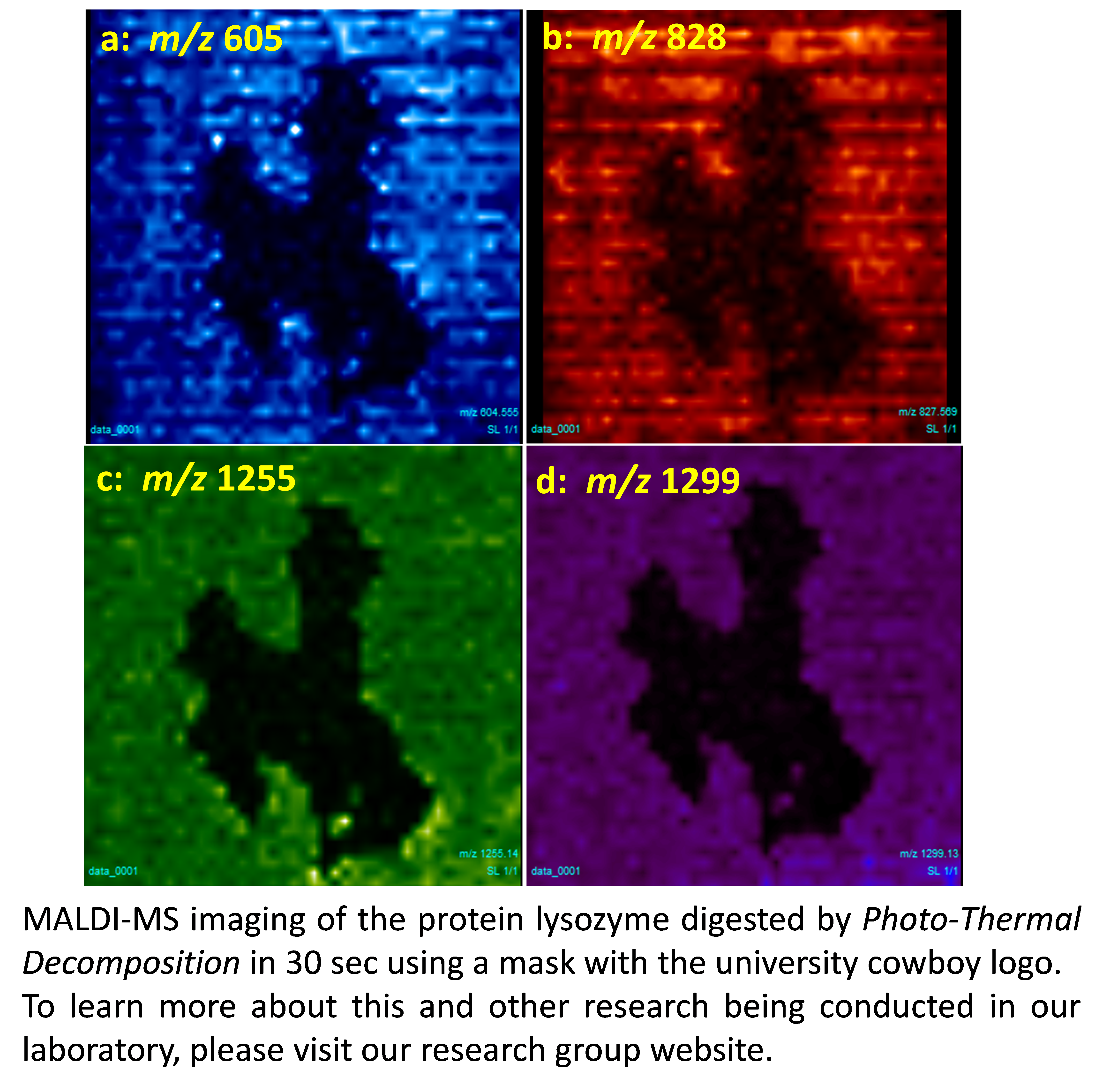
Franco Basile is a Professor in the Department of Chemistry at the University of Wyoming, specializing in Analytical Chemistry and Bioanalytical Mass Spectrometry . His research focuses on developing rapid, non-enzymatic sample preparation techniques for proteomics and metabolomics of biological and environmental samples, including microorganisms, bees, plants, and coal deposits. Education: B.S. in Chemistry (University of Wisconsin-Eau Claire, 1985), Ph.D. in Analytical Chemistry (Purdue University, 1992) Research Interests include: Analytical Mass Spectrometry : Pioneering thermal/microwave digestion for on-tissue proteomics and imaging-MS Metabolomics and Lipidomics : Analyzing root exudates, invasive grasses, and insect cold tolerance Microbial Ecology : Investigating sterol synthesis in bacteria and soil metaproteomics Article Trends span from 2025 to 2012 , emphasizing MALDI- and ESI-MS applications in proteomics, metabolomics, and environmental analysis. Recent work includes non-intrusive laser techniques for protein denaturation monitoring and sterol gene studies in planctomycetes. Scientific Awards : NSF CAREER Award R&D 100 Award ACS Outstanding Professor Award Lindbergh Foundation Research Award Funding sources include NSF, NIH, USDA, and DTRA for projects on insect cryobiology , microbial methane production , and field-portable biodetection systems . The Biodetection and Mass Spectrometry Laboratory houses advanced instrumentation like Q-Exactive HF-X Orbitrap and MALDI-ToF/ToF-MS, supporting interdisciplinary collaborations across ecology, geology, and biomedical sciences.
Andreas (Andy) S. Bommarius is a Professor of Chemical and Biomolecular Engineering and Chemistry/Biochemistry at Georgia Institute of Technology, where he has been faculty since 2000. He holds a B.S. in Chemical Engineering (MIT, 1982), Diploma in Chemistry (Technical University of Munich, 1984), and Ph.D. in Chemical Engineering (MIT, 1989). Previously, he led the Laboratory of Enzyme Catalysis at Degussa/Evonik (1990-2000). His research integrates biocatalysis and sustainable engineering , focusing on: Design of novel biocatalysts for pharmaceuticals and renewable chemicals Protein stability enhancement through computational and experimental methods Continuous manufacturing processes including simulated moving bed reactors and crystallization Valorization of lignocellulosic biomass for green API synthesis Key scientific recognitions include: Fellow of the American Institute for Medical and Biological Engineering (2008) As Director of the NSF Center for Pharmaceutical Development, he leads initiatives in drug substance stability and process analytics. He co-developed interdisciplinary courses including Drug Design, Development, and Delivery , restructuring Georgia Tech's chemical engineering curriculum. He directs the Bommarius Research Group at the Engineered Biosystems Building, focusing on enzyme engineering, continuous bioprocessing, and renewable chemical platforms.
Prof. Kai Sundmacher is a Full Professor and Chair of Process Systems Engineering at Otto-von-Guericke University Magdeburg, and Director of the Max Planck Institute for Dynamics of Complex Technical Systems. His expertise spans model-based analysis of complex process systems, integrated chemical processes, energy conversion (fuel cells/electrolysis), and biosystems engineering. He holds a Dr.-Ing. habil. from Clausthal University of Technology and has held visiting positions at institutions worldwide. Research focuses include catalyst design for CO2 methanation, digital twins for power-to-X processes, and sustainable chemical production. Awards include the Arnold Eucken Prize (1999) and Carl Zerbe Prize (1998). He leads initiatives like the Max Planck Research Network for Synthetic Biology and chairs the German Chemical Energy Research group. Teaching covers advanced process systems engineering, fuel cell technology, and bioprocess design. Over 500 publications include 400 peer-reviewed articles, with contributions to journals like Chemical Engineering Science and Fuel Cells. Active in academic service, he reviews ERC grants, chairs selection committees, and advises the Alexander von Humboldt Foundation.
Iman Azimi is a Senior Lecturer and Research Group Head in the Pharmacology Department at Monash Biomedicine Discovery Institute, Monash University. His academic journey includes a PhD from the University of New South Wales (2011), postdoctoral research at The University of Queensland (2011–2017), and a Lecturer role at the University of Tasmania (2018–2023). He leads research focused on brain cancer, cellular aging, calcium signaling, and drug discovery. His work is supported by grants from Cancer Council Tasmania, Brain Foundation, and others. Education: PhD in Pharmacology, University of New South Wales, 2011 Postdoctoral Fellowship, The University of Queensland, 2011–2017 Research Interests: Identifying therapeutic targets for brain cancers (e.g., medulloblastoma) Unraveling cellular aging mechanisms Calcium signaling in cancer and senescence High-throughput drug screening assay development Publications: Recent articles focus on LIN28 proteins in medulloblastoma, T-type calcium channel inhibitors, and calcium signaling pathways. His work bridges basic science and translational applications in cancer therapy. Awards: Includes the ASCEPT New Investigator Award (2016), Oxygen Club of California Award (2015), and multiple grants and scholarships. Leadership & Service: Chair of Institutional Biosafety Committees, Guest Editor for Cancers and Frontiers in Pharmacology , and grant reviewer for NHMRC and international agencies. Labs/Teams: Leads a research group at Monash focused on cancer and aging biology, with expertise in cell culture, fluorescence microscopy, and high-content imaging.
Dr. Amir Al Ghatta is an Honorary Research Fellow in the Department of Chemical Engineering at Imperial College London, specializing in sustainable chemistry and ionic liquid applications. His research focuses on developing green chemical processes using ionic liquids for biomass fractionation and valorization. Key areas include sustainable production of bio-based chemicals, furanic compound synthesis, and techno-economic assessment of novel processes. His work bridges fundamental chemistry with practical industrial applications in renewable materials and waste valorization. Publications demonstrate innovations in converting biomass feedstocks into valuable chemicals while minimizing environmental impact. Research themes consistently emphasize process efficiency, economic viability, and replacement of petrochemical-based processes with sustainable alternatives.
Dr Stuart Wagland is a Reader in Energy and Environmental Chemistry and Deputy Director of Research at Cranfield University's School of Water, Energy and Environment. He holds a PhD in waste chemistry from Cranfield and additional degrees in Chemistry and Display Technology. A Chartered Chemist (CChem) and Fellow of both the Royal Society of Chemistry (FRSC) and the Higher Education Association (FHEA), Dr Wagland specializes in waste management, enhanced landfill mining, and resource recovery from solid wastes. His work bridges chemistry and engineering, focusing on anaerobic digestion optimization, bioleaching, and critical metal extraction from waste streams. Research interests include waste characterization, energy potential assessment, and advanced thermal treatment technologies. Key projects involve EU Horizon 2020 initiatives (SMART GROUND, NEW MINE) and Interreg NW Europe's REGENERATIS project, aimed at recovering metals from industrial waste. Dr Wagland coordinates the UK Enhanced Landfill Mining Network and collaborates with EURELCO, a European consortium. Current activities include doctoral supervision in waste management and landfill mining. He has secured grants from Innovate UK, EPSRC, and the European Regional Development Fund. Awards include the Lord Kings Norton Medal for contributions to carbon capture and storage.