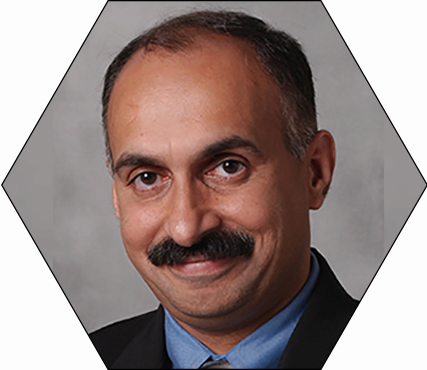
Professor George Jackson, FRS, holds the position of Professor of Chemical Physics at the Department of Chemical Engineering, Imperial College London (since 2001), and has affiliations with multiple institutions including the University of Sheffield and Cornell University. His academic career spans roles from Lecturer (1989–1994) to Reader (1994–2001) in Physical Chemistry and Chemical Physics. He leads the Molecular Systems Engineering group and chairs the journal Molecular Physics . Research focuses on theoretical and computational chemistry, thermodynamics, and fluid phase equilibria. Key contributions include the SAFT (Statistical Associating Fluid Theory) equation of state, applied to CO2 capture, polymer physics, and pharmaceutical processes. He has pioneered models for electrolytes, solvents, and complex fluids, emphasizing sustainability and industrial applications. Notable accolades include the Rossini Award (2023), Fellowship of the Royal Society (2020), and the Bakhuis Roozeboom Medal (2019). His work has been recognized through Imperial College's President's Medal (2016), the Guggenheim Medal (2014), and over 400 citations in Google Scholar. Collaborations span institutions globally, including the Sargent Centre for Process Systems Engineering and the Thomas Young Centre. Current initiatives include the HiRECORD project for CO2 capture technology scaling and the development of phase-change solvents. His research integrates molecular simulation, process design, and sustainability assessment, addressing challenges in energy, environment, and pharmaceuticals.
Suresh K. Sitaraman is a Regents' Professor and Morris M. Bryan, Jr. Professor in Mechanical Engineering at the Georgia Institute of Technology's George W. Woodruff School of Mechanical Engineering. His primary research focuses on Computer-Aided Engineering (CAE) and Design, manufacturing processes, micro/nano engineering, and mechanics of materials. He leads the Computer-Aided Simulation of Packaging Reliability (CASPaR) Lab and is involved in flexible hybrid electronics research through the Flexible Electronics Center . Dr. Sitaraman holds a Ph.D. from The Ohio State University (1989), M.A.Sc. from the University of Ottawa (1985), and B.E. from the University of Madras (1982). His research includes developing novel techniques like fixtureless magnetic actuation for interfacial fracture testing, compliant micro-scale interconnects for stress mitigation, and synchrotron X-ray diffraction analysis for through-silicon vias (TSVs). He has pioneered studies on carbon nanotube forests' mechanical properties and reliability challenges in 3D microsystems. His awards include the NSF CAREER Award (1997-2002), ASME Fellow designation (2004), and Sigma Xi Sustained Research Award (2008). He has authored over 150 publications and holds multiple patents on compliant interconnect technologies and packaging reliability solutions. Key Research Themes: Micro/nano-scale material characterization, physics-based predictive modeling, flexible electronics, 3D integration, and thermal management. Labs/Initiatives: CASPaR Lab ( caspar.gatech.edu ), Flexible Hybrid Electronics Center. Industry Impact: Contributions to semiconductor packaging, wearable electronics, and advanced manufacturing techniques.
Dr. Bhavna Sharma is an Associate Professor and Director of the Chase L. Leavitt Master of Building Science Program at the USC School of Architecture. Her work focuses on decarbonization, bio-based materials innovation, and sustainable healthcare infrastructure. She leads the Keck USC Sustainable Healthcare Initiative (KUSHI) to advance environmentally conscious healthcare systems. Dr. Sharma holds a Ph.D. in Civil and Environmental Engineering from the University of Pittsburgh, with additional degrees in Art History and Architecture. Her research spans structural systems optimization from material harvesting to building-scale applications, emphasizing bio-composites like bamboo and timber. She co-chairs USC's Presidential Working Group on Sustainability, contributing to Assignment: Earth climate goals. Courses taught include seismic design, structural systems, and building science integration. Key research areas include lifecycle assessment in healthcare, seismic-resistant designs, and interdisciplinary standards for non-conventional materials. Her work bridges material science, architectural practice, and policy to address global sustainability challenges.
Maithilee Kunda is an Associate Professor in the Department of Computer Science and Computer Engineering at Vanderbilt University's School of Engineering. She leads the Laboratory for Artificial Intelligence and Visual Analogical Systems and co-leads the Vanderbilt Initiative for Autism, Innovation, and the Workforce. Her research focuses on AI-driven cognitive systems, particularly visual reasoning and technology applications for neurodiverse populations, including autism spectrum disorder. Dr. Kunda holds a B.S. in Mathematics with Computer Science from MIT (2007) and a Ph.D. in Computer Science from Georgia Tech (2013). She was honored as an MIT Technology Review Innovator Under 35 in 2016 for her groundbreaking work. Her research bridges computational models of visual thinking and real-world impact, emphasizing neurodiverse cognition. Notable projects include developing AI systems for autism-related social skills interventions, designing visual analogy problem-solving frameworks, and advancing nonverbal communication understanding in AI. Her work addresses challenges in abstract reasoning tasks (e.g., Raven's Matrices), visual imagery-based learning, and ethical AI integration. She advocates for inclusive technology design, leveraging both generative AI and cognitive principles to create human-centered solutions. Key awards: MIT Technology Review Innovator Under 35 (2016) Her labs focus on practical AI applications for education, healthcare, and workforce development, emphasizing interdisciplinary collaboration between engineering, psychology, and neuroscience.
Russell Tessier is a Professor and Department Head of Electrical and Computer Engineering at the University of Massachusetts Amherst, affiliated with the Manning College of Information and Computer Sciences. His research focuses on reconfigurable computing, FPGA architectures, and hardware security, with notable contributions in CAD algorithms for FPGAs, embedded systems, and multi-tenant FPGA vulnerability analysis. Education: B.S.C.S.E., Rensselaer Polytechnic Institute (1989) M.S. and Ph.D., Massachusetts Institute of Technology (1992 and 1999) Research Interests: Dr. Tessier's work spans FPGA security (e.g., side-channel attacks, power distribution vulnerabilities), reconfigurable cloud computing, and hardware acceleration for applications like SAR imaging and machine learning. His lab, the Reconfigurable Computing Group, develops open-source FPGA cores (e.g., FlexGrip GPGPU, DE4 NetFPGA) and explores cutting-edge security countermeasures. Awards and Honors: Chancellor's Leadership Fellow (2015-2016) NSF Information Technology Research Grant Lilly Teaching Fellow (2002-2003) Multiple College of Engineering Excellence Awards Grants and Projects: Active funding includes NSF SaTC grants on reconfigurable cloud security and NASA support for snowpack measurement systems. His research also addresses FPGA-based solutions for cybersecurity, such as intrusion detection and power-side channel mitigation. Labs and Teams: Leads the UMass Reconfigurable Computing Group, which collaborates on open-source FPGA tools, security frameworks, and embedded system designs. The group maintains platforms like the DE4 NetFPGA and FlexGrip architecture.
Daniele Loiacono is an Associate Professor at Politecnico di Milano's Department of Electronics, Information, and Bioengineering (DEIB), affiliated with the Artificial Intelligence and Robotics Lab (AIRLab). His research focuses on interdisciplinary applications of Artificial Intelligence, Machine Learning, and Deep Learning in medical imaging, radiation therapy, and procedural content generation for games. He leads projects in synthetic image generation for radiotherapy quality assurance, automated treatment planning, and bias analysis in medical AI systems. Key research areas include medical image synthesis using GANs, radiation therapy optimization, and algorithmic game design. His contributions span clinical applications such as total marrow irradiation (TMI) planning and lymph-node segmentation, alongside innovations in shader generation and interactive evolutionary tools for game development. Loiacono collaborates on multi-center studies to validate AI-driven workflows in healthcare and has pioneered methods combining lean Six Sigma with machine learning for treatment process improvement. His work bridges clinical medicine and computer science, addressing challenges in radiation oncology, anatomical imaging, and procedural content automation. The AIRLab serves as a hub for his research, integrating AI advancements into real-world medical and engineering solutions.
Justin Bui is a Visiting Assistant Professor in the Department of Chemical and Biomolecular Engineering at NYU Tandon School of Engineering, joining in 2026. His research focuses on electrochemical technologies for decarbonization, including ion-conducting membranes, electrocatalysis, and continuum modeling. His work addresses challenges in CO2 capture, electrodialysis, and multiphase reactor design to enable sustainable energy systems. He leads a lab launching in Fall 2026, emphasizing cross-disciplinary approaches to climate solutions. Research interests include transport phenomena in bipolar membranes, electrochemical CO2 reduction, and additive manufacturing for reactor design. His publications explore topics like ion-specific energy recovery mechanisms and asymmetric membrane stability. Education and professional experience details are not explicitly provided in current records. While no awards are listed here, his work aligns with NYU’s commitment to environmental sustainability. Advising and grants details are pending as his lab initiates in 2026. Future projects will emphasize lab-scale innovations in electrochemical climate solutions.
Elisa Morgera is a Professor of Global Environmental Law at the University of Strathclyde and the UN Special Rapporteur on Climate Change and Human Rights (2024–present). She previously directed the UKRI GCRF One Ocean Hub (2019–2024), a transformative ocean governance initiative spanning 22 institutions globally. Her research focuses on international environmental law, human rights, equity, and oceans governance, with particular attention to Indigenous peoples, small-scale fishers, and climate justice. Education includes a PhD in International Law from the European University Institute and an LLM in Environmental Law from University College London. She also holds an adjunct professorship at the University of Eastern Finland. Research interests integrate environmental law with human rights, equity, and sustainability, addressing topics like benefit-sharing in natural resources, marine biodiversity, and corporate accountability. She has advised UN agencies, governments, and NGOs, and contributed to Scottish human rights frameworks, including recommendations for a legal right to a healthy environment. Key awards include election to the Royal Society of Edinburgh (2022). Her work spans over 180 publications, including articles on climate governance, ocean defenders' rights, and BBNJ Agreements. She leads interdisciplinary projects funded by UKRI, the EU, and global partnerships. Elisa has advised on over 30 international initiatives, including contributions to the UN Special Rapporteur on Human Rights and the Environment. Her advisory roles include the Scottish Government’s Human Rights Leadership Task Force (2018–2020), shaping national human rights legislation. Her One Ocean Hub and other collaborations emphasize equity and inclusion in ocean policy, involving communities in decision-making processes.
Prof. Felix Brandt is a Professor of Algorithmic Game Theory at the Technical University of Munich (TUM), within the School of Computation, Information and Technology. His research focuses on algorithmic game theory, computational social choice, and their intersections with theoretical computer science, AI, and economics. Education: Diploma and PhD from TUM, postdoctoral research at Carnegie Mellon University and Stanford University. Habilitation from LMU Munich (2010). Research interests include social choice theory, mechanism design, and strategic behavior in multi-agent systems. Notable contributions include work on tournament solutions, probabilistic social choice, and Nash equilibrium characterizations. Recent articles explore Condorcet-consistent voting systems, stability in hedonic games, and axiomatic foundations of Nash equilibrium. Awards include the DFG Heisenberg Professorship (2010) and TUM Supervisory Award (2021). Advises over 10 PhD students and has supervised numerous postdocs. Active in editorial roles for journals like Games and Economic Behavior and Social Choice and Welfare .
Roy Johnsen is a Professor in the Department of Mechanical and Industrial Engineering at the Norwegian University of Science and Technology (NTNU), specializing in corrosion and surface technology. With a Dr.ing. degree from NTH (1984), he has extensive industry experience from Statoil Research Centre (1985-1991) and CorrOcean (1991-2004), where he expanded the company globally. His current research focuses on hydrogen embrittlement, corrosion protection, and integrity management in offshore systems, with collaborations across Europe, Asia, and the Americas.
Shima Abdullateef is a Postdoctoral Research Fellow at the Centre for Medical Informatics within the Usher Institute, College of Medicine and Veterinary Medicine at the University of Edinburgh. Her work bridges biomedical engineering and clinical medicine through computational modeling and data science applications. Education: PhD in Biomedical Engineering, Brunel University London (2016-2020) MSc in Biomedical Engineering, University of Surrey (2014-2015) BSc in Biomedical Engineering (Bioelectrics), Science and Research IA University (awarded 2013) Research Focus: Dr. Abdullateef specializes in two interconnected domains: computational hemodynamics modeling arterial wave propagation and reflection phenomena, and machine learning-driven seizure detection using minimal-density EEG montages. Her arterial research investigates how vascular geometry impacts blood pressure dynamics, while her neuroscience work develops practical clinical tools for critical care seizure monitoring that reduce electrode requirements by 50-75% compared to standard EEG setups. Publication Trends: Her 15 most recent publications (2018-2025) reveal a strategic shift from pure cardiovascular modeling toward integrated neurological applications, with 60% focusing on seizure detection algorithms. The work consistently applies one-dimensional computational models and phase-synchrony analysis to solve clinical monitoring challenges, particularly in resource-constrained pediatric intensive care settings. Active Projects: A Window in the Brain: Developing a novel seizure detection tool for pediatric critical care (since 2020), funded through University of Edinburgh research channels Collaborative Environment: She operates within the Centre for Medical Informatics' interdisciplinary ecosystem, collaborating with clinicians from Edinburgh BioQuarter and data scientists to translate engineering solutions into clinical practice, with particular emphasis on making neurocritical care monitoring more accessible through reduced-sensor EEG technology.
Dr. Kezhi (Ken) Li is an Associate Professor of AI in Healthcare at the Institute of Health Informatics, University College London (UCL). He leads the AI for Health research group and has established himself as a leading expert in applying artificial intelligence to solve complex problems in healthcare, with over 130 publications in leading journals (total impact factor greater than 400). Dr. Li earned his Doctor of Philosophy from Imperial College of Science, Technology and Medicine in 2013, followed by research positions at the Medical Research Council (2015-2017), University of Cambridge (2014-2015), and Royal Institute of Technology (KTH) (2013-2014). His academic journey reflects a consistent trajectory from technical AI research toward increasingly healthcare-focused applications. Dr. Li's research focuses on solving physiological, medical, clinical, and operational problems in healthcare using AI techniques. His specific expertise includes AI in healthcare using electronic health records (EHR), biomedical time series analysis using monitors/wearables, diabetes management, large language models (LLM) in healthcare (especially mental health), patient flow optimization, and digital health with federated learning. His work bridges the gap between cutting-edge AI methodologies and practical healthcare applications, with a strong focus on improving patient outcomes and healthcare system efficiency. Analysis of Dr. Li's publication history reveals a strong emphasis on diabetes management technologies, particularly blood glucose prediction systems using advanced neural network architectures. More recently, his work has expanded into mental health applications of large language models, blockchain-based federated learning for healthcare data, and mortality prediction in critical care settings. His research demonstrates a clear evolution from purely technical AI development toward increasingly clinically impactful applications, with growing emphasis on explainability, privacy preservation, and real-world implementation challenges. Dr. Li has received numerous prestigious awards recognizing his contributions to healthcare AI: Best Application Award of IEEE Global Blockchain Conference (2025) Fellow of British Computer Society (2025) Fellow of the Royal Society for Public Health (2024) Healthcare Partnership of the Year category at the London Higher Awards (2024) ECR Promising Project Award (2023) Gallivan Award finalists (2022) Stylianos Kalaitzis PhD Award Winner (2022) HDR UK Team of the Year (COVID-19) Award (2021) As an educator, Dr. Li serves as the Director of MRes study (AI-enabled Healthcare Systems) at UCL. He leads multiple key modules including Healthcare Artificial Intelligence Journal Club, Dissertation in Artificial Intelligence Enabled Healthcare, and Advanced Machine Learning for Healthcare. His supervision extends across dissertation projects and junior researchers in his AI for Health group. His research has been supported by various grants, including those from HDR UK, focusing on translating AI innovations into practical healthcare solutions. Dr. Li leads the AI for Health research group (https://ai4hucl.github.io/ai4h_webs/), which comprises researchers with diverse expertise in machine learning, healthcare systems, and clinical domains. The group maintains strong collaborations with healthcare providers and industry partners to ensure their research addresses real-world healthcare challenges and can be effectively translated into clinical practice.
Christopher G. Brinton is the Elmore Associate Professor of Electrical and Computer Engineering at Purdue University, where he leads the ION research lab. He is affiliated with the Department of Electrical and Computer Engineering in the College of Engineering at Purdue University's West Lafayette campus. Dr. Brinton received his PhD from Princeton University, where he was previously the Associate Director of the EDGE Lab and a Lecturer of Electrical Engineering. His research focuses on the intersection of networking, communications, and machine learning, with particular emphasis on Fog computing systems, the Internet of Things (IoT), NextG Wireless, and social learning networks. His research integrates foundational techniques including convex and non-convex optimization, machine learning, and signal processing to address challenges in networked intelligent systems. The ION lab under his leadership develops both theoretical frameworks and practical implementations for next-generation networking solutions, with strong industry collaborations including Qualcomm, Nokia, Intel, Cisco, Dell, and Ericsson. Recent publications reveal a strong trend toward federated learning, decentralized algorithms, and edge intelligence, with significant contributions to model partitioning, communication-efficient learning, and robust network architectures. His work increasingly bridges traditional communication theory with modern machine learning techniques to solve emerging challenges in distributed networked systems. NSF CAREER Award ONR Young Investigator Program (YIP) Award DARPA Young Faculty Award (YFA) AFOSR Young Investigator Program (YIP) Award Intel Rising Star Faculty Award (RSA) Dr. Brinton teaches several courses including ECE 647: Performance Modeling of Computer Communication Networks, ECE 301: Signals and Systems, and ECE 547: Introduction to Computer Communication Networks. He has co-authored the book 'The Power of Networks: Six Principles That Connect Our Lives' and taught three Massive Open Online Courses (MOOCs) with over 400,000 cumulative students. While not currently actively recruiting students, he remains open to connecting with highly motivated individuals. Dr. Brinton leads the ION (Intelligent Optimization and Networking) research lab, which focuses on creating theoretical foundations and practical implementations for next-generation networked systems. The lab has recently published significant work on 6G taxonomy in collaboration with major industry partners and continues to push boundaries in distributed learning and network optimization.
Professor Jürgen Richter-Gebert is a full professor of Geometry and Visualization at the Technical University of Munich (TUM), working within the TUM School of Computation, Information and Technology. Born in 1963, he has been at TUM since 2001, following positions at ETH Zurich (1997-2001) and TU Berlin (1994-1997). His educational background includes studies at TU Darmstadt (1983-1988) and dual PhDs from TU Darmstadt and KTH Stockholm (1991-1992). Richter-Gebert's research spans combinatorial and computer-oriented geometry, with particular expertise in polytope theory and mathematical visualization software. He develops processes for the automatic generation of geometric problem solutions and is actively involved in raising the public profile of mathematics. Richter-Gebert's publications and research focus on the intersection of mathematics and computer science, with particular emphasis on projective geometry, dynamic geometry, polytope theory, and combinatorial geometry. His work demonstrates how mathematical structures can be made accessible through computerized interactive visualizations. His most notable publications include "Perspectives on Projective Geometry" (2011) and "Geometriekalküle" (2009), along with numerous papers on dynamic geometry systems. Ars Legendi Prize for excellent university teaching (2011) Karl Max von Bauernfeind Medal of the TUM (2010) MedidaPrix - media didactic university prize (2008) EASA - European Academic Software Award (2000) Communicator Preis for science communication (2021) As founder and director of the ix-quadrat mathematics exhibition at the Garching Campus, Richter-Gebert has made significant contributions to mathematics education and outreach. He has developed influential mathematical visualization tools including Cinderella, CindyJS, and iOrnament, which have received multiple awards for educational software excellence. His research group focuses on mathematical foundations, authoring systems, and mathematical visualizations with applications in education and public scenarios.
Nathaly Carolina Pinto Torres is a Doctoral Researcher at Aalto University's Department of Design, working on critical design interventions for marginalized communities. Since 2020, she has led the "Emergencia de Educación en la Amazonía Ecuatoriana" project, collaborating with indigenous students and Confeniae to develop pictographic communication systems challenging social exclusion. Her research spans: Participatory design with indigenous communities Gender justice in education during crises Epistemic justice in plurinational contexts Visual resistance strategies in Amazonian regions Postcolonial educational frameworks Design for socio-environmental transformation Publication trends show focus on: Visual communication systems for marginalized groups Crisis-driven educational design Decolonial methodologies Intersectional analysis of exclusion Epistemic justice in academia Collective resilience building Scientific recognition includes: Best Demo Award (2021) SENESCYT International Graduate Scholarship (2019) Netherlands Fellowship Programmes (NFP) (2010)