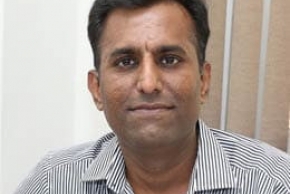
Nicklas Anttu is an Associate Professor (tenure track) at the Faculty of Science and Engineering, Department of Physics at Åbo Akademi University. His research focuses on nanowire-based technologies for sustainable energy and biosensing applications, contributing to UN Sustainable Development Goals. Key areas include nanowire solar cells, perovskite materials, and optical biosensors. He leads projects such as HPC-Phot (High-Performance Computing in Photonics, 2024–2026) and co-leads the Printed Intelligence Infrastructure (PII) project (2024–2028), funded by the Academy of Finland. His work integrates computational modeling, experimental characterization, and device fabrication to advance nanophotonics and semiconductor technologies. Research interests span nanowire optoelectronics, plasmonics, and light-matter interactions. Notable achievements include optimizing light absorption in nanowire arrays, developing biosensing platforms using aerotaxy nanowires, and advancing perovskite solar cell efficiency. His contributions bridge fundamental physics with applied nanotechnology, targeting scalable, sustainable solutions. Recent publications highlight advancements in nanowire junction analysis, waveguide-based biosensors, and perovskite material modeling. Anttu actively collaborates on international projects, including the Suzhou Foreign Academician Laboratory (2022–2025), and engages in academic activities such as doctoral thesis oppositions and conference presentations.
Dr. Padmaja Guggilla is a Professor of Physics and Chairperson of the Physics, Chemistry, and Mathematics Department at Alabama A&M University (AAMU), serving as Associate Dean of Student Success within the College of Engineering, Technology, and Physical Sciences (CETPS). She holds editorial roles with the American Physical Society and serves on high-profile committees like the DoE Basic Energy Sciences Advisory Committee (BESAC). Her research focuses on advanced materials science, including organic solar cells, composite materials, pyroelectric materials, and nanotechnology applications in energy harvesting and sensors. Key grants include leading or co-PI roles in over $8 million in funding for initiatives like the CANDID DoE collaboration, NASA diversity programs, and NSF grants for STEM education and research infrastructure. Awards include recognition as a 2018 Emerging Scholar and multiple university-level teaching and scholarship awards. She has authored/co-authored over 50 peer-reviewed publications and book chapters, with recent work emphasizing nanocomposite materials and perovskite solar cell advancements. Her leadership extends to organizing STEM events like AAMU’s STEMDAY conferences and serving on federal grant review panels since 2012. Grants: Over $8M secured in NSF, NASA, DoE, and other federal/state funding for research and education initiatives Leadership: NSF ADVANCE Gender Equity Program Co-PI, CASL Fellow, and Fearless Leadership Program graduate Expertise: Pyroelectric infrared detectors, polymer nanocomposites, and energy storage materials Her research portfolio spans 20+ years with interdisciplinary impact in materials science, engineering, and STEM education equity.
Dr. Young-Gi Kim is an Associate Professor in the Department of Chemistry at Delaware State University (DSU), part of the College of Agriculture, Science and Technology (CAST). He leads the Energy and Organic Electronics Lab, focusing on advanced materials for energy storage, organic electronics, and photonic applications. His research emphasizes conjugated polymers, supercapacitors, and solar cells, with notable contributions to the integration of Group IV elements (e.g., germanium) into donor-acceptor polymers. Dr. Kim holds a PhD in Polymer Sciences from the University of Massachusetts Lowell and has conducted postdoctoral research at the University of Florida. He has served as a Special Issue Editor for the journal Polymers and is active in presenting at international conferences. His lab has advised numerous graduate and undergraduate students, many of whom have pursued further academic or industry roles. Key areas of research include: energy storage systems, organic photovoltaics, biosensors, and smart coatings. His work bridges fundamental material science with engineering applications, aiming for practical solutions in sustainable energy and electronics. He has collaborated with institutions globally, including POSTECH (South Korea) and KAIST, and industry partners like Corteva Agriscience. Dr. Kim’s lab has produced over 100 presentations and multiple peer-reviewed articles, focusing on polymer synthesis, nanomaterial integration, and device prototyping. He is also involved in curriculum development, serving as Chair of the Curriculum Committee in the Department of Chemistry. Awards and recognitions include his role as a Special Issue Editor, multiple invited lectures at international institutions, and grants supporting his research. His lab emphasizes student mentorship, with many advisees presenting at national conferences and receiving accolades.
Veit Wagner is an Associate Professor of Physics at the School of Science, Constructor University Bremen. His research focuses on molecular and nanoelectronics, hybrid organic systems, and organic surfaces/interfaces. He holds a Ph.D. from TU-Berlin and RWTH-Aachen (1991-1995), followed by a Habilitation in Physics from the University of Würzburg (1996-2001). Before joining Constructor University in 2002, he held positions at the University of Würzburg and IBM Research Lab Rüschlikon. Wagner’s work spans organic electronics, thin-film transistors (TFTs), and energy materials. Key achievements include pioneering studies on organic solar cell stability, high-frequency organic transistors, and polyoxometalate-based catalytic materials. He has authored over 100 publications and holds the Borchers-Plakette award from RWTH-Aachen (1995). He leads the Nanomolecular Science Graduate Program and chairs the Faculty Committee for Administrative Support and Infrastructure. Professional memberships include the Deutsche Physikalische Gesellschaft and the Materials Research Society (USA).
Abasifreke Ebong is a Professor of Electrical and Computer Engineering at the University of North Carolina at Charlotte. His research focuses on advancing solar cell technology, UV-LED applications, and semiconductor materials. He holds a Ph.D. from the University of New South Wales (Australia), and degrees from the University of Port Harcourt (Nigeria). His work emphasizes low-cost, high-efficiency solutions for energy systems. Education: Ph.D. in Electrical Engineering, University of New South Wales, Australia (1995) M.Sc. in Electrical Engineering, University of Port Harcourt, Nigeria (1987) B.Sc. in Electrical Engineering, University of Port Harcourt, Nigeria (1984) Research Interests: Dr. Ebong’s work spans solar cell design, UV-LED technology, thin-film photovoltaics, and metallization processes for improving solar cell efficiency and durability. He has pioneered innovations in cost-effective materials and automation for solar devices. Recent Research Trends: His publications highlight advancements in UV-LED disinfection systems, cavitated Ag paste for solar cells, and carbon-nanotube-reinforced gridlines. He emphasizes interdisciplinary approaches, combining materials science with electrical engineering for sustainable energy solutions. Labs/Teams: His research group collaborates on projects involving photovoltaic systems, semiconductor materials, and energy autonomy. Key initiatives include solar-powered UV-LED disinfection for off-grid regions and next-generation metallization techniques for silicon solar cells.
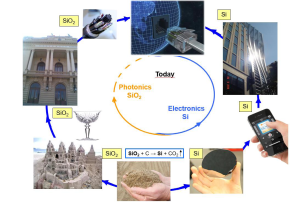
Mihaela Girtan is an Associate Professor at the University of Angers, leading research on thin film photovoltaics and photonic materials. Her work spans transparent conducting oxides, organic/perovskite solar cells, and plasmonic structures for energy conversion. Recent investigations focus on perovskite film optimization, indium-free transparent electrodes, and ellipsometric modeling for fabrication efficiency. Girtan pioneers oxide/metal/oxide multilayers as ITO alternatives and studies degradation mechanisms in organic photovoltaics. She organizes international conferences on advanced materials and delivers invited talks on solar energy transitions. Recognized among the top 2% of global researchers, Girtan bridges photonics and electronics in her monograph 'From Electronics to Photonics: Towards Future Solar Energy Devices'.
Francisco Fabregat-Santiago is a full Professor at the Physics Department of Universitat Jaume I (Spain), affiliated with the Institute of Advanced Materials (INAM). He holds a B.Sc. in Physics from Universitat de Valencia and University of Leeds (1995) and a Ph.D. from Universitat Jaume I (2001). His research focuses on electro-optical characterization of materials, particularly using impedance spectroscopy to analyze nanostructured films and devices like dye-sensitized and perovskite solar cells. Current interests include nano/bio materials for solar energy, water decontamination, bioenergy, and electrochemical production of valuable chemicals. Key research areas include: Electrocatalysis for energy storage and conversion Photoelectrochemical systems for solar fuels Nanomaterials for environmental applications Impedance spectroscopy modeling Recent publications (2021–2025) highlight advancements in biomass valorization, hydrogen storage via Liquid Organic Hydrogen Carriers (LOHCs), and optimization of electrochemical processes. His work bridges fundamental material science with applied energy technologies, emphasizing sustainable solutions. Labs/Groups: Active member of Research Group RG3. Electrocatalysis and Energy (ECATEN) at INAM.
Rosario Vidal is a Full Professor of Engineering Projects at the Universitat Jaume I since 2009, with teaching responsibilities in Ecodesign, Engineering Projects, and Design Methodologies. She leads the RG8. GID - Green Investigation & Development research group at the Institute of Advanced Materials (INAM) and has supervised 16 doctoral theses. Educational Background : B.Sc. in Industrial Technical Engineering (Chemistry, 1990), M.Sc. in Industrial Engineering (Mechanical, 1993), Ph.D. (1996) from Universitat Politècnica de València . Research Interests focus on: Life Cycle Assessment (LCA) applied to renewable energy technologies, materials, and industrial processes. Sustainability Assessment integrating social impacts and circular economy principles. Environmental Impact Analysis of photovoltaics, additive manufacturing, and battery recycling. Critical Raw Materials and resource depletion risks in emerging technologies. Eco-Innovation in design and production systems. Recent Publications (2025-2018) emphasize perovskite solar cell sustainability, lithium-ion battery recycling, additive manufacturing for underwater applications, and eco-friendly LED production. Key trends include comparative LCA across technologies, green chemistry , and resource criticality in renewable energy systems. International Collaborations include research stays at the Environmental Protection Agency (USEPA, US) , Cranfield University (UK) , NREL (US) , and Tampere University (Finland) . Her work bridges industrial scaling simulations , pollutant fate modeling , and multi-criteria decision analysis to advance sustainable solutions.
Eva Mª Barea serves as a Senior Researcher at the Institute of Advanced Materials (INAM) within Universitat Jaume I, where she leads critical investigations in Research Group 4 (Advanced Semiconductors) and the Group of Photovoltaic and Optoelectronic Devices. Her work centers on nanodevices for clean energy production and storage, with specialized expertise in photovoltaic technologies and semiconductor synthesis. Her academic credentials include: M. Sc. in Chemistry (2000) Ph. D. in Chemistry (2005) Dr. Barea is a recognized specialist in hydrothermal synthesis of metallic semiconductors and nanoparticles, with extensive hands-on experience fabricating photovoltaic devices including Dye Solar Cells and OLEDs. Current research priorities encompass: Preparation and optimization of novel semiconductor metal oxide nanoparticles Synthesis of advanced metal oxide architectures for electron capitation Development of visible-light-responsive metal oxides Advanced impedance spectroscopy characterization techniques Analysis of her 15 most recent publications reveals dominant research trajectories in perovskite stability engineering and metal oxide semiconductor innovation. Key thematic clusters include interface modification strategies to reduce voltage losses, nanostructured material integration for infrared light harvesting, and chemical engineering approaches to achieve unprecedented operational stability in tin-based perovskites—all converging toward commercially viable solar energy solutions. Her laboratory operates within INAM's Group of Photovoltaic and Optoelectronic Devices, utilizing specialized infrastructure for nanomaterial synthesis and photovoltaic device fabrication. The research environment emphasizes cross-disciplinary collaboration to address fundamental challenges in energy conversion efficiency and long-term device stability through advanced materials design.
Naresh Kumar Pendyala is a postdoctoral researcher at the Institute of Advanced Materials (INAM) of Universitat Jaume I , Spain, since February 2023. His academic journey includes a Ph.D. in Chemistry (2017) from the Indian Institute of Technology Hyderabad , followed by postdoctoral research at the State Key Laboratory , Fujian Institute of Research on the Structure of Matter (FJIRSM), Chinese Academy of Sciences (2018–2019), and the Institute of Chemistry , The Hebrew University of Jerusalem (February 2020–September 2023). Education : Ph.D. in Chemistry (IIT Hyderabad, 2017) His research focuses on semiconductor devices, particularly perovskite and quantum dot solar cells , memristors , and chemiresistive gas sensors . At INAM, he investigates perovskite material-based memristors under the guidance of Juan Bisquert and Antonio. His expertise includes additive manufacturing techniques like inkjet printing for advanced solar cells and gas sensors. Naresh has published 24 peer-reviewed articles in journals such as J. Mater. Chem. A , ACS Appl. Mater. Interfaces , and Solar RRL , and holds a patent on inkjet-printed semitransparent perovskite solar cells. His work has earned him competitive postdoctoral fellowships in China, Israel, and Spain, though specific award names are not listed in the text. He has contributed to advancements in scalable fabrication methods, stability optimization, and multifunctional device design. His collaborations span institutions in three countries, reflecting a globally connected research profile. Current projects emphasize perovskite memristors for neuromorphic computing and energy-efficient electronics.
Rafael Sánchez Sánchez is a Senior researcher at the Institute of Advanced Materials (INAM) within Universitat Jaume I in Castelló, Spain. His office is located in NB4012DI, and he can be reached at rasanche@uji.es or by phone at 964387010. As a member of Research Group 4 (Advanced semiconductors), Dr. Sánchez focuses on the development of novel semiconductor materials for optoelectronic applications. Dr. Sánchez earned his M.Sc. degree in Chemistry in 2006 and his Ph.D. degree in 2011, both from the Universitat Autònoma de Barcelona, Spain. His academic journey includes research positions at: Universitat Jaume I (2012-2017) University of Liverpool (2017-2018) Henkel Ibérica-UAB (2018-2019) Université de Bordeaux (2019-2020) Dr. Sánchez's research primarily centers on the synthesis and electro-optical characterization of functional materials and semiconductors for light generation, photovoltaics, and water splitting applications. His current work focuses on the chemical design and synthesis of quaternary diazaaromatic dications for developing novel 2D metal halide perovskite semiconductors. These materials aim to enable the preparation of low-cost, highly efficient, and durable optoelectronic devices. His expertise spans materials chemistry, semiconductor physics, and device engineering, with particular emphasis on perovskite-based technologies that offer promising alternatives to conventional semiconductors in various optoelectronic applications. Analysis of Dr. Sánchez's recent publications reveals a strong focus on perovskite materials for light-emitting diodes (LEDs) and solar cells. His work demonstrates expertise in nanocrystal synthesis, surface engineering, and device fabrication techniques. A significant portion of his research addresses stability challenges in perovskite devices, particularly through chemical engineering approaches and interface modifications. His publications span high-impact journals across materials science, chemistry, and engineering disciplines, reflecting the interdisciplinary nature of his work. The research shows a clear trajectory toward practical applications, with increasing attention to scalable manufacturing processes and environmental sustainability considerations in perovskite technology development. Dr. Sánchez has established a strong publication record with 1 book chapter and 27 publications in peer-reviewed international journals, all in Q1 journals with 18 in D1 journals having impact factors greater than 6.9. His work has garnered 2733 citations and maintains an h-index of 21, indicating significant impact in his field. While specific awards aren't mentioned in the provided information, his consistent publication in top-tier journals and substantial citation count suggest recognition within the scientific community. With extensive international research experience across multiple institutions in Spain, the UK, and France, Dr. Sánchez has developed a robust network of collaborations. His work often involves interdisciplinary teams addressing complex challenges in semiconductor materials. Although specific grant information isn't provided, his publication record suggests successful funding for research projects focused on advanced materials development. His expertise in both fundamental materials science and practical device engineering positions him well for future research directions exploring commercial applications of perovskite technologies. As a member of the Advanced Semiconductors research group at INAM, Dr. Sánchez contributes to the institute's mission of developing cutting-edge materials for energy and electronic applications. His work with perovskite semiconductors aligns with INAM's strategic research program focusing on sustainable materials and technologies. The collaborative nature of his publications indicates active participation in research teams working on various aspects of perovskite optoelectronics, from fundamental material properties to device integration and performance optimization.
Professor Kamalakannan Kailasam is a faculty member at the Institute of Nano Science and Technology (INST), Mohali, India, specializing in Advanced Functional Nanomaterials for Energy and Environmental Applications. His research focuses on photocatalytic water splitting, CO₂ conversion, gas storage, and environmental remediation. He leads a dynamic research group exploring porous materials like graphitic carbon nitride (g-C₃N₄), covalent organic frameworks (COFs), and mesoporous organics for sustainable energy and environmental solutions. His work emphasizes material design for solar fuel production, pollution control, and biomass valorization. Recent studies highlight innovations in CO₂ capture, photocatalytic reactions under visible light, and functional porous networks. Research Interests: Photocatalytic water splitting and solar fuel generation CO₂ conversion and greenhouse gas mitigation Design of porous organic/inorganic hybrid materials Biomass-to-fuel conversion and waste plastic utilization Environmental remediation via advanced oxidation processes Energy storage systems (fuel cells, batteries, supercapacitors) Key Research Trends (2023-2024): Focus on metal-free catalysts and heterostructure engineering Development of eco-friendly photocatalysts from waste resources Integration of biomass valorization with CO₂ capture Exploration of novel heptazine-based polymers for C–H activation Advising & Grants: Supervises 8+ PhD students and postdocs, with ongoing projects funded by national and international grants focused on sustainable energy materials. Collaborates with industry partners for scaling-up prototype devices. Labs/Teams: Heads the Advanced Functional Nanomaterials Lab at INST, coordinating interdisciplinary projects in materials synthesis, characterization (XRD, SEM, BET), and application testing in energy/environmental systems.
Ihsan Çaha serves as a Research Fellow at the International Iberian Nanotechnology Laboratory (INL) within the Nanostructured Materials Research Group and P. Ferreira Research Group. His work focuses on TEM/STEM investigations of energy-related materials under the Portuguese Recovery and Resilience Plan's New Generation Storage Agenda. His research spans materials science disciplines including superconductivity, biomaterials, solar cells, and catalysts, with specialized expertise in electron microscopy techniques. He possesses extensive hands-on experience in SEM, FIB/SEM, EDX, Aberration Corrected TEM-STEM imaging, EELS spectroscopy, and in situ TEM analysis, complemented by advanced skills in image processing and simulation using Digital Micrograph and CrystalMaker. Recent publications demonstrate his leadership in energy materials innovation, with significant contributions to ultrathin solar cell technology, CO2-to-methanol conversion catalysts, hydrogen storage systems, and nanomedicine drug delivery platforms. His work consistently bridges fundamental nanoscale characterization with practical energy and healthcare applications. Scientific Awards: Award for participating in the nanoGateway Mobility Program at INL facilities Dr. Çaha has secured research funding through the FCT-supported CASOLEM project (Correlated Analysis of Inorganic Solar Cells) and the national RRP initiative. His collaborative work within the Nanostructured Materials Research Group involves mentoring junior researchers in advanced microscopy techniques despite no formal advisees being documented. He operates within INL's state-of-the-art microscopy facilities as a core contributor to the institution's energy materials research portfolio, focusing on next-generation storage solutions and sustainable technology development.
Jaana Vapaavuori is an Associate Professor at Aalto University's Department of Chemistry and Materials Science, where she leads research in the Multifunctional Materials Design group. Her work spans multiple disciplines within materials science, with a particular focus on sustainable and smart materials. Her educational background includes a Doctoral degree in Engineering and Technology from Aalto University (awarded June 12, 2013) and a Master's degree from Helsinki University of Technology (awarded January 27, 2009). Professor Vapaavuori's research interests center around sustainable materials development, with particular expertise in: Nanocellulose-based materials and their applications Smart textiles and responsive materials Surface science and functional coatings Sustainable energy storage solutions Metal recovery using electrochemical methods Her recent publications demonstrate a strong focus on developing sustainable alternatives to conventional materials, with particular attention to cellulose-based systems, smart textiles, and environmentally friendly metal recovery processes. Her work bridges fundamental materials science with practical applications in energy, textiles, and environmental technology. Professor Vapaavuori has received significant research funding for her work, including multiple active projects: NorTex: Towards Nordic Center of Future Textiles (2025-2026) FinnCERES Storage (2025-2026) EARMetal: Electrochemically-Assisted Aqueous Reduction of Waste Streams (2021-2025) ModelCom: Autonomously adapting and communicating modular textiles (2021-2025) Her research has attracted considerable media attention, with 34 press/media mentions, highlighting the societal relevance of her work on smart textiles and sustainable materials. Her research contributes to multiple UN Sustainable Development Goals, particularly those related to sustainable industry, responsible consumption, and climate action.
Dr. Gregory Burwell is a Senior Lecturer in Physics at Swansea University’s Faculty of Science and Engineering. He is affiliated with the School of Biosciences, Geography and Physics and serves as the Heterogeneous Integration Leader at the Centre for Integrative Semiconductor Materials (CISM). His research focuses on two-dimensional materials processing, optoelectronic devices (e.g., photovoltaics, photodetectors), and molecular semiconductors. He teaches the module PH-300: Semiconductor Device Physics, covering fundamental device physics and practical applications like transistors and solar cells. His recent work emphasizes indoor photovoltaic systems, thin-film optics, and heterogeneous integration. He has supervised multiple postgraduate students in topics like optoelectronic glass, semiconductor photodetectors, and functional coatings for semiconductor materials. His publications span journals such as Solar RRL , Advanced Materials , and Nature Photonics . Burwell collaborates widely, with research impacting energy harvesting, biosensors, and semiconductor device optimization. He actively participates in academic networks and engages in industry partnerships through Swansea’s research initiatives.