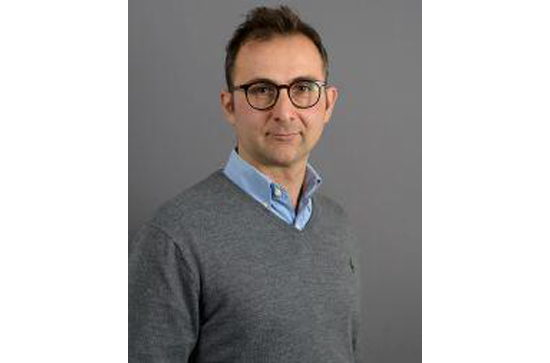
Yuxiang Wu is a Lecturer in the Department of Materials Science & Engineering at Monash University, Australia. He is actively involved in research projects including the ARC-funded 'Advancing Australian Green Steel through Redox Transformations' as Primary Chief Investigator (2025-2028). He accepts PhD students under the Monash Engineering Graduate Research Program. His research focuses on advanced materials engineering, particularly in metallurgical design of steels, corrosion mechanisms of alloys, and sustainable cement-based materials. Key areas include medium-Mn high-strength steels, chemically-patterned microstructures, and the role of retained austenite in mechanical behavior. His work has been published in high-impact journals like Nature Communications and International Materials Reviews , with notable contributions to understanding corrosion control in Al-alloys and carbonation kinetics in cementitious materials. His research has attracted media attention and significant scholarly engagement on platforms like Mendeley and ResearchGate. Professionally, he leads a major green steel initiative aiming to reduce carbon footprint in steel production through redox transformations. He collaborates widely with institutions like Max Planck Institute for Iron Research, evidenced by co-authorships with researchers like Dierk Raabe.
Michalis Konsolakis is a Full Professor at the School of Production Engineering and Management, Technical University of Crete (TUC). He holds a B.Sc. (1997) and Ph.D. (2001) in Chemical Engineering from the University of Patras, with postgraduate research at Cambridge University under a Greek-British Joint Research Programme. Previously, he served as Lecturer (2004–2010) and Assistant Professor (2010–2013) in TUC’s Department of Sciences before moving to his current position. His research focuses on heterogeneous catalysis, materials science, and surface science, particularly in energy/environmental processes like CO₂ hydrogenation, catalytic reactor design, and renewable energy systems. He has published over 200 peer-reviewed articles and serves on editorial boards of >10 journals. Konsolakis directs the Materials Science and Processes Lab (MatProLab) and the Industrial, Energy and Environmental Systems Lab at TUC. Teaching highlights include over 10 undergraduate and 5 postgraduate courses in chemistry, thermodynamics, materials science, and catalysis. He authored a general chemistry textbook and lecture notes. His work emphasizes sustainable energy solutions, including CO₂ conversion to synthetic fuels and green hydrogen production. Recent research trends in his publications emphasize advanced catalytic materials (e.g., ceria-based nanomaterials), electrochemical systems for hydrogen production, and techno-economic assessments of bioenergy processes. His labs develop novel catalysts for industrial applications, bridging fundamental science and engineering. Professional roles include editorial board memberships and international peer review for >100 journals. He collaborates globally on projects addressing environmental challenges through catalysis and materials innovation.
Dr. Xiaoli Li is an Associate Professor in the Department of Chemical and Petroleum Engineering at the University of Kansas. Her research laboratory (PVT Lab) focuses on complex fluid behavior in energy systems, with particular emphasis on phase equilibria, gas transport phenomena, and enhanced hydrocarbon recovery techniques. She maintains active research programs in unconventional reservoirs, CO 2 geostorage, hydrate technology, and nanoscale fluid dynamics. Her core research domains include: Confined phase behavior: Thermodynamics of fluids in nanoporous media Gas transport mechanisms: Rarefied flow and apparent permeability modeling Hydrate science: Structure stability and phase boundaries CO 2 utilization: Enhanced oil recovery and geological sequestration Asphaltene dynamics: Precipitation mechanisms in EOR processes Dr. Li teaches across the petroleum engineering curriculum, including core courses: Chemical Engineering Thermodynamics (C&PE 221), Reservoir Engineering (C&PE 327), Well Logging (C&PE 528), and Petroleum Engineering Design (C&PE 628). Her instructional portfolio emphasizes fundamental thermodynamics, reservoir characterization, and practical field applications. Her publication record (35+ articles) demonstrates consistent focus on reservoir thermodynamics and transport phenomena, with recent emphasis on: CO 2 -oil interactions (2020-2023), gas hydrate stability (2020-2022), shale gas transport (2019-2021), and equation of state modifications for confined fluids (2018-2020). Research methodologies combine molecular simulations, experimental studies, and novel thermodynamic modeling approaches.
Alexandra Staub is a Professor of Architecture at Pennsylvania State University , with an affiliation at the Rock Ethics Institute . Her academic work focuses on the intersection of architecture, culture, and ethics. Ph.D. from Brandenburg Technical University at Cottbus Diploma in Architecture from Berlin University of the Arts B.A. in Psychology from Barnard College, Columbia University Staub’s research explores how the built environment shapes and reflects cultural understanding, particularly in the contexts of social sustainability , gender , and political representation . Her work bridges theoretical analysis with practical design, emphasizing ethical considerations and empowerment in architecture. Recent publications highlight stakeholder agency , urban transformations , and ethical design practices . Scientific Awards & Grants: 2019–20 Penn State Rock Ethics Institute Faculty Fellow Penn State President’s Fund for Undergraduate Research (2016) College of Arts and Architecture Faculty Research Grant (2015) Raymond A. Bowers Grant (2013) External grants from Woodrow Wilson International Center, DAAD, and DFG Staub teaches third-year design studio , research methods , and architectural ethics courses. She actively participates in international conferences and serves as a peer reviewer for academic journals. Her professional experience includes architecture practice in Berlin and prior faculty roles at Brandenburg Technical University.
Professor Melanie Volkamer is a leading computer scientist at the Karlsruhe Institute of Technology (KIT), where she heads the SECUSO (Security, Usability, Society) research group within the Institute for Applied Informatics and Formal Description Methods at the Faculty of Business and Economics. She moved her research group from TU Darmstadt to KIT at the beginning of 2018 and has established herself as one of Germany's foremost experts on the human factor in security and privacy. Professor Volkamer's research focuses on human-centered security design, emphasizing that technical security solutions must be developed with user behavior and mental models in mind. She investigates why users often choose less secure passwords, fall for phishing emails, and how they react to security warnings. Her interdisciplinary team combines computer science, mathematics, and psychology to develop security solutions that better protect users against attacks while being usable in real-world contexts. Her publication record shows a strong focus on electronic voting security, email security, and cybersecurity awareness. Recent work includes analyzing the security challenges of online general meetings for listed companies, developing child-friendly authentication systems like KidzPass, and creating effective tools for detecting phishing emails. Her research demonstrates consistent attention to both technical security requirements and human factors in security design. Scientific Awards and Recognition: SECUSO tools recommended by the Federal Office for Information Security NoPhish concept materials included in the Federal Office for Information Security's CyberFibel since January 2021 Development of open source privacy-friendly apps available in the App Store Creation of educational tools like the Phishing Master Shooting Game Professor Volkamer actively advises on cybersecurity policy and regularly contributes to public discourse through media appearances and expert statements. She has supervised student projects that have resulted in practical security tools and has collaborated with government agencies including the Federal Ministry of Education and Research (BMBF) and the EU on security research projects. Her work with the Competence Center for Applied Security Technology (KASTEL) positions her at the forefront of Germany's cybersecurity research efforts. SECUSO, under Volkamer's leadership, develops practical security awareness measures including lectures, videos, flyers, and online tools that help citizens recognize fraudulent messages and better protect themselves online. The research group's work bridges academic research and practical application, making significant contributions to both theoretical understanding and real-world security solutions.
Boris Kaus is a Full Professor and Chair of Geophysics and Geodynamics at the Institute of Geosciences, Johannes Gutenberg University Mainz, Germany. His research focuses on understanding geological processes from grain scale to planetary scale using mathematical and numerical models. Funded by the German Research Foundation, European Research Council, and BMBF, his work spans lithospheric deformation, melt migration, fold-and-thrust belts, and high-performance computing applications in geosciences. His research interests center on geodynamic modeling of lithospheric processes, including subduction zones, mantle convection, and crustal deformation. Kaus develops novel numerical approaches to simulate complex geological phenomena, with emphasis on coupling between erosion, lithosphere dynamics, and mantle flow. His group creates specialized software for high-performance computing systems to tackle multi-scale geophysical problems. His scientific awards include the Paul Niggli Medal, EGU Arne Richter Award, multiple ERC grants (Starting, Proof-of-Concept, Consolidator), and the Carl Friedrich Gauss Lecturer honor. He has received recognition for editorial contributions including G-Cubed's Excellence in Refereeing award. ERC Consolidator Grant MAGMA (2018-2023) ERC Proof of Concept Grant SALTED (2016-2017) ERC Starting Grant MODEL (2010-2015) John von Neumann Excellence Project for HPC ETH Medal for Ph.D. thesis Kaus actively supervises graduate students and leads research projects funded by major European and German agencies. His group develops open-source software like GeophysicalModelGenerator.jl and maintains strong collaborations with international institutions including ETH Zürich and USC. Current projects focus on magma dynamics, lithospheric shear localization, and the development of advanced numerical methods for geodynamic simulations. The research group operates within the Geodynamics & Geophysics team at JGU Mainz, utilizing high-performance computing resources and collaborating with multiple European research initiatives including IMPRS and FORTHEM networks. Their laboratory specializes in numerical modeling of Earth systems with applications to tectonics, volcanology, and crustal evolution.
Michele Gattullo serves as an Assistant Professor within the Department of Mechanics, Mathematics & Management at the Polytechnic University of Bari, Italy, specializing in design methods for industrial engineering (ING-IND/15). His research bridges cutting-edge extended reality technologies with practical industrial applications, focusing on human-centered solutions for manufacturing, maintenance, and workplace design. Dr. Gattullo's research portfolio centers on Augmented Reality, Virtual Reality, and Biophilic Design, with significant contributions to Human-Computer Interaction in industrial contexts. He investigates how nature-inspired elements in virtual workspaces enhance employee well-being and productivity, while simultaneously developing practical AR tools for assembly guidance, technical documentation, and maintenance support. His work uniquely integrates ergonomics, cognitive psychology, and industrial engineering to optimize human-technology interaction in complex production environments. Analysis of his 15 most recent publications reveals two dominant research trajectories: biophilic design frameworks for virtual/metaverse workspaces (2023-2025) and industrial AR authoring methodologies. The biophilic stream establishes evidence-based guidelines for digital nature integration, while the AR stream delivers validated tools like ADAM and minimal AR approaches that streamline technical documentation creation. Both trajectories emphasize user experience validation through rigorous industrial studies, demonstrating strong interdisciplinary impact across computer science, industrial engineering, and environmental psychology. Scientific Awards: No awards or honors were documented in the available sources. Advising and Grants: The provided materials contain no information regarding graduate student supervision, research grants, or funding sources. His academic profile emphasizes publication output over mentoring activities or project financing details. Laboratories and Teams: While Dr. Gattullo's research involves advanced XR technologies, the source text does not specify laboratory facilities, research groups, or collaborative teams associated with his work at Politecnico di Bari.
Professor Stefan Thor Smith is a distinguished academic at the University of Reading , serving as a Professor in the Department of Energy and Environmental Engineering . His work bridges energy systems with urban sustainability , focusing on the integration of social and technical aspects of energy demand , urban energy system modeling , and climate change resilience . Academic Qualifications Postgraduate Certificate in Academic Practice (University of Reading, 2016) PhD in Built Environment (University of Nottingham, 2009) MSc in Computer Science (University of Glasgow, 2002) BSc in Physics (University of Nottingham, 2001) His research interests span the dynamics of energy demand in socio-technical systems, urban heat fluxes, pollution exposure modeling, and climate adaptation strategies. He has developed novel models for energy demand-side management , building environmental control , and urban climate interactions . Recent publications highlight his expertise in areas such as EV charging infrastructure , urban tree radiative performance , phase change material storage , and anthropogenic heat emissions . His work often involves interdisciplinary collaborations with institutions like the Centre for Research into Energy Demand Solutions and the Institute of Physics . Smith supervises a diverse group of postgraduate students and contributes extensively to teaching modules including Numerical Modelling and Programming and Urban Sustainability . His professional affiliations include the Institute of Physics , International Association of Urban Climatology , and the Higher Education Association .
Jonathan Grinham is an Assistant Professor of Architecture at Harvard University's Graduate School of Design (GSD). His research bridges material science, building science, and design to address climate change challenges, focusing on lifecycle carbon emissions, thermal health, and sustainable material systems. He is affiliated with the Harvard Center for Green Buildings and Cities, the Salata Institute for Climate and Sustainability, and the Aizenberg Lab at the Harvard John A. Paulson School of Engineering and Applied Sciences. Education: Architecture and Building Science, Virginia Tech Doctor of Design, Harvard GSD Grinham's work has produced novel technologies like the DryScreen vacuum membrane dehumidification system and the Vesma cooling solution, alongside publications, patents, and the start-up company Trellis Air Corporation. His research explores bioinspired microchannel designs, radiative sky cooling, and upcycling agricultural waste such as wool into building materials. Research Trends: His recent publications emphasize decoupling HVAC processes for energy efficiency, bioinspired material systems (e.g., duck feather hydrophobic coatings), and lifecycle carbon accounting for buildings. Projects like HouseZero and Origami Microfluidics highlight synergies between material geometry, thermal performance, and environmental impact reduction. Teaching and Collaboration: Grinham teaches courses on building simulation, materials, and thesis work. He collaborates with institutions like the Wyss Institute, Columbia University's Yu Lab, and industry partners including Faveker and American Woolen Company, mentoring students in hands-on climate-responsive design projects like the Sixteen Student Stools exhibition.
Dr. Mohammed Elamassie is an Assistant Professor at Özyeğin University's Graduate School of Science and Engineering, Department of Electrical and Electronics Engineering. He co-directs the Centre of Excellence in Optical Wireless Communication Technologies (OKATEM) and holds senior memberships in IEEE and Optica. PhD in Electrical and Electronics Engineering (Özyeğin University, 2020) MSc in Electrical and Electronics Engineering (Islamic University of Gaza, 2011) BSc in Electrical and Electronics Engineering (Islamic University of Gaza, 2006) Dr. Elamassie's research focuses on optical wireless communication systems, with specific expertise in underwater visible light communication (UVLC), vehicular visible light communication (V2V), airborne free space optical (FSO) networks, and turbulence mitigation techniques. His work addresses atmospheric channel modeling, diversity techniques, and MIMO communication challenges across multiple mediums. Analysis of his 15 most recent publications reveals critical trends in UVLC turbulence modeling, FSO UAV optimization, RIS-aided systems, and vehicular communication reliability. These works demonstrate his leadership in developing practical solutions for channel degradation and mobility-induced challenges. Best Paper Award, IEEE Black Sea Conference (2019) IEEE Turkey PhD Thesis Award (2020) Senior Member, IEEE Senior Member, Optica Optica Traveling Lecturer/Speaker Dr. Elamassie serves as Review Editor for Frontiers in Communications and Networks, covering 'Non-Conventional Communications' and 'Wireless Communications' sections. He contributes to OKATEM's research on optical wireless technologies, focusing on practical implementations across underwater, vehicular, and airborne domains.
Dr. Witold-Roger Poganietz serves as Research Group Leader of the “Sociotechnical Energy Futures” group at the Institute for Technology Assessment and Systems Analysis (ITAS) at Karlsruhe Institute of Technology (KIT), where he has been a research associate since 2008. His position places him at the intersection of technological systems analysis and societal transformation processes, with a particular focus on sustainable energy transitions. Dr. Poganietz’s research program centers on the complex interrelationships between technological systems and social structures. His primary expertise lies in sociotechnical energy analysis, water-energy-waste nexus studies, industrial ecology applications, and circular economy models. His work consistently adopts a systems perspective that examines how different elements of resource management interact across technical, social, and institutional dimensions. This approach is particularly evident in his internationally recognized research on integrated sustainability assessment methodologies. His recent publications (2023-2025) reveal a strong emphasis on context-specific applications of integrated resource management, particularly examining the water-energy-waste nexus in diverse geographic settings including Chile, Colombia, and Germany. His work frequently employs stakeholder analysis and participatory methods to understand the social dimensions of technical systems, reflecting a commitment to developing solutions that are both technically sound and socially just. Dr. Poganietz has made significant contributions through major research initiatives such as the Kopernikus-Project ENSURE, which focuses on participation mechanisms and knowledge transfer in Germany’s energy transition. His research bridges technical analysis with social considerations, addressing practical implementation challenges while maintaining strong theoretical foundations in systems analysis and technology assessment.
Fabiano Pallonetto is a Professor at Maynooth University's School of Business, with affiliations to the Hamilton Institute and Innovation Value Institute (IVI). He combines academic research with industry experience in energy, IT, and transport sectors. Role: Professor Location: Room 314, Maynooth University Contact: Fabiano.Pallonetto@mu.ie His research focuses on smart grid integration, energy system optimization, and sustainable development. Key projects include: NexSys (Funded Investigator): Developing net-zero energy pathways FLOW (Principal Investigator): Flexible EV-grid integration RES4CITY (Coordinator): Workforce upskilling for renewables Recent publications analyze energy flexibility software, deep learning optimization models, phase change materials for thermal storage, and blockchain security frameworks. His work spans smart cities , renewable integration , and AI-driven energy systems . Student Supervision: Currently advising MR B. Mohseni-Gharyehsafa (PhD research).
Leif Kobbelt serves as a University Professor at RWTH Aachen University, leading the Computer Graphics Group within the Department of Computer Science (Informatik 8). His research focuses on advancing geometry processing, interactive visualization, and computer graphics through innovative algorithmic solutions and interdisciplinary collaborations. Professor Kobbelt's research program centers on geometry acquisition and processing, with significant contributions to mesh generation, surface reconstruction, and neural rendering techniques. His work bridges theoretical geometry with practical applications in computer vision, photo-realistic image synthesis, and multimedia data transmission, often involving collaborations with industry partners and international research teams funded by DFG and EU sources. Recent publications (2023-2025) reveal a strategic integration of deep learning with traditional geometry processing, particularly in Gaussian splatting for real-time rendering, NeRF-based 4D content generation, and robust mesh Boolean operations. His group maintains leadership in quad mesh optimization and surface mapping while expanding into immersive visualization techniques for complex data analysis. The group has earned recognition through prestigious awards: Günter Enderle Best Paper Award at Eurographics 2023 Best Paper Award (1st place) at Symposium on Geometry Processing 2022 Honorable Mention for Best Paper at ACM Symposium on Virtual Reality Software and Technology Funding from Deutsche Forschungsgemeinschaft and European Union programs supports the group's research infrastructure and international collaborations. The team actively supervises graduate theses while developing open-source software tools that translate theoretical advances into practical industry applications, particularly in digital fabrication and immersive visualization systems. The Computer Graphics Group operates as a central hub for visual computing research at RWTH Aachen, maintaining strong ties with both academic institutions and technology companies. Their recent work on virtual reality educational tools and high-fidelity 3D reconstruction systems demonstrates commitment to knowledge transfer and real-world impact beyond traditional publication venues.
Dr Leok Lee is a Lecturer in the School of Electrical and Mechanical Engineering at the University of Adelaide . He is also an active member of the Centre for Energy Technology , contributing to cutting-edge research in renewable energy systems. Research Interests: Renewable energy systems, with a focus on solar thermal energy and energy storage. System integration and optimisation of complex transient energy systems. Computational fluid dynamics (CFD) and experimental design for energy applications. Decarbonisation of heavy industry through clean energy technologies. His research spans from fundamental studies in heat transfer and fluid mechanics to applied engineering solutions for decarbonising industrial processes. He has led and contributed to projects funded by ARENA and HILT CRC, targeting the integration of concentrated solar thermal energy into industrial applications such as the Bayer Alumina process. Supervision & Mentorship: Dr Lee is eligible to supervise Masters and PhD students and actively mentors undergraduate, Masters, and PhD candidates. He encourages prospective students to contact him via email to discuss research opportunities. Contact: Email: leok.lee@adelaide.edu.au Location: Room 3, Engineering South, North Terrace Campus
Dr. Bai Ziqian is an Assistant Professor in the School of Automation and Intelligent Manufacturing at Southern University of Science and Technology (SUSTech) in Shenzhen, China. Recognized as a Pujiang Scholar and Shenzhen Pengcheng Peacock Talent, she has established herself as a leading researcher at the intersection of wearable technology, textile engineering, and human-computer interaction. Her work bridges technical innovation with practical design applications, focusing on user-centered solutions that enhance human experience through technology integration. Dr. Bai's educational background includes: PhD in Smart Wearable Product Design (2011-2015), Hong Kong Polytechnic University MA in Fashion and Textile Design (2005-2006), Hong Kong Polytechnic University BA in Fashion Design and Engineering (2001-2005), South China Agricultural University Her research spans wearable technology, tangible interactive interfaces, IoTs, ergonomics, functional garments, wearables for healthcare, material innovation, smart home applications, and user-centered design. Dr. Bai has pioneered work in smart wearable fabrics and sensing mechanisms based on flexible materials, with a particular focus on human-computer interaction theory and practice. She has established a research team that has mastered key technologies in smart fabrics, interactive textiles, physiological signal monitoring, and human-computer interaction systems. Her approach consistently emphasizes user-centered design principles, ensuring that technological innovations serve practical human needs while maintaining aesthetic appeal. Dr. Bai's publication record demonstrates a clear evolution from foundational work in photonic textiles toward increasingly sophisticated wearable healthcare and human-computer interaction systems. Her recent publications focus on advanced sensor technologies, energy harvesting for wearables, and sophisticated data analysis for human motion and physiological monitoring. The interdisciplinary nature of her work is evident in publications spanning materials science, biomedical engineering, textile technology, and design methodology, with papers appearing in high-impact journals including Advanced Functional Materials (IF: 19.5), ACS Sensors (IF: 8.9), and Computers in Industry (IF: 10). Dr. Bai has received numerous prestigious awards that highlight both the technical and artistic dimensions of her work: 2024 German Red Dot Design Award for Best Design 2013 Neo-Neon, permanent collection at China Silk Museum (State grade 1 museum) 2019 Finalist, ThermoBlanket, TechStyle for Social Good International Competition 2017 1st Prize Teaching Award, Donghua University 2017 China National Textile and Apparel Council Teaching Award Multiple Service Learning Awards from Hong Kong Polytechnic University She has successfully secured research funding from prestigious sources including the National Natural Science Foundation of China and Guangdong Province's General Project. Her projects include a collaborative effort with the Guangdong Provincial Department of Education and Li Ning Company on a 'flexible wearable lower limb functional electrical stimulation system.' Dr. Bai has extensive teaching experience across multiple institutions and has guided student teams to success in national competitions. She currently leads the Human-Computer Interaction Design Laboratory (HCID) at SUSTech, which focuses on advanced design, engineering, and technology research at the intersection of disciplines, training the next generation of interdisciplinary designers and engineers.