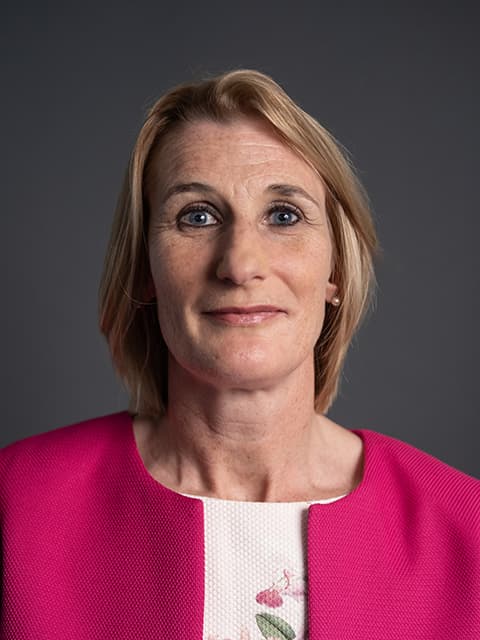
Professor Jan Godsell serves as Dean of Loughborough Business School and holds the title of Professor of Operations and Supply Chain Strategy. Her dual career spans academia and industry, combining academic rigor with executive experience in global firms like Dyson and ICI/Zeneca Pharmaceuticals. She focuses on strategic supply chain alignment, circular economy transitions, and Industry 4.0 applications. Her research bridges operational excellence and strategic business goals, emphasizing sustainability, deglobalization risks, and innovation ecosystems. Advisory roles include the Made Smarter Expert Panel and Industrial Strategy Challenge Fund Advisory Group, reflecting her industry influence. Key research themes include circular economy frameworks, supply chain resilience, and the interplay between technology and sustainable practices. Recent work explores net-zero supply chains, food waste prevention, and geopolitical sourcing strategies. Awards and grants are not explicitly listed in the provided text, but her extensive advisory roles and leadership positions underscore her recognized expertise. Her career trajectory highlights a commitment to transforming academic insights into actionable industry strategies.
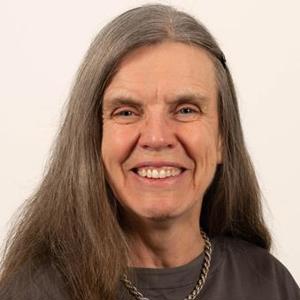
Nikitas Karanikolas serves as Professor in the Department of Informatics and Computer Engineering at the University of West Attica since March 2018, following a distinguished career progression from Assistant Professor (2004) to Associate Professor (2010) and Professor (2014) at the Technological Educational Institute of Athens. His professional trajectory includes significant roles as Systems Head of TEI Athens Library (1996-1997) and Chief of Informatics at Aretaieio University Hospital (1997-2004), alongside leadership positions in the Greek Computer Society as Board Member (2004-2006) and Secretary General (2006-2008). His academic foundation includes: Bachelor's in Statistics and Informatics from Athens University of Economics and Business (1988) PhD in Applied Informatics from Athens University of Economics and Business (1994) with thesis "Technological and Linguistic approaches in Natural Language Understanding" Dr. Karanikolas maintains an exceptionally broad research portfolio spanning Natural Language Processing , Computational Linguistics , Medical Informatics , and Green Energy systems. His work consistently bridges theoretical computational frameworks with practical healthcare applications, particularly evident in recent dementia care technologies and Greek language processing systems. The interdisciplinary nature of his research connects computational phonology with medical diagnostics and e-government applications. Analysis of his 15 most recent publications reveals a pronounced shift toward AI-driven healthcare solutions (particularly dementia patient monitoring), multilingual NLP systems (Greek and Polish), and urban safety applications . His work demonstrates consistent methodology development in ontological representations and multimodal fusion techniques, with increasing emphasis on real-world clinical and governmental implementations since 2023. No scientific awards were documented in the source materials. With 16 journal papers, 68 conference publications, and six authoritative Greek university textbooks, Dr. Karanikolas maintains an active research trajectory. His advising capacity is evidenced through extensive publication mentorship, particularly in medical informatics and NLP projects. While specific grant details are unavailable, his hospital information system implementations and textbook authorship suggest successful research funding acquisition. Current research activities focus on multimodal aggression prediction systems for dementia care, Greek language ontological frameworks, and urban navigation safety applications, primarily conducted through the University of West Attica's informatics infrastructure.
Kyle C Smith serves as Associate Professor in the Department of Mechanical Science and Engineering at the University of Illinois' Grainger College of Engineering, with a secondary appointment at the Beckman Institute for Advanced Science and Technology. His academic profile reflects a strong research focus at the intersection of electrochemical engineering and environmental technology development. Dr. Smith's research interests center on electrochemical systems for energy and water applications , with particular expertise in flow battery technology, desalination processes, and porous electrode engineering. His work bridges fundamental electrochemical principles with practical engineering solutions for sustainable technologies, as evidenced by his fingerprint analysis showing strong connections to flow battery systems (100%), desalination (92%), and redox flow batteries (89%). Analysis of his recent publications reveals a clear trajectory toward optimizing electrochemical systems for water treatment applications, with increasing focus on desalination technology since 2023. His work demonstrates consistent innovation in electrode design, flow field optimization, and energy efficiency improvement across electrochemical systems. Scientific recognition includes: ISE-Elsevier Prize for Applied Electrochemistry (2018), widely covered by 10+ news outlets and social media platforms His research has received significant media attention, with two major press features: 'New research helps eliminate dead zones in desalination technology and beyond' (January 2025) and 'Mechanical engineers lend fresh insight into battery-based desalination technology' (June 2023), indicating strong translational impact of his work. The research group maintains active collaboration networks spanning multiple institutions and countries as shown in the research network visualization. Dr. Smith's laboratory focuses on advanced electrochemical systems development, particularly investigating novel approaches to porous electrode design and flow management for applications in both energy storage and water treatment technologies. His recent work on tapered interdigitated channels and micro-interdigitated flow fields represents innovative engineering solutions to longstanding challenges in electrochemical reactor design.
Karin Tonderski is an Associate Professor at Linköping University's Department of Management and Engineering, specializing in Environmental Technology and Management. She leads research on biogas solutions, nutrient recycling, and wetland systems for water purification. Her work bridges environmental science with societal impact, particularly in South Africa and Baltic Sea region initiatives. Research Interests: Tonderski focuses on circular fertilizers, biogas innovation, and sustainable urban agriculture. She investigates how wetlands can mitigate eutrophication and provide clean water in informal settlements. Her projects emphasize cross-sector collaboration and policy integration for effective environmental management. Awards & Grants: Recipient of a SEK 3 million Formas grant (2019–2022) for South African wetlands research. Active in EU-funded projects like BONUS MIRACLE and the Biogas Solutions Research Center (BRC), advancing biogas as a sustainable energy source. Teaching & Mentoring: Teaches environmental engineering and sustainability courses, supervising bachelor and master theses. Contributes to LiU's PhD program in biogas solutions, emphasizing digestate management and systems thinking. Key Collaborations: Partners with Wits University (South Africa), Helmholtz UFZ (Germany), and Baltic Sea Region institutions. Her work integrates technical innovation with community-driven solutions to address global environmental challenges.
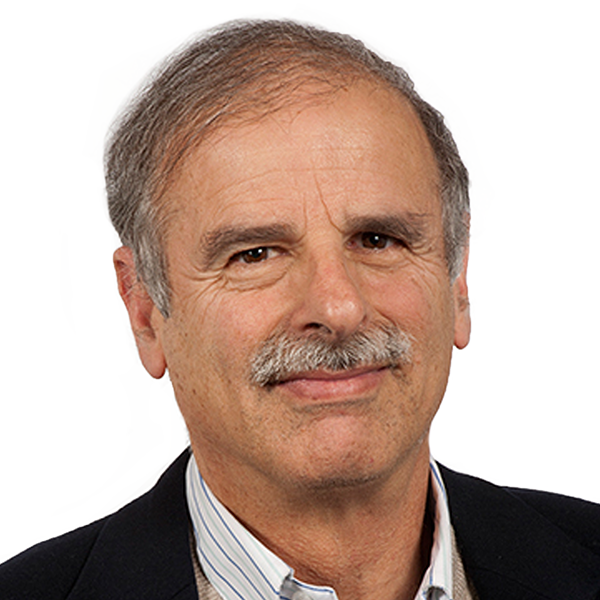
David Castañón is a Professor of Electrical and Computer Engineering (ECE) and Systems Engineering (SE) at Boston University. He holds a PhD from MIT (1976) and has held leadership roles including Department Chair of BU ECE (2010-2014) and President of the IEEE Control Systems Society (2008). His research focuses on stochastic control, optimization, game theory, and distributed computing, with applications in sensor management, inverse problems, and autonomous systems. Education: PhD, Massachusetts Institute of Technology (1976). Key affiliations include the Center for Information and Systems Engineering, the Rafik B. Hariri Institute for Computing, and the ALERT Department of Homeland Security Center of Excellence. He teaches courses such as EC702 Recursive Estimation and EC719 Statistical Learning Theory. Research interests span stochastic control, estimation theory, optimization algorithms, and multi-agent systems. Notable contributions include work on sensor management, cooperative operations, and inverse problem solutions for medical and security imaging. His work often integrates theoretical frameworks with practical applications in autonomous systems and distributed computing. Scientific achievements include IEEE Fellow status (2006), CSS Distinguished Member Award, and leadership roles in major conferences like the IEEE Conference on Decision and Control (2007 as General Chair). He has also served on the Air Force Advisory Board and the IEEE Society Review Committee. Grants and lab affiliations include the NSF Engineering Research Center for Subsurface Sensing (2001-2013) and the SENTRY DHS Center of Excellence (2021-present). His interdisciplinary collaborations bridge robotics, medical imaging, and security systems.
Kenichiro Mizohata is a University Researcher at the Department of Physics, University of Helsinki, and serves as a Supervisor for the Doctoral Programme in Materials Research and Nanosciences. His research focuses on materials physics, ion beam analysis, and the development of advanced materials for energy and environmental applications. Key interests include thin film deposition techniques (e.g., atomic layer deposition), high-entropy alloys, and radiation effects on materials. He is a core participant in the Eurofusion HerHEA project (2024–2025), collaborating with experts in materials science and nuclear engineering. His work spans interdisciplinary collaborations, addressing challenges in sustainable materials, nuclear technology, and environmental science. Publications emphasize experimental and computational studies on material microstructure, defect dynamics, and surface engineering. Mizohata’s research outputs (166+ publications) reflect expertise in materials characterization, with recent trends in nanomaterials synthesis, irradiation-resistant alloys, and sustainable recycling technologies. His contributions advance both fundamental understanding and applied solutions in materials science.
Natalie Byrd is a Researcher in the Department of Earth and Environmental Sciences, focusing on biogeochemical processes in low-level nuclear waste disposal. Her work aligns with UN Sustainable Development Goals related to environmental protection. She holds a Bachelor of Science in Environmental Science from The University of Manchester (2013–2017). Her research expertise spans biogeochemistry, nuclear waste management, geochemistry, and geomicrobiology, with a focus on microbial interactions in contaminated environments and cementitious systems. Key areas include anaerobic biodegradation of organic compounds, metal fate in alkaline conditions, and radionuclide behavior in subsurface environments. Her articles explore topics like microbial impacts on colloid-radionuclide interactions, citric acid degradation in waste environments, and cement integrity under biogeochemical processes. These studies highlight advancements in understanding waste disposal dynamics and environmental remediation strategies. Natalie's work contributes to sustainable waste management solutions, with implications for nuclear energy infrastructure safety and long-term environmental stewardship.
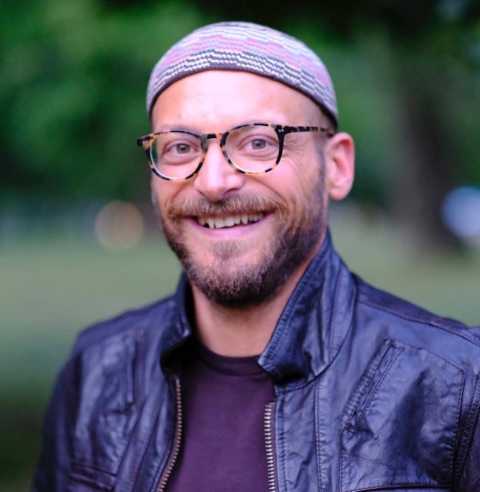
Javier Vela is a University Professor and Associate Chair of the Department of Chemistry at Iowa State University, where he also serves as a faculty scientist with the Ames National Laboratory. His research program focuses on the synthesis and characterization of nanostructured materials with applications in energy conversion, chemical catalysis, and fluorescence imaging, with over one hundred peer-reviewed publications and patents to his name. Dr. Vela received his educational training at prestigious institutions: B.S. (with Honors) in Chemistry from UNAM (2001) M.S. in Chemistry from University of Rochester (2003) Ph.D. in Chemistry from University of Rochester (2005) Following his doctoral studies, he completed postdoctoral research at the University of Chicago and Los Alamos National Laboratory before joining Iowa State University in 2009, where he received tenure in 2015, became a full professor in 2019, and was named University Professor in 2020. Dr. Vela's research program centers on the development of novel nanomaterials, particularly focusing on: Synthesis of nanostructured materials for energy applications Development of inorganic compounds for chemical catalysis Design of fluorescent materials for imaging applications Surface chemistry and structural characterization of nanocrystals Lead-free semiconductor materials for sustainable technologies Advanced solid-state NMR techniques for nanomaterial characterization His group employs a range of advanced techniques including solid-state NMR spectroscopy, dynamic nuclear polarization, and computational methods to understand nanomaterial structure-property relationships at the atomic level. Analysis of Dr. Vela's recent publication record reveals a strong focus on advanced materials characterization techniques, particularly solid-state NMR applications to nanomaterials. His work spans multiple disciplines including materials science, analytical chemistry, and environmental chemistry, with particular emphasis on sustainable energy solutions and advanced characterization methods. A significant portion of his recent work addresses challenges in nitrate reduction for sustainable ammonia production and the development of lead-free semiconductor alternatives through innovative synthesis approaches. Dr. Vela has received numerous prestigious awards and honors: Fulbright Scholar in Italy (2024) ACS Fellow (2021) John D. Corbett Endowed Professor (2020-2023) AAAS Fellow (2018) NSF CAREER Award (2013) Multiple LAS awards including Cassling Innovator (2018) and Early Achievement in Research (2014) ACS Midwest Stanley C. Israel Award (2014) As an educator and mentor, Dr. Vela has directed twenty doctoral and four master's theses while successfully mentoring numerous undergraduate researchers, including three NSF graduate research fellowship awardees. His research has been supported by significant funding including the NSF CAREER Award and various other grants that have enabled his group to investigate nanostructured materials for energy conversion, chemical catalysis, and fluorescence imaging applications. His service to the chemical community includes serving as Councilor for the Ames local section of the American Chemical Society, Program Chair for the Midwest Regional Meeting in 2018, and Treasurer of the Division of Inorganic Chemistry. Dr. Vela leads an active research group focused on inorganic and materials chemistry, with strong connections to the Ames National Laboratory where he has been a faculty scientist since 2010. His group collaborates extensively with researchers across disciplines to address challenges in sustainable energy and advanced materials development, maintaining an active presence in the scientific community through publications, conference presentations, and editorial board service for journals including ACS Energy Letters, Chemistry of Materials, and ACS Applied Engineering Materials.
Jeyeon Jo is an Assistant Professor in the Department of Textiles, Merchandising and Interiors at the University of Georgia's College of Family and Consumer Sciences. Her research focuses on wearable sensors, assistive technology, and ergonomic design, with an emphasis on sustainable materials and healthcare applications. She holds a Ph.D. in Human Centered Design from Cornell University (2023), an M.S. in Fashion Design (2017), and a B.S. in Clothing and Textiles (2014), both from Seoul National University. **Education:** Ph.D. Human Centered Design, Cornell University (2023) M.S. Fashion Design, Seoul National University (2017) B.S. Clothing and Textiles, Seoul National University (2014) **Research Interests:** Jeyeon develops wearable healthcare solutions using stretchable fiber optics and passive RFID, with a focus on optimizing user comfort and performance. Her work spans assistive technologies, firefighting gear ergonomics, and cross-cultural studies of clothing's sociocultural role. Recent projects include sustainable textile prototyping (LeatherBoard) and gait-monitoring systems (RFInsole). **Awards:** Human Service Studies Graduate Fellowship (Cornell, 2022) Best Brief at ISWC 2021 (2021) Roberta G. & John B. De Vries Graduate Award (Cornell, 2020) **Grants & Advising:** Currently no grants explicitly listed; actively advising students in wearable tech and textile engineering. Editorial roles include Fashion and Textiles (2024–present) and Korean Fashion & Textile Research Journal (2025–2026).
Srabanti Chowdhury is an Associate Professor of Electrical Engineering and Senior Fellow at the Precourt Institute for Energy at Stanford University. She holds a courtesy appointment in Materials Science and Engineering. Her research focuses on wideband gap (WBG) and ultra-wide bandgap (UWBG) materials, energy-efficient power/RF systems, and thermal management using diamond integration. She earned her M.S. (2008) and Ph.D. (2010) in Electrical and Computer Engineering from UC Santa Barbara. Key achievements include the 2023 Technical Excellence Award (SRC), 2020 Alfred P. Sloan Fellowship, and 2024 IEEE Fellow distinction. She has authored 120+ journal papers, 26 patents, and serves on IEEE committees like IRPS and VLSI Symposium. Her work addresses thermal boundary resistance in GaN/SiC-diamond interfaces and 3D thermal scaffolding for integrated circuits. She also explores vertical GaN power devices and monolithic bidirectional switches. Notable research directions include AI-driven thermal simulation pipelines, diamond-incorporated RF cooling, and high-voltage GaN PN diodes. Her contributions span semiconductor fabrication (e.g., MOCVD growth), interface engineering, and device-level thermal solutions for next-generation electronics.
Prof. Dr. Sabine Enders holds a Professorship at the Karlsruhe Institute of Technology (KIT) since 2015, previously affiliated with the Technical University of Berlin (UniCat member since 2012). She leads the Institute of Technical Thermodynamics at KIT. Her research focuses on thermodynamics of complex material systems, including phase and interphase equilibria of polymers, drug solubilization via hydrogels/micellar systems, and thermodynamic isolation of biologically relevant molecules. Education & Career: Professorship at KIT since 2015 Former affiliation with TU Berlin (Thermodynamics and Thermal Process Engineering) Research Interests: Phase equilibria modeling for hyperbranched polymers Lattice-cluster theory applications Drug delivery systems via polymer-based solutions Biological molecule isolation mechanisms Her publications emphasize computational thermodynamics and experimental studies on polymer solutions, with notable contributions to phase behavior analysis and interfacial phenomena. Labs & Affiliations: Active at the Institute of Technical Thermodynamics (KIT) and previously part of TU Berlin's Thermodynamics group.
Prof. Cengiz Kahraman is a Professor in the Department of Industrial Engineering at Istanbul Technical University (ITU). He holds a PhD in Industrial Engineering from ITU and has held numerous academic and administrative roles, including Head of Department (2010–2013) and Vice Dean (2004–2008). His research focuses on fuzzy logic, multi-criteria decision making, engineering economics, and statistical analysis. He has supervised over 60 theses and led projects funded by TUBITAK and private institutions, including studies on fuzzy decision support systems, warranty cost analysis, and performance evaluation systems. Education: PhD in Industrial Engineering, Istanbul Technical University (1992–1996) MSc in Industrial Engineering, Istanbul Technical University (1988–1990) BSc in Industrial Engineering, Istanbul Technical University (1984–1988) Research Interests: Fuzzy logic extensions (e.g., spherical, Pythagorean, neutrosophic sets) Multi-criteria decision-making methodologies (AHP, TOPSIS, VIKOR) Applications in supply chain management, sustainability, and engineering economics Key Awards: Applied Soft Computing Journal Best Paper Award (2024) ITU Engineering Science Award (2023) TUBITAK Science Award (2018) Memorial Da Ruan Award (2014) Recent Projects: Intelligent multi-criteria legal tracking systems Fuzzy inference techniques for debt collection optimization Social innovation platforms for education volunteers Warranty cost modeling for Arçelik products Grants & Advising: Recipient of multiple TUBITAK Publication Incentives (2011–2015) Advisor to over 60 graduate students in fuzzy decision-making and engineering Directed projects totaling over ₺1.2 million in funding Labs/Teams: Leads research groups focusing on fuzzy decision systems and sustainable engineering solutions.
Satish Nagarajaiah is a tenured Professor at Rice University with joint appointments in the Civil & Environmental Engineering Department , Mechanical Engineering Department , and affiliation with Materials Science and Nano-Engineering . His research spans structural dynamics , earthquake engineering , seismic isolation , and adaptive stiffness systems , with significant contributions to negative stiffness , smart tuned mass dampers , and strain sensing using nanomaterials . Joint appointments across Civil, Mechanical, and Materials Science departments Developed 3D-BASIS software for nonlinear dynamic analysis of base-isolated structures Recipient of NSF CAREER Award , ASCE Moissieff Award , and multiple ASCE medals Research Interests include: Nonlinear dynamic analysis of seismic systems Adaptive passive stiffness and control mechanisms Machine learning and computer vision for sparse structural identification Nanocomposite-based strain sensing (contact/noncontact) Development of smart skins and optical sensors for structural health monitoring Scientific Awards include: NSF CAREER Award (1998-1999) ASCE Moissieff Award (2015) Raymond C. Reese Research Prize (2017) Nathan M. Newmark Medal (2020) George W. Housner Medal (2025) Fellow, U.S. National Academy of Inventors (2019) Distinguished Member, ASCE (2021) Editorial Leadership includes Senior Editor of Mechanical Systems and Signal Processing (Elsevier, 2017-2019, 2024-present), Editor of Structural Control and Health Monitoring (Wiley, 2008-2022, 2024-present), and Editor-in-Chief of Structural Monitoring and Maintenance (Techno-Press, 2014-2024).
Dr. Ludo Ausiello is a Senior Lecturer in Electronics at the University of Portsmouth, affiliated with the School of Electrical and Mechanical Engineering and the Faculty of Technology. His roles include membership in the Portsmouth AI and Data Science Centre and the Portsmouth Centre for Advanced Materials and Manufacturing. He holds a Fellowship of the Higher Education Academy and is a member of the Institute of Acoustics. Education: Integrated Master’s in Electronic Engineering (University of Bologna), European PhD in Audio Engineering, and PGCert in Higher Education (2019). Professional training includes Fonoprint Studios (Bologna) and industry experience at Maserati, Magneti Marelli, and Harman. Research interests focus on audio engineering, signal processing, electro-acoustics, and innovative manufacturing. Recent work includes developing affordable measurement ecosystems for musical acoustics, optimizing soundboard designs via least-squares analysis, and applying AI to room acoustics prediction. His studies span topics like wood elasticity, loudspeaker design, and vocal fatigue in educational spaces. Awards: Fellowship of the Higher Education Academy (2019). Teaching and advising: Taught analog and digital oscillator design at the University of Bologna and contributed to curriculum development at Solent University. Active in mentoring students through collaborative industry projects. Labs/Teams: Engaged with interdisciplinary teams at Portsmouth, focusing on advanced materials and AI-driven acoustic solutions.
Igor Jankovic is an Associate Professor in the Department of Civil, Structural and Environmental Engineering at the University at Buffalo's School of Engineering and Applied Sciences. His research focuses on groundwater flow and contaminant transport in heterogeneous aquifers, with particular emphasis on the impact of aquifer heterogeneity on solute movement and transport modeling. Education: PhD in Civil Engineering, University of Minnesota (1997) MS in Civil Engineering, University of Minnesota (1993) BS in Civil Engineering, University of Split, Croatia (1990) His work addresses critical issues in groundwater hydrology including: Advective transport mechanisms in heterogeneous media Breakthrough curve prediction and analysis Effective hydraulic conductivity modeling Upscaling of flow and transport parameters Application of the Analytic Element Method (AEM) for complex aquifer simulations Comparison of transport models (CTRW, MRMT) in heterogeneous environments Research trends in his publications reveal a focus on: Three-dimensional heterogeneous aquifer modeling Non-Fickian and anomalous transport behavior Impact of spatial variability on contaminant migration Development of numerical algorithms for large-scale groundwater simulations Validation of stochastic transport theories against field experiments (e.g., MADE and Borden aquifers) Interaction between physical and chemical heterogeneity in reactive transport