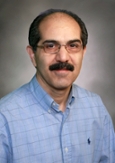
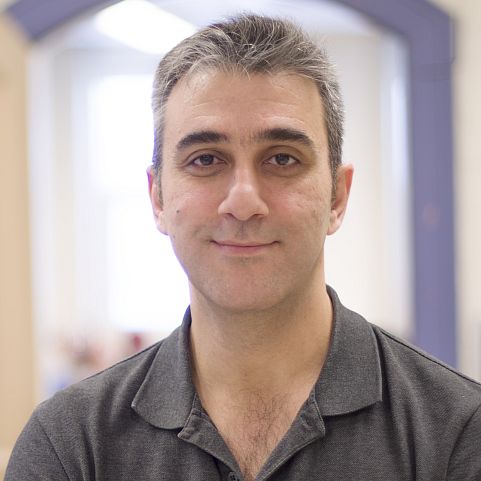
Christopher W. Bale is an Associate Professor in the Department of Chemical Engineering at Polytechnique Montréal . He is a member of the Institute for Data Valorization (IVADO) and the Thermochemical Computing Research Center (CRCT) . Education: B.Sc.A. (Manchester), M.A.Sc., Ph.D. (Toronto) His research interests focus on chemical thermodynamics , computational phase diagrams , automated thermochemical calculations , and chemical metallurgy . He has pioneered the development of the FactSage software, a key tool in thermodynamic modeling and materials design. Analysis of his publications reveals a consistent emphasis on computational methods for alloy design, phase stability, and industrial applications. His work spans chemical equilibrium constraints , aqueous corrosion modeling , and optimization algorithms for metallurgical processes. Scientific Awards : Synergy Award for Innovation (2013) - NSERC Canada He has supervised multiple graduate students, including: Bouchard, D. (Ph.D. 1994) Péloquin, A. (Master's 2006) Bale's lab work through the CRCT has advanced thermal energy storage systems and magnesium alloy development, with applications in renewable energy and metals processing.
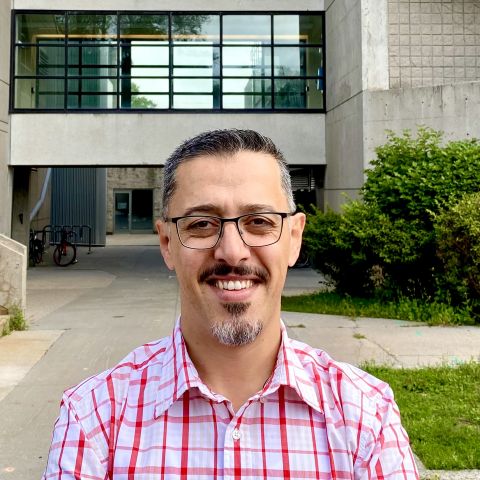
Shahzad Barghi serves as Associate Professor, Graduate Chair, and Director of the Master of Engineering program in the Department of Chemical and Biochemical Engineering at Western University's Faculty of Engineering. His academic career spans over 20 years with extensive industry experience in petroleum, petrochemical, and wastewater sectors. PhD, University of Western Ontario MSc, Tehran University, Tehran, Iran Dr. Barghi's research focuses on multiphase reactor engineering, fluidization technology, and photocatalytic water treatment systems. His work bridges fundamental hydrodynamics with industrial applications, particularly in gas-solid systems, membrane-based wastewater treatment, and odor abatement processes. He has developed innovative reactor designs for advanced oxidation processes and successfully implemented membrane pervaporation for wastewater treatment. His publication record demonstrates strong expertise in circulating fluidized bed technology, with significant contributions to high-flux gas-solid systems, prilling tower design, and TiO 2 -based photocatalysis. Recent work emphasizes sustainable solutions for water purification and pollution control, including monodisperse particle production systems that reduce dust emissions in fertilizer manufacturing. Dr. Barghi has supervised numerous PhD and Master's students, focusing on reactor design, hydrodynamics, and environmental applications. His research has been supported by collaborations with industrial partners including TODA Advanced Materials, Cargill Canada, Cosmetica Inc., Lanxess, and Firestone. His teaching portfolio includes graduate courses in Chemical Process Safety and Oil Refining, and undergraduate courses covering Chemical Process Design, Unit Operations, and Air Pollution Control Engineering. He maintains active research projects in photocatalytic reactor development, fluidized bed modeling, and wastewater treatment technologies.
Dr. Mostafa Yakout serves as an Assistant Professor in the Department of Mechanical Engineering within the Faculty of Engineering at the University of Alberta. A Professional Engineer (P.Eng.) licensed in Alberta and Ontario, he also holds an Adjunct Research Professor position at Western University (2022-2025). Previously, he served as a Sessional Instructor at McMaster University and an Assistant Lecturer at Alexandria University. His educational background includes: Postdoctoral Fellowship, McMaster University, Canada, 2019-2022 Ph.D. Mechanical Engineering, McMaster University, Canada, 2015-2019 M.Sc. Production Engineering, Alexandria University, Egypt, 2011-2013 B.Sc. Production Engineering, Alexandria University, Egypt, 2005-2010 Dr. Yakout's research focuses on developing process-driven solutions for additive manufacturing of next-generation materials, including alloys containing rare-earth metals, high-performance metal alloys, and high-temperature materials. His group employs numerical, analytical, and experimental methods to establish critical process-structure-property-performance relationships. This work directly supports clean technology development and industrial transformation toward net-zero emissions in Canadian manufacturing. Analysis of his recent publications (2021-2025) reveals dominant themes in laser powder bed fusion (LPBF), particularly Inconel 617 applications for small modular reactors, rare earth element-doped coatings, and magnetic alloy optimization for electric motors. His research consistently integrates multiphysics modeling, in-situ process monitoring, and microstructure-property relationship studies targeting aerospace, nuclear energy, and biomedical engineering applications. No specific scientific awards or fellowships are documented in the provided materials. Dr. Yakout currently accepts undergraduate students for research supervision. His group collaborates extensively with industry, government agencies, and academic institutions across Canada and internationally. As CARDD-Tech Research Lead, he focuses on critical minerals and rare earth elements to advance sustainable manufacturing solutions aligned with national clean technology initiatives. He leads the ANGAM Group, which specializes in additive manufacturing process development for advanced materials. The team's work emphasizes hybrid additive manufacturing techniques and design optimization for industrial applications requiring high-performance material solutions.
Akshaya Mishra is an Adjunct Assistant Professor affiliated with the Vision and Image Processing Lab at the University of Waterloo. Her research interests span computer vision, machine learning, blast engineering, and interdisciplinary applications of data science across environmental, biomedical, and socioeconomic domains. She holds a contact email at amishra@miovision.com and has contributed to over 50 peer-reviewed publications since 2022. Her work integrates computational methods with real-world challenges, including sustainable development, healthcare innovation, and resource management. Research areas include advanced imaging techniques, blast vibration modeling, and policy analysis for rural development. Key contributions include bibliometric studies on financial inclusion, AI-driven healthcare diagnostics, and optimization frameworks for engineering systems. Her articles address global issues such as aging populations in India, agripreneurship in Nepal, and material science advancements in additive manufacturing. Though no formal awards or grants are listed, her publications reflect a collaborative approach with industry and academia, particularly in interdisciplinary problem-solving. Ongoing projects include environmental impact assessments of blasting operations and machine learning models for climate-sensitive agricultural planning.
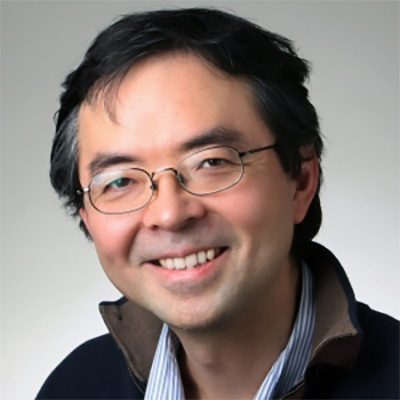
Ehsan Toyserkani is a Professor at the University of Waterloo's Faculty of Engineering and holds the Canada Research Chair in Intelligent Additive Manufacturing. He leads the Multi-Scale Additive Manufacturing (MSAM) Laboratory, one of the top 5 academic AM facilities globally. His research focuses on advanced manufacturing technologies, including in-situ monitoring, laser material processing, and bio-additive manufacturing. Education: Doctorate in Mechanical and Mechatronics Engineering, University of Waterloo (2003) Master's in Mechanical Engineering, Amirkabir University of Technology (1995) Bachelor's in Mechanical Engineering, Sharif University of Technology (1992) Research Interests: Toyserkani's work spans Additive Manufacturing (AM) systems, in-situ monitoring, bio-AM applications, and smart materials. His lab develops cutting-edge AM processes and collaborates internationally through networks like the Pan-Canadian NSERC HI-AM Network. His innovations have led to 18 patents and two start-ups. Grants & Leadership: He directs the HI-AM Network, involving seven Canadian universities and 14 industry partners. He is also a voting member of ASTM Committee F42 and advises the Advanced Manufacturing Supercluster (NGen). Awards: Highlights include Fellow of the Canadian Academy of Engineering (2024), UW Graduate Supervision Excellence Award (2021), and Canada Research Chair (2017–2031). Labs & Teams: The MSAM Lab specializes in AM research, including material development, process optimization, and defect detection. Recent projects include the Consortium for Sustainable Scale-up in Metal Additive Manufacturing (CSS-MAM), funded by the Government of Canada.
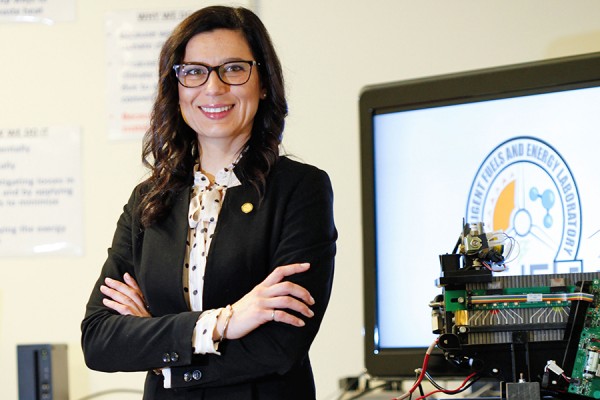
Professor Ofelia Jianu is a faculty member in the Department of Mechanical Engineering at the University of Windsor, leading research in sustainable energy systems. Her work focuses on hydrogen production via thermochemical cycles, thermal management of electric vehicles, and advanced manufacturing techniques. She heads the Intelligent Fuels and Energy Laboratory (I-FuELs) and collaborates with industry through initiatives like Mitacs. Her research spans heat transfer in electric motors, battery thermal simulation, and molten salt systems for energy storage. She has advised students like Alma Tamim and Eman El-Masri, supported by grants from NSERC and industry partnerships. Professor Jianu also contributes to the university’s Open Learning initiatives, emphasizing innovative teaching methods. Her research projects include advancing hydrogen-based economies, optimizing electric vehicle components, and improving energy efficiency through additive manufacturing. She has pioneered studies on Cu-Cl thermochemical cycles, heat exchanger design, and residual stress analysis in materials. Awards and recognitions highlight her impact on sustainable technologies and student mentorship. Collaborative efforts with the Centre for Hybrid Automotive Research and Green Energy have driven innovations in electric motor cooling and battery systems. Her work bridges academia and industry, addressing global energy challenges through interdisciplinary approaches.
Professor Sumanth Shankar is affiliated with McMaster University's Faculty of Engineering , Department of Mechanical Engineering . His research focuses on advanced manufacturing and materials processing. B.Tech (Metallurgical Engineering), Institute of Technology – Banaras Hindu University (IT-BHU), 1996 Ph.D (Materials Science and Engineering), Worcester Polytechnic Institute (WPI), 2000 Research areas include: Metal Casting and Solidification Processing Semi-Solid Metal Casting (Rheo-Casting, Thixo-casting) Diffusion Analysis and Molten Metal Rheology Advanced Microscopy (SEM, TEM, FIB, LEAP) Microstructure-Property-Performance-Cost Relationships Recent publications focus on Aluminum-Silicon alloys , Solidification Dynamics , Intermetallic Phase Evolution , and Advanced Casting Processes like Controlled Diffusion Solidification (CDS) and Tilt-Pour Casting. Key themes include Microstructure Control , Viscosity Analysis , and X-ray/Neutron Diffraction techniques. Scientific recognition: Best Paper Award, Aluminum Division (2005) Teaching responsibilities include: Mechanical Engineering (MECH ENG 4W03: Air Conditioning & Refrigeration Systems) Solidification Processing (MECH ENG 714/MATLS 715) MATLS 3MF3: Materials Fabrication Contact: shankar@mcmaster.ca | Office: JHE 102 | Phone: 905-525-9140 ext. 26473
Edgar A. Matida is an Associate Professor at Carleton University , affiliated with the Faculty of Engineering and Design and the Mechanical and Aerospace Engineering department. His research spans aerosol science, computational fluid dynamics, and energy systems, with applications in pharmaceutical delivery, fuel cell modeling, and aerospace interactions. B.Sc., Sao Paulo University M.Sc., Ph.D., Yokohama National University His primary research interests include: Pharmaceutical aerosols and inhalation devices Large eddy simulation (LES) and turbulent flow analysis Dispersed two-phase flow modeling Aerofoil-vortex interactions in rotorcraft Direct methanol fuel cells (DMFCs) Advanced aerosol characterization techniques (LDV, PIV) Recent publications highlight trends in 2025 in e-cigarette aerosol dynamics, allergen dispersion modeling, and aerospace applications. Earlier works focus on 2024-2023 solidification processes, wind turbine analysis, and exposure chamber systems. All studies employ numerical methods (LES, CFD) and experimental validation. Professional activities include Member, Editorial Board of Journal of Aerosol Medicine and Pulmonary Drug Delivery Member, International Society for Aerosols in Medicine (ISAM)
Holger Kleinke is a Professor at the University of Waterloo , specializing in Inorganic Chemistry . His research focuses on thermoelectric materials , crystal structure analysis , and machine learning applications in materials discovery . He can be reached at kleinke@uwaterloo.ca . Research Interests Professor Kleinke's work spans: Thermoelectric materials for energy conversion Zintl phases and intermetallic compounds Machine learning for materials prediction Solid-state synthesis techniques Crystal structure-property relationships Nanostructure engineering for enhanced performance Scientific Contributions Developed explainable AI models for thermoelectric property prediction Pioneered fast cooling methods to improve SnSe thermoelectric performance Investigated complex bismuthide structures like Ba8Zn2-xIn3+xBi10 Explored organic cathode materials through coordination polymer design Optimized electrochemical interfaces for fast-charging batteries
Dr. Mahmoud Alzoubi is an Assistant Professor at Queen's University , cross-appointed between the Robert M. Buchan Department of Mining Engineering and the Department of Mechanical and Materials Engineering . He leads an interdisciplinary research program that couples advanced transport phenomena with energy-efficient technologies for mining and renewable energy applications. Education: Ph.D. in Mining & Mechanical Engineering, McGill University (2018) M.Sc. in Engineering Systems & Management, Masdar Institute of Khalifa University in collaboration with MIT (2014) B.Sc. in Mechanical Engineering, Jordan University of Science and Technology (2005) Research Interests: His work centers on transport phenomena in porous media , with emphasis on phase-change heat and mass transfer , artificial ground freezing , thermal energy storage , microfluidic devices , and renewable HVAC cycles . By integrating high-fidelity experiments with large-scale numerical simulations performed on high-performance clusters, he advances sustainable solutions for energy-intensive mining operations and green building technologies. Publication Impact: Across 32 peer-reviewed articles (2013-2024), a dominant theme emerges: developing computationally efficient models for coupled thermo-hydraulic processes in freezing, storage and ventilation systems. Studies range from Stefan-problem analytical solutions for phase-change materials to large-eddy simulations of cough-jet dispersion for indoor-air safety, underscoring a methodological breadth that spans pure mathematics, experimental heat transfer, and applied computational fluid dynamics. Funding & Recognition: Total research funding secured: CAD 466,000+ (direct cash CAD 381,000 + high-performance computing allocation CAD 85,000) Former member, Canadian Hydrogen in Mining Advisory Committee , Natural Resources Canada Laboratory & Teams: Dr. Alzoubi directs a research laboratory at Queen’s University equipped with state-of-the-art instrumentation for multiphysics experimentation and access to national HPC facilities. The group collaborates closely with industry partners (mining, HVAC) and government laboratories to translate fundamental findings into scalable, energy-efficient technologies for northern mining and cold-region infrastructure.
Dr. Vahid Fallah serves as an Associate Professor in the Department of Mechanical and Materials Engineering at Queen's University's Faculty of Engineering. His research is centered at the Azar Advanced Manufacturing Laboratory (AAML), a CFI/ORF-funded infrastructure facility specializing in Laser Powder Bed Fusion (LPBF) systems for reactive metals processing. PhD in Mechanical Engineering-Materials Processing (2011, University of Waterloo) MASc in Materials Identification and Selection (2005, Sharif University of Technology) BASc in Industrial Metallurgy (2002, Sharif University of Technology) With over 15 years of combined academic and industrial experience, Dr. Fallah specializes in Additive Manufacturing of metals , solidification phenomena , and precipitation hardening of aerospace aluminum alloys . His work bridges fundamental metallurgy with industrial applications, particularly in automotive and aerospace sectors. The research portfolio demonstrates deep expertise in laser-based manufacturing, friction stir welding/processing, and computational materials science, with strong emphasis on aluminum and titanium alloys. Recent publications reveal consistent focus on rapidly solidified aluminum alloys , graphene-reinforced nanocomposites , and high-entropy alloys . Key trends include microstructure-texture-property relationships in additive manufacturing, hot-cracking mitigation strategies, and innovative thermomechanical processing routes. The 2023-2025 publications show increasing exploration of reactive metal processing and advanced characterization techniques. Dr. Fallah's Azar laboratory features a custom-designed LPBF system with oxygen-controlled atmosphere for processing reactive metals like Al, Ti, and Zr alloys, equipped with in-situ monitoring capabilities. The facility supports both fundamental research and industry collaborations, including previous work with Novelis Inc. and Airbus on aluminum alloy development. His industrial experience includes leadership roles at Alcereco Inc. where he developed Al-Sc alloys for aerospace and proprietary atomization technology that led to Equispheres Inc. This industry-academia duality enables translation of research into commercial applications, particularly in metal powder production and high-strength alloy development.
Michael Benoit is an Assistant Professor at the University of Waterloo, focusing on advanced materials processing and additive manufacturing. His research integrates experimental and computational methods to address challenges in joining technologies, microstructure optimization, and defect mitigation in metals. He holds a full-time faculty position and contributes to curricular innovation in engineering education. Research interests span additive manufacturing (AM) of light alloys, laser-based deposition, and interfacial phenomena in dissimilar material joints. Key areas include crack susceptibility in AM processes, thermal management during welding/brazing, and microstructural evolution under extreme conditions. Recent publications highlight process-structure-property relationships in AM, novel benchmark designs for defect analysis, and optimization strategies for steel and superalloy applications. His work bridges fundamental materials science with industrial AM adoption in sectors like aerospace and construction. Notably involved in developing high-contrast filler wires for non-destructive testing, thermal analysis of aluminum alloys, and multi-variable predictive models for welding processes. His contributions advance both theoretical understanding and practical implementation of advanced manufacturing systems.
Colin Denniston is a Professor in the Department of Physics & Astronomy at Western University. His research focuses on multiscale modeling of soft matter systems, including complex fluids, liquid crystals, colloidal suspensions, and polymer dynamics. He specializes in developing novel numerical methods for simulating micro/nano-fluidic systems and studying material properties during curing processes. Key research areas include: Molecular dynamics simulations of polymerization reactions Hydrodynamic interactions in confined flows Photonic band gap engineering using colloidal crystals Interfacial dynamics in coupled lattice-Boltzmann and molecular dynamics frameworks His work bridges theoretical physics, computational modeling, and materials engineering. Notable contributions include advancements in LAMMPS integration for fluid simulations and studies on defect-bonded colloidal structures in cholesteric phases. The Denniston Group actively explores applications in advanced composites and nanotechnology. Professional activities include leading the Denniston Group at Western University and collaborating on projects involving fiber-reinforced polymers for aerospace/automotive industries. He accepts graduate student applications year-round.
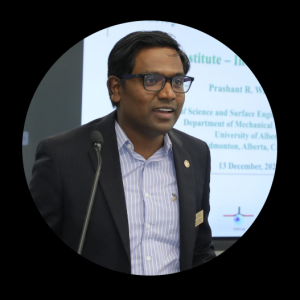
Prashant Waghmare is an Associate Professor and Associate Dean of the MEng Program at Carleton University's Faculty of Engineering and Design. He holds a position in the Department of Mechanical and Aerospace Engineering, focusing on interdisciplinary research in fluid dynamics, interfacial phenomena, and thermal engineering. His work spans experimental and theoretical investigations of droplet dynamics, heat transfer systems, and advanced materials. Dr. Waghmare's research interests include microgravity fluid behavior, electrowetting effects, refrigerant replacement in heat pipes, and the optimization of additive manufacturing processes. He has contributed to studies on CO2 storage capacity, particle separation in microfluidic systems, and the development of eco-friendly superhydrophobic surfaces for oil-water separation applications. His publications highlight advancements in understanding droplet freezing, viscous medium interactions, and novel manufacturing techniques for composite materials. He is affiliated with Carleton University's Mechanical and Aerospace Engineering Department and collaborates on projects involving thermal systems, material characterization, and environmental engineering solutions.
Danielle Fortin is a Full Professor and Director of the Environmental Science program at the University of Ottawa's Department of Earth and Environmental Sciences. She holds a Ph.D. from INRS-Eau (1992) and an M.Sc. from Université Laval (1987). Her research focuses on geomicrobiology, particularly microbial interactions with minerals and metals in extreme environments like deep-sea vents and mine tailings. Key areas include biogenic mineral formation, metal cycling, and biosignature analysis. Dr. Fortin’s work integrates aqueous geochemistry, mineralogy, and molecular techniques. She has advised numerous graduate students and postdoctoral fellows, with active projects on mine tailings remediation, microbial iron oxide dynamics, and bioaccessibility of metals. Her collaborations include Health Canada and Natural Resources Canada, addressing environmental challenges like arsenic mobilization and anammox processes in contaminated waters. Research highlights include studies on fossilized iron bacteria, biogeochemical mercury methylation in the St. Lawrence River, and geochemical transformations in mine-impacted ecosystems. Her contributions span over 150 peer-reviewed publications and presentations at international conferences, reflecting her leadership in environmental and geomicrobiological research.