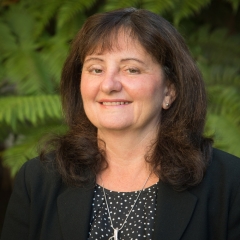
Philip Cardiff is a Professor in Computational Mechanics at the School of Mechanical and Materials Engineering, University College Dublin. He holds a BE (2008) and PhD (2012) in Mechanical Engineering from UCD. His research focuses on computational mechanics, machine learning, and their integration, with expertise in finite volume methods, fluid-solid interaction, and biomechanics. He leads the Bekaert University Technology Centre and contributes to editorial roles in the Journal of Open Source Software and OpenFOAM Journal . Cardiff has secured grants from ERC, I-Form, and the UCD Energy Institute, addressing challenges in offshore energy, advanced manufacturing, and cardiac xenotransplantation. Education: BE in Mechanical Engineering, University College Dublin (2008) PhD in Development of the Finite Volume Method for Hip Joint Analysis, University College Dublin (2012) Professional Diploma in University Teaching & Learning, University College Dublin Research Interests: Computational mechanics, finite volume methods, and machine learning integration Fluid-solid interaction, biomechanics, and materials science Applications in additive manufacturing, energy systems, and biomedical engineering Grants & Awards: ERC Consolidator Grant (2020–2025) Funded Investigator in I-Form and UCD Energy Institute Principal Investigator in UCD Centre for Biomedical Engineering Teaching & Leadership: Programme Director for MEngSc in Materials Science and Engineering (2018–2023) Coordinates modules in computational mechanics and advanced materials processing Advocates constructivist teaching approaches with active learning strategies Labs & Collaborations: UCD Centre for Mechanics Bekaert University Technology Centre MaREI and I-Form Research Centres
Professor Christopher Berndt is a Distinguished Professor in Surface Science and Engineering at the School of Engineering, Swinburne University of Technology, where he joined in 2008 as the founding professor of this discipline. He previously held founding professorships at James Cook University and was a tenured professor at Stony Brook University, USA, where he remains an Adjunct Professor. He also served as a Fellow at NASA-Lewis Research Center, working on thermal barrier coatings. His leadership in professional societies includes serving as President of the Thermal Spray Society (ASM) and being inducted into the Thermal Spray Hall of Fame in 2007. His research interests center on materials engineering , particularly surface science , thermal spray technologies , high-entropy alloys , and coatings for extreme environments . He also contributes significantly to biomedical engineering through bioactive coatings and clean energy via advanced materials for batteries and hydrogen technologies. His work bridges fundamental materials science with industrial applications in aerospace, energy, and manufacturing. The recent publications reveal a strong focus on advanced thermal spray techniques such as HVOF and HVAF, development of high-entropy and medium-entropy alloys, and innovative coating applications in energy storage, corrosion resistance, and high-temperature protection. His research consistently emphasizes microstructural control, phase stability, and mechanical performance under extreme conditions. Inducted into the Thermal Spray Hall of Fame (2007) Fellow of the Australian Institution of Engineers Fellow of ASM International Fellow of The Institution of Metallurgists (UK) Fellow of ASME, ACS, and ACerS Chartered Engineer (UK) Professional Engineer (Australia) Member of the College of Bioengineers (Australia) Professor Berndt actively supervises numerous PhD students, with current projects on high-entropy alloys, internal pipe coatings, and biomedical surface engineering. He has secured extensive research funding from organizations including the Australian Research Council (ARC), Department of Defence, Office of Naval Research (US), and industry partners such as Entromat and Amaero Engineering. He leads major initiatives such as the ARC Training Centre in Surface Engineering for Advanced Materials (SEAM) and has contributed to commercialization projects in space vehicle manufacturing. He is the Founding Editor and now Editor Emeritus of the Journal of Thermal Spray Technology and has edited over 10 conference proceedings. His research network spans across Australia, the USA, and Thailand, reflecting a strong international collaborative footprint in advanced materials research.
Leijun Li, PhD, P.Eng., is a Professor in the Department of Chemical and Materials Engineering at the University of Alberta, where he also serves as Chair. With a career spanning institutions including Rensselaer Polytechnic Institute, University of Northern Iowa, and Utah State University, he specializes in physical metallurgy , welding metallurgy , and additive manufacturing . His research focuses on microstructure characterization, mechanical properties, and modeling of non-equilibrium phase transformations during welding and AM processes. Current affiliations: University of Alberta, American Welding Society, ASM International Research themes: Additive manufacturing of alloys, Corrosion science, Pipeline metallurgy, Phase transformations, Welding robotics He has received multiple AWS Hobart Awards (4 times) and Savage Awards (2 times) for his work on pipeline welding and metallurgy. His group has published extensively on topics including delta-ferrite retention in Grade 91 steel, inverse bainite transformations , and welding defect analysis . Recent projects include NSERC Alliance Missions Grant for rare earth mineral recovery and Alberta Innovates Ecosystem Program for advanced manufacturing. Key collaborators: Dr. Tom Lienert, Dr. Xiaoying Fang, Dr. P-Q Xu Labs: Rooms 2-158/3-133 (CME Building), Office 12th Floor DICE Building
Diana A. Lados is a Professor in the Department of Mechanical and Materials Engineering at Worcester Polytechnic Institute (WPI). Her research focuses on fatigue, fracture mechanics, and light metal materials, particularly in Al-Si-Mg alloys. She has expertise in microstructure characterization, residual stress analysis, and fatigue life prediction. Education: BS and MS in Materials Science, Polytechnic University of Bucharest (1997) MS in Materials Science, Southern Illinois University (1999) PhD in Materials Science, Worcester Polytechnic Institute (2004) Research Interests: Fatigue crack growth mechanisms and fracture toughness in light metals Design of materials for enhanced fatigue resistance Residual stress measurement and compensation techniques Microstructure-performance relationships in cast alloys Powder metallurgy and novel alloy development Awards & Honors: ASM International Fellow (2017) Elected to Board of Trustees of ASM International (2018) Axel Madsen Scholarship Award (2003) Grants & Advising: No specific grants or student advisees are listed. Her work is funded through institutional and collaborative research initiatives. Labs/Teams: Leads research on fatigue and fracture mechanics in metals, collaborating with industry partners on alloy development and materials testing.
Sanjiv Sinha is a Professor in the Department of Mechanical Science and Engineering at the University of Illinois, serving as the Associate Head for Undergraduate Programs. He is also affiliated with the Micro and Nanotechnology Lab. His research focuses on thermal conductivity, nanomaterials, thermoelectrics, energy storage, and advanced manufacturing. Key contributions include innovations in thermochemical energy storage systems, nanowire thermal properties, and hybrid material fabrication techniques. Sinha has been recognized with prestigious awards including the DARPA Young Faculty Award (2011) and NSF CAREER Award (2010). His recent work spans hydrogel thermal characterization, nanoporous crystalline materials, and intracellular thermometry. Articles highlight interdisciplinary approaches to energy systems, environmental engineering, and biomedical applications. Ongoing projects include developing smart water management systems and advanced thermal interfaces for electronics cooling. Collaborations emphasize sustainable technologies and nuclear materials science. Research Highlights: Thermoelectric materials, nanostructured phase change systems, and ultrasonic welding of metal-polymer composites. Grants & Funding: Supported by DARPA, NSF, and industry partnerships focused on thermal energy storage and nanofabrication. Labs & Teams: Leads the Micro and Nanotechnology Lab, collaborating with interdisciplinary teams in materials science and energy engineering.
Gregory J. Wagner is an Associate Professor of Mechanical Engineering and Director of Graduate Studies at Northwestern University's McCormick School of Engineering. His research focuses on developing computational methods for multi-scale and multi-physics problems in additive manufacturing, fluid dynamics, and heat transfer. He leads the Wagner Research Group, which specializes in high-performance computing tools for complex engineering simulations. Education includes a Ph.D., M.S., and B.S. in Mechanical Engineering from Northwestern University and Boston University. His work integrates machine learning with traditional computational methods to model material behavior, microstructure evolution, and process-structure-property relationships in advanced manufacturing. Notable contributions include the GO-MELT framework for thermal simulations and the C-HiDeNN neural network approach for large-scale systems. Research interests span additive manufacturing process modeling, multiphysics coupling, and data-driven approaches for material design. Awards include the Bette and Neison Harris Chair in Teaching Excellence. Publications emphasize thermal modeling, phase change phenomena, and computational fluid dynamics innovations. His lab's work bridges mesoscopic and multiscale modeling, with applications in energy systems, biomedical devices, and environmental engineering. Collaborations focus on experimental validation and industrial-scale simulation challenges.
Dr. Andrey Molotnikov is an Associate Professor in Additive Manufacturing and Director of the RMIT Centre for Additive Manufacturing at RMIT University's School of Engineering. His expertise spans additive manufacturing, computational materials science, and multi-material 3D printing. He leads a research team of 8 academics, multiple postdocs, and 10 PhD students, focusing on innovations like multi-material printing, high entropy alloys, and in-process quality assurance. Key research themes include architectured materials, computational modeling of solidification processes, and fatigue analysis of additively manufactured components. His work has resulted in over 80 publications (h-index 29) and several patents, with industry collaborations driving technology adoption. Recent publications (2022–2025) emphasize advancements in laser-based processes, defect detection via machine learning, and biomedical applications of additive manufacturing. He actively supervises research projects on topics such as hierarchical lattice structures and hybrid materials, supported by ARC grants and industry partnerships. Dr. Molotnikov’s labs and teams prioritize cross-disciplinary collaboration, aiming to bridge computational modeling with practical manufacturing solutions. His research addresses challenges in material compatibility, process optimization, and structural integrity of AM components.
Qiyang Tan is a Research Fellow at the School of Mechanical and Mining Engineering , The University of Queensland , with affiliations to the Centre for Advanced Materials Processing and Manufacturing (AMPAM) . His research focuses on additive manufacturing of metals and MAX phases , high-temperature oxidation , alloy development , grain refinement , and machine learning applications in materials science . Education: PhD (The University of Queensland, 2018), Bachelor of Materials Science and Engineering (South China University of Technology, 2014) Dr. Tan’s research expertise includes proposing the Oxide Reinforcement Model to understand metal oxidation resistance and applying the E2EM crystallographic model to identify new grain refiners for additively manufactured materials. His work spans Al, Ti, Cu alloys , steels , and γ-TiAl intermetallic alloys , aiming to improve processability in additive manufacturing for advanced ceramics and metallic-ceramic composites. His 15 most recent publications highlight trends in additive manufacturing , grain refinement , hydrogen embrittlement , and machine learning in alloy design , with applications in high-strength alloys , ceramics , and extreme environment materials . Dr. Tan is available for supervision and has secured funding from organizations such as the Australian Research Council (ARC) , Baosteel-Australia Joint Research and Development , and HBIS Group Co, Ltd .
Xiaotao Bi is a Professor in the Department of Chemical and Biological Engineering at the Faculty of Applied Science, University of British Columbia. He is a Fellow of The Canadian Academy of Engineering, recognized for his significant contributions to the field of chemical engineering, particularly in biomass energy systems and environmental technologies. Dr. Bi's research focuses on developing environmental systems analysis and life cycle assessment tools to model and evaluate biomass energy systems. His work encompasses Canadian wood pellets, animal wastes, agricultural residues, and integrated impacts assessment of various biomass conversion processes including combustion, gasification, torrefaction, and pelletization. Current research interests include electrostatic charging of dielectric particles in gas-solids fluidized beds, dual fluidized bed for biomass steam gasification, and novel i-CFB reactors for catalytic NOx reduction. His extensive publication record demonstrates expertise across multiple domains of sustainable energy and environmental engineering. Recent work shows a strong emphasis on biomass conversion technologies, particularly microwave-assisted processes, fluidized bed systems, and waste valorization. There's a clear trend toward developing more efficient and environmentally friendly processes for converting various biomass feedstocks into energy and valuable products, with particular attention to addressing technical challenges like tar formation in gasification and electrostatic issues in particle handling. Dr. Bi has been recognized with the prestigious honor of being named a Fellow of The Canadian Academy of Engineering, which acknowledges his significant contributions to engineering research and practice in Canada. As a research leader, Dr. Bi has supervised numerous graduate students and secured funding for his research team to investigate innovative approaches to biomass conversion and environmental engineering challenges. His work bridges fundamental research with practical applications for sustainable energy systems. Dr. Bi leads a research team focused on developing advanced technologies for biomass conversion and environmental protection. His laboratory facilities likely include specialized equipment for fluidized bed operations, biomass processing, and analytical tools for characterizing biofuels and byproducts.
Dr. Spencer Jeffs is an Associate Professor in Aerospace Engineering at Swansea University's School of Aerospace, Civil, Electrical and Mechanical Engineering. Based in the Institute of Structural Materials, his research focuses on advanced high-temperature materials including ceramic matrix composites (CMCs), titanium alloys, and nickel superalloys, with applications in gas turbines and nuclear reactors. He is a Chartered Engineer (CEng) and Fellow of the Higher Education Academy (FHEA), teaching across foundation, aerospace, mechanical, and materials engineering modules. Current roles: Admissions Tutor (2017-present), Honorary Editor for the Engineering Integrity Society (2020-present) Research aligns with SDGs 7 (Affordable Clean Energy) and 9 (Industry Innovation) His work employs experimental and computational techniques like mechanical testing, electron microscopy, and X-ray CT, often in collaboration with industrial partners. Recent publications emphasize small punch testing for additive manufacturing, process optimization, and structural integrity of advanced materials. Supervision includes PhD projects on CMCs, corrosion-fatigue interactions, and hybrid composite driveshafts.
Rainer J. Hebert is a Professor in the Department of Materials Science and Engineering at the University of Connecticut, serving as Director of the Pratt and Whitney Additive Manufacturing Center and Associate Director of the Institute of Materials Science. His research focuses on advancing additive manufacturing technologies with particular emphasis on materials development and process optimization for industrial applications. Education Ph.D., University of Wisconsin-Madison, 2003 Postdoctoral Fellow, University of Wisconsin-Madison, 2003-2005 Post Doctoral Fellow, Research Center Karlsruhe, Germany (now Karlsruhe Institute of Technology), 2003-2005 Research Interests Professor Hebert's research spans multiple areas within materials science and additive manufacturing. His primary focus is on developing new alloys specifically designed for additive manufacturing processes, with particular attention to how microstructures form during rapid solidification and laser processing. He investigates powder characteristics and their effects on the final manufactured products, aiming to improve quality and performance. His work on quasicrystal-reinforced aluminum alloys has shown promising results for high-performance applications, and he has made significant contributions to understanding the fundamental mechanisms of laser powder bed fusion. Hebert's research bridges fundamental materials science with practical industrial applications, particularly in aerospace and high-temperature environments. Publication Trends Analysis of Professor Hebert's recent publications reveals a strong focus on advancing additive manufacturing technologies, particularly laser powder bed fusion. His work spans from fundamental materials science (microstructure formation, phase transformations) to practical applications (alloy design, process optimization). A notable trend is the increasing integration of computational methods with experimental work to predict and optimize material behavior. His research shows a progression from basic microstructure characterization to more complex systems involving multi-material interactions, intelligent manufacturing systems, and the development of specialized alloys resistant to cracking and other defects. The consistent theme across his publications is improving the reliability and performance of additively manufactured components for demanding applications. Awards Materials Science and Engineering Program Teaching Award, 2010-2011 Advising and Grants As Director of the Pratt and Whitney Additive Manufacturing Center, Professor Hebert oversees significant research initiatives funded by both government agencies and industry partners, particularly in aerospace applications. His leadership in the Institute of Materials Science provides opportunities for student research and collaboration across multiple disciplines. His extensive publication record suggests active mentorship of graduate students in materials science and engineering. His research program likely involves multiple PhD and Master's students working on various aspects of additive manufacturing, from fundamental materials science to process development. Laboratories and Teams Professor Hebert directs the Pratt and Whitney Additive Manufacturing Center at UConn, which serves as a hub for collaborative research between academia and industry. The center focuses on advancing metal additive manufacturing technologies, particularly for aerospace applications. He also plays a key leadership role in the Institute of Materials Science, one of UConn's premier research centers. His research teams likely include graduate students, postdoctoral researchers, and industry collaborators working on projects related to powder characterization, laser processing, microstructure analysis, and alloy development. The collaborative nature of his work is evident from the multi-institutional authorship on many of his publications.
Tresa Pollock is the ALCOA Professor of High Tech Materials in the Materials Department at the University of California, Santa Barbara (UCSB), part of the College of Engineering. Her research focuses on structural materials, high-temperature processing, ultrafast laser interactions, alloy design, and 3D characterization techniques. She holds a Ph.D. from MIT and a B.S. from Purdue University. Research Interests: Her work addresses extreme environment materials performance, thermal barrier coatings, cobalt-base superalloys, hypersonic flight materials, femtosecond laser tomography, and computational materials engineering. Recent projects include developing refractory alloys and advanced characterization methods like the TriBeam system. Awards: She is a Fellow of TMS (The Minerals, Metals & Materials Society) and received the 2023 Acta Materialia Gold Medal. Grants & Collaborations: Supported by agencies like ONR, NSF, AFOSR, and industry partners including GE, Boeing, and Rolls-Royce. Her lab includes advanced facilities at UCSB’s Microscopy and Microanalysis Facility. Labs & Teams: Leads a research group with senior scientists like Chris Torbet. Labs are located in Engineering II and Elings Hall, focusing on 3D tomography, laser-material interactions, and high-temperature alloy development.
Denis Dowling is a Full Professor at University College Dublin (UCD), leading the School of Mechanical and Materials Engineering. He directs the I-Form Advanced Manufacturing Research Centre, a 40M Euro initiative focusing on additive manufacturing and digital integration in manufacturing environments. His research spans surface engineering, plasma treatments, and advanced materials processing, with a focus on composites and additive manufacturing innovations. Dr. Dowling holds a PhD from UCD and has supervised 20 PhD and 5 MSc students. He is actively involved in the European Institute of Innovation and Technology (EIT) in manufacturing and previously led UCD's participation in the SFI Precision Cluster. His awards include the UCD Innovation Award (2012) and the Institute of Materials Finishing Gold Medal (2013). His work bridges academia and industry, with collaborations in solar energy, medical devices, and manufacturing SME sustainability. Key research themes include functional coatings for biomedical applications, microwave-assisted synthesis of nanostructures, and in-situ process monitoring for additive manufacturing quality control. Teaching includes modules on nanomaterials and manufacturing, reflecting his research-led approach. Professional roles include chairing the Irish branch of the Institute of Metal Finishing.
Greta Lindwall is a Lecturer at the Royal Institute of Technology (KTH), specializing in materials science and additive manufacturing. She teaches courses such as Metallic Materials, Powder Metallurgy, and Materials in Design and Product Development. Her roles include examiner, course coordinator, and teacher for several advanced programs. Her research focuses on solidification processes in additive manufacturing, particularly using high-energy X-ray techniques and synchrotron imaging to study material behavior during electron beam and laser powder bed fusion. She has contributed to understanding microstructural evolution in steels, grain refinement mechanisms, and process optimization for materials like tool steels and stainless steel. Her work integrates experimental methods with computational modeling, including CALPHAD-based approaches for phase equilibria and microstructural prediction. Key research areas include real-time tracking of solidification, smoke mechanisms in electron beam processes, and the development of novel alloys for AM applications. Lindwall collaborates with initiatives like the LIGHTer Academy and has published extensively on topics such as phase transformations, material properties under AM conditions, and process monitoring technologies. Her contributions bridge fundamental materials science with advanced manufacturing techniques, aiming to improve material performance and process reliability.
Benjamin Klusemann is Professor of Materials Mechanics at the Institute for Production Engineering and Systems, Leuphana University of Lüneburg. He holds leadership positions including Chairman of the School of Management and Technology (2024), Chairman of the Masterprogramme, and Chairman of the Graduate School (since 2017), demonstrating his significant academic standing and administrative responsibilities within the university. His research spans multiple engineering disciplines with a strong focus on mechanics, process simulation, and material modeling. Professor Klusemann specializes in continuum mechanics and the finite element method, applying computational approaches to solve complex problems in materials science and manufacturing engineering. His work bridges theoretical modeling with practical applications in advanced manufacturing processes, particularly in friction-based joining techniques and material behavior analysis. Professor Klusemann's extensive publication record (224 publications) reveals a consistent research trajectory focused on advanced manufacturing techniques, particularly friction-based joining processes, material modeling, and simulation. His recent work emphasizes laser shock peening applications, intermetallic compound evolution in solid-state joining, and the mechanical behavior of nanocrystalline materials. His research demonstrates a strong interdisciplinary approach combining materials science, mechanical engineering, and computational modeling to address industrial challenges in lightweight materials processing. His notable scientific achievements include: Professor O.C.Zienkiewicz Award NUMIFORM 2023 Auszeichnung für herausragende Leistungen in der Forschung (Recognition for outstanding research achievements) ESAFORM Scientific Prize Professor Klusemann actively contributes to academic governance and the international research community. He has organized and participated in numerous conferences including ESAFORM, GAMM meetings, and specialized workshops on computational mechanics. His leadership extends to research projects focused on aluminum processing, material flow analysis, and data-driven design of recycled materials, demonstrating his commitment to both fundamental research and practical applications in manufacturing technology.