
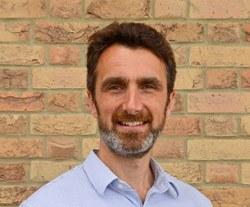
Professor Howard Stone is a faculty member at the University of Cambridge, affiliated with the Department of Materials Science and Metallurgy. He has progressed through academic ranks, including Professor of Metallurgy (2021), Reader in Metallurgy (2017), and Lecturer in Metallurgy (2012). PhD (University of Cambridge, 2000) MA (University of Cambridge, 1995) His research focuses on metallurgy and materials science , particularly Nickel-Based Superalloys , High-Entropy Alloys , and Titanium Alloys . Key areas include microstructural evolution under thermal stress, oxidation resistance, and additive manufacturing techniques like laser powder bed fusion. Professor Stone’s recent publications highlight trends in superalloy design , phase stability , and additive manufacturing . Topics include gamma prime precipitation, lattice misfit analysis, and oxidation behavior modification. He is associated with the Rolls-Royce UTC (University Technology Centre) at Cambridge, which focuses on advanced metallurgical research and industrial collaboration.
جستجوی استاد راهنمای دانشگاهی
برای مسیر پژوهشیتان، استاد راهنما، استاد دانشگاه و پژوهشگر مناسب را پیدا کنید و با آنها ارتباط بگیرید.
نمایش ۱-۱۵ از ۷۴ استاد راهنما
اطلاعات پروفایلها از صفحات عمومی دانشگاهها گرفته شده و ممکن است بهروز نباشد.
Sumsun Naherمشاهده پروفایل
مدرس ارشد
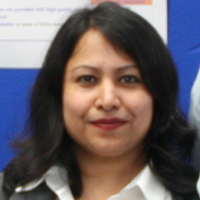
Dr. Sumsun Naher is a Senior Lecturer in the Department of Engineering at City, University of London , where she has worked since 2013. Previously, she served as Lecturer and Research Development Officer at Dublin City University (2006–2013) and as Scientific Officer at Bangladesh Council of Scientific & Industrial Research (1998–2000). Her academic career includes a Post Graduate Diploma in Academic Practice from City, University of London. PhD , School of Mechanical & Manufacturing Engineering, Dublin City University MSc , Materials & Metallurgical Engineering, Bangladesh University of Engineering and Technology BSc , Materials & Metallurgical Engineering, Bangladesh University of Engineering and Technology Her research focuses on semi-solid processing , laser processing , simulation & modelling of materials technologies , and materials characterisation . Recent work explores cellulose nanofiber-based water filters for antibiotic removal and phase change materials in geothermal energy systems. Key article trends reveal expertise in: Laser Surface Modification of metals and composites Advanced Casting Methodologies and semi-solid metal forming Nanoparticle Reinforcement in metal matrix composites Thermal Modelling for energy systems Sustainable Material Solutions in water treatment and energy Computational Materials Science via finite element analysis Naher has received the DCU Invent Commercialisation Award (2011) and holds fellowships from IMechE , Institute of Materials, Minerals & Mining , and Advance Higher Education Authority . She actively reviews for funding bodies and examines PhD theses internationally. As an organiser of the ESAFORM Conference and co-organiser of its Additive Manufacturing symposium since 2017, she contributes to academic leadership. Her professional roles include Board of Directors for the European Association of Materials Forming and participation in EU COST Action projects (Thixoforming, Thixosteel, Nanostructured Materials).
Andrew Wellsمشاهده پروفایل
دانشیار
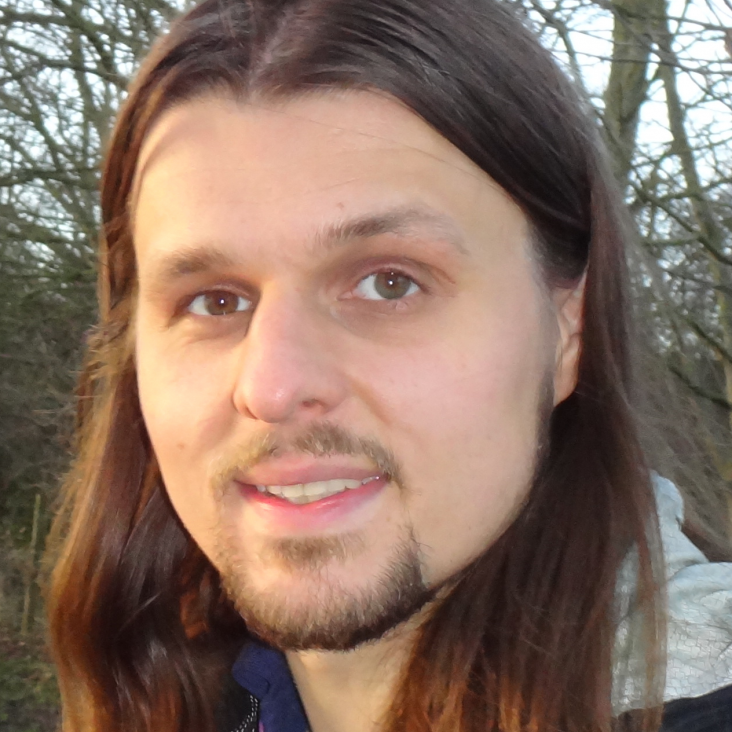
Andrew Wells is an Associate Professor of Physical Climate Science at the University of Oxford's Department of Atmospheric, Oceanic and Planetary Physics. His research focuses on fluid mechanics, thermodynamics, and geophysical processes, with a particular emphasis on sea ice dynamics, ice-ocean interactions, and turbulent convection. He is affiliated with the Ice and Fluid Dynamics research group and conducts studies using mathematical modeling, numerical simulations, and laboratory experiments. His work explores phenomena such as mushy layer growth in sea ice, buoyant plumes under ice shelves, and the impact of salinity on melt pond evolution. Key contributions include studies on Enceladus' geysers, frazil ice crystal interactions, and thermal convection in porous media. His research has implications for climate modeling, astrobiology, and geophysical fluid dynamics. Wells has published extensively in journals like *Journal of Fluid Mechanics*, *Geophysical Research Letters*, and *Proceedings of the Royal Society A*. His recent work emphasizes the interplay between phase changes, convection patterns, and environmental processes in polar and planetary systems.
Professor M. Grae Worster is a renowned academic in fluid dynamics and geophysics, affiliated with the University of Cambridge's Department of Applied Mathematics and Theoretical Physics (DAMTP) within the Faculty of Mathematics. He holds the title of Professor and specializes in fluid mechanics, solidification processes, and geophysical flows. His research focuses on buoyancy-driven flows, magma dynamics, sea ice evolution, and phase-change phenomena in porous media. Worster earned his Ph.D. in 1983 from Cambridge University with a thesis on "Convective Flow Problems in Geological Fluid Mechanics." His work bridges theoretical and experimental approaches, addressing complex fluid dynamics in natural systems like magma chambers, lava lakes, and sea ice formation. Key areas of expertise include mushy-layer convection, premelting dynamics, and viscous gravity currents. His research interests span fluid mechanics, solidification physics, and environmental fluid dynamics, with a strong emphasis on geophysical applications. Recent studies explore hydrogel mechanics, grounding-line dynamics in ice sheets, and thermal regelation in colloidal systems. He has authored over 140 peer-reviewed articles and co-edited influential works like Perspectives in Fluid Dynamics and Understanding Fluid Flow . Worster's contributions to fluid dynamics include groundbreaking studies on sea ice dynamics, where he developed models for brine drainage and ice growth mechanisms. His work on solidification processes in alloys and colloidal suspensions has advanced materials science and geophysics. Collaborations with experimentalists ensure his theoretical models are grounded in empirical validation.

Sir Harshad Bhadeshia is a renowned Indian-British metallurgist and Professor of Metallurgy at Queen Mary University of London since 2022. Previously, he held the Emeritus Tata Steel Professorship at the University of Cambridge, where he worked from 1980 until his move to Queen Mary. His research focuses on the theory of solid-state transformations in multicomponent steels , aiming to create novel alloys and processes with minimal resource use. Education: BSc from City of London Polytechnic, PhD from University of Cambridge (1980) under David V. Edmonds Research Areas: Phase transformations in steel, computational modeling, neural networks, Bainite, welding technology, hydrogen embrittlement resistance, nanostructured materials Scientific Awards: Bessemer Gold Medal (2006), Hume Rothery Prize (1992), Rosenhain Medal (1994), Knight Bachelor (2015), Adolf Martens Medal (2017), William Menelaus Medal (2025) Editorial Roles: Editor for Materials Science and Engineering: A , Materials Science and Technology , and Science and Technology of Welding and Joining Students: Roger Reed, Rachel Thomson His Google Scholar publications (over 650) cover topics in metallurgy, phase transformations, computational modeling, hydrogen resistance, and AI in materials science, with a significant emphasis on Bainite, welds, and nanostructured steels. The SKF University Technology Centre (2009-2019) and Computational Metallurgy Laboratory (2005-18) highlight his leadership in industrial collaborations and international research. His scientific awards and fellowships (Royal Society, Royal Academy of Engineering, Institute of Materials, Minerals and Mining) underscore his global recognition.
Chris Cheeseman is a Professor of Materials Resources Engineering at the Department of Civil and Environmental Engineering, Imperial College London. He leads the Materials Section and directs the UKCRIC Centre for Infrastructure Materials, funded by EPSRC. His expertise lies in materials science applied to sustainability, including waste management, circular economy, and low-carbon materials. He holds affiliations with multiple interdisciplinary centers, including the Grantham Institute and the Marine and Coastal Environments Network. Chris earned his PhD in ceramics science from the University of Oxford, followed by industry experience as a Technical Manager. At Imperial since 1990, he has supervised over 120 graduate students and published 220+ papers. His research emphasizes innovation, spawning spin-off companies like Novacem (low-carbon cements) and Aeropowder (waste feather applications). Key research themes include carbon sequestration via olivine, magnesium-based cements, and recycling of industrial byproducts. His work bridges material science with environmental engineering, addressing global challenges like climate change and resource efficiency. Recent articles focus on novel cements, waste valorization (e.g., sewage sludge ash), and sustainable construction materials. Collaborative projects include EPSRC-funded infrastructure initiatives and collaborations with industry on permeable pavements and superhydrophobic surfaces. Chris has pioneered curricula in advanced materials for sustainable infrastructure and environmental engineering. His labs focus on material lifecycle analysis, industrial symbiosis, and scalable low-carbon solutions.
Professor Stewart Williams is a leading academic at Cranfield University's Welding and Additive Manufacturing Centre, specializing in advanced manufacturing technologies. His research focuses on additive manufacturing, particularly wire arc additive manufacturing (WAAM), laser processing, and materials science. He previously worked at BAE Systems, contributing to aerospace manufacturing innovation. Williams' work bridges academia and industry, addressing challenges in large-scale engineering structures, residual stress mitigation, and material optimization. Education: PhD in Laser Physics (Royal Holloway College, University of London). Research Interests: His studies emphasize WAAM for titanium and aluminum alloys, hybrid laser-arc processes, and microstructure refinement through techniques like ultrasonic peening. He also investigates in-process monitoring and non-destructive evaluation for AM components. Grants & Partnerships: Leads the WAAMMat multi-client program and collaborates with industry leaders such as Airbus, Rolls-Royce, and Lockheed Martin. His projects address automation, mechanical properties, and industrial scalability of additive technologies. Labs/Teams: Heads Cranfield's Welding and Additive Manufacturing Centre, fostering interdisciplinary research in advanced manufacturing and materials engineering.

Spencer Jeffsمشاهده پروفایل
دانشیار
Dr. Spencer Jeffs is an Associate Professor in Aerospace Engineering at Swansea University's School of Aerospace, Civil, Electrical and Mechanical Engineering. Based in the Institute of Structural Materials, his research focuses on advanced high-temperature materials including ceramic matrix composites (CMCs), titanium alloys, and nickel superalloys, with applications in gas turbines and nuclear reactors. He is a Chartered Engineer (CEng) and Fellow of the Higher Education Academy (FHEA), teaching across foundation, aerospace, mechanical, and materials engineering modules. Current roles: Admissions Tutor (2017-present), Honorary Editor for the Engineering Integrity Society (2020-present) Research aligns with SDGs 7 (Affordable Clean Energy) and 9 (Industry Innovation) His work employs experimental and computational techniques like mechanical testing, electron microscopy, and X-ray CT, often in collaboration with industrial partners. Recent publications emphasize small punch testing for additive manufacturing, process optimization, and structural integrity of advanced materials. Supervision includes PhD projects on CMCs, corrosion-fatigue interactions, and hybrid composite driveshafts.
Christopher Gourlay is a Professor of Physical Metallurgy at Imperial College London's Department of Materials, part of the Faculty of Engineering. He has been affiliated with the Engineering Alloys research theme since 2008, specializing in microstructure development during phase transformations in alloys and solders. His research focuses on lightweight magnesium and aluminum alloys, electronic solder joint reliability, and solidification processes. He holds a MEng in Metallurgy from the University of Oxford (2002) and a PhD from the University of Queensland (2007), where his work centered on semi-solid deformation of Al and Mg alloys. He was awarded a RAEng/EPSRC Research Fellowship in 2008. Research interests include solidification microstructure control, intermetallic compound effects in solders, and alloy recyclability. Key projects involve thermal fatigue resistance of solder joints, grain refinement in magnesium alloys, and in-situ imaging of microstructural dynamics. He is a Fellow of the Institute of Materials (FIMMM) and the Institute of Cast Metals Engineers (FICME), and currently chairs the Electronic Packaging and Interconnection Materials Committee at TMS (USA, 2023–2027). His group employs advanced characterization techniques like synchrotron radiography and FIB-based nanoscale engineering, addressing challenges in electronic materials and sustainable manufacturing processes.
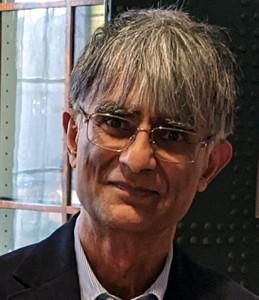
Sir Harshad Bhadeshia is Professor of Metallurgy at the School of Engineering and Materials Science, Queen Mary University of London. A distinguished academic holding Fellowships of the Royal Society (FRS), Royal Academy of Engineering (FREng), and Institute of Materials, Minerals and Mining (FIMMM), his career has been dedicated to advancing the fundamental understanding of metallurgical phenomena with practical industrial applications. His work bridges theoretical developments with real-world engineering challenges in steel technology and sustainable materials design. Professor Bhadeshia's research focuses on the theory of solid-state phase transformations, with particular emphasis on predicting and verifying structural development in complex metallic alloys, especially multicomponent steels. His interests span physical and chemical metallurgy, phase transformations, mathematical modeling, alloy design, and materials algorithms. He has made significant contributions to understanding hydrogen interaction with iron and its compounds, bainite formation, and the development of nanostructured steels with exceptional properties. His work on computational approaches to materials science has led to practical tools for steel design and manufacturing. Analysis of his recent publications reveals a sustained focus on fundamental metallurgical phenomena with practical applications across multiple domains. His research spans steel design for specific applications (rails, welds), phase transformations (bainite, pearlite), hydrogen-related phenomena, and computational materials science. A consistent theme is the integration of theoretical understanding with practical engineering solutions, particularly in addressing challenges related to sustainability, hydrogen embrittlement, and advanced manufacturing techniques like additive manufacturing. Fellow of the Royal Society (FRS) Fellow of the Royal Academy of Engineering (FREng) Fellow of the Institute of Materials, Minerals and Mining (FIMMM) Knighthood for services to metallurgy Extensive publication record spanning decades Development of freely available teaching resources through the Materials Algorithms Project (MAP) Professor Bhadeshia has mentored numerous researchers throughout his career, evident from his extensive collaborative publication record. His work has been supported by significant research grants, particularly in the areas of steel development, phase transformations, and sustainable engineering. He has led major research projects addressing critical challenges in materials science, including hydrogen embrittlement, high-temperature performance of steels, and computational design of advanced alloys. His research group has made substantial contributions to understanding the fundamental mechanisms governing steel behavior under various conditions. Based at Queen Mary University of London, Professor Bhadeshia leads research within the Centre for Sustainable Engineering. His team focuses on metallurgy, particularly steel research, phase transformations, and computational materials science. Current research directions include developing steels with enhanced resistance to hydrogen embrittlement, designing sustainable steel alloys with reduced carbon footprint, and advancing computational methods for predicting microstructure-property relationships. The group maintains strong industry collaborations, ensuring their research addresses real-world engineering challenges while advancing fundamental scientific understanding.
- Physical Metallurgy
- Steels
- Phase Transformations
- +۶ مورد دیگر

Robert Eadieمشاهده پروفایل
مدرس ارشد
Dr. Robert Eadie is a Senior Lecturer in Construction Management at Ulster University's Belfast School of Architecture and the Built Environment. He serves as MSc Civil and Infrastructure Engineering Course Director and Academic Lead for Civil Engineering Apprentices. Biography: 20 years in construction industry prior to academia Research Focus: BIM, procurement, pedagogy, and sustainable construction practices Professional Roles: Fellow of Engineers Ireland, Chartered Committee Member of CIHT Northern Ireland Accomplishments: 89+ peer-reviewed publications, 11 scientific awards His work contributes to UN Sustainable Development Goals through social responsibility in construction procurement. Recent research explores point cloud solidification for BIM, virtual reality applications, and IT project management frameworks. Key Research Areas Building Information Modeling (BIM) automation Sustainable procurement practices Construction pedagogy innovation Public-private partnership performance frameworks Scientific awards include: 2018 Doctor Honoris Causa (European Technical University) 2016 Distinguished Teaching Fellowship 2014 Engineering Council UK Registration 2018 Bulgarian Scientific and Technical Union Award
Sagar Nikam is a Lecturer at Ulster University's School of Computing, Engineering and Intelligent Systems, specializing in additive manufacturing and laser processing technologies. He works at the Derry~Londonderry campus in Magee, Northern Ireland. PhD in Engineering from Indian Institute of Technology Indore (2018) MSc from National Institute of Technology Tiruchirappalli (2013) BSc from Shivaji University (2010) His research focuses on additive manufacturing processes , particularly laser directed energy deposition and powder bed fusion technologies. He develops image processing algorithms and computer vision systems for real-time defect detection in biomedical-grade alloys, employing artificial intelligence techniques like YOLO-based object detection models. His work addresses critical aspects such as: Melt pool dynamics and spatter particle analysis Thermal modeling incorporating Marangoni convection effects Finite element simulation of deposition processes Process parameter optimization using genetic algorithms Recent projects include Digital twin-based process monitoring systems funded by the Department for the Economy (UK Government), collaborating with colleagues like Dr. Deepika Nikam, Dr. David Kerr, and Prof. Sean Coleman.
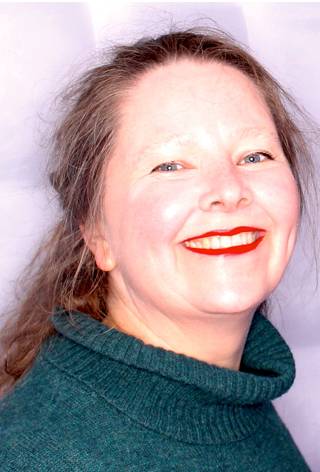
Prof. Lidunka Vočadlo is a Professor of Mineral Physics at the Department of Earth Sciences, University College London. Her work focuses on computational mineral physics, particularly the thermoelastic and rheological properties of materials under extreme conditions relevant to planetary cores. She leads research into Earth’s core dynamics, planetary ices, and volatile distribution in deep-Earth environments. Her group, Crystallography and Mineral Physics, applies ab initio simulations and experiments to study iron alloys, planetary materials, and their roles in planetary evolution models. Education and affiliations are not explicitly detailed here, but her research emphasizes high-pressure, high-temperature phenomena. Key research themes include the Earth’s core-water reservoir, light elements in planetary cores, and isotope fractionation during core-mantle differentiation. She teaches the course GEOL0012: Global Geophysics. Her publications span computational modeling of iron alloys, planetary ices, and geochemical tracers, with a focus on advancing understanding of core-mantle interactions and planetary formation. Labs/Teams: Active member of the Crystallography and Mineral Physics Group at UCL Earth Sciences.
Charles M. Elliott is a Professor of Mathematics at the University of Warwick. His research focuses on mathematical and numerical analysis of partial differential equations (PDEs), particularly in evolving domains, manifolds, and surfaces. Key areas include free boundary problems, geometric evolution equations, biomembranes, and phase transitions. He has contributed to finite element methods for surface PDEs and holds editorial roles at journals like the IMA Journal of Numerical Analysis and Interfaces and Free Boundaries . Notable awards include the Humboldt Prize (2010) and the Royal Society Wolfson Research Merit Award (2016). His work bridges theoretical mathematics and applications in biology, materials science, and continuum mechanics. Educations and career details: While specific educational qualifications are not explicitly stated in the text, his professional trajectory includes leadership in computational mathematics and extensive editorial contributions. His teaching responsibilities include advanced modules like Maths-in-Action and Topics in Partial Differential Equations . Research Interests: Elliott’s work emphasizes PDEs in complex environments, with applications to biomembranes, cell motility, and material phase transitions. His methods integrate evolving surface finite elements and stochastic processes. Recent trends in his publications highlight evolving domains, coupled bulk-surface systems, and geometric PDEs. He addresses challenges in numerical analysis and modeling of evolving interfaces. Awards and Recognition: In addition to the Humboldt Prize and Royal Society award, he is a Fellow of the Society for Industrial and Applied Mathematics (SIAM, 2015) and received an honorary doctorate from the University of Sussex (2022). Advising and Grants: While specific student names or grant details are not listed, his research programs involve collaborations on topics like biomembrane dynamics and phase field models. He has pioneered numerical methods for evolving surface PDEs, impacting fields from materials science to mathematical biology. Labs and Teams: His work is conducted within Warwick’s Department of Mathematics, collaborating on interdisciplinary projects involving computational PDEs and their applications. The research often involves evolving geometries and multiscale modeling approaches.
Professor Geoff Smith is a leading academic in Pharmaceutical Process Analytical Technology at De Montfort University, affiliated with the Leicester School of Pharmacy and the Pharmaceutical Technologies research group. He holds a PhD from the University of Brighton and a BPharm from the University of Bath, and has been instrumental in advancing freeze-drying and process analytical technologies. His research expertise lies in developing and applying novel sensing technologies for pharmaceutical manufacturing. Key areas include freeze-drying process development, impedance and dielectric spectroscopy, terahertz imaging, dynamic laser speckle, and electrostatic measurements for powder flow analysis. His work is strongly industry-oriented, focusing on enhancing process understanding and control through real-time, non-invasive monitoring. The recent publications highlight a strong trend in the application of Through-Vial Impedance Spectroscopy (TVIS) for lyophilization process optimization. Research spans from fundamental studies on ice nucleation and glass transition to practical applications in micro-collapse detection, heat transfer coefficient calculation, and container compatibility. There is also significant work on terahertz-based characterization of crystallinity and microneedle penetration, indicating a broader interest in advanced spectroscopic and imaging techniques for pharmaceutical quality assurance. Scientific Awards and Recognition: While specific awards are not listed in the provided text, his extensive publication record, multiple patents, and leadership in Innovate UK-funded projects reflect high recognition in his field. Professor Smith has successfully secured substantial research funding from Innovate UK and the Technology Strategy Board, including grants such as EXTALcoat, FastLyo, AtlasBio, BioStaRT, and LyoDEA, involving collaborations with industry leaders like GEA, AstraZeneca, and Sanofi. He has supervised numerous PhD projects and plays a key role in teaching Pharmaceutical Quality by Design and Good Manufacturing Practice. He leads the Pharmaceutical Technologies group, which he restructured to include chemists, physicists, and engineers, fostering a multidisciplinary approach to solving current pharmaceutical challenges. Laboratories and Research Groups: He leads the Pharmaceutical Technologies research group at DMU, which focuses on developing and applying advanced analytical techniques like TVIS, terahertz spectroscopy, and laser speckle imaging for pharmaceutical process understanding and control. The group operates at the intersection of pharmaceutical science, engineering, and material science, with a strong emphasis on industrial collaboration and technology transfer.