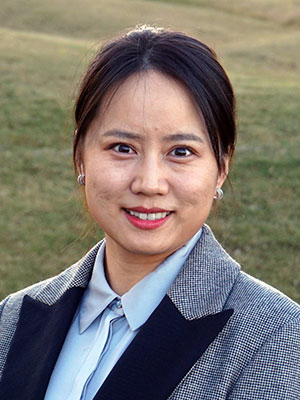
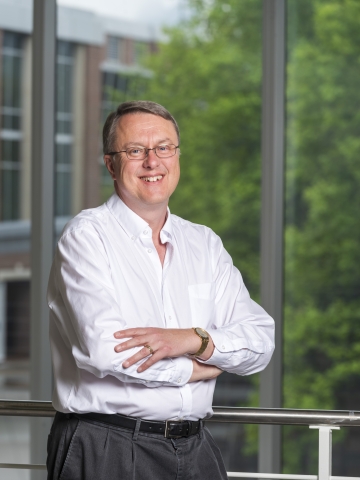
Dr. Sulin Zhang is a Professor in the Department of Engineering Science and Mechanics at Pennsylvania State University , where she investigates the interplay between mechanical forces and materials behavior across materials science , biology , chemistry , and medicine . Her work spans solid-state battery technology , biofilm mechanics , and cellular mechanobiology . 2025 : Stack Pressure Effects in Silicon Anodes 2024 : 3D Neural Probes, Liquid Metal Composites 2023 : Biofilm Nematic Ordering, Plant Cell Wall Mechanics Her research themes focus on stress generation and mechanical regulation in systems ranging from lithium-ion anodes to biofilm morphogenesis . She employs in situ microscopy , agent-based modeling , and machine learning to analyze mechanical-chemical-electrochemical couplings. Key trends include anisotropic material failure , nanoparticle-cell interactions , and self-organizing microbial systems . Recent funding includes a $2.14M NIH grant (2022) for nerve regeneration scaffolding development. While no explicit awards are listed, her work has been highlighted in Nature Physics and PNAS Nexus , indicating high visibility in interdisciplinary research.
Mohammed Abdelbassit is a Research Fellow at the University of Auckland's School of Chemical Sciences, New Zealand. His expertise spans inorganic chemistry, crystallography, and materials science, focusing on the synthesis and structural characterization of novel cluster compounds for energy-efficient technologies like hydrogen storage and LEDs. Education: PhD in Chemistry (University of Canterbury, 2021) MSc in Chemistry (King Fahd University, 2014) BSc (Hons) in Chemistry (Sudan University, 2009) His research explores: 1. Transition metal oxide clusters with mixed Ru/In/Sn species; 2. Electrophotocatalysis for light-driven energy conversion; 3. Lead-free perovskites for optoelectronics; and 4. Nonlinear optical materials. Publications highlight innovations in cluster bonding, halogen interactions, and adsorption materials. He teaches core courses in physical chemistry, nanomaterials, and analytical chemistry, and co-supervises PhD students while maintaining active collaborations across universities and industry partners.
Ian Robinson is a Professor at the London Centre for Nanotechnology, University College London, and Group Leader of the X-ray Scattering group in the Condensed Matter Physics and Materials Science Division at Brookhaven National Laboratory since 2016. His group specializes in advanced X-ray scattering techniques including Bragg Coherent Diffraction Imaging, surface scattering, and ultrafast X-ray science. Education: • M.A. Natural Sciences, Cambridge University (1973-76) • Ph.D. Biophysics, Harvard University (1976-81) Research Focus: Robinson's work centers on phase transitions, nanocrystal dynamics, cuprate superconductors, and domain structures in materials. He pioneered Crystal Truncation Rods analysis and Bragg Coherent Diffraction Imaging, enabling 3D nanoscale imaging of crystal strains and defects. Current research explores ultrafast material excitation using X-ray free-electron lasers. Publication Trends: Recent articles (2015-2020) demonstrate strong focus on coherent X-ray imaging techniques applied to quantum materials, superconductors, and nanocrystals, with emphasis on time-resolved studies of material dynamics at synchrotron and XFEL facilities. Awards & Recognition: Gregori Aminoff Prize (2015) ICSOS Surface Structure Prize (2011) Royal Society Wolfson Merit Award (2006-10) ACA Warren Prize (2000) APS Fellow (1995) Bell Labs Distinguished Member of Technical Staff (1990) Leadership: Directs X-ray scattering research at Brookhaven Lab and coordinates international scientific advisory committees for major facilities including European XFEL, LCLS, and ALBA synchrotron.
Jiaqing He is a Chair Professor and Vice Dean at the College of Science , Southern University of Science and Technology (SUSTech) , and serves as Head of the Department of Physics. He obtained his PhD in Physics from Wuhan University and Germany Juelich Research Center in 2004, followed by postdoctoral and faculty roles at Brookhaven National Laboratory (2004–2008), Northwestern University (2008–2012), and Xi'an Jiaotong University (2012–2013) before joining SUSTech in 2013. Education PhD in Physics (2004), Wuhan University & Juelich Research Center BS in Physics (1998), Wuhan University Research Focus : His lab specializes in Transmission Electron Microscopy (TEM) for atomic-scale characterization of materials, particularly thermoelectric materials for energy conversion. Key areas include defect analysis, phase transformations, and structure–property correlations in chalcogenides, skutterudites, and 2D systems. Techniques span HRTEM, STEM, EELS, and in-situ TEM. Recent Publications highlight advancements in high-entropy materials, nanostructure engineering, and resonant phonon scattering mechanisms. His work bridges fundamental physics and scalable device applications. Awards & Honors : Pengcheng Scholar Distinguished Professor (2014) Ministry of Education Natural Science Second Prize (2017) Shenzhen Natural Science Second Prize (2017) & First Prize (2022) Shenzhen May 1st Labor Medal (2018) Laboratory Overview : The JQHe Research Lab integrates TEM with thermoelectric material development, emphasizing atomic-level insights into defects and interfaces. It also explores flexible Bi2Te3 films and high-entropy GeTe-based systems for power generation.
Dr. Lee Burton is a faculty member at the Department of Materials Science and Engineering, Faculty of Engineering, Tel Aviv University. He leads the Burton Materials Discovery Lab, focusing on data-driven discovery of materials and semiconductors for renewable energy and clean technologies, such as solar panels. NSFC Young Scientists Award (2022) NSFC International Young Scientists Award (2019) Eastern Young Scholar Award (2018) E.U. Seal of Excellence Award (2017) His research leverages computational modeling to predict solid-state material properties before synthesis, with applications in renewable energy technologies. Recent work includes identifying two-dimensional semiconductors through conductivity effective mass analysis. Group members include PhD student Muhammad Jabaly and fast-track master's students Nadav Moav and Roee Asher. Contact details: Email leeburton@tauex.tau.ac.il , Phone +972 03-6407872.
Dr. Yanan Dai is an Associate Professor in the Department of Physics at Southern University of Science and Technology (SUSTech), where he joined in August 2022. His research focuses on probing exotic excited state dynamics in quantum materials using ultrafast optical and photoelectron spectromicroscopy techniques. Previously, he worked as a postdoctoral research scientist at Columbia University's Department of Chemistry from 2019 to 2022. B.S., Space Science & Technology, Shandong University (2013) Ph.D., Physics, University of Pittsburgh (2019) His research integrates Quantum Excited State Dynamics , Strong-field Nano-optics , and Ultrafast Spectroscopy & Microscopy to explore topological structures in condensed matter systems. Notable achievements include the first imaging of Meron (half-skyrmion)-like plasmonic spin textures using ITR-PEEM and full-Brillouin zone detection of Hot Electron Dynamics via TR-ARPES in 2D thermoelectric materials. His recent articles focus on Topological Optics , Plasmonics , and Floquet Engineering of quantum materials at nanofemto scales. Key methodologies include Structured Light Design , Extreme-UV Spectroscopy , and Spin-momentum-locking in surface plasmon polaritons. Scientific Awards: Outstanding Dissertation Award, International Organization of Chinese Physicists and Astronomers (2020) Outstanding Thesis Award, Springer (2020) At SUSTech, he teaches University Physics , Modern Optics , and Principles of Nonlinear Optics . For lab recruitment and collaborations, contact him at daiyn@sustech.edu.cn or dai.yanan@outlook.com .
Pererik Andreasson is a Lecturer at the Academy of Information Technology , Halmstad University. His research focuses on 3D printing, materials science, electromagnetic compatibility testing, and wireless communication. Key contributions include optimizing 3D-printed radar lenses, advancing phase-change material characterization via femtosecond x-ray diffraction, pioneering augmented reality methods for electromagnetic field visualization, and developing substrate integrated waveguide antennas for IoT devices. 3D printing of optical components Dynamic processes in phase-change materials Augmented reality for electromagnetic testing IoT antenna design His recent work on frequency-adjustable SIW antennas (2024) and AR-based EMC visualization (2021) demonstrates cross-disciplinary innovation. While no scientific awards are documented, his 15+ publications since 2007 highlight sustained expertise in material science and wireless technologies.
Dr. Federico Javier Hernández serves as a Lecturer in Computational Chemistry at the Centre for Chemical Research within the School of Physical and Chemical Sciences at Queen Mary University of London. His expertise centers on computational photochemistry and photophysics, with emphasis on excited-state mechanisms in complex molecular environments including aggregates, organic crystals, and solution-phase systems. Hernández completed his undergraduate studies in Physical Chemistry at the University of Córdoba (UC), Argentina, followed by a hybrid experimental and theoretical-computational PhD in Chemistry jointly awarded by UC and the University of Quilmes under Professors Gustavo Pino and Juliana Palma. His doctoral research investigated photophysical and photochemical processes relevant to Atmospheric Chemistry and Biochemistry. His laboratory focuses on elucidating fundamental mechanisms behind phenomena such as aggregation-induced emission, radiative quenching, singlet fission, ultralong organic phosphorescence, charge/exciton transport, and thermally activated delayed fluorescence. These investigations employ advanced computational methodologies including plane-wave DFT, multiscale electronic structure methods (QM:QM' and QM:MM), nonadiabatic dynamics simulations (surface hopping and Ehrenfest dynamics), and machine learning integration for materials discovery. This work directly supports rational design of functional molecules for optoelectronic applications and energy storage/conversion technologies. Analysis of Hernández's 15 most recent publications (2022-2025) reveals consistent focus on nonadiabatic dynamics in condensed phases, excited-state mechanisms in molecular aggregates, and atmospheric reaction kinetics. Key trends include development of computational benchmarks for photochemical processes, application of machine learning to photodynamics, and investigation of polaritonic effects in vibrational spectroscopy. His work bridges theoretical chemistry with practical materials design for optoelectronics. No major scientific awards or fellowships are documented in the available information. While current PhD advisees are not listed, Hernández maintains an active research group within the Centre for Chemical Research. His collaborative network spans international institutions including University College London, University of Bristol, and University of Santiago de Chile. He contributes to academic instruction through CHE 209 – Introductory Programming for Chemists and leverages his ORCID profile (https://orcid.org/0000-0001-7497-9424) for scholarly identification. His research infrastructure integrates high-performance computing with data science approaches to tackle complex photochemical problems.
Yanying Lu serves as Joint Assistant Professor in Clemson University's College of Engineering, Computing and Applied Sciences (CECAS), holding appointments in both the Department of Automotive Engineering and Department of Materials Science and Engineering since January 2025. Her research laboratory operates at the university's Greenville campus facility (4 Research Drive). Education: Ph.D. in Chemistry, Nankai University (2018) Postdoctoral Scholar, University of South Carolina & Lawrence Berkeley National Laboratory (2018-2022) Dr. Lu's research program centers on advancing materials engineering for energy storage applications, with particular expertise in ceramic engineering, composite materials development, and battery manufacturing processes. Her group investigates novel electrode architectures, solid electrolytes, and manufacturing techniques to enhance battery performance, safety, and scalability across multiple chemistries including lithium-ion, sodium-ion, and zinc-ion systems. Current focus areas include extreme fast-charging cathodes, dendrite-suppressing anodes, and flexible battery designs for wearable applications. Analysis of her publication record reveals consistent contributions to next-generation battery technologies, with recent emphasis on single-crystal cathode materials, solid-state systems, and industrial manufacturing processes. Her work bridges fundamental materials science with practical engineering challenges in battery production, showing strong industry relevance through multiple patent filings alongside academic publications. Scientific Awards: No awards documented in available materials. Advising & Grants: Information regarding current advisees or grant funding is not specified in provided materials. As a new faculty member leading an active research group, she is expected to mentor graduate students and pursue external research funding in energy storage technologies. Research Group: Dr. Lu directs a materials engineering laboratory focused on battery technology development, situated at Clemson's automotive research hub in Greenville, SC. The group emphasizes translational research with direct applications to electric vehicle batteries and grid-scale energy storage systems.
Dr. T. Serkan Kasırga leads the 2D & Strongly Correlated Materials Laboratory at Bilkent University's National Nanotechnology Research Center (UNAM). His research focuses on experimental solid-state physics, specializing in quantum phenomena in low-dimensional and strongly correlated materials. He directs multiple funded projects with €2M secured through 11 grants as Principal Investigator. Research Interests: The lab investigates four primary areas: (1) Novel quantum material discovery via real-time optical CVD, (2) Photoresponse mechanisms in low-dimensional systems using scanning photocurrent microscopy, (3) Classical/quantum phase transitions in correlated materials, and (4) Exciton dynamics in 2D transition metal dichalcogenides influenced by substrate engineering. Recent Publications Focus: Work from 2023-2024 demonstrates strong emphasis on synthesis innovations (CVD-grown nanomaterials), characterization of ionic/electronic behaviors in 2D systems, and applications in neuromorphic computing and energy conversion. Recurring themes include substrate engineering effects, doping-free device strategies, and advanced measurement techniques for nanoscale properties. Awards & Recognition: BAGEP Award (Science Academy of Türkiye, 2021) Research Infrastructure: The lab maintains capabilities in: Chemical vapor deposition (conventional/optical) 2D heterostructure fabrication Cryogenic electronic transport (1.6-400K) Scanning photocurrent microscopy Atomic force microscopy Clean-room nanofabrication access Advising & Funding: Currently supervises 2 graduate students and 1 postdoctoral researcher. Secured 11 external grants as PI since 2014 including active TUBITAK projects (2025, 2023). Total research funding exceeds €2M with additional infrastructure co-PI roles.
Devid Maniglio is an Associate Professor at the Department of Industrial Engineering, University of Trento. His research focuses on bioengineering, biomaterials, and tissue engineering, with a particular emphasis on bioprinting, surface modification, and functional materials. He has contributed to advancements in silk fibroin and hydrogel-based systems for medical applications. Research Interests Bioengineering for personalized medicine Biomaterials and surface engineering 3D bioprinting and tissue regeneration Molecular imprinting and biosensors Drug delivery and cell encapsulation Teaching Diagnostic and therapeutic technologies for personalized medicine Engineered materials for precision medicine Fundamentals of biomedical technologies Functional surfaces laboratory Labs & Collaborations Devid Maniglio is affiliated with the Functional Surfaces Laboratory at the University of Trento, collaborating with researchers such as Stefano Rossi and Flavio Deflorian. His work integrates interdisciplinary approaches in biomedical engineering and sustainable medical technologies.
Vitor Duarte Fernandes Monteiro is a Senior Researcher and Invited Professor at the Industrial Electronics Department of the School of Engineering, University of Minho, Portugal. He is a member of the IE R&D Group at Centro ALGORITMI, where he conducts research in power electronics and energy systems. His work focuses on the intersection of power electronics, renewable energy integration, and electric mobility. Dr. Monteiro received his Ph.D. in Power Electronics and Energy Systems in 2016 and his M.Sc. in Industrial Electronics and Computer Engineering in 2010, both from the University of Minho, Portugal. His research interests span a wide range of topics in power electronics and energy systems, with particular focus on Power Electronics Converters, Digital Signal Control, Electric Mobility, Renewables, Hybrid AC/DC Grids, Power Quality, Power Conditioners, Solid-State Transformers, Energy Efficiency, Wireless Power Transfer, Railway Systems, Energy Storage Systems, and Smart Grid applications. His work emphasizes practical implementation and experimental validation of novel power electronic solutions for modern energy challenges. Analysis of Dr. Monteiro's recent publications (2023-2025) reveals a strong focus on advanced power converter topologies for renewable energy integration, electric vehicle charging infrastructure, and smart grid applications. His research shows a clear trend toward unified power quality solutions, bidirectional power flow control, and innovative approaches to hydrogen energy systems. The interdisciplinary nature of his work bridges traditional power electronics with emerging applications in transportation electrification and smart city infrastructure. Dr. Monteiro serves in several editorial capacities, demonstrating recognition by his peers: Associate Editor of the Journal IET Power Electronics Associate Editor of the Journal IEEE Latin America Transactions Topic Editor of the Journal MDPI Electronics Editorial Board Area Editor of the Journal EAI Endorsed Transactions on Energy Web Associate Editor of the IEEE Transportation Electrification Community eNewsletter Guest Editor for multiple journals including IET Power Electronics, Sustainability, and Energies As a Senior Researcher at Centro ALGORITMI, Dr. Monteiro leads research projects focused on power electronics applications for energy systems. His work involves close collaboration with industry partners and participation in European research initiatives. He mentors junior researchers and contributes to the development of innovative power electronic solutions with real-world applications. Dr. Monteiro is actively involved with the Group of Energy and Power Electronics (GEPE) at the University of Minho, where he contributes to both research and educational activities. His work with GEPE focuses on experimental validation of novel power electronic converters and their application to modern energy challenges including renewable integration, electric mobility, and smart grid technologies.
Heike Herper is a Researcher at the Department of Physics and Astronomy (Materials Theory) at Uppsala University . Her work focuses on computational studies of magnetic materials, particularly for permanent magnet applications and magnetocaloric systems, within the NOVAMAG EU project . Affiliation: Uppsala University, Materials Theory Email: heike.herper@physics.uu.se Research involves Density Functional Theory (DFT) calculations combined with Monte Carlo simulations to model finite temperature effects. Key projects include identifying non-hazardous permanent magnet alternatives, studying rare-earth materials, and developing electronic structure databases. Recent publications highlight her expertise in analyzing: Pressure-induced stacking faults in Gd (2024) Giant magnetocaloric effects in Mn,Fe NiSi (2024) Rare-earth-free magnets via high-throughput screening (2023) Magnetic phase diagrams of Heusler alloys (2022) Electronic structure of transition metal complexes (2020)
Angus Wilkinson serves as Professor and Associate Chair for Operations and Academic Programs at Georgia Institute of Technology, holding joint appointments in the School of Chemistry and Biochemistry (College of Sciences) and School of Materials Science and Engineering (College of Engineering). His research bridges inorganic chemistry and materials science with focus on functional materials. Education includes: B.A. in Chemistry from Oxford University (1988) D.Phil. in Chemistry from Oxford University (1992) Junior Research Fellowship at Christ Church, Oxford (1991-1993) Postdoctoral work at University of California Santa Barbara Wilkinson's research centers on low and negative thermal expansion materials , particularly fluorides and oxides with ReO 3 -type structures. His group develops synchrotron X-ray methods for in-situ studies under extreme conditions (high pressure/temperature), with applications in oil well cement hydration and gas-containing perovskites . Current work explores helium incorporation into crystal frameworks and thermal expansion control through structural modifications. The research combines materials synthesis at Georgia Tech with neutron scattering at HFIR/SNS facilities and X-ray studies at APS. Analysis of recent publications (2019-2025) reveals strong focus on gas-containing perovskites (particularly helium clathrates), thermal expansion engineering through anion interstitials, and high-pressure behavior of fluorides. Methodologically, the work integrates advanced scattering techniques with computational modeling and specialized sample environments. Awards include: NSF CAREER award (1996) Sigma Xi award for outstanding junior faculty research (1996) Linus Pauling Prize from American Crystallographic Association (1991) Wilkinson leads research utilizing major national facilities including Advanced Photon Source (APS), High Flux Isotope Reactor (HFIR), and Spallation Neutron Source (SNS). His group maintains active collaborations across materials characterization fields, with current projects examining cement hydration under oil well conditions and novel CO 2 adsorbents. As Associate Chair, he oversees academic operations while maintaining an active research program evidenced by consistent high-impact publications.
Takuya Nakanishi is a Professor and Senior Researcher at Waseda University's Comprehensive Research Organization, where he has been employed since July 2022. Previously, he held research positions at Waseda University's Research Organization for Nano & Life Innovation, National Institute for Materials Science (NIMS), and National Institute of Advanced Industrial Science and Technology (AIST). His academic journey began with a Doctor of Science degree from Hokkaido University. Dr. Nakanishi's research spans multiple disciplines at the intersection of nanotechnology, electrochemistry, and biosensing. His expertise includes nanomaterials characterization and synthesis, molecular recognition, surface science, and chiral analysis. A significant portion of his work focuses on developing innovative field effect transistor (FET) biosensors for detecting biomarkers, viruses, and other analytes with high sensitivity. His research has important applications in medical diagnostics, pharmaceutical development, and food safety. His publication record shows a clear progression from fundamental studies on chiral discrimination and surface electrochemistry to applied research on biosensors and nanomedicine. The most recent work demonstrates sophisticated integration of nanomaterials with biological systems for sensitive detection and therapeutic applications, particularly in cancer detection and treatment. His scientific achievements have been recognized with multiple awards: Poster Award at Chirality 2006 - 18th International Symposium on Chirality (ISCD-18) Best Poster Presentation Award at The 56th Annual Meeting of the International Society of Electrochemistry Poster Award at Chirality 2003 - 15th International Symposium on Chirality (ISCD-15) Dr. Nakanishi has been actively involved in numerous professional committees, including the Electrochemical Society of Japan, where he has served on Public Relations, Convention Planning, and Editorial committees. His research has secured significant funding for projects involving nanomaterials, biosensors, and electrochemical systems. He has also contributed to the development of magnetite nanoparticle-based cancer therapies and advanced sensor technologies for medical diagnostics. His laboratory work centers on nanoscale electrochemical systems, with particular emphasis on FET biosensors, chiral recognition interfaces, and magnetic nanoparticle applications. Current research directions include improving biosensor stability in biological environments, developing debonding-on-demand adhesives, and investigating chiral inversion mechanisms in pharmaceutical compounds.