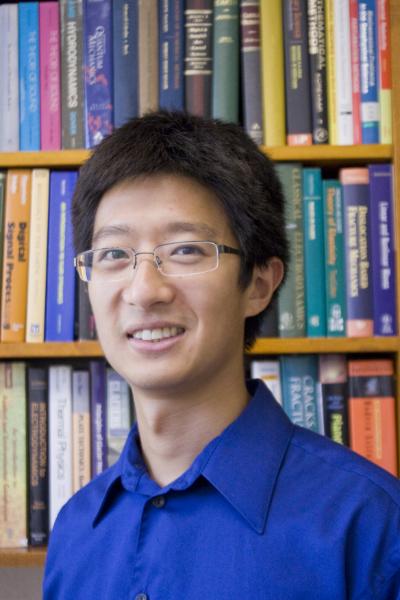
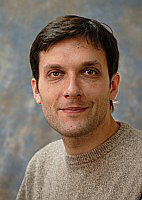
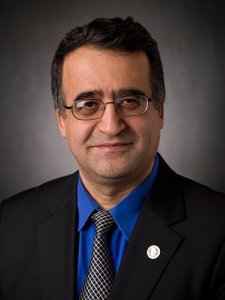
Victor Tsai is a Professor of Earth, Environmental, and Planetary Sciences at Brown University. He specializes in seismology, geomechanics, and theoretical glaciology, with a focus on earthquake mechanics, glacial dynamics, and wave propagation. His research bridges geophysical theory and observation, addressing topics like fault network complexity, subglacial hydrology, and seismic tomography. Tsai holds a PhD from Harvard University (2009) and has been recognized with awards including the NSF CAREER Award (2015) and the Charles F. Richter Award (2014). Education: PhD (Harvard, 2009), AM (Harvard, 2006), BS (Caltech, 2004) Affiliations: Brown University (since 2019), previously at Caltech (2011–2019) Research highlights include modeling earthquake source complexity, understanding high-frequency ground motion, and developing new seismic imaging techniques. His work on glacial earthquakes and meltwater pulses has advanced climate-ice interaction studies. Collaborations span seismology, glaciology, and planetary science.
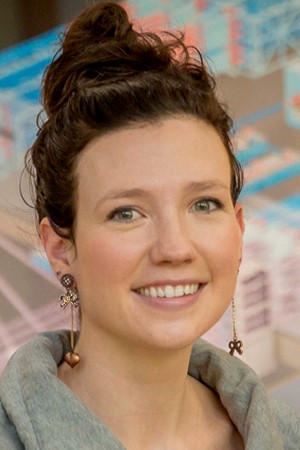
Danae Polsin is an Assistant Professor in the Department of Mechanical Engineering at the Hajim School of Engineering & Applied Sciences, University of Rochester. Her research focuses on high-energy-density physics, shock wave dynamics, and x-ray diffraction techniques. She investigates material behavior under extreme conditions such as laser-driven compression, inertial confinement fusion, and multimegabar pressures. Dr. Polsin’s work addresses fundamental questions in condensed matter physics, including phase transitions, metallurgical transformations, and electronic structure evolution under extreme pressures and temperatures. Her research leverages cutting-edge facilities like the National Ignition Facility (NIF) and OMEGA Laser, where she develops diagnostic tools such as time-resolved x-ray diffraction systems to study warm dense matter and shock-compressed materials. Her recent studies include isostructural phase transitions in materials under laser shock, melt dynamics in nickel and iron compounds, and the structural complexity of sodium at high pressures. She collaborates on inertial confinement fusion projects, validating implosion models and advancing fusion energy systems through experimental design and multimessenger measurements. Danae Polsin’s research emphasizes bridging experimental observations with theoretical models, contributing to our understanding of material behavior at terapascal pressures and informing applications in energy systems and advanced materials science.
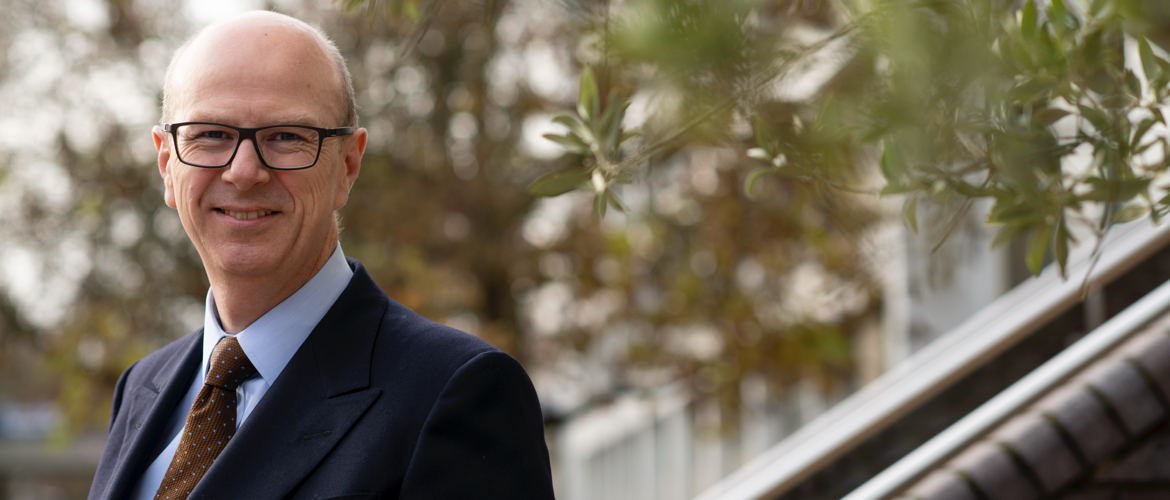
Professor Stephen Hicks is a Professor in Civil Engineering and Leader of the Civil and Environmental Engineering Discipline Stream at the School of Engineering, University of Warwick. He has held senior roles in research institutes like the Heavy Engineering Research Association (HERA) and the Steel Construction Institute (SCI), contributing to national and international standards development. Education: PhD (University of Cambridge, 1998), BEng (University of London, 1993) Research focuses on composite steel-concrete structures, structural reliability, and vibration serviceability. He leads teaching modules including ES3E1 Design Project and ES2C2 Civil Engineering Design. Key projects include Eurocode 4 revisions and steel-concrete composite systems development. Grants include leadership on Steel-CLT composite design (WSP UK) and EU-funded Eurocode 4 standardization projects. He chairs CEN Subcommittee SC4 for Eurocode 4 and contributed to Australasian standards like AS/NZS 2327. Engaged in governance roles with organizations such as EPD Australasia and Steel Construction New Zealand.
Deniz Yavuz is a Professor and Director of the Molecular and Quantum Photonics Cluster (MSPQC) at the Department of Physics, University of Wisconsin–Madison, where he leads the Yavuz Lab. His research group conducts experimental, computational, and theoretical studies in quantum optics and ultrafast physics, with a focus on quantum interference effects such as slow and stopped light. His research interests span a wide range of topics in atomic, molecular, and optical (AMO) physics. Key areas include nanoscale atomic localization using electromagnetically induced transparency (EIT), molecular modulation for generating broadband coherent light sources (including the concept of a 'white laser'), superradiance as a source of decoherence in quantum computing, and axion detection through laser-based four-wave mixing in waveguides. He also investigates negative refraction and refractive index engineering in atomic and solid-state systems. The recent publications of Deniz Yavuz reflect a consistent focus on quantum optical phenomena, nonlinear interactions, and ultrafast processes. His articles explore topics such as nanoscale manipulation of atoms, axion generation, Raman lasing in microresonators, and superradiance. The keywords and sub-fields reveal a strong emphasis on quantum interference, coherence, and the engineering of light-matter interactions at fundamental limits. Among his notable scientific contributions are pioneering work on EIT-based sub-diffraction localization, high-power Raman lasing in solid-state resonators, and theoretical frameworks for axion detection and negative refraction. Though no specific awards are listed in the provided text, his sustained publication record in high-impact journals and leadership of a major research lab indicate significant recognition in the field. Deniz Yavuz has mentored numerous graduate students and postdoctoral researchers, many of whom have pursued successful careers in academia and industry. His advising spans projects in atomic localization, molecular modulation, quantum computing, and axion physics. He has also received research funding enabling long-term investigations into quantum optics and ultrafast phenomena, though specific grants are not detailed in the text. The Yavuz Lab operates two optics laboratories in Chamberlain Hall and conducts research through experimental setups, computational modeling, and theoretical analysis. The lab is actively working on projects codenamed 'E.I.T.', 'Project Rainbow', 'Shepherd', and previously 'Project Green Lantern', reflecting a structured and innovative research environment focused on pushing the boundaries of quantum and optical science.
Karin Sigloch is a Visiting Professor at the Department of Earth Sciences , University of Oxford, and a member of Exeter College . Her research focuses on seismology and geodynamics , particularly using seismic tomography to image Earth's interior structure and link it to surface geological processes. She leads the DEEPTIME ERC-funded project, which integrates subduction zone studies with paleogeography. Teaching: Geophysical Methods (2nd year), Seismology (3rd year), Solid Earth seminars (4th year), and NERC Doctoral Training modules. Key Projects: RHUM-RUM ocean-bottom seismic experiment (2011-2014), DEEPTIME mantle tomography initiative. Research Interests: Seismic tomography advancements, mantle plumes dynamics, paleo-trench reconstructions, and vertical slab sinking hypotheses. Her work bridges seismic imaging with geological field data and geodynamic modeling. Awards: Philip Leverhulme Prize (2015) for outstanding contributions in Earth Sciences. Collaborations include the NERC Doctoral Training Programme and Leverhulme Trust-funded paleogeography studies. Her research group emphasizes cutting-edge waveform inversion techniques and interdisciplinary integration with plate reconstructions.
Dr Laura Lander is a Lecturer in Engineering at King's College London's Department of Engineering, part of the Faculty of Natural, Mathematical & Engineering Sciences. Her research focuses on sustainable energy storage systems, particularly advancing high-performance batteries through materials science and techno-economic analysis. She holds a PhD from the Collège de France and has held postdoctoral roles at the University of Tokyo and Imperial College London. Her work emphasizes battery recycling, lifecycle assessment, and circular economy frameworks. Notable contributions include developing methodologies for recycling lithium-ion batteries and optimizing battery pack designs for cost-effective disassembly. She leads the UKRI Future Leaders Fellowship-funded project 'Aluminium-Ion Batteries for a Resilient Energy Future' (2024–2028). Key collaborations span institutions globally, addressing challenges in energy storage sustainability. Her research aligns with UN Sustainable Development Goals related to affordable and clean energy (SDG7) and responsible consumption (SDG12). Office hours: Wednesdays 10am–12pm at Strand Campus. Education: PhD (Collège de France), Postdoc (University of Tokyo), Faraday Institution Researcher (Imperial College London) Awards: JSPS Postdoctoral Fellowship, UKRI Future Leaders Fellowship Research interests include battery materials discovery, life cycle assessment, and techno-economic analysis of renewable energy storage systems. She is affiliated with the London Centre for Nanotechnology and the Centre for Sustainable Business.
Poul Ægidius Norby is a Professor in the Department of Energy Conversion and Storage at the Technical University of Denmark (DTU), where he leads research in structural analysis and modelling of energy materials. His work spans battery technology, electrocatalysis, and advanced diffraction techniques for in situ characterization. Position: Professor Institution: Technical University of Denmark (DTU) Department: Department of Energy Conversion and Storage Research Group: Structural Analysis and Modelling Location: Fysikvej 310, 422, 2800 Kgs. Lyngby, Denmark His research focuses on the fundamental understanding of materials for sustainable energy technologies, particularly using X-ray and neutron diffraction to study battery operation in real time. He contributes to UN Sustainable Development Goals related to clean and affordable energy. Recent publications highlight his work on solid-state batteries, sodium-ion anodes from biomass, high-entropy alloy electrocatalysts, and spatial inhomogeneity in lithium diffusion. These studies reflect a strong trend toward operando characterization, sustainable materials synthesis, and next-generation energy storage solutions. His research bridges fundamental materials science with practical energy applications. He actively supervises PhD students and leads multiple funded projects, including those on solid-state electrolytes and in situ battery studies. His work involves collaboration across disciplines and institutions, emphasizing neutron and synchrotron-based techniques. Dr. Norby regularly contributes to academic discourse through guest lectures and conference presentations on topics such as in situ diffraction and lithium battery technology.
Dr. Ali Sadaghiani is an Associate Professor in Surface Engineering and an Anniversary Fellow at the University of Birmingham, affiliated with the Department of Mechanical Engineering in the School of Engineering. He leads the Smart Research Group, focusing on advancing phase-change heat transfer and interfacial transport phenomena for sustainable energy and water solutions. PhD in Thermofluidics, Sabanci University, 2019 MSc in Mechatronics Engineering, Sabanci University, 2015 BSc in Mechanical Engineering, Iran University of Science and Technology, 2012 His research lies at the intersection of thermal-fluid engineering and material science, with a strong emphasis on boiling, condensation, evaporation, and freezing. He develops advanced engineered surfaces to enhance heat transfer efficiency in applications such as electronic cooling, battery thermal management, solar desalination, and anti-icing systems. His work integrates experimental methods (e.g., micro-PIV, Raman spectroscopy), multiscale modeling (CFD, MD), and surface modification techniques. His recent publications and projects reflect a consistent focus on sustainable technologies, including solar-driven interfacial evaporation, hydrogen-powered propulsion systems, and solid-state battery thermal regulation. He has led and contributed to multiple Horizon Europe and national research initiatives such as Triathlon, ARISE, MicroFlowTec, and BioAFC, demonstrating strong interdisciplinary collaboration and innovation. ERC Starting Grant laureate Anniversary Fellow Dr. Sadaghiani actively supervises PhD students and welcomes applicants interested in phase-change heat transfer, surface engineering, AI-driven material design, and sustainable thermal systems. He has secured significant research funding and continues to develop scalable solutions for next-generation energy and water technologies.
Johannes R. Kratz, MD, is an Associate Professor in the Department of Surgery at the University of California, San Francisco (UCSF), School of Medicine. He holds the Van Auken Endowed Chair in Thoracic Oncology and serves as Interim Chief of the Division of Thoracic Surgery. Kratz is also the Program Director of the Thoracic Surgery Residency Program, Director of Minimally Invasive and Robotic Thoracic Surgery, and Medical Director of Robotic Surgery at UCSF Health, highlighting his dual leadership in both academic and clinical domains. He earned his M.D. magna cum laude from Harvard Medical School, a Master of Arts in Philosophy from Stanford University, and completed his clinical training including a residency in General Surgery at Massachusetts General Hospital and a fellowship in Cardiothoracic Surgery at UCSF. His academic credentials are further strengthened by additional training in Diversity, Equity, and Inclusion from UCSF. Kratz’s research is centered on improving outcomes for patients with early-stage thoracic malignancies. His work focuses on developing and validating molecular prognostic assays, particularly a 14-gene signature for lung cancer, understanding tumor immunology, and advancing precision medicine through multi-omics and organoid models. He leads the Kratz Lab, which investigates the genetic and immunological drivers of lung, esophageal, and thymic cancers to discover novel therapeutic targets. His most recent publications, spanning 2023–2025, reveal a strong emphasis on neoadjuvant targeted therapies (especially osimertinib), immune microenvironment profiling using spatial and single-cell techniques, molecular risk stratification, and surgical outcomes research. His work bridges clinical trials, translational science, and surgical innovation, with a growing interest in the impact of the pandemic on surgical care and biomarker development for precision oncology. Scientific Awards and Honors: Van Auken Endowed Chair in Thoracic Oncology (2018) Michael DeBakey Research Scholarship, American Association for Thoracic Surgery (2019) Hellman Family Clinical-Translational Research Development Award (2019) UCSF Health Exceptional Physician Award (2017) Haile T. Debas Academy of Medical Educators Excellence in Teaching Award (2019, 2023) Cardiothoracic Surgery Faculty Teaching Award (2021) Soma Weiss Scholar, Harvard Medical School (2005) Howard Hughes Research Training Fellowship (2004) Kratz has been a Principal Investigator on multiple grants from the American Association of Thoracic Surgery, Bakar ImmunoX Foundation, Helen Diller Family Comprehensive Cancer Center, and UCSF. He actively mentors surgical trainees and contributes to medical education, reflected in his residency program leadership and teaching awards. He is also involved in clinical trials related to minimally invasive surgery and perioperative care. His lab, launched in 2018, is a hub for innovative research in early-stage lung cancer therapeutics.
David Lynn is a Professor in the Department of Chemical & Biological Engineering at the University of Wisconsin-Madison's College of Engineering, with a joint affiliation in Materials Science & Engineering. His laboratory focuses on interdisciplinary research involving soft materials, nanostructured interfaces, and biomaterials for biomedical applications. Dr. Lynn holds a PhD from the California Institute of Technology (1999) and a BA from the University of South Carolina (1994). Research Interests: His group designs polymers, liquid crystals, and responsive surfaces for applications in drug/gene delivery, antifouling coatings, biosensing, and antimicrobial systems. Key themes include the development of slippery liquid-infused porous surfaces (SLIPS), peptide-based therapeutics, and machine learning-enhanced diagnostic platforms. Research Trends: Recent publications (2022-2025) demonstrate a strong focus on liquid crystal-based sensors, antimicrobial peptide design, and scalable fabrication of functional coatings. Machine learning integration for material optimization and amphiphile detection represents an emerging theme, alongside innovations in catheter-mediated gene delivery and biomass-derived pharmaceuticals. Awards and Honors: Kellett Mid-Career Award (2020) Bluemke Professorship (2016) Sloan Research Fellow (2007) Beckman Young Investigator (2003) TR100 Top Innovator (2003) Romnes Faculty Fellowship (2014) Teaching and Advising: He teaches graduate/undergraduate courses including Polymer Science, Synthetic Organic Materials, and oversees thesis research. His lab provides interdisciplinary training for students in chemistry, engineering, and pharmaceutical sciences, emphasizing collaborative problem-solving. Laboratory: The Lynn Lab develops advanced materials for biotechnology and medicine, with facilities for polymer synthesis, nanomaterial characterization, and biological testing. Current projects include liquid crystal emulsions for pathogen detection and peptide therapeutics for antifungal applications.
Prof. Dr. Wolfgang Brütting is a group leader at the Institute of Physics, Experimental Physics IV of the University of Augsburg . His research focuses on organic semiconductors and their applications in optoelectronic devices, particularly organic light-emitting diodes (OLEDs) . The group investigates molecular orientation, charge transport, and interfacial polarization mechanisms to enhance device efficiency and stability. Research Interests include: Molecular orientation in organic emitters Charge injection and accumulation in OLEDs Thermally activated delayed fluorescence (TADF) Perovskite nanocrystals for LEDs Organic-inorganic hybrid materials Thin film characterization techniques Recent Publications (2025-2023) highlight advancements in interface engineering, TADF emitter design, and perovskite nanocrystal stabilization. Collaborative efforts span institutions in Germany, Japan, and the U.S., with a strong emphasis on experimental validation and computational modeling. Key Facilities include: Transmission Electron Microscope (TEM) Molecular-beam epitaxy setups Photoluminescence and ellipsometry systems Numerical simulation tools
Benjamin Klusemann is Professor of Materials Mechanics at the Institute for Production Engineering and Systems, Leuphana University of Lüneburg. He holds leadership positions including Chairman of the School of Management and Technology (2024), Chairman of the Masterprogramme, and Chairman of the Graduate School (since 2017), demonstrating his significant academic standing and administrative responsibilities within the university. His research spans multiple engineering disciplines with a strong focus on mechanics, process simulation, and material modeling. Professor Klusemann specializes in continuum mechanics and the finite element method, applying computational approaches to solve complex problems in materials science and manufacturing engineering. His work bridges theoretical modeling with practical applications in advanced manufacturing processes, particularly in friction-based joining techniques and material behavior analysis. Professor Klusemann's extensive publication record (224 publications) reveals a consistent research trajectory focused on advanced manufacturing techniques, particularly friction-based joining processes, material modeling, and simulation. His recent work emphasizes laser shock peening applications, intermetallic compound evolution in solid-state joining, and the mechanical behavior of nanocrystalline materials. His research demonstrates a strong interdisciplinary approach combining materials science, mechanical engineering, and computational modeling to address industrial challenges in lightweight materials processing. His notable scientific achievements include: Professor O.C.Zienkiewicz Award NUMIFORM 2023 Auszeichnung für herausragende Leistungen in der Forschung (Recognition for outstanding research achievements) ESAFORM Scientific Prize Professor Klusemann actively contributes to academic governance and the international research community. He has organized and participated in numerous conferences including ESAFORM, GAMM meetings, and specialized workshops on computational mechanics. His leadership extends to research projects focused on aluminum processing, material flow analysis, and data-driven design of recycled materials, demonstrating his commitment to both fundamental research and practical applications in manufacturing technology.
Dr. Vadim Cheianov is an Associate Professor in the Leiden Institute of Physics (LION) within the Faculty of Science at Leiden University. He leads the Cheianov Group, which specializes in theoretical quantum many-body physics with applications in condensed matter and ultracold atomic systems. His research interests span several cutting-edge domains in theoretical physics, including the behavior of mobile quantum impurities in quantum fluids, adiabatic protocols in driven many-body systems, mechanisms of non-ergodicity in quantum systems such as many-body localization and integrability, and the macroscopic manifestations of quantum anomalies like the chiral magnetic effect in condensed matter and cosmological contexts. The recent publications from his group reflect a strong focus on quantum dynamics, topological effects, and fundamental aspects of quantum statistical mechanics. These works integrate concepts from condensed matter, ultracold atoms, quantum field theory, and mathematical physics, often bridging theoretical predictions with potential experimental observations in quantum simulators and solid-state devices. Scientific Awards: NWO Physics Projectruimte Grant (2018) Dr. Cheianov has secured competitive research funding, including the NWO Physics Projectruimte grant awarded in 2018, which supports innovative and high-risk theoretical physics research. While formal advising roles are not detailed in the provided text, his leadership of an active research group implies mentorship of PhD and master’s students. His work contributes significantly to foundational understanding in quantum matter and has implications for quantum technologies and emergent hydrodynamic phenomena in quantum systems. The Cheianov Group operates within the Quantum Matter and Optics division of LION, collaborating with experimental and theoretical physicists to explore non-trivial quantum phenomena in both synthetic and natural quantum materials.
David Aitken is a Professor of Organic Chemistry at the Institute of Molecular Chemistry and Materials of Orsay (ICMMO - UMR 8182) , University of Paris-Saclay. His research focuses on synthetic methodology , photochemistry , and the preparation of bioactive molecular scaffolds . He studied Chemistry at the University of Strathclyde (BSc 1983, PhD 1986), followed by a CNRS Researcher position at the University of Paris 5 before becoming a Professor at the University of Clermont-Ferrand 2 in 1998. Since 2006, he has led his research group at Orsay and currently serves as Director of ICMMO . Education : BSc and PhD in Chemistry (University of Strathclyde, Scotland) Research Interests : Synthetic methodology, photochemical transformations, hydrogen bonding in peptides, conformational control, and biologically relevant molecules Methodologies : Photochemistry, organocatalysis, tandem reactions, stereoselective synthesis, and computational modeling Structural Analysis : Hydrogen bonding, helical folding, and non-covalent interactions using spectroscopy and molecular modeling Current Role : Director of ICMMO research institute His recent publications highlight innovations in peptide helical folding , cyclobutane and cyclopropane synthesis , and enantioselective catalytic reactions . His work bridges organic synthesis with biological applications, particularly in protein interaction inhibitors and insulin-sensitizing molecules .
Ali Demirci is a Professor in the Department of Agricultural and Biological Engineering at the College of Agricultural Sciences, Pennsylvania State University, where he leads research in food safety engineering and sustainable bioprocessing. His work bridges agricultural engineering with microbiology to develop innovative solutions for food safety and bioresource utilization. His research program focuses on three interconnected domains: Non-thermal Food Safety : Development and characterization of pulsed UV light, electrolyzed oxidizing water, and ozone for microbial inactivation on food surfaces and equipment Advanced Bioreactor Systems : Design of biofilm bioreactors for enhanced production of high-value compounds like menaquinone-7 and nisin using immobilized microbial cultures Waste Valorization : Conversion of agricultural byproducts (particularly distillers' dried grains) into biofuels, enzymes, and functional food ingredients through optimized fermentation processes Analysis of his 2022-2025 publications reveals a strategic research trajectory toward sustainable bioprocess intensification. His work increasingly integrates circular economy principles, focusing on non-sterile processing, waste stream utilization, and techno-economic feasibility. Key technological threads include biofilm reactor scalability, lignocellulosic enzyme optimization, and pulsed light decontamination systems for industrial implementation. Professional recognition includes being honored as part of the Penn State College of Agricultural Sciences faculty by a national society in October 2024, highlighting his contributions to agricultural engineering. Dr. Demirci's research program demonstrates strong industry relevance through development of practical technologies for food safety enhancement and agricultural waste conversion. His collaborations span microbiology, food science, and chemical engineering disciplines, with publications appearing in leading journals including Bioprocess and Biosystems Engineering, Journal of Food Engineering, and Food and Bioprocess Technology. Current projects focus on scaling biofilm reactor technologies and integrating first- and second-generation bioethanol production systems.