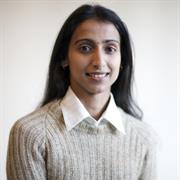
Dr. Subashani Maniam is a Senior Lecturer in the School of Science at RMIT University. Her research focuses on organic synthetic chemistry, particularly energy storage materials and bioactive compounds with therapeutic applications. She holds a PhD in Supramolecular Chemistry from the Australian National University (2008) and has held postdoctoral positions at the University of Melbourne, CSIRO, and Monash University. Her work includes developing organic materials for redox flow batteries and exploring supercritical CO₂ for sustainable processes. Education: PhD (2008, ANU), Postdoc (2008-2011, Melbourne/CSIRO), Monash University collaboration (2011-2016). Awards: 2016 Victoria Fellowship, 2021 Green Chemistry Hot Article, 2019 Women Researchers' Network Poster Prize. Research interests include synthesizing organic materials for energy storage, hydrogen storage, fluorescent labels for cancer metabolites, and drug discovery targeting neurodegenerative diseases. She is involved in collaborative projects on recycling via supercritical CO₂ and sustainable energy solutions. Her teaching spans advanced chemistry theory and laboratory courses, including coordination of CHEM1040 and CHEM1041.
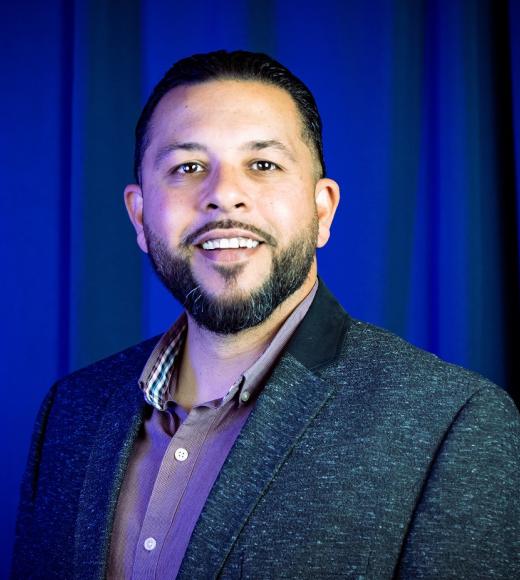
Mohamed Bayoumy is an Assistant Professor at the University of Pittsburgh, specializing in optical fiber sensors, materials science, and their applications in extreme environments like nuclear reactors and energy systems. His work focuses on developing radiation-resistant sensors, machine learning-enhanced monitoring, and distributed fiber sensing technologies. He actively contributes to advancing sensor design for harsh conditions and energy sectors. Research interests include distributed fiber optic sensing, radiation tolerance in materials, machine learning for sensor data analysis, and applications in nuclear engineering, additive manufacturing, and hydraulic fracturing. His projects often integrate optical fibers for real-time monitoring of temperature, strain, and environmental parameters. Presentation topics include survey-based studies on remote education during the pandemic, project-based learning in optics, and sensor behavior prediction using neural networks. A patent on optical fiber-based sensing for electrical cables and radiation detection reflects his innovation in applied sensor technologies. Key collaborations involve institutions like Oak Ridge National Laboratory (Daw, Carpenter), Penn State (Ohodnicki, Buric), and international partners. His work bridges fundamental materials science with applied engineering solutions for energy and infrastructure challenges.
Dr. Alexander Badalyan is a Research Fellow at the Australian School of Petroleum, University of Adelaide. Previously, he held positions at Grozny State Oil Technical University (Russian Federation/USSR) and the University of South Australia. His research focuses on porous media dynamics, including CO2 storage, fluid flow in reservoirs, and fines migration mechanisms. He has contributed to over 67 peer-reviewed journal articles and 46 conference publications, with a particular emphasis on environmental and petroleum engineering applications. Research interests include suspension flow in porous media, manometric gas adsorption for solid characterization, thermophysical properties of fluids, and supercritical CO2 applications. He has developed computer-based systems for real-time process monitoring and control, and his work extends to dissolved gas analysis in power transformers and online water quality monitoring. His contributions to innovative technologies earned the 2002 University of South Australia Vice-Chancellor Award for Innovation. Current research trends span CO2 storage challenges, fracture network behavior, and formation damage mitigation. He collaborates on interdisciplinary projects combining experimental and mathematical modeling approaches, addressing critical issues in subsurface engineering and environmental sustainability.
Jesús M. Velázquez is an Associate Professor in the Department of Chemistry at the University of California, Davis. His research focuses on designing dimensionally reduced materials, including monolayers, nanocrystalline thin films, and mesoporous monoliths, with applications in nanoelectronics, energy conversion, and environmental remediation. Education: Ph.D. (2012) and B.S. (2004) from University at Buffalo-SUNY and University of Puerto Rico-Cayey, respectively. His group employs advanced characterization techniques like microscopy, spectroscopy, electrochemistry, and synchrotron-based methods to establish structure-function correlations that iteratively guide materials design. Representative research areas include energy conversion , electrocatalysis , and environmental remediation . Key trends in his publications include applications of machine learning to materials synthesis, exploration of Chevrel-phase sulfides for energy storage, and development of mesoporous ceramics for oil spill cleanup. His work bridges inorganic chemistry and materials engineering with a focus on sustainability. Scientific Awards: Jean Dreyfus Lectureship (2024) Alfred P. Sloan Foundation Fellow (2023) Camille Dreyfus Teacher-Scholar Award (2022) APS Sustainable Energy Fellowship (2021) NSF CAREER Award (2020) Cottrell Scholar Award (2020)
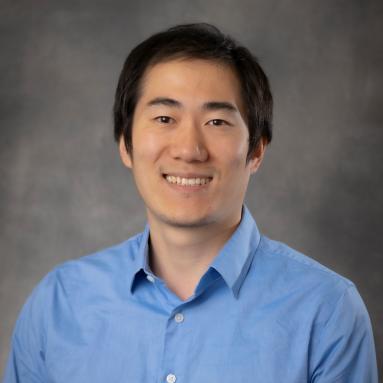
Ye Lu is an Assistant Professor in the Department of Aerospace Engineering at Worcester Polytechnic Institute (WPI). He holds a B.S. and M.S. in Aerospace Engineering from WPI (2013 and 2015, respectively) and a Ph.D. in Aeronautics and Astronautics from Purdue University (2019). Before joining WPI in 2023, he served as an Assistant Professor in the College of Aeronautics and Engineering at Kent State University. His research focuses on the intersections of orbital mechanics and hypersonic flight mechanics, with an emphasis on advancing space mission design through novel techniques and next-generation exploration architectures. Specific interests include planetary exploration mission concepts, such as orbiter co-delivery systems, sample returns from gas giants, and multi-probe exploration strategies. Dr. Lu leads the Laboratory for Spaceflight and Planetary Exploration , where his team addresses challenges in aerobraking, aerocapture, and entry-descent-landing systems. His work integrates computational modeling and experimental approaches to optimize mission parameters and enhance spacecraft resilience. Professional affiliations include the American Institute of Aeronautics and Astronautics (AIAA) and the American Astronautical Society. While his current academic role is in aerospace engineering, his scholarly publications span materials science and energy technologies, including studies on perovskite solar cells, flexible electronics, and battery mechanics. This interdisciplinary approach reflects his broader interest in applying mechanical principles to diverse engineering challenges.
Sossina M. Haile is the Murphy Professor of Materials Science and Engineering at Northwestern University, where she leads the U.S. Department of Energy's Energy Frontier Research Center focused on Hydrogen in Energy and Information Sciences. Prior to this, she spent 18 years at the California Institute of Technology and three years at the University of Washington. Her research focuses on materials for sustainable energy technologies, including fuel cells and hydrogen production. She is a prominent figure in electrochemical energy systems, having pioneered advancements in solid acid proton conductors and protonic ceramic fuel cells. Haile earned her Ph.D. in Materials Science and Engineering from MIT in 1992, with postdoctoral training at the Max Planck Institute in Stuttgart as a Humboldt Fellow. She currently serves on editorial boards for Joule and MRS Energy and Sustainability , and on the DOE Basic Energy Sciences Advisory Board. Her awards include Fellowships from the Electrochemical Society (2024), Royal Society of Chemistry (2023), and Materials Research Society (2018). Her work bridges fundamental materials science with applied energy solutions, addressing challenges in renewable energy storage and conversion.
Joeri Van Mierlo is a Professor at Vrije Universiteit Brussel (VUB), leading the MOBI Electromobility Research Centre and heading the Electrical Engineering-Energy Technology department. His expertise spans electric/hybrid vehicles, battery systems, and environmental/economic analyses of vehicle technologies. He has held visiting roles at Chalmers University of Technology and serves in key roles with organizations like AVERE and IEEE. Research Interests include electric vehicle innovation, battery technology, energy management systems, and sustainable mobility solutions. His work emphasizes reducing environmental impacts and improving economic viability of electrified transport. Recent articles focus on battery optimization, self-healing materials, thermal management, and LCA analyses. Over 500 publications highlight his contributions to electromobility and energy storage. Awards: Clarivate's Highly Cited Researcher (2023/2024), Energies Best Paper Awards (2016/2017), and multiple best paper recognitions. Grants & Projects: Led 150+ projects including GEARING MOBI (electric vehicle tech) and OptiBATT_IRVA (battery optimization). Labs/Teams: Core leader at MOBI and Flanders Make, collaborating internationally on electromobility initiatives.
Mircea Dincă is the Alexander Stewart 1886 Professor of Chemistry at Princeton University. He leads the Dincă Lab, focused on synthesizing novel organic-inorganic hybrid materials for energy storage, environmental applications, and advanced materials. His research emphasizes microporous materials, conductive MOFs/COFs, and sustainable battery technologies. Research interests include catalysis, inorganic chemistry, and materials science. Key projects involve developing conductive MOFs for energy storage, sustainable battery materials, and photophysical properties of ordered porous materials. The lab employs advanced characterization techniques (XRD, electrochemistry, NMR) to study structure-property relationships. Recent articles highlight advancements in 2D MOF capacitance, organic Li-ion batteries, and exciton dynamics. The lab's work addresses energy storage challenges and material design for industrial applications. Awards: Highly Cited Chemist (2014–2024), Brown Foundation Investigator (2023), AAAS Fellow (2022), Blavatnik Award (2021), Waterman Award (2016). Grants/Advising: Supervises over 30 graduate/postdoc students, including recent advisees Jewel Ryu, Will Bullett, and Joe Geniesse. Active in NSF, DOE, and industry-funded projects. Lab facilities include the Frick Laboratory (Princeton) and collaborations with institutions like MIT, UC Berkeley, and KAUST. Current efforts explore metallic MOFs, CO₂ sensors, and sustainable energy materials.
Univ.-Prof. Dr. Ruth Schwaiger is a Professor at the Research Center Jülich GmbH, affiliated with the Institute of Energy Materials and Devices (IMD-1). Her research focuses on advanced materials science, including structural and functional materials, energy-related materials, and nanotechnology. She leads projects on alloy development, solid-state electrolytes, and mechanical characterization of advanced composites. Her work integrates experimental techniques like nanoindentation, XRD, and in situ pyrolysis with computational modeling to study material behavior under extreme conditions. Recent contributions include studies on recycling solid oxide electrolyzer stacks, nano-lamellar magnet hardening, and high-temperature alloy design. Ruth Schwaiger’s research emphasizes sustainability and material performance optimization, addressing challenges in energy storage, corrosion resistance, and additive manufacturing. She collaborates on open databases (e.g., opXRD) to advance materials informatics.
Olga Kulikova is an Associate Professor and Leading Scientific Researcher at the Laboratory of Physics of Semiconductor Compounds “Sergiu Radautsan” within the Institute of Applied Physics (IFA) in Chișinău, Moldova. Her research focuses on coordination polymers, crystal engineering, luminescent materials, and semiconductor materials. She holds a Ph.D. and has been actively involved in numerous national and international research projects, including FP7 and H2020 initiatives. Her work spans the synthesis, structural characterization, and functional properties of coordination compounds, with particular emphasis on photoluminescence, magnetic properties, and applications in sensing and biomedical fields. Key projects include studies on zinc and cadmium-based coordination networks, transition metal-organic materials, and the design of chemosensors. Publications highlight her contributions to understanding luminescence quenching mechanisms, structural variability in coordination polymers, and the development of materials for biomedical applications. Her research often integrates crystal engineering principles with advanced spectroscopic techniques to explore material functionality. Key Projects: ANCD 20.80009.5007.01, H2020-MSCA-RISE-2017-777968, FP7-PEOPLE 295202 Labs/Teams: Leading projects in the Laboratory of Physics of Semiconductor Compounds, collaborating on multidisciplinary initiatives.
Stefano Materazzi is an Associate Professor at the Department of Chemistry, Sapienza University of Rome. His research focuses on analytical chemistry, forensic chemistry, and biomedical applications. He specializes in developing innovative analytical methodologies using techniques like MicroNIR spectroscopy, thermoanalytical methods (TGA/EGA), and chemometrics. Key areas include drug delivery systems, environmental analysis, and diagnostic tools for hemoglobinopathies. His work emphasizes green analytical chemistry and portable sensing technologies. Education: Not explicitly stated in texts, inferred via professional roles. Affiliations: Sapienza University of Rome (Department of Chemistry). Research interests span microencapsulation strategies for probiotics, PFAS detection in waste, olive maturation sensing, and forensic applications of thermal analysis. Recent studies include early detection of sickle cell anemia and thalassemia using TGA/chemometrics. He collaborates on projects like 'Development of innovative analytical methodologies for hemoglobinopathies screening in the Lazio Region.' Publications highlight advancements in portable analytical platforms (e.g., MicroNIR) for on-site testing of drugs, food quality, and environmental samples. His work bridges fundamental chemistry with practical applications in health, environment, and industry. Grants/Projects: Development of innovative analytical methodologies for hemoglobinopathies screening in the Lazio Region. A nutraceutical approach for superior quality milk. Labs/Teams: Involved in multidisciplinary teams focusing on analytical chemistry, nanotechnology, and biomedical applications at Sapienza University.
Brian Fronk is an Associate Professor in the Department of Mechanical Engineering at Pennsylvania State University, College of Engineering. His research is centered on advanced thermal systems, with a focus on supercritical CO 2 heat transfer, solar thermal technologies, and energy storage solutions. He is affiliated with the Institute of Energy and the Environment and contributes to research themes in Integrated Energy Systems and Equitable Communities and the Built Environment. His research interests span Supercritical CO2 Heat Transfer , Solar Thermal Systems , Heat Pump Systems , High-Temperature Heat Exchangers , Thermochemical Energy Storage , and Natural Refrigerants . His work combines experimental validation with modeling to develop efficient and sustainable energy systems for industrial and residential applications. The recent publication trend (2023–2025) highlights a strong focus on particle-to-fluid heat exchange , microchannel solar receivers , techno-economic analysis of energy systems , and advanced manufacturing of heat exchangers . These works reflect a commitment to decarbonization, industrial efficiency, and innovative thermal storage. Scientific Awards and Recognition: Recognized for excellence by the Institute of Energy and the Environment (2025) Brian Fronk actively advises graduate students and leads research funded by major grants, including a $2.5M project aimed at reducing emissions and inefficiencies in industrial systems. His lab conducts experimental work on particle-based heat exchangers, solar receivers, and high-flux thermal systems. He collaborates with researchers across disciplines to advance clean energy technologies and promote equitable engineering solutions.
Tony Keene is an Associate Professor in the School of Chemistry at University College Dublin, specializing in molecular magnetism and functional coordination materials. With a strong background in crystallography and materials science, he leads research on coordination polymers and metal-organic frameworks (MOFs) for advanced applications in sensing and energy storage. 2002: BSc (Hons) in Chemistry, University of Southampton, UK 2007: PhD in Chemistry, University of Glasgow, UK Postdoctoral Fellow, Universität Bern, Switzerland 2009: Postdoctoral Fellow, University of Sydney, Australia 2012: Postdoctoral Fellow, University of Adelaide, Australia; Marie Curie Fellow, University of Southampton, UK 2014: Research Scientist, EPSRC National Crystallographic Service, University of Southampton, UK 2015: Lecturer in Inorganic Chemistry, University College Dublin, Ireland Professor Keene's research focuses on the rational design of coordination polymers and porous metal-organic frameworks (MOFs) to create materials that can detect chemical and physical changes through magnetometry. His work provides unique insights into absorption processes in MOFs that cannot be obtained through standard gas sorption analysis. He has a strong interest in developing separation techniques for insoluble materials, enabling the purification of product mixtures on a laboratory scale and allowing for better characterization of target compounds without interference from impurities. His research bridges the gap between molecular magnetism and functional materials design. Analysis of Professor Keene's recent publications reveals a strong focus on crystallography, molecular magnetism, and materials science. His work spans from fundamental structural studies of coordination compounds to applied research on energy storage materials like supercapacitors and battery cathodes. A recurring theme is the use of advanced characterization techniques, particularly X-ray crystallography and magnetic measurements, to understand structure-property relationships in novel materials. His research increasingly incorporates computational modeling to complement experimental findings. Member, Royal Society of Chemistry Member, British Crystallographic Association Professor Keene is actively involved in academic leadership and student engagement. He chairs the Graduate Studies Committee and the School of Chemistry Outreach and Recruitment Team. He coordinates multiple research projects for students and teaches courses ranging from introductory chemistry to specialized topics like computational X-ray crystallography. His outreach work brings chemistry to diverse audiences of all ages and interests through the School of Chemistry's enthusiastic outreach team. As head of the Outreach Team in the School of Chemistry, Professor Keene leads initiatives that bring chemistry to a wide range of audiences. His research group focuses on molecular magnetism and functional coordination materials, with particular expertise in crystallographic characterization and magnetic measurements of novel compounds.
Jürgen Malzbender serves as Group Leader of the Ceramic Materials research team at Forschungszentrum Jülich's Institute of Energy Materials and Devices (IMD), specifically within the Structure and Function of Materials department (IMD-1). His work centers on advanced ceramic systems for energy conversion and storage technologies at one of Europe's largest interdisciplinary research centers. His research program investigates solid oxide fuel and electrolysis cells (SOFC/SOEC), ceramic membranes, and solid-state batteries, with specialization in correlating mechanical properties and microstructure to functional performance in ceramic energy materials. He actively studies operational degradation mechanisms to improve material durability and efficiency in energy applications. As a departmental group leader, Malzbender directs experimental research and analytical efforts in ceramic material science. The profile indicates active institutional affiliation but provides no details regarding scientific awards, student supervision, grant funding, or specific publications beyond the general research scope.
Dr. Elena Yazhenskikh serves as a Researcher within the Structure and Function of Materials group (IMD-1) at Forschungszentrum Jülich's Institute of Energy Materials and Devices. Her work focuses on advancing fundamental understanding of material properties for energy applications, operating from Building 05.1, Room 22b at the Jülich campus. Her research spans critical domains in materials innovation: Atomic-scale structure-property relationships Energy conversion and storage materials Nanoscale characterization techniques Computational modeling of material behavior Device physics for next-generation energy systems Advanced electron microscopy applications As an active member of Germany's Helmholtz Association research ecosystem, Dr. Yazhenskikh contributes to interdisciplinary projects addressing sustainable energy challenges through materials science innovation. Her recent work (updated July 2024) emphasizes experimental and theoretical approaches to optimize material performance in energy devices.