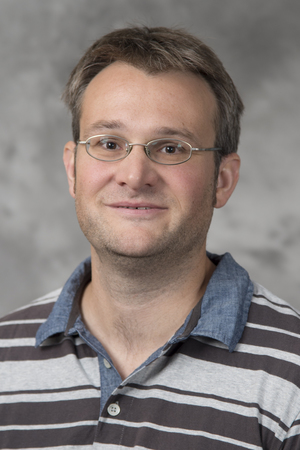
Prof. Dieter H.H. Hoffmann is a distinguished academic in the Department of Physics , specializing in high-energy physics, dark matter detection, and plasma-based fusion research. His work focuses on particle astrophysics, including axion searches via helioscopes like CAST, nuclear fusion mechanisms (particularly proton-boron reactions), and plasma dynamics in extreme conditions. He collaborates on major projects such as the Cherenkov Telescope Array (CTA) for gamma-ray astronomy and heavy-ion beam experiments at facilities like FAIR. Research interests include: Dark matter axion detection and theoretical modeling Proton-boron fusion as an alternative energy pathway Plasma interactions in high-intensity laser and beam experiments Stopping power and beam transport in dense matter High-energy-density physics for inertial confinement fusion Recent work highlights advancements in: CAST experiment sensitivity improvements for solar axions Experimental validation of proton-boron fusion yields in dense plasmas Development of NectarCAM cameras for CTA's gamma-ray detection Simulation of proton beam dynamics in solid-state materials His contributions bridge fundamental physics with applied research in energy and detector technology, with active involvement in international collaborations like CTA and FAIR experiments.
David M. Ceperley is a Founder Professor in Physics and Research Professor at the University of Illinois at Urbana-Champaign, where he has been a faculty member since 1987. He maintains his office in the Engineering Sciences Building and is affiliated with the Department of Physics within the College of Engineering. His distinguished career has established him as a leading authority in computational quantum physics. Professor Ceperley received his BS in physics from the University of Michigan in 1971 and his Ph.D. in theoretical physics from Cornell University in 1976. Following postdoctoral appointments at the University of Paris and Rutgers University, he worked as a staff scientist at both Lawrence Berkeley and Lawrence Livermore National Laboratories before joining the UIUC faculty. From 1987 until 2012, he also served as a staff scientist at the National Center for Supercomputing Applications. Ceperley's research focuses on developing and applying quantum Monte Carlo methods to study quantum many-body systems. His most significant contribution is his calculation of the energy of the electron gas, which provides fundamental input for electronic structure calculations. He pioneered path integral Monte Carlo methods for quantum systems at finite temperature, particularly for superfluid helium and hydrogen under extreme conditions. His current research encompasses electron fluids, metalization of hydrogen at high pressure, temperature-dependent simulations of solids and liquids, and cold atom systems. Analysis of Ceperley's publication record reveals a consistent trajectory from foundational method development to increasingly complex applications in condensed matter physics. His recent work demonstrates a strong emphasis on high-pressure physics, particularly the behavior of hydrogen and related systems under extreme conditions. The integration of quantum Monte Carlo with other computational approaches represents a significant evolution in his research methodology. B. J. Alder CECAM Prize (2016) Member International Academy of Quantum Molecular Sciences (2013) Blue Waters Professor (2014) Center for Advanced Studies Professor (2009) Founder Professor of Engineering (2006) National Academy of Sciences (2005) Fellow, American Academy of Arts & Sciences (1999) Rahman Prize in Computational Physics (1998) Feenberg Medal (1994) Professor Ceperley has mentored numerous graduate students and postdoctoral researchers throughout his career, contributing significantly to the training of computational physicists. His research has been consistently supported by major funding agencies including the National Science Foundation and Department of Energy. He has taught courses including MSE 485 (Atomic Scale Simulations) and PHYS 460 (Condensed Matter Physics), demonstrating his commitment to education alongside research. His work has positioned him as a leader in computational quantum physics, developing methods that can find exact properties of many-body systems and apply them to diverse materials. His research group continues to advance computational techniques for studying materials under extreme conditions, with particular emphasis on high-pressure hydrogen physics and quantum phase transitions.
Dr. Greis Julieth Kim Reyes serves as Assistant Professor of Physics in the Department of Physics and Astronomy at SUNY New Paltz, where she conducts computational research on semiconductor materials and defects. Her work bridges theoretical physics and practical materials design for energy applications. Her educational journey includes a Ph.D. in Physics from University at Buffalo (2024), Master's in Physics from Universidad Nacional de Colombia (2014), and Bachelor's in Physics-Education from Universidad Distrital Francisco José de Caldas (2010). This international background informs her interdisciplinary approach to materials science. Dr. Reyes specializes in computational exploration of intermediate band semiconductors, defect engineering, and magnetic materials using density functional theory (DFT) and machine learning. Her research reveals how atomic-scale defects create novel electronic properties, particularly in 2D materials like C 3 N/C 3 B bilayers and perovskite oxides. She employs iterative Kohn-Sham methods to simulate electronic behavior and optical responses, with recent work focusing on excitonic effects for solar energy applications. Analysis of her 15 most recent publications shows consistent emphasis on computational discovery of materials with tailored optical and electronic properties. Key trends include defect-enabled photocatalysis, interlayer exciton engineering in van der Waals heterostructures, and Jahn-Teller effects in doped semiconductors - all targeting next-generation energy technologies. Her scholarly recognition includes: Bahethi Scholarship (SUNY Buffalo, 2022) Silvestro Scholarship (SUNY Buffalo, 2022) Marshall Plan Foundation grant (Johannes Keppler Universität, 2018) As an educator, Dr. Reyes develops interactive quantum mechanics curricula using Mathematica simulations, as evidenced by her GitHub repository. She teaches General Physics and Quantum Physics courses while integrating computational tools to build student intuition for quantum materials. Though specific research students aren't listed, her teaching philosophy emphasizes critical thinking through problem-solving sessions and real-world applications. Her computational laboratory work focuses on first-principles simulations of materials, with active development of educational resources for quantum mechanics instruction. Current projects explore machine learning pipelines for materials discovery and defect-property relationships in emerging semiconductor systems.
Peide Ye is the Richard J. and Mary Jo Schwartz Professor of Electrical and Computer Engineering at Purdue University's College of Engineering. His research focuses on semiconductor devices, oxide electronics, and advanced transistor technologies, particularly in 2D materials, ferroelectric semiconductors, and monolithic 3D integration. He leads investigations into thin-film transistors (TFTs), atomic layer deposition (ALD) processes, and device reliability under extreme conditions. His work bridges quantum phenomena with practical applications in nanoelectronics. Research Interests: Dr. Ye specializes in nanoelectronics, including novel semiconductor materials (e.g., In2O3, tellurene), ferroelectric field-effect transistors (Fe-FETs), and low-voltage/high-performance device designs. His group addresses challenges in scaling transistors to atomic dimensions, optimizing contact engineering, and mitigating defects in oxide semiconductors. Articles Trends: His recent publications (2024-2025) emphasize ultrathin oxide transistors with record performance metrics (e.g., 36 GHz fT), BEOL-compatible fabrication, and quantum effects in 2D materials. Key themes include low-power operation, defect-tolerant designs, and integration of logic/memory systems. Labs/Teams: While specific lab names aren't listed here, his work is closely tied to Purdue's nanoelectronics research infrastructure, collaborating with semiconductor industry leaders to advance next-generation transistor technologies.
Andreas Jung is an Associate Professor of Physics and Astronomy at Purdue University, affiliated with the CMS experiment at CERN. His research focuses on understanding the electroweak scale stabilization via precision measurements of top quark interactions, Higgs boson studies, and detector R&D. He also explores quantum algorithms for high-energy physics and supply chain optimization. Jung earned his Ph.D. from the University of Heidelberg (2009) and a diploma from the University of Dortmund (2004). Education: Ph.D. in Physics, University of Heidelberg, 2009 (Dissertation: D* Meson Cross Section Measurement) Diploma in Physics, University of Dortmund, 2004 (Commissioning of H1 Fast Track Trigger) Research Interests: High Energy Physics, Particle Physics, Detector Development, Quantum Computing Applications, Material Science for Detectors, and Collider Experiments. His work includes analyzing top quark spin correlations, quantum annealing for vertex reconstruction, and carbon fiber composites for CMS upgrades. Awards: Senior Distinguished Researcher fellowship at Fermilab LHC Physics Center (2019) 3-year PhD scholarship from German Research Society (2004–2007) Teaching & Leadership: Teaches courses on particle physics and data science. Serves as Convener of CMS TOP Physics Analysis Group and leads detector mechanics R&D. Engages in quantum computing collaborations with DoD and industry partners. Labs/Teams: Jung Research Group at Purdue, CMS Collaboration, and Purdue Quantum Science & Engineering Institute (PQSEI). Active in detector development for the High-Luminosity LHC upgrade, including carbon fiber support structures and silicon pixel detectors.
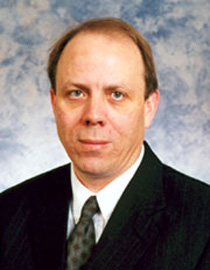
Mark Law is a Professor in the Department of Electrical & Computer Engineering at the University of Florida, part of the Herbert Wertheim College of Engineering. His research focuses on semiconductor process modeling, integrated circuit fabrication, and superconductivity. He leads the ColdFlux superconductor design tool project and has contributed to advancements in Ga2O3 and GaN-based devices. Education: PhD, Electrical Engineering, Stanford University (1988) MS, Electrical Engineering, Stanford University (1982) BS, Computer Engineering, Iowa State University (1981) Research Interests: Design and modeling of IC fabrication processes, semiconductor device behavior, superconducting electronics, radiation effects in semiconductors, and TCAD simulation tools. His work emphasizes practical applications of advanced materials like Ga2O3 and GaN in power electronics and high-voltage devices. Notable Contributions: Developed the ColdFlux EDA tool for superconducting circuits, pioneered edge termination techniques for β-Ga2O3 rectifiers, and modeled radiation damage in wide-bandgap semiconductors. Awards: Fellow, National Collegiate Honors Council (2023) UF Academy of Distinguished Teaching Scholars (2019) IEEE Electron Device Society J.J. Ebers Award (2010) Multiple teaching awards, including College of Engineering Teacher of the Year (1996). Advising & Grants: While no specific students are listed, his research has been supported by industry and government grants. He advises on semiconductor fabrication processes and has led collaborative projects with SEMI and the Semiconductor Research Corporation. Labs & Teams: Leads the ECE Device Simulation Group and collaborates with the University of Florida’s Materials Science Department on advanced semiconductor projects.
Christoph T. Koch is a Professor of Physics at Humboldt-Universität zu Berlin, where he has held the W3 Chair since 2015. Previously, he held a similar position at Ulm University (2011–2015), supported by the Carl Zeiss Foundation. His research focuses on advanced electron microscopy techniques, including quantitative transmission electron microscopy (TEM), electron holography, and strain mapping. He leads the AG Strukturforschung/Elektronenmikroskopie group, advancing materials science through innovations in imaging and spectroscopy. Education: B.Sc./M.Sc. in Physics at Heidelberg University (1996–1998), followed by an exchange at Arizona State University (1997–1998). PhD in Physics from Arizona State University (2002, advisor: Prof. John C.H. Spence). Postdoctoral research at the Max Planck Institute for Metals Research, Stuttgart (2002–2011). Research interests include: Electron diffraction and phase retrieval Nanometer-scale strain and defect analysis Electron energy-loss spectroscopy (EELS) for plasmonics and bandgap mapping Development of FAIR data infrastructure for materials science Leadership: Managed the Department of Physics at Humboldt University (2020–2024). Collaborates widely, with key co-authors including P.A. van Aken, W. Sigle, and C. Felser. His work bridges experimental microscopy and computational modeling, addressing challenges in semiconductors, ceramics, and 2D materials. Notable contributions include pioneering methods for 3D reconstruction via electron ptychography, dynamic electron diffraction analysis, and strain mapping in advanced CMOS technologies. Current efforts emphasize real-time imaging and AI-driven data analysis in materials research.
Philip Hemmer is a Professor in the Department of Electrical and Computer Engineering at Texas A&M University, affiliated with the College of Engineering. He holds a Ph.D. in Physics from MIT (1984) and a B.S. from the University of Dayton (1976). His research focuses on quantum optics, nanodiamond-based quantum sensing, and advanced optical materials for applications in quantum computing, biosensing, and thermal imaging. Key areas include solid-state quantum systems, upconversion nanoparticles, and fiber-optic sensor technologies. Dr. Hemmer's work spans interdisciplinary fields such as quantum communication, luminescent thermometry, and nanotechnology. His lab develops novel materials like GeV color centers in diamonds for high-precision sensing and explores applications in medical diagnostics, environmental monitoring, and fundamental physics. Awards include the National Science Foundation Fellowship and multiple AFOSR Star Team Awards. Education: Ph.D., Physics, Massachusetts Institute of Technology, 1984 B.S., University of Dayton, 1976 Awards: National Science Foundation Fellowship Summa Cum Laude, University of Dayton Air Force Research Laboratory Chief Scientist's Award AFOSR Star Team Award (three-time recipient) His recent publications emphasize quantum-enhanced biosensing, nanodiamond engineering, and fiber-optic quantum sensors. Research trends highlight innovations in thermal imaging using diamond defects, multiplexed sensing platforms, and scalable quantum technologies.
Robert Pollice is a Lecturer at the Faculty of Science and Engineering , University of Groningen , specializing in Homogeneous Catalysis . His research integrates computational chemistry , machine learning , and automated experimentation to accelerate molecular design and catalyst development . Research Interests focus on homogeneous catalysis , quantum chemistry , and machine learning applications. His work addresses challenges in reaction mechanism modeling , noncovalent interactions , and inverse molecular design , leveraging closed-loop optimization and large language models for chemical data analysis . Publications span quantum chemical simulations , solvation energy calculations , excited state engineering , and automated catalyst discovery . His recent studies explore inverted singlet-triplet gaps , machine learning for reaction modeling , and SELFIES for molecular string representations . Peer-review Contributions include evaluations for journals like Organic Process Research & Development , Materials Advances , and Chem , reflecting his expertise in catalysis , quantum chemistry , and AI-driven chemical discovery .
Michael Herbst is an Assistant Professor (tenure-track) at EPFL, holding a joint appointment in the School of Basic Sciences (SB) and the School of Engineering (STI). He leads the Mathematics for Materials Modelling (MatMat) research group, focusing on error control in atomistic simulations, density-functional theory (DFT), and interdisciplinary computational methods. His work bridges mathematics, materials science, and computer science, emphasizing robust algorithms and Julia-based software development. Herbst holds a PhD from Heidelberg University and has held postdoctoral positions at RWTH Aachen and Inria Paris. He is a core member of the MARVEL and CESMIX research centers. Education: 2018: Dr. rer. nat. (magna cum laude), Heidelberg University 2009–2013: BA and MSci (1st class) in Natural Sciences, University of Cambridge 2008–2009: Studies in Mathematics/Physics, TU Kaiserslautern Research Interests : Herbst's research centers on developing reliable computational methods for materials modeling, including error estimation in DFT, black-box SCF algorithms, and Julia-based tools like the Density-Functional Toolkit (DFTK). His work addresses challenges in high-throughput simulations, numerical stability, and interdisciplinary collaboration across mathematics, physics, and computer science. Grants & Projects : MARVEL Center for Computational Design (EPFL) CESMIX Center for Extreme-Scale Simulations (MIT) EMC² Project (Sorbonne/Inria/École des Ponts) Awards : HGS MathComp PostDoc Fellowship (2018–2021) DAAD Travel Funding (2018) Exploratory Research Space Fund (RWTH Aachen, 2022) Labs & Teams : Head of the MatMat group at EPFL, focusing on error-controlled simulations and open-source software development.
Sarah Cartmell is a Professor of Bioengineering and Head of the Department of Materials at The University of Manchester. She holds senior roles in the School of Natural Sciences, including Senate membership and leadership in advanced materials initiatives like the Royce Institute. Her research focuses on biomaterials for regenerative medicine, including tendon repair, stem cell differentiation, and bioreactor design. Cartmell has secured over £34.7 million in grants, authored 70+ publications, and serves on editorial and review boards for journals like Science and Technology of Advanced Materials . Her work contributes to UN Sustainable Development Goals in health and innovation. Education : B.Eng (Materials Science with Clinical Engineering, University of Liverpool, 1996), Ph.D. (Clinical Engineering, University of Liverpool, 2000), Postdoc at GeorgiaTech, and academic roles at Keele University. Research Interests : Translation of novel tissue repair products, mechanical force effects on stem cells, and advanced biomaterials for bone and cartilage regeneration. Grants & Funding : £12.7M as lead PI and £22M as PI/Co-I across 22 sources (government, industry, charities). Awards : President of UK Tissue and Cell Engineering Society, IOM3 Fellow, and TERMIS EU council member. Leadership : Led the Royce Institute’s biomedical materials initiative, coordinating 200+ stakeholders, and chairs major international conferences in biomaterials and tissue engineering. Projects : Includes AMFaces (3D-printed facial prosthetics), biomaterials for regenerative medicine, and bioelectronics networks. Labs/Teams : Biomaterials Research Group, Manchester Bioelectronics Network, and advanced materials in medicine initiatives. Her research bridges clinical and industrial applications, emphasizing translational solutions for musculoskeletal disorders and regenerative therapies.
Sophie Hermans is a Researcher in the Department of Applied Physics & Materials Science at the California Institute of Technology (Caltech). Her work focuses on advancing quantum networking technologies, particularly using rare-earth ions and diamond nitrogen-vacancy (NV) centers as qubit systems. She explores challenges such as decoherence mitigation, entanglement distribution, and scalable quantum network architectures. Her research interests include quantum optics, solid-state physics, and materials science. Key topics are the creation of entangled states between remote qubits, optimizing qubit coherence in dense nuclear spin environments, and developing protocols for multi-node quantum networks. Her experiments often combine theoretical modeling with cutting-edge experimental setups to validate quantum protocols. Recent articles highlight advancements in multipartite entanglement, heralded entanglement delivery, and the use of nanophotonic cavities to enhance qubit-photon coupling. These studies aim to bridge the gap between fundamental physics and practical quantum communication systems. No scientific awards or grants are explicitly mentioned in the provided text. She has not listed advisees or students, though her role as a Postdoctoral Scholar Research Associate suggests involvement in early-career mentorship. Her lab is located at Caltech’s Steele Laboratory, where she contributes to the development of quantum network hardware and protocols.
Frank Neese is the Director and Managing Director (since 2024) of the Max-Planck-Institut für Kohlenforschung in Mülheim an der Ruhr, Germany, where he leads the Department of Molecular Theory and Spectroscopy. He holds honorary professorships at the University of Bonn (since 2013) and the University of Duisburg-Essen (since 2020), reflecting his strong academic affiliations. His research program bridges theoretical chemistry, quantum mechanics, and spectroscopy with applications in bioinorganic and materials chemistry. Education: Diploma in Biology, University of Konstanz (1993) Ph.D. (Dr. rer. nat.), University of Konstanz (1997) Postdoctoral Research, Stanford University (1997–1999) Habilitation, Universität Konstanz (2001) Frank Neese's research focuses on the development and application of advanced quantum chemical methods for understanding molecular electronic structures, particularly in transition metal complexes and metalloenzymes. His work emphasizes spectroscopic simulations (EPR, XAS, MCD, etc.) and reaction mechanisms in catalysis. He is renowned as the lead developer of the ORCA quantum chemistry software, a widely used tool in computational chemistry. His theoretical frameworks integrate density functional theory, wavefunction-based methods, and multiscale modeling to achieve high accuracy in predicting chemical properties. The 15 most recent publications highlight a consistent trajectory in electronic structure theory, with strong emphasis on spectroscopy, transition metal chemistry, and method development. Key themes include double-hybrid functionals, spin-state energetics, spin-orbit coupling, and QM/MM modeling of biological systems. The interdisciplinary nature of his work spans chemistry, biochemistry, and materials science, often targeting challenges in catalysis and energy conversion. Scientific Awards: Gottfried Wilhelm Leibniz Prize (2023) Humboldt Research Award ISACS Award Fellow of the Royal Society of Chemistry Member of the North Rhine-Westphalian Academy of Sciences Member of the Leopoldina Neese has secured extensive third-party funding for his research, enabling a large, interdisciplinary team of scientists and students. He actively mentors PhD and postdoctoral researchers, fostering the next generation of theoretical chemists. His leadership extends to official functions in scientific societies and editorial roles in major chemistry journals. The ORCA development team, which he heads, is a central hub for innovation in computational chemistry software. He leads a vibrant research group focused on method development and applications in molecular spectroscopy and reactivity. The team collaborates internationally and organizes the ORCA User Meeting, fostering a global community of users and developers in quantum chemistry.
Aumber Abbas is a researcher at Newcastle University specializing in advanced materials for sustainable energy and environmental applications. His work spans nanotechnology, catalysis, and biomass conversion, with significant contributions to carbon-based nanomaterials and electrochemical systems development. His research focuses on synthesizing graphene quantum dots from biomass waste for environmental sensing and remediation applications, developing catalytic processes for CO 2 utilization and cyclic carbonate production, and engineering electrochemical systems including vanadium redox flow batteries. Recent work emphasizes waste-derived functional materials for optical security, anti-counterfeiting, and wastewater treatment through nanoporous catalyst design and plasma-based tar removal technologies. Analysis of recent publications (2024-2025) reveals a dominant trend in sustainable nanomaterial engineering, particularly biomass-waste-derived carbon structures with tailored optical and catalytic properties. His work integrates experimental validation with simulation approaches to address energy storage, environmental remediation, and security applications, demonstrating strong interdisciplinary collaboration within Newcastle's engineering research community.
Daniel G Georgiev is a Professor in the Department of Electrical Engineering and Computer Science at the University of Toledo's College of Engineering. He has been on faculty since Fall 2006, following prior roles as a research faculty member at Wayne State University's Center for Smart Sensors and Integrated Microsystems (SSIM). Education : M.S. in Engineering Physics (Quantum Electronics and Laser Equipment) from Sofia University (1994), Ph.D. in Electrical Engineering (Electronic Materials and Devices) from the University of Cincinnati (2003). Research Interests : Dr. Georgiev's work focuses on laser modification and micro-structuring of materials, thin films of semiconducting oxides/nitrides (e.g., NiO, Zn3N2), glassy materials, metal whiskers (Sn, Cu), wide bandgap semiconductors (GaN, Zn3N2), photovoltaics, and biomedical device applications. His expertise spans device fabrication, material characterization, and radiation effects. Article Trends : Recent publications emphasize GaN-based power electronics, hybrid edge termination structures, threshold switching in nanocircuitries, and material innovations via reactive sputtering. Subfields include laser microstructuring, whisker suppression in Sn films, and doping strategies for nitride semiconductors. Collaborations : Co-authorship with researchers across institutions, including contributions to biomedical implants, II-VI nanocrystals, and chalcogenide glasses.