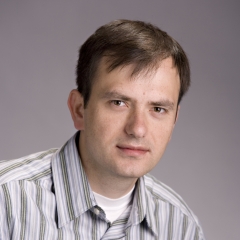
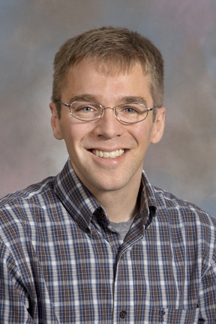
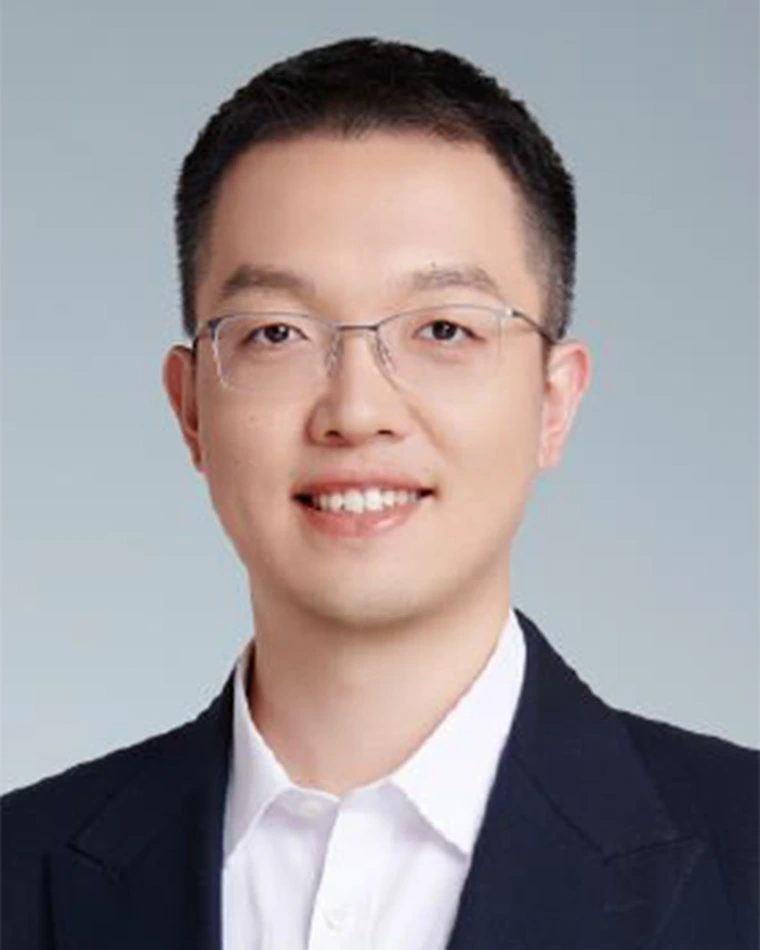
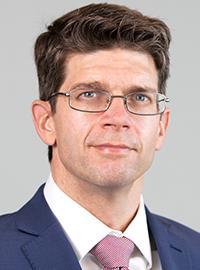
Dmitri Strukov is a Professor at the University of California, Santa Barbara in the Department of Electrical and Computer Engineering. His work spans material science, electrical engineering, and computer science, focusing on novel computing paradigms using emerging memory devices. Education: PhD in Electrical and Computer Engineering from SUNY Stony Brook, MS in Applied Physics and Mathematics from Moscow Institute of Physics and Technology. Research Interests include neuromorphic computing , non-volatile memory applications , and mixed-signal circuits for machine learning and hardware security. His group develops memristive crossbar arrays and 3D NAND flash for energy-efficient systems. Scientific Leadership features Fellow of IEEE and Distinguished Lecturer roles. His work has been recognized with best paper awards at ASPLOS’19 and Computing Frontiers’13. Students: Mentored PhD graduates in neurocomputing, security, and memristor design including Z. Fahimi, S. Larimian, M.R. Mahmoodi, and X. Guo. Grants: Funded by AFOSR, ARO, DARPA, NSF, and industry leaders like Google and Samsung. Labs: Utilizes UCSB’s nanofabrication center and advanced tools for memristor characterization.
Alexei Kitaev is the Ronald and Maxine Linde Professor of Theoretical Physics and Mathematics at the California Institute of Technology (Caltech). His research focuses on quantum computation, topological quantum phases, anyons, topological insulators and superconductors, and the black hole information paradox. He has pioneered the concept of topological quantum computation, where quantum information is protected through topological properties of many-body systems. His recent publications explore quantum error correction, scrambling dynamics, and holographic principles in SYK-like models, reflecting his interdisciplinary impact on quantum physics, computer science, and condensed matter. His work on the Sachdev-Ye-Kitaev model has advanced understanding of quantum chaos and gravitational phenomena. Kitaev has received numerous accolades, including the MacArthur Award (2008), Breakthrough Prize in Fundamental Physics (2012), Dirac Medal (2015), and Oliver Buckley Condensed Matter Prize (2017). He has taught advanced courses such as 'Quantum Computation' and 'Advanced Condensed-Matter Physics' at Caltech. Scientific Awards: MacArthur Award (2008) Breakthrough Prize in Fundamental Physics (2012) Dirac Medal (2015) Oliver Buckley Condensed Matter Prize (2017)
H.-S. Philip Wong is the Willard R. and Inez Kerr Bell Professor in the School of Engineering at Stanford University, where he has been since 2004. He holds the rank of Professor in the Department of Electrical Engineering and serves as the Director of the Stanford Nanofabrication Facility. Prior to Stanford, he spent 16 years at IBM’s T.J. Watson Research Center and served as Vice President of Corporate Research at TSMC (2018–2020), remaining as Chief Scientist in an advisory role thereafter. Leadership roles include founding the Stanford SystemX Alliance and leading the Microelectronics Commons AI Hardware Hub funded by the CHIPS Act. Research focuses on nanotechnology, semiconductor devices, and next-generation computing architectures, including carbon nanotube electronics, 3D integration (N3XT/MOSAIC), and neuromorphic computing. Awarded IEEE Fellow (2001), the IEEE Andrew S. Grove Award, and the J.J. Ebers Award for contributions to electron devices. His work spans device physics, fabrication, and system integration, with over 600 publications. Key contributions include advancements in phase-change memory, carbon nanotube transistors, and compute-in-memory systems. He advises numerous students and collaborates with industry through initiatives like the Stanford Non-Volatile Memory Technology Research Initiative. Recent efforts emphasize AI hardware acceleration, cryo-CMOS for quantum computing, and scalable memory architectures. His lab innovations include CellChips for synthetic biology and hyperdimensional computing using 3D RRAM.
Lan Wei is an Associate Professor in the Department of Electrical and Computer Engineering at the University of Waterloo, Canada. She leads the Waterloo Emerging Integrated Systems Group, focusing on device-circuit co-optimization, cryogenic CMOS for quantum computing, and emerging technologies like GaN, RRAM, and low-dimensional materials. Her work bridges nanoelectronics and system-level applications, with notable contributions to the MIT Virtual Source GaN HEMT (MVSG) compact model, an industry-standard tool. Education: B.S. in Microelectronics and Economics, Peking University (2005) M.S. and Ph.D. in Electrical Engineering, Stanford University (2007, 2010) Research Interests: Nanoelectronic devices Cryogenic CMOS for quantum computing GaN-based circuits and systems RRAM-based neuromorphic computing Device-circuit interactive design Publications reflect her expertise in GaN modeling, quantum computing hardware, and RRAM applications. Recent work emphasizes scalable quantum control circuits and error-resilient neural networks using emerging technologies. Awards include the 2019 Ontario Early Researcher Award and the 2020 UWaterloo President's Excellence Award in Research. She has served on technical committees for IEDM, DATE, and ICCAD, and contributed to the ITRS roadmap. Teaching includes courses like ECE 240 (Electronic Circuits) and ECE 730 (Solid State Devices). Her group actively seeks graduate students with interest in integrated systems and nanoelectronics.
Azad J Naeemi is a Professor holding the Dean's Professorship in the School of Electrical and Computer Engineering at the Georgia Institute of Technology. He serves as Editor-in-Chief of the IEEE Journal on Exploratory Computational Devices and Circuits and Associate Director for Computation of the NSF-supported National Nanotechnology Coordinated Infrastructure (NNCI). His educational background includes a B.S. in Electrical Engineering from Sharif University (1994) and M.S./Ph.D. in Electrical and Computer Engineering from Georgia Tech (2001/2003). Prior to academia, he worked as a design engineer in Tehran (1994-1999) and as a research engineer at Georgia Tech's Microelectronics Research Center (2004-2008). Professor Naeemi's research spans nanotechnology with focus on emerging nanoelectronic devices, spintronics, ferroelectric devices, and design technology co-optimization for CMOS/beyond-CMOS technologies. His work bridges materials, devices, circuits, and systems, particularly investigating integrated circuits based on nanoscale devices and interconnects. Educational research includes experiential learning environments for engineering education. Recent publications (2024-2025) demonstrate strong emphasis on spin-orbit torque MRAM, ternary content addressable memories, ferroelectric/antiferroelectric devices, and plasmonic circuits. Key trends include energy-efficient hardware accelerators, neuromorphic computing applications, and compact modeling for advanced technology nodes. His scientific honors include: IEEE Solid-State Circuits Society James Meindl Innovators Award (2022) IEEE Electron Devices Society Paul Rappaport Award (2008) NSF CAREER Award (2013) SRC Inventor Recognition Award (2010) Multiple Georgia Tech teaching awards Professor Naeemi leads research supported by NSF (including NNCI infrastructure) and SRC. His editorial role with IEEE JXCDC positions him at the forefront of exploratory computational devices. He previously served as General Co-Chair for the IEEE International Interconnect Technology Conference (2013). His work connects with Georgia Tech's Microelectronics Research Center and national nanotechnology initiatives through the NNCI network, focusing on computational infrastructure for nanoscale device characterization and design.
David A. Muller serves as the Samuel B. Eckert Professor of Engineering in the School of Applied and Engineering Physics at Cornell University and co-directs the Kavli Institute at Cornell for Nanoscale Science. His research group focuses on developing quantitative electron microscopy methods to understand materials properties at the atomic scale, with particular emphasis on sustainable energy applications and quantum materials. Muller's laboratory utilizes some of the world's highest resolution electron microscopes housed in specially designed, environmentally isolated rooms. Muller received his undergraduate education at the University of Sydney and earned his Ph.D. in Physics from Cornell University in 1996. Between 1997 and 2003, he was a member of the technical staff at Bell Laboratories, where he applied his expertise in imaging single atoms and atomic-scale spectroscopy to determine the physical limits of transistor miniaturization. In 2003, he returned to Cornell as a faculty member, where he has since established himself as a leader in advanced electron microscopy techniques. Muller's research spans multiple frontiers in materials science, with particular focus on understanding how electronic-structure changes at the atomic scale control macroscopic behavior in diverse systems like turbine blades, fuel cells, and transistors. His current work emphasizes the physics of renewable energy materials, atomic-scale control of materials to create electronic phases that cannot exist in bulk, and developing hardware and algorithms for 'big data' acquisition from high-bandwidth pixelated electron microscope detectors. His group's work bridges theoretical physics and experimental techniques, requiring researchers who can think in both real and reciprocal space while considering both fundamental principles and practical applications. Analysis of Muller's recent publications reveals a strong trend toward advancing electron ptychography and 4D-STEM techniques for atomic-scale imaging. His group has pioneered methods for 3D atomic-scale metrology, strain mapping, and imaging of radiation-sensitive materials. The research spans applications from semiconductor technology to quantum materials and energy storage systems, demonstrating the versatility of his microscopy approaches across multiple scientific domains. Top 100 Young Innovator by Tech Review Magazine (2003) Burton Medal from Microscopy Society of America (2006) Ernst Ruska Prize of German Society for Electron Microscopy (2021) John Cowley Medal from International Federation of Societies for Microscopy (2023) Fellow of American Physical Society Fellow of American Association for the Advancement of Science Fellow of Microscopy Society of America Muller has mentored an extensive group of students and postdocs who have gone on to successful careers in academia and industry. His former students hold faculty positions at institutions including Rice University, University of Southern California, Seoul National University, Colorado School of Mines, and the University of Michigan, among others. His research has been supported by substantial grants, including a $22.5M NSF grant that accelerates materials discovery. The Muller lab maintains close collaborations with the Kavli Institute at Cornell and PARADIM (Platform for the Accelerated Realization, Analysis, and Discovery of Interface Materials). The Muller lab operates at the forefront of electron microscopy, housing specialized instrumentation including high-resolution transmission electron microscopes in environmentally isolated rooms. The group collaborates extensively with other research teams at Cornell and worldwide, focusing on understanding materials atom by atom. Current research directions include applying machine learning to electron microscopy data analysis, developing cryogenic techniques for studying low-melting-point materials, and exploring quantum phenomena in engineered materials systems.
Hua Chen is an Associate Researcher and PhD Supervisor at the School of Quantum Science and Engineering at Southern University of Science and Technology (SUSTech), with extensive experience in quantum computing circuit design and MEMS sensor interfaces. Previously, he served as an Associate Researcher at the Institute of Microelectronics, Chinese Academy of Sciences (2021-2022) and as an Assistant Researcher there from 2017-2021, building on his industry experience as an RF/Analog IC Design Engineer at Southwest Integrated Circuit Design Co., Ltd (2007-2010). Education: Ph.D. in Microelectronics and Solid-State Electronics, University of Chinese Academy of Sciences (2014-2017) M.Eng. in Electronic and Communication Engineering, University of Chinese Academy of Sciences (2011-2014) B.Eng. in Microelectronics, Chongqing University of Posts and Telecommunications (2003-2007) Dr. Chen's research focuses on interface circuit design for quantum computing and MEMS sensors, with particular expertise in high performance analog/RF/mixed-signal IC design. His recent work has shifted toward cryogenic circuit design for quantum bit control and readout systems, representing a strategic pivot toward China's national priority in quantum information technology. His publications reveal a consistent trajectory from MEMS gyroscopes and oscillators toward quantum computing hardware support circuits, demonstrating his ability to adapt expertise to emerging technological frontiers. Dr. Chen's research output shows a clear evolution from traditional MEMS sensor interfaces toward quantum cryogenic electronics, with his 15 most recent publications heavily concentrated in cryogenic circuit design for quantum applications. This represents a strategic shift aligning with China's substantial investment in quantum computing research, particularly in the development of control and readout electronics for scalable quantum systems. His significant honors include: Special talent of Shenzhen's Pengcheng Peacock Plan (January 2024) IEEE Senior Member (February 2022) Intellectual Property Specialist of Chinese Academy of Sciences (January 2020) Outstanding Employee (Top 10%) at Institute of Microelectronics CAS (2020) Multiple Graduate Student Scholarships from Institute of Microelectronics CAS (2015-2017) As a PhD Supervisor at SUSTech, Dr. Chen mentors graduate students in quantum circuit design while leading research funded through multiple sources including a Beijing Natural Science Foundation General Project (RMB 200,000) for RF MEMS disk oscillator drive circuits and a Youth Project (RMB 100,000) for MEMS gyroscope phase alignment. He has also participated in major national projects totaling over RMB 27 million, demonstrating his integration into China's strategic research initiatives. Dr. Chen leads a research group at the International Quantum Academy in Shenzhen focused on cryogenic CMOS integrated circuit design for quantum computing applications. His team develops specialized low-temperature measurement and control chips that address critical challenges in scaling quantum computing systems, with particular emphasis on MEMS-based quantum frequency references and cryogenic amplifiers that operate at temperatures near absolute zero.
Nathalie P. de Leon is an Associate Professor of Electrical and Computer Engineering at Princeton University and an Associated Professor of Physics. She is affiliated with the Princeton Plasma Physics Laboratory and co-leads the Co-Design Center for Quantum Advantage (C 2 QA). Her lab focuses on quantum hardware development using color centers in wide bandgap materials and superconducting qubits, with applications in quantum networks and nanoscale sensors. Ph.D., Chemical Physics, Harvard University, 2011 B.S., Chemistry, Stanford University, 2004 Her research spans optical materials , light-matter interactions , and quantum information processing , integrating nanophotonics , surface science , and quantum metrology . Recent publications highlight advances in diamond-based quantum sensors , superconducting circuit engineering , and noise/loss mitigation in quantum systems. Scientific Awards: APS Rolf Landauer and Charles H. Bennett Award in Quantum Computing (2023) DOE Early Career Award (2018) DARPA Young Faculty Award (2018) NSF CAREER Award (2018) Her lab has advised 22 graduate students and collaborates extensively with institutions like Princeton Plasma Physics Laboratory, University of Chicago, UZH, and Brookhaven National Laboratory. Current projects emphasize hybrid quantum devices , telecom band photonics , and many-body quantum physics .
John M. Nichol is an Assistant Professor in the Department of Physics and Astronomy at the University of Rochester, where he has conducted experimental quantum research since 2016 following postdoctoral work at Harvard University. His work bridges fundamental quantum mechanics and applied quantum computing development. Education: B.A. in Physics, St. Olaf College (2006) Ph.D. in Physics, University of Illinois at Urbana-Champaign (2013) Postdoctoral Associate, Harvard University Nichol's research centers on experimental quantum information processing using semiconductor nanostructures, with primary focus on electron spin qubits in quantum dots. His lab investigates quantum coherence mechanisms, develops noise-resilient control protocols for spin qubits, and explores quantum information transfer across spin chains. Key initiatives include engineering novel materials for extended qubit lifetimes, implementing dynamical decoupling techniques to combat decoherence, and studying many-body quantum phenomena in engineered spin systems. This work directly addresses scalability challenges in solid-state quantum computing. Analysis of Nichol's 2021-2025 publications reveals dominant themes in semiconductor spin qubit optimization, with 80% of papers addressing coherence preservation through charge noise mitigation and advanced control methods. His research increasingly integrates hybrid quantum systems, combining spin qubits with acoustic wave devices and superconducting resonators. Recurring subfields include Si/SiGe heterostructure engineering, quantum fluctuator characterization, and quantum simulation using spin chains - reflecting a strategic focus on overcoming material limitations in quantum hardware. Scientific Awards: National Science Foundation CAREER award Google Research Scholar Award Leonard Mandel Faculty Fellow Award Nichol's research program is supported by competitive grants including the NSF CAREER award (funding coherence enhancement research) and Google Research Scholar Award (supporting quantum control innovations). His laboratory trains graduate students in nanofabrication, cryogenic measurement techniques, and quantum device characterization, with emphasis on translating fundamental discoveries into practical quantum computing components. Current projects focus on long-distance quantum state transfer and error-corrected multi-qubit operations. The Nichol Lab operates specialized facilities for quantum dot device fabrication and millikelvin transport measurements at the University of Rochester. His team collaborates with materials scientists on heterostructure growth and theorists on quantum simulation protocols, maintaining strong ties with semiconductor industry partners for advanced material development. Recent expansions include acoustic wave integration platforms for hybrid quantum systems.
Xiaodong Yan is an Assistant Professor in the Department of Materials Science and Engineering and an affiliated faculty member in the Department of Electrical and Computer Engineering at the University of Arizona . His research bridges materials science, nanoelectronics, and quantum computing, with a focus on developing novel quantum materials and devices for next-generation computing systems. Education : BS in Physics (Peking University, China), MS in Electrical Engineering (University of Notre Dame), PhD in Electrical and Computer Engineering (University of Southern California). Postdoctoral Training : Materials Science and Engineering, Northwestern University (2021-2023). Dr. Yan’s research explores the synthesis and physics of emerging quantum materials, particularly 2D materials and van der Waals heterostructures , to create advanced devices for neuromorphic computing , quantum sensing , and low-power electronics . His work spans nanofabrication, device characterization, and algorithm integration. His recent publications in Nature and Nature Electronics highlight breakthroughs in Moiré synaptic transistors with room-temperature neuromorphic functionality and reconfigurable heterojunction transistors for machine learning hardware. These studies emphasize 2D material integration , reconfigurable electronics , and bio-mimicking systems . Scientific Awards : MHI Ph.D. Scholar, Ming Hsieh Department of ECE at USC. Dr. Yan leads the Yan Research Group , which focuses on material and device solutions for neuromorphic computing and quantum sensing . The group actively recruits graduate and undergraduate researchers.
Christopher Re is a Professor in the Department of Computer Science at Stanford University, affiliated with the Stanford AI Lab, Machine Learning Group, and Center for Research on Foundation Models. His research focuses on the intersection of machine learning, database systems, and scientific computing, with applications in humanitarian efforts, scientific discovery (e.g., extrasolar neutrinos, DNA foundation model Evo), and industry partnerships with companies like Apple and Google. He has been recognized with prestigious awards, including the MacArthur Foundation Fellowship and multiple test-of-time awards. His work emphasizes advancing thermal materials, phase-change memory, and ultrafast electron microscopy technologies. Re's research contributions span database theory, systems, and machine learning, with best papers at PODS 2012, SIGMOD 2014, and ICML 2016. His lab’s innovations have been incorporated into products globally, and he actively invests in technology startups. Key projects include developing thermal interface materials for 3D integrated circuits and exploring energy-efficient neuro-inspired memory systems. His awards reflect sustained excellence: NeurIPS 2020 and PODS 2022 test-of-time awards, along with recent accolades for student-led initiatives at MIDL 2022 and ICLR22. Re’s interdisciplinary approach bridges academia and industry, driving both scientific and humanitarian impact.
Paul Stevenson is an Assistant Professor of Physics at Northeastern University's College of Science, leading the Stevenson Group. His research focuses on quantum sensing and biophysical dynamics using solid-state spins, particularly nitrogen vacancy centers in diamond. He develops nanoscale sensors for probing molecular motion and quantum communication technologies. Notably, his work bridges physics, chemistry, and biology, addressing challenges such as magnetism in complex systems and single-molecule imaging. He is a 2023 TIER1 Awardee and collaborates with institutions like Brown University and UC Berkeley. Stevenson's lab explores quantum materials and spintronics, leveraging interdisciplinary approaches to advance quantum hardware and biophysical understanding. His group's innovations include ultrasensitive magnetometers and tools for studying antiferromagnetic ordering. Contact: p.stevenson@northeastern.edu .
William S. Oates is the Cummins, Inc. Professor of Engineering in the Department of Mechanical Engineering at Florida A&M / Florida State University. He holds affiliations with the Mechatronics and Energy Center and the Florida Energy Systems Consortium (FESC). His research focuses on solid mechanics of multifunctional materials, quantum-informed continuum modeling, and applications in robotics, aerospace, and energy systems. He has advised over 20 graduate students and holds awards including ASME Fellow (2018) and NSF CAREER Award (2011). Education: Ph.D. from Georgia Institute of Technology. Research spans smart materials, fractal media mechanics, and quantum computing for material modeling. Key projects include high-temperature sapphire pressure sensors, photomechanical polymers, and Bayesian uncertainty quantification in materials science. Notable awards include DARPA Young Faculty Award (2009) and FSU Guardian of the Flame Teaching Award (2010). His lab collaborates with the National High Magnetic Field Lab and Challenger Learning Center for K-12 outreach. Current research includes quantum algorithm implementation for engineering applications and fractal-based viscoelastic models.
Bhavin J. Shastri is an Assistant Professor in the Department of Physics, Engineering Physics and Astronomy at Queen's University in Canada. His research explores the physics of light for computing , pushing frontiers in information and signal processing through photonic computing and quantum/neuromorphic photonics . He is affiliated with the Centre for Nanophotonics and NUCLEUS , a pan-Canadian photonic computing program funded by NSERC CREATE, bridging artificial intelligence and quantum information . Canada Research Chair & Principal Investigator Faculty Affiliate at Vector Institute (2020-) Editorial Board Member of JPhys Photonics (2019-) Member of IEEE Photonics Society Technical Affairs Council (2019-) Visiting Researcher Scholar at Princeton University (2018-) Shastri Lab members have access to world-class shared facilities, including the Centre for Nanophotonics (CFI-Innovation Fund), Nanofabrication Kingston , the Centre for Advanced Computing , and the Digital Research Alliance of Canada . The lab takes an interdisciplinary approach combining nanophotonics with complex systems on emerging substrates. His research focuses on silicon photonics , nanophonic processors , and photonic integrated circuits with applications to deep learning , nonlinear programming , and quantum information science . His articles show consistent exploration of quantum photonic neural networks , photonic memory systems , and optical signal processing for machine learning and quantum technologies . 2020 IUPAP Young Scientist Prize in Optics 2014 Banting Postdoctoral Fellowship 2012 D. W. Ambridge Prize 2011 IEEE Photonics Society Graduate Student Fellowship 2011 NSERC Postdoctoral Fellowship Multiple Best Student Paper Awards Shastri's lab supervises Ph.D. candidates and postdoctoral fellows working on quantum photonics , neuromorphic computing , and photonic AI systems . His recent work includes photonic tensor cores for scientific computing , quantum photonic neural networks , and all-optical memory systems. Shastri Lab designs programmable nanophotonic processors with potential to outperform microelectronic processors in energy efficiency and computational speeds by seven and four orders of magnitude respectively. Their work spans from device design to system-level implementations in optical computing for machine learning and quantum information processing .
Jesús del Alamo serves as the Donner Professor of Science within MIT’s Department of Electrical Engineering and Computer Science, leading cutting-edge research in semiconductor device physics with applications spanning logic, high-frequency, and power electronics. His work bridges fundamental materials science with practical device engineering to address next-generation computing challenges. Academic Credentials: PhD, Stanford University MS, Stanford University Research Focus: Professor del Alamo’s expertise centers on transistor physics and semiconductor device innovation, particularly III-V compound semiconductors (InGaAs, GaN) and diamond MOSFETs. Current investigations target reliability mechanisms in GaN transistors for RF/power applications, novel analog computing architectures, and electrochemical ionic synapses for neuromorphic hardware. His group pioneers atomic-scale fabrication techniques like thermal atomic layer etching for sub-5nm devices while exploring quantum confinement effects in vertical nanowires. Publication Evolution: Recent work (2023-2025) demonstrates a strategic shift toward neuromorphic computing, with 60% of publications focusing on electrochemical synapses and ferroelectric memories for AI acceleration. This builds upon decades of transistor scaling research, now converging with materials innovations in HfZrO 2 ferroelectrics and protonic conductors to enable energy-efficient analog deep learning hardware. Award Recognition: Louis D. Smullin Award for Excellence in Teaching Amar Bose Award for Excellence in Teaching Intel Outstanding Researcher Award Semiconductor Research Corporation Technical Excellence Award Semiconductor Industry Association-Semiconductor Research Corporation University Researcher Award Collaborative Leadership: He directs research within MIT’s Microsystems Technology Laboratories (MTL), collaborating with faculty including Bilge Yildiz (electrochemical systems) and Ju Li (computational materials). Current projects integrate device physics with neuromorphic algorithms, supported by semiconductor industry partnerships focused on translating fundamental discoveries into practical AI hardware solutions. Research Infrastructure: His group operates within MIT’s MTL cleanroom facilities, utilizing advanced characterization tools for in-situ device analysis and leveraging partnerships with industry leaders in semiconductor manufacturing to prototype novel transistor architectures.