University of California , Santa Barbara (UCSB)United States
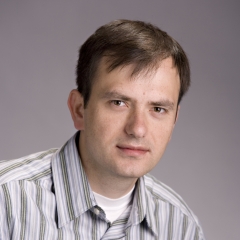
Dmitri Strukov is a Professor at the University of California, Santa Barbara in the Department of Electrical and Computer Engineering. His work spans material science, electrical engineering, and computer science, focusing on novel computing paradigms using emerging memory devices. Education: PhD in Electrical and Computer Engineering from SUNY Stony Brook, MS in Applied Physics and Mathematics from Moscow Institute of Physics and Technology. Research Interests include neuromorphic computing , non-volatile memory applications , and mixed-signal circuits for machine learning and hardware security. His group develops memristive crossbar arrays and 3D NAND flash for energy-efficient systems. Scientific Leadership features Fellow of IEEE and Distinguished Lecturer roles. His work has been recognized with best paper awards at ASPLOS’19 and Computing Frontiers’13. Students: Mentored PhD graduates in neurocomputing, security, and memristor design including Z. Fahimi, S. Larimian, M.R. Mahmoodi, and X. Guo. Grants: Funded by AFOSR, ARO, DARPA, NSF, and industry leaders like Google and Samsung. Labs: Utilizes UCSB’s nanofabrication center and advanced tools for memristor characterization.
Susan K. Fullerton-Shirey is an Associate Professor, Bicentennial Board of Visitors Faculty Fellow, and Vice Chair for Graduate Education in the Department of Chemical and Petroleum Engineering at the University of Pittsburgh. She earned her Ph.D. in Chemical Engineering from Penn State University in 2009 and held a courtesy appointment at Notre Dame University's Electrical Engineering Department before joining Pitt in 2015. Education: Ph.D. (2009) and B.S. in Chemical Engineering from Penn State University. Her research focuses on 2D materials , ion transport , and polymer electrolytes for next-generation nanoelectronics. The Nanoionics and Electronics Lab explores electric double layer gating to enable low-power electronics and biodegradable polymer films. Recent publications highlight advancements in solid polymer electrolytes for reconfigurable p-n junctions , strain-induced phase transitions in 2D materials, and hardware security applications. Her work bridges materials science , condensed matter physics , and electrochemistry . Scientific Awards: Alfred P. Sloan Research Fellowship in Chemistry (2020) AAAS Marion Milligan Mason Award for Women in Chemical Sciences (2019) NSF CAREER Award (DMR-EPM) (2018) Ralph E. Powe Jr. Faculty Award (2016) She has advised 7 graduate students and secured grants from the NSF, DARPA, and the Ellen MacArthur Foundation. The lab collaborates with institutions like Penn State and Notre Dame, with sponsors including the Pittsburgh Quantum Institute and Oak Ridge Associated Universities.
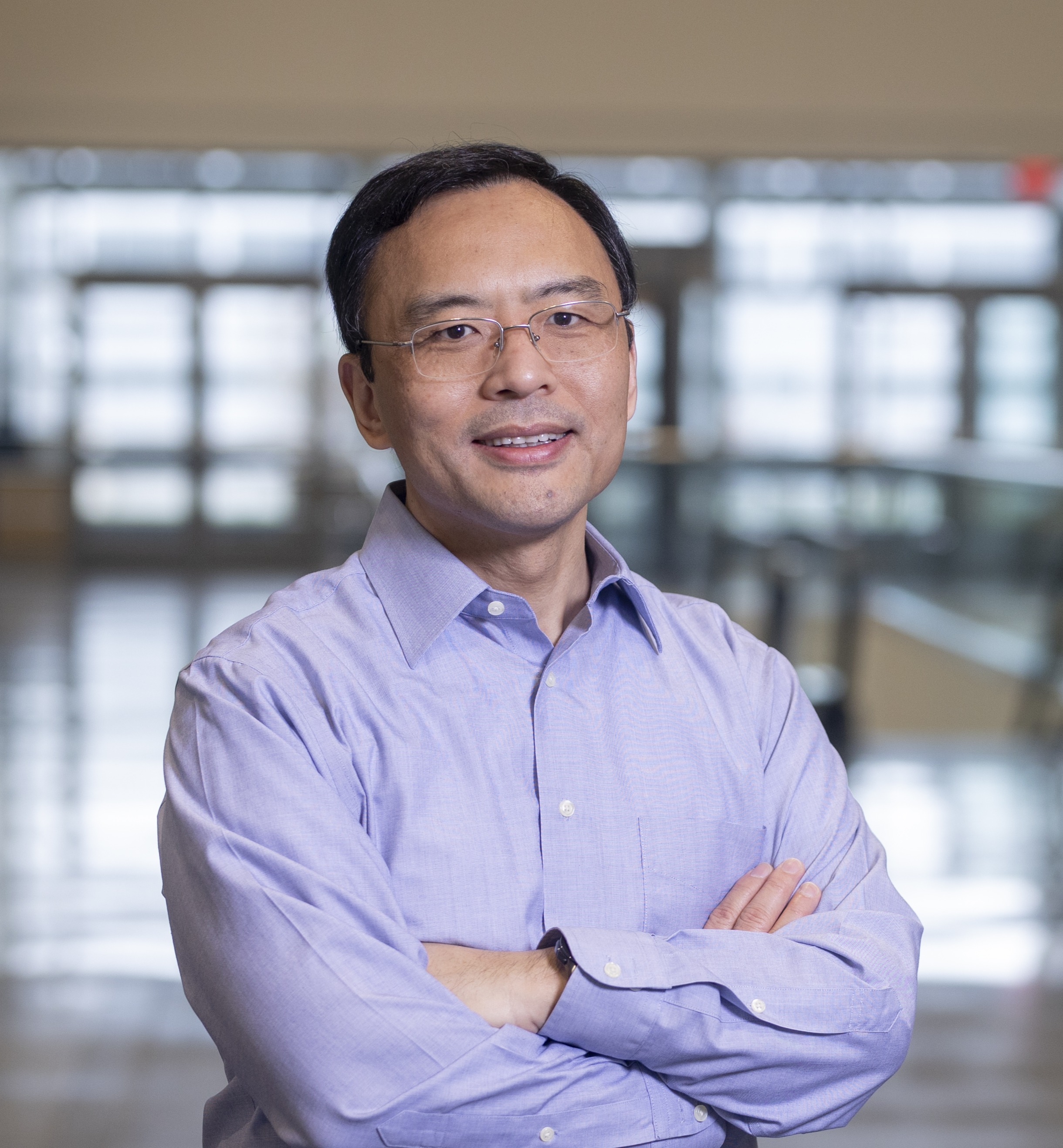
Wei Lu is the James R. Mellor Professor of Engineering at the University of Michigan with joint appointments in the Department of Electrical Engineering & Computer Science (EECS) and Materials Science & Engineering. He directs the Solid State Electronics Laboratory and leads the Lu Research Group. Lu completed his BS in Physics at Tsinghua University (1996), PhD at Rice University (2003), and postdoctoral research at Harvard University. Research Focus: Lu's work bridges nanoelectronics, materials science, and computing architectures. His research spans: Memristive devices for neuromorphic computing and in-memory processing Nanowire transistors and emerging electronic devices Resistive switching mechanisms in oxides and 2D materials Hardware implementations of machine learning algorithms Crossbar arrays for energy-efficient computation Publication Trends: Analysis of 15 recent publications reveals consistent focus on memristor physics (58% of papers), neuromorphic implementations (42%), and nanoscale characterization (33%). Key evolution includes increased emphasis on full system integration (20%) and commercial applications. Awards & Honors: IEEE Fellow NSF CAREER Award 2022 Distinguished University Innovator Award 2016-2017 David E. Liddle Research Excellence Award 2014-2015 Rexford E. Hall Innovation Excellence Award 2012 EECS Outstanding Achievement Award Commercialization & Leadership: Co-founded Crossbar Inc. (resistive RAM technology) and MemryX Inc. (edge AI chips). Currently advises PhD candidates and postdocs in nanoelectronics and neuromorphic systems, with active NSF and industry-funded projects in memristive computing platforms.
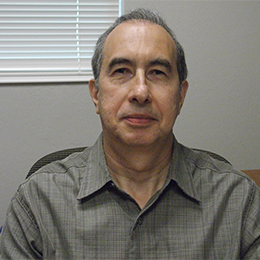
Dr. Jorge Torres is an Associate Professor at the U.A. Whitaker College of Engineering, Florida Gulf Coast University (FGCU), specializing in the Department of Bioengineering, Civil Engineering, and Environmental Engineering. He holds an MD from the National University of Colombia and a Ph.D. in Biomedical Engineering from the University of Texas at Austin. His research focuses on biosensors, biosignal analysis, electrophysiology, and biomedical optics, with prior experience as a Visiting and Research Professor at the University of los Andes in Colombia, where he contributed to biomedical instrumentation and signal processing projects. Dr. Torres teaches courses in biomedical instrumentation and has led/co-led projects funded by Colciencias (Colombia’s primary research agency), emphasizing physiological measurements and medical device development. Education Ph.D. in Biomedical Engineering (Electrical Concentration), University of Texas at Austin M.S. in Biomedical Engineering (Electrical Concentration), University of Texas at Austin M.D., National University of Colombia Research & Teaching Dr. Torres’s research integrates engineering principles with medical applications, including biosignal analysis, medical lasers, and sensor development. He has authored numerous articles on topics ranging from graphene-based sensors to clinical case studies. He is an IEEE member in multiple societies, including Engineering in Medicine and Biology and Signal Processing. Grants & Experience Principal Investigator (PI) or Co-PI on Colciencias-funded projects in Colombia Co-investigator on NIH and Whitaker Foundation grants Experience in biomedical instrumentation, laser applications, and ultrasound Labs & Collaborations His work involves collaborations in sensor technology, medical device implementation, and interdisciplinary education programs such as the Master’s in Biomedical Sciences at Universidad de los Andes.
Sergio Paredes Navia serves as Assistant Professor of Engineering and Director of Engineering Labs at Saint Vincent College within The Herbert W. Boyer School of Natural Sciences, Mathematics and Computing. A Colombian national, he holds a PhD in Mechanical Engineering from West Virginia University and a BS in Industrial Automation Engineering from the University of Cauca. His educational background includes: PhD in Mechanical Engineering, West Virginia University BS in Industrial Automation Engineering, University of Cauca (Colombia) Dr. Paredes's research centers on advanced energy materials , with specialization in thermoelectric ceramics and solid oxide fuel cells (SOFCs) . He pioneers microstructural engineering and dopant strategies to optimize thermal/electrical performance of oxide ceramics, while integrating control systems and artificial intelligence for energy device enhancement. His interdisciplinary approach bridges materials science, robotics, and automation to develop sustainable power generation solutions. Analysis of his 2018-2023 publications reveals dominant trends in energy materials innovation , particularly grain boundary engineering for thermoelectrics and electrocatalytic surface modifications for fuel cells. Key focus areas include nanostructured coatings, oxygen reduction reaction optimization, and hierarchical structure control to achieve order-of-magnitude improvements in conductivity and durability. No scientific awards were documented in the source material. As Engineering Labs Director, Dr. Paredes oversees all laboratory operations, safety protocols, and student training. His teaching portfolio spans Dynamics, Automatic Control Systems, Game Design and Development, and Python programming. He cultivates hands-on learning environments focused on developing ethically grounded, technically proficient engineers capable of solving complex real-world challenges.
Susan Fullerton is an Associate Professor and Bicentennial Board of Visitors Faculty Fellow in the Department of Chemical and Petroleum Engineering at the University of Pittsburgh's Swanson School of Engineering. She also serves as Vice Chair of Education. Her research focuses on nanoionics and electronics, particularly ion transport in 2D materials and polymer electrolytes for advanced device applications. Fullerton holds a PhD from Penn State (2009) and previously served as a Research Assistant Professor at Notre Dame's Department of Electrical Engineering before founding Pitt's Nanoionics and Electronics Lab in 2015. She has received multiple prestigious awards including the NSF CAREER Award, Alfred P. Sloan Fellowship, and AAAS Marion Milligan Mason Award. Her teaching excellence was recognized with the 2018 James Pommersheim Award. Research interests include phase transitions in 2D materials, hardware security via ion-locked polymers, and sustainable polymer design. Education: PhD in Chemical Engineering, Pennsylvania State University, 2009 Key Research Areas: Ion gating in 2D materials Non-volatile memory devices Triggerable polymer degradation Hardware security through ion locking Neuromorphic computing architectures Awards: Alfred P. Sloan Research Fellowship (2020) AAAS Marion Milligan Mason Award (2019) NSF CAREER Award (2018) James Pommersheim Teaching Award (2018) Fullerton's lab develops novel materials for electronics and security applications, including monolayer electrolytes and phase-change polymers. She leads efforts to improve STEM education through personalized learning models and diversity initiatives. Current projects explore ion-mediated semiconductor transitions and scalable nanomaterial fabrication techniques. Labs/Teams: Nanoionics and Electronics Lab (established 2015), interdisciplinary collaborations in nanomaterials engineering and educational innovation.
Matthias Kuehne is an Assistant Professor of Physics at Brown University, where he joined the Department of Physics in 2023 following postdoctoral work in Professor Michael Strano's group at MIT. His research focuses on the fluidic, ionic, and electronic properties of low-dimensional materials and devices, with particular expertise in carbon nanotubes, 2D materials, and nanofluidic systems. His educational background includes a doctorate of natural sciences (Dr. rer. nat.) from the University of Stuttgart (2017), a diplome d'ingenieur from Grenoble Institute of Technology (Grenoble INP), France, and a diploma in physics from Karlsruhe Institute of Technology, Germany. His doctoral research was conducted at the Max Planck Institute for Solid State Research. Professor Kuehne's research interests center around solid-state nanofluidics and nanoionics, specifically investigating confinement and quantum effects governing the behavior of molecules and ions in low-dimensional materials devices. His work spans multiple disciplines including condensed matter physics, electrochemistry, physical chemistry, and materials science, with applications in energy storage, molecular transport, and nanoscale sensing. His publication record from 2011-2024 shows a consistent focus on carbon nanotubes, 2D materials, and nanofluidic phenomena, with significant contributions in Nature, Nature Communications, and other high-impact journals. His research demonstrates expertise in experimental techniques including Raman spectroscopy, magneto-transport measurements, and in-situ TEM imaging of nanoscale phenomena. At Brown, Professor Kuehne teaches undergraduate physics courses including PHYS 0030 (Basic Physics A), PHYS 0040 (Basic Physics B), PHYS 1610 (Biological Physics), and PHYS 2630 (Biological Physics). He leads the K-Lab, which is actively recruiting scientists and engineers with backgrounds in materials science, chemistry, and physics to build a creative and collaborative research team focused on solid-state nanofluidics and nanoionics. The K-Lab investigates confinement and quantum effects in low-dimensional materials, with recent work focusing on segmented carbon nanotube nanofluidics, atomic resolution imaging of lithium behavior, and ultrafast ion diffusion in 2D materials. The lab maintains an open recruitment policy for undergraduate, graduate, and post-graduate researchers interested in these cutting-edge research areas.