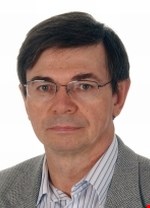
Giorgio Domenico Maria Micale is a Full Professor of Engineering at the University of Palermo, affiliated with the Department of Chemical Engineering within the School of Engineering. He serves as a Delegate for European-level project development. His research focuses on membrane technologies, renewable energy systems, and sustainable processes for brine valorization and desalination. Key roles: Full Professor, European project delegate Affiliations: University of Palermo (School of Engineering, Department of Chemical Engineering) Research interests include: membrane-based desalination, energy conversion from salinity gradients, electrodialysis optimization, and industrial waste-to-resource processes. He has extensively studied magnesium recovery from brines, crystallization processes, and pilot plant design for sustainable chemical production. His recent work emphasizes computational fluid dynamics (CFD) modeling, experimental validation of membrane systems, and energy-efficient processes. Notable projects involve pilot plants for magnesium recovery, bipolar membrane electrodialysis systems, and innovative desalination technologies. Micale has advised numerous students on theses related to chemical engineering and environmental processes since 2006. He collaborates on grants focusing on renewable energy integration and sustainable industrial practices. His lab develops advanced membrane modules and fluid dynamics analysis tools for industrial applications.
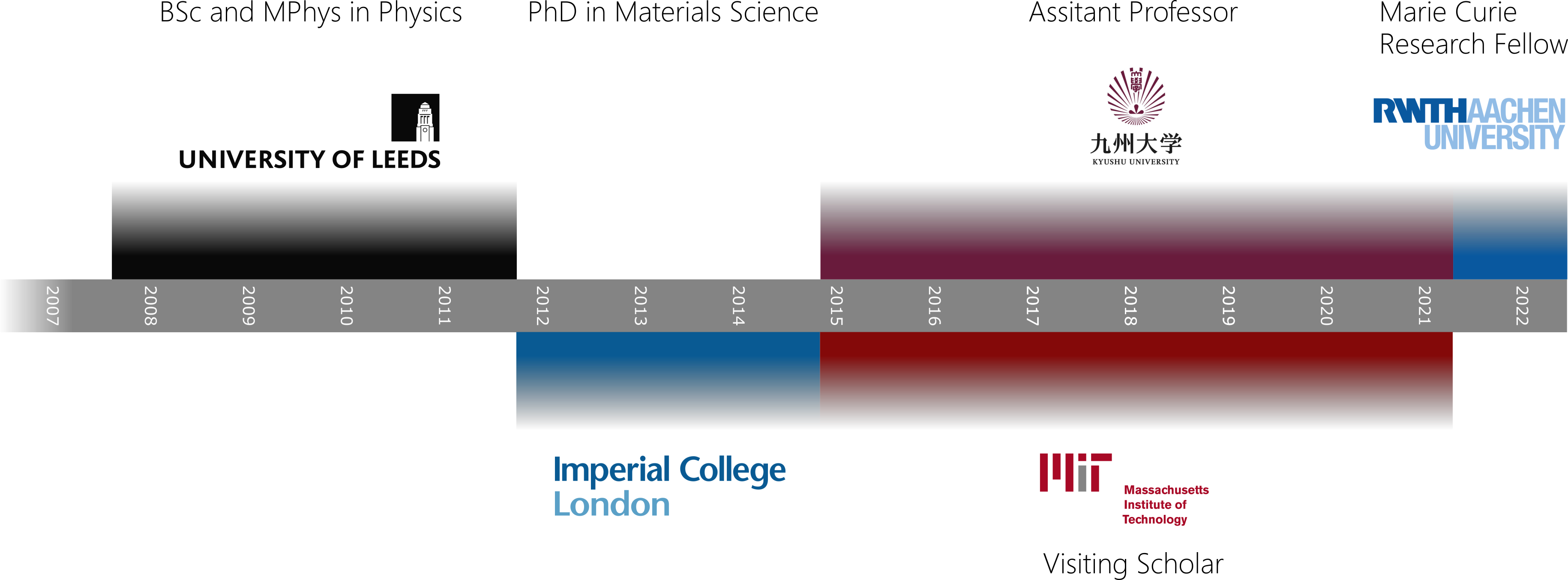
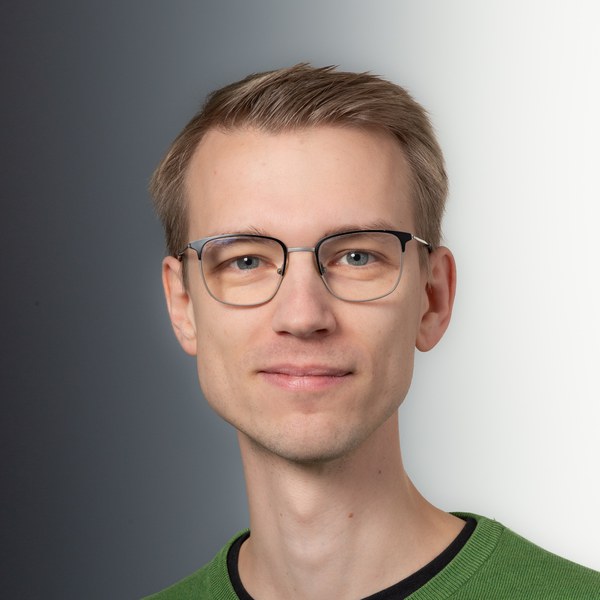
George F. Harrington is a Marie Skłodowska-Curie Research Fellow at RWTH Aachen University's Institute of Physical Chemistry and will join the University of Bath as a Lecturer in Physical Chemistry in 2023. His research focuses on advanced functional oxide materials for energy conversion devices, including fuel cells, electrolyzers, and sensors. He investigates the relationship between material synthesis, structure, and properties through techniques like pulsed laser deposition, X-ray diffraction, and defect modeling. Previously, he held an Assistant Professorship at Kyushu University and was affiliated with the Next-Generation Fuel Cell Research Centre and International Institute for Carbon-Neutral Energy Research. Research interests include strain-modified ionic conductivity in oxides, oxygen surface exchange kinetics, and the role of defects in material functionality. He has organized international conferences and symposiums, co-authored a book on fuel cell governance, and collaborates widely on topics like thin film growth and electrochemical interfaces. His work addresses challenges in solid-state ionics and material durability for clean energy applications.
Dr. Jack Panter is a Lecturer in Fluid Dynamics at the University of East Anglia (UEA), affiliated with the School of Engineering, Mathematics and Physics. He is a member of the Fluids & Structures research group and co-manages the Thermofluids Research Laboratory with Dr. Stefano Landini. His research integrates computational and experimental approaches to study multiphase fluid systems, with applications in sustainability, thermal management, and energy storage. Education: PhD in Physics, Durham University (awarded 2020) MSci in Physics and Chemistry, Durham University (2015, First Class) Dr. Panter's research centers on fundamental interfacial and wetting phenomena, with a strong emphasis on computational modeling. He develops and applies phase-field models, the Binary Image Transition State Search (BITSS) algorithm, and the Lattice Boltzmann method to study fluid equilibria, transitions, and dynamics. His work extends into soft matter, including elastic buckling, bio-elasticity, and colloidal organization. Applications include optimizing super-liquid-repellent surfaces with Procter & Gamble and simulating capillary rise for carbon capture technologies with ExxonMobil. His recent publications focus on thermal management of lithium-ion batteries using phase-change materials, hybrid immersion cooling strategies for electric vehicles, and computational simulations of wetting and capillary phenomena. These works reflect a strong trend toward sustainable engineering solutions, energy efficiency, and advanced computational fluid dynamics. Scientific Awards: No awards explicitly mentioned. Dr. Panter is actively involved in research funding and advising. He leads a Royal Society-funded project on capillary coupling and collaborates on a knowledge exchange project on low-cost thermal energy storage. He advises on computational methods and contributes to interdisciplinary research in thermal systems and fluid dynamics. His lab, the Thermofluids Research Laboratory, is equipped with advanced experimental facilities for thermal characterization, battery testing, 3D printing, and capillary force measurement, enabling both fundamental and applied research. Research Group: Thermofluids Research Laboratory – focused on phase-change phenomena, thermal management of electronics and batteries, and thermal energy storage. The lab supports projects in solid-liquid phase change materials, hybrid composites, microstructure design, and capillary phenomena.
Ryan B. Sills is an Assistant Professor in the Department of Materials Science and Engineering at Rutgers, The State University of New Jersey. His research focuses on condensed matter theory and condensed matter experiment, with particular expertise in dislocation dynamics, materials failure mechanisms, and computational modeling of materials behavior under various loading and environmental conditions. Dr. Sills' research interests span multiple critical areas in materials science, including the fundamental mechanisms of plastic deformation, fracture processes, and radiation damage in metallic materials. His work integrates advanced computational techniques including molecular dynamics simulations, dislocation dynamics modeling, and machine learning approaches to bridge length and time scales in materials modeling. He has made significant contributions to understanding hydrogen embrittlement phenomena, helium bubble formation in metals, and the complex interactions between defects in crystalline materials. Analysis of Dr. Sills' recent publication record reveals a strong and consistent research program focused on dislocation-related phenomena in metallic materials, particularly stainless steels used in nuclear applications. His work demonstrates an increasing integration of machine learning techniques with traditional physics-based modeling to create more efficient and accurate simulation frameworks. Notable research themes include void nucleation mechanisms, dislocation junction formation, anomalous hardening phenomena, and the development of multiscale modeling approaches to connect atomistic processes with macroscopic material behavior. Dr. Sills leads research supported by NSF CAREER funding, focusing on reconciling crack tip mechanics with plastic zone behavior during metal fracture. His work has significant implications for understanding hydrogen embrittlement and radiation damage in structural materials, particularly for applications in nuclear energy systems where material degradation under extreme environments is a critical concern.
Valeriya Pinchuk is a Professor and Head of the Department of Thermal Engineering and Energy Technology at Dnipro University of Technology (National Metallurgical Academy of Ukraine). She holds a Doctor of Engineering Sciences degree in Technical Thermal Physics and Industrial Heat-and-Power Engineering (2016) and has been actively contributing to academic and research activities in energy engineering for over two decades. Her educational background includes graduation from the State Metallurgical Academy of Ukraine in Industrial Heat Power Engineering and Energy Saving (1999). She teaches core courses including 'Heat and Mass Transfer,' 'Special Issues of Heat and Mass Transfer,' and 'Recycling of Waste and the Use of Secondary Energy Resources,' while supervising student research, diploma theses, master's theses, and graduate students. Professor Pinchuk's research focuses on thermal physics and aerodynamics, with particular emphasis on coal-water fuel combustion, thermophysical properties of materials, and waste-free technologies in energy and metallurgy. Her work spans experimental and numerical investigations of heat and mass transfer processes, fuel activation and catalysis, and extraction of rare earth elements from coal and biomass. She has published extensively in high-impact journals, with her research primarily addressing energy conversion efficiency, environmental aspects of solid fuel use, and innovative fuel technologies. Her scientific contributions have been recognized through multiple awards from the Ministry of Education and Science of Ukraine and Dnipropetrovsk Regional authorities. Professor Pinchuk serves as an Associate Editor for the International Journal of Energy for a Clean Environment and reviews for numerous international journals indexed in Scopus and Web of Science. As an active member of the scientific community, she serves as an expert for the National Research Foundation of Ukraine and the Ministry of Education and Science of Ukraine. She is also a member of The Royal Society of Chemistry and an Academician of the Academy of Higher Education Sciences of Ukraine.
Marek Flaska is an Associate Professor in the Ken and Mary Alice Lindquist Department of Nuclear Engineering at Pennsylvania State University, College of Engineering. His research focuses on nuclear detection systems, neutron and gamma-ray spectroscopy, and radiation measurement technologies. He is affiliated with the Institutes of Energy and the Environment and contributes to integrated energy systems research. His research interests include neutron and gamma radiation detection, pulse shape discrimination, scintillation counters, liquid and organic scintillators, silicon photomultipliers (SiPM), Monte Carlo simulations, and nuclear non-proliferation. His work aims to improve the accuracy, efficiency, and portability of radiation detection systems for both civilian and security applications. The recent publications highlight a strong trend in digital signal processing for radiation detection, with significant emphasis on machine learning applications for pulse shape discrimination, multiplexing schemes for compact neutron cameras, and characterization of new-generation silicon photomultipliers. His work bridges fundamental detector physics with practical engineering solutions for reactor instrumentation and nuclear security. Scientific Awards and Recognition: $3.6M in grants awarded to nuclear engineering projects Dr. Flaska advises research projects and leads efforts in detector development and reactor-based experiments. He has secured major funding for nuclear engineering research and collaborates with national laboratories and institutions on reactor instrumentation and nuclear security. His team works on advanced scintillation systems, fast neutron detection, and real-time radiation monitoring. He is involved in the operation and characterization of irradiation facilities at the Penn State Breazeale Reactor, including the Fast-Neutron Irradiator and epithermal neutron beam systems. His lab focuses on developing and testing novel radiation detection systems using organic and inorganic scintillators, composite materials, and digital readout electronics.
Prof. Dr. Jelena Miladinović is a Full Professor at the Department of Inorganic Chemical Technology, Faculty of Technology and Metallurgy, University of Belgrade. Her scientific expertise centers on inorganic chemical engineering, with a focus on thermodynamics of electrolyte solutions, solid-state thermodynamics, phase equilibria in multicomponent systems, and mineral fertilizers technology. She has taught courses including Fundamentals of Solid State Thermodynamics, Thermodynamics of Electrolyte Solutions, Chemical Thermodynamics, and Technology of Acids, Bases and Mineral Fertilizers. Her research explores electrolyte solution behavior, adsorption thermodynamics, solid-state ionic systems, and predictive modeling of chemical processes. She extensively mentors students across academic levels, advising 3 doctoral dissertations (e.g., thermodynamic characterization of phosphate-containing electrolytes), 11 master's theses (e.g., adsorption thermodynamics and solution properties), and 19 undergraduate theses (e.g., viscosity analysis of silicate glasses and electrolyte system modeling).
Andres Annuk serves as a Professor in Energy Supply at the Estonian University of Life Sciences , within the Institute of Forestry and Engineering's Chair of Energy Application Engineering. His research extensively explores renewable energy integration, sustainable construction, and energy system optimization. Research interests focus on renewable energy systems (wind-solar hybrids, geothermal), energy storage technologies (battery-hydrogen solutions, phase-change materials), and data-driven approaches for energy management (machine learning for forecasting, optimization algorithms). Applications span residential microgrids, building efficiency, and waste-to-energy conversion. Recent publications (2024–2025) demonstrate strong emphasis on: 1) Machine learning applications in energy infrastructure (soil stress prediction, solar data imputation), 2) Hybrid renewable systems (wind-hydrogen microgrids, geothermal co-generation), and 3) Sustainable construction (thermal storage materials, life-cycle assessment). Technical methodologies frequently involve finite element analysis, optimization algorithms, and stochastic modeling.
Professor Sergey Mikhailov is a Professor of Applied Mathematics and Analysis in the Department of Mathematical Sciences at Brunel University London, where he has been working since 2006. He is also an Advisory Editor of the journal Mathematical Methods in the Applied Sciences. His educational background includes: MSc from Moscow Institute of Physics and Technology (State University), Moscow-Dolgoprudnyi, Russia PhD from Moscow Institute of Physics and Technology (State University), Moscow-Dolgoprudnyi, Russia DrSc from Institute for Problems in Mechanics, Academy of Sci. of the USSR, Moscow, Russia Professor Mikhailov's research focuses on Applied Analysis, Solid Mechanics, and Computational Mathematics . His work specifically addresses Boundary-domain integral and integro-differential equations, Partial differential equations, Theoretical fatigue, damage, durability, and fracture mechanics, Free boundary problems for PDEs of elasticity with damage, and Nonlinear partial integro-differential Volterra equations of crack propagation in damaged media. His recent work has concentrated on Stokes, Oseen, and Navier-Stokes PDEs, particularly on existence, uniqueness and regularity of solutions of evolution (non-stationary) problems in Sobolev spaces. Analysis of his recent publications (2019-2024) reveals a strong focus on fluid dynamics problems, particularly Navier-Stokes equations with anisotropic and variable coefficients. His work often involves boundary-domain integral equations and their applications to various boundary value problems. The research spans theoretical aspects of existence and uniqueness of solutions as well as practical applications in mechanics and engineering. Professor Mikhailov has been involved in several significant research grants: Mathematical Analysis of Localised Boundary-Domain Integral Equations for Nonlinear PDEs (EPSRC, EP/M013545/1, 2015-2018) Mathematical Analysis of Localised Boundary-Domain Integral Equations for BVPs with Variable Coefficients (EPSRC, EP/H020497/1, 2010-2013) Boundary-Domain Integral and Integro-Differential Equations: Formulation, Analysis, Localisation (Royal Society, 2006-2009) Analysis of Boundary-Domain Integral and Integro-Differential Equations (London Mathematical Society and Nuffield Foundation, 2006-2008) Nonlinear Dynamics and Rock Contact Fracture Mechanics in Modelling of Vibration Enhanced Drilling (EPSRC, 2002-2006) Non-Local Approach to High Cyclic Fatigue: Theoretical Basis (EPSRC, 1999-2001) He teaches MA2632 (Algebra and Analysis) and MA1608 (Elements of Applied Mathematics) at Brunel University London and serves as a Research Mentor in the Mathematics Department. Professor Mikhailov is a member of the London Mathematical Society. His PhD supervision focuses on topics in Applied Mathematics, Applied Analysis and Solid Mechanics, particularly the analysis of Stokes, Oseen, and Navier-Stokes PDEs, and the investigation of existence and uniqueness of solutions for boundary-domain integral and integro-differential equations.
Dr. Dustin Vivod is a researcher at the Research Center Jülich GmbH, affiliated with the Institute of Energy Technologies (IET) and its department for Theory and Computational Modeling of Materials in Energy Engineering. His work focuses on computational materials science, surface chemistry, and nanomaterials for energy and environmental applications. Core Fields: Computational Materials Science, Nanointerface Engineering, Environmental Remediation Institution: Institute of Energy Technologies (IET), Research Center Jülich GmbH Research highlights include molecular simulations of self-assembled monolayers, pH-responsive coordination polymers, and magnetic nanoparticle sorbents for hydrocarbon/water contaminant removal. His publications emphasize computational modeling and experimental validation of nanomaterials' surface properties.
Dr. Shicheng Yu is a researcher at the Research Center Jülich GmbH , affiliated with the Institute of Energy Technologies (IET) under the Fundamentals of Electrochemistry (IET-1) department. His work focuses on solid-state battery technologies, electrochemical stability, and advanced energy storage materials. Research Interests Dr. Yu’s research spans Solid-State Battery Engineering Electrochemical Interface Design Ion Transport Mechanisms Material Degradation Analysis Hybrid Energy Systems with a particular emphasis on lithium/sodium metal batteries and computational electrochemistry. Scientific Contributions His recent publications (2023-2025) highlight innovations in 3D Electrode Architectures Garnet/LATP Electrolyte Optimization Non-Radiative Recombination Suppression Nano-Scale Interface Engineering for next-generation energy storage solutions.
Sonia Mogilevskaya is a Research Professor at the University of Minnesota , specializing in applied mathematics and computational mechanics . Her work focuses on modeling elastic responses of materials, fracture propagation, and microstructure behavior in geomaterials and composites. Research Interests : Applied mathematics, computational mechanics, geomaterials, composite materials, fracture mechanics, and numerical algorithm development. Publications : Recent work includes discrete Eshelby techniques, Gurtin–Murdoch models, boundary element methods, and stress analysis in nonhomogeneous media. Applications : Mining, hydraulic fracturing, and material design. Her publications highlight advancements in boundary element methods , modeling of material surfaces , and analysis of fracture propagation in complex media. Key subfields include micromechanics , elasticity theory , and numerical algorithms for geomechanical and composite systems. Scientific Awards : Advising and Grants : Labs and Teams : No explicit information provided.
Associate Professor Norbert Lümmen is affiliated with the Department of Mechanical and Maritime Engineering at the Western Norway University of Applied Sciences (HVL), where he teaches thermodynamics and fluid mechanics. He served as program leader for the bachelor study program in energy technology from August 2015 to July 2023, a multidisciplinary program involving all departments at the Faculty of Engineering and Natural Sciences. Education: Diploma in Physics from Heinrich-Heine University (Düsseldorf), Doctoral degree in Physical Chemistry from the University of Cologne Previous role: Postdoctoral researcher at the University of Bergen (4 years) His research focuses on energy recovery from waste , waste heat recovery , hydrogen production , and numerical simulations of energy systems . He supervises bachelor and master student groups in energy technology and has contributed to studies on topics like Stirling-cryocoolers and biomass energy conversion . Recent publications analyze gasification processes, PEM electrolysis, and efficiency metrics in waste incineration-based CHP systems. Current affiliations include the Energy and Environmental Technologies and Data Science research groups at HVL. His work bridges theoretical thermodynamics with practical energy efficiency solutions in maritime and industrial contexts.
Hao Bai serves as an Associate Professor in the Department of Mechanical & Mechatronics Engineering at Lakehead University, where he holds the professional designation P.Eng. and maintains active teaching and research responsibilities. His academic qualifications include: BSc from Peking University, Beijing, China MSc from University of Science and Technology of China, Anhui, China PhD from Peking University, Beijing, China PhD from University of Manitoba Dr. Bai's research integrates theoretical and applied mechanics with engineering innovation, specializing in structural health monitoring through guided wave propagation, nondestructive evaluation techniques for pipeline systems, energy harvesting mechanisms, and advanced computational modeling. His methodological expertise spans finite element analysis, boundary element methods, and vibration control systems, contributing to safer infrastructure and sustainable energy solutions. No scientific awards were documented in the source material. Information regarding graduate student supervision, research grants, laboratory facilities, or collaborative teams was not provided in the available text.
Dr. Karol Pietrak is an Assistant Professor at Warsaw University of Technology's Institute of Heat Engineering, where he leads research in thermodynamics and heat transfer. He serves as Editor of the WUT Base of Knowledge and teaches courses including Thermodynamics and Computer Science laboratories. His research focuses on inverse thermal problems, numerical methods, and thermal measurement techniques applied to composite materials and energy systems. Pietrak's research explores heat transfer in heterogeneous media, thermal conductivity modeling, and inverse problem-solving using computational methods. Key investigations include: Development of AI-assisted laser diagnostics for thermal characterization Experimental analysis of anisotropic thermal properties in building materials Novel measurement techniques for interfacial thermal resistance Computational modeling of composite material behavior His publications demonstrate consistent focus on thermal transport phenomena, with recent work emphasizing AI applications in inverse thermal problems and advanced characterization of composite materials. Research spans fundamental heat transfer mechanisms to applied building physics solutions. Pietrak has led significant research projects including: HEMP4NZEB (2021-2023): Eco-composite development for near-zero energy buildings Innovative geothermal systems (2021-2023): Enhanced heat exchange probes DryWall (2017-2020): Insulation and drying technology INNOOS (2013-2016): Protective equipment testing systems He advises student projects on MATLAB engineering applications, neural networks, and thermal system design, while serving as peer reviewer for multiple thermal science journals.