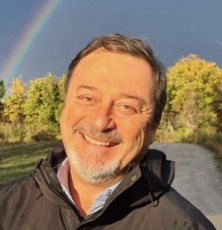
Raquel Mesquita is a prominent researcher at the Centre for Biotechnology and Fine Chemistry (CBQF) , focusing on analytical chemistry and microfluidic device development for environmental and biomedical applications. Her work bridges metal ion bioavailability analysis in aquatic systems with point-of-care diagnostics using saliva biomarkers. Education: PhD in analytical chemistry Key research themes include: Metal Ion Monitoring : Innovations in sequential injection analysis and chelating agent-based sensors for seawater and natural water systems. Microfluidic Devices : Development of paper-based analytical platforms for urease activity, glucose detection, and hemodialysis applications. Biotechnology : Leveraging chitosan from mealworms for antioxidant and biomedical uses. Her publications (195 total) span journals like Biosensors , Chemosensors , and Sustainable Chemistry and Pharmacy , emphasizing intersectional applications of materials science and environmental health. Scientific Recognition : CBQF Annual Incentive (2023) CASSS Travel Grant (2016) Multiple Best Presentation Awards (2013-2014) As principal investigator for projects like DBmonitor and B2D2 , she advances real-time biomarker monitoring and low-cost diagnostic platforms . Her 78 activities include organizing CBQF DAY 2025 and chairing workshops on sample treatment techniques.
Justinas Palisaitis is an Associate Professor at Linköping University , affiliated with the Department of Physics, Chemistry and Biology (IFM) within the Faculty of Science and Engineering (LITH) . He serves as a principal research engineer at the Atomic Resolution TEM Infrastructure of Sweden (ARTEMI) , a national research infrastructure in advanced electron microscopy. His work focuses on materials science, particularly thin film synthesis, MXene-based composites, and electrocatalytic materials for energy storage applications. He has secured a SEK 15 million grant as Research Infrastructure Fellow 2022 from the Swedish Foundation for Strategic Research. His research involves developing methodologies for atomic-resolution transmission electron microscopy and dynamical sample preparation to enable investigation of materials with extreme precision. Recent projects include the synthesis of hard boron thin films, two-dimensional cathode materials for Al-ion batteries, and sulfur-functionalized MXenes for hydrogen evolution catalysts. His publications in 2025 cover topics like MXene/polyaniline composites for ammonium-ion batteries, Mo 4/3 B 2-x T z boridene cathodes , and ductile yet hard HfN thin films . He contributes to national infrastructure development through the installation of cutting-edge Focused Ion Beam (FIB) systems for TEM/APT sample preparation. His work intersects with sustainable energy solutions, including hydrogen production , carbon capture , and renewable battery technologies . Key Affiliation: ARTEMI (Atomic Resolution TEM Infrastructure of Sweden) Research Areas: Thin film physics, MXene composites, energy storage materials 2025 Trends: 2D energy materials, defect-engineered nitrides, boron-based films 2022 Grant: SEK 15 million Research Infrastructure Fellow award
Xiaolong Liu serves as Assistant Professor at Southern University of Science and Technology's School of Microelectronics. His academic journey includes a Ph.D. from Hong Kong University of Science and Technology (2019), M.E. from Tsinghua University (2014), and B.E. from Beijing University of Aeronautics and Astronautics (2010). Prior to his current position, he worked as Staff Engineer at eTopus Technology in Silicon Valley (2019-2021) and completed a postdoc at HKUST. Ph.D. in Electronic and Computer Engineering, Hong Kong University of Science and Technology (2019) M.E. in Microelectronics, Tsinghua University (2014) B.E. in Electronic Engineering, Beijing University of Aeronautics and Astronautics (2010) Dr. Liu's research spans cutting-edge RF/mm-Wave/THz integrated circuit design, focusing on high-performance signal generators , ultra-wideband transceivers , and low-power frequency synthesis . His work addresses critical challenges in 5G/6G communications, terahertz spectroscopy, and high-speed wireline interfaces through innovative CMOS architectures. Technical emphases include varactor-less VCOs, harmonic enhancement techniques, and magnetic tuning mechanisms for millimeter-wave systems. His publication portfolio demonstrates consistent leadership in IEEE flagship journals/conferences (JSSC, TMTT, ISSCC, VLSI), with recent work advancing Class-F oscillators, sub-sampling PLLs, and sub-THz synthesizers. Notable trends include migration toward sub-THz frequencies (2023-2025) , multi-core oscillator architectures , and elimination of harmonic tuning for simplified design. IEEE VLSI Paper Technical Highlights (2019) IEEE CICC Invited Talk (2019) IEEE TVLSI 2023 Best Reviewer Award Top 4 Most Downloaded Paper in TCAS-II (July 2022) Dr. Liu actively mentors students through SUSTech's graduate programs, with advisees consistently earning university-level thesis awards and conference recognitions. His lab maintains strong industry ties through silicon validation and collaborates on cutting-edge tapeouts in 7nm/16nm nodes. Current projects focus on cryo-CMOS interfaces for quantum computing and ultra-wideband transceivers for 6G applications. His research group operates within SUSTech's state-of-the-art microelectronics facility, specializing in mm-Wave/THz characterization and high-speed SerDes validation. The team maintains partnerships with semiconductor foundries for advanced-node prototyping and collaborates with industry leaders on real-world implementation challenges.
Bo Jiang is a Postdoctoral Fellow in the Department of Chemistry at the University of Oslo's Faculty of Mathematics and Natural Sciences, where he conducts research in the Electrochemistry Research Group. His work bridges fundamental materials science with practical applications in energy technologies. Dr. Jiang's research interests span multiple domains of advanced materials, with particular focus on: Electrochemistry and solid-state ionics Energy storage materials for batteries (potassium-ion and magnesium systems) Lead-free ferroelectric and piezoelectric materials Perovskite oxide materials and their structural properties Nanostructured electrode materials for electrochemical applications Analysis of Dr. Jiang's publication record (2016-2025) reveals a consistent research trajectory focused on structure-property relationships in functional materials. His work shows increasing sophistication in combining computational methods with experimental validation, particularly in understanding local structural disorder in complex materials. The publications demonstrate strong international collaboration and a focus on both fundamental mechanisms and practical applications in energy technologies. Dr. Jiang's research program addresses critical challenges in sustainable energy technologies, with particular emphasis on developing alternatives to lithium-ion battery systems and lead-based piezoelectrics. His work on potassium-ion battery materials and lead-free ferroelectrics positions him at the forefront of environmentally conscious materials development. As a Postdoctoral Fellow, Dr. Jiang actively contributes to the research ecosystem at the University of Oslo, collaborating with senior researchers like Professor Sverre Magnus Selbach while developing his independent research profile. His work demonstrates the capacity for both theoretical insight and practical materials development.
Fabio Marino is an Assistant Professor at the Faculty of Science , Utrecht University , affiliated with the Department of Pharmacy , Biomolecular Mass Spectrometry and Proteomics group. He is also associated with the Utrecht Institute for Pharmaceutical Sciences (UIPS) , Oncode Accelerator , and Princess Maxima Center . Previously, he served as Director of Mass Spectrometry at Enara Bio (Oxford, UK) and conducted postdoctoral research at the Ludwig Cancer Institute (Lausanne, Switzerland) and Utrecht University . PhD in Proteomics from Utrecht University (2016) His research focuses on HLA antigen presentation , proteomics , and mass spectrometry to enhance immunotherapy. Key areas include spliced peptides , post-translational modifications , and analytical workflow development . His 15 most recent articles span immunopeptidomics , HLA ligandome characterization , middle-down proteomics , and adjuvant effects in vaccines. He is a co-inventor in over 10 immunotherapy-related patents and actively contributes to clinical antigen discovery and biotech product development . His lab develops high-throughput analytical methods for HLA-bound antigen identification , with applications in cancer immunotherapy and vaccine design . Current work includes UV-photodissociation , ion mobility , and bioinformatics for epitope prediction .
Hans van Dommelen is Associate Professor of Micromechanics at Eindhoven University of Technology (TU/e), Department of Mechanical Engineering, where he leads the Group Van Dommelen . His research couples microstructure to mechanical and functional behaviour of materials spanning nuclear fusion, additive manufacturing, polymers, and biomechanics. Education PhD in Mechanical Engineering, TU/e (2003) – Micromechanics of particle-modified semicrystalline polymers Visiting researcher, MIT (1999–2000), University of Virginia (2003–2004), and Cambridge University (2010–2012) Research Interests Van Dommelen’s work focuses on multi-scale mechanics and structure–property relationships . Using microstructural modelling and homogenization techniques, he links phenomena at the microscale to macroscopic response in: Crystalline and heterogeneous materials Nuclear fusion reactor materials (tungsten, liquid-metal shields) Additive manufacturing (wire-arc, selective laser sintering, vat photopolymerization) Semi-crystalline polymers and short-fiber composites Traumatic brain injury biomechanics Scientific Output He has authored over 230 peer-reviewed publications (h-index > 40) in leading journals such as Journal of the Mechanics and Physics of Solids , Biomechanics and Modeling in Mechanobiology , Nuclear Fusion , and Additive Manufacturing . Recent trends include viscoelastic-viscoplastic metamaterials, anisotropic food printing, recrystallization kinetics of tungsten under fusion loads, and multiscale fracture of additively manufactured metals. Teaching & Supervision Van Dommelen coordinates and lectures in: Structure and Properties of Materials Computational and Experimental Micro-mechanics Fusion Reactor Materials and Plasma-Wall Interaction He has supervised >85 MSc and PhD theses to date. Laboratory & Collaborations He heads the Group Van Dommelen within the Mechanics of Materials section, maintaining strong collaborations with DIFFER, ITER, and international partners on liquid-metal technologies for fusion blankets and advanced additive manufacturing processes.
Privatdozent Dr. Yunteng Wang is a faculty member at the Institute of Geotechnical Engineering within the Department of Landscape, Water and Infrastructure at the University of Natural Resources and Life Sciences, Vienna (BOKU). He earned his Habilitation in Geotechnical Engineering from BOKU University in 2024 and previously served as an FWF Lise Meitner Research Fellow at the institution (2021-2024). His academic background includes a Ph.D. in Engineering from Chongqing University, China (2013-2019) and a Bachelor's degree in Civil Engineering from the same university (2009-2013). Dr. Wang's research focuses on advanced computational methods in geomechanics, particularly in the areas of: Geomechanics and rock mechanics Peridynamics and phase-field modeling Fracture and localization phenomena Data-driven approaches and machine learning applications Geothermal energy extraction mechanics His recent publications demonstrate a strong trend toward integrating traditional geomechanical modeling with cutting-edge computational techniques, including sophisticated numerical frameworks that combine peridynamics, phase-field methods, and data-driven strategies to address complex fracture and failure phenomena in geological materials. His work spans from fundamental theoretical developments to practical applications in geothermal energy and infrastructure engineering. Dr. Wang has been recognized with notable awards including the Acta Geotechnica Best Paper Prize (2019) and the Excellent Doctoral Dissertation award from the Chinese Society for Rock Mechanics & Engineering (2020). He currently leads three significant research projects funded by the European Commission and industry partners, focusing on: Solid and Fluid Phase Transition of Granular Materials (2026-2030) Modern numerical methods for high-fidelity simulation of geohazards (2025-2029) CO2 enhanced development of HDR and safe capping (2023-2025) Dr. Wang serves as an active member of the scientific community, reviewing for prestigious journals including Computers & Structures, Rock Mechanics and Rock Engineering, Acta Geotechnica, GEOTECTONICS, Geofluids, and Engineering Fracture Mechanics, while also evaluating proposals for organizations like the Vienna International School of Earth and Space Sciences (VISESS).
Federico Pepi is an Associate Professor at the Department of Chemistry and Pharmaceutical Technologies, University of Rome "La Sapienza", Faculty of Pharmacy and Medicine. His research focuses on gas-phase ionic chemistry, mass spectrometry applications, and microdroplet reactivity, with significant contributions to surface functionalization techniques. Dr. Pepi earned his Degree in Chemistry and Pharmaceutical Technologies from University of Rome "La Sapienza" in 1989 with a grade of 106/110. He completed his PhD in Chemical Sciences in 1993 and has been at the University of Rome "La Sapienza" since 1995, first as a University Researcher (1995-2003) and then as Associate Professor (2004-present). His research primarily investigates the structure and reactivity of ionic and neutral species in the gas phase. He specializes in using mass spectrometry, particularly triple quadrupole and ion trap techniques, to study gas-phase ion chemistry. A significant portion of his work focuses on the interactions between ions and solid surfaces, developing techniques like "reactive landing" for functionalizing electrode surfaces with redox proteins, which has applications in biosensors and biofuel cells. His publications demonstrate expertise in analyzing reaction mechanisms, particularly in carbohydrate chemistry and dehydration processes. Analysis of his recent publications reveals a continued focus on gas-phase ion chemistry while expanding into applications in food science, pharmaceutical development, and green chemistry. His work increasingly combines traditional gas-phase studies with microdroplet chemistry, exploring accelerated reactions in confined volumes and thin films. There's also a growing interest in the application of his techniques to biomedical problems, including inflammation research and SARS-CoV-2 related studies. Dr. Pepi has received several scientific awards throughout his career: Winner of two PhD competitions (Chemical Sciences and Pharmaceutical Sciences) in 1990 CNR scholarship from the National Committee for Chemical Sciences in 1993 Degree prize named after Prof. Giordano Giacomello in 1993 Winner of the Post-doctoral competition in Pharmaceutical Sciences in 1994 CNR-NATO scholarship for research abroad in 1999 Dr. Pepi has held multiple teaching positions at the Faculty of Pharmacy and Medicine, including General and Inorganic Chemistry for Pharmacy (10 credits), Analytical Chemistry and Complements of General and Inorganic Chemistry for Pharmacy (8 credits), and General and Inorganic Chemistry for Biotechnology (6 credits). His research has been supported by projects including "Study of the reactivity of ionic species in charged microdroplets by 'Ambient' Ion Soft-landing." He has collaborated with researchers at Purdue University (Prof. Graham Cooks), CNR research institutes, and several Italian universities (Tor Vergata, University of Campania, University of Perugia). His laboratory work focuses on developing and applying "reactive landing" techniques for surface functionalization, particularly for creating modified electrodes with biological molecules. This research has led to advancements in biosensor technology and the study of direct electron transfer between redox molecules and electrode surfaces. His team has successfully deposited enzymes and mediators on gold electrodes and nanostructured materials like multi-walled carbon nanotubes.
Dr. Marcin Turek is a Professor at the Department of Materials Physics , Institute of Physics , within the Faculty of Mathematics, Physics and Computer Science at Maria Curie-Skłodowska University. His research focuses on ion implantation techniques for modifying solid materials, particularly GeSn alloys, Si/SiO₂ nanostructures, and polymers like PET. Key Research Areas: Ion Beam Applications Semiconductor Physics Nanotechnology Surface Modification Scientific Contributions: Recent work includes studies on energy gap engineering in GeSn alloys, ion beam generation, and thermal desorption of gases from semiconductors. His publications span journals like Materials , Wear , and Acta Physica Polonica A . He conducts both experimental and computational modeling research.
Damir Pajić is a full Professor at the Department of Experimental Physics within the Faculty of Science at the University of Zagreb. Appointed in 2000 after completing his PhD in 2008 (graduating with his undergraduate degree in 1998), he maintains active research and teaching roles in condensed matter physics. His research spans magnetism in condensed matter , low-dimensional magnetic systems , nanomagnetism , and magnetoelectric multiferroics , with particular focus on metal-organic hybrid magnets and molecular magnetic systems. Current work includes the HRZZ-funded project 'Evolucija složenih magnetskih i polarnih uređenja iz jednostavnih 2D podstruktura u slojevitim hibridnim organsko-anorganskim halogenometalatima (HOI2DEM)' running from 2023-2027. Analysis of his extensive publication record reveals dominant themes in hybrid organic-inorganic magnetic materials , multiferroic perovskites , and polaronic transport mechanisms in complex oxide systems. His work consistently bridges fundamental magnetic phenomena with potential applications in spintronics and energy materials. Teaching responsibilities include undergraduate Physics Practicum and advanced courses in Physics of Nanomaterials, Physics of Disordered Systems, and Magnetism and Magnetic Materials across both undergraduate and graduate programs. Laboratory work focuses on synthesis and characterization of novel magnetic materials, particularly layered hybrid halocuprates and metal-organic frameworks, utilizing SQUID magnetometry and structural analysis techniques under varied experimental conditions.
Jason Patrick Devers is a Postdoctoral Researcher in the Section for Environmental Chemistry and Physics within the Department of Plant and Environmental Sciences at the University of Copenhagen's Faculty of Science. His research focuses on advanced analytical techniques for environmental contaminants, particularly in wastewater systems using comprehensive two-dimensional gas chromatography. Dr. Devers recently completed his PhD at the University of Copenhagen in 2025, with doctoral research centered on non-target screening analysis of wastewater via comprehensive two-dimensional gas chromatography mass spectrometry. His primary research interests include Environmental Chemistry , Analytical Chemistry , and Wastewater Treatment . He develops and applies comprehensive two-dimensional gas chromatography (GC×GC) for analyzing contaminants of emerging concern , bridging advanced chromatographic techniques with environmental risk assessment. Key methodologies involve non-targeted screening, quantification strategies, and multichromatographic platform analysis. From 2022-2025, Dr. Devers' publications demonstrate a clear trajectory toward method innovation for emerging contaminant analysis, with emphasis on wastewater effluent characterization, environmental fate studies, and toxicity assessment. His work integrates analytical chemistry with real-world environmental monitoring needs. No major scientific awards are documented in available sources. As a postdoctoral researcher, Dr. Devers actively contributes to collaborative projects but holds no formal advising roles. He is integral to Professor John H. Christensen's research group, which investigates micropollutant dynamics in Danish water systems through industry-academic partnerships. Dr. Devers operates within the Environmental Chemistry and Physics section at the University of Copenhagen, utilizing state-of-the-art chromatographic platforms. The group maintains strong collaborations with Danish wastewater treatment facilities and environmental agencies for field validation and impact assessment.
Selina Tisler is an Assistant Professor in the Department of Plant and Environmental Sciences at the University of Copenhagen, specializing in the Section for Environmental Chemistry and Physics. Her research program focuses on advanced analytical techniques for environmental contaminants, particularly in water systems and wastewater treatment processes. Her primary research interests include: Development of analytical methodologies for environmental samples Non-target screening of emerging contaminants Wastewater treatment and contaminant removal strategies Chemical migration from materials into environmental matrices Environmental toxicology and risk assessment High-resolution mass spectrometry applications Dr. Tisler's publication record demonstrates expertise across multiple dimensions of environmental analytical chemistry, with recent work spanning from fundamental physicochemical studies of contaminant behavior to practical applications in water treatment technologies. Her research shows particular strength in developing and applying advanced chromatographic and mass spectrometric techniques for environmental analysis. Her scientific contributions include significant work on: Activated carbon treatment for pharmaceutical removal from wastewater Analysis of chemical migration from plastic materials Development of algorithms for high-resolution mass spectrometry data processing Adsorption mechanisms of organic micropollutants in wastewater systems Quality assurance in environmental analytical methods Dr. Tisler maintains an active collaborative research program, frequently working with colleagues including J.H. Christensen, M.B. Jørgensen, and K. Kilpinen, with publications appearing consistently through 2025 (including several listed as 'E-pub ahead of print').
Jean-Luc BOUDENNE is a University Professor affiliated with the Transfer Reactivity Analysis Micropollutants Environment (TRAME) team. His research focuses on environmental chemistry, toxicology, and analytical methods for water quality monitoring. Academic Rank: Professor Research Team: TRAME His work addresses critical issues in Environmental Science and Analytical Chemistry , particularly the fate of UV filters in coastal ecosystems, disinfection byproducts in swimming pools, and optimization of sample extraction techniques. Recent studies highlight his leadership in assessing health risks from micropollutants and biopesticides . Key trends in his publications include: Development of 3D-printed analytical devices for environmental monitoring Ecotoxicology of sunscreen components in marine ecosystems Statistical optimization of extraction methods for contaminants Public health risk assessment of industrial and recreational water use
Luca Fiori is a Full Professor at the Department of Civil, Environmental and Mechanical Engineering, University of Trento. His work integrates chemical engineering principles with environmental applications, focusing on sustainable technologies for biomass conversion and waste valorization. Education: Laurea in Chemical Engineering (1998), PhD in Chemical Engineering (2003) Academic Career: Researcher (2004), confirmed faculty (2007) Research Interests: Specializing in two key areas: (1) Supercritical fluid extraction for food industry byproducts valorization, particularly grape seeds and agricultural waste; (2) Thermochemical conversion of biomass through pyrolysis and gasification. His work includes experimental setup of supercritical extraction labs and development of solid-gas equilibrium models for biomass conversion. Recent Research Trends: Focus on hydrothermal carbonization (HTC) for bioplastic disposal, wastewater treatment materials, and biofuel production. Collaborative projects bridge pulp&paper, waste treatment, and chemical industries through HTC integration. Scientific Awards: PAT-CRS 2007 funding for supercritical CO2 extraction research Labs & Infrastructure: Developed ex novo supercritical fluid extraction laboratory and experimental gasification/pyrolysis apparatus. Specialized in MATLAB/Cantera modeling and CFD simulations for reactor design.
Vasilios Sakkas is an Associate Professor at the Department of Chemistry, University of Ioannina . His expertise lies in Analytical Chemistry with a focus on environmental and chemical analysis, teaching undergraduate and postgraduate courses including Analytical Chemistry I , Environmental Pollution Control Laboratory , and Chemometrics . Research Interests include: Development of advanced analytical techniques (chromatography, spectrometry) Chemometric optimization of analytical methods Environmental pollution control (pesticides, pharmaceuticals, endocrine disruptors) Photocatalytic degradation of pollutants Application of artificial neural networks in chemical analysis His work emphasizes water pollution control and microextraction methods for contaminant detection. Publications demonstrate expertise in GC-MS , LC-MS , and magnetic sorbents for analyzing environmental and food matrices.


.jpg)