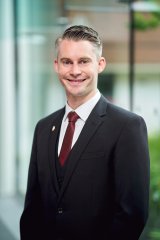
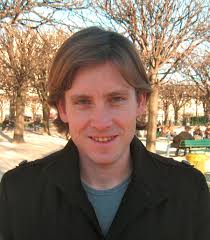
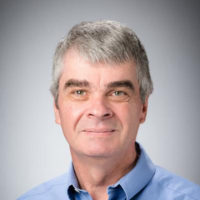
Olivier Tougait is a Professor at the Chemistry, materials and processes for sustainable nuclear power (CIMEND) department within the Unité de Catalyse et Chimie du Solide (UCCS) at Université Lille . He specializes in solid-state chemistry, nuclear materials, and actinide-based compounds, with a focus on understanding fuel cycle processes for nuclear energy. Academic Background: PhD in Chemistry (1998, Université de Rennes1), Postdoctoral Fellow at Northwestern University (1998-2000). Career: Lecturer at Rennes1 (2000-2014), now Professor at UCCS since 2014. Collaborations include the French Alternative Energies and Atomic Energy Commission (CEA) , Orano , and Framatome . Research Interests: Actinide-based intermetallic compounds Phase diagrams of nuclear materials Magnetocaloric properties Fuel cycle process optimization Synthesis and thermodynamic behavior of uranium alloys Collaborative industrial nuclear R&D Publications since 2012 focus on: Uranium-molybdenum fuel characterization Germanium/Aluminum substitution in actinide systems Thermal stability of uranyl peroxide nanoclusters Crystallographic analysis of heavy-fermion materials Labs: Directs the joint research laboratories LR4CU and LRC PUMA, which collaborate with Orano and Framatome on nuclear fuel cycle innovations.
Professor Dan Balint is the Head of the Mechanics of Materials Division in the Department of Mechanical Engineering at Imperial College London. He holds a Ph.D. in Engineering Sciences from Harvard University (2003), an S.M. in Applied Mathematics from Harvard (2001), and a B.S. in Engineering Mechanics from Michigan State University (1998). Prior to joining Imperial in 2006, he was a Research Associate at the Cambridge Centre for Micromechanics. His research spans theoretical and computational solid mechanics, with focus areas including: Micromechanics of crystalline materials (metals/ceramics) Dislocation-defect interactions and failure mechanisms Discrete dislocation plasticity methods Nuclear cladding materials and zirconium hydrides Thin film failure and metal forming processes Fracture mechanics and material size effects Recent publications (2022-2025) predominantly explore dislocation dynamics, zirconium alloy behavior under nuclear conditions, computational modeling of microstructural stresses, and machine learning applications in materials science. Common themes include thermomechanical degradation, crack initiation mechanisms, and multi-scale modeling approaches. Professor Balint serves as Associate Editor of the European Journal of Mechanics - A/Solids and consults for industrial partners including Rolls Royce, BP, and the US Air Force.
Helena Roco Taboada is an Interim Lecturer in the Department of Pharmacology, Pharmacy and Pharmaceutical Technology at the University of Santiago de Compostela. She holds a PhD from the same institution for her thesis on 'Quality-by-design approach for the development of lipid-based nanosystems for anti-mycobacterial therapy' (2021), supervised by Dr. Mariana Landín Pérez and Dr. Carmen Remuñán López. She is affiliated with the Faculty of Sciences and is part of the Strategic Grouping in Materials (AEMAT) and the ID-FARMA research group focusing on dosage forms and drug release systems. Her research interests center on pharmaceutical technology, drug delivery systems, and nanomedicine, with a focus on applications in anti-mycobacterial therapy, osteoporosis treatment, and bone regeneration. Her work integrates lipid-based nanosystems, targeted drug delivery, and AI-driven formulation strategies. Recent projects include developing lipid nanoparticles for clofazimine delivery and thermosensitive hydrogels for osteoarthritis management. Her publications span topics like nanoparticle functionalization, cryoprotectant optimization in lyophilization, and AI tools for nanostructured lipid carrier design. She is active in interdisciplinary collaborations within materials science and biomedical engineering.
Seth Lichter is a Professor of Mechanical Engineering at Northwestern University, specializing in molecular-scale dynamics. His research focuses on polymer dynamics, surface diffusion, and energy-related phenomena. He holds a Ph.D. and M.S. from MIT in Mechanical and Aerospace Engineering, respectively, and a B.A. in Engineering and Applied Physics from Harvard University. His current projects include collaborations on polymer dynamics with Prof. Chris Goedde and Prof. Anupam Garg, as well as studies on liquid-surface interactions under shear. Lichter emphasizes analytical modeling and closed-form solutions to complex problems, combining computation with physical insight. He teaches courses such as Modeling Energy in Society , Molecular Motors in Biology , and the interdisciplinary Nonlinear Dynamics , which spans eight departments across Engineering and Arts & Sciences. Notable awards include the Office of Naval Research Young Investigator Award and the Clemens Herschel Prize for Excellence in Engineering.
Craig Russell is a Lecturer in Pharmacy at Aston University, affiliated with the College of Health and Life Sciences and the Pharmaceutical & Clinical Pharmacy Research Group. He holds a PhD in Paediatric Drug Development from Aston University (2014) and a BSc in Human Biology from the University of Huddersfield (2010). His research focuses on pharmaceutical formulation design, 3D printing in drug manufacturing, nanoparticle drug delivery systems, and genomic approaches to drug development. He leads the MPharm Programme and teaches across multiple disciplines, including Cell Biology, Formulation Science, and Biopharmaceutics. Key projects include a funded PhD investigating 3D printing in tablet production (2018) and collaborations with major pharmaceutical companies like AstraZeneca and GSK. His work emphasizes translational research, bridging laboratory innovations with clinical applications. Recent studies explore mesoporous silica microparticles for targeted drug delivery and photopolymer resin optimization for Stereolithography. Education: BSc Human Biology (Huddersfield, 2010), PhD in Paediatric Drug Development (Aston, 2014), PG Cert HEA (2018). Teaching: MPharm Programme Director; lectures on Cell Biology, Immunology, and Formulation Science. Research Themes: Pharmaceutical Formulation, Nanotechnology, 3D Printing, Genomics. Grants: Internal funding for 3D printing in tablet production. Collaborations: AstraZeneca, GSK, Pfizer, Bristol Myers Squibb, UCL. His articles span drug delivery systems, 3D printing advancements, and genomic profiling, reflecting a commitment to innovation in pharmaceutical science.
Magdy Mahmoud Abdelquader is a Research Fellow at the School of Pharmacy, specializing in therapeutic deep eutectic solvents (THEDES) for pharmaceutical applications. His work focuses on optimizing drug delivery systems through thermal analysis and formulation science. His primary research interests center on Deep Eutectic Solvents , particularly their application in drug delivery for non-steroidal anti-inflammatory drugs (NSAIDs) and lidocaine. Key areas include solvent stability, thermodynamics, microstructure analysis, and thermal processing of thermally labile active ingredients. His fingerprint reveals dominant expertise in Material Science (100% Deep Eutectic Solvent) and Pharmacology (66% NSAIDs, 50% Lidocaine). Analysis of his five publications (2022-2025) shows consistent focus on THEDES systems, with significant citation impact (76 citations for his 2023 review article). Research trends emphasize polymer selection for stability, lidocaine-NSAID interactions, and melt-extrusion processing techniques. Abdelquader's collaborative network includes international researchers like S. Li, G.P. Andrews, and D.S. Jones, with publications in high-impact journals including European Journal of Pharmaceutics and Biopharmaceutics . His work has garnered substantial academic attention with 139 Mendeley readers for his review article and multiple news mentions.
Hans Christian Bruun Hansen is a Professor in Environmental Chemistry at the Department of Plant and Environmental Sciences, Faculty of Science, University of Copenhagen. His research focuses on solid-solution processes governing pollutant fate in soils and sediments with applications in soil and water remediation. His primary research areas include: Engineering and reactivity of iron(II)iron(III) hydroxides ("green rusts") Phosphate bonding in anoxic soils Fate of natural toxins like ptaquiloside and glucosinolates Hansen pioneered critical discoveries in environmental chemistry, including demonstrating green rusts' reducing capacity for nitrate-to-ammonium conversion and dehalogenation of chlorinated compounds. His recent work shows green rusts can form 1 nm thick iron oxide sheets for catalytic applications. His research on natural toxins documented carcinogenic ptaquiloside in soil and elucidated degradation kinetics. Hansen has secured over 35 million DKK in research funding through projects like SupremeTech (phosphorus remediation) and Iron-X (solvent degradation). He teaches environmental chemistry from BSc to PhD levels and has supervised 69 MSc and 25 PhD theses. As Head of the Section for Environmental Chemistry and Physics (40 researchers), he leads initiatives like the EnvEuro MSc program and Sino-Danish Water Research Center. His laboratory focuses on nanoscale remediation materials and natural toxin analysis.
Torgeir Welo is a Professor at the Department of Mechanical and Industrial Engineering , Norwegian University of Science and Technology (NTNU) . He specializes in metal forming , particularly aluminum alloy structures , with a focus on plastic bending behavior , dimensional stability , and 3D forming technologies . His research also encompasses Lean Product Development , emphasizing knowledge reuse and maximizing customer value in automotive and aerospace applications. Key Research Areas : Metal Forming, Aluminum Processing, Springback Control, Lean Development, Additive Manufacturing, Material Substitution Teaching : Courses on Aluminum Technology , Metal Forming Analysis , and Machine Element Design Publications (15 most recent): Focus on springback monitoring , charge weld evolution , flexible forming , machine learning applications , and circular economy frameworks in metal manufacturing.
Scott Armstrong is a Professor of Mathematics at the Courant Institute of Mathematical Sciences, New York University. His research focuses on partial differential equations, calculus of variations, and probability theory, with a specialization in stochastic homogenization of PDEs in random media and related statistical mechanical systems. He holds a Ph.D. from UC Berkeley (2009) and a B.S. from Texas A&M University (2002). Education: Ph.D. in Mathematics, University of California, Berkeley, USA (2009) B.S. in Mathematics, Texas A&M University, USA (2002) Research Interests: Scott's work addresses fundamental questions in homogenization theory, including quantitative estimates for elliptic and parabolic equations in random media, renormalization group methods, and applications to statistical mechanics. His contributions bridge analysis, probability, and mathematical physics, with a focus on rigorous mathematical frameworks for understanding macroscopic behavior from microscopic models. Publications: His recent work includes studies on anomalous diffusion, renormalization group techniques, and quantitative homogenization in high-contrast media. Over 50 peer-reviewed articles highlight his expertise in stochastic PDEs, elliptic regularity, and variational methods. Awards: No specific awards listed in the provided text. Advising & Grants: No student advisees or grant details explicitly mentioned in the text. Labs/Teams: No dedicated labs or collaborative teams explicitly noted, though his research likely involves interdisciplinary collaborations within the Courant Institute.
Stephen W. Hoag is a Professor in the Department of Pharmaceutical Sciences at the University of Maryland School of Pharmacy. His research spans pharmaceutical formulation, process development, and analytical technologies, with a strong emphasis on solid oral dosage forms and controlled release systems. University: University of Maryland School: School of Pharmacy Department: Department of Pharmaceutical Sciences Email: shoag@umaryland.edu Phone: (410) 706-6865 Fax: (410) 706-0346 Address: 20 North Pine Street, Baltimore, MD 21201 Education: B.S. in Biochemistry, University of Wisconsin–Madison, 1982 Ph.D. in Pharmaceutics, University of Minnesota, Twin Cities, 1990 Dr. Hoag's research is centered on two primary areas: (1) the development of systematic methods for formulating immediate and controlled release tablets, utilizing instrumented tablet presses, shear cell analysis, and process analytical technology (PAT) such as Near-Infrared (NIR) and Raman spectroscopy; and (2) the application of mathematical models to understand mass transport in hydrogels, including calcium alginate and silk-elastinlike protein polymers. His work on folic acid supplementation and prenatal vitamins has important public health implications due to the role of folic acid in preventing neural tube defects. Although no recent publications are listed in the provided text, his research output is evident through his co-editorship of the widely used reference work Pharmaceutical Dosage Forms: Tablets (3rd edition, 2008), and his leadership in developing best practices for PAT in pharmaceutical manufacturing. Scientific Awards: No specific awards mentioned in the provided text. Dr. Hoag has actively mentored a large number of graduate students, postdoctoral fellows, and visiting scientists, contributing significantly to pharmaceutical education and workforce development. His laboratory is equipped with state-of-the-art instrumentation for preformulation, formulation, tableting, coating, dissolution testing, and analytical characterization. The lab supports both non-clinical and GMP-level manufacturing research, enabling translational development of dosage forms. He also leads a hands-on short course on tablets and capsules, further extending his educational impact. Research Facilities: Thermal analysis (DSC, MDSC) Solubility and viscosity measurement Moisture analysis (Karl Fisher, LOD) Mechanical testing (Instron) Flow characterization (shear cell, angle of repose) Particle size analysis (laser diffraction, SEM, sieve) Tablet presses (Stoke’s B2, Manesty Beta, fully instrumented) Coating systems (fluid bed, pan coaters) UV/Vis, HPLC, GC, MS instrumentation Environmental stability chambers Granulation, milling, blending equipment Dissolution testing with autosampler
Tim J. Nye is an Associate Professor in the Department of Mechanical Engineering at McMaster University's Faculty of Engineering. He holds a Ph.D. in Mechanical Engineering (1997) from the University of Waterloo, following an M.Sc. (1989) at Ohio State and B.A.Sc. (1987) at Waterloo. His research focuses on applying operations research techniques to manufacturing systems, with specific expertise in optimization algorithms for sheet metal processes, hydroforming reliability, and adaptive control in forging. Education: Ph.D. Mechanical Engineering, University of Waterloo (1997) M.Sc. Mechanical Engineering, Ohio State (1989) B.A.Sc. Mechanical Engineering, University of Waterloo (1987) Research interests span multiple dimensions of advanced manufacturing: developing decision models for production investment, creating novel lot-sizing algorithms incorporating work-in-process costs, exact solutions for 2D nesting problems, and agent-based systems for reliability prediction using warranty data. His work bridges theoretical operations research with practical metal forming applications. Recent publications demonstrate consistent contributions to manufacturing optimization, with particular focus on stamping processes, sheet metal design, and hydroforming reliability. These align with McMaster's research clusters in Advanced Materials & Manufacturing and Infrastructure. Scientific awards include the 2002 CSME Best Student Paper competition win for machine vision research with S. Dworkin. He maintains active collaborations with industry partners, as evidenced by his research on industry-university R&D ventures. Current projects explore intelligent open die forging as a solid freeform fabrication method, demonstrating his commitment to both traditional manufacturing improvement and emerging rapid prototyping technologies.
Professor Gerrit Jan Poelarends is a distinguished academic at the University of Groningen, holding the position of Professor of Pharmaceutical Biotechnology within the Faculty of Science and Engineering. He serves as Director of the Groningen Research Institute of Pharmacy and Head of the Department of Chemical and Pharmaceutical Biology. His extensive research portfolio spans biocatalysis, enzyme engineering, and sustainable pharmaceutical synthesis, with significant contributions to the UN Sustainable Development Goals through environmentally friendly chemical processes. Prof. Poelarends' research interests focus on the discovery and design of novel biocatalysts for pharmaceutical applications. His work centers on developing enzymatic pathways for asymmetric synthesis of noncanonical amino acids, creating enantioselective biocatalysts for various synthetic bond-forming methodologies, and characterizing promiscuous protein functions to understand enzyme evolution. His research group actively explores enzyme engineering guided by mutability landscapes, development of engineered peroxygenases, and discovery of ene- and nitroreductases for sustainable chemistry applications. Analysis of his recent publications reveals a strong trend toward sustainable pharmaceutical synthesis through enzyme engineering, particularly in the areas of nitroreductases, C-N lyases, and peroxygenases. His work consistently bridges fundamental enzymology with practical applications in green chemistry, demonstrating expertise in both understanding enzyme evolution and applying this knowledge to create biocatalysts for environmentally friendly production of pharmaceuticals. His scientific achievements have been recognized through numerous prestigious awards including NWO VENI, VIDI, and VICI grants, ERC Starting and Proof of Concept grants, and competitive fellowships for his students. These awards highlight the innovative nature and impact of his research in biocatalysis and enzyme engineering. Prof. Poelarends has supervised over thirty PhD students throughout his career, with current supervision of multiple doctoral candidates working on projects related to enzyme engineering and biocatalysis. His research has been supported by substantial grants from NWO, the European Union (including multiple ERC grants), and collaborative international projects, reflecting the significance and scope of his work. The Pharmaceutical Biotechnology group he leads includes technicians, postdocs, and PhD students working on various aspects of enzyme discovery and engineering. The research team operates within well-established laboratory facilities at the Groningen Research Institute of Pharmacy, with access to state-of-the-art equipment for protein expression, purification, structural analysis, and biocatalytic reaction screening. Their work is closely integrated with the University of Groningen's broader research initiatives in sustainable chemistry and pharmaceutical sciences, contributing to multiple EU-funded training networks and collaborative projects.
Tristan Kershaw is a Senior Lecturer at the University of Bath's Department of Architecture & Civil Engineering. His research focuses on climate resilience, building physics, and urban microclimate adaptation. He holds an MPhys (2004) and PhD in low-temperature solid-state physics (2008) from the University of Exeter. His work explores how urban design and green/blue infrastructure can mitigate climate change impacts on buildings and communities. He has led projects funded by EPSRC, the Royal Academy of Engineering, and the EU, addressing topics like heatwave mitigation, sustainable land management, and climate adaptation in underserved regions. Key contributions include the CIBSE Napier Shaw Medal (2012) for developing probabilistic future weather models. His research emphasizes long-term building sustainability, thermal comfort, and nature-based solutions for urban resilience. He collaborates internationally and actively supervises doctoral students in climate change resilience, urban heat islands, and zero-carbon design. Education: MPhys (Exeter, 2004), PhD (Exeter, 2008) Affiliations: Centre for Climate Adaptation & Environment Research (CAER), Centre for Regenerative Design & Engineering (RENEW) Grants: EPSRC-funded projects on urban green infrastructure and heatwave impacts Recent projects include designing climate-resilient buildings in Qatar and developing urban models for thermal observation. His work aligns with UN SDGs related to climate action (SDG13) and sustainable cities (SDG11).
Philip Cardiff is a Professor in Computational Mechanics at the School of Mechanical and Materials Engineering, University College Dublin. He holds a BE (2008) and PhD (2012) in Mechanical Engineering from UCD. His research focuses on computational mechanics, machine learning, and their integration, with expertise in finite volume methods, fluid-solid interaction, and biomechanics. He leads the Bekaert University Technology Centre and contributes to editorial roles in the Journal of Open Source Software and OpenFOAM Journal . Cardiff has secured grants from ERC, I-Form, and the UCD Energy Institute, addressing challenges in offshore energy, advanced manufacturing, and cardiac xenotransplantation. Education: BE in Mechanical Engineering, University College Dublin (2008) PhD in Development of the Finite Volume Method for Hip Joint Analysis, University College Dublin (2012) Professional Diploma in University Teaching & Learning, University College Dublin Research Interests: Computational mechanics, finite volume methods, and machine learning integration Fluid-solid interaction, biomechanics, and materials science Applications in additive manufacturing, energy systems, and biomedical engineering Grants & Awards: ERC Consolidator Grant (2020–2025) Funded Investigator in I-Form and UCD Energy Institute Principal Investigator in UCD Centre for Biomedical Engineering Teaching & Leadership: Programme Director for MEngSc in Materials Science and Engineering (2018–2023) Coordinates modules in computational mechanics and advanced materials processing Advocates constructivist teaching approaches with active learning strategies Labs & Collaborations: UCD Centre for Mechanics Bekaert University Technology Centre MaREI and I-Form Research Centres
Prof. Michael Vogel is a Professor at the Institute for Condensed Matter Physics at Darmstadt University of Technology (Technische Universität Darmstadt), where he leads the Molecular Dynamics in Condensed Matter research group. His work focuses on understanding the microscopic structure and dynamics of condensed matter systems and relating these to macroscopic properties. Research Interests Prof. Vogel's research spans several key areas in condensed matter physics and physical chemistry. His group investigates the structure and dynamics of condensed matter—from simple liquids and soft matter to crystalline and amorphous solids. Specific research focuses include: Water Anomalies: Exploring the fundamental understanding of water's anomalies, particularly testing the hypothesis of a transition between two liquid phases in supercooled water. Ion Transport: Studying microscopic mechanisms of ion movement in energy materials, with applications to lithium-ion batteries and fuel cells. Glass Transition: Investigating cooperative and heterogeneous motion processes during the glass transition to contribute to fundamental understanding. Protein Dynamics: Examining the interplay between protein and solvent dynamics, particularly in biological function. Ionic Liquids: Analyzing structural and dynamic heterogeneities in ionic liquids and their relationship to macroscopic properties. Liquids at Interfaces: Understanding how interfaces alter the properties of liquids, especially water, when confined in nanoscopic geometries. Research Methodology Prof. Vogel's group combines modern experimental techniques, particularly nuclear magnetic resonance (NMR) spectroscopy, with computational approaches like molecular dynamics simulations. This dual approach allows for comprehensive characterization of both local molecular motions and long-range transport properties. Their work often involves analyzing systems under confinement, at interfaces, or in supercooled states to reveal fundamental mechanisms that govern material behavior. Scientific Contributions Prof. Vogel has made significant contributions to understanding: The role of dynamic heterogeneities in glass-forming systems Mechanisms of ion transport in solid-state electrolytes The behavior of water in confined geometries and at interfaces The coupling between protein and solvent dynamics Structural and dynamic properties of ionic liquids Research Team and Facilities Prof. Vogel leads an active research group at TU Darmstadt with access to advanced NMR facilities and computational resources. His team regularly publishes in high-impact journals across physics, chemistry, and materials science. The group collaborates with other research institutions and participates in interdisciplinary projects such as the DFG Research Group 1583 on "Hydrogen-bonding liquids in the presence of internal interfaces of different hydroaffinity."