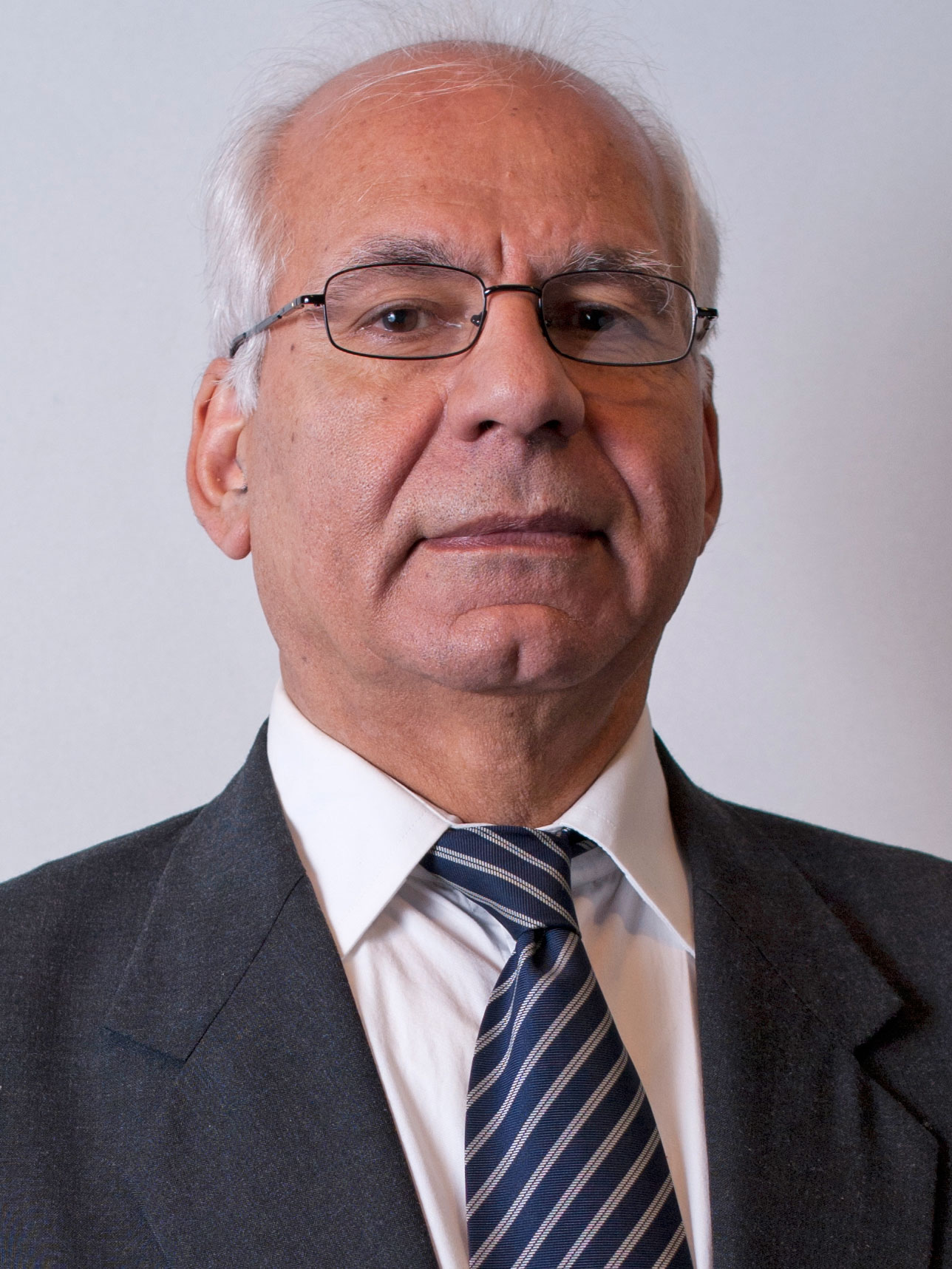
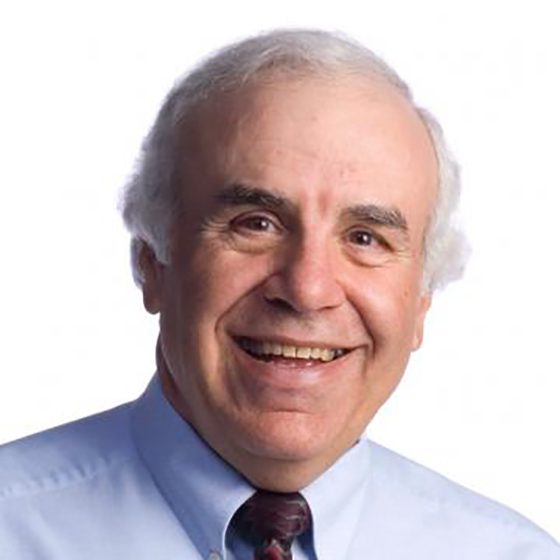
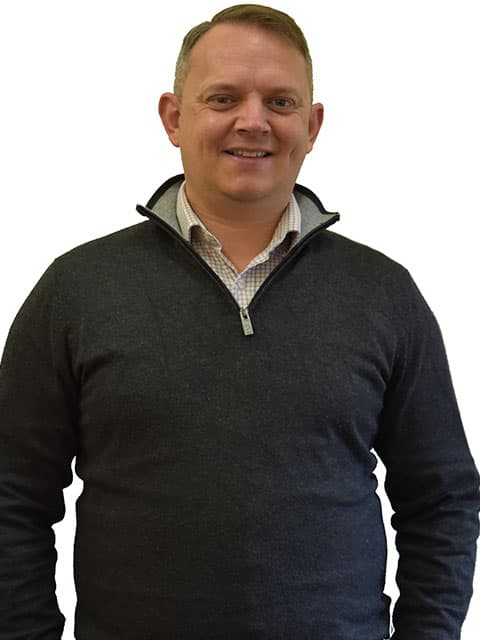
Ellen Zweibel is the W. L. Kraushaar Professor of Astronomy and Physics at the University of Wisconsin–Madison , where she has been a faculty member since 2003. She holds a joint appointment in the Department of Astronomy and Physics . Zweibel earned her undergraduate degree in Mathematics from the University of Chicago and her Ph.D. in Astrophysical Sciences from Princeton University. Her research focuses on plasma astrophysics , particularly the evolution of astrophysical magnetic fields , cosmic ray feedback in galactic and intergalactic environments, and stellar differential rotation dynamics. Recent work examines cosmic ray interactions with the interstellar medium, magnetic instabilities in galaxy clusters, and turbulence-driven dynamo processes. Zweibel's publications highlight collaborations on missions like HelioSwarm and SOFIA/HAWC+ , including the discovery of a magnetized dust ring in the Galactic Center . She leads NSF-funded research on microscale plasma processes in high-beta environments and contributes to understanding magnetic reconnection across astrophysical contexts.
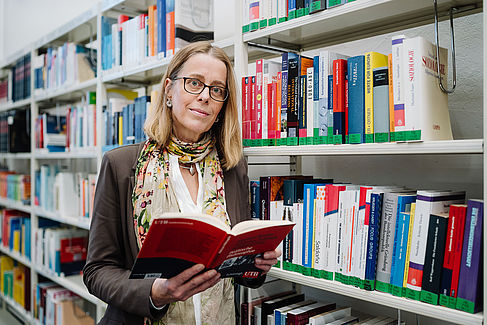
Christina Nikitopoulos Sklibosios is an Associate Professor in the Finance Discipline Group at the University of Technology Sydney (UTS) Business School. She specializes in energy finance, renewable energy economics, sustainable finance, and commodity markets. Her research focuses on analyzing price dynamics and volatility in energy markets, particularly addressing challenges posed by renewable energy integration, green bond markets, and climate transition risks. She has held leadership roles including Finance PhD Program Coordinator (2015–2023) and currently serves on the UTS Business School's Faculty Board and HDR Director (acting). Education: Doctoral and academic background in finance and energy economics (details not explicitly provided in texts). Her research projects include modeling electricity prices in Australia’s National Electricity Market (NEM), assessing renewable energy impacts on grid stability, and evaluating green bond premiums. Key grants include ARC grants on energy market volatility and climate risk (2010–2017), and recent awards such as the UTS Strategic Research Accelerator grant (2024–2025) for net-zero decision-making tools. Research interests span energy economics, sustainable finance mechanisms, and commodity market dynamics. She collaborates with international organizations like CEMA, IAEE, and AFFECT, and contributes to policy discussions on energy transition and financial market reforms.
Minna Palmroth is a Professor of Computational Space Physics at the University of Helsinki 's Faculty of Science , leading the Department of Physics 's Space Physics Research Group. She directs the Kestävän avaruustieteen ja -tekniikan huippuyksikön (Centre of Excellence in Sustainable Space Science and Technology) and serves as the principal investigator for the Vlasiator hybrid-Vlasov simulation framework.
Johan Meyers is a full Professor at KU Leuven's Faculty of Engineering Science, Department of Mechanical Engineering, where he heads the Applied Mechanics and Energy conversion (TME) research unit. He serves as a contact person for TME and is an active member of the KIES – KU Leuven Institute for Energy and Society. His administrative roles include membership on the Council of the Faculty of Engineering Science, the Mechanical Engineering Department Council and Board, and chairing the HPC Steering Committee. Professor Meyers' research focuses on turbulent flow simulation and optimization, with particular emphasis on wind energy applications, atmospheric pollutant dispersion, and computational methods. His work spans Direct Numerical Simulation (DNS), Large-Eddy Simulation (LES), and model reduction techniques for applications in energy engineering. Current research categories include flow control & optimization, wind farm engineering, and atmospheric pollutant dispersion modeling, with specific applications in radioactive release scenarios and wind turbine system optimization. His recent publications demonstrate a strong trend toward wind energy applications, particularly in optimizing wind farm layouts and operations through advanced computational methods. The research shows significant emphasis on Large-Eddy Simulation techniques to study atmospheric boundary layer interactions with wind farms, with growing interest in hybrid wind-solar energy systems and the effects of surface temperature heterogeneity on flow patterns. His work increasingly integrates machine learning approaches to enhance computational efficiency in wind farm modeling. Professor Meyers actively supervises numerous PhD students including Bon, T., Janssens, N., Jamaer, S., and ALREWENY, A., among others. His research is supported by multiple ongoing projects through 2028, including 'Wind-farm co-design in the North-Sea basin given climate and market uncertainty' and 'Reconstruction of turbulence from partial observations,' primarily funded by research councils and industry partnerships. He leads the Turbulent Flow Simulation and Optimization (TFSO) research group, which develops efficient supercomputing simulation tools for turbulent flow applications in energy engineering. The group specializes in wind farm optimization, atmospheric pollutant dispersion modeling, and airborne wind energy systems, with a particular focus on LES studies of wind farm interactions with the atmospheric boundary layer.
Francine Battaglia is a Professor and Chair of the Department of Mechanical and Aerospace Engineering at the University at Buffalo, part of the School of Engineering and Applied Sciences. She directs the Advanced Simulations for Computing ENergy Transport (ASCENT) Laboratory. Her research focuses on computational fluid dynamics (CFD) applications in building energy systems, renewable energy, turbulent multiphase flows, and combustion. She holds a PhD in Mechanical Engineering from Pennsylvania State University (1997), and MS/BS degrees from SUNY Buffalo (1992, 1991). Research interests include CFD modeling for HVAC optimization, natural ventilation design, pathogen dispersion mitigation, and biomimetic aerodynamics inspired by insect flight. Her work bridges engineering, biology, and environmental science, addressing challenges in energy efficiency, public health, and sustainable architecture. Key contributions include developing predictive models for hydroplaning safety, solar chimney systems, and microbial fuel cells. She has received accolades such as the ASME Fellow distinction (2009), MAC Academic Leadership Fellowship (2019-2020), and Virginia Tech’s Teaching Excellence Award (2016). Her articles span CFD advancements in fluidization, combustion, and ventilation strategies, emphasizing practical applications in energy systems and public health. The ASCENT Lab collaborates on adaptive HVAC technologies and eco-friendly building designs, reflecting her dedication to interdisciplinary innovation. Awards: MAC Leadership Fellow, ASTFE Fellow, ASME Dedicated Service Award Education: PhD (Penn State), MS/BS (SUNY Buffalo) Labs: ASCENT Lab (focusing on CFD and energy transport)
Tomas Karlsson is a Professor and Deputy Head of Department at the Royal Institute of Technology , specializing in Space and Plasma Physics . He teaches courses such as EF2240 Space Physics , EF2245 Space Physics II , and EI1240 Electromagnetic Theory , while serving as examiner or coordinator for advanced projects and thesis work in space-related fields. His research focuses on the interaction between the solar wind and planetary magnetospheres , with specific interests in bow shock physics , magnetosheath jets , solar wind magnetic holes , auroral physics , and comparative studies of magnetospheres across planets and comets. He employs spacecraft data (e.g., MMS , Cluster , BepiColombo ) and simulations to analyze plasma dynamics and space weather phenomena. The 15 most recent publications highlight trends in solar wind turbulence , magnetospheric boundary processes , and planetary plasma interactions , with recurring themes in SLAMS (Short Large-Amplitude Magnetic Structures) , magnetosheath jet formation , and magnetic hole propagation . These works span statistical surveys, hybrid simulations, and multi-mission data analysis.
Professor Mohammad E. Taslim is a faculty member in the Department of Mechanical and Industrial Engineering at Northeastern University's College of Engineering. He holds the role of Program Director for the Master of Science in Energy Systems program. His academic expertise spans experimental and numerical research in gas turbine cooling technology, renewable energy systems (solar/wind), non-Newtonian fluid dynamics, and nano-sensor development. Education: PhD in Mechanical Engineering from the University of Arizona (1981). Research focuses on heat transfer optimization in turbine blades, multiphase flow analysis, and energy sustainability. He leads projects funded by organizations like General Electric Aviation and the American Chemical Society. Key research areas include: 1) Advanced gas turbine cooling strategies, 2) Sand separation systems for helicopter engines, 3) Non-rotating wind energy generation. Notable publications include studies on droplet dynamics, film cooling effectiveness, and rib-roughened channel heat transfer. Awards include the 2022 Faculty Research Team Award, Fellowships from ASME and AIAA, and multiple patents (e.g., non-rotating wind turbine and carbon nanotube ladder technology). Active in academic leadership, he advises students on study abroad programs like the Vietnam Dialogue, integrating field visits with engineering coursework.
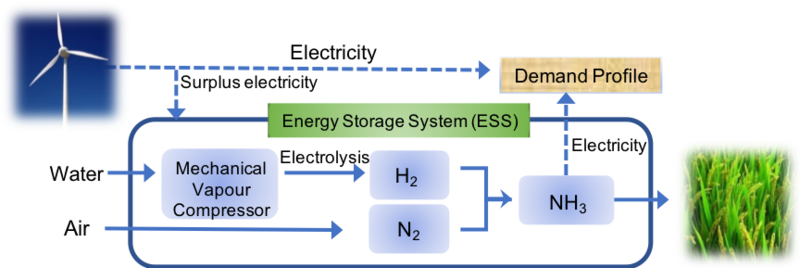
Professor Edman Tsang leads the Wolfson Catalysis Centre at the University of Oxford, focusing on catalysis and sustainable energy systems. His work includes developing novel catalysts for green ammonia production, renewable energy storage, and CO₂ conversion. He collaborates with Siemens on a £1.5M Innovate UK project for a wind-powered green ammonia plant at Rutherford Appleton Laboratory. Research spans photocatalytic solar cells, biofuel production from biomass, and hydrogen storage solutions. His team pioneered the e-Haber-Bosch process, reducing energy demands through renewable integration. Key innovations include patented catalysts for ammonia synthesis and advanced electrochemical systems. The group also explores plastic upcycling via mild heterogeneous catalysis and carbon capture technologies.
Victor Becerra is a Professor of Power Systems Engineering at the University of Portsmouth, affiliated with the School of Electrical and Mechanical Engineering within the Faculty of Technology. He is also associated with the Centre for Environmental and Renewable Energy Solutions and the Agile Centre For Equitable Sustainability. His research focuses on advanced control systems, renewable energy integration, smart grids, battery management, and nuclear power plant control. He actively supervises PhD students in topics like optimal control of battery systems and microgrid optimization. His academic work spans over 193 publications, with recent contributions emphasizing techno-economic analysis of green hydrogen, modular energy storage solutions, and optimal control strategies for batteries and nuclear reactors. His research often addresses real-world applications such as grid flexibility at ports, peer-to-peer energy trading platforms, and drone-based inspection of offshore wind turbines. Becerra's expertise includes developing control algorithms for marine structures, sodium-cooled reactors, and unmanned aerial vehicles. He has contributed to books on solar energy engineering and applications, highlighting interdisciplinary approaches to sustainability challenges. His work integrates theoretical models with practical implementations, such as energy management systems for compressed air and advanced BMS for drones. Key themes in his research include renewable energy systems optimization, fault-tolerant control mechanisms, and adaptive control strategies for dynamic environments. He collaborates internationally, addressing global energy challenges through innovative control methodologies and sustainable technologies.
Prof. Dr. Barbara Praetorius is a leading scholar in sustainability economics at HTW Berlin since 2017. She co-chaired Germany's Coal Commission ("Kommission Wachstum, Strukturwandel und Beschäftigung") and serves on advisory boards for Berliner Wasserbetriebe and VERBUND AG. Her work bridges climate policy, energy economics, and social equity, with a focus on Germany and the Global South. Research Themes: Climate economics, decarbonization pathways, renewable energy integration, and sustainable development in emerging economies. Policy Influence: Regular contributor to national climate policy debates, particularly on carbon pricing and coal phase-out strategies. Academic Roles: Professor at HTW Berlin's Department 3: Economics and Law since 2017, previously Deputy Director of Agora Energiewende (2014-2017). Recent Publications emphasize plug-in solar systems' socio-economic impacts, just coal transitions in Hesse, and ecological industrial policy frameworks. Her 2024 work on energy market transformation highlights the need for policy innovation and market redesign. Scientific Recognition : Ranked among Germany's most influential female economists by FAZ Active in EU energy policy advisory roles Recipient of BMBF research funding for international projects
Dr. Huadong Mo is a Senior Lecturer at the School of Systems and Computing, University of New South Wales (UNSW) Canberra, Australia. He holds a B.E. degree in automation from the University of Science and Technology of China (2012) and a Ph.D. in systems engineering and engineering management from the City University of Hong Kong (2016). Prior to his current position, he was a research associate at ETH Zurich's Reliability and Risk Engineering Lab (2016-2019) and a Lecturer at UNSW Canberra (2019-2021). Dr. Mo's educational background includes a strong foundation in systems engineering with international experience across China, Switzerland, and Australia. His career trajectory demonstrates a progression from academic research to faculty positions with increasing responsibilities in teaching and research leadership. His research focuses on enhancing the resilience, performance, and security of complex systems using learning-based algorithms, primarily in power and energy systems, cyber-physical systems, and manufacturing systems. He applies data analytics to understand system evolution under uncertainties, with particular emphasis on prognostics and health management, sustainable transportation, robust operation of power systems under extreme events, and reinforcement learning-based asset management. His work bridges theoretical advances with practical applications in critical infrastructure. Analysis of Dr. Mo's recent publications reveals a strong focus on energy systems, particularly in the integration of machine learning with power grid management, battery storage systems, and resilience against cyber threats. His research shows a clear trajectory toward increasingly complex system integration, with growing emphasis on multi-vector energy communities, cross-domain prediction, and uncertainty-aware energy management. The interdisciplinary nature of his work spans electrical engineering, computer science, and operations research. 2024 IEEE SMC Early Career Award 2023 Visiting Research Fellowship (Jean d'Alembert Pour Fellowship) Gold Medal in 2024 China International College Student Innovation Competition (as supervisor) Arc PGC Supervisor Award (2021) IEEE SMC Outstanding Chapter Award (2021) Alumni Achievement Award from City University of Hong Kong (2019) Dr. Mo actively supervises numerous HDR students working on cutting-edge research topics including battery health monitoring, quantum control, reinforcement learning for power systems, and explainable AI for energy management. He leads multiple significant research grants totaling over 3 million AUD, including projects funded by ARC, Energy Innovation Fund, and international collaborations with institutions like ETH Zurich, Cambridge, and Tsinghua University. His research group maintains strong international connections, facilitating student exchanges and collaborative research. As Postgraduate Course Coordinator of Systems Engineering and Chair of IEEE SMC ACT Chapter, Dr. Mo plays a significant role in academic leadership and professional community building. His research team collaborates with industry partners on practical implementations of their theoretical work, particularly in the energy sector.
Anthony R. Ingraffea is a Professor in Cornell University's College of Engineering, Department of Civil and Environmental Engineering. He has taught structural mechanics, finite element methods, and fracture mechanics at Cornell since 1977. His research focuses on computational simulation systems for fracture control in engineered systems, combining experimental testing with numerical modeling. His groundbreaking work in computational mechanics includes pioneering interactive computer graphics applications and leading the $15M NSF-funded Synthesis National Engineering Education Coalition. He received significant recognition for addressing aging aircraft problems through NASA-sponsored research. Key research areas include: Fracture mechanics in aerospace and civil systems Finite element analysis for complex materials Environmental risk assessment of energy infrastructure Digital twin technology for predictive engineering Renewable energy systems modeling Scientific awards highlight his achievements: NASA Group Achievement Award (1996) ASTM Irwin Medal (2006) TIME Magazine 'People Who Mattered' (2011) Fellow of the International Congress on Fracture (2009) NSF Presidential Young Investigator (1984) He has secured over $35M in R&D grants from agencies like NSF, NASA, and industry partners including Boeing and IBM. His educational innovations in engineering teaching technology earned multiple university and national awards.
Sebastien Nicolas Gros is a Professor at the Department of Engineering Cybernetics, Norwegian University of Science and Technology (NTNU). His research focuses on safe reinforcement learning (RL) and data-driven model predictive control (MPC), with applications in energy systems, biomedical engineering, and autonomous vehicles. Institution: Norwegian University of Science and Technology Department: Engineering Cybernetics His work emphasizes AI-driven optimization for domestic energy storage, battery integration, and smart building management. Collaborations include Equinor, DNV, Kongsberg, Volvo, and CorPower Ocean. Key themes in his publications include: Control theory for renewable energy systems (wave energy converters, buildings) Biomedical applications (artificial pancreas, glucose monitoring) Transportation systems (electric vehicles, autonomous ships) Machine learning integration with physical models He supervises 6 PhD students and co-supervises projects on multi-rotor wind turbines and industrial PhD collaborations. The articles demonstrate a convergence of RL, MPC, and uncertainty quantification across energy, biomedical, and transportation domains.
Dr. Craig Hancock is a Research Professor in Geospatial Engineering with 15 years of research experience in Surveying and Geodesy. His expertise spans GNSS error mitigation, structural monitoring, and geospatial techniques for digital construction. He has supervised 10 PhD students and published over 80 academic papers. Education: BSc and PhD in Surveying/Geomatics Key Projects: Principal Investigator for projects on GNSS error mitigation, structural health monitoring, and marine economy technology. His research focuses on three core areas: GNSS error categorization and mitigation (particularly ionospheric effects), structural and environmental change monitoring, and geospatial data acquisition for BIM and digital construction. Recent work includes improving 3D modeling accuracy, UAV-based GNSS spoofing detection, and BIM-enabled facility management in healthcare infrastructure. His articles explore topics like sensor optimization, structural dynamics, and geospatial data fusion. Grants include £150k for bridge deformation studies and £9k for ionospheric error analysis. He actively contributes to teaching and enterprise initiatives, integrating geospatial technologies with industry needs.
Jef Poortmans is a Visiting Professor at KU Leuven, Belgium, specializing in photovoltaic technologies and solar energy systems. His research spans multiple applications including conventional solar installations, agrivoltaics, vehicle-integrated photovoltaics, and tandem solar cell configurations. Affiliated with the Electa department at KU Leuven, he maintains an active research profile with numerous publications extending into 2025. His research interests focus on advancing photovoltaic technology across multiple dimensions. Poortmans investigates thermal modeling to improve energy yield predictions, develops lightweight PV modules for vehicle integration, explores agrivoltaic systems that combine agriculture with solar energy production, and works on next-generation perovskite and tandem solar cell technologies. His work often addresses practical implementation challenges including reliability under various environmental conditions, mechanical integration requirements, and performance optimization for specific applications. Analysis of his recent publications reveals a strong emphasis on practical implementation challenges of photovoltaic systems. His work spans fundamental materials science (particularly for perovskite and thin-film technologies), system integration challenges (especially for vehicle applications), and innovative approaches to land use optimization through agrivoltaics. A recurring theme is addressing reliability and performance issues under real-world operating conditions rather than ideal laboratory settings. Poortmans frequently collaborates with researchers across multiple institutions, indicating strong industry and academic connections within the photovoltaics community. His work appears in high-impact journals including Solar Energy Materials and Solar Cells, Scientific Reports, and Advanced Functional Materials, demonstrating recognition within the field. While specific grant information isn't detailed in the provided materials, his extensive publication record across diverse photovoltaic applications suggests successful funding acquisition for multiple research projects. His involvement in PhD theses supervision indicates active mentorship of next-generation researchers in the photovoltaics field. His research group appears to focus on bridging fundamental photovoltaic science with practical engineering applications, particularly addressing the reliability and integration challenges that prevent wider adoption of solar technologies in non-traditional applications like vehicles and agricultural settings.