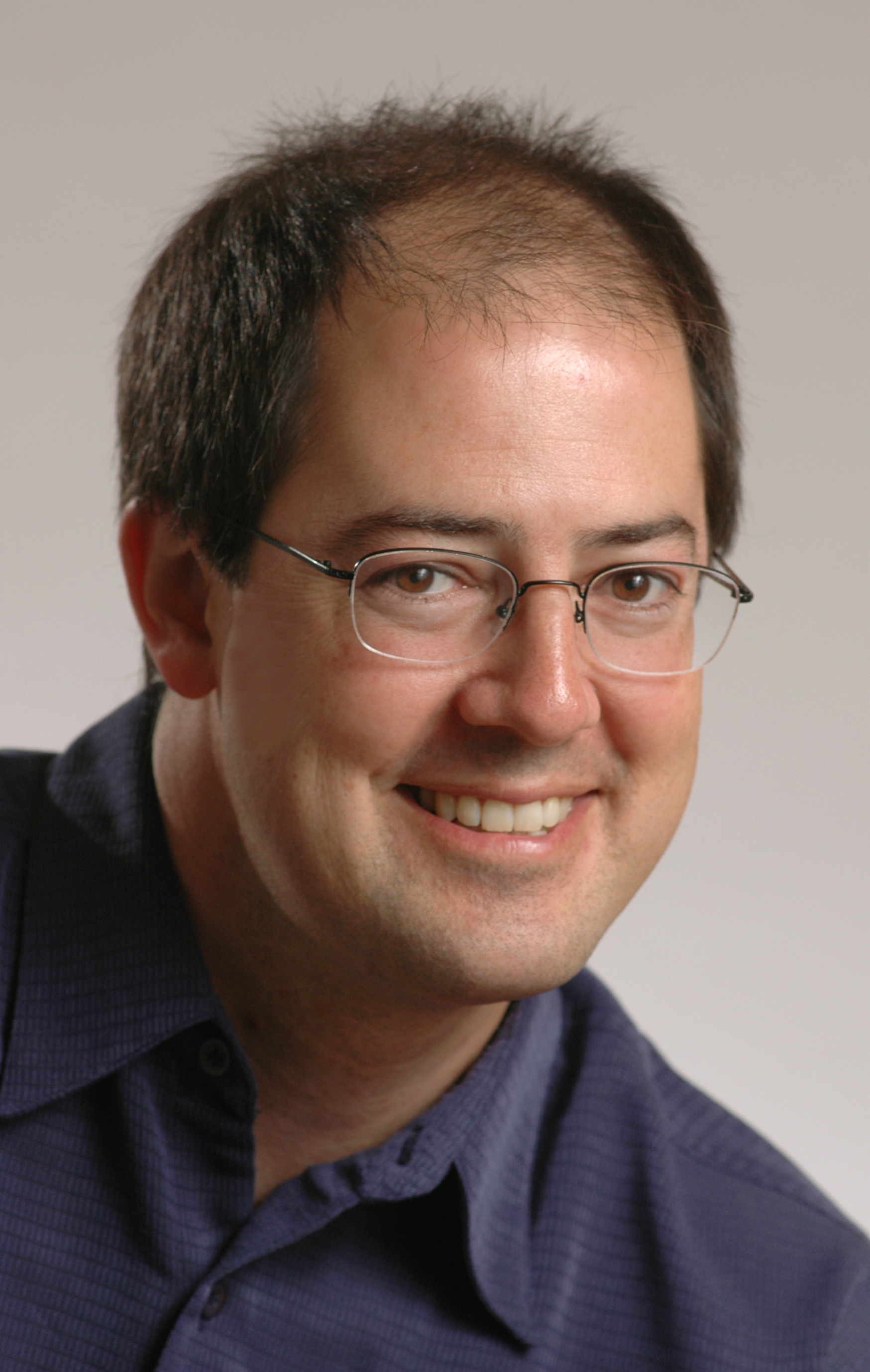
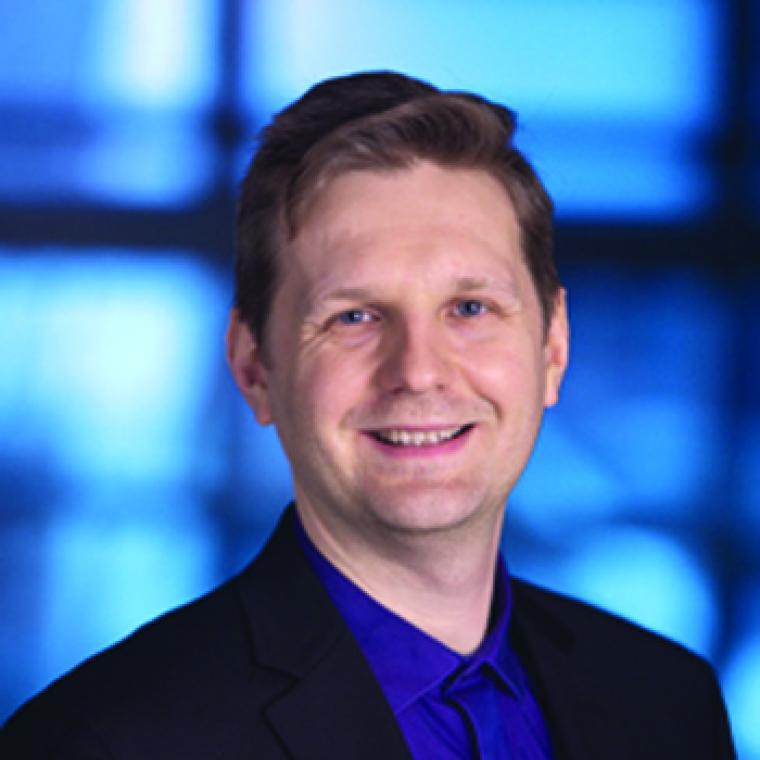
Kristofer Pister is a Professor in the Department of Electrical Engineering and Computer Sciences at the University of California, Berkeley. He co-directs the Berkeley Sensor and Actuator Center (BSAC) and the Ubiquitous Swarm Lab. His career spans groundbreaking innovations in Micro/Nano Electro Mechanical Systems (MEMS), Control Systems, and Low-Power Circuits, with a focus on Smart Dust and synthetic insects. Education: Ph.D. and M.S. in EECS from UC Berkeley (1992, 1989); B.A. in Applied Physics from UC San Diego (1986). His research areas include MEMS , Control Systems , Robotics , and Integrated Circuits , with recent work on self-powered micro-sensors, crystal-free radios, and interplanetary swarm networks. Key awards include the ISA Albert F. Sperry Founder Award (2009) , Alexander Schwarzkopf Prize (2006) , and the NSF CAREER Award (1996) . He has authored numerous influential publications in wireless sensor networks and microrobotics. His lab, Ubiquitous Swarm Lab , explores distributed robotics and swarm intelligence. Pister emphasizes open collaboration in research, ethical conduct in academia, and efficient resource utilization for graduate students.
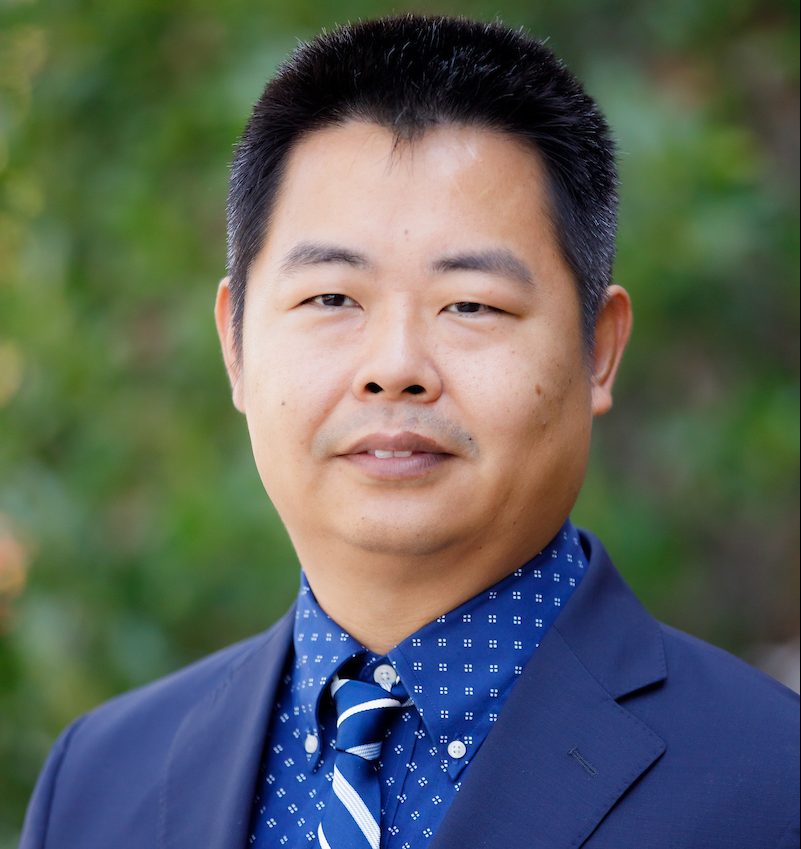
Dr. Jiaqi Gong serves as Associate Professor in Computer Science and Adjunct Associate Professor in Mechanical Engineering at The University of Alabama's College of Engineering, while directing the Alabama Center for the Advancement of Artificial Intelligence. His academic foundation includes: B.S. in Engineering, China University of Geoscience (2004) Ph.D. in Engineering, Huazhong University of Science and Technology (2010) Dr. Gong's research pioneers human-AI convergence through cyber-physical systems and smart health technologies, developing mobile/wearable platforms to enhance human perceptual, cognitive, and physical capabilities. His work spans artificial intelligence, machine learning, computer vision, and IoT with applications in healthcare, environmental monitoring, and education. The Sensor-Accelerated Intelligent Learning (SAIL) laboratory he founded drives innovation in behavior change interventions, human movement modeling, and educational data mining. Recent publications reveal strong interdisciplinary trends: healthcare AI dominates with medication adherence prediction and surgical classification systems, while environmental applications feature flood-risk communication and drought analysis. His work increasingly integrates generative AI and LLMs across domains, demonstrating methodological innovation in federated learning, knowledge graphs, and explainable storytelling frameworks. Notable recognitions include: Best Student Paper Award, IEEE/ACM Connected Health Conference (2022) Best Student Paper Award, Body Sensor Networks Conference (2019) Data Challenge Win, IEEE Biomedical Health Informatics (2018) Best Paper Award, Body Area Networks Conference (2014) Best Demonstration Award, IEEE Wireless Health Conference (2014) Dr. Gong leads significant funded projects including a $2M CDC/NIOSH grant for first responder safety and $3M NSF funding for hydrologic research. As SAIL laboratory director, he mentors students in developing clinically deployed technologies for multiple sclerosis, dementia, and mental health. Future work focuses on scaling AI applications in chronic disease management and climate resilience through the Alabama AI Center. The SAIL laboratory (founded 2017) operates as a multidisciplinary hub developing wearable/mobile systems for health applications, with active collaborations across medical clinics and engineering departments for real-world deployment of behavior change interventions and movement analysis tools.
Dustin Tingley is a Professor of Government at Harvard University and holds a joint appointment at the Harvard Kennedy School of Public Policy . He serves as Interim Vice Provost for Advances in Learning and directs the Data Science and Technology Group and the Harvard Initiative on Learning and Teaching . He earned a PhD in Politics from Princeton and a BA in political science and math from the University of Rochester. Key Roles : Deputy Vice Provost (past), Chair of Harvard's Standing Committee on Climate Education Research Focus : Climate change politics, data science, causal inference, and international political economy His recent work explores the political economy of climate transitions , public opinion on carbon policies , and machine learning applications in social sciences . He co-founded ABLConnect , a repository for active learning pedagogy, and organized conferences on causal mechanisms , teaching with AI , and equitable classrooms . Awards : Gladys M. Kammerer Award (2015) for co-authored book Sailing the Water’s Edge Notable Publications : Uncertain Futures: How to Unlock the Climate Impasse (2023, with Alex Gazmararian) The Political Economy of the Clean Energy Transition (2025)
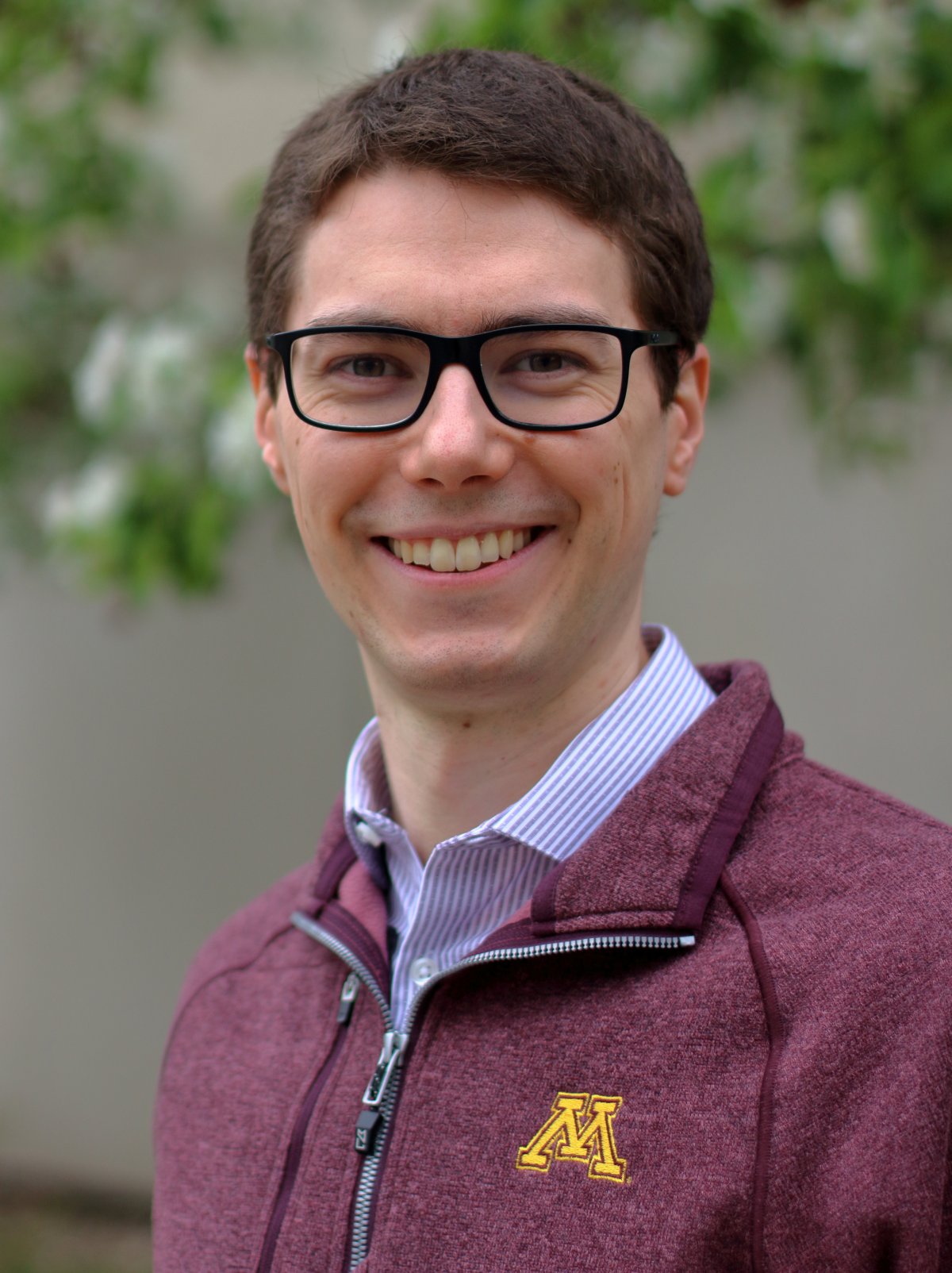
Ryan Caverly serves as an Associate Professor in the Department of Aerospace Engineering and Mechanics at the University of Minnesota, Twin Cities, holding the prestigious McKnight Land-Grant Professorship. His research bridges theoretical control frameworks with practical aerospace and robotics applications, focusing on dynamic modeling and system control. Education: BS in Honours Mechanical Engineering from McGill University MS in Aerospace Engineering from the University of Michigan PhD in Aerospace Engineering from the University of Michigan Professor Caverly's research centers on input-output stability, robust control of nonlinear systems, and computationally efficient modeling of flexible structures. His work spans aerospace vehicles, spacecraft, and robotic manipulators, emphasizing theoretical rigor alongside real-world implementation challenges in structural flexibility and control precision. Recent publications reveal strong emphasis on predictive control for orbital mechanics, hypersonic vehicle dynamics, and cable-driven systems. His work consistently integrates convex optimization, state estimation, and structural dynamics to solve complex problems in solar sail technology, UAV navigation, and hypersonic flow measurement. Scientific Awards: McKnight Land-Grant Professor Caverly leads multiple externally funded projects including NASA-sponsored research on solar sail momentum management, UAV state estimation with Honeywell, hypersonic bow shock measurements with the Air Force, and deployable space structure control. His grants portfolio demonstrates significant industry and government collaboration in aerospace innovation. He directs the Aerospace, Robotics, Dynamics, and Control (ARDC) Lab, which specializes in the intersection of dynamic modeling and control theory for flexible multi-body systems, with particular focus on cable-driven mechanisms and lightweight aerospace structures.
Kathleen C. Howell is the Hsu Lo Distinguished Professor of Aeronautics and Astronautics at Purdue University's School of Aeronautics and Astronautics. Her expertise spans orbit mechanics, spacecraft trajectory optimization, and mission design in multi-body systems. She holds degrees from Iowa State University (B.S., 1973), Stanford University (M.S., 1977; Ph.D., 1983). B.S. in Aerospace Engineering, Iowa State University, 1973 M.S. in Aeronautical & Astronautical Engineering, Stanford University, 1977 Ph.D. in Aeronautical & Astronautical Sciences, Stanford University, 1983 Her research focuses on libration point orbits, solar sail trajectories, and trajectory optimization in Earth-Moon and interplanetary systems. She has pioneered methods for analyzing Lissajous trajectories, invariant manifolds, and low-thrust mission design. Recent work includes solar sail applications for lunar coverage and ARTEMIS mission trajectory analysis. Publications highlight innovations in multi-body dynamics, with contributions to journals like Acta Astronautica , Journal of Guidance, Control, and Dynamics , and AIAA/AAS Conference Proceedings . Her work emphasizes practical mission design tools and visualization techniques. Awards: Fellow, AIAA (2013) W.A. Gustafson Teaching Award (2012) Dirk Brouwer Award (2004) Presidential Young Investigator Award (1984) Multiple Elmer F. Bruhn Teaching Awards Her advising and grants include leadership in space mission design, formation flight, and solar sail technology. She has collaborated on projects like the TRIANA mission and contributed to the Cassini end-of-mission analysis. Active in professional societies, she has edited conference proceedings and delivered invited lectures globally.
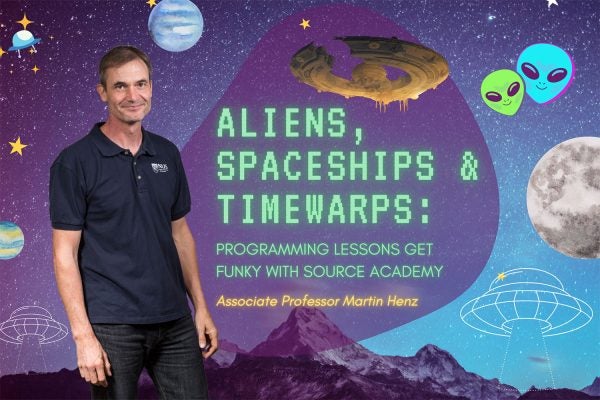
Martin Henz is an Associate Professor at the National University of Singapore , affiliated with the School of Computing and its Department of Computer Science . His academic journey includes an M.Sc. in Computer Science from Stony Brook University (1993) and a Dr.rer.nat. in Computer Science from Saarland University (1997). He has also worked as a Research Scientist at the German Research Centre for Artificial Intelligence. Research Focus : Scalable Experiential Learning, Systems for Teaching/Learning, AI in Education, Programming Languages, Algorithms, and Constraint Programming. Key Projects : Source Academy (immersive programming environment), Deep Teaching (LMS enhancements), and NUS Seafarers (maritime experiential learning). Publications span education technology, programming languages, and sustainable engineering, with recent works focusing on JavaScript-based pedagogy, automated question generation, and electric vehicle conversions. He supervised Rahul Singhal 's PhD, leading to the educational startup Cerebry, and co-founded Workforce Optimizer Pte Ltd with Alan Sevugan. Awards : NUS Annual Digital Education Award (2021) NUS Annual Teaching Excellence Award (2016/17) Fulbright Scholarship (1990) Startup @ Singapore Champion (2001)
Artur Davoyan serves as an Assistant Professor in the Department of Mechanical and Aerospace Engineering at the University of California, Los Angeles (UCLA), based in room 46-147E of Engineering IV. He leads the Davoyan Research Group, focusing on revolutionary technologies for space exploration and advanced materials systems. Education: Australian National University, 2011 Research Expertise: Dr. Davoyan pioneers breakthrough propulsion systems including pellet-beam propulsion and light sails capable of interstellar travel at unprecedented speeds. His work integrates high-power laser technology, nanoscale materials engineering, and optoelectronic device development for applications in space, energy, and communications. Key specialties encompass metamaterials, plasmonics, and metasurfaces for manipulating light-matter interactions at fundamental levels. Research Impact: His innovations have driven extensive media coverage across Wired, Space.com, and The U.S. Sun (2021-2023), highlighting concepts like smartphone-sized laser-propelled spacecraft and 5-year voyages to Voyager 1. This research receives support from NASA initiatives and UCLA funding programs including the Promise Institute grant (2021-22). Research Infrastructure: The Davoyan Research Group operates as the primary hub for developing next-generation propulsion technologies and advanced materials, with ongoing projects targeting solar system exploration and interstellar mission capabilities through laser-matter interaction physics.
Igor Bargatin is an Assistant Professor of Mechanical Engineering and Applied Mechanics at the University of Pennsylvania's School of Engineering and Applied Science. His research focuses on micro- and nanoelectromechanical systems (MEMS/NEMS) for energy conversion, optics, and smart materials. He develops innovative devices such as thermionic energy converters and photophoretic flyers, leveraging interdisciplinary approaches across mechanical engineering, materials science, and applied physics. Research Interests: Photophoretic propulsion and near-space flight systems Ultralight robust materials (e.g., nanocardboard) Thermionic energy conversion and surface engineering MEMS/NEMS fabrication and microscale devices Key Contributions: Developed lightweight photophoretic flyers capable of carrying payloads in the mesosphere Pioneered tunable work function surfaces for high-efficiency thermionic converters Advanced mechanical metamaterials with unprecedented strength-to-weight ratios Awards & Grants: NSF CAREER Award (2019) for thermal transport research in metamaterials Labs & Affiliations: Center for Environmental Building & Design (collaborator) University of Pennsylvania Nanofabrication Facility
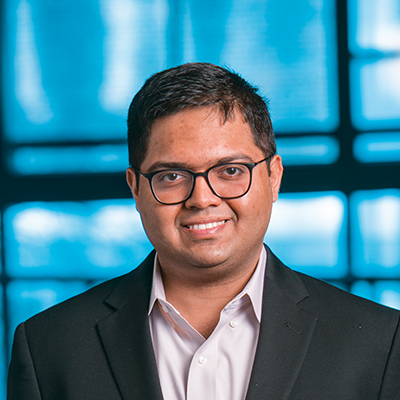
Deep Jariwala is an Associate Professor and the Peter and Susanne Armstrong Distinguished Scholar at the University of Pennsylvania, with primary appointment in the Department of Electrical and Systems Engineering and secondary affiliation in Materials Science and Engineering. He serves as the Undergraduate Chair for ESE and leads the Device Research and Engineering Laboratory. Dr. Jariwala's research focuses on nanometer and atomic scale devices, materials and interfaces for computing, sensing, information technology, and renewable energy applications. His interdisciplinary work bridges Electrical Engineering, Materials Science, Condensed Matter Physics, Optics, and Physical Chemistry. Key research areas include nanoelectronics, nanophotonics, 2D materials (particularly transition metal dichalcogenides), ferroelectric devices (especially AlScN-based systems), and advanced nanofabrication techniques. His laboratory investigates fundamental properties while developing practical device applications. Analysis of Dr. Jariwala's recent publications (2023-2025) reveals a strong emphasis on wafer-scale 2D materials growth, ferroelectric memory devices, and high-temperature electronics. His work spans from fundamental materials science to device applications, with particular focus on selector-free memory architectures, high-temperature operation (>500°C), and novel approaches to doping and contact engineering in 2D semiconductor devices. Recent trends show increasing emphasis on AI hardware and energy-efficient computing paradigms. Dr. Jariwala has been recognized with the Peter and Susanne Armstrong Distinguished Scholar award for his research contributions. As an academic advisor, Dr. Jariwala mentors undergraduate, graduate, and postdoctoral researchers in his laboratory. His team develops expertise in semiconductor processing, thin film deposition, nanofabrication, electrical characterization, and optical spectroscopy. He actively recruits students interested in nanoelectronics, nanophotonics, and atomic scale materials, providing hands-on experimental experience with close mentoring. The Device Research and Engineering Laboratory, located at 204 Singh Building (3205 Walnut Street), is equipped for advanced materials synthesis, device fabrication, and comprehensive electrical and optical characterization of nanoscale systems.
Prof. Dr.-Ing. Sergio Montenegro is a Professor of Aerospace Information Technology at Julius-Maximilians-University Würzburg, where he leads the Chair of Computer Science VIII. His academic journey includes a Bachelor's in Computer Science from Universidad del Valle de Guatemala (1978-1982), a Diploma from Technische Universität Berlin (1983-1985), and a Dr.-Ing. from TU Berlin (1989). Prior to joining academia, he held positions as a software developer (1979-1982), research coordinator at Fraunhofer Gesellschaft (1985-2007), and Head of Department at DLR (2007-2010). His research focuses on dependable distributed systems for aerospace applications, including satellite networks, real-time operating systems (RODOS), UAV swarm control, fault-tolerant architectures, and space mission software. Key projects span satellite formation flight (TET, AsteroidFinder), solar sail missions, distributed avionics (VIDANA), and medical IoT systems. Recent publications (2018) demonstrate strong emphasis on distributed spacecraft systems, UAV navigation, fault tolerance, and software engineering for space applications. Trends include miniaturized satellite technologies, decentralized control algorithms, real-time OS verification, and Java-based space systems. He leads research in distributed computing networks and UAV laboratories, supervising projects like VaMEx-LaOLA (Mars exploration) and ultra-wideband positioning systems. Though no awards are documented, he has coordinated over 100 projects including ESA and DLR missions.
Karim Abu Salem serves as a Fixed-term Assistant Professor in the Department of Mechanical and Aerospace Engineering (DIMEAS) at the Polytechnic University of Turin, affiliated with the College of Mechanical, Aerospace, and Automotive Engineering. He additionally holds invited membership in the College of Management and Production Engineering. His teaching portfolio includes Aerospace Vehicle Design, Space Flight Mechanics/Structures, Space Environment Operations, and Aeronautical Legislation courses for both bachelor's and master's programs in Aerospace Engineering. Dr. Abu Salem's research centers on sustainable aviation innovation, specializing in box-wing aircraft configurations, hybrid-electric and hydrogen propulsion systems, and advanced structural design methodologies. His work addresses critical challenges in emissions reduction, flight dynamics optimization, and climate impact mitigation through computational modeling, metamodeling techniques, and multidisciplinary design analysis. Key focus areas include unconventional aircraft architectures, power management systems, and metamaterial applications for next-generation aerospace vehicles. Analysis of his recent publications (2023-2025) reveals a concentrated research trajectory toward decarbonizing regional and medium-range aviation. His work demonstrates increasing emphasis on liquid hydrogen propulsion, box-wing aerodynamic efficiency, and holistic environmental impact assessment beyond CO 2 emissions. The publications exhibit strong collaboration patterns with researchers like G. Palaia and E. Carrera, primarily targeting high-impact journals in aerospace engineering and sustainability. As an active educator, Dr. Abu Salem contributes to curriculum development across multiple aerospace engineering programs, bridging theoretical concepts with emerging sustainable aviation technologies through his course collaborations and lectures.
Dr. Bruce Betts is Chief Scientist and LightSail Program Manager at The Planetary Society, a global space advocacy organization. He holds a Ph.D. in Planetary Science from Caltech and has extensive experience in planetary research, instrument management, and public outreach. As an Adjunct Professor at California State University Dominguez Hills, he teaches astronomy and planetary science. His research focuses on planetary surfaces, including Mars, the Moon, and Jupiter’s moons, using infrared data. He has managed high-profile projects like silica glass DVDs on Mars rovers and the LIFE experiment on the Phobos mission. Betts is author of Astronomy for Kids and regularly contributes to The Planetary Report , his blog, and social media (@RandomSpaceFact). He co-hosts Planetary Radio and has appeared on The Universe documentary series. His work bridges academia, public engagement, and space policy advocacy. Education: B.S. in Physics and Math, Stanford University M.S. in Applied Physics, Stanford University Ph.D. in Planetary Science (with Geology minor), California Institute of Technology Research Interests: Planetary surface analysis, asteroid hunting, space instrumentation, and making space accessible to the public through writing, media, and education. Recent Article Themes: Focus on planetary defense (NEO grants), astrobiology (space agriculture/exoplanet atmospheres), and space policy (budget analysis, Artemis Accords). His articles blend technical insights with broader implications for exploration and policy. Awards & Recognition: Not explicitly listed in text, but his contributions to space advocacy and education are widely recognized within the field. Grants & Projects: Managed NASA instrument programs, led LightSail solar sail missions, and oversees outreach projects like the Mars Sample Return initiative. His STEP grants explore space farming and Martian lake analogs. Labs & Teams: Involved with The Planetary Society’s Shoemaker NEO Grant program, LightSail engineering teams, and collaborations with institutions like JPL and Caltech.
Dr. McKenzie Skiles is an Associate Professor at the University of Utah's School of Environment, Society & Sustainability, leading the Snow Hydrology Research-to-Operations Laboratory (Snow HydRO Lab). Her work focuses on snow hydrology, dust-on-snow radiative forcing, and remote sensing applications to assess snowpack dynamics and water security in semi-arid mountain regions. She holds a PhD in Geography from UCLA (2014), alongside multiple degrees from the University of Utah, including dual BS in Geography and Environmental Studies (2008) and an MS in Geography (2010). Her academic journey includes a postdoc at Caltech/JPL (2015–2016) and prior roles as an Assistant Professor at the University of Utah (2017–2023) and Utah Valley University (2016–2017). Her research integrates field observations, numerical modeling, and remote sensing to quantify how light-absorbing particles (dust, black carbon) accelerate snowmelt, impacting water resources in the Western U.S. Key projects include the Dust^2 initiative and the Surface Atmosphere Integrated Field Laboratory (SAIL). Recent work highlights the shrinking Great Salt Lake's role in increasing dust-on-snow events in the Wasatch Mountains. Publications emphasize snow albedo modeling, dust radiative forcing, lidar applications, and machine learning for snow water equivalent estimates. Collaborations span federal agencies (NASA, NOAA) and universities, with a focus on bridging science and operational water management.
Professor Michael Wheatland is affiliated with the School of Physics at The University of Sydney , serving as Associate Dean (Education) in the Faculty of Science. He is a leading researcher in solar astrophysics , solar flares , coronal magnetic fields , and Bayesian probability , with significant contributions to computational modeling. Research Interests : Solar flares and activity Coronal magnetic field modeling Bayesian data analysis Space weather Stellar flare dynamics Recent Projects : Ensemble modeling of space-weather drivers (2023) Magnetic skeletons and solar flares (2022) Relativistic light sail propulsion (2020-2022) Grants : Australian Research Council Discovery Projects (2023, 2022, 2018, 2015, 2007, 2003, 2002, 2000) Education Innovation Grants (2019, 2017) Students : Research student: Abhinav IYER (2021)
Grover Swartzlander is a Professor at the Chester F. Carlson Center for Imaging Science within the College of Science at Rochester Institute of Technology. He holds a BS from Drexel University, an MS from Purdue University, and a Ph.D. from Johns Hopkins University. His research spans optical physics, with a focus on light-matter interactions and innovative imaging techniques. Research interests include groundbreaking work in: Optical manipulation : Radiation pressure, optical lift, and laser propulsion Imaging systems : Vortex coronagraphy for exoplanet detection and high-contrast astronomy Photonics : Vortex beams, diffractive optics, and coherence control Space technology : Solar sails and NASA Innovative Advanced Concepts His publications (2012-2018) demonstrate consistent focus on optical forces, vortex beam dynamics, and coronagraphic imaging. Recent work emphasizes practical applications in astronomy and spacecraft propulsion, with frequent publications in Optics Letters , Applied Optics , and Nature Photonics . Teaching responsibilities include graduate courses in optics (IMGS-633) and supervision of MS/PhD thesis research (IMGS-790/890). He maintains active industry engagement through provisional patents for diffractive light sail technology.