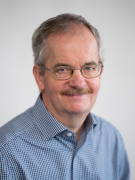
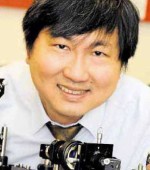
Tomas Karlsson is a Professor and Deputy Head of Department at the Royal Institute of Technology , specializing in Space and Plasma Physics . He teaches courses such as EF2240 Space Physics , EF2245 Space Physics II , and EI1240 Electromagnetic Theory , while serving as examiner or coordinator for advanced projects and thesis work in space-related fields. His research focuses on the interaction between the solar wind and planetary magnetospheres , with specific interests in bow shock physics , magnetosheath jets , solar wind magnetic holes , auroral physics , and comparative studies of magnetospheres across planets and comets. He employs spacecraft data (e.g., MMS , Cluster , BepiColombo ) and simulations to analyze plasma dynamics and space weather phenomena. The 15 most recent publications highlight trends in solar wind turbulence , magnetospheric boundary processes , and planetary plasma interactions , with recurring themes in SLAMS (Short Large-Amplitude Magnetic Structures) , magnetosheath jet formation , and magnetic hole propagation . These works span statistical surveys, hybrid simulations, and multi-mission data analysis.
Justin C. Kasper is an Affiliated Professor in the Department of Climate and Space Sciences and Engineering at the University of Michigan. He serves as Graduate Advisor for the Ph.D. program in Space & Planetary Physics and leads multiple high-profile space exploration initiatives. Education 2003: PhD in Physics from Massachusetts Institute of Technology 1999: AB in Physics from University of Chicago Research Focus Dr. Kasper's work centers on solar physics and space weather , investigating heating mechanisms, plasma instabilities, and helium dynamics in the solar corona and solar wind. His research examines space weather impacts on society and develops early warning systems using deep space monitors. He also studies Jupiter's moon Europa and its interaction with Jupiter's magnetosphere. As an instrument designer, Kasper creates sensors for spacecraft operating in extreme environments from the Sun's surface to the solar system's edge. His research provides critical insights into solar flares and the million-degree solar wind. Scientific Contributions Analysis of Dr. Kasper's publications reveals consistent focus on solar wind composition, heating mechanisms, and plasma diagnostics. His work tracks helium abundance variations through solar cycles, examines ion-cyclotron resonant heating, and investigates temperature anisotropy constraints in solar wind protons. Awards and Honors 2011: Popular Science Brilliant 10 2010: Presidential Early Career Award for Scientists and Engineers 2010: Smithsonian Innovative Spirit Award Multiple NASA Group Achievement Awards for LRO and Triana projects 2004: MIT Dean's Educational and Student Advising Award Research Leadership Dr. Kasper serves as Principal Investigator for the SWEAP Investigation on NASA's Solar Probe Plus mission, Instrument Lead for the Faraday Cup on the Deep Space Climate Observatory, and Co-Investigator for FIELDS. He leads international teams developing sensors that will make the first direct measurements of the solar corona.
Susan T. Lepri is a Professor in the Department of Climate and Space Sciences and Engineering at the University of Michigan's College of Engineering, where she serves as Director of the Space Physics Research Laboratory. Her work focuses on heliospheric physics, utilizing spacecraft data from missions like ACE, WIND, and Solar Orbiter to investigate solar wind origins and coronal mass ejections. Her educational background includes: Ph.D. in Atmospheric and Space Sciences, University of Michigan M.S. in Atmospheric and Space Sciences, University of Michigan B.S. in Physics, Astronomy and Astrophysics, University of Michigan Lepri's research centers on tracing charged particles in the heliosphere using heavy ion measurements to study solar wind sources, coronal mass ejection physics, and particle acceleration mechanisms. She develops space-based ion mass spectrometers for missions including the European Space Agency's Solar Orbiter (Heavy Ion Sensor) and the Interstellar Mapping and Acceleration Probe. Her work integrates statistical analysis of solar wind composition with magnetohydrodynamic model validation to unravel plasma behavior in space environments. Analysis of her 15 most recent publications (2015-2017) reveals consistent focus on solar wind composition dynamics, particularly charge state evolution and elemental fractionation. Key themes include magnetic reconnection signatures in slow solar wind formation, anomalous composition in depleted interplanetary coronal mass ejections, and solar wind charge exchange contributions to X-ray backgrounds. Her instrumentation work bridges observational gaps in inner heliospheric measurements. Major recognitions include: 2018 Claudia Joan Alexander Trailblazer Award (University of Michigan) 2012-2013 Kenneth M. Reese Outstanding Research Scientist Award 2008 JGR-Space Physics Excellence in Refereeing Citation NASA Graduate Fellowship (2001-2003) Lepri actively mentors through outreach programs including K-12 initiatives with the Michigan Space Grant Consortium and Detroit Area Pre-College Engineering Program. She has coordinated Rochester Adams High School STEAM fairs and elementary science outreach while developing educational content like MConnex videos. Her research is supported by NASA grants enabling instrument development for Solar Orbiter and IMAP missions, with collaborations spanning international space agencies and academic institutions. As Director of the Space Physics Research Laboratory, she leads teams developing next-generation space instrumentation, particularly ion mass spectrometers for heliospheric exploration. Current projects include the Heavy Ion Sensor for Solar Orbiter (measuring inner heliospheric composition) and innovative sensors for IMAP, advancing capabilities to trace solar wind sources and particle acceleration mechanisms.
Lynn Kistler is a Professor in the Department of Physics & Astronomy at the University of New Hampshire (UNH), part of the College of Engineering and Physical Sciences. Her research focuses on plasma physics, space weather, and magnetospheric dynamics, particularly investigating the interactions between the solar wind and Earth's magnetosphere-ionosphere system. She holds a Ph.D. in Physics from the University of Maryland, along with a B.S. from Harvey Mudd College. Dr. Kistler's work emphasizes understanding plasma processes such as ion outflow from the ionosphere, magnetic reconnection, and storm-time magnetospheric evolution. She has led studies using data from missions like the Van Allen Probes, Solar Orbiter, and Cluster, contributing to advancements in instrumentation (e.g., the SWA suite) and computational modeling. Her research bridges observational analysis, theoretical frameworks, and machine learning to address challenges in space weather prediction and plasma dynamics. Key areas of her research include the role of ionospheric ions (O⁺, H⁺) in plasma sheet dynamics, the effects of geomagnetic storms on ring current formation, and the behavior of heavy ions in near-Earth space. She has authored or co-authored over 260 publications, spanning journals like Nature Communications , Geophysical Research Letters , and Journal of Geophysical Research . Dr. Kistler has secured grants and collaborations through initiatives like the NASA Interstellar Mapping and Acceleration Probe (IMAP) and has served as a co-investigator on multiple missions. Her work emphasizes interdisciplinary approaches, combining spacecraft observations with ground-based data and numerical simulations to unravel the complexities of Earth's space environment.
Professor Jack D. Scudder is a distinguished Professor of Physics and Astronomy at the University of Iowa, where he has been faculty since 1993. His research focuses on space magneto-plasmas and their kinetic properties, particularly in the solar corona, solar wind, collisionless shocks, magnetosheath, magnetopause, and collisionless reconnection phenomena. Scudder received his B.A. in Physics and Mathematics from Williams College in 1969, followed by an M.S. in Plasma Physics from the University of Maryland in 1971, and a Ph.D. in Plasma Physics from the same institution in 1975. His doctoral thesis was titled "Fission Driven Acoustic Waves in a Uranium Gas Core Reactor" under advisor D.A. Tidman. His research interests span Space Physics, Plasma Physics, Solar Wind dynamics, Magnetic Reconnection mechanisms, Collisionless Shocks, and Magnetospheric Physics. Scudder has made significant contributions to understanding non-thermal electron distributions in the solar wind, the role of ambipolar electric fields, and the fundamental processes of magnetic reconnection in space plasmas. His work often bridges theoretical models with spacecraft observations from missions like Voyager, ISEE-1, and NASA's Magnetospheric Multiscale Mission. Analysis of his recent publications (2012-2023) reveals a strong focus on non-Maxwellian distributions in space plasmas, with particular emphasis on solar wind electron behavior, the thermal force in astrophysical plasmas, and detailed measurements of magnetic reconnection sites. His research demonstrates a consistent theme of challenging conventional assumptions about plasma behavior in space environments, particularly the ubiquitous presence of non-thermal particle distributions. NASA Exceptional Scientific Achievement Medal, 1991 NASA Group Achievement Award for GGS-Polar Hydra Experiment, June, 1998 NASA Special Achievement Awards (1976, 1979, 1981, 1986) NASA Voyager Group Achievement Awards (Saturn 1983, Uranus 1986) NASA Voyager (Cruise, Jupiter) Certificate of Appreciation, 1981 Professor Scudder has advised several graduate students, including Arthur J. Hull (PhD 1998) and John C. Dorelli (PhD 1999), as well as Master's students Chonghui Shen, Robert Holdaway, and Xuejun Cao. He has served as Principal Investigator for the Polar Hydra Hot Plasma Experiment and was Deputy Project Scientist for the ISTP/GGS Wind and Polar Spacecraft missions. His professional service includes editorial work for the Journal of Geophysical Research and extensive proposal reviewing for NASA and NSF. As Principal Investigator for the Polar Hydra Hot Plasma Experiment and through his long-standing involvement with NASA missions including Voyager, ISEE-1, and MMS, Scudder has led significant laboratory and spacecraft-based investigations of space plasma phenomena. His research group has contributed to the fundamental understanding of collisionless plasma processes that govern space weather and astrophysical environments.
Brian Walsh is an Associate Professor of Mechanical Engineering at Boston University, with affiliations in the Departments of Astronomy and Electrical and Computer Engineering. He holds a Ph.D. in Mechanical Engineering from Boston University (2011) and a B.A. from Colgate University (2006). His research focuses on experimental space physics and spacecraft instrumentation, particularly studying solar wind-magnetosphere interactions, magnetopause reconnection, and X-ray imaging techniques. His work investigates energy transfer from the Sun to Earth's space environment, with a primary focus on the magnetopause. Walsh develops instruments for NASA and ESA missions, including the LEXI lunar X-ray imager and the CuPID CubeSat. He has contributed to missions like SMILE and pioneered compact solar energetic particle telescopes. His research spans CubeSat-based observations and large-scale space missions, emphasizing cross-scale coupling and global magnetospheric dynamics. Key research interests include plasma turbulence, magnetosheath dynamics, and exosphere variability. Walsh collaborates on projects like the Trans-Heliospheric Survey and the Magnetospheric Constellation (MagCon), aiming to advance understanding of heliospheric plasma behavior. His work also addresses space weather prediction and instrument calibration, such as the Carruthers Observatory Student Solar Monitor (COSSMo). Walsh's recent studies explore solar wind acceleration, ionospheric outflow asymmetry, and the role of recirculated plasmasphere material in ring current dynamics. His contributions to instrumentation and mission design highlight his dual role as a researcher and engineer in aerospace and space physics.
Jessika Trancik is a Professor at the Institute for Data, Systems, and Society (IDSS) at the Massachusetts Institute of Technology (MIT). She is also an external professor at the Santa Fe Institute. Her work bridges data science, engineering, and policy to understand and improve energy systems. Education: B.S. in Engineering from Cornell University Ph.D. from the University of Oxford as a Rhodes Scholar Her research focuses on the dynamic costs, performance, and environmental impacts of energy technologies across sectors including electricity, transportation, heating, and industrial processes. Key technologies studied include solar energy, wind energy, energy storage, low-carbon fuels, electric vehicles, and nuclear fission. She aims to inform climate policy and accelerate equitable and beneficial technology innovation through data-driven analysis. Prof. Trancik's prior affiliations include Columbia University’s Earth Institute and WSP International/UNOPS (now Interpeace) in Geneva, reflecting her global engagement in sustainability and development work. She has held prestigious positions and fellowships, including being a Rhodes Scholar, though specific scientific awards are not listed in the provided text. She advises students and leads research projects at MIT, though no specific advisees are named. Her work is supported by her lab or research group at IDSS, which focuses on technology evaluation and policy implications, although the exact name of the lab is not specified.
Dr. Tan Wen Shan is a Lecturer in Mechatronics Engineering at Monash University Malaysia, specializing in power systems and renewable energy integration. He holds a PhD in Electrical Engineering from Universiti Teknologi Malaysia (2017), an MEng in Electrical Engineering (2013), and a BEng in Electrical and Electronics Engineering (2011). His research focuses on stochastic generation scheduling, energy storage systems, smart grids, and blockchain applications in energy markets. Education: BEng (Electrical and Electronics Engineering), Universiti Malaysia Sabah, 2011 MEng (Electrical Engineering), Universiti Teknologi Malaysia, 2013 PhD (Electrical Engineering), Universiti Teknologi Malaysia, 2017 Research Interests: Stochastic generation scheduling with renewable integration Power system flexibility and resilience Electricity market operations and blockchain Artificial intelligence in energy systems Publications and Projects: Recent work includes P2P energy trading, transportable energy storage, and resilience-based scheduling under natural disasters. Active projects include sustainable energy bike lanes in Kuala Lumpur and AI-assisted energy storage planning. His articles emphasize renewable energy forecasting, smart grid optimization, and decentralized energy systems. Awards: ITEX 2023 Prize (2023) IBM Call for Code 2022 Green Practice Challenge Accelerator Prize (2022) Teaching and Supervision: Unit Coordinator for TRC3500 (Sensors and Artificial Perceptions) and TRC3600 (Modelling and Control) Supervised multiple final-year projects on energy systems and smart grids (2023–2024).
Zigong Xu is a Postdoctoral Scholar Research Associate in Physics at the California Institute of Technology (Caltech), affiliated with the Division of Physics, Mathematics, and Astronomy. His research focuses on solar energetic particles (SEPs), heliospheric physics, and cosmic ray dynamics. His work leverages data from missions like Solar Orbiter, Parker Solar Probe, and Chang’E-4 to study particle acceleration mechanisms, interplanetary shock dynamics, and the propagation of energetic particles in the solar environment. His research interests span solar flares, coronal mass ejection interactions, and the interplay between solar eruptions and the Earth-Moon radiation environment. He has contributed to understanding phenomena such as inverse velocity dispersion in SEPs, cosmic ray cavities in near-Earth space, and the composition variations of 3He-rich SEP events. Collaborations with multi-spacecraft missions highlight his expertise in analyzing particle data across diverse heliospheric distances. Zigong has explored topics including galactic cosmic ray shielding on the lunar surface, thermodynamic properties of solar protons, and the role of coronal shocks in particle acceleration. His studies often involve advanced statistical methods and comparative analyses of observations from instruments like EPT and HET aboard Solar Orbiter, and ISOIS on Parker Solar Probe. No formal awards or grants are explicitly mentioned, though his extensive publication record reflects active engagement in the field. He collaborates with international teams on missions such as Chang’E-4’s Lunar Lander Neutron and Dosimetry (LND) experiment, advancing lunar surface radiation studies.
James McLaughlin is a Professor of Physics at Northumbria University, specializing in solar physics and magnetohydrodynamics. He holds a PhD from the University of St Andrews and previously worked at NASA Goddard Space Flight Center and the University of St Andrews as a Research Fellow. His research focuses on magnetic reconnection, solar coronal dynamics, and MHD wave behavior. He leads the Solar and Space Physics Group and secured a £1.29M STFC grant (2023–2026). McLaughlin supervises PhD students exploring oscillatory reconnection dynamics and has authored over 50 peer-reviewed papers. He is a Fellow of the Royal Astronomical Society and a Member of the Institute of Physics. Education: MSci (Mathematics & Physics), Durham University, 2002 PhD (Applied Mathematics & Solar Physics), University of St Andrews, 2002–2006 Research Interests: Magnetic reconnection mechanisms, solar flare dynamics, coronal heating, MHD wave propagation, and plasma diagnostics in extreme astrophysical environments. His work bridges theoretical modeling, numerical simulations, and observational data from instruments like SDO/AIA and DKIST. Recent Projects: STFC Consolidated Grant: Solar and Space Physics Group (£1.29M, 2023–2026) Awards: Fellow of the Royal Astronomical Society (2002) Member of the Institute of Physics (1998) Advising & Grants: Supervises PhD students Ryan Smith and Jordan Talbot. His research explores oscillatory reconnection’s role in generating solar waves and energy release. He collaborates internationally on space physics missions and heliophysics studies.
David Burgess is a Professor of Mathematics and Astronomy at Queen Mary University of London, affiliated with the School of Physical and Chemical Sciences and the Centre for Fundamental Physics. His research focuses on space and astrophysical plasma physics, particularly shocks in collisionless plasmas, turbulence, particle acceleration, and large-scale simulations. He collaborates internationally with ESA and NASA mission groups. Key Research Areas: Solar wind turbulence, bow shock dynamics, interplanetary shocks, and plasma simulations. Grants: £868k from STFC for heliospheric research (2023–2027), £626k for planetary studies (2020–2024). Collaborations: Involves groups in Europe and the USA, leveraging data from space missions like Solar Orbiter and MMS. His work uses particle-in-cell simulations and hybrid models to study plasma behavior, with recent emphasis on magnetic reconnection, electron heating, and shock-turbulence interactions.
Professor Timothy Horbury is a faculty member in the Department of Physics, Faculty of Natural Sciences at Imperial College London. His roles include Principal Investigator of the Solar Orbiter magnetometer, Science lead of the IMAP and HelioSwarm magnetometers, and membership in the FIELDS and SWEAP teams for the Parker Solar Probe. Affiliations: Space Lab, Space, Plasma and Climate Community. His research explores: Waves and turbulence in plasmas Solar wind structures Novel data analysis techniques Particle acceleration and propagation His broader research areas span Astronomical and Space Sciences, Atmospheric Sciences, Atomic/Molecular/Nuclear/Particle/Plasma Physics, Physical Chemistry, Geophysics, and Aerospace Engineering. Labs/Teams: Space Lab, Parker Solar Probe collaboration (FIELDS/SWEAP teams).
Ingrid Mann is a Professor in Space Physics at the UiT The Arctic University of Norway , Department of Physics and Technology. She leads and participates in multiple externally funded research initiatives including the Cosmic dust injection into the upper Earth atmosphere , MXD 2 rocket project to study the mesosphere , and EISCAT Research infrastructure project . ORCID: 0000-0002-2805-3265 Member of research group Space Physics Member of projects: Intermittent fluctuations in physical systems , Maxidusty-2 , CASCADE , Codia , Boosting Space Business , and Forskningsparken 1 A216 Her research spans space and atmospheric physics , focusing on dusty plasmas , cosmic dust dynamics , and polar atmosphere interactions . She employs spacecraft observations , EISCAT radar , rocket experiments , and machine learning for data analysis. Recent publications highlight cosmic dust detection with Parker Solar Probe and Solar Orbiter , PMSE multilayer properties , and dust impact signal modeling . Her work integrates radar , optical , and spacecraft data to understand polar atmospheric systems. She teaches FYS-2000 Kvantemekanikk , FYS-2019 Sun, Planets, and Space , and supervises G-Chaser student rocket projects . Her research group contributes to EISCAT_3D infrastructure and interplanetary dust modeling . Co-edited books: Nanodust in the Solar System (2012) Small Bodies in Planetary Systems (2008) Modern Meteor Science (2005)
Harald Kucharek is a Research Professor in the Physics & Astronomy Department at the University of New Hampshire (UNH), part of the College of Engineering and Physical Sciences. He is affiliated with the Space Science Center and holds a dual Ph.D. in Physics from the Technical University of Munich and an M.S. in Physics from the University of Regensburg. His research focuses on heliospheric physics, interstellar medium interactions, and space plasma dynamics, leveraging data from missions like IBEX and Solar Orbiter. Dr. Kucharek's work centers on understanding the global structure of the heliosphere, interstellar neutral gas flow, and particle acceleration at shocks. He has contributed to studies of pickup ions, energetic neutral atoms (ENAs), and magnetic reconnection processes. His teaching includes courses on Space Plasma Physics and Magnetohydrodynamics of the Heliosphere. He has been involved in over 22 grants (2005–2024), including mission-related research for IMAP and interstellar probe concepts. Key research trends include analyzing IBEX observations of interstellar helium and oxygen, investigating shock dynamics and ion acceleration, and modeling the heliospheric boundary. His recent work explores the implications of hybrid simulations and multi-spacecraft data for understanding plasma behavior in extreme environments. Collaborations with institutions like NASA and ESA highlight his role in advancing space physics through both observational and theoretical contributions.
Dr. Charles Wang is a Reader in the Department of Physics at the University of Aberdeen, within the School of Natural and Computing Sciences. He has held this position since 2005 and is also an Honorary Cruickshank Lecturer in Astronomy at the same institution. His academic journey began with a BSc in Physics from National Taiwan University, followed by a Certificate of Advanced Study in Mathematics from Cambridge, and culminated in a PhD in Mathematical Physics from Lancaster University. Education: BSc (National Taiwan University), CASM (Cambridge), PhD (Lancaster) Current Position: Reader, Department of Physics, University of Aberdeen Additional Role: Honorary Cruickshank Lecturer in Astronomy Dr. Wang's research lies at the intersection of theoretical physics and experimental gravity, focusing on general relativity, quantum gravity, modified gravity, astrophysics, and cosmology. He is a pioneer in quantum gravity phenomenology, particularly through atom interferometry techniques. His work extends into applied mathematics, including differential geometry, Clifford algebra, and the Cosserat theory of rods. He actively collaborates with industry and research institutions on quantum sensing, gravity gradiometry, and precision measurement applications. His recent publications reveal a strong trajectory in quantum aspects of gravity, including Unruh radiation, gravitational decoherence, quantum sensing of spacetime fluctuations, and loop quantum gravity formulations. These works are published in high-impact journals such as Physical Review D, Classical and Quantum Gravity, and the European Physical Journal C. Scientific honors include being a Fellow of the STFC Centre for Fundamental Physics. He has secured significant research funding from sources like MoD/Dstl, EPSRC, UKSA, and BP for projects related to quantum gravity experiments and gravity sensing technologies. STFC Centre for Fundamental Physics Fellow Dr. Wang has supervised PhD students and contributed to major international collaborations such as STE-QUEST (ESA mission candidate), GG-TOP (with Birmingham), and CERN-related supernova research. He has also served in professional roles including Grampian Regional Organiser for the Institute of Physics in Scotland and as a Series Editor for Springer Briefs in Physics. He is affiliated with research groups including the Plasma Science Research Group (PSRG) and contributes to interdisciplinary initiatives such as the Advanced Centre for Energy and Sustainability (ACES).