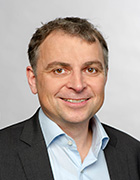
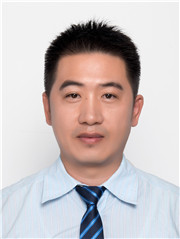
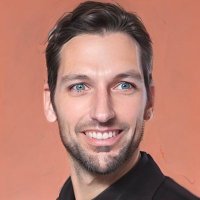
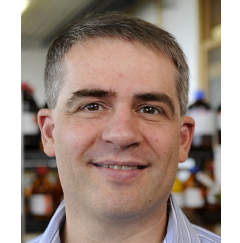
Prof. Dr. Dominik Schwarz is a faculty member at the Faculty of Physics , Bielefeld University. His research focuses on Cosmology and Particle Physics , particularly in the areas of Dark Energy , Dark Matter , Cosmological Inflation , and Large-Scale Structure Formation . He contributes to projects like the International LOFAR Telescope Consortium and the SFB-TRR 211 on strongly interacting matter. APART Fellow of Austrian Academy of Sciences Humboldt Fellow CERN Fellow His recent work explores the cosmic dipole anisotropy , axion density perturbations , and multi-wavelength cosmic web mapping . He also advances data science infrastructure through the PUNCH4NFDI consortium.
David W. Hogg is Professor of Physics and Data Science in the Center for Cosmology and Particle Physics in the Department of Physics at New York University. He serves as Senior Research Scientist in the Astronomical Data Group in the Center for Computational Astrophysics of the Flatiron Institute and maintains an affiliation with the Max-Planck-Institut für Astronomie in Heidelberg. His primary research focuses on observational cosmology, particularly approaches that use galaxies to infer physical properties of the Universe. He also conducts significant research on stellar kinematics in the Milky Way and the measurement and discovery of exoplanets. Across all domains, Hogg develops engineering systems and statistical methodologies that enable large-scale astrophysical projects for both his research group and the broader community. Recent work demonstrates expertise in robust statistical methods, particularly dimensionality reduction techniques like Robust-HMF. His research bridges theoretical statistics with practical applications in major astronomical surveys including Gaia, SDSS-V, and SPHEREx. He frequently explores connections between Bayesian and frequentist approaches to astronomical data analysis, with recent work on nuisance parameter integration, anomaly detection, and robust matrix factorization. Research supported by NYU, NASA, NSF, Moore Foundation, Sloan Foundation Additional support from Max Planck Society, Humboldt Foundation, ERC, Simons Foundation Hogg is actively involved in major astronomical projects including Astrometry.net, Gaia, and SDSS, with long-term comprehensive goals of analyzing all galaxies, stars, and astronomical images. His work emphasizes open science principles, reproducible research practices, and the development of publicly accessible tools for the astronomical community.
Max Planck Institute for Solar System ResearchGermany
Harald Krüger is a Research Scientist at the Max Planck Institute for Solar System Research (Göttingen), specializing in planetary science and space dust analysis. He leads and contributes to multiple space missions, including the DESTINY+ Dust Analyzer (DDA), the Rosetta COSIMA instrument, and the PHILAE Dust Impact Monitor (SESAME-DIM). His research focuses on cometary dynamics, interstellar dust interactions, and solar system formation processes. Krüger holds a PhD from the University of Göttingen and has held research roles at prestigious institutions like the Max Planck Institutes for Nuclear Physics and Astronomy (Heidelberg). He chairs ESA’s working group on comet 67P/Churyumov-Gerasimenko and participates in international astronomical societies. His work integrates advanced instrumentation design with observational data from spacecraft missions, contributing to our understanding of cosmic dust properties and their role in planetary systems. Key projects include analyzing interstellar dust via the DESTINY+ mission and studying Martian moons through the MMX mission. His publications emphasize instrument constraints, cometary dust trail detection, and spacecraft outgassing effects on measurements.
Prof. Florian Zaussinger is a faculty member at the Faculty of Applied Computer and Life Sciences at Mittweida University of Applied Sciences. His research focuses on thermal convection, fluid dynamics, and numerical simulations in both geophysical and astrophysical contexts. He has contributed extensively to studies on microgravity experiments, including the GeoFlow and AtmoFlow projects conducted on the International Space Station (ISS). University: Mittweida University of Applied Sciences Faculty: Applied Computer and Life Sciences Department: Mathematics Contact: +49 3727 58-1381 | florian.zaussinger@hs-mittweida.de | Building 6, Room 6-131 His research involves advanced numerical modeling of complex fluid systems, including spherical convection, dielectric heating, and double-diffusive processes. He has developed and applied computational tools like the ANTARES code to simulate convection in DA white dwarfs, planetary atmospheres, and Earth's mantle. His work bridges theoretical fluid mechanics with experimental validation in space-based microgravity environments. Recent publications highlight his expertise in thermo-electrohydrodynamic convection, planetary fluid flow analysis, and microgravity-induced instabilities. While the scraped data does not list scientific awards or students directly, his academic profile emphasizes interdisciplinary collaboration with engineering and life sciences, particularly in applied mathematics for fluid dynamics and experimental data processing.
Prof. Jürgen Müller is a Full Professor at the Institute of Geodesy, Leibniz University Hannover, leading research in physical geodesy, satellite gravimetry, and relativistic geodesy. He holds positions as Executive Director of the Institute and contributes to global geodetic initiatives like the Global Geodetic Observing System (GGOS). His work focuses on advancing quantum technologies for Earth observation, including cold atom interferometry and optical clocks, to enhance gravity field measurements and test fundamental physics principles. Research Interests: Müller's expertise spans gravimetric Earth observation, lunar laser ranging (LLR), relativistic geodesy, and the application of quantum sensors in space missions. His team explores novel sensor concepts for future satellite gravimetry, such as hybrid accelerometers and gravity gradiometry systems, addressing challenges in climate monitoring and Earth system dynamics. Publications Overview: His recent work emphasizes quantum accelerometers for satellite missions, deployable solar panels for GRACE-like satellites, and LLR-based tests of general relativity. Key contributions include improving Earth rotation parameter estimation and exploring optical clock networks for height system unification. Grants & Collaborations: Müller collaborates on international projects like the CARIOQA quantum pathfinder mission and the GENESIS space observatory. He leads teams in simulating quantum sensor performance and analyzing LLR data for lunar and Earth dynamics studies. Labs/Teams: As head of the Institute of Geodesy, he oversees research groups working on quantum gravimetry, space geodesy, and geodetic reference systems, leveraging facilities like the 10-meter atom interferometer at Hannover.
Paula Schneider serves as Teacher for Special Tasks at the University of Art and Design Offenbach am Main , heading their book and paper workshop since 2020. She studied Book Art at Burg Giebichenstein Halle (2013-2019) and previously taught at Bezalel Academy (2017-2020). Her work bridges bookbinding , literary experimentation , and archival research through installations, artist books, and public interventions. Education : 2019: Diploma in Book Art, Burg Giebichenstein University of Halle Teaching : 2020–present: Lecturer for special tasks at HfG Offenbach 2017–2020: Annual courses at Bezalel Academy for Arts and Design, Jerusalem Screen printing tutor during studies Her artistic research explores narrative structures , time perception , and memory systems through works like Inner Monologue (2018) and Mio Mnemotop (2021). Recent projects include Night Frost (2024) examining textual accumulation and Cloudburst Working on the Textberg (2024) using mining metaphors for textual analysis. She examines book formats (e.g., leporello, monotypes, screen printing) to interrogate knowledge preservation (Rabaraababaraba, 2015) and urban observation (Praise of the Gate, 2023). Notable exhibitions include Because We Are Young (2021) analyzing GDR industrial history and Between (2019) at Halle/Leipzig Airport, which required mobile audience engagement with audio pieces about airport soundscapes. Her works have been featured in Text3 and Spin n errei tours. Contact: schneider@hfg-offenbach.de | Workshop: +49 69.80059-245 | Office: +49 69.80059-106
Beate Paulus is a Professor for Theoretical Chemistry at the Freie Universität Berlin , affiliated with the Chemistry and Biochemistry college and the Chemistry department. Her research focuses on advanced quantum chemical methodologies and applications to 2D materials, spintronics, and catalysis. Current affiliation: Freie Universität Berlin Key research areas: Quantum Chemistry, Density Functional Theory, 2D Materials, Spintronics, Electrocatalysis Her work spans computational modeling of electronic structures, magnetic properties, and chemical reactions using Density Functional Theory (DFT) with specialized corrections. She investigates systems like MoS2 , graphene heterostructures , and transition metal complexes , aiming to understand and optimize properties for energy applications, biosensors, and nanoelectronics. Recent publications highlight her contributions to quantum mechanical fluorine tunnelling , spin-selective transport in doped nanoribbons , and surface functionalization strategies for 2D materials. Her group also explores mechanically interlocked molecules and redox-responsive polymers with potential biomedical applications. Beate Paulus leads the Paulus Group , which actively publishes in high-impact journals and collaborates on interdisciplinary projects involving experimental and theoretical approaches.
Ralf Jaumann is a Professor at the Free University of Berlin within the Institute of Geological Sciences, Department of Planetary Sciences and Remote Sensing . He serves as Deputy Director of the Institute of Planetary Research and previously led the Planetary Geology Department at the German Aerospace Center (DLR) in Berlin-Adlershof until January 2020. As Principal Investigator of the High Resolution Stereo Camera (HRSC) on ESA's Mars Express mission (2013-2021), he has significantly contributed to Mars geology studies. Co-PI of Mastcam-Z on NASA's Mars 2020 mission Co-I on instruments for Rosetta , Cassini , Dawn , and ExoMars missions Coordinated global Mars color mosaics and long-term surface change detection using HRSC data His research focuses on planetary geology , remote sensing , and space mission instrumentation , particularly analyzing geological processes on Mars, asteroids, and icy satellites. Recent publications examine spectral properties of asteroid regolith, Martian aeolian processes, and hydration dynamics on the Moon. Despite his extensive involvement in mission operations, no specific student advisement records or scientific awards are mentioned in the provided data. Jaumann teaches Planetary Exploration: Space Missions and Planetologie Literaturseminar at the graduate level.
Prof. Dr. Nadine Buczek serves as Professor of Renewable Energies, Nanotechnology and Photonics at the Department of Applied Natural Sciences, Lübeck University of Applied Sciences (TH Lübeck), a position she has held since 2017. She leads the Energy Materials Laboratory and maintains active affiliations with the Climate and Environmental Protection Group, Materials for Storage and Renewable Energy Systems, and Photovoltaics Group. Her research centers on physical principles of renewable energy systems and photonics, with core expertise in solar technology, thermoelectrics, and nanoscale material engineering. She investigates spin wave phenomena in disordered magnetic materials and develops advanced fabrication techniques for silicon nanowires and superlattices using metal-assisted chemical etching, with applications in sustainable energy conversion and storage. Analysis of her 15 most recent publications (2012-2022) reveals consistent focus on condensed matter physics and nanomaterial engineering. Key trends include theoretical modeling of spin dynamics in alloys, structural characterization of etched semiconductor nanostructures, and optimization of nanofabrication processes for renewable energy applications. Her work bridges experimental nanotechnology with computational physics, primarily targeting semiconductor-based energy solutions. The Energy Materials Laboratory under her direction drives interdisciplinary research in photovoltaics and thermoelectric materials, collaborating closely with the Materials for Storage and Renewable Energy Systems group. Current projects emphasize scalable nanofabrication methods and fundamental studies of charge transport in nanostructured materials to advance next-generation renewable energy technologies.
Jessica Agarwal is a Professor at the Institute of Geophysics and Extraterrestrial Physics (IGEP) within the Faculty of Electrical Engineering, Information Technology, Physics at Technische Universität Braunschweig. She leads the Solar System Astronomy working group and holds a prestigious Lichtenberg Professorship funded by the Volkswagen Foundation, which has entered a second funding phase following a successful evaluation. Her research focuses on the study of small bodies in the Solar System, including active asteroids, comets, and collisional breakups, using observational and dynamical methods. The project combines ground-based and space-based observations to understand the formation and evolution of these objects. The Lichtenberg Professorship reflects her outstanding contributions to planetary science and astrophysics, with TU Braunschweig providing substantial institutional support, including a lifetime professorship appointment, ensuring long-term continuity of her research program. Scientific Awards: Lichtenberg Professorship (Volkswagen Foundation) Prof. Agarwal actively contributes to advancing solar system science through her leadership in research projects and collaborations. Her work is supported by both national foundations and her host institution, positioning her as a key figure in modern planetary astronomy.
Prof. Dr.-Ing. Matthias Gaderer is a Professor of Renewable Energy Systems at the TUM Campus Straubing, Technical University of Munich. His research focuses on energy systems for heat, electricity, and fuels, with a particular emphasis on biomass, solar, and geothermal energy applications. He leads projects in combustion technologies, low-emission systems, and decentralized energy systems. Gaderer holds a doctorate from TUM and has extensive industry experience in process engineering. His work includes establishing applied biomass research at the Bavarian Center for Applied Energy Research and leading the research group 'Thermal Use of Biomass in High-Temperature Processes.' He is actively involved in committees such as the Scientific Committee of CEBC and Bavarian Science Forums. His teaching includes courses on energy systems and biomass utilization. Key projects include Reverion GmbH, FlexBioNeuro, and H2 real-world laboratory initiatives. Education: Process Engineering from TU Graz and KTH Stockholm. Research interests span thermochemical gasification, combustion technologies, and energy economics. His publications emphasize biomass gasification, hydrogen production, and sustainable energy systems. He collaborates on EU-funded projects like E2Fuels and leads teams in developing innovative energy solutions.
Professor He Bin is Dean of the Department of Materials Science and Engineering at the Shenzhen University of Technology , where he has served since 2025.01. He is a core member of the Guangdong Provincial Higher Education Crystal Growth and Application Engineering Technology Center and recognized as a Shenzhen Overseas High-Level Talent . Previously, he was an Associate Professor at Shenzhen University of Technology (2018-2025) and held research positions at Southern University of Science and Technology and University of Hong Kong. PhD in Materials Physics and Chemistry from Beijing University of Technology (2008) Bachelor in Materials Forming and Control Engineering from China University of Petroleum (1998) His research focuses on diamond and related materials , thin film technology , and nanostructures , with applications in thermal management , photoelectrocatalysis , precision tooling , cultured diamond , 3D printing , and ultra-wide bandgap semiconductors . Recent publications highlight advancements in photoelectrochemical systems , electrocatalytic water splitting , and surface engineering . Scientific achievements include: Shenzhen University of Technology Major Project and Scientific Research Platform Construction Award (2019) First Prize for High-level Paper (2018) Peacock Talents Category C (2018) He has secured over 20 research grants, including projects from the Shenzhen Higher Education Stable Support Program and Guangdong Province Characteristic Innovation Projects. His work spans 12 representative papers , 3 book chapters , and 6 national patents in diamond-based technologies and heterojunction systems.
Dr. Lars Lauterbach is a University Professor at RWTH Aachen University , leading the Department of Synthetic Microbiology . His research focuses on molecular genetics, biochemistry, and gas-converting biocatalysts, particularly hydrogen-dependent enzymatic processes. Institution: RWTH Aachen University Role: Institute Head Contact: lars.lauterbach@rwth-aachen.de His work spans hydrogen metabolism , metalloenzymes , and electrobiochemistry , with recent publications emphasizing CO2 conversion, hydrogenase engineering, and enzymatic cofactor regeneration. Key research areas include: Hydrogen-driven biocatalytic cascades Oxygen-tolerant hydrogenases Carbon dioxide valorization Multi-step enzymatic synthesis Hydrogen storage and utilization Redox chemistry in metalloproteins The 2023-2025 article list reflects trends in CO2-based biotechnology , biocatalytic hydrogenation , and synthetic microbial systems , with applications in pharmaceuticals, fine chemicals, and sustainable energy.
Dr. Norbert Jux is an Adjunct Professor at the Department of Chemistry and Pharmacy, Friedrich-Alexander-University Erlangen-Nürnberg (FAU), associated with Prof. Dr. Hirsch's Chair of Organic Chemistry II. His research focuses on advanced molecular architectures involving nanographenes, porphyrins, and their conjugates for applications in materials science and photophysics. Research Highlights: Specializes in π-extended conjugates, supramolecular complexation, and regiocontrolled synthesis of polycyclic aromatic systems. Recent Work: Explores helical nanographenes, panchromatic absorption materials, and electron transfer mechanisms in hybrid systems. Collaborations: Works with teams in synthetic chemistry, photophysical characterization, and surface science. Email: norbert.jux@fau.de | Lab Website
Professor Patrick Rinke leads the Chair of AI-based Materials Science at the Technical University of Munich (TUM), within the TUM School of Natural Sciences and Department of Physics. His research group develops advanced electronic structure and machine learning methods to address critical challenges in materials science, surface science, physics, chemistry, and nanoscience. Professor Rinke's research spans multiple cutting-edge domains including electronic structure theory development, machine learning applications for materials science, data-driven materials discovery, biomaterials engineering, atmospheric science applications, clean energy materials, and hybrid materials systems. His work integrates advanced computational methods with practical applications across diverse scientific fields, particularly focusing on how artificial intelligence can transform traditional materials research. Analyzing his recent publications reveals strong trends in applying machine learning techniques to materials discovery, with particular emphasis on Bayesian optimization methods, active learning approaches for molecular data, and efficient dataset generation strategies. His research spans from fundamental electronic structure theory to practical applications in biomaterials, atmospheric science, and renewable energy technologies. Professor Rinke has received several prestigious awards including the August-Wilhelm Scheer visiting professorship (2017), a German Science Foundation research scholarship (2007), the Outstanding Postdoctoral Research Achievement Award from UC Santa Barbara (2009), recognition as an Outstanding Referee for Physical Review journals (2014), and the Institute of Physics Computational Physics Group Thesis Prize (2003). Professor Rinke actively contributes to the academic community through teaching and supervision. For the Winter term 2025/26, he is teaching courses including Academic Writing Skills, Introduction to Machine Learning for Materials Science, Current Topics in AI-Based Materials Science, and Machine Learning for Natural Sciences. His research group includes several team members working on diverse projects spanning the intersection of AI and materials science.