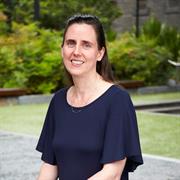
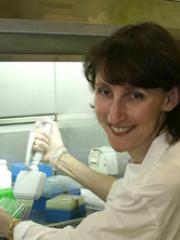
Dist. Professor Rachel Caruso is a Professor at RMIT University's School of Science, specializing in nanomaterials, energy storage systems, and photocatalysis. Her research focuses on advancing materials science through innovations in titanium-based nanomaterials, perovskite solar cells, and sustainable hydrogen production. She is actively involved in research supervision, offering guidance on topics like carbon capture, electrochemical CO₂ reduction, and antimicrobial surface engineering. Her work integrates machine learning for material discovery and emphasizes interdisciplinary applications in environmental and biomedical fields. Research Interests: Macromolecular Chemistry, Nanotechnology, Energy Materials, Photocatalysis, and Biomedical Applications. Supervision Projects: Includes pioneering studies on direct air capture of CO₂, graphene-based photocatalytic films, and perovskite materials for biomedical uses. Professor Caruso collaborates extensively on projects addressing global challenges such as renewable energy and antimicrobial resistance. Her contributions span over 200 publications, with notable advancements in titanium suboxide synthesis and electrocatalyst design.
Dr. Yi Shen is a Senior Lecturer at the School of Chemical and Biomolecular Engineering, The University of Sydney, and Chair of RACI Women in Chemistry. She is also affiliated with multiple research institutes including Sydney Institute of Agriculture, Sydney Southeast Asia Centre, The Centre for Drug Discovery Innovation, and The University of Sydney Nano Institute. PhD in Soft Materials from ETH Zurich Postdoctoral research at University of Cambridge and Harvard University Her research focuses on protein phase behavior and functional biomaterials development, utilizing soft matter approaches and microfluidic techniques to address challenges in neurodegenerative diseases, sustainable materials, and biomedical engineering. She has published extensively in top journals like Nature Nanotechnology and PNAS, with a particular emphasis on: Protein liquid-liquid phase separation mechanisms Biomaterials from protein nanofibrils Microfluidic manipulation of biological systems Biodegradable bioplastics development Shear force effects on biomolecular systems Pathological protein aggregation dynamics Key scientific achievements include: 2022 ARC DECRA Fellowship 2022 Sydney Nano Frontier award 2018 ETH Zurich Spark Award (for Fe delivery system invention) 2012 Princeton Grand Challenges Program 2 patents pending 2 Nature Nanotechnology cover articles As an educator, she coordinates CHNG2802 Chemical Engineering Modelling and Analysis, co-teaches CHNG3804 Biochemical Engineering and CHNG5605 Bio-products: Laboratory to Marketplace, and guest lectures across biomedical and nanotechnology programs. Her lab actively collaborates with institutions in Switzerland (ETH Zurich), UK (Cambridge), and US (Harvard, Princeton), focusing on transforming biomolecular understanding into real-world applications in health, industry, and environmental sustainability.
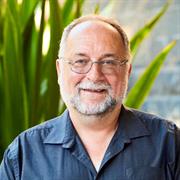
Prof. Ivan Cole is an Adjunct Professor at RMIT University's School of Engineering, specializing in rapid materials discovery for corrosion protection, nanostructures, and additive manufacturing. His work integrates computational modeling with high-throughput experimentation, focusing on corrosion inhibitors, biocompatible surfaces, and additive manufacturing process optimization. With over 30 years of experience across academia and industry (including leadership roles at CSIRO and Centro-Svilluppo Materiali), he leads the Rapid Discovery & Fabrication Team (RDF) to advance these research areas. Research Interests: Corrosion science, microbially induced corrosion (MIC), additive manufacturing surfaces, nanostructure sensing, multiscale modeling, and green materials discovery. His team addresses challenges in corrosion protection, biomedical implants, and environmental remediation through innovative methodologies. Awards: 2019 Australian Corrosion Medal 2016 CSIRO Lifetime Achievement Award 2013 Best Paper in NACE Corrosion Supervision & Projects: Active in mentoring PhD/Master’s students across corrosion inhibition, additive manufacturing, and nanostructure design. Notable projects include developing quorum sensing inhibitors for biofilm control, in-situ monitoring for metal AM, and eco-friendly corrosion inhibitors. Labs & Collaborations: Leads the Rapid Discovery & Fabrication Team and collaborates with industry partners to translate research into practical solutions for materials durability and sustainability.
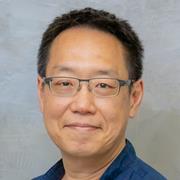
Professor Bing-Jie (Bruce) Ni is an Adjunct Professor at the University of Technology Sydney (UTS) within the School of Civil and Environmental Engineering and a full Professor at UNSW Sydney. He is an internationally recognised leader in environmental engineering, wastewater treatment, greenhouse-gas mitigation, microplastics fate, electrocatalysis and sustainable energy systems. Education PhD in Environmental Engineering, University of Science and Technology of China, Hefei (2005–2009) Research Interests Professor Ni’s research integrates process engineering, microbial biotechnology, materials science and mathematical modelling to develop sustainable technologies for high-efficiency pollutant removal, minimal carbon footprint and maximal energy recovery from wastewater. He is a global pioneer in: Modelling and control of nitrous oxide (N₂O) and methane (CH₄) emissions from wastewater systems, Micro- and nano-plastics ecotoxicity and mitigation in anaerobic digestion, Transforming sewage sludge into high-value liquid bio-energy (medium-chain fatty acids and long-chain alcohols), Designing cost-effective electrocatalysts from natural minerals for green hydrogen production and wastewater electrolysis. Research Output & Impact Over the last decade he has published 2 research books, 30 book chapters and >400 refereed journal papers , including 35 in Environmental Science & Technology and 85 in Water Research . His work has influenced global policy: the IPCC adopted his nitrous-oxide-emission model in 2019 to revise national greenhouse-gas inventories for the first time in 13 years. Awards & Recognition ARC Future Fellowship & ARC DECRA Fellowship Clarivate Analytics Highly Cited Researcher (Web of Science) Royal Society of Chemistry Highly Cited Researcher (2020–present) Mendeley Data Top 2 % Cited Researchers worldwide Listed among “Australia’s Most Innovative Engineers” (Engineers Australia, 2018) 50+ additional awards including Scopus Young Researcher Award, South Australian Water Awards, UQ Research Excellence Awards, and Outstanding Doctoral Dissertation Awards. Research Funding & Leadership He has secured ≈ AUD $10 million in competitive funding (six major ARC grants plus >20 government, university and industry projects). He serves as: Lead Guest Editor, Water Research Editorial Advisory Board, Environmental Science & Technology Associate Editor for Journal of Cleaner Production , Environmental Chemistry Letters , Environmental Research , Journal of Environmental Management Editorial Board member for five additional high-impact journals. Teaching & Supervision At UTS he teaches Renewable Energy Technologies , Environmental and Sanitation Engineering , Process Dynamics and Control , and Water and Wastewater Treatment . He is available to supervise Masters and PhD students in environmental biotechnology, process modelling and sustainable energy systems. Laboratory & Commercial Translation He heads active research teams at both UNSW and UTS and is the inventor of >10 granted patents , some of which are currently being commercialised to deliver real-world impacts in greenhouse-gas-neutral wastewater treatment and renewable energy production.
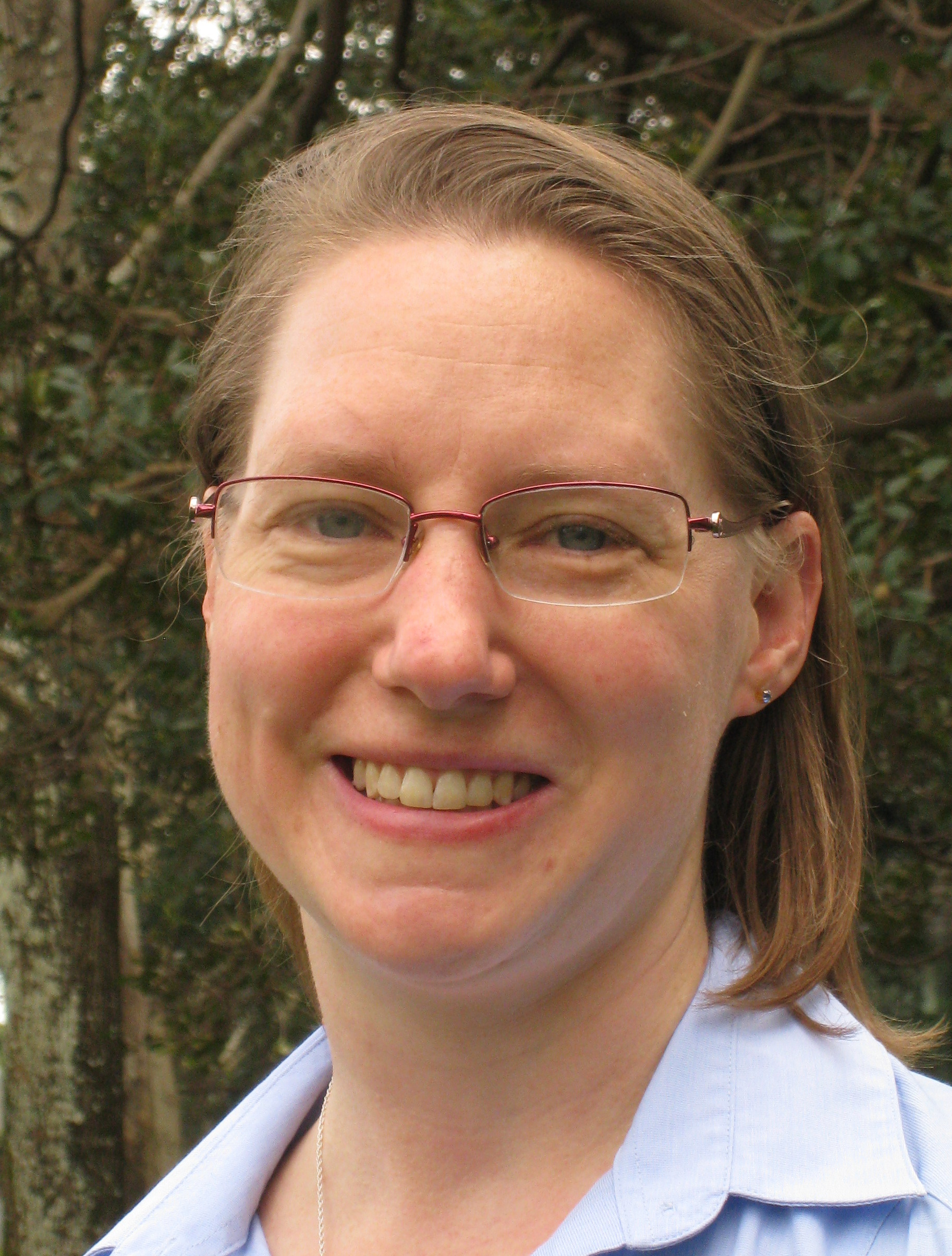
Dr. Lucy Gloag is a Lecturer at the Research School of Chemistry at the Australian National University (ANU), where she joined in 2024 after previously serving as a Lecturer at the University of Technology Sydney in 2023. Her research focuses on the development of advanced nanomaterials for energy applications, particularly in electrocatalysis and energy storage. Education: BSc/BCA and BSc(Hons) from Victoria University of Wellington, New Zealand PhD from the University of New South Wales (2018) on synthesis and characterization of Ru-based nanocatalysts Dr. Gloag is a nanomaterials chemist and electron microscopist specializing in the synthesis and characterization of nanomaterials for electrocatalytic applications. Her research addresses the fundamental question of how nanostructure can be used to enhance the performance of electrocatalysts . She employs solution-phase synthesis techniques to create nanoparticles with precise control over crystal structure, dimensions, and surface faceting, then correlates these structural features with electrocatalytic properties using transmission electron microscopy and electrochemistry. Her work spans energy conversion technologies, biomedical applications of nanoparticles, and advanced materials characterization. Analysis of her recent publications reveals a strong focus on single-atom catalysts, hierarchical nanostructures, and the relationship between nanomaterial structure and function. Her research spans both fundamental materials science and practical applications in energy conversion, with significant work on oxygen evolution reaction, hydrogen evolution reaction, and methanol oxidation electrocatalysts. She has also made notable contributions to biomedical applications of nanoparticles, particularly in magnetic particle imaging and Alzheimer's disease diagnostics. Scientific Awards: ARC Discovery Project Grant (2023) ARC Linkage Project Grant (2023) UNSW Science COVID19 Strategic Support Grant (October 2021) Dementia Australia Research Foundation – Yulgilbar Innovation Grant (2019-2022) Australian Postgraduate Research Scholarship (2015) AMN-7 Image Competition Finalist (2015) Dr. Gloag currently leads the ANU Futures Scheme 2.0 project (2024-2028) and has secured multiple competitive research grants, demonstrating strong research leadership. Her work involves extensive collaboration with researchers at UNSW and other institutions, particularly with Professors Richard Tilley and Justin Gooding. She has published 28 research outputs since 2015, with significant citation impact (h-index of 17). Her laboratory at ANU (Building 137, room 2.49) focuses on developing single atom and nanomaterials for energy storage and conversion technologies, continuing her trajectory as an emerging leader in advanced materials synthesis and electron microscopy characterization.
Dr. Qingbo Sun is a researcher at the Department of Materials Physics, Australian National University, specializing in advanced materials for energy and electronic applications. His work focuses on defect engineering, dielectric materials, and photovoltaic effects in nanocrystalline systems. Research interests include: Defect-driven local symmetry breaking Colossal dielectric permittivity Photocatalytic heterojunctions High-pressure material transformations Doping strategies in semiconductors Nonlinear electric polarization Research trends from his publications highlight innovations in TiO2-based photocatalysts, SnO2 dielectrics, and ferroelectric heterostructures. Collaborations span materials synthesis, computational modeling, and international experimental studies. His work is cited extensively in Scopus with 294 citations.
Associate Professor Judy Hart is a materials scientist at the School of Materials Science & Engineering, UNSW Sydney , specializing in the development of semiconducting materials for renewable energy applications. Her work integrates computational (DFT) and experimental approaches to understand composition-property relationships in systems like solid solutions , heterostructures , and doped materials for photocatalysis and solar cells . She leads projects funded by ARC Discovery and Linkage grants , including work on photo-electro-catalysis systems and stabilizing ceramic materials . Education: PhD in Materials Engineering (Monash University, 2007), BEng (Materials) (Monash, 2002) Professional Experience: Senior Lecturer (UNSW, 2017–), Lecturer (UNSW, 2013–2017), University of Bristol (2007–2012) Research Interests Her research focuses on designing materials for renewable energy , particularly photoelectrochemical water splitting and organic oxidation reactions . Key areas include Density Functional Theory (DFT) , defect engineering , band gap tuning , and nanostructured materials . She investigates ferroelectric polarization effects , metal oxide heterostructures , and stability of battery components , with applications in hydrogen production , CO2 conversion , and advanced battery materials . Scientific Awards Ramsay Memorial Fellowship (University of Bristol, 2007–2009) Teaching Contributions She is co-author of the 1st Australian & New Zealand edition of "Materials Science and Engineering: An Introduction" , and teaches courses on computational materials science , corrosion-resistant surfaces , mechanical behavior of metals , and materials design .
Dr. Huadong Mo is a Senior Lecturer at the School of Systems and Computing, University of New South Wales (UNSW) Canberra, Australia. He holds a B.E. degree in automation from the University of Science and Technology of China (2012) and a Ph.D. in systems engineering and engineering management from the City University of Hong Kong (2016). Prior to his current position, he was a research associate at ETH Zurich's Reliability and Risk Engineering Lab (2016-2019) and a Lecturer at UNSW Canberra (2019-2021). Dr. Mo's educational background includes a strong foundation in systems engineering with international experience across China, Switzerland, and Australia. His career trajectory demonstrates a progression from academic research to faculty positions with increasing responsibilities in teaching and research leadership. His research focuses on enhancing the resilience, performance, and security of complex systems using learning-based algorithms, primarily in power and energy systems, cyber-physical systems, and manufacturing systems. He applies data analytics to understand system evolution under uncertainties, with particular emphasis on prognostics and health management, sustainable transportation, robust operation of power systems under extreme events, and reinforcement learning-based asset management. His work bridges theoretical advances with practical applications in critical infrastructure. Analysis of Dr. Mo's recent publications reveals a strong focus on energy systems, particularly in the integration of machine learning with power grid management, battery storage systems, and resilience against cyber threats. His research shows a clear trajectory toward increasingly complex system integration, with growing emphasis on multi-vector energy communities, cross-domain prediction, and uncertainty-aware energy management. The interdisciplinary nature of his work spans electrical engineering, computer science, and operations research. 2024 IEEE SMC Early Career Award 2023 Visiting Research Fellowship (Jean d'Alembert Pour Fellowship) Gold Medal in 2024 China International College Student Innovation Competition (as supervisor) Arc PGC Supervisor Award (2021) IEEE SMC Outstanding Chapter Award (2021) Alumni Achievement Award from City University of Hong Kong (2019) Dr. Mo actively supervises numerous HDR students working on cutting-edge research topics including battery health monitoring, quantum control, reinforcement learning for power systems, and explainable AI for energy management. He leads multiple significant research grants totaling over 3 million AUD, including projects funded by ARC, Energy Innovation Fund, and international collaborations with institutions like ETH Zurich, Cambridge, and Tsinghua University. His research group maintains strong international connections, facilitating student exchanges and collaborative research. As Postgraduate Course Coordinator of Systems Engineering and Chair of IEEE SMC ACT Chapter, Dr. Mo plays a significant role in academic leadership and professional community building. His research team collaborates with industry partners on practical implementations of their theoretical work, particularly in the energy sector.
Associate Professor Ken Chiang is a faculty member at RMIT University's School of Engineering under the STEM faculty. He holds an Associate Professor rank and has over 20 years of academic and industrial research experience, securing over $12 million in research funding. His work focuses on innovative catalyst technologies, sustainable processes, and liquid metal catalysis for applications in CO2 utilization, hydrogen generation, and environmental engineering. Research Interests Chemical Engineering, Macromolecular and Materials Chemistry, Materials Engineering, Environmental Engineering, and catalytic systems for renewable energy. Key Projects Recent projects include development of next-generation liquid metal catalysts for CO2 reutilization, low-emission hydrogen generation via ammonia utilization, and novel reactor concepts for process intensification. His research also addresses wastewater purification and solar-to-chemical energy conversion. Advising & Grants He has supervised 10 PhD students, 2 Master's students, and 2 industrial trainees. His funding includes government and industry projects totaling over $12 million. Labs & Collaborations Collaborates on decarbonization technologies and liquid metal systems, with contributions to RMIT's research network in sustainable energy and catalysis.
Professor Yun Wang is a Full Professor at Griffith University's School of Environment and Science (Chemistry and Forensic Science), affiliated with the Centre for Catalysis and Clean Energy and the Environmental Futures Research Institute. His research focuses on computational materials design for energy conversion, catalysis, and renewable energy applications, particularly addressing interface-related challenges in electrochemical and photocatalytic systems. He earned his PhD from Fudan University and completed postdoctoral training at the University of Texas at Austin and the University of Sydney. Education: PhD in Chemistry, Fudan University (2002) BSc in Chemistry, Fudan University (1997) Research Interests: Dr. Wang's work emphasizes multi-scale computational methods to study materials properties, surface/interface science, and reaction mechanisms. His group develops data-driven models to enhance energy device performance, including batteries, solar cells, and electrocatalytic systems. Recent projects involve MXenes, perovskite solar cells, and nanoscale zero-valent iron for environmental remediation. Publications & Trends: His most cited works address electrocatalysis, energy storage materials, and environmental applications of nanomaterials. Recent articles highlight advancements in sodium-ion battery electrolytes, CO₂ reduction catalysts, and advanced photocatalytic systems. Awards: Fellow of the Royal Society of Chemistry Grants: Over A$1.5M in funding from ARC, CSIRO, and industry partnerships for catalysis, clean energy, and materials design projects. Teaching: Convenor of Chemistry I, Environmental Chemistry, and Analytical Chemistry courses, emphasizing research-integrated curricula. Labs/Teams: Leads the Catalysis and Clean Energy group, collaborating with the Environmental Futures Research Institute and international partners.
Professor Elizabeth Gillam is a Professor in the School of Chemistry and Molecular Biosciences at the University of Queensland (UQ). Her research focuses on cytochrome P450 enzymes, exploring their roles in drug metabolism, biocatalysis, and evolutionary adaptations. She investigates how these enzymes enable organisms to metabolize diverse chemicals, including drugs, pollutants, and natural products, with applications in drug discovery, bioremediation, and synthetic biology. Education: BSc(Hons) in Biochemistry from UQ, PhD from Oxford University, and postdoctoral training at Vanderbilt University. She joined UQ in 1993 and became a Professor of Biochemistry in 2009. Research Interests: Gillam’s work emphasizes directed evolution of P450 enzymes to enhance catalytic efficiency and specificity. Her lab studies P450 involvement in neurodegenerative diseases, plant defense mechanisms, and solar-powered biocatalysis. She employs ancestral sequence reconstruction to engineer thermostable enzymes, advancing their industrial and biomedical applications. Articles Overview: Her recent work highlights the evolutionary plasticity of P450s, their roles in plant signaling (e.g., strigolactones), and the development of biocatalysts for drug discovery. Studies also address P450-mediated detoxification pathways in vertebrates and photosynthesis-linked catalytic systems. These projects underscore her lab’s interdisciplinary approach, bridging biochemistry, evolution, and biotechnology.
Dr. Mehdi Jafarian is a Senior Lecturer in the School of Chemical Engineering at the University of Adelaide . His work focuses on hydrogen production , CO2 capture , solar thermal energy , and chemical looping combustion . Key research areas include: Solar thermal integration in industrial processes Hydrogen generation via methane pyrolysis CO2 sequestration technologies Advanced water treatment systems Thermochemical energy storage Research Trends : Recent publications emphasize hydrogen production optimization , PFAS removal , and molten metal reactor systems . Sub-fields span flash reactor modeling , hydrodynamic cavitation , and membrane-free electrolysis . Contact : mehdi.jafarian@adelaide.edu.au
Dr. Klaudia Wagner is a Senior Research Fellow at the Intelligent Polymer Research Institute (IPRI), part of the University of Wollongong since 2023. She joined UOW in 2007 after postdoctoral work at Massey University (2001-2006) and a PhD in Chemistry (2002) from Silesian University of Technology in Poland. Her research spans electrochemistry , energy conversion , and conducting polymers for bio applications. Education PhD, Chemistry - Silesian University of Technology, Poland (2002) MSc & ChE, Chemistry - Silesian University of Technology, Poland (1993) Wagner's work focuses on electrochemical energy systems , including dye-sensitized solar cells , fuel cells , and electrolysers for hydrogen generation . She also explores controlled fluidic transport and conductive polymers for biomedical use. Her recent publications highlight advancements in Cu-complex catalysts for CO2 reduction and self-cross-linking polymers for stable electrochemical interfaces. Grants include ARC Discovery Projects (2012-2016, 2015-2019) and DAAD funding (2019) for photoactive droplet systems. She supervises PhD projects in electrochemical engineering and ionic liquid electrolytes , though student names are not explicitly listed. Wagner's collaborative network spans institutions in Australia, Germany, and New Zealand, with affiliations to IPRI, Australian Institute for Innovative Materials , and Massey University's Nanomaterials Research Centre.
Dr. Hannah Schunker is a Senior Lecturer in the School of Information and Physical Sciences at the University of Newcastle. She holds an ARC Future Fellowship (2022–2026) and is a Research Advantage Women in Research Fellow. Her expertise lies in solar and stellar physics, focusing on helioseismology and asteroseismology to study the solar dynamo and magnetic field dynamics. She previously worked at the Max Planck Institute for Solar System Research in Germany. Education: Doctor of Philosophy, Monash University Bachelor of Science, University of Adelaide Research Interests: Dr. Schunker investigates the Sun's magnetic field, solar dynamo mechanisms, and space weather impacts. Her work includes analyzing solar oscillations, magnetic flux emergence, and asteroseismology of Sun-like stars. She discovered the 'Schunker Effect,' where helioseismic waves are perturbed by sunspot magnetic fields. Key Contributions: Developed methods to predict space weather by analyzing active region emergence. Advanced understanding of subsurface flows and magnetic field interactions. Contributed to the PLATO mission for exoplanet and stellar asteroseismology studies. Awards & Grants: ARC Future Fellowship (2022) ABC Science collaborations (e.g., 'Solar Storms,' 'Fusion') Claire Corani Prize (1999) Teaching & Supervision: Lectures include Advanced Physics II , Introduction to Astronomy , and Photonics . She coordinates multidisciplinary laboratory research projects. Labs/Teams: Active in solar physics research groups within the University of Newcastle and collaborates internationally on helioseismology and asteroseismology projects.
Dr. Jialiang Huang is a Senior Lecturer and Senior Research Fellow at the School of Photovoltaic and Renewable Energy Engineering, University of New South Wales. With over 15 years of expertise in thin-film solar cells, his work focuses on defect engineering , nanostructured materials , and advanced characterization techniques . His research spans emerging photovoltaic materials such as polycrystalline silicon, kesterite, chalcogenides, and perovskites. Research Interests include: Defect engineering in high-efficiency solar cells Advanced electron microscopy characterization Development of Cd-free and high-bandgap photovoltaic technologies His articles (e.g., on Cd-free Cu2ZnSnS4 solar cells and multifunctional coatings) highlight innovations in material synthesis and efficiency optimization. His work emphasizes nanoscale characterization and interface engineering , contributing to advancements in solar energy systems. Labs/Teams: Active in the UNSW Electron Microscope Unit and collaborative projects on solar-driven ammonia synthesis and photovoltaic materials.