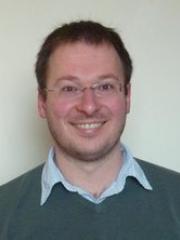
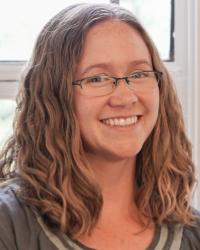
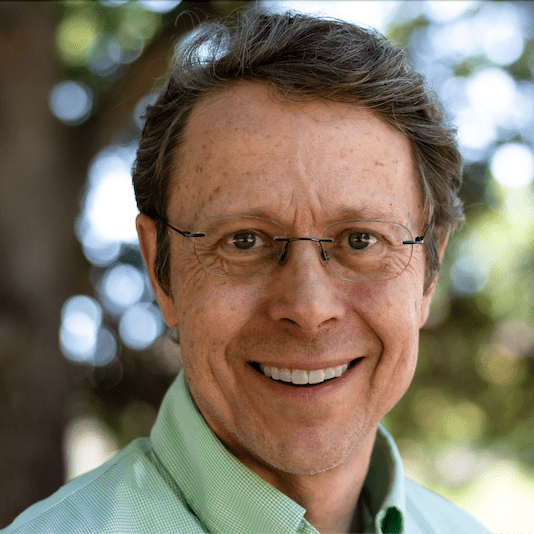
Joshua Luczak is an Assistant Professor of Philosophy (Education) at the College of Integrative Studies, Singapore Management University. His work bridges the philosophy of science with environmental ethics and climate science, focusing on geoengineering as a tool to combat anthropogenic climate change. PhD in Philosophy, University of Western Ontario (2015) MA in Philosophy, Monash University (2010) BA in Philosophy, Monash University (2007) He teaches courses such as "Big Questions", "What is This Thing Called Science?", and "Heated Debates: Climate Justice". His research explores the intersection of scientific methodology, climate ethics, and geoengineering, with a particular emphasis on toy models in statistical mechanics and the ethical implications of climate denialism. His recent publications highlight the evolving discourse around geoengineering, the philosophical significance of toy models in physics, and the ethical harms of climate denialism. While his articles span topics from methane removal to historical analyses of thermodynamics, they consistently address the moral and epistemological challenges of climate science. Contact: jluczak@smu.edu.sg | Phone: +65 68261381
Sonny Rosenthal is a Full-time Faculty member and Associate Professor of Sustainability Communication at the College of Integrative Studies, Singapore Management University. As a Lee Kong Chian Fellow, he focuses on environmental sustainability, media studies, and public health communication. PhD, University of Texas at Austin (2011) MA, Washington State University (2006) BA (Cum Laude), University of Washington (2004) His research spans climate change communication, health behavior interventions, and digital media impacts. Key areas include: Environmental risk perception and proenvironmental behavior Public health messaging during pandemics Fitness tracking technology for aging populations Climate change audience segmentation Eco-labeling and consumer trust Recent publications demonstrate interdisciplinary applications of communication theory to sustainability and health challenges. Articles analyze topics ranging from vaccine hesitancy mechanisms to nature connectedness interventions, reflecting his expertise in blending behavioral science with practical communication solutions. Scientific recognition includes: Lee Kong Chian Fellowship His methodological contributions span structural equation modeling, cluster analysis, and media literacy assessments. Rosenthal's work bridges academic research with real-world applications in both health and environmental domains.
Benjamin Lee Preston is a Senior Policy Researcher at the RAND Corporation, Director of the RAND Center for Climate and Energy Futures, and Professor of Policy Analysis at the RAND School of Public Policy. His work bridges climate science, policy analysis, and equity, focusing on resilience, environmental justice, and low-carbon transitions. Ph.D. in Environmental Biology, Georgia Institute of Technology B.S. in Biology, College of William & Mary Preston's research centers on climate risk, adaptation, and the societal dimensions of environmental change. He investigates how natural hazards impact infrastructure, the equity implications of climate policy, and the use of strategic foresight in emergency management. His work emphasizes systemic causes of vulnerability, particularly the enduring impacts of redlining and racial discrimination on environmental health disparities. His recent publications reveal a strong focus on climate resilience, decarbonization pathways, environmental justice, and risk assessment for national critical functions. He has contributed to major assessments including the U.S. National Climate Assessment and the IPCC’s Fifth and Sixth Assessment Reports. His work often integrates interdisciplinary methods and community engagement to inform equitable policy solutions. Contributor, U.S. National Climate Assessment Contributor, IPCC Fifth and Sixth Assessment Reports Member, Climate Adaptation Task Team, Global Climate Observing System (GCOS) Board Member, Board on Environmental Change and Society, National Academies Advisory Committee, Climate Crossroads, National Academies Preston has advised at the highest levels of government, including serving as Assistant Director for Climate Services and Adaptation in the White House Office of Science and Technology Policy (2021–2023). He has led initiatives to map environmental racism and develop tools for policymakers and communities. His research is supported by RAND’s internal funding and has influenced national conversations on climate equity, infrastructure resilience, and disaster preparedness. He has collaborated with community organizations in cities like Elizabeth, New Jersey, and San Diego, California, to advance environmental justice through participatory research. He leads the RAND Center for Climate and Energy Futures and previously directed the Community Health and Environmental Policy Program. His team develops frameworks for assessing climate risk, designing equitable adaptation strategies, and integrating scientific knowledge into policy decisions. Preston is also active in public outreach, frequently contributing to media and policy discussions on climate change as an existential and equity issue.
Dr Robert Bellamy is a Senior Lecturer in Climate and Society at the Department of Geography, University of Manchester. He joined Manchester in 2018 after a James Martin Fellowship at the University of Oxford. His work bridges social science, climate research, and technology governance. Education: BSc in Environmental Science (University of York) MSc (Distinction) in Climate Change (University of East Anglia) PhD in Environmental Science (University of East Anglia) His research examines how climate change responses are perceived and governed, with a focus on carbon dioxide removal, solar geoengineering, and energy systems. Recent projects include REFLECT (2025–2030) and Co-CREATE (2024–2026). Key awards include the University of Manchester Presidential Fellowship (2018–2022) and Best Researcher of the Year (2021). He contributes to editorial roles as Editor-in-Chief of Dialogues on Climate Change and leads the MSc in Climate Change program.
Robert J. Lempert is a Professor of Policy Analysis at the RAND School of Public Policy and Director of the Frederick S. Pardee Center for Longer Range Global Policy and the Future Human Condition. He specializes in risk management and decision-making under deep uncertainty, with a focus on climate change, energy, and environmental policy. His work integrates quantitative methods like Robust Decision Making (RDM) to inform long-term policy strategies. He holds leadership roles in organizations such as the IPCC and the Society for Decision Making Under Deep Uncertainty. Education: Ph.D. in Applied Physics from Harvard University. Awards: American Physical Society Fellow, member of Council on Foreign Relations, and lead roles in national and international climate assessments. His research spans policy analysis, climate adaptation, and the governance of emerging technologies like geoengineering.
Monika Harnisz is a Professor at the Department of Water Protection Engineering and Environmental Microbiology, Faculty of Geoengineering, University of Warmia and Mazury in Olsztyn. With over 114 publications and 2822 Google Scholar citations, her research focuses on environmental microbiology, antibiotic resistance, and wastewater treatment challenges. Current Position: Full Professor Institutional Email: monika.harnisz@uwm.edu.pl ResearchGate Profile: Profile Link Research Focus Her work addresses antimicrobial resistance (AMR) as a critical public health threat through: Wastewater resistome analysis Carbapenem-resistant pathogens Environmental transmission pathways Biogas plant contamination Chemical and microbial pollutant interactions Disinfection technology optimization Recent studies involve WHO AWaRe antibiotics monitoring , digestate safety assessment , and environmental impacts of pharmaceuticals using advanced analytical methods (SPE-LC-MS/MS, metagenomics). Academic Contributions Supervised 2 doctoral students Contributed to 3 promoted doctorates Developed selective media for Bacteroides isolation Advocated for improved wastewater surveillance policies Technical Expertise Antibiotic residue analysis Molecular resistance characterization Metagenomic sequencing applications Biogas process optimization Environmental pathogen tracking Water quality assessment
Gunnar Tibert is an Associate Professor at KTH Royal Institute of Technology's School of Aerospace, Moveability, and Naval Architecture. He specializes in deployable structures for aerospace applications, with a focus on bistable composites, tensegrity systems, and space deployment mechanisms. His roles include examiner and course responsible for courses like Spacecraft Dynamics and Project in Aerospace Engineering . Education: Ph.D. in Deployable Tensegrity Structures for Space Applications (KTH, 2002), Licentiate in Numerical Analyses of Cable Roof Structures (KTH, 1999). Research Interests: Structural dynamics, composite materials, space system design, and vibration suppression in deployable systems. His work spans both peer-reviewed articles and experimental studies, including sounding rocket experiments for space web deployment. Recent publications focus on planetary sunshade systems for climate engineering, metamaterials for vibration control, and additive manufacturing in satellite components. He collaborates on projects like the Suaineadh space web experiment and B2D2 composite boom deployment. Notable contributions include form-finding methods for tensegrity structures and material characterization for bistable tape springs. His research combines experimental testing, numerical simulations, and aerospace engineering principles to advance deployable space technologies.
Dr Jim Watson is an Adjunct Associate Professor at the School of the Environment, University of Queensland, and Principal Scientist (Remote Sensing) at the New South Wales Department of Planning and Environment. He specializes in remote sensing for environmental monitoring, particularly algorithms for satellite and aerial imagery to assess vegetation and agricultural systems. He holds a PhD in Computer Science from UQ and has expertise in crop-climate modeling, high-performance computing, and phenotyping technologies. Education: PhD in Computer Science (University of Queensland, 2006); previous roles include statistical inference research at the University of Leeds (UK) and agricultural sensing work at the Queensland Alliance for Agriculture and Food Innovation. Research focuses on remote sensing applications for vegetation monitoring, climate change impacts on agriculture, and clean energy transitions. Key projects include the Joint Remote Sensing Research Program and contributions to the IPCC AR5. His work bridges computational methods with environmental challenges, addressing topics like renewable energy integration, crop stress adaptation, and policy frameworks for sustainable development. Publications highlight interdisciplinary approaches, including energy systems analysis, crop modeling under climate change, and phenotyping innovations. His awards include IPCC AR5 contributions, reflecting global recognition for climate science impacts. Labs/Teams: Joint Remote Sensing Research Program (JRSRP), Queensland Alliance for Agriculture and Food Innovation (QAAFI).
Lauren Hartzell Nichols is an Affiliate Assistant Professor in the Department of Philosophy at the University of Washington, within the College of Arts & Sciences. She holds a Ph.D. in Philosophy from Stanford University (2009) and a B.A. in Philosophy and Environmental Studies from Connecticut College (2003). Her research focuses on climate ethics, environmental ethics, and the ethical dimensions of climate change policy, particularly intergenerational justice and precautionary principles. She has authored a book, *A Climate of Risk*, and numerous peer-reviewed articles on topics like geoengineering ethics, climate adaptation, and catastrophic risk management. Her academic service includes roles such as co-organizer of the Summit on Geoengineering Research (2012) and guest co-editor of a *Climatic Change* special issue (2013). She has secured grants including a $20,500 Simpson Center grant for interdisciplinary research on wind energy and environmental justice. Teaching highlights include courses on environmental ethics, climate ethics, and integrated social sciences. Her work bridges philosophy, environmental science, and policy, emphasizing the need for ethical frameworks to address climate change's societal and ecological challenges.
Douglas MacMartin is an Associate Professor in Mechanical and Aerospace Engineering at Cornell Engineering, specializing in climate engineering and solar radiation management. His research develops knowledge foundations for societal decisions on solar geoengineering. Research Focus: Stratospheric aerosol injection strategies and climate impacts Climate modeling of solar radiation management scenarios Governance frameworks for climate intervention Dynamic control approaches for climate engineering Recent work analyzes regional climate responses to geoengineering, marine cloud brightening feedback algorithms, and AMOC stabilization potential. He has testified before US Congress and contributed to NASEM reports on climate intervention governance. Honors and Awards: Chair, 2022 Gordon Research Conference on Climate Engineering Member, NASEM Committee on Climate Intervention Strategies AACC O. Hugo Schuck Best Paper Award UTRC Outstanding Achievement Awards Educational Background: Ph.D. in Aeronautics & Astronautics, MIT B.A.Sc. in Engineering Science, University of Toronto
Dr. Danielle Young is a UKRI Research Fellow at the University of Leeds' School of Politics and International Studies. Her research focuses on International Relations Theory, International Security, and Environmental Politics. She holds a PhD in International Politics from Aberystwyth University. Her current project investigates parallels between nuclear weapons governance and the emerging governance of solar geoengineering technology, particularly Stratospheric Aerosol Injection (SAI). This work bridges security studies and environmental politics, examining how international frameworks address techno-scientific interventions. Key publications include analyses of solar radiation modification governance, critiques of techno-fix approaches to climate challenges, and explorations of sovereignty in the context of environmental degradation.
Hin-Yan Liu is an Associate Professor at the University of Copenhagen's Faculty of Law, specializing in Artificial Intelligence Governance , Existential Risk Regulation , and Climate Geoengineering . His work explores how emerging technologies disrupt legal frameworks and societal norms. PhD - King's College London LLM (Distinction) - University College London LLB (Hons.) - City, University of London BA (Psychology) - University of Alberta His research focuses on: Artificial Intelligence's legal disruption effects Existential risk governance frameworks Cognitive liberty in digital societies Climate technology regulation Recent publications examine AI accountability, quantum computing implications, and climate geoengineering ethics. His work appears in Law, Innovation and Technology and Routledge Research Agenda for Law and Technology . Scientific contributions include: Developing 'Legal Disruption' theory Coordinating AI-LeD research group Co-authoring 'Governing Boring Apocalypses' Advancing Anthropocene governance concepts He supervises PhD candidates and teaches research-integrated courses like 'Artificial Intelligence and Legal Disruption', emphasizing problem-finding over conventional teaching methods.
Clare Heyward is a full-time Professor at UiT The Arctic University of Norway, affiliated with the Institute of Philosophy and First Semester Studies. Her primary research explores political philosophical dimensions of climate justice, with specialized focus areas including cultural and intergenerational injustices, natural resource ethics, and geoengineering governance. She maintains active participation in research groups such as FemPhil, ARC, Pluralism, Democracy, and Justice (PDJ), and the Center for Arctic Humanities. Research Focus Heyward's work centers on dissecting ethical frameworks for climate action, particularly: Cultural injustices linked to climate impacts Intergenerational equity in resource allocation Geoengineering ethics and governance dilemmas Natural resource rights in decarbonization contexts Publication Analysis Her recent scholarship (2019-2025) demonstrates consistent engagement with climate justice theory, carbon removal ethics, and governance challenges for emerging technologies. Key thematic clusters include: rethinking equity in net-zero transitions, philosophical foundations of carbon rights, ethical scrutiny of solar radiation management, and justice-centered adaptation frameworks. Methodologically, she blends normative political theory with applied policy analysis. Research Collaborations Heyward contributes to multiple interdisciplinary initiatives: FemPhil (gender-inclusive philosophical discourse) ARC (Arctic-related climate research) Pluralism, Democracy, and Justice (PDJ) Center for Arctic Humanities (regional environmental humanities)
Dr. Rose Cairns is a Research Fellow at the Science Policy Research Unit (SPRU) within the University of Sussex Business School, where she has been working since 2012. Her research focuses on sustainability transformations, political ecology, and environmental governance, examining how collective imaginaries shape our approach to global sustainability challenges. Dr. Cairns holds a PhD from the University of Leeds' Sustainability Research Institute (2012), an MSc in Conservation and Biodiversity from the University of Exeter (2008), and a BSc in Social Anthropology from the University of Cambridge (2002). Prior to her PhD, she worked in the environmental NGO sector with organizations including People & Planet, the Centre for Alternative Technology, and Volunteering Matters. Her research interests span multiple empirical areas including biodiversity conservation, climate change, geoengineering, the food/energy/water nexus, sustainable agriculture, and urban digital infrastructures. She takes a critical approach to policy processes, examining questions of power, language, and framing in the construction of expertise, unpicking dominant policy narratives, and analyzing environmental discourse across different social worlds. Dr. Cairns' recent publications reveal a consistent focus on sociotechnical imaginaries and transformation processes, with increasing attention to crisis framing in sustainability discourse. Her work combines political ecology with critical policy studies, often employing qualitative and discursive methods to examine how sustainability challenges are framed and governed. Marie Curie global fellowship (UK Government guarantee funded) for 'Imaginaries in Crisis' project EPSRC grant for Crisis and imaginaries of sustainability transformations ESRC grant for Governance of Sociotechnical Transformations project ESRC grant for STEPS Centre research ESRC grant for Nexus Network project As part of the teaching team for the online Sustainable Development MSc, Dr. Cairns contributes to modules on Sustainable Development: perspectives, policies and practices; Decolonising Knowledge for Sustainable Development; Democratising Science and Technology; and Methods and Skills. She supervises MSc dissertations on sustainability-related topics, particularly interested in working with students who wish to take qualitative and critical approaches to sustainability transformations and environmental politics. Dr. Cairns is currently leading the 'Imaginaries in Crisis' project, examining how crisis framings in sustainability discourse might shape our ability to collectively imagine the future. She has previously led or contributed to significant research projects including the Governance of Sociotechnical Transformations (GoST), STEPS Centre Methods, SDG 17++, The Nexus Network, and the Climate Geoengineering Governance Programme.
Gernot Wagner is a Clinical Associate Professor at the NYU Wagner School of Public Service and a Senior Lecturer at Columbia Business School. He also serves as Faculty Director of the Climate Knowledge Initiative at Columbia, a Research Fellow at the Centre for Economic Policy Research (CEPR), and an affiliated faculty member at NYU’s Center for Data Science and Development Research Institute. His expertise spans climate economics, policy, and geoengineering. Wagner holds a Ph.D. in Political Economy and Government from Harvard University (2007), alongside multiple master’s degrees from Harvard, Stanford, and a joint A.B. in Environmental Science, Public Policy, and Economics (magna cum laude). He has taught at Columbia, Harvard, and NYU, and previously led Harvard’s Solar Geoengineering Research Program (2016–2019). His research focuses on climate risks, policy design, and geoengineering. Key works include *Climate Shock* (co-authored with Martin Weitzman), a Top 15 Financial Times McKinsey Business Book of the Year 2015, and *Geoengineering: The Gamble*. He writes the *Risky Climate* column for Bloomberg Green and contributes to Project Syndicate. Wagner’s awards include Austria’s Natural Science Book of the Year 2017 for *Climate Shock*. His work bridges academia, policy, and public engagement, addressing climate challenges through economic and technological solutions.