Professor Charlotte Lemanski is a Professor of Urban Geography at the University of Cambridge's Department of Geography. Her research focuses on urban inequality in the global South, particularly through infrastructure, governance, and citizenship frameworks. She holds affiliations with the University of the Western Cape (Extraordinary Professor) and the University of Johannesburg (Senior Research Fellow). Education: BA Politics (Durham), MSc Development Management (LSE), DPhil Geography (Oxford) PG Cert in Learning and Teaching (UCL) Research interests include off-grid infrastructure transitions, infrastructural citizenship, and interdisciplinary urban studies. Her work emphasizes Southern voices in knowledge production, evidenced by her British Academy-funded initiatives mentoring early-career researchers. Notable projects include studies on energy innovation for low-income housing, governance of just urban transitions, and hybrid infrastructure configurations in African cities. She has supervised numerous postgraduate students and collaborates with NGOs, architects, and engineers globally.
Minjie Chen is an Associate Professor of Electrical and Computer Engineering and the Andlinger Center for Energy and the Environment at Princeton University, serving as Acting Associate Director for Research at the Andlinger Center. He leads the Princeton Power Electronics Lab (PowerLab), which focuses on developing fundamental and novel power electronics solutions for a wide range of applications from mW-scale energy harvesting to MW systems in renewable energy integration. Dr. Chen received his Ph.D. in Electrical Engineering and Computer Science from MIT in 2015 and his B.S. in Electrical Engineering from Tsinghua University in 2009. Before joining Princeton as an Assistant Professor in February 2017, he was a postdoctoral associate at MIT Research Laboratory of Electronics. His research spans power electronics, magnetics design, and machine learning applications in energy systems. The PowerLab develops advanced power conversion architectures that enable order-of-magnitude higher power density through high-frequency designs, addressing circuit timing, parasitics, magnetics, and thermal management challenges. Their work targets applications ranging from portable devices to data centers and renewable energy systems. The research group has produced a remarkable series of high-impact publications, with seven IEEE Transactions on Power Electronics Prize Papers in seven consecutive years (2016-2023). Their recent work increasingly integrates machine learning techniques with power electronics, exemplified by the MagNet project which redefines how power magnetics are studied and modeled. NSF CAREER Award, 2019 IEEE PELS Richard M. Bass Outstanding Young Power Electronics Engineer Award, 2023 Power of Associations Silver Award from ASAE for MagNet project, 2024 Multiple IEEE Transactions on Power Electronics Prize Papers (2016-2023) Princeton Engineering Commendation List for Outstanding Teaching (2019, 2020) Dr. Chen advises approximately 15 graduate students who have received numerous awards including the IEEE PELS John G. Kassakian Fellowship, Princeton SEAS Honorific Fellowship, and multiple IEEE conference best paper awards. His research is supported by significant grants from NSF, DOE ARPA-E, Princeton Innovation Fund, C3.ai DTI, and industry partners including Intel, Google, and pSemi. The lab's MagNet project has become a major international initiative with a $60,000 prize pool challenge. The PowerLab maintains strong industry connections and has launched several collaborative projects with Intel, Google, and pSemi. Their MagNet project has evolved into an international challenge with participation from over 40 teams worldwide, demonstrating the growing impact of their approach to machine learning for power magnetics modeling.
Marcella Lusardi is an Assistant Professor in the Department of Chemical and Biological Engineering and the Princeton Materials Institute at Princeton University, leading interdisciplinary research at the intersection of materials synthesis, catalysis, and sustainability. Her educational background includes: Ph.D. in Materials Science and Engineering from MIT (2018) B.S. in Chemical Engineering from Columbia University (2012) Dr. Lusardi's research focuses on designing advanced catalytic materials for environmental challenges, with core expertise in surface science, light-matter interactions, and complex materials processing. Her group develops natural and engineered materials for energy and sustainability applications, emphasizing CO 2 capture/reduction, pollution abatement, and photocatalysis through molecular-level catalyst design. The MatCat Lab integrates experimental techniques like NMR spectroscopy with computational guidance to create scalable solutions for closed carbon cycles and greener chemical processes. Analysis of her 15 most recent publications (2019-2025) reveals a dominant focus on zeolite-based catalysis for CO 2 conversion and carbonylation reactions, with growing emphasis on supramolecular assemblies and water-tolerant acid catalysts. Her work consistently bridges fundamental material properties with practical sustainability applications, showing progression toward integrated systems for direct air capture and light-mediated reactions. The MatCat Lab employs a highly interdisciplinary approach centered on defect engineering in silica matrices and molecular recognition for supramolecular networks. Current projects target tailored reaction environments for CO 2 reduction and microplastic oxidation, utilizing advanced synthesis methods and structural elucidation to develop practical catalytic technologies for a sustainable future.
Marcos Cruz is Professor of Innovative Environments at The Bartlett School of Architecture, University College London (UCL), where he leads research in bio-integrated design. He runs Bio-ID with Dr. Brenda Parker, a multidisciplinary research platform investigating design driven by biotechnology, computation, materials, and fabrication. Previously, he served as Director of The Bartlett from 2010-2014 and founded the BiotA Lab (2014-2018). His academic career spans multiple institutions including University College London (where he ran MArch Unit 20 for 19 years), University of Westminster (2008-2010), UCLA (2010), and IAAC (2014-present). Professor Cruz holds a Licenciatura from ESAP Porto, a Masters with distinction from UCL, and a PhD from UCL (2007), sponsored by the Portuguese Foundation for Science and Technology. His doctoral research on 'Neoplasmatic Architecture' earned him the RIBA President's Research Award in 2008. He is a registered architect with both the Architects Registration Board (ARB) and the Portuguese Architecture Chamber. His primary research area is Bio-Integrated Design, which explores how biotechnology and computation can reshape our built environment in response to climate change. This work goes beyond using nature as inspiration; instead, it treats nature as the medium for a multi-layered design approach. His key research project, Poikilohydric Living Walls, investigates integrating growth systems directly on building facades using algae and mosses that can switch photosynthetic activity on and off without additional maintenance. Another significant research area is The Body in Architecture, which examines the relationship between human flesh and architectural flesh, proposing a 'thick embodied flesh' that creates truly inhabitable architectural interfaces. His recent publications demonstrate a strong progression toward integrating living systems directly into building materials and facades. The research spans from microbial to tectonic scales, with increasing focus on biomaterials, robotic fabrication, and sustainable design approaches that actively participate in urban ecosystems rather than merely responding to them. RIBA President's Research Award (2008) for 'Neoplasmatic Architecture' Multiple Best Unit awards at Bartlett Summer Show (awarded by Thom Mayne, Paul Finch, Richard Rogers, Claude Parent, and Ross Lovegrove) Work part of permanent collection at FRAC Orleans Exhibitions at Venice and São Paulo Biennales Professor Cruz has supervised numerous PhD students through UCL's Research-by-Design programme and currently directs the MArch/MSc in Bio-Integrated Design. His research has been supported by EPSRC and involves industrial partners including Laing O'Rourke, Pennine Stone Limited, and Amorim, with academic partners at UCL Biochemical Engineering, University of Coimbra, and IST Tomar. He co-founded MAM-ARCH London (formerly marcosandmarjan) in 2000, whose work has built buildings and pavilions, won international competitions including the Kunsthaus Graz, and been exhibited globally. His practice represents a significant bridge between architectural design and biological systems, positioning him at the forefront of bio-integrated architectural research.
Professor Emilio Artacho is a faculty member in the Department of Physics at the University of Cambridge, based at the Cavendish Laboratory. He transitioned from the Department of Earth Sciences in 2011, where he was granted a Professorship in 2006. His research focuses on computational simulations of non-equilibrium processes in condensed matter, particularly using first-principles molecular dynamics and density-functional theory. He co-developed the SIESTA program for linear-scaling electronic structure calculations, widely utilized in computational materials science. Artacho’s work spans far-from-equilibrium phenomena in irradiated matter, multiferroics, nanoconfined water systems, and surface chemistry. His contributions include studies of electronic stopping power in materials, 2D electron gas formation at ferroelectric interfaces, and the structural dynamics of water under confinement. His academic roles include adjunct positions at Ikerbasque (Nanogune, Spain) and visiting professorships at institutions like the University of California, Berkeley, and École Normale Supérieure de Lyon. Research interests are anchored in theoretical condensed matter physics, with applications to nanomaterials, radiation effects, and interfacial phenomena. His computational methods bridge quantum mechanics and classical dynamics, enabling insights into complex systems like proton-irradiated solar cells and confined water films.
Gunnar Kusch is a Senior Research Associate at the Department of Materials Science & Metallurgy, University of Cambridge. His research focuses on defects in semiconductors, porous AlGaN materials, and advanced characterization techniques like cathodoluminescence (CL) and atom probe tomography (APT). He holds a PhD from the University of Strathclyde and leads projects on UV-B LED optimization, nanoscale defect behavior analysis, and semiconductor device design. His work bridges materials synthesis, characterization, and device performance, with applications in energy-efficient lighting and solar cell technology. Key research areas include: Defect engineering in III-nitride semiconductors Porous AlGaN templates for high-efficiency UV emitters Correlative microscopy techniques (CL, EBSD, APT) Composition-structure-property relationships in photovoltaic materials Notable contributions include developing CL-based methods for nanoscale defect analysis and demonstrating improved Cu(In,Ga)S₂ solar cell efficiencies through compositional engineering. His laboratory focuses on translating microscopic insights into macroscopic device improvements.
Arjan F. Kirkels is an Assistant Professor and University Lecturer in the Department of Technology, Innovation & Society within the School of Industrial Engineering and Innovation Sciences at Eindhoven University of Technology (TU/e). His work focuses on sustainability assessments, decision-making in transitions, and interdisciplinary education for sustainable innovation. His research interests include Life Cycle Assessment (LCA), Multi-Criteria Assessment (MCA), sustainability transitions, industrial ecology, and systems engineering. He applies these to emerging technologies such as batteries, hydrogen systems, and heat pumps, with a strong emphasis on integrating stakeholder values and addressing deep uncertainties in sustainability decisions. The recent articles highlight a consistent focus on assessing emerging technologies, particularly in renewable energy and circular economy applications. Trends include prospective LCA, experience curves in solar technology, socio-technical impact assessment, and educational innovations in sustainability. His work bridges technical analysis with social and governance dimensions of sustainability transitions. Best Teacher Award, 1st year Bachelor Sustainable Innovation, for course 0SV20 'Industrial Ecology' (2013) Best Teacher Award, 1st year Bachelor Sustainable Innovation, for course 0SV20 'Industrial Ecology' (2018) Best Teacher Award, 1st year Bachelor Sustainable Innovation, for course 0SV20 'Industrial Ecology' (2020) Educational award nomination, bachelor Sustainable Innovation, course 0SK30 Inter-University Sustainability Challenge (2023) Education Award 2024 - master Innovation Sciences (2025) Arjan F. Kirkels has supervised over 100 thesis students and more than 100 interdisciplinary student groups. He has developed and taught over 20 courses and co-authored 4 textbooks and 7 publications on educational innovation. He is currently supervising four researchers: Huiying Liu, Prapti Maharjan, Rishi Bhatnagar, and Seyed Mousavi. His research is supported by projects such as the EU-funded cVPP (Community-based Virtual Power Plant) and studies on Dutch sustainability transitions. He is actively involved in educational initiatives, including MOOC development and challenge-based learning, and contributes to public discourse through media appearances and workshops on sustainability education and systems thinking.
Sanna Syri is a Professor at Aalto University's School of Engineering , specifically within the Department of Energy and Mechanical Engineering . Her research focuses on large-scale energy systems, emphasizing climate change mitigation through innovative electricity market strategies and sustainable district heating solutions. Research Interests : Climate-resilient energy systems Electrification of district heating Data center waste heat utilization Renewable energy integration Green hydrogen production Recent Work examines Nordic electricity market dynamics, cold climate energy challenges in Finland and Japan, and the economic implications of electrified district heating systems. Her publications address critical energy transition issues through experimental and modeling approaches. Contact : sanna.syri@aalto.fi
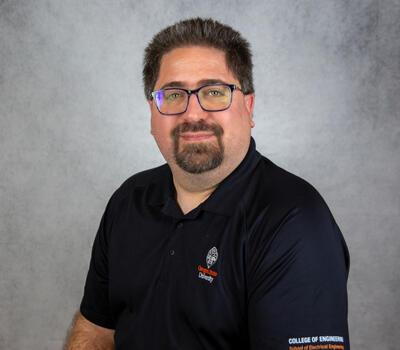
Scott Kerlin is a Senior Lecturer in the Department of Electrical Engineering and Computer Science at Oregon State University's College of Engineering. He holds an M.S. and B.S. in Computer Science from the University of North Dakota. Prior to academia, he worked at the Mayo Clinic on medical software systems and IBM as a build master for enterprise products. His career spans roles including network administrator, lab manager, and Undergraduate Director at UND. Dr. Kerlin's research focuses on bridging industry experience with academic curriculum, particularly in computer science education, project-based learning, and cybersecurity. He emphasizes practical applications of theoretical concepts, such as integrating 3D printing and scanning technologies with security systems for small satellites. His work also explores student efficacy in AI courses and scalable software project management methodologies. He has taught at multiple institutions, including the University of Minnesota and Augsburg University, and held roles at Michigan Tech as Senior Security Engineer. His 2024 Engineering+ Outstanding Teaching Award highlights his commitment to pedagogical innovation. Current projects include in-space 3D printing, solar energy systems, and cryptographic solutions for satellite communications. Key areas of contribution include: 3D printing/Scanning: Material characterization, key replication, and aerospace applications Cybersecurity: Intrusion detection, satellite communications security, and chaotic cryptosystems Educational Innovation: Active learning frameworks, PBL implementation, and student performance modeling His interdisciplinary approach connects computer science fundamentals with real-world engineering challenges, emphasizing sustainability and industry relevance in curricula.
Dr. G.K. Knopf is a Professor in the Department of Mechanical & Materials Engineering at Western University, Canada. He holds a Ph.D. (1991), M.Sc. (1987), and B.E. (1984) from the University of Saskatchewan. His work bridges product design, advanced manufacturing, and bio-inspired technologies. Research Focus: Dr. Knopf’s research spans 3D shape reconstruction , laser microfabrication , micro-optics , and bioelectronic imaging arrays . Recent projects emphasize light-driven actuators , flexible electronics , and graphene-based inks for printing circuits on unconventional substrates like silk and paper. Publications: Over 150 peer-reviewed works, including two edited CRC Press volumes ( Smart Biosensor Technology , Optical Nano and Micro Actuator Technology ). Key contributions involve non-lithographic fabrication , bacteriorhodopsin photodetectors , and self-organizing feature maps for data visualization. Awards/Patents: Co-inventor of two U.S. patents (6,542,249 for 3D surface measurement; 7,573,024 for bioelectronic imaging arrays). Teaching: Leads graduate courses in Medical Device Design and Optomechatronic Systems , as well as undergraduate Mechatronics and Medical Device Development courses.
Ahmed Hammad is an Associate Professor in the Department of Civil and Environmental Engineering at the University of Alberta's Faculty of Engineering, where he also serves as Director of Academic Integrity, ENG WIL, Co-op and Career Connections. With 25 years of industry experience as a Project Planning & Control Manager on global mega-projects (including Oil Sands, LNG, and Infrastructure across Canada, UAE, Australia, and Egypt), he brings extensive practical expertise to academia. Education: Doctorate of Philosophy, Construction Engineering & Management, University of Alberta (2009) Master of Science, Construction Engineering & Management, University of Alberta (1999) Master of Engineering, Construction Engineering and Management, Cairo University (1996) Bachelor of Science, Civil Engineering, Mansoura University (1989) Research Focus: Dr. Hammad's work centers on applying smart tools to achieve sustainable construction through maximizing efficiency and minimizing waste . His research employs Machine Learning , Multi-Criteria Decision Making , Knowledge-Based Decision Support Systems , and digital twin technologies to optimize project planning, resource allocation, and sustainable material selection. He investigates the integration of BIM and Augmented Reality to enhance construction processes while reducing environmental impact. Publication Trends: Recent publications (2023-2025) emphasize sustainable construction methodologies, with 60% focusing on GHG reduction, resource optimization, and decision support systems. Key themes include machine learning for labor estimation, TOPSIS/MCDM for sustainable material selection, and digital twins for production planning, reflecting his NSERC-funded projects on KBDSS and construction-oriented digital twins. Scientific Recognition: Best Paper Award at 8th International Conference on Industrial Engineering and Operations Management (2018) Best Paper Award at HBRC Green Smart Sustainable Buildings Conference (2024) Research Leadership: Dr. Hammad secures major industry-academic partnerships, including NSERC Mission Alliance Grants ($1.2M+) with 16 industry partners for GHG reduction projects and NSERC Alliance Grants with 9 partners for digital twin development. His completed projects include collaborations with the City of Edmonton and Alberta Ministry of Infrastructure on resource allocation models. Research Ecosystem: As leader of the Sustainable Construction Research Group (SCRG), he fosters industry-academia collaboration through regular workshops with construction firms and government agencies, focusing on translating research into practical tools for sustainable project delivery.
Jun Liu is an Assistant Professor in the Department of Mechanical and Aerospace Engineering at the School of Engineering and Applied Sciences, University at Buffalo. His research focuses on advanced energy materials, nano/micro-mechanics, and self-powered systems, with applications in triboelectric energy harvesting and scanning probe microscopy. Education: PhD, Materials Engineering, University of Alberta (2018) MS, Materials Science, Shanghai University (2015) BE, Materials Science and Engineering, Nanchang University (2012) Research Interests: Development of tribovoltaic and triboelectric systems for self-powered electronics Mechanical energy harvesting via dynamic heterojunctions and Schottky contacts 3D-printed hydrogel structures for energy absorption and flexible electronics Nanoscale characterization using atomic force microscopy Design of nanocomposite sensors and catalytic materials Publication Trends: His work emphasizes triboelectricity, nanoscale energy conversion, and sustainable materials. Recent articles explore bionic tactile sensing, tunable hydrogels, and quantum dynamics in sliding interfaces. Awards: SONY Faculty Innovation Award (2021) Nature Springer MINE Young Scientist Award (2020) International Contest of Applications in Nano/Micro Technology Prize (2013) Laboratory: Advanced Energy Materials and Nanomechanics Lab at University at Buffalo.
Dr. Stirling Howieson is a Senior Lecturer in the Department of Architecture at the University of Strathclyde. His research focuses on two key areas: (1) housing and health, including asthma epidemiology, indoor air quality, and energy-efficient building design, and (2) solar energy applications such as biochar production, solar desalination, and off-grid energy solutions. He leads projects like the Sunstore Powerpan, which won the 2019 Geneva Grand Prix, and collaborates on initiatives in sub-Saharan Africa. Education: PhD in Housing and Health, University of Strathclyde (2003) MPhil in Thermal Standards, University of Strathclyde (1985) Bachelor of Architecture, Heriot-Watt University (1979) Research Interests: His work addresses the interplay between indoor environmental conditions and public health, leveraging solar technology for sustainable solutions. Key topics include asthma prevention through ventilation optimization, hygroscopic materials for energy-efficient buildings, and solar-driven biochar systems for waste management. Awards: Grand Prix and Gold Medal (Geneva Invention Exposition, 2019) Scottish Edge (2016) Advising & Grants: Supervises PhD projects on solar energy and low-carbon design. Secured grants like Innovate UK’s Energy Catalyst 8 for off-grid solar solutions. Active in measuring socio-economic impacts of solar appliances in South Africa. Labs/Teams: Engages in interdisciplinary teams developing solar thermo-electric systems and sustainable building technologies.
Amin Hammad is a Professor at the Concordia Institute for Information Systems Engineering, with an additional appointment as Affiliate Professor in Building, Civil, and Environmental Engineering at Concordia University. His research focuses on advancing construction technology through digital transformation, automation, and AI integration. He leads work in BIM applications, 4D simulation, robotic systems, and sustainable infrastructure management. His interdisciplinary approach bridges civil engineering with computer science and data analytics. Key research areas include: Automation and robotics in construction (Construction 4.0) BIM and digital twin lifecycle management AI-driven defect detection and inspection systems Occupational safety through exoskeleton performance evaluation Multi-purpose utility tunnel optimization Energy-efficient building systems Recent work emphasizes applying machine learning to construction equipment activity recognition, UAV path optimization for infrastructure inspection, and ontology development for integrated systems. His research addresses industry challenges in productivity, safety, and sustainability through data-driven solutions.
Professor Kevin Sivula is a Full Professor of Chemical Engineering at École Polytechnique Fédérale de Lausanne (EPFL), where he leads the Laboratory of Molecular Engineering of Optoelectronic Nanomaterials (LIMNO) and serves as Director of the Institute of Chemical Sciences and Engineering (ISIC). He teaches courses on Transport Phenomena, Chemical Engineering Practicals, Product design, and solar energy conversion systems. His research focuses on photoelectrochemical solar energy conversion, particularly developing novel nanomaterials for renewable energy applications. Professor Sivula's work bridges chemical engineering, materials science, and renewable energy technologies with emphasis on solar water splitting and hydrogen production. His research group explores organic semiconductors, transition metal dichalcogenides, perovskite materials, and metal oxide photoelectrodes for solar fuel generation. Professor Sivula's recent publications (2023-2025) demonstrate his leadership in advancing perovskite solar cell technology, developing novel photoelectrochemical systems for hydrogen production, and engineering semiconductor interfaces for improved energy conversion efficiency. His work spans fundamental materials characterization to device engineering, with particular emphasis on stability and scalability of solar fuel production systems. As an academic leader, Professor Sivula has supervised numerous PhD students whose research spans organic semiconductor nanoparticles for solar hydrogen production, perovskite materials engineering, photoelectrochemical CO 2 reduction, and nanomaterials for energy conversion. His research has been supported by various grants focused on advancing sustainable energy technologies.