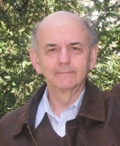
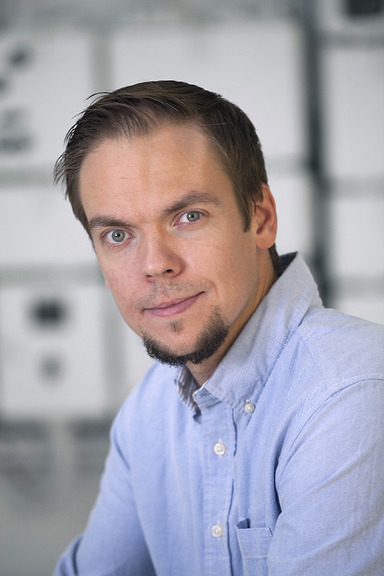
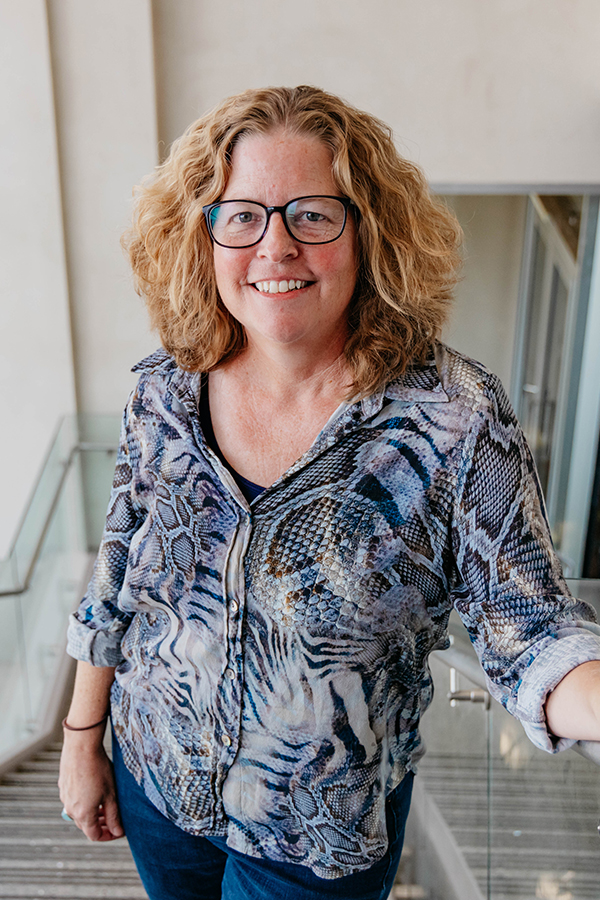
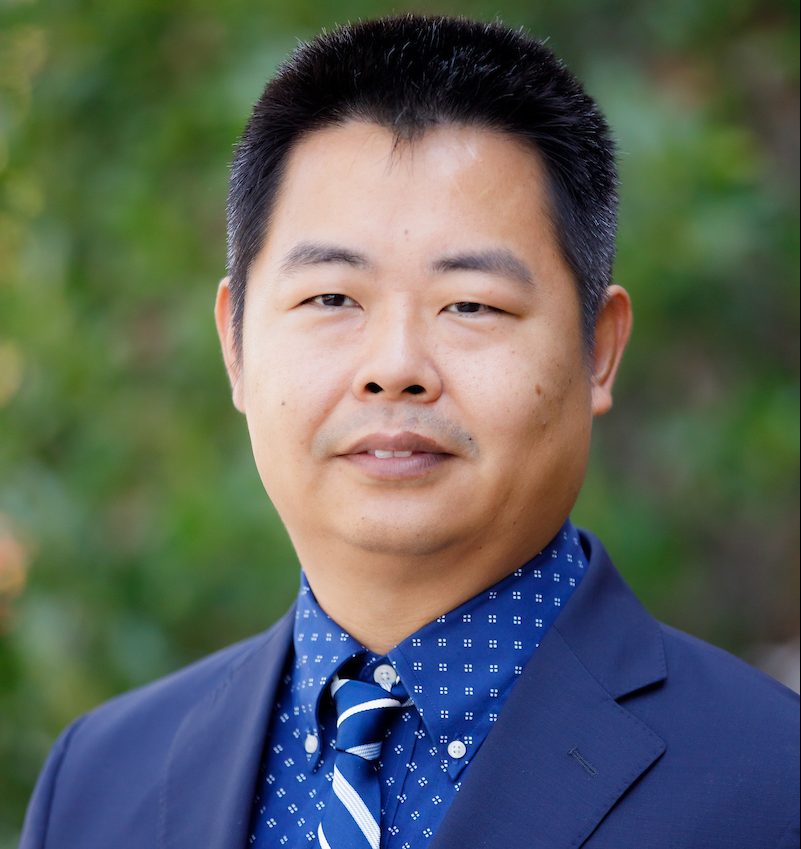
Hugo de Lasa is a Full Professor at the Department of Chemical and Biochemical Engineering, Faculty of Engineering, University of Western Ontario. He holds a Bachelor in Chemical Engineering (1968) from Universidad Nacional del Sur, Argentina, and a Doctoral degree (1971) from Université de Nancy, France. Research Focus: Catalysis, Photocatalysis, Chemical Reactor Engineering, Fluidization, Biomass Gasification Awards: Research Excellence Prize (1998), Fellow of the Chemical Institute of Canada (2000), Medal of Research and Development (2000), Doctor Honoris Causa (2004, 2018) His work spans chemical reactor design , photocatalytic hydrogen production , and fluidized bed technologies . Recent publications highlight machine learning applications in chemical equilibrium modeling and CO2 capture using microalgae. He founded the Chemical Reactor Engineering Centre (CREC) and Recat Technologies Inc. , a university spin-off commercializing reactor innovations. Awards include the Vanguard Award (2019) and Commemorative Issue in Catalysts Journal (2020). His research has generated 389 peer-reviewed publications , 14 patents , and over 10,000 citations .
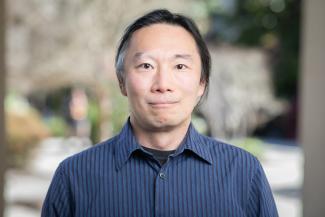
Takemichi Okui is a Professor of Physics at Florida State University (FSU), part of the Department of Physics within the College of Arts and Sciences. He holds a Ph.D. from the University of California, Berkeley (2003), and a B.Sc. from Hokkaido University, Japan (1998). His research focuses on High Energy Theory, with expertise in particle physics, cosmology, and quantum field theory. Okui has been recognized with awards such as the FSU Developing Scholar Award (2017) and University Teaching Award (2016). He has mentored multiple graduate students and postdoctoral researchers. Okui's academic roles include serving on FSU's Graduate Affairs Committee and organizing events like the Dirac Lectures. He has taught advanced courses in high energy physics, quantum field theory, and relativity. His research has been supported by grants from the U.S. Department of Energy (DOE) and Japan's JSPS, totaling over $10 million in funding. Key research interests include neutrino physics, dark matter, and axion models. Recent work explores primordial black holes and B-meson decays at the Belle II experiment. Okui actively contributes to professional services, reviewing grants for NSF/DOE and refereeing top journals like Physical Review Letters.
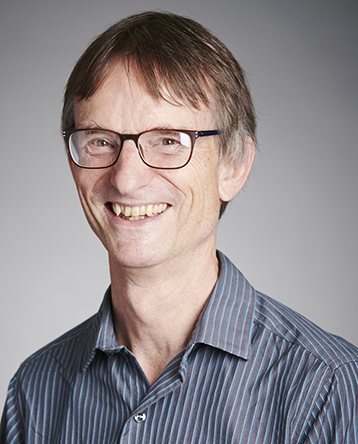
Anthony Rollett is a Professor in the Department of Materials Science and Engineering at Carnegie Mellon University , where he has been a faculty member since 1995. He serves as the Principal Investigator and Co-Director of the NASA-supported Institute for Model-Based Qualification & Certification of Additive Manufacturing (IMQCAM) and co-director of the Next Manufacturing Center . Prior to CMU, he held leadership roles at Los Alamos National Laboratory (1991-1995). Education: Ph.D., Materials Engineering, Drexel University (1987) MA, Metallurgy and Materials Science, Cambridge University (1977) Research Interests: Rollett’s work focuses on microstructural evolution and microstructure-property relationships in 3D using experiments and simulations. His expertise spans additive manufacturing , metal 3D printing , materials for energy systems , grain growth , recrystallization , and stereology , with techniques like high-energy diffraction microscopy (HEDM) and dynamic x-ray radiography (DXR) . Scientific Contributions: He has over 320 peer-reviewed publications and an h-index >80 . His recent articles highlight machine learning for laser processing , fatigue analysis of additively manufactured alloys, and design optimization for heat exchangers in supercritical CO2 and solar thermal applications . Scientific Awards: Fellow of ASM International (1996) Fellow of the Institute of Physics (UK) (2004) Fellow of The Minerals, Metals & Materials Society (TMS) (2011) Cyril Stanley Smith Award (TMS, 2014) Member of Honor, French Metallurgical Society (2015) US Steel Professor (2017) Francqui International Professor (2020-2021) International FAME Award (2023) Leadership & Impact: Rollett co-led the development of a NASA Space Technology Research Institute for additive manufacturing and established a new master’s program in additive manufacturing (2018). His research group is funded by industry , federal agencies , and Pennsylvania state grants . He also serves on the Basic Energy Science Advisory Committee and Defense Programs Advisory Committee for the Department of Energy.
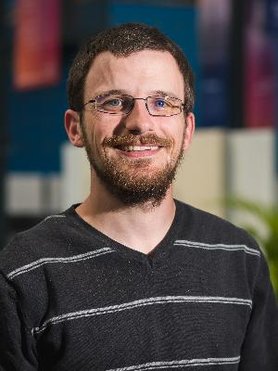
Jacky Bourgeois is an Assistant Professor of Data-Centric Design at Delft University of Technology's Faculty of Industrial Design Engineering (IDE), leading the Data-Centric Delft Design Lab. His work bridges Human-Computer Interaction, Data Science, and Participatory Design, focusing on methods like data donation to empower collaborative data exploration. He holds a computer science background, previously researching ubiquitous technologies for domestic energy practices of 'energy farmers' (solar households). Key projects include the PROMISE study on patient-led oncological care and the Data Donation initiative promoting ethical data practices. Education: Background in Computer Science; academic focus on sustainable design engineering and IoT. Teaching includes courses like 'Data-Centric Design for...' (2024) and 'Digital Product Development' (2023). Research Interests: Data as subjective inquiry material, data intimacy, data commons, and human-data interaction in home contexts. Notable contributions include PAIRcolator for collaborative data reflection and Tangi for 360° video insights. Awards include Best Paper at CHI 2025 and DIS '24 Best Paper. Grants & Collaborations: NWO-funded research on hospital sounds (2024), IoT Rapid Proto Labs for industry-academia partnerships, and ancillary role as a scientific employee at The Open University (2025–2027). Labs & Teams: Director of the Data-Centric Delft Design Lab; collaborates with the HCI Data & Design SIG. Current projects address ethical frameworks for data donation and patient-centered healthcare systems.
Dr. Rajesh Bera is a Research Fellow at ICFO's Functional Optoelectronic Nanomaterials group specializing in quantum-confined nanostructures. His research examines ultrafast carrier dynamics, excitonic properties, and optoelectronic applications of nanomaterials including quantum dots, nanoplatelets, and hybrid nanostructures. Current investigations focus on intraband transitions in doped nanocrystals, orientation-dependent excitonic behavior in 2D materials, and charge transfer mechanisms in heterostructure devices. Work bridges fundamental photophysics with applications in photodetection, sensing, and energy conversion. Recent publications demonstrate expertise in time-resolved spectroscopy of quantum materials, nanomaterial synthesis via colloidal chemistry, and rational design of optoelectronic devices. Continually develops novel characterization methods to probe ultrafast processes at nanoscale interfaces.
Shafiul Monir serves as Senior Lecturer in Engineering, Associate Dean (International and Partnerships), and Programme Leader for the MSc in Engineering at Wrexham University, with contact details including Room D30, phone 01978 293151, and email s.monir@wrexham.ac.uk. His academic qualifications include: BEng (Hons) in Aeronautical Mechanical Engineering from Wrexham University (2008) MSc in Aeronautical Engineering specializing in Computational Fluid Dynamics (CFD) modelling PhD in Low Carbon Research from University of Wales (awarded 2018) under Wrexham University's auspices Monir's research centers on solar photovoltaic technology development, particularly applying computational fluid dynamics to optimize thin-film deposition processes for Cadmium Telluride (CdTe) solar cells. His expertise spans atmospheric pressure metalorganic chemical vapour deposition (AP-MOCVD), thin-film uniformity challenges, and renewable energy systems engineering, with significant contributions to advancing sustainable photovoltaic manufacturing techniques. He is a core member of the Centre for Solar Energy Research (CSER), participating in the Solar Photovoltaic Academic Research Consortium (SPARC) Cymru project funded by the Lower Carbon Research Institute (LCRI). His doctoral research received support through the Knowledge Economy Skills Scholarships (KESS) program, European Social Fund (ESF), and Scanwel Ltd sponsorship.
Josiah Hester is Associate Professor of Interactive Computing and Computer Science at Georgia Tech's College of Computing, where he also directs the Center for Advancing Responsible Computing and the Ka Moamoa – Ubiquitous and Mobile Computing Lab . His research focuses on sustainable, battery-free computing systems for health, conservation, and education, informed by his Native Hawaiian heritage. Education: Ph.D. in Computer Science, Clemson University, 2017 B.S. in Computer Science, Clemson University Honors College, 2011 Research Interests: Hester’s group pioneers intermittent computing —devices that harvest ambient energy (solar, radio, thermal, microbial) and operate reliably despite frequent power loss. Applications span: Large-scale conservation sensing with Indigenous communities Battery-free health wearables (smart masks, implantables) Educational tools for sustainable design Carbon-aware IoT and recyclable robotics Recent Work & Trends: His 2024–2025 publications unveil soil-powered sensors, recyclable electronics, and culturally-grounded CS education tools. A consistent theme is co-design with underserved communities and embedding sustainability metrics at every layer—from hardware to curriculum. Scientific Awards: Presidential Early Career Award for Scientists and Engineers (PECASE) – 2025 Alfred P. Sloan Fellowship – 2022 NSF CAREER Award – 2022 Popular Science “Brilliant 10” – 2021 3M Non-Tenured Faculty Award – 2021 Multiple best-paper & best-presentation awards Grants & Teams: Hester’s lab is supported by >$50 million in active funding from NSF, NIH (ARPA-H), DARPA, DoD, Sloan, VMware, and 3M. He leads interdisciplinary teams on projects such as: $35 million ARPA-H bioelectronics initiative for diabetes and cancer $5 million NSF “Coastlines and People” Hub for Manoomin conservation $2 million NSF-DELPHI sustainable edge device design Laboratory & Mentorship: The Ka Moamoa Lab (named with Hawaiian meaning “lamp of the moamoa fish”) hosts graduate, undergraduate, and post-doctoral researchers. Hester actively recruits Native and Indigenous students and has mentored award-winning advisees such as Nivedita Arora (ACM Doctoral Dissertation Award 2024).
Greg Keoleian is the Peter M. Wege Endowed Professor of Sustainable Systems at the University of Michigan. He co-founded and directs the Center for Sustainable Systems and co-leads the MI Hydrogen initiative. His research focuses on advancing life cycle assessment (LCA) methodologies to evaluate the sustainability of technologies, products, and systems. Key areas include renewable energy systems (e.g., wind, solar, bioenergy), transportation decarbonization, circular economy frameworks, and food/agricultural systems. He teaches interdisciplinary graduate courses on Sustainable Energy Systems and Industrial Ecology, and co-directs the Engineering Sustainable Systems Dual Degree Program and the Rackham Graduate Certificate Program in Industry Ecology. Research interests emphasize integrating environmental, economic, and social metrics into sustainability assessments. Notable contributions include pioneering LCA models for hydrogen energy systems, vehicle lifecycle optimization, and circular economy pathways for automotive materials. His work spans global and regional scales, addressing challenges such as reducing greenhouse gas emissions, optimizing resource efficiency, and promoting sustainable urban infrastructure. Keoleian’s recent work highlights synergies between emerging technologies (e.g., wireless charging, autonomous vehicles) and sustainability goals. He collaborates with policymakers and industry leaders to translate research into actionable strategies for deep decarbonization and circular economy adoption. Initiatives like the State of Michigan Hydrogen Roadmap exemplify his focus on bridging academic research with practical implementation. His interdisciplinary approach ensures comprehensive analysis of energy systems, industrial processes, and consumer behaviors. Keoleian’s teaching and mentorship emphasize systems thinking and cross-sector collaboration. He has shaped curricula that prepare students for leadership roles in sustainable systems design, policy development, and corporate sustainability management. Ongoing projects include optimizing reusable packaging systems, evaluating food waste impacts, and modeling urban energy justice in electric vehicle deployment.
Ville Vuorinen is an Associate Professor at the Department of Energy and Mechanical Engineering, Aalto University. His research focuses on computational fluid dynamics (CFD) in energy technology, particularly using Large-Eddy Simulation (LES) and hybrid LES-RANS approaches with OpenFOAM. Research Interests: Combustion, Turbulence, Hydrogen, Emission Reduction, Biofuels, Marine Engine Hydrodynamics, Primary Atomization, Liquid Cooling. His team explores hydrogen-enriched flames, ammonia combustion, two-phase flows, and virus transmission modeling. Article Trends : Recent work spans hydrogen pre-ignition in engines, LES of ammonia/methanol flames, aerosol transmission in choir rehearsals, atomic layer deposition conformality, underwater noise analysis, and techno-economic waste-to-hydrogen systems. Keywords include combustion modeling, sustainable energy, and cross-disciplinary CFD applications. Scientific Awards Teknologiateollisuus ry Diesel- ja kaasumoottoritoimialaryhmän tunnustusapuraha (2010) Collaborations : Works closely with experimentalists. Advisees include Shervin Karimkashi Arani, Parsa Tamadonfar, Ossi Kaario, and others. Research impacts energy-efficient ships, marine engines, and biomedical applications.
Kassandra McQuillen is an Assistant Professor of Practice in the Department of Energy Commerce & Business Economics at the Rawls College of Business, Texas Tech University. She holds a JD from Ventura College of Law and has nearly two decades of experience in clean energy contracts, project development, and civil litigation. Her expertise includes wind/solar energy policy, land use, and socioeconomic impacts of renewable projects. Joined Texas Tech to expand clean energy business content in the Energy Commerce Program Developed undergraduate and graduate courses in wind energy Served as co-PI on the NSF-funded WindU grant program Member of the MSIS in Energy graduate faculty Research focuses on legal and policy frameworks for renewable energy projects, landowner agreements, and compensation trends. She has also leveraged her TV competition experience (Survivor contestant) for guest lectures on resilience and leadership. A U.S. Navy veteran with service in the Seabees, she resides in Lubbock with her family, enjoying outdoor activities and travel.
Dr. Jiaqi Gong serves as Associate Professor in Computer Science and Adjunct Associate Professor in Mechanical Engineering at The University of Alabama's College of Engineering, while directing the Alabama Center for the Advancement of Artificial Intelligence. His academic foundation includes: B.S. in Engineering, China University of Geoscience (2004) Ph.D. in Engineering, Huazhong University of Science and Technology (2010) Dr. Gong's research pioneers human-AI convergence through cyber-physical systems and smart health technologies, developing mobile/wearable platforms to enhance human perceptual, cognitive, and physical capabilities. His work spans artificial intelligence, machine learning, computer vision, and IoT with applications in healthcare, environmental monitoring, and education. The Sensor-Accelerated Intelligent Learning (SAIL) laboratory he founded drives innovation in behavior change interventions, human movement modeling, and educational data mining. Recent publications reveal strong interdisciplinary trends: healthcare AI dominates with medication adherence prediction and surgical classification systems, while environmental applications feature flood-risk communication and drought analysis. His work increasingly integrates generative AI and LLMs across domains, demonstrating methodological innovation in federated learning, knowledge graphs, and explainable storytelling frameworks. Notable recognitions include: Best Student Paper Award, IEEE/ACM Connected Health Conference (2022) Best Student Paper Award, Body Sensor Networks Conference (2019) Data Challenge Win, IEEE Biomedical Health Informatics (2018) Best Paper Award, Body Area Networks Conference (2014) Best Demonstration Award, IEEE Wireless Health Conference (2014) Dr. Gong leads significant funded projects including a $2M CDC/NIOSH grant for first responder safety and $3M NSF funding for hydrologic research. As SAIL laboratory director, he mentors students in developing clinically deployed technologies for multiple sclerosis, dementia, and mental health. Future work focuses on scaling AI applications in chronic disease management and climate resilience through the Alabama AI Center. The SAIL laboratory (founded 2017) operates as a multidisciplinary hub developing wearable/mobile systems for health applications, with active collaborations across medical clinics and engineering departments for real-world deployment of behavior change interventions and movement analysis tools.
James F. Drake is a Distinguished University Professor in the Department of Physics at the University of Maryland, College Park, with affiliations at the Institute for Physical Science and Technology (IPST) and the Institute for Research in Electronics and Applied Physics (IREAP). He holds a B.S., M.S., and Ph.D. in Physics from UCLA (1975). His research focuses on theoretical plasma physics, particularly magnetic reconnection and plasma turbulence, with applications to space physics, solar flares, and magnetic fusion. Key contributions include elucidating the role of whistler waves in reconnection dynamics and advancing understanding of energy release mechanisms in plasmas. Dr. Drake’s awards include the American Physical Society Fellowship and the Humboldt Senior Scientist Research Award. He teaches advanced physics courses (e.g., Physics 604, 611, 761-762) and has pioneered computational models to study reconnection, turbulence, and particle acceleration. Recent work leverages Parker Solar Probe data to explore solar wind dynamics and reconnection in near-Sun environments. Education: UCLA (B.S., M.S., Ph.D. in Physics, 1975) Research Themes: Magnetic Reconnection, Plasma Turbulence, Space Plasma Dynamics Notable Achievements: Leader in reconnection theory; developer of kinetic simulation frameworks; contributor to NASA missions
Prof. Joost Reek is a Professor at the University of Amsterdam's Faculty of Science and leads the Homogeneous, Supramolecular and Bio-Inspired Catalysis group within the Van 't Hoff Institute for Molecular Sciences. He serves as scientific director of NIOK (Netherlands Institute for Catalysis Research), a nationwide graduate school coordinating catalysis research across Dutch universities under recognition by the Royal Netherlands Academy of Sciences (KNAW). His research focuses on supramolecular chemistry and catalysis, with expertise in supramolecular cages, homogeneous catalysis, sustainable chemistry, solar fuels, and electrochemical conversions. The group develops novel catalysts for industrial reactions (hydroformylation, hydrogenation), biomass conversion, and solar fuel generation including water oxidation and CO 2 reduction. Recent work explores nanocage systems for bioorthogonal chemistry and photoactive catalytic nanospheres. Reek's team secured a €10.6 million Synergy grant in 2023 for brain cancer research involving nanocages delivering small interfering RNAs. They maintain industry partnerships through NIOK's VIRAN advisory board and operate a spin-off company translating molecular research into applications. The group is embedded within the Van 't Hoff Institute for Molecular Sciences, utilizing advanced facilities for molecular design and catalytic testing. Their interdisciplinary approach bridges fundamental supramolecular chemistry with sustainable energy solutions and biomedical innovations.
Micah Hale is a Professor and Department Head of Civil Engineering at the University of Arkansas, Fayetteville, and holds the Twenty First Century Endowed Leadership Chair in Civil Engineering. His work focuses on concrete materials, structural performance, and sustainable construction practices. Education: Ph.D., M.S., and B.S. in Civil Engineering from the University of Oklahoma. Dr. Hale’s research explores High-Performance Concrete , Bond Behavior of Prestressing Strands , and Mitigation of Alkali-Silica Reaction (ASR) . He also investigates Thermal Energy Storage applications for solar power systems and sustainable ultra-high-performance concrete (UHPC) development. His publications highlight advancements in concrete durability, prestressed girder analysis, and environmentally conscious material design. Recent studies emphasize calcium oxychloride formation , prestress transfer modeling , and self-consolidating concrete optimization. His scholarly output spans structural mechanics, chemical durability, and material sustainability. Awards: Twenty First Century Endowed Leadership Chair in Civil Engineering As an educator, Dr. Hale teaches Reinforced Concrete Design , Prestressed Concrete Design , and Concrete Materials and Mixture Proportioning . His contributions to engineering ethics education and student engagement further underscore his academic leadership.
Devis Tuia serves as Associate Professor at the Swiss Federal Institute of Technology Lausanne (EPFL), holding appointments in the Institute of Environmental Engineering (IIE) within the School of Architecture, Civil and Environmental Engineering (ENAC). He leads the Environmental Computational Science and Earth Observation Laboratory (ECEO) since 2020 and contributes to EPFL's Doctoral Program in Civil and Environmental Engineering. His academic journey began in Lausanne with studies at UNIL and EPFL, culminating in a PhD in remote sensing from UNIL. Postdoctoral research followed at institutions in Valencia, Boulder, and EPFL, focusing on machine learning model adaptation. He progressed from Research Assistant Professor at University of Zurich to Associate and Full Professor at Wageningen University before joining EPFL. Tuia's research bridges Earth observation with artificial intelligence, specializing in interpretable deep learning for environmental applications. His lab develops algorithms for making remote sensing accessible, with particular emphasis on digital wildlife conservation through automated censuses using drone and satellite imagery. Current projects tackle the 'black box' problem in environmental modeling while advancing spatial intelligence for sustainable urban development. His 2023-2025 publication portfolio reveals three dominant trends: (1) species distribution modeling using incomplete observations, (2) multimodal fusion of satellite/drone data with textual descriptions, and (3) interpretable AI frameworks for environmental decision-making. This work consistently addresses real-world challenges like wildfire forecasting and biodiversity monitoring. As an educator, Tuia supervises 12 current PhD students and has graduated 4 former EPFL doctoral candidates. His teaching portfolio includes Frontiers of Deep Learning for Engineers , Sensing and Spatial Modeling for Earth Observation , and Image Processing for Earth Observation courses. The ECEO laboratory maintains active collaborations with ESA-NASA initiatives and conservation organizations globally.