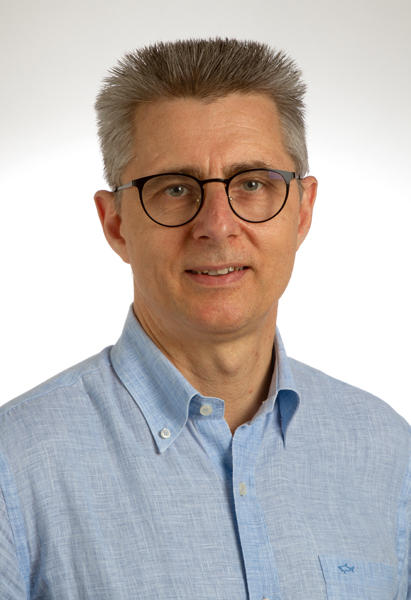
John Bell is a Professor and Deputy Vice-Chancellor (Research and Innovation) at the University of Southern Queensland (UniSQ), based at the Springfield Campus. He holds a BSc from the University of Sydney and a PhD from the University of New South Wales (UNSW). His leadership role involves overseeing research strategy and innovation initiatives across the institution. Bell's research spans advanced materials and energy technologies, with expertise in: Nanomaterials synthesis and characterization Renewable energy generation/storage (photovoltaics, batteries) Functional polymers and composite materials Semiconductor device engineering Smart building technologies His recent publications (2022-2025) demonstrate a strong focus on sustainable energy solutions, particularly next-generation batteries, solar cells, electrochromic devices, and nanotechnology-enabled sensors. Over 80% of his recent work addresses materials innovation for decarbonization and energy efficiency.
Dr. Miaoqiang Lyu is a Research Fellow at the School of Chemical Engineering , The University of Queensland . His work focuses on lead-free perovskites , flexible energy storage , and optoelectronic devices . Research Interests : Designing low-toxicity and stable semiconducting lead-free perovskites for solar energy conversion Developing flexible energy storage devices for Internet-of-Things (IoT) sensors Advancing zinc batteries and aqueous electrolyte systems Photocatalytic hydrogen production and CO2 reduction Recent Article Trends : Focus on 2D/3D heterostructures, interstitial metal doping, and solvent-engineered interfaces Applications in indoor photovoltaics, artificial synaptic functions, and wearable electronics Lead-free perovskites for resistive memory and energy storage Scientific Awards : ARC DECRA Fellow Advance Queensland Industry Research Fellow CRC for Polymers grant Supervision & Funding : Principal advisor for two PhD projects on lead-free perovskites and flexible batteries Current grants: Enabling low-toxicity perovskites for indoor photovoltaics (2026-2030), Printable zinc ion batteries (2025-2026) Labs & Collaborations : Affiliated with the Nanomaterials Centre at UQ Collaborations with Professor Lianzhou Wang , Professor Ian Gentle , and Associate Professor Ruth Knibbe
Yu Xia is a Post Doc at the Department of Chemistry, Stockholm University, Sweden. He is affiliated with the Tom Willhammar Research Group, focusing on advanced electron microscopy and diffraction techniques for structural characterization of materials. PhD (2019–2023) from a joint program between the University of Birmingham (UK) and the Southern University of Science and Technology (China). Research emphasizes fabrication of metallic nanoparticles with non-equilibrium structures and shapes using gas-phase condensation and thermal shock methods. Specializes in scanning transmission electron microscopy (STEM), in-situ heating experiments, and electron energy loss spectroscopy (EELS) for nanoparticle analysis. Current work prioritizes 4DSTEM imaging for electron beam-sensitive materials and Python-based post-processing of electron microscopy datasets. Yu Xia's research spans Materials Science , Nanotechnology , and Electrocatalysis , with applications in photocatalytic hydrogen evolution , graphene composites , and advanced electron microscopy techniques . His work often integrates computational image processing with structural characterization to optimize material properties. Publications highlight innovations in heterostructure engineering , metallic alloy catalysts , and electron beam-sensitive material imaging . No scientific awards are explicitly mentioned in the provided text. Yu Xia's technical expertise includes Python scripting for image analysis, in-situ electron microscopy , and multifunctional graphene-based materials .
Dr. Lucy Gloag is a Lecturer at the Research School of Chemistry at the Australian National University (ANU), where she joined in 2024 after previously serving as a Lecturer at the University of Technology Sydney in 2023. Her research focuses on the development of advanced nanomaterials for energy applications, particularly in electrocatalysis and energy storage. Education: BSc/BCA and BSc(Hons) from Victoria University of Wellington, New Zealand PhD from the University of New South Wales (2018) on synthesis and characterization of Ru-based nanocatalysts Dr. Gloag is a nanomaterials chemist and electron microscopist specializing in the synthesis and characterization of nanomaterials for electrocatalytic applications. Her research addresses the fundamental question of how nanostructure can be used to enhance the performance of electrocatalysts . She employs solution-phase synthesis techniques to create nanoparticles with precise control over crystal structure, dimensions, and surface faceting, then correlates these structural features with electrocatalytic properties using transmission electron microscopy and electrochemistry. Her work spans energy conversion technologies, biomedical applications of nanoparticles, and advanced materials characterization. Analysis of her recent publications reveals a strong focus on single-atom catalysts, hierarchical nanostructures, and the relationship between nanomaterial structure and function. Her research spans both fundamental materials science and practical applications in energy conversion, with significant work on oxygen evolution reaction, hydrogen evolution reaction, and methanol oxidation electrocatalysts. She has also made notable contributions to biomedical applications of nanoparticles, particularly in magnetic particle imaging and Alzheimer's disease diagnostics. Scientific Awards: ARC Discovery Project Grant (2023) ARC Linkage Project Grant (2023) UNSW Science COVID19 Strategic Support Grant (October 2021) Dementia Australia Research Foundation – Yulgilbar Innovation Grant (2019-2022) Australian Postgraduate Research Scholarship (2015) AMN-7 Image Competition Finalist (2015) Dr. Gloag currently leads the ANU Futures Scheme 2.0 project (2024-2028) and has secured multiple competitive research grants, demonstrating strong research leadership. Her work involves extensive collaboration with researchers at UNSW and other institutions, particularly with Professors Richard Tilley and Justin Gooding. She has published 28 research outputs since 2015, with significant citation impact (h-index of 17). Her laboratory at ANU (Building 137, room 2.49) focuses on developing single atom and nanomaterials for energy storage and conversion technologies, continuing her trajectory as an emerging leader in advanced materials synthesis and electron microscopy characterization.
Dr. Qingbo Sun is a researcher at the Department of Materials Physics, Australian National University, specializing in advanced materials for energy and electronic applications. His work focuses on defect engineering, dielectric materials, and photovoltaic effects in nanocrystalline systems. Research interests include: Defect-driven local symmetry breaking Colossal dielectric permittivity Photocatalytic heterojunctions High-pressure material transformations Doping strategies in semiconductors Nonlinear electric polarization Research trends from his publications highlight innovations in TiO2-based photocatalysts, SnO2 dielectrics, and ferroelectric heterostructures. Collaborations span materials synthesis, computational modeling, and international experimental studies. His work is cited extensively in Scopus with 294 citations.
Associate Professor Judy Hart is a materials scientist at the School of Materials Science & Engineering, UNSW Sydney , specializing in the development of semiconducting materials for renewable energy applications. Her work integrates computational (DFT) and experimental approaches to understand composition-property relationships in systems like solid solutions , heterostructures , and doped materials for photocatalysis and solar cells . She leads projects funded by ARC Discovery and Linkage grants , including work on photo-electro-catalysis systems and stabilizing ceramic materials . Education: PhD in Materials Engineering (Monash University, 2007), BEng (Materials) (Monash, 2002) Professional Experience: Senior Lecturer (UNSW, 2017–), Lecturer (UNSW, 2013–2017), University of Bristol (2007–2012) Research Interests Her research focuses on designing materials for renewable energy , particularly photoelectrochemical water splitting and organic oxidation reactions . Key areas include Density Functional Theory (DFT) , defect engineering , band gap tuning , and nanostructured materials . She investigates ferroelectric polarization effects , metal oxide heterostructures , and stability of battery components , with applications in hydrogen production , CO2 conversion , and advanced battery materials . Scientific Awards Ramsay Memorial Fellowship (University of Bristol, 2007–2009) Teaching Contributions She is co-author of the 1st Australian & New Zealand edition of "Materials Science and Engineering: An Introduction" , and teaches courses on computational materials science , corrosion-resistant surfaces , mechanical behavior of metals , and materials design .
Caner Ünlü is an Associate Professor in the Department of Chemistry at Istanbul Technical University with 39 publications and 10 active research projects through 2025. His work focuses on quantum dot synthesis, photophysical characterization, and applications in environmental sensing and renewable energy systems. Research interests center on carbon dots, chalcogenide quantum dots, and their interactions with biological systems. Key areas include tunable emission design, photosynthetic enhancement for algae biomass production, eco-friendly ATP sensing, and micropollutant removal. His methodology integrates experimental synthesis with computational modeling and machine learning for nanomaterial optimization. Recent publications (2024-2025) demonstrate strong thematic coherence in quantum dot engineering for specific functionalities: dopant-driven metal ion sensing, defect state manipulation in chalcogenides, and spectral modulation of photosynthetic complexes. This work bridges nanomaterials science with biotechnology and environmental engineering. Scientific awards: None mentioned in source material. Ünlü has supervised 14 research students and secured multiple grants including TÜBİTAK funding for quantum dot applications in solar cells and environmental remediation. Current projects involve quantum dot integration with metal-organic frameworks and development of fuel-marking nanomaterials. While specific lab names are unreported, his collaborative projects indicate active participation in interdisciplinary teams advancing quantum dot technology for energy and environmental solutions.
Jindal Shah is a Professor and holds the Anadarko Petroleum Chair in Chemical Engineering at Oklahoma State University, where he also serves as the Graduate Program Director. He is affiliated with the Department of Chemical Engineering within the College of Engineering at Oklahoma State University. Dr. Shah received his educational training from prestigious institutions worldwide. He earned his Ph.D. in Chemical Engineering from the University of Notre Dame in 2005, followed by an M.S. in Environmental Engineering from the University of Cincinnati in 1999, and completed his undergraduate education with a B.Tech. in Chemical Engineering from the Indian Institute of Technology (IIT) Bombay in 1996. Dr. Shah's research focuses on the application of molecular simulation methodologies to understand molecular-level interactions that give rise to macroscopic phenomena. His primary research interests include Monte Carlo and Molecular Dynamics Simulations, Phase Equilibria, Ionic liquids, and Dye-sensitized solar cells. A significant portion of his work centers on designing novel biodegradable ionic liquids with properties suitable for chemical processes, with applications in next-generation batteries and carbon capture. He also investigates molecular-level interactions responsible for device efficiency in dye-sensitized solar cells to rationally design novel dye molecules. Additionally, Dr. Shah employs data science and machine learning techniques to correlate properties of ionic liquids and generate new molecules with desired properties. An analysis of Dr. Shah's recent publications reveals a strong focus on ionic liquids and their applications in energy storage and carbon capture technologies. His work consistently bridges fundamental molecular-level understanding with practical applications, particularly in developing electrolytes for batteries and CO2 capture systems. A notable trend is the integration of machine learning techniques with traditional molecular simulation methods to accelerate materials discovery and optimization. His research demonstrates a progression from fundamental molecular simulations toward applied technologies with significant environmental impact, particularly in climate action (SDG 13) and affordable clean energy (SDG 7). Dr. Shah has secured substantial research funding from multiple prestigious sources including the National Science Foundation, U.S. Department of Energy, National Aeronautics and Space Administration, and industry partners. His funded projects include 'Collaborative Research: Cyber Training-Implementation, Medium, Establishing Sustainable Ecosystem for Computational Molecular Science Training & Education' (NSF), 'Ionic Liquids for Direct Air Capture of CO2 using Electric-Field-Mediated Moisture Gradient Process' (DOE), and 'CAREER: Computation-Enabled Rational Design of Cytochrome P450 for Ionic Liquid Biodegradation' (NSF). These grants support his research in computational molecular science, CO2 capture technologies, and the development of biodegradable ionic liquids. As an educator, Dr. Shah has been actively involved in teaching graduate courses including Principles of Chemical Engineering Thermodynamics, Doctoral Thesis supervision, and specialized courses such as Machine Learning for Chemical Processes and Introduction to Chemical Process Analytics. His teaching philosophy integrates cutting-edge research with educational practice, preparing students for the computational challenges of modern chemical engineering. He has also mentored numerous doctoral students through their dissertation research, contributing to the development of the next generation of chemical engineers and computational scientists.
Anne-Sophie Chauvin is a Senior Lecturer and Researcher at École Polytechnique Fédérale de Lausanne (EPFL), School of Basic Sciences, within the Institute of Chemical Sciences and Engineering and the Supramolecular Chemistry Laboratory. She actively engages in supramolecular and inorganic chemistry, focusing on f-element (lanthanides and actinides) coordination polymers and luminescent bioprobes for biological and technological applications, including invisible inks and dye-sensitized solar cells. PhD in Bioinorganic Chemistry from University Paris V-René Descartes (thesis on Nitrile Hydratase mimetics) Postdoctoral work at University of Geneva on chiral alcohol configuration analysis Habilitation à Diriger des Recherches (HDR) from University René Descartes (2006) Her research spans Lanthanide and Actinide Chemistry , Luminescence , Coordination Polymers , Metallacages , and Photovoltaic Materials . Recent publications emphasize catalytic spiro stereocenter formation, actinide coordination polymers, and photoredox-enabled biomolecule functionalization. She has supervised PhD students including Andrei Andreichenko , Julien Andrès , Steve Comby , and Aurélien Willauer . Recognitions include Fellowship of the Royal Society of Chemistry (FRSC) and membership in the Swiss Chemical Society (SCS). Current roles include teaching General and Analytical Chemistry to first-year Pharmacy and Biology students at the University of Lausanne (UNIL), overseeing practical sessions, and serving on the EPFL School of Basic Sciences Faculty Council.
Professor B M Azizur Rahman is a distinguished academic in the field of photonics at City University London, where he has served as Professor of Photonics in the Department of Electrical and Electronic Engineering since 2000. Previously, he was Reader in Photonics (1996-2000) and Lecturer (1988-1996) at the same institution. His academic journey began with a BEng (1971-1976) and MSc (1976-1979) from Bangladesh University of Engineering and Technology, followed by a PhD from University College London (1979-1982). His educational background laid the foundation for his extensive research career focusing on photonics, integrated waveguides, and optical sensors. Professor Rahman has made significant contributions to fields including plasmonic biosensors, fiber optic sensing technologies, supercontinuum generation, and metamaterial-based sensing systems. His research bridges theoretical modeling with practical applications in environmental monitoring, healthcare diagnostics, and engineering solutions. An analysis of his most recent publications (2022-2025) reveals a strong focus on advanced sensing technologies with applications across multiple domains. His work demonstrates expertise in combining photonics principles with nanotechnology, artificial intelligence, and novel materials to develop highly sensitive detection systems. Key research trends include the integration of deep learning with optical sensing, development of plasmonic-enhanced biosensors, and innovative waveguide designs for improved optical performance. Professor Rahman has maintained a highly productive research career with over 443 publications documented in his ORCID profile. His work shows extensive international collaboration with researchers from institutions in the UK, Bangladesh, Thailand, and other countries. While specific grant information is not provided in the available data, his sustained publication record across high-impact journals indicates successful research funding and supervision of numerous research projects over his career. His research group appears to focus on experimental photonics, computational modeling of optical systems, and development of novel sensing platforms.
Professor Paolo Fornasiero is a Full Professor of Inorganic Chemistry at the University of Trieste, Department of Chemical and Pharmaceutical Sciences, where he has worked since 1998. He serves as Deputy Director of the department since 2021 and Scientific Responsible of the CNR Research Unit associated with the Institute of Chemistry of OrganoMetallic Compounds (ICCOM) since 2008. His career spans EU projects, bilateral collaborations with China, India, and Argentina, and leadership roles in journals like ACS Catalysis (Executive Editor since 2021). Full Professor (2016–present) Associate Professor (2006–2016) Assistant Professor (1998–2006) Post-Doc, University of Reading (1996–1997) His research focuses on multi-functional metal-oxide nanosystems for energy and environmental catalysis, including green hydrogen production , CO2 valorization , and methane emission control . He pioneered core-shell catalysts and single-atom systems for stability and selectivity. His work extends to solid oxide fuel cells and photocatalytic water depollution . Recent publications highlight trends in photothermal catalysis , single-atom catalysts , and CO2 electroreduction . His 280+ papers (3 in Science , 2 in Nature Communications ) reflect expertise across Environmental Catalysis , Nanomaterials , and Green Energy . 2022 Malatesta Medal 2021 European Academy of Sciences member 2017 Edoardo Kramer Award 2016 Heinz Heinemann Award 2013 Chiusoli Gold Medal He oversees PhD/postdoc advising and participates in global capacity-building via UNIDO and World Academy of Sciences . His lab collaborates with institutions like KAUST , Czech Academy of Sciences , and Dalian Institute of Chemical Physics .
Mark MacLachlan is a distinguished Professor and currently serves as the Dean of the Faculty of Science at the University of British Columbia (UBC). He leads a vibrant research group in the Department of Chemistry focused on supramolecular materials, with expertise spanning organic, inorganic, and polymer chemistry. His work bridges fundamental molecular design with practical applications in energy, electronics, and sustainable materials. Dr. MacLachlan's research interests center on supramolecular chemistry and materials science, with emphasis on nanomaterials, porous structures, and cellulose-based systems. His group develops novel organic and inorganic molecules and materials with applications in electronics, photonics, catalysis, and environmental technologies. Key research areas include mesoporous materials for optics and catalysis, supramolecular chemistry with macrocycles, structurally interesting molecules, and self-assembled systems including gels. His work often addresses environmental challenges and alternative energy applications such as solar energy conversion and hydrogen fuel cells. Analysis of his recent publications reveals a strong focus on cellulose nanocrystals and their applications in photonic materials, energy storage, and responsive systems. His work integrates supramolecular chemistry with platinum-based systems for molecular machines and recognition. The research demonstrates interdisciplinary approaches combining chemistry, materials science, and nanotechnology to create functional materials with precisely controlled properties. Fellow of the Royal Society of Chemistry (UK) (2016) Tier 1 Canada Research Chair in Supramolecular Materials (2015-2029) Elected Fellow of the Royal Society of Canada (FRSC) (2014) Rutherford Memorial Medal (Royal Society of Canada) (2013) Killam Award for Excellence in Graduate Student Mentorship (UBC) (2013) NSERC Steacie Memorial Fellowship (2012-14) Dr. MacLachlan has mentored numerous graduate students and postdoctoral researchers, fostering a collaborative research environment that spans multiple disciplines. His group employs a wide range of characterization techniques including electron microscopy, spectroscopy, and X-ray crystallography. The MacLachlan research group maintains active collaborations with institutions worldwide, including the WPI Nano Life Science Institute at Kanazawa University where he serves as a Visiting Professor. The MacLachlan group operates state-of-the-art facilities for synthesizing and characterizing novel materials, with particular expertise in chiral nematic structures, mesoporous materials, and supramolecular assemblies. Their work on cellulose nanocrystals has led to innovative applications in photonic materials, energy storage devices, and responsive systems.
Hongyi Xu is a Senior Lecturer at the Australian National University's Research School of Chemistry and a researcher/principle investigator at Stockholm University (0.2 FTE). He holds a PhD in Materials Engineering from the University of Queensland (2013) and a Bachelor of Engineering (Mechatronics) from the same institution (2008). His research focuses on developing electron crystallography methods for studying materials, small molecules, peptides, and macromolecules, with applications in drug design and structural biology. He has pioneered MicroED techniques, including solving the first new protein structure using this method and demonstrating protein-inhibitor binding analysis. Key research areas include electron crystallography methodology, multidimensional electron microscopy toolkits, metalloenzyme charge state analysis, and fragment-based drug design. He has secured grants such as the Swedish Research Council Starting Grant and has collaborated with over 25 international groups. Notable achievements include the development of SerialED and contributions to cryo-EM advancements like Single Particle Analysis (SPA) and cryo-ET. Recent publications highlight advancements in perovskite photovoltaics, electrocatalytic hydrogen peroxide production, and zeolite structural analysis. His work bridges materials science and biology, addressing challenges in structural determination through innovative microscopy techniques. Awards include the Dean’s Accommodation for Academic Excellence (2013) and the Best Thesis Award (2013).
Michael S. Eberhart is an Assistant Professor in the Department of Chemistry and Environmental Science at New Jersey Institute of Technology (NJIT). His research focuses on solar energy conversion, specifically photoexcited charge transfer reactions and biomimetic strategies for artificial photosynthesis. He holds a Ph.D. in Chemistry from Columbia University (2016) and a B.S. in Chemistry from New Mexico State University (2010). His work integrates electrochemistry, electrocatalysis, and photoelectrocatalysis to develop sustainable solutions for energy and environmental challenges. Eberhart’s lab, eberhartlab.com , explores molecular functionalization of electrodes for water remediation and solar fuel generation. His recent studies highlight innovations in mesoporous metal oxide photoanodes and surface-bound molecular complexes for enhanced catalytic efficiency. Major research themes include stabilizing chromophores on nanostructured materials, designing bifunctional chromophore assemblies, and optimizing charge transport pathways. His articles from 2017–2021 emphasize advancements in photoelectrochemical systems, with a focus on water oxidation catalysis and plasmon-enhanced light utilization. The lab’s interdisciplinary approach bridges inorganic chemistry, materials science, and renewable energy applications.
Koenraad Muylaert is a Full Professor at the Faculty of Science, KU Leuven, and head of the Biology department at KU Leuven Kulak. His research focuses on microalgae ecology and phytoplankton physiology , with applications in eutrophication studies , wastewater treatment , and biofuel production . Based in Kortrijk, Belgium, he works with international teams in Ecuador, Qatar, and Belgium. Current projects on mountain lake eutrophication and urban aquatic systems Specializes in nano-material flocculation and omega-3 fatty acid production from microalgae Research Trends from his recent articles show emphasis on: Microalgae harvesting innovations (cellulose nanocrystals, PDMAEMA polymers) Comparative processing techniques (DAF vs sedimentation, drying methods) Biotechnological applications in flavor chemistry and microbiome interactions Laboratory operates at KU Leuven's Kortrijk campus, with strong collaborations in environmental engineering and food science . His work bridges fundamental ecological research with industrial biotechnology for sustainable solutions.