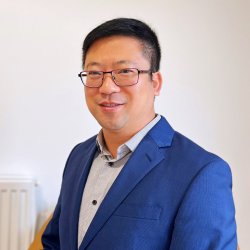
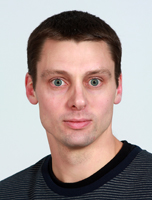
Dr. Benedikt Bläsi is Science Manager for Optics for Photovoltaics at Fraunhofer ISE's Photovoltaics Division. His research focuses on optical concepts for solar cells including light trapping structures, nanoimprint lithography, and color engineering for building-integrated PV. Key innovations include the MorphoColor® concept inspired by butterfly wings for colored PV modules, hyperuniform disordered structures for light management, and roller-nanoimprinted textures. Recent work advances III-V/Si multi-junction cells achieving 36.1% efficiency and computational methods for optical modeling. He holds editorial roles at Optics Express and leads projects on terawatt-scale photovoltaics, collaborating globally on optical technology roadmaps for sustainable energy scaling.
Sergio Pagano is a Full Professor at the University of Salerno, affiliated with the Department of Physical Sciences and Technologies of Matter. His research focuses on quantum technologies, superconductivity, nanomaterials, and sensor systems. He has contributed to projects like DARTWARS, advancing parametric amplifiers and Josephson junction-based devices. His work spans quantum information processing, energy harvesting solutions, and sustainable materials for sensors and supercapacitors. Pagano collaborates widely, with notable contributions to low-temperature physics, nonlinear dynamics, and applied superconductivity. University Affiliation: University of Salerno Department: Department of Physical Sciences and Technologies of Matter Research interests include quantum computing, superconducting circuits, eco-friendly nanomaterials, and sensor technology. His recent projects explore hyperentanglement protocols, energy-efficient IoT systems, and the development of low-power temperature sensors using hydrogel nanocomposites. Pagano also investigates noise spectroscopy in solar cells and electrical transport in thin films. Publications highlight advancements in parametric amplification, Josephson junction dynamics, and energy storage systems. Collaborative efforts with SPIN (CNR) and international teams emphasize experimental and theoretical work in quantum devices and low-noise detection for axion searches.
Mohamed Morsy is an Associate Professor of Electrical Engineering at Texas A&M University-Texarkana, specializing in antenna design and wireless communication systems. His research focuses on developing compact, high-performance antennas for next-generation wireless applications including 5G networks, IoT devices, and mobile communications. Research interests span multi-band MIMO antenna systems, dielectric resonator antennas, ultrawideband technology, and educational methodologies in engineering curriculum development aligned with ABET standards. Publication analysis reveals concentrated focus on antenna miniaturization techniques since 2019, with recent expansion into sustainable energy materials (2024) and semiconductor technology (2025). Key innovations include meander-line MIMO configurations and stacked dielectric resonators for bandwidth enhancement.
Hemamala Karunadasa is a Professor of Chemistry at Stanford University and a Senior Fellow at the Precourt Institute for Energy. She leads an active research group focused on developing new materials for clean energy applications through synthetic chemistry approaches that bridge organic molecular tunability with inorganic solid properties. Education: Postdoc, California Institute of Technology (2011) - Molecular catalysts for activating hydrocarbons Postdoc, University of California, Berkeley and Lawrence Berkeley National Lab (2010) - Molecular catalysts for generating hydrogen from water PhD, University of California, Berkeley (2009) - Inorganic Chemistry AB, Princeton University (2003) - Chemistry Certificate, Princeton University (2003) - Materials Science and Engineering Professor Karunadasa's research program targets materials for environmental remediation (sorbents), solid-state lighting (phosphors), and renewable energy (solar cells). Her lab specializes in solution-state routes to new solid-state materials, with expertise in both solution- and solid-state synthetic techniques, structure determination through powder- and single-crystal x-ray diffraction, and various spectroscopic and electrochemical characterization methods. Analysis of recent publications reveals a strong focus on halide perovskites and their derivatives, particularly exploring how structural modifications affect electronic properties. Her group investigates organochalcogenide-halide perovskites, mixed-valence systems, and pressure effects on material properties. A notable trend is the exploration of alternative elements to address toxicity concerns in traditional lead-based perovskites while maintaining desirable optoelectronic properties for energy applications. Scientific Awards: Brown Investigator award (2022) ACS Inorganic Chemistry Lectureship award (2022) Stanford Chambers Fellowship (2021) Stanford Terman Fellowship (2015) Alfred P. Sloan Research Fellowship (2015) National Science Foundation CAREER award (2014) Professor Karunadasa has successfully mentored numerous students who have received prestigious fellowships including the Schmidt Science Fellowship, Miller Research Fellowship, and Stanford Knight-Hennessy Scholar. Her research is supported by multiple grants from the National Science Foundation, Department of Energy, and the Precourt Institute for Energy. She maintains productive collaborations with research groups across Stanford, including those in Applied Physics and SLAC National Accelerator Laboratory. The Karunadasa Lab employs a comprehensive suite of characterization tools including powder- and single-crystal x-ray diffraction, various spectroscopic and electrochemical probes, imaging methods, and film deposition techniques. Group members also characterize materials under extreme environments and in operating devices to optimize them for renewable energy applications, with recent work focusing on quantum science applications through a Stanford Q-FARM Quantum Science Seed Grant.
Dr. Son Minhee is a Research Fellow at the Energy Studies Institute, National University of Singapore (NUS). She holds a PhD in Energy and Environmental Policy and Technology from Korea University, specializing in environmental profiles and cost-benefit analysis of photovoltaic (PV) waste management. Her work focuses on low-carbon strategies, renewable energy adoption, and carbon neutrality policies, with expertise in life cycle assessment (LCA) and carbon accounting across sectors. Education: PhD in Energy and Environmental Policy and Technology, Korea University Master’s Degree, Graduate School of Energy and Environment (Green School), Korea University Her research interests span renewable energy technologies, LCA methodologies, and policy analysis for sustainable transitions. She explores carbon reduction pathways through renewable integration and emerging technologies, while evaluating policy frameworks for carbon neutrality. Recent work includes dynamic material flow analysis of plastics and hydrogen-based energy systems. Minhee’s articles highlight trends in waste management innovation, CCUS technology perception, and regional energy policy effectiveness. She collaborates on multi-sector carbon accounting projects using LCA, contributing to Singapore’s low-carbon agenda.
Bill Rutherford is a Professor and Chair in Biochemistry of Solar Energy at Imperial College London, affiliated with the Faculty of Natural Sciences and the Department of Life Sciences. His research focuses on Photosystem II, a water-oxidizing enzyme critical for solar energy conversion and renewable energy applications. He holds multiple affiliations, including the Centre for Structural Biology, Industrial Biotechnology Hub, and Grantham Institute. Rutherford’s work bridges biochemistry, biophysics, and energy science, with contributions to understanding enzyme mechanisms and their evolutionary origins. Research Interests: Photosystem II structure/function, water-splitting catalysts, bioenergetics, and the intersection of photosynthesis with renewable energy solutions. His studies aim to address global energy challenges through fundamental biological insights. Affiliations: CDT in Chemical Biology: Innovation in Life Sciences (supervisor) Centre for Structural Biology Institute for Molecular Science and Engineering Membrane Biology Group Electron Microscopy Centre Awards: Fellow of the Royal Society (FRS), recognizing his pioneering contributions to biochemistry and photosynthesis research. Labs/Teams: Leads research groups at the Department of Life Sciences, collaborating with interdisciplinary teams across Imperial College’s energy and structural biology initiatives.
Keqing Huang is a Postdoctoral Fellow at the Australian National University's College of Engineering, specializing in perovskite solar cell research. He investigates high-performance solar cells, flexible perovskite devices, and effects of external stimuli like radiation on device physics. Huang earned his B.S. and M.S. from Central South University and PhD from ANU. His research focuses on enhancing efficiency and stability of perovskite photovoltaics through interface engineering, novel material compositions, and scalable fabrication techniques. Recent work addresses challenges in commercialization, including humidity tolerance during manufacturing and radiation resistance for space applications. Huang's publications demonstrate consistent innovation in device architecture, particularly through interface modification strategies and additive engineering. His work spans fundamental material studies to large-scale module development. Awards include: Excellent Master's Thesis of Hunan Province Excellent Poster Award at The 7th Conference on New Generation Solar Cells He collaborates with research teams at ANU's Engineering Building and contributes to advancing renewable energy technologies through materials innovation.
Dr. Mahmoud Masoud is a Senior Lecturer at the School of Electrical and Electronic Engineering, University of Sheffield, and the Outreach Lead for General Engineering Admissions. He holds a PhD in Electrical Machines and Drives from Heriot-Watt University (2003), and has held academic positions at institutions including Alexandria University (Egypt), Strathclyde University (UK), Beirut Arab University (Lebanon), and Sultan Qaboos University (Oman). His career includes roles as an Assistant Professor, Research Fellow, and Associate Professor, with over 26 consultancy projects in electrical engineering. Research interests focus on electric machines, power electronics, renewable energy, and engineering education. He leads the Electrical Machines and Drives Group at Sheffield and teaches courses like AER125 (Electrical Fundamentals) and EEE349 (Power Engineering Electromagnetics). Awards include SFHEA (2023), Best Educator (BAME Engineering Society, 2024), and Teaching Impact Award (2024). His vision emphasizes innovation and global impact through teaching, research, and administrative work. Recent work includes developing modular remote labs for power electronics education, transformerless wind energy systems, and metamaterial-based solar efficiency improvements. He has contributed to over 70 publications since 2003, spanning fault detection, multiphase systems, and pedagogical methods.
Dr. Maxim Shkunov is a Senior Lecturer at the University of Surrey's School of Computer Science and Electronic Engineering, affiliated with the Nanoelectronics Centre and Advanced Technology Institute. He serves as Programme Director for the Nanotechnology and Renewable Energy MSc, Academic Integrity Officer, and PGR Director at the ATI. His research focuses on printed electronics using solution-processable nanomaterials and organic semiconductors, particularly in flexible optoelectronics for bio-interfaces, organic-inorganic hybrid devices, and energy storage solutions. Key areas include conjugated polymers for artificial retinas, nanowire electronics, and high-performance lithium-gas batteries. Teaching responsibilities include modules such as Renewable Energy Technologies, Nanoelectronics and Devices, and Molecular Electronics. His work emphasizes synergies with industry and academic partners in chemical synthesis, sensor applications, and printable device development. Notable contributions include advancements in flexible printed electronics and bio-interfaces, with recent publications addressing full-color vision restoration and energy storage innovations. Dr. Shkunov’s research spans semiconductor physics, nanomaterial characterization, and device fabrication, with a focus on large-area electronics for health, energy, and environmental applications. His lab develops cutting-edge technologies like inkjet-printed supercapacitors and laser-patterned composite electrodes, reflecting a commitment to translating materials science into practical, scalable solutions.
Dr. Vlad Stolojan is an Associate Professor (Reader) at the Advanced Technology Institute, University of Surrey, within the School of Computer Science and Electronic Engineering. He holds additional roles as Fire Safety Officer and Academic Tutor for all years of undergraduate Electronic and Electrical Engineering students. His research focuses on nanotechnology, with expertise spanning nanomaterials synthesis, characterization techniques (e.g., electron microscopy), and applications in energy storage, biomedical engineering, and advanced composites. Dr. Stolojan’s work integrates cutting-edge methods such as electrospinning for creating functional nanofibers, catalytic growth of carbon nanotubes, and focused ion beam microscopy. Recent advancements include developing polar-nanofiber separators for lithium-sulfur batteries and biomimetic scaffolds for neural stem cell transplantation. He co-founded Radical Fibres Ltd (now Nanolayr UK), pioneering electrospinning R&D for industrial applications. His teaching contributions include coordinating the Nanofabrication and Characterisation module and co-teaching Nanoscience and Nanotechnology . He emphasizes practical skills like microscopy image analysis, nanotube growth mechanisms, and journal writing. His research portfolio reflects interdisciplinary innovation, with over 100 publications in high-impact journals and multiple patents. In 2021, his team secured a state-of-the-art microscope enabling atomic-level imaging, enhancing Surrey’s nanotechnology capabilities. His work bridges academia and industry, addressing challenges in sustainable materials, energy systems, and biomedical devices.
Dr. Lei Xing is a Lecturer in Digital Chemical Engineering at the University of Surrey, where he also serves as a Fellow of the Institute for Sustainability and the Institute for People-Centred AI. He joined the Department of Chemical and Process Engineering in September 2022, following postdoctoral research positions at Oxford University, Purdue University, and the University of Birmingham. Dr. Xing earned his PhD in Chemical and Process Engineering from Newcastle University. His academic journey has equipped him with expertise spanning chemical engineering, energy systems, and artificial intelligence, enabling his interdisciplinary research approach. His research focuses on sustainable industrial-agri-food systems through industrial decarbonization and AI-based digitalization within circular economy frameworks. Key areas include electrochemical energy conversion (fuel cells, electrolysers), carbon capture and utilisation, AI-enabled multi-criteria assessment, and model predictive control. He specializes in multi-physics and multi-phase flow modeling, multi-objective optimisation, and techno-economic analysis of renewable energy systems, with particular emphasis on practical applications for achieving Net Zero targets. Dr. Xing's recent publications demonstrate a strong integration of artificial intelligence with traditional chemical engineering approaches. Many studies develop digital twin models for electrochemical systems, optimize carbon capture processes, and advance sustainable hydrogen production technologies. His work consistently bridges theoretical modeling with practical engineering applications, incorporating life cycle assessment and techno-economic analysis to evaluate environmental and economic viability of energy solutions. Chartered Member of IChemE (MIChemE) Fellow of Higher Education (FHEA) Associate Editor for Fuel Cells and Frontiers in Energy Research Editorial Board Member for Energy and AI, CCST, and Energies Dr. Xing actively supervises multiple PhD students working on cutting-edge projects at the intersection of AI and sustainable energy systems. His research is supported by significant grants totaling over £1.2 million from EPSRC, Royal Society, Horizon Europe, and other funding bodies. These projects address critical challenges in decarbonizing hard-to-abate sectors, developing circular economy approaches for fertilizer production, and advancing CO2 electrolysis technologies. He leads research initiatives within the Sustainable Energy and Materials group at Surrey, collaborating with colleagues across chemistry, mechanical engineering, electrical engineering, and computer science disciplines. His work on the OLINWASTE project represents a major EU-funded effort to transform olive mill waste into valuable bioproducts, while his C-Cir project focuses on accelerating the commercial translation of CO2 electrolysers.
Dr. Y. Shirley Meng is a Zable Chair Professor in Energy Technologies and Professor of NanoEngineering at UC San Diego. She leads the Laboratory for Energy Storage and Conversion (LESC), focused on developing advanced materials for electrochemical energy storage, including batteries and solar cells. Her research integrates experimental techniques with computational modeling to innovate in solid-state batteries, sodium-ion batteries, and magnetic materials. Dr. Meng founded the Sustainable Power and Energy Center (SPEC), fostering interdisciplinary energy solutions. Education: PhD in Advanced Materials for Micro & Nano Systems (Singapore-MIT Alliance, 2005). Postdoctoral research at MIT. Elected Fellow of the Electrochemical Society. Research interests span energy storage technologies, materials science, and sustainable energy systems. Key projects include high-voltage cathodes, solid electrolytes, and scalable battery designs. Recent breakthroughs include carbon-free silicon anodes and pressure-controlled lithium metal batteries. Over 190 peer-reviewed publications, patents, and prestigious awards reflect her global impact. Current research teams include postdocs, graduate students (e.g., Thomas Wynn, Haelie Chung), and collaborators worldwide. Active in industry partnerships and policy initiatives for clean energy.
Dr. John Dos Santos is a Research Fellow in Organic Optoelectronics at the School of Chemistry, University of St Andrews. His research focuses on advanced optoelectronic materials and their applications, particularly in thermally activated delayed fluorescence (TADF) systems. He explores strategies to enhance material performance in organic light-emitting diodes (OLEDs), solar cells, and light-emitting electrochemical cells (LECs). Key research contributions include the development of MR-TADF (Multi-Resonance TADF) emitters for narrowband emission, molecular design of deep-blue TADF materials, and the integration of TADF emitters into functional devices. His work also spans the synthesis of conjugated macrocycles and BODIPY-based hole-transport materials for photovoltaic applications. Publications highlight advancements in optoelectronic material design, covering topics such as molecular asymmetry effects, color tuning, and novel TADF frameworks. Collaborations with international teams demonstrate a focus on interdisciplinary material science and device engineering.
Lasse Vines is a Professor of Solid-state Physics and Quantum Technology at the University of Oslo (UiO), affiliated with the Department of Physics and the Center for Materials Science and Nanotechnology. His research focuses on semiconductor physics, materials physics in bulk, thin films, and nanostructures, with applications in solar cells, power electronics, and quantum technology. Key interests include point defects, doping, and diffusion in semiconductors like SiC and Ga2O3. Affiliations: Faculty of Mathematics and Natural Sciences, UiO; Center for Materials Science and Nanotechnology Education: MSc in Physics and Mathematics (NTNU, 2001), PhD in Semiconductor Physics (UiO, 2008) Research Dr. Vines investigates semiconductor defects and their impact on material properties. Recent work includes defect profiling in SiC using SIMS/DLTS, diffusion mechanisms in Ga2O3, and defect-engineered quantum emitters in ZnO. His articles analyze defect dynamics, radiation tolerance, and phase transformations in wide bandgap semiconductors. Publications Recent trends emphasize defect-engineered semiconductors, ion implantation effects, and luminescence mechanisms. Key areas include 4H-SiC device optimization, β-Ga2O3 doping, and quantum material platforms for future technologies. Grants & Projects Involved in projects like GO-POW (Gallium Oxide for Power Electronics), QuTe (Quantum Emitters in Semiconductors), and SiQUEST (Silicon Quantum Technologies). These focus on defect control, quantum materials, and semiconductor applications.
Britt-Marie Steenari is a researcher at Chalmers University of Technology, specializing in resource recovery from waste materials through advanced thermal and hydrometallurgical methods. Her work focuses on metals extraction from electronic scrap, paint residues, and municipal solid waste ash using techniques like pyrolysis, solvent extraction, and thermodynamic modeling. She also investigates biomass combustion and waste gasification, particularly the behavior of minerals and metal compounds during these processes. Her research emphasizes sustainable resource management, including the recycling of lithium-ion batteries, solar cell waste, and metal oxide varistors. She employs spectroscopic methods (e.g., XANES) and leaching processes to characterize and recover valuable metals such as copper, zinc, rare earth elements, and antimony. Key applications include waste-to-resource strategies for construction materials and energy systems. Britt-Marie has contributed to projects on phosphorus recovery in the Baltic Sea region and the use of fly ash in cement. Her work bridges environmental engineering, metallurgy, and materials science to address global challenges in circular economy and pollution control.