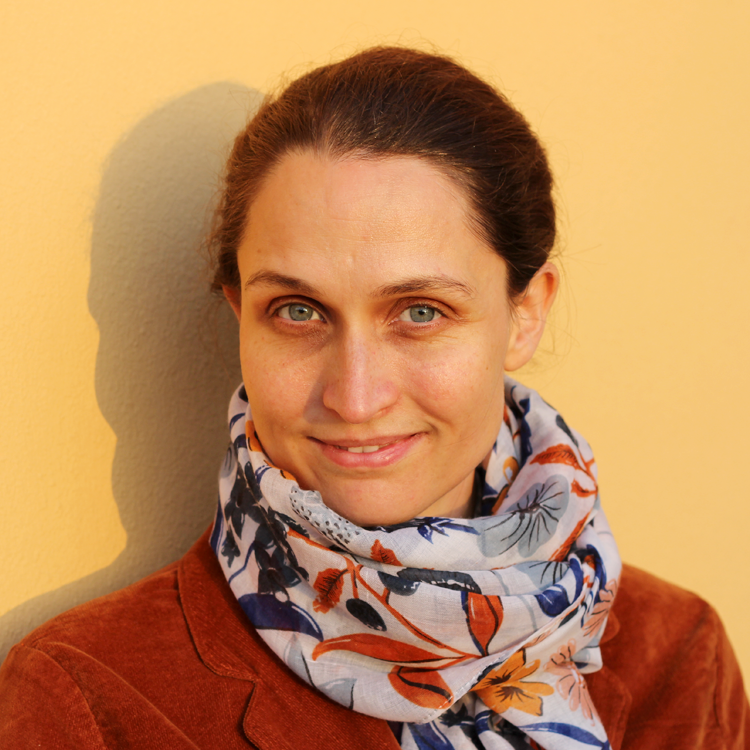
Professor Jörg Büchner is a faculty member in the Faculty of Physics at the University of Göttingen, specializing in theoretical and computational plasma physics with direct applications to astrophysical systems. His work bridges fundamental plasma theory with observational solar and space physics phenomena. His research portfolio emphasizes Magnetic Reconnection in turbulent environments, Astrophysical Plasma Dynamics relevant to solar coronae, and high-fidelity Computational Modeling techniques including particle-in-cell (PiC) simulations. Key contributions address energy conversion mechanisms in collisionless plasmas and instability development in current sheets. Professor Büchner has mentored doctoral researchers including Fabien Widmer (2016), whose thesis examined turbulent reconnection in astrophysical contexts, and Patricio A. Muñoz Sepúlveda (2015), who investigated kinetic-scale instabilities in solar coronal plasmas. His supervision reflects a sustained focus on multi-scale plasma phenomena where theoretical frameworks meet numerical experimentation.
Professor Kristina Schädler is a faculty member at the West Coast University of Applied Sciences (FH Westküste), where she serves as Professor of Data Processing within the School of Technology. She has been with the university since 2005 and also served as Dean of the Department of Technology. Her academic background includes a PhD in machine learning from TU Berlin, where she was awarded the Chorafas Research Prize for young scientists. West Coast University of Applied Sciences (since 2005) TU Berlin, Institute of Computer Science (1994-1999) Martin Luther University Halle/Wittenberg (1990-1994) Professor Schädler's research focuses on artificial intelligence and machine learning applications, particularly in image processing and data analysis. Her work spans multiple domains including industrial automation, agricultural technology, renewable energy, and animal husbandry. She has led numerous research projects that bridge academic theory with practical industrial applications, with particular emphasis on developing robust image processing systems that can be deployed in real-world settings. Her research portfolio demonstrates a consistent pattern of applying advanced machine learning techniques to solve practical problems across diverse industries. The ANIMET project, which developed facial recognition for horses, and the MaviSeg system for multichannel image segmentation represent her innovative approach to adapting computer vision technologies for specialized applications. Her work often involves close collaboration with industry partners to ensure practical relevance and implementation. Chorafas Research Prize for young scientists Innovationspreis at Equitana (2013) for the ANIMET project Professor Schädler has supervised numerous student theses that have resulted in practical applications across various domains. Her research group has secured funding from multiple sources including the European Commission, BMBF, and regional development agencies. She has established the CICAD project as a sustainable competence center for industrial image processing, which has trained multiple doctoral students through cooperative programs with the University of Lübeck. Her work demonstrates strong industry connections with companies like HIT Hinrichs Innovation + Technik, MBJ Solutions, and Fischer und Tausche Kondensatoren. Her research laboratory focuses on industrial image processing applications, with specialized equipment for 2D/3D imaging, spectral analysis, and machine learning implementation. The CICAD project established a dedicated competence center that continues to develop new applications of image processing technology across multiple industries.
Dr. Eva Unger is a researcher at the Helmholtz Centre Berlin for Materials and Energy (HZB), where she heads the junior research group Hy-Per-FORME since March 2017. Her work focuses on developing manufacturing processes for perovskite semiconductor layers to create large-area hybrid tandem solar modules that combine perovskite and silicon layers. Her educational background includes: Chemistry studies at the University of Marburg Diploma from the University of Uppsala, Sweden Doctorate on hybrid photovoltaics Dr. Unger's research interests center on understanding the structure and transformation of intermediate phases in material growth for functional materials, particularly in photovoltaics. She utilizes analytical methods to visualize processes in temporal and spatial domains, making scientific phenomena tangible for both research and communication. Her work bridges fundamental material science with practical solar technology advancement. Her publication trends reveal consistent focus on perovskite material growth mechanisms, evolving from foundational 2014 studies on intermediate phases to enabling later structural breakthroughs like the 2018 Stanford collaboration. This trajectory demonstrates progression from basic characterization toward scalable manufacturing solutions for tandem solar cells. Her notable scientific recognition includes: Marcus and Amalia Wallenberg Foundation Scholarship for postdoctoral research at Stanford University International Career Grant from the Swedish Science Council (Vetenskapsrådet) Dr. Unger leads the Hy-Per-FORME research group funded by the Swedish Science Council grant, directing projects on perovskite deposition techniques and material growth processes. Her role involves mentoring researchers in photovoltaic technology development while securing competitive research funding. The Hy-Per-FORME group specifically targets industrial-scale production of perovskite-silicon tandem modules through advanced deposition methods, focusing on improving efficiency, stability, and manufacturability of next-generation solar cells.