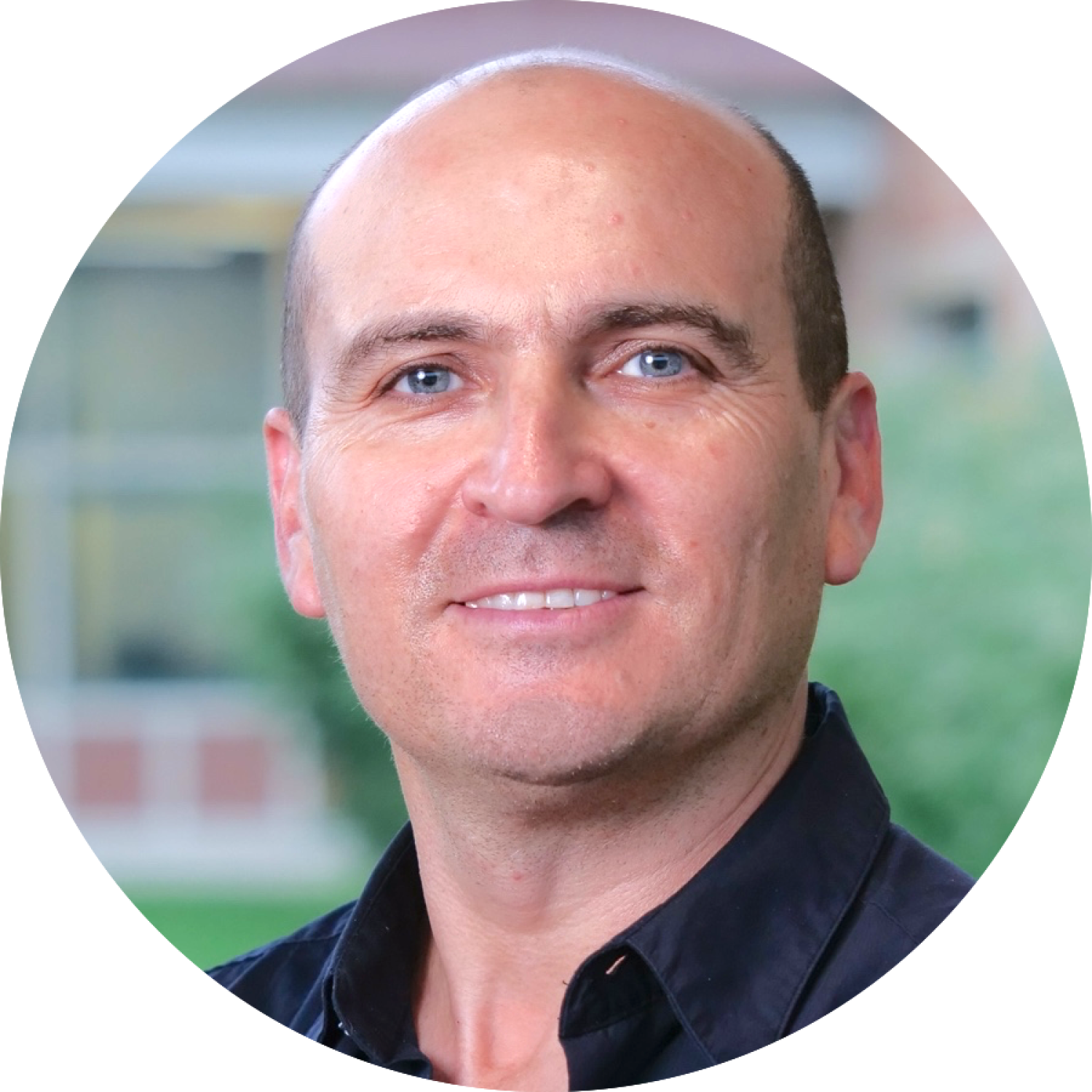
Dr. Marc Dumont is a Lecturer in Environmental Microbiology at the University of Southampton, specializing in methane-oxidizing bacteria and their roles in biogeochemical cycles. His research spans microbial ecology, environmental health, and sustainable agriculture applications. Education: PhD in Microbiology (University of Warwick), BSc in Microbiology (McGill University) Research Interests: Methanotrophs and methane cycling Microbial communities in soils/sediments Biogeochemical cycles Plant-microbe interactions Antibiotic resistance in environments Scientific Contributions: Co-authored book on stable isotope probing methods Over 70 publications in environmental microbiology Editorial board member for 4 journals Research Groups: Microbiology group Plants and Food Security Precision Biosciences Innovation Hub Institute for Life Sciences Southampton Marine and Maritime Institute
Catherine Beck serves as Associate Professor of Geosciences and Co-Director of Geoarchaeology at Hamilton College, where she leads research reconstructing Cenozoic paleoenvironments through sedimentary and stratigraphic records. Her work focuses on the East African Rift Valley, particularly the Turkana Basin in Kenya, integrating field research, continental scientific drilling, and laboratory analyses to understand paleoclimate dynamics and their relationship to early hominin evolution. Beck earned her Ph.D. and M.S. from Rutgers University and B.S. from Tufts University. Her educational foundation supports expertise in sedimentology, stratigraphy, and isotope geochemistry, with fieldwork spanning Kenya's Rift Valley and New York's Adirondack region. She directs the Hamilton Isotope Lab (HIL), collaborating with instrument technician Bruce Wegter to advance paleoenvironmental research. Her research centers on coupling lake sediment studies with paleoecology and stable isotope analyses to constrain conditions during hominin evolution. Key methodologies include grain-size analysis, XRF scanning, ostracod sclerochronology, and enamel proteomics. Recent work examines orbital-scale climate controls, hydrologic changes since the Mid-Miocene Climatic Optimum, and alkaline soil development in rift valleys. She emphasizes multi-proxy approaches to resolve complex paleoenvironmental questions across the Miocene to Pleistocene. Analysis of Beck's 15 most recent publications reveals dominant themes in Turkana Basin paleoenvironmental reconstruction, with strong emphasis on hominin evolution contexts. Her work bridges paleoclimatology, archaeology, and geology through techniques like dental microwear analysis, proteomics, and biomarker studies. Recurring methodologies include high-resolution grain-size analysis, stable isotope geochemistry, and integration of drilling core data with outcrop studies. Beck received the Class of 1963 Excellence in Teaching Award in Spring 2017. Her research is supported through the Hominin Sites and Paleolakes Drilling Project (HSPDP) and institutional resources like the Hamilton Isotope Lab. She actively mentors students through Senior Thesis courses and field studies, with publications highlighting educational innovations like "Early and Often" field course integration. As Co-Director of Geoarchaeology and HIL director, Beck leads collaborative teams involving students, technicians, and international researchers. Her work with the ICDP workshop on Deep Drilling in the Turkana Basin exemplifies her commitment to large-scale interdisciplinary projects exploring climate-hominin linkages. Current efforts focus on 29-million-year enamel proteome datasets and orbital-scale hydroclimate variability.
Dr. Fu Yong is an Assistant Professor and doctoral supervisor at the Department of Marine Science and Engineering , Southern University of Science and Technology (SUSTech), Shenzhen, China. He earned his PhD in Geotechnical Engineering from the National University of Singapore (NUS) in 2018, preceded by a Master's (Tongji University, 2013) and Bachelor's (Shanghai University, 2010) in Civil Engineering . Current Role: Assistant Professor, SUSTech (2020–present) Prior Roles: Research Fellow (NUS, 2018–2020), Research Engineer (NUS, 2017–2018) Dr. Fu specializes in marine geotechnical engineering , with key focuses on offshore wind power foundation design, deep-sea anchoring technologies, and underground space development. His technical expertise includes large deformation finite element modeling (CEL/RITSS methods), stochastic analysis , and machine learning (GWO-MLP optimization). His work bridges laboratory experiments (centrifuge and field tests) with computational simulations to address challenges in marine infrastructure. Marine foundation design for offshore wind turbines and marine ranches Deepwater dynamic penetration anchoring systems Horizontal deep soil mixing equipment for underground space Finite element simulation of large deformations and thermal effects His publication trends reveal a consistent focus on offshore anchoring mechanics, shale fracture modeling, and machine learning integration for geotechnical predictions. Recent works (2024–2025) emphasize torsional effects in suction anchors, sand-GFRP interface behavior, and advanced constitutive models for cemented soils. Key journals: Geotechnique , Ocean Engineering , Physics of Fluids , Computers and Geotechnics Dr. Fu has received multiple scientific awards , including the 2024 SUSTech Undergraduate Teaching Award, 2022 SUSTech Outstanding College Mentor Award, and NUS Research Scholarship (2013–2017). Selected Honors: 2024 First Prize, SUSTech Undergraduate Teaching Award 2022 SUSTech Outstanding College Mentor 2020 Shenzhen Overseas High-level C Talent He actively contributes as a reviewer for 18+ international journals and serves on editorial boards for journals like Sustainable Structures . His work on machine learning-driven anchor penetration prediction (2024) and hybrid phase-field shale fracture modeling (2024) exemplifies interdisciplinary innovation.
Lena Merete Tallaksen is a Professor at the Department of Geosciences, University of Oslo, specializing in Physical Geography and Hydrology. Her research focuses on hydrological modeling, drought analysis, and hydroclimatology, with applications to global change studies. PhD (Dr. Scient., 1991) and M.Sc. (Cand. Scient., 1987) in Hydrology from the University of Oslo Her academic interests include: Regional low flow and drought analyses using extreme value analysis and space-time modeling Hydroclimatology, particularly climate drivers of drought Global change impacts on water resources and hydrological extremes The selected publications highlight her expertise in drought modeling, climate linkages, and European hydrology. Key collaborations include the EU-funded WATCH project, UNESCO FRIEND, COST733, and partnerships with Wageningen University, University of Birmingham, and Norwegian institutions like NVE and SINTEF. Scientific awards include the prestigious IAHS Tison Award (1998) for her work on streamflow drought modeling. She has led courses in soil and groundwater hydrology (GEO3020/4020) and fluvial hydrology (GEO4340).
Dr. John Morgan is an Associate Professor in the Ecological Plant and Animal Sciences department at La Trobe University , Melbourne, Australia. His research focuses on the interplay between ecological theory and applied conservation practices, particularly in restoration ecology, species invasion dynamics, and climate change impacts across diverse ecosystems ranging from alpine grasslands to tropical savannas. Research Interests: Long-term vegetation dynamics, fire ecology, climate change adaptation, conservation of native plant biodiversity, weed invasions, and functional trait ecology. Key Projects: Investigating nutrient impacts on grassland stability, climate change effects on alpine shrubs, fire regime consequences in tropical savannas, and fungal conservation in Australian and Antarctic ecosystems. Professional Engagement: Active in mentoring students, collaborating with conservation groups, and providing ecological expertise to government agencies through funded projects like NESP PeatSense and Farm-scale Natural Capital Accounting. Teaching: Has taught courses on plant diversity, landscape ecology, and mountain ecosystems since 2000.
Dr. Amir Sadeghpour serves as an Associate Professor of Soil Management and Integrated Cropping Systems in the Department of Plant, Soil, and Agricultural Systems at Southern Illinois University Carbondale (SIU). His research and teaching focus on developing sustainable agricultural systems that address challenges posed by climate variability. Dr. Sadeghpour's educational background includes a Ph.D. in Plant and Soil Sciences from the University of Massachusetts Amherst (2014), an M.S. in Agronomy from the University of Tehran, Iran (2008), and a B.S. in Crop Production and Plant Breeding from Azad University of Varamin, Iran (2006). Prior to joining SIU, he held postdoctoral positions at Virginia Tech and Cornell University. His research program integrates agroecological principles with precise nutrient management to design regionally adapted cropping systems that are profitable, efficient, sustainable, and resilient. Key research areas include long-term tillage trials in corn-soybean systems, nitrogen management in cover cropping systems, precision nitrogen management of corn, agroecological intensification of cropping systems, and sustainable phosphorus management for vegetable crops. His work emphasizes practical solutions for enhancing agricultural sustainability while maintaining productivity. Analysis of his recent publications reveals a strong focus on environmental sustainability in agriculture, with particular attention to nutrient cycling, greenhouse gas emissions, cover crop systems, and precision management approaches. His research spans multiple scales from field-level experiments to county-wide nutrient balances, demonstrating both practical applicability and broader environmental implications. The Gerald O. Mott Meritorious Graduate Student Award in Crop Science (2013) Outstanding Graduate Student Award (ASA, NE Branch) (2013) Dr. Sadeghpour teaches several courses including Soil Management (CSEM/PSAS 443), Writing Fact Sheets in Soil Science (CSEM 390), Fertilizers & Soil Fertility (CSEM 447), and Soil Fertility Evaluation (CSEM 448). His teaching emphasizes practical applications of soil science principles to real-world agricultural challenges.
Antoine Guisan is a Professor in the Department of Ecology and Evolution at the University of Lausanne, leading the Guisan Group within the Institute of Earth Surface Dynamics. His work focuses on species distribution modeling (SDMs), climate change ecology, and biodiversity conservation, particularly in alpine and tropical ecosystems. He collaborates extensively on mechanistic niche models, invasive species dynamics, and nature's contributions to people (NCPs). Affiliation: Department of Ecology and Evolution, Faculty of Geosciences and Environment, University of Lausanne Research Themes: Species distribution modeling, niche truncation, climate change impacts, microbial biogeography, conservation prioritization His recent publications emphasize spatially nested SDMs, glacier retreat effects on functional diversity, and invasive species modeling. Awards and part-time status are not mentioned. Students include Bart Steen, Mathieu Knight, and Antoine Adde.
Matthew Lanning serves as an Assistant Professor at the State University of New York at Fredonia, located in Houghton Hall. His academic work centers on environmental science with a focus on forest ecosystem dynamics and biogeochemical processes. His primary research areas include: Water use efficiency responses to atmospheric CO2 and climate change Acid deposition impacts on forest productivity and hydrology Tree-ring carbon isotopic analysis for historical environmental reconstruction Drought stress effects on ecosystem respiration and production Science education innovations during pandemic disruptions Analysis of his 15 most recent publications (2020-2025) reveals a consistent focus on how environmental stressors—particularly acid deposition and changing climate conditions—affect forest water use and carbon cycling. His methodological approach frequently combines isotopic techniques with long-term watershed experiments, demonstrating expertise in translating complex biogeochemical processes into quantifiable ecosystem responses. No scientific awards were documented in the source material. The provided information does not specify student advisees, research grants, or laboratory teams associated with Dr. Lanning's work.
Julio Sepúlveda is an Associate Professor in the Department of Geological Sciences and Associate Director of Community and Belonging at the Institute of Arctic and Alpine Research ( INSTAAR ) at the University of Colorado Boulder . His research spans biogeochemistry , geobiology , and paleoclimate studies, with a focus on microbial roles in carbon cycling, oxygen minimum zones, and extreme climate events. PhD (Marine Geosciences): University of Bremen, Germany (2008) MS (Oceanography): University of Concepción, Chile (2005) BS (Marine Biology and Oceanography): University of Concepción, Chile (2001) His research group investigates microbial lipid biomarkers to reconstruct: Modern systems: continental margins , marine oxygen minimum zones , and extreme environments Ancient systems: mass extinction events , greenhouse climates , and glacial-interglacial transitions Key article trends include: Validating brGDGTs as paleotemperature proxies in Arctic lakes Quantifying microbial responses to ocean deoxygenation via lipid analysis Applying machine learning ( BIGMaC ) to improve paleoenvironmental reconstructions Reconstructing Arctic vegetation during interglacial periods via ancient DNA Scientific Awards: School of Science Infinitive Kilometer Award, MIT (2012) MARUM Research Prize for Best PhD Thesis (2010) Best Undergraduate Thesis in Marine Biology, Chile (2000) Best Student Presentation in Biological Oceanography, Chile (1999) Current advisees and postdocs include: PhD Students: Harry Allbrook, Robert Kelleher Grad Students: Muhammad Haikal Ezhar bin Abu Bakar, Robert Bourque Postdoctoral Scholars: Edgart Flores, Jonathan Raberg, Maria Luisa Sánchez Montes He leads the Organic Geochemistry Lab and contributes to the AllSTAARs Task Force . Courses taught include GEOL 4700/5700: Organic Geochemistry and GEOL 3040: Global Change .
Dr. Alexandra Ponette-Gonzalez is an Associate Professor in City & Metropolitan Planning at the University of Utah and Curator of Urban Ecology at the Natural History Museum of Utah. Her research focuses on atmospheric deposition , urban ecology , and ecosystem services with a particular emphasis on black carbon dynamics , nitrogen cycling , and urban forest planning . 2023-present: Associate Professor at University of Utah 2023-present: Curator of Urban Ecology at Natural History Museum of Utah PhD in Forestry & Environmental Studies from Yale University (2009) Research Highlights include: NSF CAREER award-winning work on urban air pollution mitigation Digital urban forestry tools for equitable canopy distribution Particulate matter capture by urban trees and bioindicators Black carbon in urban soils and ecosystem impacts Hydrologic connectivity in tropical and urban systems Scientific Awards : National Science Foundation CAREER award U.S. EPA Clean Air Scientific Advisory Committee member (2021-2025) Her work bridges environmental science with policy implementation , focusing on atmosphere-biosphere interactions across diverse ecosystems from tropical forests to urban environments. The Ecosystems Lab she leads investigates material fluxes in urban systems, emphasizing particulate matter dynamics , ecosystem service quantification , and environmental justice in urban greening initiatives.
Efstratiadis Andreas serves as an Assistant Professor in the Department of Water Resources and Environmental Engineering at the School of Civil Engineering, National Technical University of Athens (NTUA), based at the Laboratory of Hydrology and Water Resources Development. His research spans water resources systems, hydropower infrastructure, and the water-energy nexus, with emphasis on stochastic modeling and uncertainty quantification. His primary research interests include stochastic hydrology, flood risk assessment, multipurpose reservoir optimization, and renewable energy integration. He investigates cascading infrastructure failures, spatial reliability in solar PV systems, and climate-energy market uncertainties, often employing advanced simulation-optimization frameworks to address complex water-energy challenges under environmental variability. Recent publications (2023–2025) reveal a strong focus on hydropower dam safety, flood control infrastructure design, and the operational trade-offs in multipurpose reservoirs. His work increasingly integrates Earth Observation data for hydrologic modeling and examines socio-technical dimensions of the water-energy nexus, reflecting a shift toward interdisciplinary systems analysis. Dr. Efstratiadis contributes to NTUA's Laboratory of Hydrology and Water Resources Development, which develops decision support systems like Hydronomeas 2020 and national monitoring infrastructure (OpenHi.net) for Greek surface waters. His lab emphasizes computational tools for water resources management under climate uncertainty.
Shinpei Yoshitake is an Associate Professor at Waseda University's Faculty of Education and Integrated Arts and Sciences, where he has served since 2021 after progressing from Assistant Professor (2019-2021). His academic journey began with a PhD from Hiroshima University in 2008, followed by research positions at Waseda University and Gifu University. He maintains active roles in academic service, currently serving as an expert committee member for the Ministry of the Environment's Study Group for Expanding Biochar Application through 2025. Dr. Yoshitake earned his PhD from Hiroshima University's Graduate School of Biosphere Science, Department of Environmental Dynamics and Management in 2008, following earlier graduate studies at the same institution. His educational foundation was established through undergraduate studies in the Faculty of Integrated Arts and Sciences at Hiroshima University. His research focuses on ecosystem ecology with particular emphasis on carbon and nitrogen cycling processes. His work explores biochar applications in forest ecosystems, soil microbial dynamics, mangrove ecology, and the effects of climate change on ecosystem processes. He investigates how biochar amendments affect soil respiration, nitrogen transformation rates, and plant physiological responses, with significant contributions to understanding carbon sequestration mechanisms in various forest types. His recent publications (2020-2025) reveal a strong focus on biochar applications in forest ecosystems, mangrove carbon dynamics, and nutrient cycling processes. These works demonstrate interdisciplinary approaches combining field experiments, biogeochemical analysis, and ecological modeling. His research shows particular interest in how carbon and nitrogen cycling respond to environmental changes and anthropogenic interventions like biochar application. Poster Award, 2025.03, The 11th Tokyo Women's Medical University-Waseda University Research Exchange Seminar Young Researcher Poster Presentation Award, September 2024, Japanese Society of Soil Science and Plant Nutrition Poster Excellence Award, 2024.03, Ecological Society of Japan Poster Award, February 2024, The 10th Tokyo Women's Medical University-Waseda University Research Exchange Seminar Ecological Research Award, 2018.03, The Ecological Society of Japan Dr. Yoshitake actively mentors students, with numerous co-authored publications featuring student researchers as first authors. His research has attracted significant funding, particularly for biochar application studies and mangrove ecosystem research. He collaborates extensively with researchers across Japan and internationally, particularly on mangrove studies with Thai researchers. His laboratory focuses on ecosystem processes with equipment for soil respiration measurements, microbial community analysis, and carbon-nitrogen cycling studies.
Jean Braun is affiliated with the Institut des Sciences de la Terre (ISTerre) in Grenoble, France. Their research spans multiple domains in Earth sciences, including thermochronology , landscape evolution modeling , and glacial-isostatic adjustment . Key contributions involve inverse modeling techniques for reconstructing topographic history, quantifying exhumation rates, and analyzing the interplay between climate and tectonic processes. Research Interests: Temperature distribution, Himalayan tectonics, passive margin escarpments, and climate-driven geomorphic processes. Jean Braun’s recent work emphasizes the impact of glacial isostatic adjustment on river dynamics, as seen in studies of the U.S. mid-Atlantic coast and the Yellow River Delta. Their methodological innovations include the CLICHE and FastScape models, which integrate climate variability and efficient algorithms for solving stream power equations. Key findings highlight the longevity of passive margin escarpments due to flexural rebound and the role of rock thermal conductivity in refining exhumation rate estimates. Notable publications span journals like Earth and Planetary Science Letters , Geomorphology , and Tectonophysics , with a focus on inverse modeling, thermochronological data analysis, and the tectonic evolution of regions such as Scandinavia, the Himalayas, and the Namibian margin. Collaborative efforts with researchers like T. Pico, K. Mezger, and P.A. Van Der Beek underscore interdisciplinary approaches to understanding Earth’s surface processes.
Anne-Catherine A.M. Dieudonné, holding the title Dr.ir., is a faculty researcher at the Faculty of Civil Engineering and Geosciences, Delft University of Technology , within the Section of Geo-Engineering . Her work bridges fundamental geomechanics with pressing energy and environmental challenges, focusing on clays, bentonites, bio-cemented sands, geothermal systems, nuclear waste disposal, and CO₂ geological storage. Education & Training: Doctor of Engineering (Dr.ir.) – advanced doctoral degree in civil engineering/geosciences, exact institution and dates not stated in the source. Research Interests: Anne-Catherine’s research is organised around four pillars: Energy Geotechnics: thermo-hydro-mechanical (THM) modelling of geothermal systems in deep mines, cold-water injection-induced fracturing, optimisation under uncertainty. Environmental Geotechnics: long-term performance of clay barriers for nuclear waste repositories, gas and fluid transport in saturated clays, self-healing of rock-salt fractures. Bio-mediated Ground Improvement: micro-scale mechanics of bio-cemented sands, influence of carbonate distribution on stiffness and strength, DEM and experimental characterisation. Advanced Experimental & Numerical Techniques: development of novel visualisation devices for fluid-driven cracks, constitutive modelling of expansive clays, zero-thickness interface elements for fracture simulation. Publication Trends: Since 2020 she has authored or co-authored more than 25 peer-reviewed articles and conference contributions. The 2025 corpus shows a strong emphasis on geothermal reservoir engineering , bio-cemented geomaterials , and deep geological disposal , with methodological advances in coupled THM modelling, discrete-element simulation, and experimental validation. Scientific Awards & Honours: ABTUS Scientific Prize – Belgian Association for Underground Techniques and Urbanism (2012) C.B.R. Heidelberg Prize (2011) Bright Spark Lecture Award (2025) Ioannis Vardoulakis PhD Prize (2017) NWO Veni Grant (2019) Supervision & Grants: Anne-Catherine has supervised at least one doctoral student, A. Zhang , on bio-cemented sands. She is principal investigator on the NWO Veni project focusing on clay fracture mechanics and participates in the European EURAD consortium for radioactive waste management research. Laboratory & Teams: She is affiliated with the Geo-Engineering Section laboratories at TU Delft, which host advanced triaxial, oedometer, and bespoke visualisation rigs for clay and sand testing. Collaborative networks span TU Delft, KU Leuven, University of Liège, and multiple European institutions within EURAD.
Dr. Andrew G. Ristvey is a Principal Agent & Extension Specialist for Commercial Horticulture at the University of Maryland 's Wye Research and Education Center (Wye REC) in Queenstown, MD, with affiliate faculty status in the Department of Plant Science and Landscape Architecture. He holds a Ph.D. in Horticulture (2004) and an MS in Marine-Estuarine Environmental Sciences (MEES, 1993) from the University of Maryland system, and his work bridges sustainable horticultural practices with environmental stewardship. Education : MS (1993, MEES Program, University of Maryland Eastern Shore); PhD (2004, Horticulture, University of Maryland) His research focuses on plant nutrition , irrigation management , and sustainable alternative crop production , particularly in green roof systems and specialty crops like aronia and industrial hemp. Over his career, he has advanced methods for nutrient optimization in containerized plants, explored innovative substrates for urban horticulture, and developed water-quality strategies to mitigate agricultural runoff. His work integrates field trials, environmental modeling, and extension outreach to address practical challenges in ornamental and alternative crop systems. Recent publications highlight his contributions to: Green Infrastructure : Investigating crumb rubber amendments for zinc sequestration in green roofs. Water Recycling : Analyzing reservoir stratification and nutrient dynamics in nursery systems. Alternative Crops : Assessing organic production of photinia and industrial hemp.