
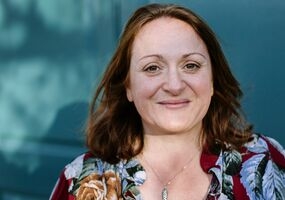
Professor Fay Couceiro is a Professor of Environmental Pollution in the School of Civil Engineering and Surveying at the University of Portsmouth. She leads the Microplastics Research Group and the 'Evaluating change across the plastics lifecycle' theme for the Revolution Plastics Institute, focusing on pollution sources, interventions, and collaborations with industry. She holds editorial roles at Cambridge Prisms: Plastics and peer reviews for multiple journals and funding bodies. Education: BSc in Marine Biology (Queen's University Belfast), PhD in Biogeochemistry (funded project on Strangford Lough), postdoctoral research at the University of Plymouth. Research Interests: Contaminants' fate, microplastics' environmental and health impacts, nutrient dynamics, heavy metals, and organic pollutants like PAHs. Her work integrates pure science with civil engineering solutions. Publications span 2007–2025, emphasizing microplastic toxicity, soil-oil interactions, and pollution mitigation strategies. Over 27 peer-reviewed articles highlight her contributions to environmental science. Advising & Grants: Supervises MSc/PhD students and collaborates with companies like Southern Water. Active in STEM outreach and UK research policy, including the EU's HR Excellence in Research accreditation process. Labs/Teams: Microplastics Research Group, Revolution Plastics Institute, and interdisciplinary teams in environmental technology and resilience.
جستوجوی استاد و پژوهشگر
استاد راهنما، استاد دانشگاه یا پژوهشگر مناسب برای مسیر پژوهشیتان را پیدا کنید و با او ارتباط بگیرید.
نمایش ۴۶-۶۰ از ۱۰٬۹۰۰ استاد راهنما
اطلاعات این پروفایلها از صفحات عمومی دانشگاهها جمعآوری شده و ممکن است بهروز نباشد.
Hugo de Boer is a Professor at the Copernicus Institute of Sustainable Development , Faculty of Geosciences, Utrecht University. He serves as scientific lead for the Delta Climate Center in Vlissingen and coordinates MSc programs in Water Science and Management and Water Management for Climate Adaptation . His research explores climate-ecosystem interactions, focusing on plant ecophysiology, ecosystem dynamics, and nature-inclusive climate adaptation in deltas. Research Themes: Future Deltas, Pathways to Sustainability, Integrative Bioinformatics Projects: LEMONTREE, CloudRoots, 'From losers to winners' (ancient plant lineages under elevated CO2) Teaching Expertise: System thinking for sustainability, quantitative statistics, plant ecophysiology Research Trends emphasize interdisciplinary approaches to climate change impacts on ecosystems, with publications spanning plant-cloud processes, CO2 acclimation, and eco-evolutionary optimality models. His work bridges biogeochemistry, land-atmosphere interactions, and sustainable development frameworks. Projects & Collaborations include experimental studies on ancient plant lineages (Equisetum) and integrative field campaigns in Amazon and temperate forests. He contributes to modeling climate-vegetation feedbacks, pesticide emission scenarios, and social-ecological system transitions.
James Tinjum is a Professor in the Department of Civil & Environmental Engineering at the University of Wisconsin-Madison, College of Engineering. His interdisciplinary expertise spans geotechnical, geological, environmental, transportation, and sustainable energy engineering. Education PhD 2006, University of Wisconsin-Madison MS 1995, University of Wisconsin-Madison BS 1993, University of Wisconsin-Madison Research Interests Professor Tinjum’s research integrates energy geotechnics with environmental sustainability. He investigates wind energy site design, district-scale geothermal heating/cooling systems, beneficial reuse of industrial byproducts (e.g., coal-combustion residuals, cement kiln dust), life-cycle environmental analysis, and remediation of contaminated sites. Additional focus areas include thermal conduction in unsaturated soils, landfill liner performance, and PFAS management in Wisconsin. Recent Research Directions His 2020–2024 publications reveal a strong emphasis on geothermal system performance , wind-turbine foundation–soil interaction , and emerging contaminant transport (PFAS, chromium). Fiber-optic distributed temperature sensing (FO-DTS) is a recurring enabling technology, applied to both geothermal borefields and landfill covers. Life-cycle assessment methodologies are consistently employed to quantify environmental benefits of renewable energy and waste-reuse strategies. Scientific Awards 2018 Fellow, American Society of Civil Engineers (ASCE) 2003 ASCE Zone III Practitioner Advisor of the Year 2002 ASCE Wisconsin Section Outstanding Young Engineer Teaching & Mentoring Professor Tinjum teaches core geotechnical courses (Soil Mechanics, Foundation Systems) alongside specialized offerings in wind-energy balance-of-plant design and sustainable systems engineering capstone. He supervises numerous master’s and doctoral students through GLE 790/890 research credits each semester. Labs & Teams He directs field-scale instrumentation campaigns at two wind-turbine sites and multiple campus/district geothermal installations, leveraging fiber-optic sensing networks and thermal response testing to advance energy geotechnics.
- Probabilistic Seismic Hazard Assessment
- Earthquake Predictability
- Operational Earthquake Forecasting
- +۷ مورد دیگر
Prof. Stefan Wiemer is the Director of the Swiss Seismological Service (SED) and holds the Chair of Seismology at ETH Zurich's Department of Earth and Planetary Science. He obtained a geophysics diploma from Ruhr University Bochum (1992) and a PhD from the University of Alaska Fairbanks (1997). His research focuses on earthquake processes, probabilistic hazard assessments, induced seismicity, and geothermal energy applications. He has published over 200 articles and supervised 30 PhD students, while also lecturing at the University of Bern. Key Roles: Member of ERC Grants Evaluation Panel (2015–present) Scientific Advisor to GFZ German Research Center for Geosciences (2021–present) President of Swiss Geophysical Commission Projects: Leader of Switzerland's national earthquake risk model Coordinator of EU-funded RISE (risk assessments) and DEEP (geothermal de-risking) projects Principal Investigator for ERC Synergy grant FEAR (BedrettoLab fault experiments) His research spans operational earthquake forecasting, CO2 storage monitoring, and the BedrettoLab underground experiments. He has won the Humboldt Foundation Fellowship (1997) and contributed to international initiatives like the Dutch Mining Effects Panel. Teaching includes ETH's Geophysics I course. Scientific contributions include developing seismic hazard models (ERM-CH23), real-time induced seismicity forecasting frameworks, and innovative techniques for fault dynamics analysis. His work integrates field data, laboratory experiments, and computational modeling to address both natural and human-induced seismic risks.
- Environmental Engineering
- Hydrology
- Hydraulics
- +۱۲ مورد دیگر
Joel S. Hayworth is an Associate Professor in the Department of Civil Engineering at Auburn University's College of Engineering. His research focuses on environmental and ecosystem restoration, particularly in estuarine, terrestrial, and freshwater systems. He leads the Estuarine Environments Research Program (EERP), which investigates the fate of endocrine-disrupting chemicals (EDCs), PFAS, and oil spill residues in coastal environments. Dr. Hayworth's educational background includes a PhD in Civil Engineering (Hydrology/Hydraulics) from Auburn University, an MS in Hydrology from the University of Nevada, Las Vegas via the Desert Research Institute, and a BS in Geophysics from the University of California, Santa Barbara. He previously worked at the Tennessee Valley Authority Engineering Laboratory and the U.S. Air Force Research Laboratory, and founded Hayworth Engineering Science in 1999 before returning to academia in 2010. His research interests span environmental engineering, hydrology, hydraulics, estuarine science, pollutant fate and transport, and chemical fingerprinting. He has developed advanced analytical methods for detecting EDCs and PFAS in water, sediment, and biota. His work integrates field studies, laboratory experiments, and environmental modeling to understand complex hydrologic, geologic, chemical, and biological processes in human-impacted ecosystems. The 15 most recent articles highlight a strong trend in environmental contaminant analysis, particularly focusing on PFAS, oil spill residues, and endocrine disruptors. His research combines analytical chemistry with environmental modeling and field monitoring, often in collaboration with interdisciplinary teams. Key themes include the development of UHPLC-MS/MS and GC-MS/MS methods, fate and transport modeling of pollutants, and ecological risk assessment in estuarine systems. Dr. Hayworth's scientific contributions are supported by funding from agencies such as the Gulf Coast Ecosystem Restoration Council (RESTORE Council). His work has led to significant publications in journals like Science of the Total Environment , Marine Pollution Bulletin , and Water . He actively mentors students and collaborates with researchers like T.P. Clement, G.F. John, and V. Mulabagal. His projects, such as the restoration assessment of Cotton Bayou and Terry Cove, demonstrate applied science for environmental problem-solving. He has developed state-of-the-art analytical laboratories and partnered with coastal communities for long-term monitoring. His laboratory, the Estuarine Environments Research Program (EERP), conducts multi-year studies on endocrine disruptors in estuaries, develops innovative sampling and analysis methods, and trains the next generation of environmental engineers and scientists. The team works across disciplines to address complex environmental challenges in the Gulf Coast region.
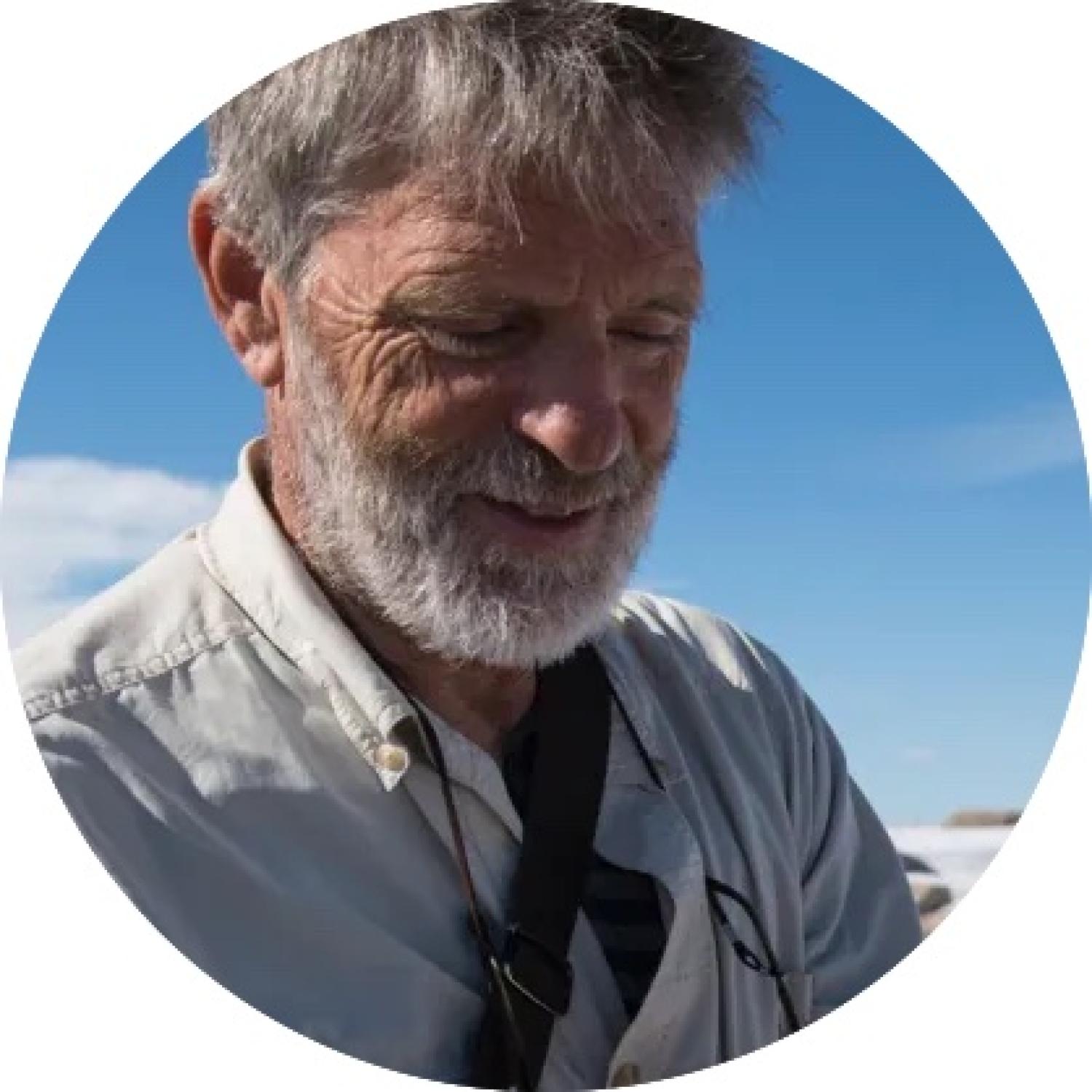
Gifford H. Miller is a Professor at the University of Colorado Boulder and serves as the Director of the Center for Geochemical Analysis of the Global Environment (GAGE) . His research focuses on reconstructing Earth's climate system using Quaternary records, with expertise in amino acid geochronology and cosmogenic exposure dating. Specializes in Arctic climate history, ice sheet dynamics, and human impacts on ecosystems Active in teaching courses on global change, Quaternary dating methods, and Holocene nonlinearities His recent work explores Holocene climate variability through lake sediments in Iceland and Baffin Island, integrating biomarkers and ancient DNA. Awards include the 2021 University of Colorado Distinguished Professor title and fellowships from AGU and GSA. 2021: Distinguished Professor, University of Colorado System 2018: Distinguished Career Award, American Quaternary Association 2009: Elected Fellow, American Geophysical Union
Prof. Dr. Jing Wang is a Full Professor at the Department of Civil, Environmental and Geomatic Engineering at ETH Zürich. His research focuses on air pollution control, nanoparticle transport, and environmental health and safety (EHS) impacts of nanomaterials. He has held roles including Assistant Professor at ETH Zürich (2010–present), Research Assistant Professor at the University of Minnesota (2007–2010), and postdoctoral associate in Particle Technology (2005–2007). Education: Bachelor’s in Engineering (2000) – Tsinghua University, Beijing Master’s in Computer Sciences (2003) – University of Minnesota PhD in Aerospace Engineering (2005) – University of Minnesota Research Interests: Air/water filtration technologies Nanoparticle emission reduction and measurement Multiphase flow mechanics Environmental impacts of nanomaterials Collaborations: Industrial partnerships include 3M, BASF, Boeing, Intel, Samsung, and others in nanoparticle measurement and filtration solutions. Honors: 2011 Smoluchowski Award (Association for Aerosol Research) 2006 ‘Best Dissertation’ Award (University of Minnesota) 2004 Doctoral Dissertation Fellowship Teaching: Courses include Air Pollution Control, Environmental Engineering Seminars, and Excursions for Environmental Engineers. Labs/Teams: Leads the Particle Technology Lab and collaborates with the Institute of Environmental Engineering at ETH Zürich.
Youssef M. A. Hashash is the Grainger Distinguished Chair in Engineering and a Professor in the Department of Civil and Environmental Engineering at the University of Illinois at Urbana-Champaign (UIUC). He holds a B.S., M.S., and Ph.D. in Civil Engineering from MIT (1987–1992). His expertise spans geotechnical engineering, earthquake engineering, and computational geomechanics, with a focus on deep excavations, tunneling, and soil-structure interaction. He co-developed DEEPSOIL, widely used for seismic soil response analysis. Education: B.S. Civil Engineering, MIT (1987) M.S. Civil (Geotechnical) Engineering, MIT (1988) Ph.D. Civil (Geotechnical) Engineering, MIT (1992) Research Interests: Dr. Hashash's work integrates geotechnical engineering with advanced technologies like AI, visualization, and discrete element modeling. Key areas include: Seismic site response and amplification models for Central/Eastern North America Tunneling and underground infrastructure resilience Geotechnical applications of machine learning and augmented reality Soil-structure interaction and liquefaction analysis Professional Roles: Geotechnical co-leader, NIST investigation of the Champlain Towers South collapse (2022–present) Chair, National Academies' Committee on Geological and Geotechnical Engineering (2024–present) Past President, Geo-Institute of ASCE Awards: Presidential Early Career Award for Scientists and Engineers ASCE 2014 Peck Medal Elected to National Academy of Engineering (2022) Labs/Teams: Leads research groups at UIUC focused on computational geomechanics and geotechnical earthquake engineering. Collaborates with federal agencies like NIST and NSF on large-scale projects.

Holly Michael is a Professor and Unidel Fraser Russell Career Development Chair for the Environment at the University of Delaware, serving as Director of the Delaware Environmental Institute. She holds a BS from the University of Notre Dame (BS, 1990s) and a PhD from MIT (2000s). Her research focuses on coastal hydrogeology, saltwater intrusion, groundwater sustainability, and climate change impacts on water resources. Current projects include investigating coastal critical zones, groundwater salinization dynamics, and arsenic-safe groundwater management in Bangladesh. Dr. Michael’s work integrates field studies, modeling, and experimental economics to address water resource challenges. She leads initiatives on subterranean estuaries, tidal wetland biogeochemistry, and the interplay between groundwater and surface water systems. Her research spans disciplines such as contaminant hydrology, geostatistics, and environmental policy, with emphasis on coastal regions. Notable projects include assessing the impacts of storm surges on coastal forests and modeling groundwater responses to sea-level rise. Dr. Michael collaborates internationally on issues like sustainable groundwater use and climate adaptation strategies. Her interdisciplinary approach bridges hydrology, ecology, and socio-economic frameworks to solve complex environmental problems.
- Microbiome and Microbial Communities
- Evolutionary Genetics
- Symbiosis and Mutualism Evolution
- +۳ مورد دیگر
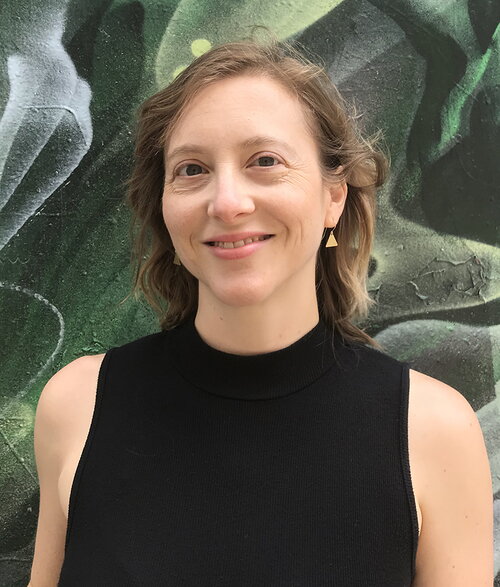
Katy D. Heath is a Professor of Plant Biology and Affiliate Professor in Microbiology at the University of Illinois Urbana-Champaign (UIUC). She leads the Plant Biology department and is affiliated with the Carl R. Woese Institute for Genomic Biology. Her research focuses on the evolution of mutualisms, particularly plant-microbe interactions such as legume-rhizobium symbiosis, emphasizing genetic and ecological factors influencing symbiotic stability and adaptation. She investigates how environmental pressures (e.g., global change) shape mutualistic relationships and microbial community dynamics. Education: B.S. (2000) and Ph.D. (2007) from the University of Illinois and University of Minnesota, respectively, followed by postdoctoral work at the University of Toronto (2007–2009). Research Interests: Symbiosis evolution, microbial genetics, plasmid transmission dynamics, and the impacts of agricultural practices on rhizobia populations. She studies diverse systems, including Medicago-Sinorhizobium, soybean-Bradyrhizobium, and invasive legume-rhizobium interactions. Recent publications (2020–2025) highlight studies on endophyte impacts on soybean yield, rhizobia diversity under conventional farming, and genomic analyses of symbiotic coevolution. Her work integrates molecular biology, quantitative genetics, and ecology. Grants & Collaborations: Lead PI on a $12.5M NSF Biology Integration Institute (Genomics and Eco-evolution of Multi-scale Symbiosis). Her team includes collaborations with institutions like Indiana University and the University of Chicago. Labs & Teams: Heath Lab focuses on symbiosis research, with active projects on microbiome dynamics, plasmid-host coevolution, and community outreach (e.g., Boys and Girls Club collaborations). Recent lab highlights include student graduations (e.g., Ivan Sosa Marquez, Chase) and awards like the John R. Laughnan Award in Plant Biology.

Richard Simonمشاهده پروفایل
دانشیار
- Rock Mechanics
- Mining Engineering
- Geotechnics
- +۴ مورد دیگر
Richard Simon is an Associate Professor in the Department of Civil, Geological and Mining Engineering at Polytechnique Montréal. He holds leadership roles as Publications Director of his department and Administrative Director of the Institute for Research in Mining and Environment (IRME) UQAT-Polytechnique. His educational background includes a B.Eng. and M.Sc.A. from Polytechnique Montréal and a Ph.D. from McGill University. Dr. Simon teaches courses including Introduction to Mine Operations, Underground Mining, and Rock Mechanics I. His research focuses on rock mechanics, numerical modeling, mining engineering, and geotechnical applications in mining environments. His extensive publication record demonstrates consistent focus on numerical modeling of rock behavior, mine stability analysis, and backfill mechanics. Recent work emphasizes computational geomechanics applications in mining operations, including stress analysis in backfilled stopes, slope stability in open pits, and optimization of mining layouts. Environmental aspects of mining, particularly contaminant transport in fractured rock, also feature prominently. Dr. Simon has supervised 6 doctoral and 8 master's students working on topics ranging from numerical seismic assessment in mines to rock fracture mechanics. He secured significant research funding including $900,000 (2017) for a metals circular economy project and led three new IRME research initiatives (2015). He directs research activities at IRME UQAT-Polytechnique and collaborates extensively within the mining geomechanics research community. His expertise is regularly featured in media outlets including La Presse+ and Les Affaires.

Scientia Professor Nasser Khalili is the Head of the School of Civil and Environmental Engineering at the University of New South Wales (UNSW). He also serves as the Director of the ARC Research Hub for Resilient and Intelligent Infrastructure Systems (RIIS), President of the Australian Association for Computational Mechanics (AACM), and a core member of the International Technical Committee on Unsaturated Soil (TC106). His research focuses on geotechnical engineering, computational mechanics, porous media behavior, and sustainable infrastructure systems. Key areas of expertise include unsaturated soils, hydraulic fracturing modeling, and advanced material characterization for asphalt mixtures. Professor Khalili's work integrates computational methods with experimental analysis to address challenges in infrastructure resilience and environmental sustainability. He has pioneered studies on pore pressure dynamics, fracture mechanics in porous media, and the application of waste materials in construction. His leadership roles in national and international committees reflect his influence in advancing geotechnical and computational engineering practices. His scientific contributions include over 150 peer-reviewed articles, with recent work emphasizing machine learning applications in civil engineering and innovative solutions for sustainable asphalt mixes. Awards include Fellowship of the Academy, recognizing his significant impact on the field.

Oswald J. Schmitz is the Oastler Professor of Population and Community Ecology at the Yale University School of the Environment. His research bridges biodiversity and ecosystem services, focusing on species interactions, climate change impacts, and conservation strategies. He employs field experiments and mathematical models to study predator-herbivore-plant dynamics, nutrient cycling, and carbon sequestration. Education: B.Sc., M.Sc., University of Guelph Ph.D., University of Michigan Research areas include: Trophic rewilding for climate solutions Human-wildlife conflict dynamics Meta-ecosystem nutrient flows Animal-driven carbon cycle modifications Context-dependent conservation strategies His 2024 Bormann Prize-winning work on calving impacts in nutrient cycles and other recent publications highlight innovative ecosystem science. Schmitz mentors students like Kristy Ferraro and collaborates with alumni such as Rob Buchkowski and Julia Monk. He teaches three conservation-focused courses with an emphasis on quantitative skills and real-world applications.
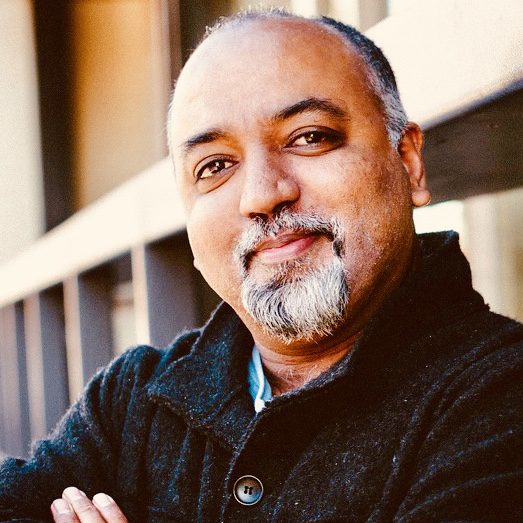
Sai Ravelaمشاهده پروفایل
پژوهشگر
Sai Ravela is a Principal Research Scientist in the Department of Earth, Atmospheric and Planetary Sciences (EAPS) at the Massachusetts Institute of Technology (MIT). His research focuses on nonlinear stochastic dynamics, coherent fluid systems, uncertainty quantification, and autonomous observing technologies. He specializes in developing data-driven methodologies for natural hazard detection, climate change impacts, and environmental risk assessment. Ravela’s work integrates computational science with geophysical applications, including storm surge modeling, extreme rainfall analysis, and geothermal exploration. He pioneers techniques like neural dynamical systems and adversarial learning to improve predictive accuracy in nonstationary climate regimes. His contributions span environmental monitoring systems, autonomous aircraft resilience frameworks, and policy-informed climate vulnerability assessments. Key research areas include: Coastal flood risk in Bangladesh and Vietnam Dynamic data-driven applications systems (DDDAS) Machine learning for geosciences and environmental systems Uncertainty quantification in complex fluid dynamics He leads interdisciplinary projects at MIT’s Computational Science and Engineering (CSE) program, advancing methods for data assimilation, surrogate modeling, and real-time environmental observatories. His innovations bridge theoretical frameworks with practical solutions for climate adaptation and disaster resilience.
- Unsaturated Soil Mechanics
- Dynamic Soil-Structure Interaction
- Ground Improvement Techniques
- +۶ مورد دیگر
Professor Behzad Fatahi is a distinguished academic in Civil and Environmental Engineering at the University of Technology Sydney (UTS), specializing in geotechnical engineering, railway infrastructure, and sustainable construction technologies. With a career spanning over 16 years at UTS, he has served as Deputy Head of School - Teaching and Learning (2024-present), Head of Discipline (2020-2024), and School Research Coordinator (2012-2017). His research focuses on unsaturated soil mechanics , dynamic soil-structure interaction , and green infrastructure solutions . Academic Appointments : Professor (2024-present), Associate Professor (2017-2024), Senior Lecturer (2011-2017), Lecturer (2008-2011) Research Leadership : Supervised 21 PhD students to completion, developed groundbreaking techniques for landfill waste reuse and tyre-derived aggregates in railway construction His work on seismic resilience of LNG tanks and bioengineered soil stabilization has received international recognition, including the 2023 Best Research Paper Award at the Australasian Association for Engineering Education conference. Professor Fatahi's industry experience includes geotechnical engineering roles at Coffey International and SES Engineering prior to academia. Key Research Contributions : Developed green corridor models for railway lines using coupled flow-deformation equations Pioneered AI-integrated teaching frameworks for civil engineering education Advanced machine learning techniques for intelligent compaction and structural buckling analysis As a Category 1 supervisor , he mentors graduate researchers in Civil Engineering , Geomechanics , and Earthquake Engineering . His peer-reviewed work (>240 publications) demonstrates technical excellence and innovation across multiple geotechnical domains.