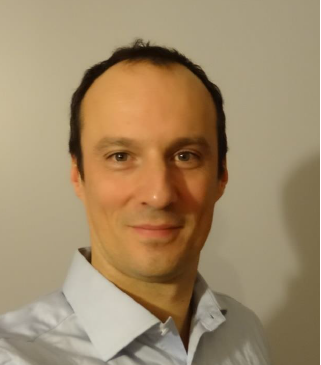
Kristen DeAngelis is a Professor in the Department of Microbiology at the University of Massachusetts Amherst, focusing on microbial ecology in the context of climate change and biofuels. Her research spans microbial physiology, community dynamics, and biogeochemistry. Institution: University of Massachusetts Amherst Department: Department of Microbiology Contact: deangelis@umass.edu Her work examines how climate change affects soil microbial communities, particularly in rhizosphere carbon dynamics and anaerobic decomposition. She aims to apply findings to improve biofuel development and understand greenhouse gas emissions in terrestrial ecosystems. Recent publications emphasize microbial responses to soil warming, manganese-mediated organic matter degradation, and genomic insights into thermal adaptation. Her lab integrates biogeochemical and molecular microbiology approaches to address climate perturbations. Kristen's lab, the Molecular Microbial Ecology Lab, includes members Megan Mitchell, Ilana Krebs, Maria Montero Sanchez, Cam Anderson, Anna Budman, Li Han Alicia Chan, and Melissa Shinfuku. The lab emphasizes microbial diversity, community interactions, and visual communication of science.
Dr. Yong Wang is an Associate Professor in the Department of Physics within the College of Arts & Sciences at the University of Arkansas. His research bridges physics, nanotechnology, and biology, focusing on single-molecule and single-cell biophysics. He leads an active research laboratory that develops cutting-edge biophysical tools to advance biological understanding and applies physical principles to solve biological problems. Dr. Wang's educational background includes: Ph.D. in Physics from University of California Los Angeles (UCLA) - 2011 M.S. in Physics from University of California Los Angeles (UCLA) - 2007 B.S. in Physics from University of Science and Technology of China (USTC) - 2005 Dr. Wang's research program focuses on the intersection of physics, nanotechnology, and biology. His laboratory develops and applies advanced biophysical techniques to investigate fundamental questions in biological systems. Current research directions include studying antibiotic mechanisms of metal nanostructures (nanoparticles, nanowires, and 2D materials), examining dynamics of biological molecules in living systems (bacteria and animal cells), investigating mechanical properties of biological systems (proteins, DNA and bacteria), and developing nano-bio sensors and devices for various applications. His work often involves single-molecule and single-cell measurements, combining experimental and computational approaches to uncover physical principles governing biological phenomena. Analysis of Dr. Wang's recent publications reveals a strong focus on bacterial response to nanomaterials, particularly silver-based nanostructures, and their antimicrobial mechanisms. His research also explores DNA mechanics and its applications in biosensing, as well as microfluidic systems for manipulating and studying microorganisms. The interdisciplinary nature of his work is evident in the diverse range of journals where his papers appear, spanning physics, microbiology, materials science, and engineering disciplines. Dr. Wang has received several significant research awards and grants, including: Tenure and promotion to Associate Professor (2022) Arkansas Biosciences Institute equipment grants for ddPCR and high-performance computing (2022) UA Chancellor's Gap Fund for Commercialization for bent DNA constructs development (2022) Arkansas Biosciences Institute grant for applying bent DNA to RNA research (2021) National Science Foundation I-Corps Program grant (2021) USDA/NIFA grant for studying antibiotic resistance genes in agricultural water (2020) His students have also received prestigious awards including the Ray Hughes Graduate Fellowship and the Chan and Chen Endowed Research Scholarship. Dr. Wang actively mentors numerous graduate and undergraduate students, with recent PhD graduates including Dr. Venkata Krishnamurthi, Dr. Ariel Rogers, and Dr. Diksha Shrestha. His laboratory has successfully guided multiple students through honors theses and research projects. He has secured substantial external funding from agencies including NSF, USDA, and the Arkansas Biosciences Institute, demonstrating the significance and impact of his research program. The Wang Lab at the University of Arkansas maintains a vibrant research environment with multiple PhD students, master's students, and undergraduates working collaboratively on cutting-edge biophysics projects. The lab utilizes advanced instrumentation for single-molecule imaging, nanofabrication, and bacterial studies, supported by recent equipment grants. Current research directions continue to expand the understanding of nano-bio interactions while developing novel biophysical tools with potential applications in medicine and environmental science.
Jerzy Napiórkowski is a Professor at the Department of Construction and Operation of Vehicles and Machines , Faculty of Technical Sciences , University of Warmia and Mazury in Olsztyn . His research focuses on Tribology , Reliability , and Operation of mechanical systems. Research Interests : Tribological processes in kinematic nodes, abrasive wear resistance of materials, reliability modeling of machinery. Supervision : Available for Polish doctoral students; laboratory equipped with infrastructure for wear testing and material analysis. Scientific Metrics : 28 Scopus/WoS publications, h-index 4 (WoS), 9 (Google Scholar), 397 Google Scholar citations. Contact : jerzy.napiorkowski@uwm.edu.pl | ORCID | ResearchGate Recent work explores synergistic lubrication methodologies, wear of agricultural tools, and DEM modeling of low-elasticity grains. Publications emphasize practical applications in automotive and agricultural machinery.
Sophie BERVEILLER serves as a University Professor at Arts et Métiers ParisTech's Metz campus, attached to the MMSV Department (Department 1). She maintains a primary affiliation with Arts et Métiers ParisTech while actively contributing to the LEM3 Laboratory (UMR CNRS 7239), a collaborative research unit jointly operated by the University of Lorraine, the French National Centre for Scientific Research (CNRS), and Arts et Métiers. Her research spans critical domains in mechanical engineering, with emphasis on: Mechanics and structural dynamics Advanced materials characterization Vibration analysis and control Soil-structure interaction Microstructural behavior of materials The LEM3 Laboratory, co-financed by the European Union and located at 7 rue Félix Savart in Metz, provides state-of-the-art experimental facilities including mechanical testing platforms, microscopy suites, and computational resources. Professor BERVEILLER's work leverages these capabilities through national and international collaborations, with research directions focusing on sustainable materials development and structural integrity assessment under dynamic loads.
Thierry Auger is a Research Fellow at the PIMM laboratory (Arts et Métiers Sciences et Technologies) since October 2017, where he leads research in the CoMet team focusing on Behavior and Microstructure of Metals. His extensive academic career spans over two decades with previous positions at the Laboratory of Mechanics of Structures, Soils and Materials (Ecole CentraleSupélec/MSSMAT, 2008-2017) and the Laboratory Centre for the Study of Metallurgical Chemistry (CNRS/CECM, 2001-2008). Dr. Auger's research centers on liquid metal embrittlement phenomena, metallurgy, and fracture mechanics. His work investigates how liquid metals interact with structural materials causing embrittlement, with particular focus on nuclear materials exposed to liquid sodium, lead, and lead-bismuth eutectic. His expertise spans from fundamental understanding of embrittlement mechanisms to practical applications in nuclear engineering systems. His recent publications (2021-2025) demonstrate a strong focus on high-entropy alloys exposed to liquid metals, advanced characterization of embrittlement mechanisms, and multi-scale modeling approaches. These works appear in leading journals including Corrosion Science, Scripta Materialia, and Journal of Nuclear Materials, reflecting his significant contributions to understanding material degradation in extreme environments. Dr. Auger actively contributes to nuclear materials research through multiple collaborative projects including ANR Gauguin and Meso3D, and maintains strong connections with national and international research institutions working on advanced nuclear systems and liquid metal technologies. His teaching portfolio includes Structural Integrity and Continuum Mechanics courses at ENSAM for Energy Engineering students, bridging his research expertise with educational responsibilities in materials science and mechanical engineering.
Michael Brun is a University Professor at the University of Lorraine, attached to LEM3 Laboratory (UMR CNRS 7239) and Department MMSV, with teaching responsibilities in the Faculty of Mathematics and Computer Science. LEM3 operates as a joint research unit between University of Lorraine, CNRS, and Arts et Métiers, located at 7 rue Félix Savart, Metz. His research specializes in computational structural dynamics, focusing on multi-scale/multi-physics co-simulation techniques for impact/contact analysis, spectral/finite element coupling in soil-structure and fluid-structure interactions, dynamic buckling of thin structures using MAN methods, PML applications for infinite media wave propagation, and earthquake-resistant structural design. This work bridges theoretical mechanics with practical engineering software development. LEM3 Laboratory provides advanced research infrastructure co-financed by the European Union, organized into three departments (MMSV, IMPACT, T-PRIOM) and specialized platforms including MécaRhéo for rheology, MicroMat for microstructure analysis, Procédés for manufacturing processes, and Calcul intensif for high-performance computing.
Pascal Laheurte serves as a University Professor at the University of Lorraine, attached to the MMSV Department within the University Institute of Technology. He conducts research at the LEM3 Laboratory (UMR CNRS 7239), a joint research unit operated by the University of Lorraine, the French National Centre for Scientific Research (CNRS), and Arts et Métiers. His research focuses on: Mechanics of materials at microstructural levels Soil and structural mechanics Advanced materials characterization Mechanical behavior of engineered structures The LEM3 Laboratory maintains specialized research platforms including: MécaRhéo (rheology and mechanics) MicroMat (microstructure analysis) Procédés (manufacturing processes) Calcul intensif (high-performance computing) Professor Laheurte's work is supported by European Union co-financing for laboratory infrastructure and engages in both national and international collaborative projects through the laboratory's framework.