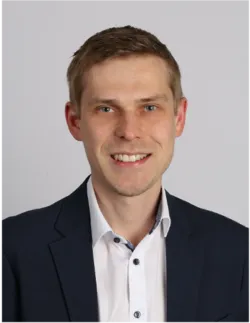
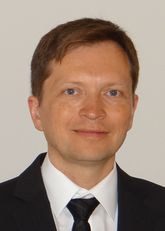
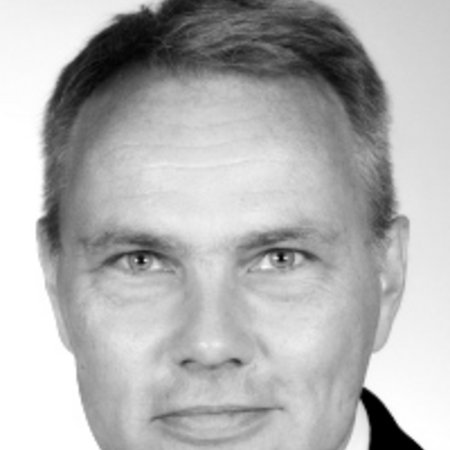
Freek Verbeek is an Assistant Professor at Virginia Polytechnic Institute and State University in the College of Engineering. He is affiliated with the Systems Software Research Group and the Open University of the Netherlands, with a research focus on formal verification and reverse engineering of binaries. His work bridges theoretical rigor with practical applications in networks-on-chips (NoC), cache coherence protocols, and x86-64 binary analysis. Research interests include formal verification of low-level systems, deadlock prevention in communication networks, and automated theorem proving using tools like Isabelle/HOL and ACL2. He has developed verification tools such as DCI2 and WickedXmas for deadlock detection in hardware designs and is actively working on bottom-up verification of assembly code and decompilation techniques. His publications span topics like binary decompilation, memory safety, and deadlock analysis in networks, with a notable best-paper award at SEFM 2020. His recent work explores cross-layer verification of cache coherence and communication fabrics, formal semantics of assembly code, and refinement relations between binaries and abstract models. Scientific awards include: Best-paper award at SEFM 2020 He is currently hiring PhD students and postdocs for projects on formal methods and reverse engineering of binaries, emphasizing decompilation with formally verified soundness and collaboration between Dutch and U.S. institutions.
Andreas Koch is a Research Associate at the Professorship of Simulation for Additive Manufacturing at the Technical University of Munich (TUM), Germany. His research focuses on computational modeling of compressible multiphase flows, CutDG methods, and high-performance computing with software development. He holds a Master of Science (M.Sc.) in Mechanical Engineering from TUM (2024). Research Interests Koch's work bridges computational mechanics and machine learning, with emphasis on cut discontinuous Galerkin methods for simulating complex flows and high-performance computing systems. His publications demonstrate expertise in machine learning applications for aerospace systems, including anomaly detection in spacecraft telemetry and deep learning acceleration for spaceborne hardware. Scientific Awards ERC Starting Grant Publications (2024-2013) His research portfolio includes 15 recent publications spanning edge AI solutions for spacecraft , RF synchronization systems, and machine learning frameworks for aerospace applications. Earlier work explores robot perception and geoinformatics implementations.
Prof. Dr. Artur Andrzejak is a full professor (W3) at Heidelberg University since 2010, serving as the Head of the research group Artificial Intelligence for Programming (AIP), and currently as Executive Director of the Institute of Computer Science. He has held significant academic roles including Deputy Dean of the Faculty of Mathematics and Computer Science (2019-2024), Dean of Studies for Computer Science (2015-2017), and Liaison Professor of the German National Academic Foundation (2014-2023). Habilitation in Computer Science (2009), Freie Universität Berlin Ph.D. in Computer Science (2000), ETH Zurich Diploma in Mathematics (1995), Freie Universität Berlin His research focuses on artificial intelligence applications in software engineering, particularly code generation and error correction techniques. He has also made significant contributions to software aging analysis, distributed systems, and cloud computing, with publications spanning federated learning, secure computation, and software rejuvenation. Recent publications demonstrate a strong focus on code generation and error correction methods using large language models, while earlier work includes foundational studies in distributed systems, grid computing, and software rejuvenation techniques. His research combines theoretical computer science with practical applications in enterprise software systems. As an academic leader, he has organized Dagstuhl Seminars on Parallel Data Analysis (2013) and Self-Healing Systems (2009), and served on editorial boards for the journals Parallel Processing Letters and Multiagent and Grid Systems. He has held various leadership roles in academic institutions and research networks.
Christian Derksen is a scientific assistant at the Faculty of Computer Science , University of Duisburg-Essen. He is affiliated with the ICB/Informatik department and actively involved in the SOFTEC team and IoT Lab cooperation. His research focuses on smart energy systems , multi-agent based simulation , and hybrid energy infrastructures , integrating engineering, economics, and computer science. Research Trends: Derksen's work emphasizes agent-based modeling for energy systems, smart grid development, and hybrid network simulation. His recent articles explore topics like energy conservation law applications, cross-domain resource allocation , and standardized control frameworks for decentralized energy networks. Advising: Supervised two theses in 2024: one on machine learning for energy models and another on cross-platform user interfaces for decentralized energy management systems. His methodological contributions include the Energy Option Model (EOM) and Agent.GUI simulation framework for hybrid energy systems and networks.
Prof. Dr.-Ing. Werner Seim serves as Section Head for the Department of Building Rehabilitation and Timber Engineering at the University of Kassel's Faculty of Civil and Environmental Engineering. His research focuses on seismic-resistant timber structures, advanced fabrication techniques, and adhesive-bonded composites. Teaches courses: Construction I/II, Introduction to Timber Construction, Structural Design Leads projects: HOCHHINAUS (high-rise timber), SafeTeCC (adhesive bonding), wood-textile composites Specializes in: CLT shear walls, dowel connections, earthquake engineering Research trends from 2013-2025 emphasize timber structural mechanics, seismic performance, hybrid composites, and computational fabrication methods. His work addresses both historical preservation and modern sustainability in timber construction. Current affiliations include: University of Kassel Faculty of Civil and Environmental Engineering Building Rehabilitation and Timber Engineering Department
Andrej Batos is a Researcher at the Faculty of Mechanical and Process Engineering , Hochschule Düsseldorf. His work focuses on multi-body and flow simulation, particularly for agricultural machinery and processes. Research Interests: Multi-body simulation, Flow simulation, Coupling of multi-body and flow simulation. Teaching: Festigkeitslehre (Strength of Materials) and Konstruktion von Maschinen (Machine Design). Key Research Trends: His publications emphasize simulation-driven design for agricultural equipment, including cutting processes, flow dynamics, and mechanical optimization of harvesters and gear systems. Recent work explores electrification in mobile machinery and smart dosing units for plant protection. Collaborations: Affiliated with the FMDauto – Institute for Product Development and Innovation , he collaborates on projects like SimFlow (funded by BMBF) to reduce harvest losses through advanced simulation techniques.
Marcel Mauri is a researcher in the field of Business Informatics at Goethe University Frankfurt. His work focuses on agile workflow management, business process management, case-based reasoning, cloud computing and knowledge management. He has been actively involved in research projects like EVER and WFCF that investigate methods for transferring workflows between domains and managing cloud-based workflow systems. Research Interests Marcel's research interests center around: Agile workflow management and business process management Case-based reasoning and knowledge extraction from processes Cloud computing and resource management in distributed systems Recent Publications His recent publications show a strong focus on autonomous mobility systems and cloud management. He has published extensively on: Integration of BDI agents with traffic simulation tools Workflow transfer learning between domains Experience management approaches for cloud task placement Projects Marcel has been involved in several research projects: Project EVER - Extraction and Processing of Procedural Experience Knowledge in Workflows WFCF - Workflow Cloud Framework for process-oriented case-based reasoning CAKE - Collaborative Agile Knowledge Engine for workflow management
Guillermo Martínez-López is a Researcher at the Chair of Statics and Dynamics, Technical University of Munich (TUM), since 2024, previously working at the Chair of Statics (2020-2024). His research focuses on computational structural mechanics with applications in wind engineering and civil infrastructure design. He holds a Master of Science (2017-2019) and Bachelor of Science (2013-2017) in Civil Engineering from Universitat Politècnica de València, with study periods at RWTH Aachen (2016-2017) and KTH Royal Institute of Technology (2018-2019). His research spans Wind Engineering , Structural Optimization , and Computational Mechanics , addressing critical challenges in long-span bridge aerodynamics and membrane structure design. Key contributions include flutter mitigation strategies for cable-supported bridges and standardized pressure mapping for membrane roof canopies, emphasizing computational efficiency through forced-motion simulation optimization. Analysis of his 2019-2024 publications reveals a concentrated focus on wind-structure interaction problems, with increasing emphasis on standardization methodologies for membrane structures and computational cost reduction in aerodynamic simulations. His work bridges theoretical computational mechanics with practical civil engineering applications. His scientific recognition includes: La Caixa Foundation Research Fellowship (2020-2022) DAAD Research Fellowship (2020) He actively contributes to third-party funded projects including CoDA, MistralWind, WINSENT, and FlexWing, focusing on wind engineering applications and structural optimization. As an instructor in Wind Engineering courses at TUM, he integrates research into teaching while collaborating within Prof. Wüchner's research group on advanced computational methods. His work is embedded within TUM's computational mechanics ecosystem, contributing to software development (Kratos Multiphysics) and participating in interdisciplinary teams addressing wind effects on civil structures through projects like Digitaler Baukasten.
Yang Tao, Ph.D. , a Marie Skłodowska-Curie Postdoctoral Fellow at the Technical University of Munich (TUM), works at the Chair of Acoustics of Mobile Systems under Prof. Steffen Marburg. His research focuses on developing textile-based metamaterials for low-frequency noise absorption, bridging acoustics, material engineering, and computational modeling. Acoustic metamaterials Fibrous material characterization Numerical acoustics Multi-functional textiles Recent publications highlight his expertise in Johnson-Champoux-Allard-Lafarge models for fibrous materials, acoustic bound states, and modular multilayer systems. Yang's work addresses urban noise challenges through scalable textile manufacturing techniques. Scientific awards include the prestigious Marie Skłodowska-Curie Postdoctoral Fellowship . His research integrates experimental and computational approaches to advance sound absorption and material design.
Oliver Lenke is a Scientific Assistant at the Chair of Integrated Systems , Technical University of Munich (TUM), affiliated with the TUM School of Computation, Information and Technology . He completed his Bachelor’s (2015-2018) and Master’s (2018-2020) in Electrical Engineering at TUM and has been a PhD student since 2020 . His research focuses on MPSoC architectures , memory hierarchies , hardware preloading mechanisms , and FPGA-based system prototyping . His recent publications address topics like near-memory computing , cache prefetching , and runtime adaptive MPSoCs . He supervises students in projects involving VHDL coding , C programming , and MPSoC optimization , collaborating with industry partners such as Infineon AG , BMW AG , and Huawei . His work includes developing non-intrusive performance monitoring frameworks and dynamic memory preloading solutions .
Alexander Lamprecht is a Research Associate at TUMCREATE, Singapore , affiliated with the Electrification Suite & Test Lab . His work aligns with research areas such as Security for IoT, Autonomous Systems, Decentralized Systems for Data Sovereignty, Time-Sensitive Networking (TSN), and Interoperability of Industrial IoT Systems. He has contributed to teaching courses like IoT Security, System Design for the Internet of Things, and Software Architecture for Distributed Embedded Systems across multiple semesters. His research interests include: Security for IoT and Autonomous Systems Security and Privacy in Decentralized Systems Time-Sensitive Networking (TSN) and Wireless-TSN Interoperability of Industrial IoT Systems Lamprecht’s teaching and research activities reflect TUMCREATE’s focus on Industry 4.0 and next-generation connectivity frameworks like 6G. Contact him at alexander.lamprecht@tum-create.edu.sg .
Yash Deshpande is a researcher at the Chair of Communication Networks at Technical University of Munich (TUM), focusing on reliable low-latency communication systems for AI-enabled robotics and industrial applications. He joined the chair in January 2021 after completing his MSCE at TUM. B.Sc./M.Sc. in Electronics, University of Pune (2016-2018) MSCE in Communications Engineering, TUM (2021) His research spans medium access protocols , digital twin latency modeling, and networked control systems . Current projects include 6G Future Lab Bavaria, AI.NET ANTILLAS, and 5G Testbed Bayern extensions. Recent publications address tree algorithms with interference cancellation , deterministic networking integration with 5G , and reproducible wireless channel emulation . Collaborative work includes industrial digital twins (AI.Fabrik) and network-aware timing bounds in precision protocols. He contributes to IEEE conferences (INFOCOM, GLOBECOM, CASE) and journals (IEEE Transactions on Communications, Information Theory), with emphasis on stochastic network models and learning-based MAC protocols .
Prof. Dr. Wolfgang Funk is a full-time Professor in the Business Information Systems program at the Faculty of Business, Baden-Württemberg Cooperative State University Villingen-Schwenningen. With a doctorate in Computer Science from Technische Universität Darmstadt and extensive experience in applied research, he specializes in software engineering, digital watermarking, and biometric recognition systems. PhD in Engineering from TU Darmstadt (2008) Diploma in Physics from University of Würzburg (1994) His research focuses on: Digital watermarking techniques for multimedia data Biometric system security and liveness detection Software engineering for business applications Image compression algorithms in recognition systems Publications demonstrate expertise in: 3D CAD model watermarking Multimedia security frameworks MPEG-4 compression impacts Biometric anti-spoofing methods Scientific achievements include: Joseph von Fraunhofer Prize (1998) Three granted European patents in digital watermarking and biometric systems
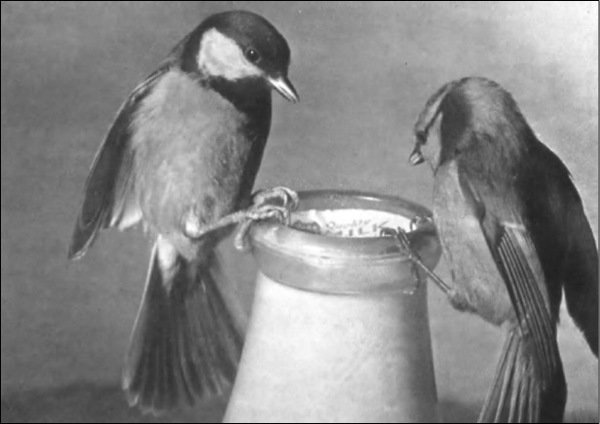
Lucy M. Aplin is Professor of Cognitive and Cultural Ecology at the University of Zurich (Department of Evolutionary Biology & Environmental Studies) and Associate Professor at the Australian National University (Research School of Biology). She heads the Cognitive and Cultural Ecology (CCE) Group, leads the ERC-funded project “CULTURES ADAPT”, and directs the citizen-science initiative “Clever Cockies” on sulphur-crested cockatoos. Combining field experiments and automated tracking, she studies how cognition, social networks and cultural evolution shape animal behaviour—especially in parrots and parids. Education PhD (2014) – University of Oxford & Australian National University BSc (Hons, First Class, 2009) – Australian National University LLB (2003-2008) – Australian National University Research Interests Lucy’s research investigates how new behaviours emerge, spread and persist in wild animal populations. Her work integrates three core themes: Cognitive Urban Ecology : understanding how cognitive flexibility enables parrots to thrive in cities. Social Networks & Culture : mapping the role of social structure in the diffusion and long-term maintenance of cultural traits. Comparative Cultural Evolution : comparing cultural processes across parrot species and parids to uncover general principles. Methodologically, the lab pioneers automated data-collection tools—GPS tags, microphone backpacks, PIT-tagged puzzle-boxes—and large-scale citizen-science platforms. Publication Trends From 2021-2024, Aplin’s 15 most recent papers reveal accelerating interest in urban animal culture , technological innovation in tracking , and the mechanisms of social learning . Study systems span wild sulphur-crested cockatoos (bin-opening culture), monk parakeets (vocal dialects), and great tits (foraging traditions). Interdisciplinary approaches combine behavioural experiments, social-network analyses, citizen science and open-source hardware development. Awards & Fellowships Christopher Barnard Award for Outstanding Contributions by a New Investigator (2022) Max Planck Society Lise Meitner Tenure-Track Fellowship (2022, declined) National Geographic Explorer (2019) Jasper Loftus-Hills Young Investigator Award, American Society of Naturalists (2015) Junior Research Fellowship, St John's College, University of Oxford (2015) Grants & Supervision Lucy has secured >€1.5 M from the European Research Council (2022-2027 “CULTURES ADAPT”), the Cultural Evolution Society, German Science Foundation (DFG), Israeli Science Foundation, UK NERC, and National Geographic. She currently supervises four PhD students (Fontana, Bolcato, Dorepalli, Rose) and two post-docs (Penndorf, Chimento) across Zurich and Canberra, and mentors numerous Honours & Masters students. Labs & Teams She leads the Cognitive and Cultural Ecology (CCE) Lab , an international team embedded in the University of Zurich and ANU, and collaborates closely with the Max Planck Institute of Animal Behaviour (as Alumna Group Leader) and Centre for the Advanced Study of Collective Behaviour (University of Konstanz).
Cristian-Alexandru Staicu is a tenure-track faculty member at CISPA Helmholtz Center for Information Security in Saarbrücken, Germany. He earned his PhD from the Software Lab group at TU Darmstadt under Michael Pradel's supervision, a Master's from EIT Digital (University of Trento and Twente), and a Bachelor's in Computer Engineering from Politehnica University Timișoara. Research Focus : Systems security at the intersection of software/web security, software engineering, and programming languages Contributions : Empirical studies on JavaScript ecosystems, vulnerability detection in npm/Deno, open-source tool development, and security benchmarks His research group Empirical and Behavioral Security investigates real-world threats through case studies on JavaScript bundling, Deno runtime risks, and prototype pollution vulnerabilities. Recent work includes security analysis of source code models and empirical studies of cross-economic web disparities. Key publication trends include: Security risks in Node.js and Deno ecosystems Automated testing techniques for JavaScript sandboxes and constraints Empirical methodologies applied to web inclusivity and global digital disparities Analysis of type systems and gradual typing security implications Dr. Staicu actively supervises PhD candidates and contributes to open-source security , having uncovered multiple critical vulnerabilities in popular JavaScript packages. His group develops tools like SecBench.js while maintaining strong collaborations across USENIX , IEEE , and ACM venues.