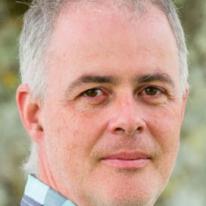
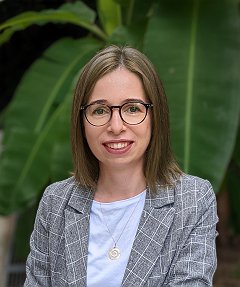
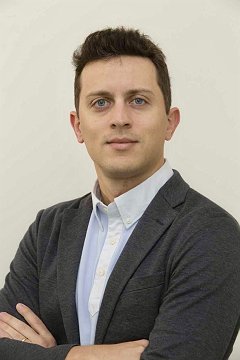
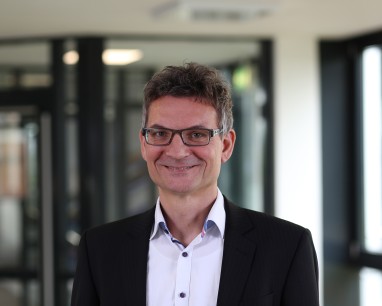
Chih-Duo Hong is an Assistant Professor at the Department of Management Information Systems , College of Business , National Chengchi University , holding this position since February 2023. He earned his Ph.D. in Computer Science from University of Oxford (2017-2022). Research Focus : Formal methods, automated reasoning, neural network testing, and software security Grants : Principal Investigator for multiple National Science and Technology Council projects on data transformation systems (2023-2026) His work spans parameterized verification , probabilistic systems , and neural network fairness , with publications in journals like IEEE Transactions on Software Engineering and ACM TOPLAS. He contributes to concolic testing , array systems abstraction , and constraint-based software optimization . Recent Topics : Formal verification of anonymity/uniformity in probabilistic systems Individual fairness testing for neural networks Regular abstractions for array constraints Collaborations include institutions like University of Oxford, National Chengchi University, and research partners Anthony Lin, Philipp Rümmer, Fang Yu.
Тетяна Сергіївна Дьячук є старшим викладачем кафедри комп'ютерних систем та мереж Факультету комп'ютерних наук і технологій Запорізької національної технічної політехніки, де працює з 2006 року після закінчення університету з відзнакою. Вона є активним членом академічної спільноти, зосереджуючись на сучасних напрямках комп'ютерних наук та технологій. Освіта: Запорізька національна технічна політехніка, 2006 рік, спеціальність "Комп'ютерні системи та мережі", кваліфікація "Магістр комп'ютерних систем та мереж" (з відзнакою) Запорізька національна технічна політехніка, 2006 рік, кваліфікація "Менеджер-економіст" Наукові інтереси Тетяни Сергіївни охоплюють ключові напрями сучасних комп'ютерних технологій, зокрема розподілені та паралельні обчислення, блокчейн-технології, децентралізовані платформи та оптимізацію обчислень. Вона також активно займається дослідженнями в галузі Android-програмування та розробки мобільних додатків. Її наукова робота характеризується практичною спрямованістю, що знаходить відображення в численних публікаціях та конференціях. Аналіз наукових публікацій Тетяни Сергіївни показує чітку еволюцію її наукових інтересів від фундаментальних досліджень розподілених систем та алгоритмів планування ресурсів до сучасних технологій блокчейну, штучного інтелекту та автоматизації процесів програмування. Особливо вражає її здатність поєднувати теоретичні дослідження з практичними застосуваннями в різних галузях, від медичної діагностики до розробки мов високого рівня. Наукові досягнення: Понад 15 наукових публікацій в провідних наукових виданнях Активна участь у міжнародних наукових конференціях Реєстрація в наукометричних базах: Scopus, Web of Science, Google Scholar, ORCID Тетяна Сергіївна активно бере участь у науково-педагогічній діяльності, викладаючи курси, що відповідають сучасним тенденціям в комп'ютерних науках. Вона також займається науковою роботою зі студентами, сприяючи їх інтеграції в наукову спільноту через участь у наукових конференціях та проєктах. Незважаючи на те, що конкретні науково-дослідні гранти не зазначені в доступних джерелах, її публікаційна активність та участь у конференціях свідчать про продуктивну наукову діяльність. Хоча конкретні лабораторії або наукові групи, якими керує Тетяна Сергіївна, не зазначені в доступних джерелах, її наукова робота тісно пов'язана з розвитком сучасних технологій розподілених систем та обчислень, що ймовірно відбувається в рамках кафедри комп'ютерних систем та мереж Запорізької політехніки.
Jim Buckley is a Professor in the Computer Science and Information Systems Department at the University of Limerick, Ireland, and a Principal Investigator in Lero. He leads the ARC research group focused on software evolution and legacy system modernization, with significant industry collaborations including Huawei, IBM, and Fidelity. Education: BSc in Biochemistry, University of Galway (1989) MSc in Computer Science, University of Limerick (1994) PhD in Computer Science, University of Limerick (2002) Research Focus: His work centers on AI-enhanced software engineering (AI4SE/SE4AI), featuring breakthroughs in clone detection, software architecture evaluation, and feature location. He has developed industry-adopted tools for software comprehension and evolution, with recent emphasis on explainable AI (XAI) and scalable neural network applications for industrial codebases. His research consistently bridges academic rigor with industrial implementation. Publication Trends: Recent articles (2022-2025) reveal a dominant shift toward AI-driven software engineering solutions, particularly in clone detection and architecture recovery. Key themes include industrial scalability, developer experience optimization, and responsible AI integration, with strong representation in top-tier venues like IEEE Transactions and ACM Computing Surveys. Scientific Awards: No awards specified in source material. Grants & Industry Impact: Leads the Huawei-funded TREES Programme and maintains active partnerships with 9+ companies. His research has yielded licensed tools (e.g., for legacy system evolution), two IP assignments from LLM-based clone detection work, and practical frameworks adopted by seven Irish enterprises. Research Infrastructure: Directs the ARC group within Lero, which combines academic researchers and industry practitioners to address real-world software maintenance challenges through empirical studies and tool prototyping.
Benjamin Delaware is an Assistant Professor in the Department of Computer Science at Purdue University since 2016. He earned his Ph.D. in Computer Science from the University of Texas at Austin in 2013 under William Cook and Don Batory, following an M.Sc. in Computer Science from Washington University in St. Louis (2007) and a dual B.S. in Computer Science and B.A. in Russian from Truman State University (2005). Research focuses on program synthesis , formal verification , and relational program properties . Key contributions include KestRel (relational verification), PALM (LLM-assisted proof automation), and Clotho (distributed system testing). His publications span top venues like OOPSLA, PLDI, and POPL, with recent work (2025) on coverage-type-guided synthesis and LLM-integrated proof repair . He has received multiple scientific awards , including a SIGPLAN Distinguished Paper Award (2023) and CRII Award from NSF (2018). Ben advises a research group producing graduates such as Qianchuan Ye (now at SUNY Buffalo) and Kia Rahmani (UT Austin postdoc). He teaches graduate courses on program reasoning (CS560) and programming language design (CS456/CS565), with earlier teaching experience at UT Austin. Active in academic service , he served as Program Committee Co-Chair for RocqPL 2026 and CoqPL 2025 , and as Diversity, Equity, and Inclusion Chair at POPL 2023. His grants include NSF funding for input generator verification (2023-2026) and Cisco research on privacy-preserving computation (2022-2023).
Ivan Polášek is a part-time Associate Professor at the Department of Applied Informatics within the Faculty of Mathematics, Physics and Informatics at Comenius University in Bratislava. His institutional affiliations include membership in the Division of Theory and System Design. His research explores: Software modeling and visualization techniques Virtual/augmented reality applications in software engineering AI-driven optimization of software design and refactoring Collaborative development methodologies Design pattern analysis and anti-pattern detection Recent publications (2017-2024) demonstrate strong focus on VR-supported collaborative design, executable software models, and communication methodologies in team-based development environments. He teaches undergraduate courses in agile development and software architectures, while leading research seminars. No awards or supervised students are documented in available sources. Polášek contributes to the INNOVAITE research project and maintains collaborations with European institutions including researchers from the Netherlands, France, and Sweden.
Dr. Andreea Costea is an Assistant Professor at the Programming Languages Group in the Faculty of Electrical Engineering, Mathematics and Computer Science (EEMCS) at TU Delft, Netherlands. She completed her PhD at the School of Computing, National University of Singapore (NUS), and previously collaborated with NUS's Programming Languages and Software Engineering lab, Automated Program Repair team, and VERSE lab. Research: Formal Methods, Software Verification, Automated Program Repair, Rust Programming, Concurrency Funding: Ministry of Education Tier 3 Grant (2022) Projects: HIPPODROME (Java data race repair), ROBoSuSLik (heap synthesis), Mercurius (session protocols) Recent MSc Students: Matei Mirică (2025), Arjan Seijs (2025), Jim van Vliet (2025), Timen Zandbergen (2025), Arthur de Groot (2024), Julius de Jeu (2024), Matteo Bertorotta (2024). Conference Involvement: Program Committee member for PriSC 2024, PEPM 2024, SPLASH/ISSTA 2026, ICSE 2025, ICFP 2023, APLAS 2021.
Dr. Lecturer İbrahim ŞANLIALP is a faculty member at the Faculty of Engineering and Architecture, Ahi Evran University, specializing in Computer Hardware and Software Engineering. He holds a Ph.D. (2022) and M.Sc. (2015) in Computer Engineering from Süleyman Demirel University, alongside a B.Sc. in Electronics and Computer Education (2010). Education: Ph.D. in Computer Engineering (Süleyman Demirel University, 2015-2022) M.Sc. in Computer Engineering (Süleyman Demirel University, 2012-2015) B.Sc. in Computer Engineering (Süleyman Demirel University, 2005-2010) Diploma in Electronics and Computer Education (Süleyman Demirel University, 2005-2010) His research focuses on Computer Software and Programming Languages , with recent studies analyzing energy efficiency in code refactoring, landslide prediction using statistical methods, and machine learning applications in public health. His work spans green computing , geospatial analysis , and AI-driven classification systems. Dr. Şanlıalp has contributed to 9 publications, including 2 journal articles (SCI-Exp, TR Dizin) and 7 conference papers. His projects include "3D Environment Path-Finding Algorithms for UAVs" (2025-2026) and "Grid-Based Path Planning Simulation" (2024-2025) as principal investigator. Metrics highlight 26 total citations (Google Scholar), h-index of 1, and active collaborations with researchers from Süleyman Demirel University, Ankara Yıldırım Beyazıt University, and Niğde Ömer Halisdemir University. His teaching portfolio includes courses like "Game Programming", "Computer Concepts", and "Cybercrime" since 2022.
Mattia Fazzini is an Assistant Professor in the Department of Computer Science & Engineering at the University of Minnesota's College of Science and Engineering. His primary academic appointment focuses on software engineering research and teaching, with active involvement in major conferences including ASE, ISSTA, ICSE, and MOBILESoft where he has served in leadership roles such as General Co-chair (MOBILESoft 2023) and Program Committee Co-chair. His research centers on software testing, maintenance, and security , with particular emphasis on mobile applications. Key research themes include: Developing techniques for automated Android testing and maintenance Addressing API compatibility issues across Android versions Creating tools for test oracle generation and bug reproduction Investigating security vulnerabilities in mobile ecosystems Optimizing test suites through test double analysis His recent publications (2021-2025) reveal strong focus on Android-specific challenges, with recurring themes in compatibility testing, automated test generation, and security analysis. Over 60% of his work involves tool development for practical testing scenarios, particularly targeting mobile platforms. Notable recognitions include: IEEE TCSE Distinguished Paper Award (2024) for work on test suite optimization ACM Distinguished Paper Award (2022) for COVID-19 app analysis As an educator, he advises multiple PhD and Master's students while teaching undergraduate and graduate courses including CSCI 3081W (Program Design) and CSCI 5802 (Software Engineering II). His service contributions span conference organization (MOBILESoft, ISSTA, ICSE) and extensive program committee work across top software engineering venues. He leads research projects focused on practical testing solutions with real-world applicability in mobile software development.
Dr. Ying Wang is an Associate Professor and Assistant Dean at the Software College of Northeastern University in China, where she also serves as a doctoral supervisor. She received her PhD in Software Engineering from Northeastern University in January 2019 and joined the faculty in February 2019. Her academic career includes a postdoctoral fellowship at the Hong Kong University of Science and Technology (2022-2023) and a visiting scholar position at Microsoft Research Asia (2021) through the StarTrack Program. Her research focuses on dependency management, software ecosystem governance, software refactoring, and software supply chain security. She has made significant contributions to understanding cross-language dependencies, vulnerability propagation across ecosystems, and developing tools for dependency conflict detection and resolution. Her work spans multiple programming language ecosystems including Java, C#, Python, Go, JavaScript, Android, and Rust. Dr. Wang's publication record shows a consistent trajectory of high-impact research in top software engineering conferences (CCF-A level) including ASE, ICSE, ESEC/FSE, and ISSTA. Her recent work increasingly integrates large language models with traditional software engineering techniques, particularly in dependency analysis and software refactoring. The publications demonstrate a strong emphasis on practical tool development with industry applications. Microsoft Research Asia Star Program Scholar (2020) CCF Outstanding Doctoral Dissertation Award nomination (2020) Liaoning Province Outstanding Doctoral Dissertation Award (2021) ACM SIGSOFT Distinguished Paper Award (ICSE 2021 and ESEC/FSE 2023) Multiple CCF ChinaSOFT Software Prototype Competition awards (2020, 2023) OpenHarmony Community Security Governance Contributions (2024, 2025) Dr. Wang actively mentors a large group of graduate students working on various aspects of software engineering, with many graduates securing positions at major technology companies including Huawei, Microsoft, Alibaba, and Tencent. She serves on the editorial board of IEEE Transactions on Software Engineering and has held numerous program committee positions at top software engineering conferences. Her research has strong industry connections, with several tools developed by her team being integrated into commercial platforms at Huawei and Microsoft.
Leopoldo Teixeira is an Assistant Professor at the Informatics Center (CIn) of the Federal University of Pernambuco (UFPE) in Brazil. Since May 2023, he has served as Head of Graduate Studies at his department. He leads the Software Testing and Analysis Research group and is affiliated with the Software Productivity Group and CIn-Trust. Dr. Teixeira was a CAPES-Alexander von Humboldt Experienced Research Fellow at the Chair of Software Engineering of Universität des Saarlandes in 2022, where he collaborated with Sven Apel on variability analysis over time and space. His educational background includes: PhD in Computer Science from Federal University of Pernambuco (CIn-UFPE, 2014), supervised by Paulo Borba and Rohit Gheyi MSc in Computer Science from CIn-UFPE (2010) Bachelor's degree in Computer Engineering from the Polytechnic School of Pernambuco (2007) Dr. Teixeira's research focuses on providing strong foundations for improving software quality and productivity. His work spans software product lines, configurable systems, refactoring, formal methods, software testing, and mobile development. He has made significant contributions to understanding challenges in highly configurable systems and software evolution, with particular emphasis on theoretical rigor combined with practical applicability. His publication record demonstrates expertise across software testing methodologies, analysis of configurable systems, and formal verification techniques. Recent work addresses pressing challenges in containerization practices (Dockerfile repair), test reliability (flaky test detection), and formal specification of API properties, showing his ability to tackle both theoretical and practical aspects of software engineering. Dr. Teixeira has received recognition through the CAPES-Alexander von Humboldt Experienced Research Fellowship. CAPES-Alexander von Humboldt Experienced Research Fellow (2022) Dr. Teixeira actively contributes to the software engineering community through extensive service on program committees of major conferences including ICSE, FSE, ASE, and SPLASH across multiple years. In 2024, he served as Conference and Local Organization Chair for FSE. He mentors students through his leadership of the Software Testing and Analysis Research group at CIn-UFPE. His laboratory work focuses on software testing and analysis, particularly in the context of configurable systems and software product lines. The research group investigates practical approaches to improve software quality through better testing methodologies, analysis techniques, and formal verification approaches for complex software systems.
Işıl Dillig is an Associate Professor of Computer Science at the University of Texas at Austin, where she leads the UToPiA research group. Her academic career spans over a decade of significant contributions to programming languages research, particularly in program analysis, verification, and synthesis. Dr. Dillig received all her academic degrees (BS, MS, and PhD) from Stanford University before joining the faculty at UT Austin. Her educational background established the foundation for her innovative research approach that bridges theoretical computer science with practical applications. Her research focuses on developing techniques to make software systems more reliable, secure, and easier to build through advanced program analysis, verification, and synthesis methods. She has pioneered approaches that combine symbolic reasoning with machine learning to tackle complex software engineering challenges across multiple domains including security, databases, and programming language theory. Her work demonstrates exceptional depth in creating practical tools that address real-world software development problems while maintaining strong theoretical foundations. Analysis of Dr. Dillig's publication record reveals a consistent trajectory of innovation in program synthesis, with recent work expanding into neurosymbolic approaches that bridge neural networks with formal methods. Her research shows strong connections between theoretical foundations and practical applications, particularly in security-critical systems, database technologies, and blockchain applications. The evolution of her work demonstrates increasing sophistication in handling complex program structures while maintaining practical usability. Dr. Dillig has received prestigious recognition for her research contributions: Sloan Fellowship NSF CAREER award As a dedicated educator and research leader, Dr. Dillig has served in significant roles including Program Chair for PLDI 2022 and Steering Committee member for PLDI. She has mentored numerous students through her UToPiA research group, guiding research in program synthesis, verification, and analysis. Her work has been supported by substantial research grants that have enabled innovative projects at the intersection of programming languages and security. Dr. Dillig leads the UToPiA (UT Austin Programming, Languages, and Analysis) research group, which focuses on developing novel techniques for program analysis, verification, and synthesis. The group maintains strong collaborations with industry partners and academic institutions worldwide, translating theoretical advances into practical tools that address real software engineering challenges.
Ilya Sergey is an Associate Professor at the National University of Singapore (NUS) School of Computing, with previous faculty appointments at University College London (2015-2018). His academic career spans multiple prestigious institutions including IMDEA Software Institute (postdoctoral position) and KU Leuven (PhD). His educational background includes a PhD in Computer Science from KU Leuven (2012), an MSc in Mathematics and Computer Science from Saint Petersburg State University (2008), and professional experience as a software engineer at JetBrains prior to academia. Sergey's research focuses on the intersection of programming language theory and practical software verification, with particular emphasis on concurrent systems , smart contracts , and program synthesis . His work bridges theoretical foundations in type theory and separation logic with practical applications in blockchain technology and Rust programming. He has developed novel techniques for verifying heap-manipulating programs, analyzing commutativity in distributed transactions, and synthesizing correct-by-construction code. Analysis of his recent publications reveals a clear trajectory toward practical verification of blockchain systems and concurrent data structures, with increasing focus on Rust programming language applications. His work demonstrates consistent innovation in mechanized reasoning techniques while maintaining relevance to real-world software challenges, particularly in the domains of smart contracts and distributed systems. Sergey maintains an active research group at NUS, as evidenced by his social media references to lab traditions and student collaborations. He frequently participates in major programming languages conferences as both author and committee member, serving in leadership roles including General Chair for ICFP 2025. His research lab follows distinctive traditions, including location-based Mattermost status updates when traveling. Sergey is deeply engaged with the programming languages community through conference organization, mentoring activities, and outreach initiatives such as nature walks for conference attendees.
Peter Rosso is a Doctor of Philosophy researcher at the University of Bristol's School of Electrical, Electronic and Mechanical Engineering, specializing in Computer-Aided Design (CAD) systems and product development methodologies. His work bridges software engineering principles with mechanical design practices. His educational background includes a BEng in Mechanical Engineering from the University of Bristol (awarded July 19, 2017). Research focuses on addressing technical debt in CAD modeling , improving CAD editability and usability , and exploring graph database applications for design intent preservation. Key methodologies include adapting object-oriented programming principles to CAD systems and investigating variability impacts on model reusability. Current research trends show strong interdisciplinary connections between software engineering and mechanical design, particularly in applying version control concepts from software development to physical product lifecycles through digital twin paradigms. His work demonstrates significant citation impact with 15+ Scopus citations across recent publications. Scientific Recognition: No major awards or fellowships explicitly documented in source materials As Principal Investigator for the active CAD Refactoring project (since September 2018), he leads research on improving CAD model editability with collaborators including Prof. B.J. Hicks and Dr. S.C. Burgess. The project has generated notable academic engagement with 14 Mendeley readers and social media mentions. His research group maintains active collaborations across mechanical engineering and software domains, with particular emphasis on translating software engineering best practices to CAD environments and developing integrated version control systems for virtual-physical artifact management in product development cycles.
Vassilis Routsis serves as a Lecturer in Technologies in the Digital Humanities at University College London's Department of Information Studies, holding a dual appointment as Senior Research Fellow. His primary responsibility involves managing the UK Data Service's census flow data project, working closely with the Office for National Statistics (ONS) to disseminate 2011 and 2021 UK census data. Currently, he leads the development of next-generation tools including sophisticated APIs with subsetting capabilities and user-friendly interfaces for census data discovery and extraction. Routsis earned his PhD from UCL with research focused on Informational Privacy and Self-Disclosure Online: A Critical Mixed-Methods Approach to Social Media . His academic background includes a BA in Sociology and an MSc in Social and Political Theory, establishing a robust foundation in social sciences that informs his interdisciplinary approach to digital humanities. His research spans the intersection of technology and social sciences, with particular emphasis on data privacy, census data analysis, and AI applications for social research. Routsis currently leads the ESRC-funded CORDIAL-AI project exploring how Large Language Models can improve access to complex datasets, and co-leads the Census Innovation at CeLSIUS project focused on enhancing access to restricted UK Census data through synthetic datasets and improved user guidance. Routsis teaches postgraduate courses in programming, databases, and AI, leading modules including 'Server-Side Programming and Structured Data,' 'Social Media Analytics,' 'Database Theory and Practice,' and 'Developing Dynamic Web Applications.' His recent publications demonstrate a clear trend toward making complex data more accessible through innovative technological solutions, particularly focusing on census flow data and AI methodologies for data retrieval. ESRC-funded CORDIAL-AI project lead Census Innovation at CeLSIUS project co-lead Member of Royal Statistical Society Peer reviewer for Digital Humanities Conference and iConference As supervisor for Master's and PhD students in Digital Humanities and Data Science programs, Routsis brings extensive technical expertise across multiple programming languages including Python, JavaScript, PHP, SQL, Java, C#, and R. His work at the UCL Centre for Languages and International Education as a software and web engineer further demonstrates his commitment to developing pedagogical tools that support academic communities.
Prof. Dr.-Ing. Steffen Helke serves as a full Professor in the Department of Electrical Engineering & Information Technology at University of Applied Sciences Südwestfalen. His academic roles include Senate membership, evaluation officer for the department, program coordinator for Media Informatics, and spokesperson for the GI Specialist Group Automotive Software Engineering. Current affiliations span committee work in electrical engineering bachelor programs and leadership in safety-critical software research. His research focuses on functional software security , safety-critical system verification , and model-based quality assurance . Key areas include information flow control languages, automotive software security, hierarchical statechart validation, and requirements delta analysis for efficient development estimation. Methodologies emphasize formal verification, static analysis, and tool-supported refactoring to ensure robustness in embedded systems. Teaching encompasses advanced courses in Software Engineering, IT Security, Ethical Hacking, and Competitive Programming. Thesis supervision occurs in research areas like NLP-based requirements analysis, refactorings for security languages (Jif), and model checking for Statecharts. Industrial collaborations facilitate project/bachelor theses with real-world security applications. Research trends from publications show consistent focus on bridging formal methods with industrial software development. Dominant disciplines include Software Engineering (72% of works) and Formal Verification (58%), with emerging subfields like NLP-assisted requirements engineering (2019) and automotive security frameworks. Keyword analysis reveals sustained emphasis on verification (100% of works), security (80%), and automotive applications (40%). Administrative contributions include leadership in the combined Electrical Engineering bachelor program and active participation in university governance through department councils. Tools developed in his research (e.g., Delta Analyzer, R2BC) are integrated into curricula using ReqView, Matlab/Simulink, and Enterprise Architect for systematic requirement engineering and UML modeling.